
Plant Library · Fruits · By Faizan Ahmad
Updated November 17, 2026
🟣 How to Grow Elderberry
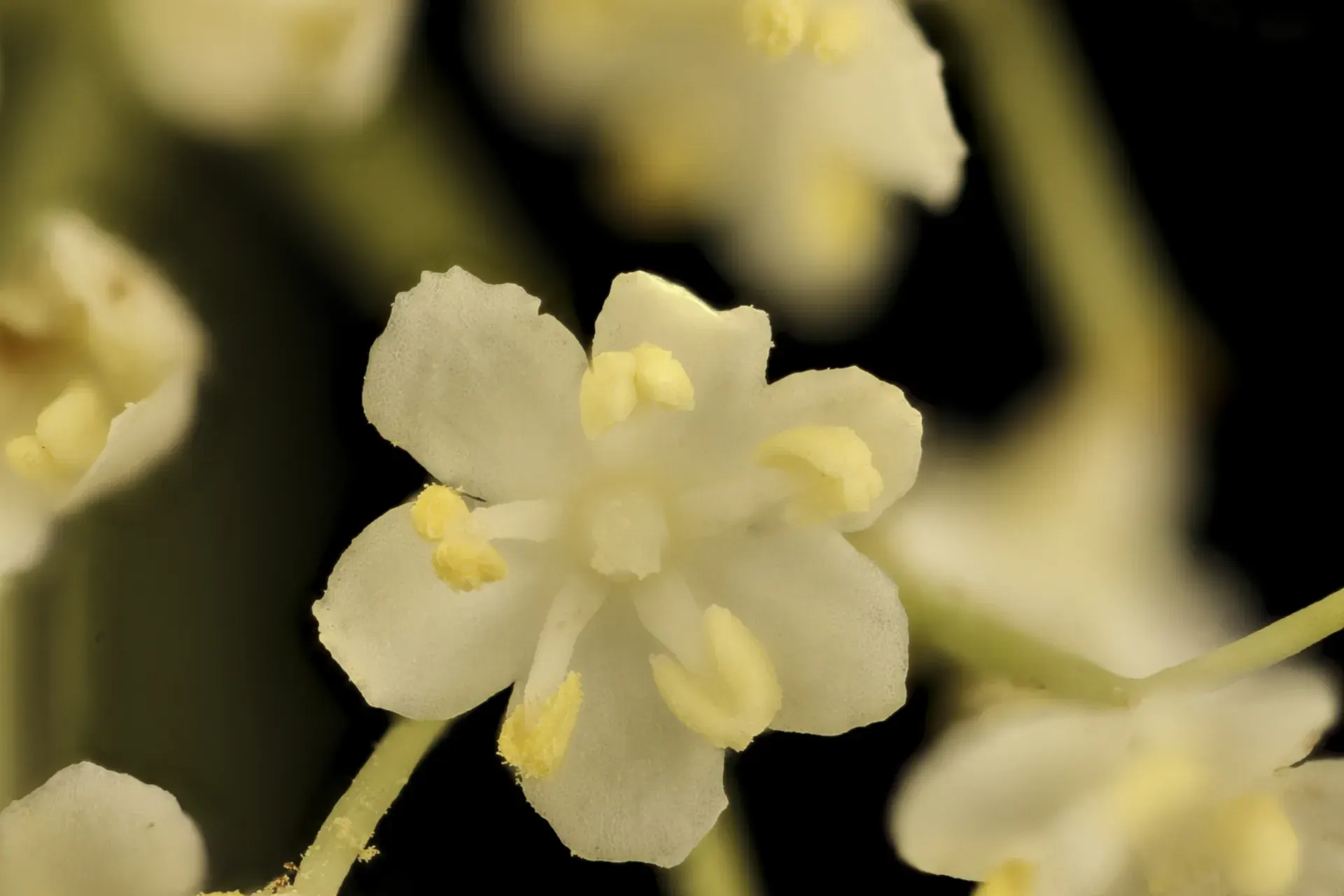
Elderberries are big, fast, generous bushes — 6–10 ft — with clouds of white flowers in early summer and heavy clusters of dark berries in fall, made for syrups, jellies and cordials. They tolerate wet soil where other fruit fails. One rule matters: cook elderberries before eating — raw berries (and the stems and leaves) can upset the stomach.
Grow Elderberry with us — step by step
Elderberry is the forgiving fruit: it tolerates the damp corner nothing else wants, grows fast enough to screen a fence in two seasons, and asks mainly for a winter tidy and a prompt harvest before the birds strip the clusters. One caution runs through every step below — the berries are always cooked, never eaten raw. Tell us the day your bushes went in and this page turns it into your personal elderberry schedule, timed from your planting date rather than a generic calendar.
Step 1 — today: Plant your Elderberries today, 6–10 ft apart at nursery depth, in moist rich soil, water deeply and mulch. Plant two varieties for the heaviest crops.
Elderberry at a glance
Spacing: 6–10 ft in · Seed depth: As in the pot
Sun: Full sun to part shade
Water: Regular — tolerates wet soil
Harvest: First berries in year 2–3
Timing counts from your average last spring frost — get your own dates in the Planting Calendar. Guidance follows standard extension-service practice for Canada and the US.
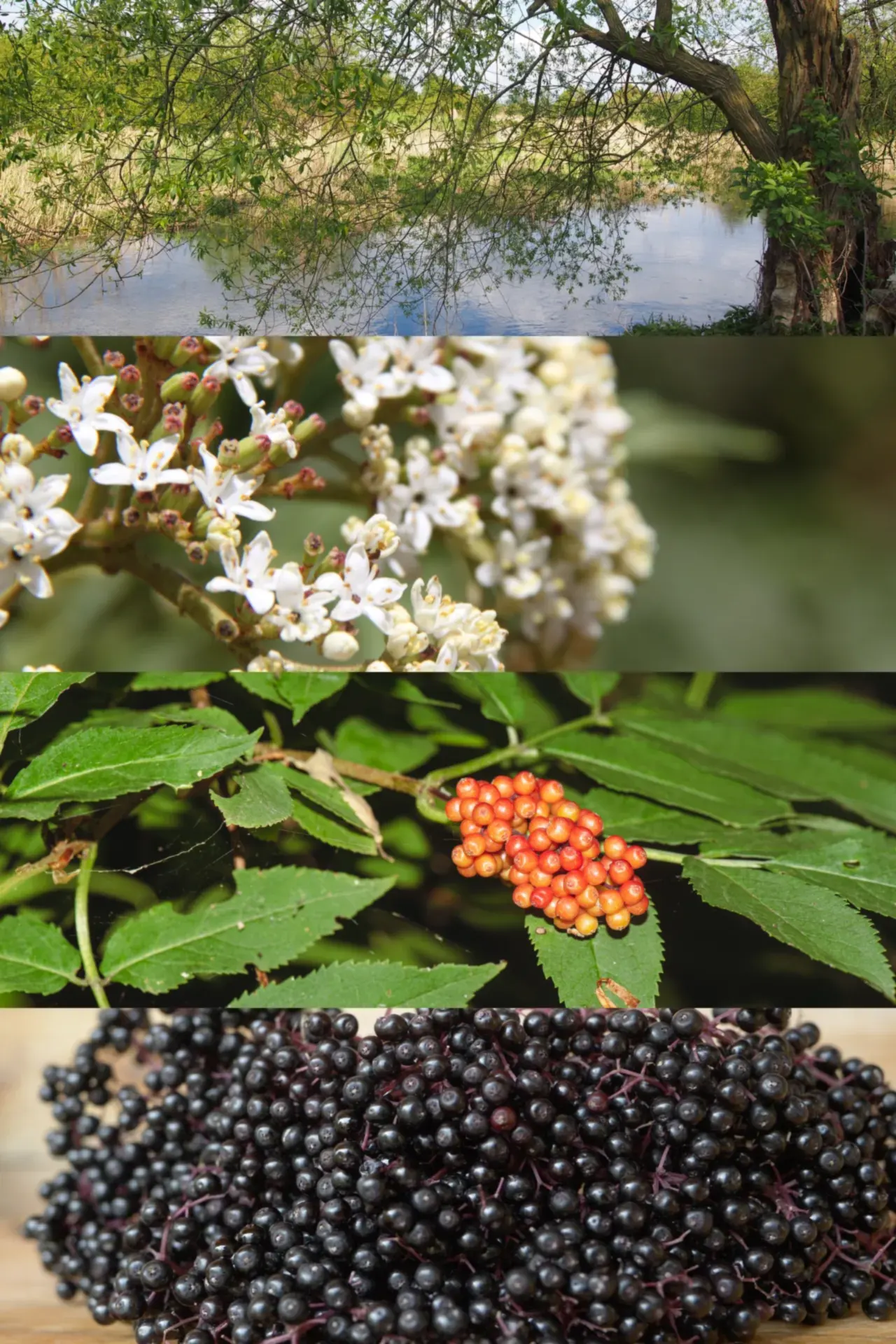
How to plant and grow elderberry, step by step
Step 1 — Time it right
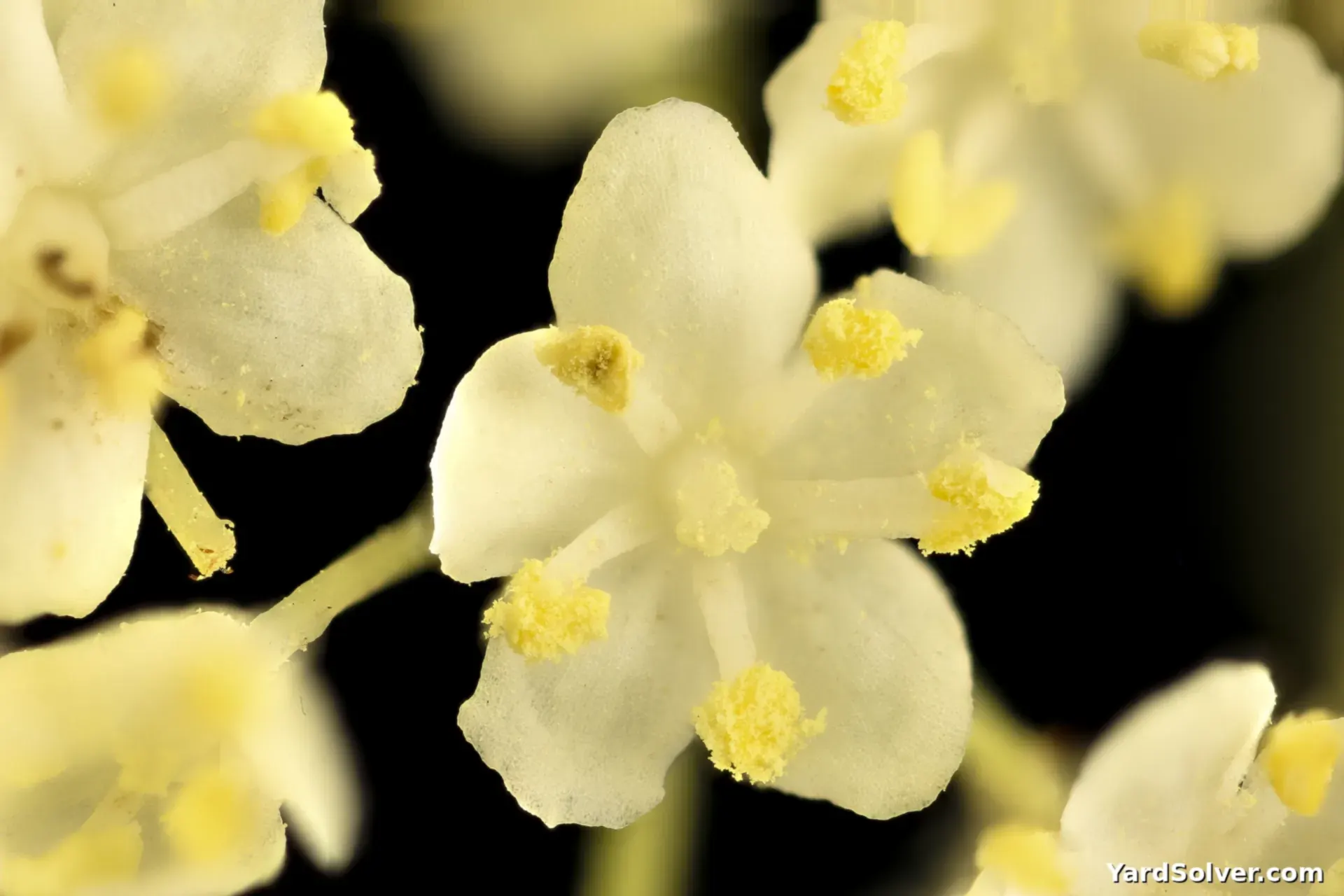
Plant in early spring or fall. Elderberries are tough and adaptable — they even tolerate wet ground. Bare-root plants are usually cheapest and establish quickly if planted while dormant and kept moist for the first month. Elderberry tolerates soil from about pH 5.5 to 7.5, so no special bed preparation is needed beyond digging in organic matter on thin, sandy ground.
Step 2 — Prepare the spot
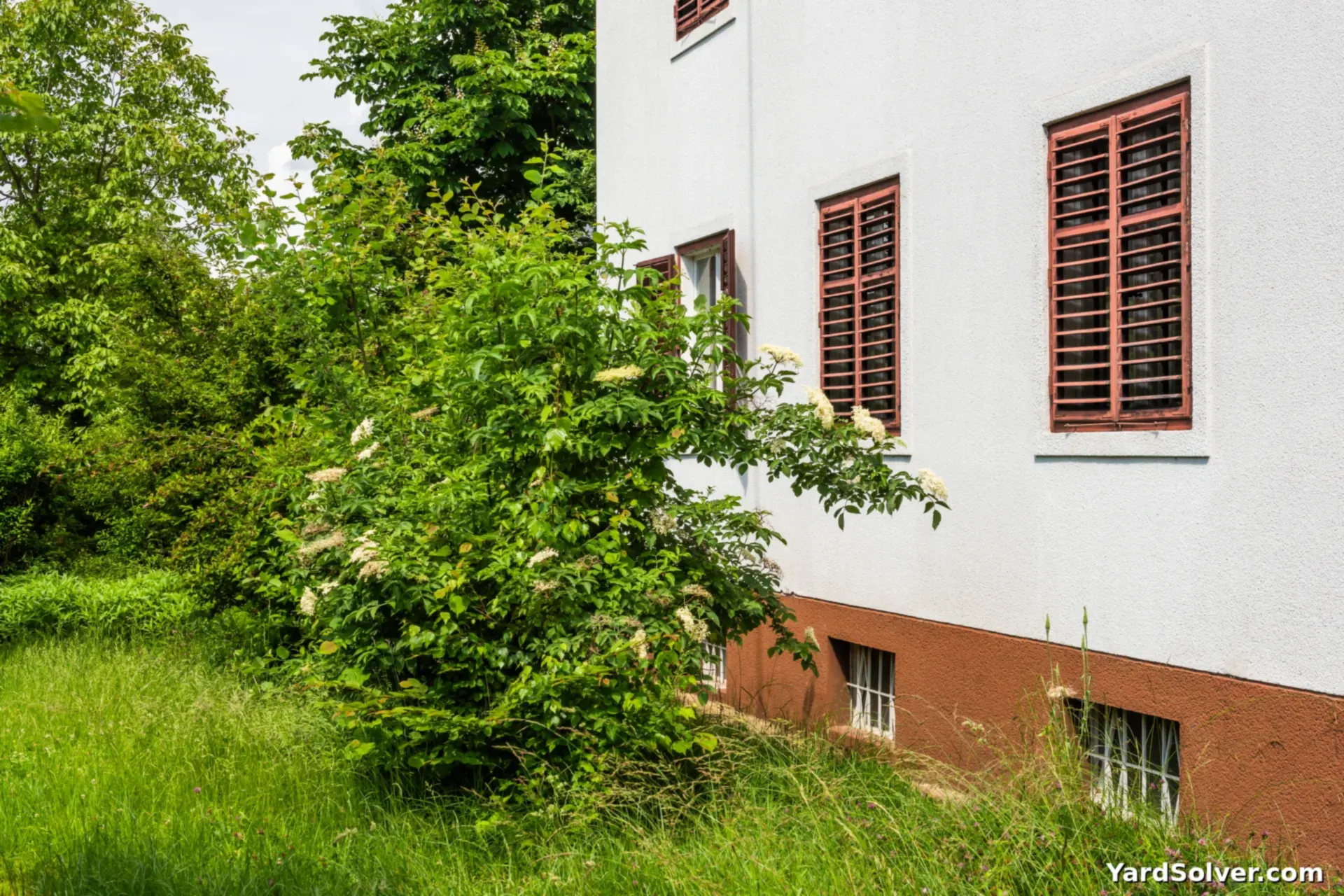
Sun: Full sun to part shade. Moist, rich soil in sun or part shade — elderberry is one of the few fruits happy in a damp corner. Work out how much soil you need with the Garden Mix Calculator or the Raised Bed Soil Calculator. A mature bush reaches 8–12 ft tall and nearly as wide, so judge the spot by its final size, not the plant in the pot. Planting near a compost heap or a reliably damp ditch suits it well — few other fruits crop happily with roots that stay this moist.
Step 3 — Plant it
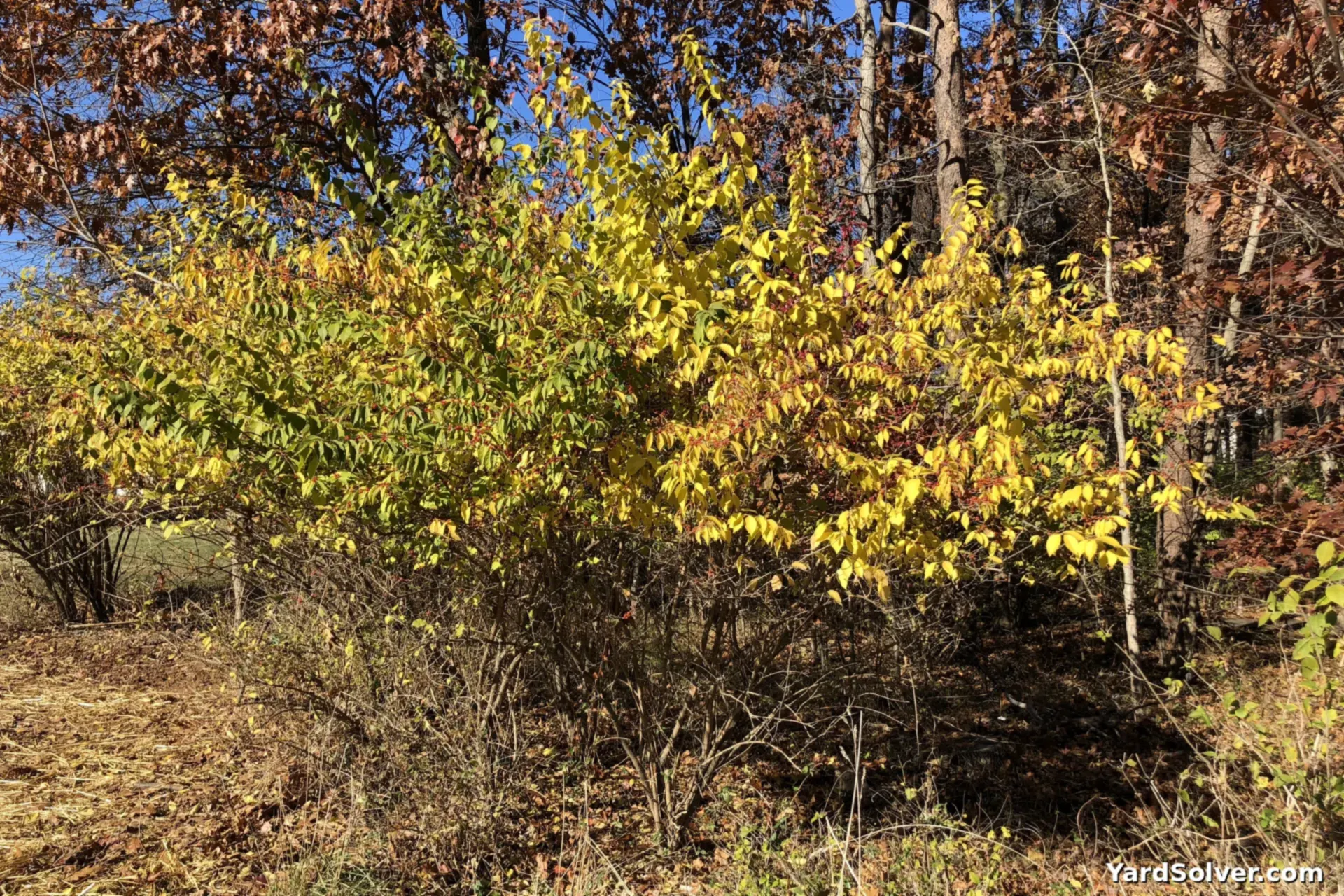
Set bushes 6–10 ft apart at nursery depth, water in deeply and mulch. Plant two varieties for the heaviest crops. The Plant Spacing Calculator turns that spacing into bushes-per-row. Two different varieties planted within about 50 ft of each other cross-pollinate and noticeably increase yields — pairs such as Adams with York are the classic planting. Set the crown at nursery depth, water in with a full can per bush, and stake only if the site is very windy.
Step 4 — Water and feed
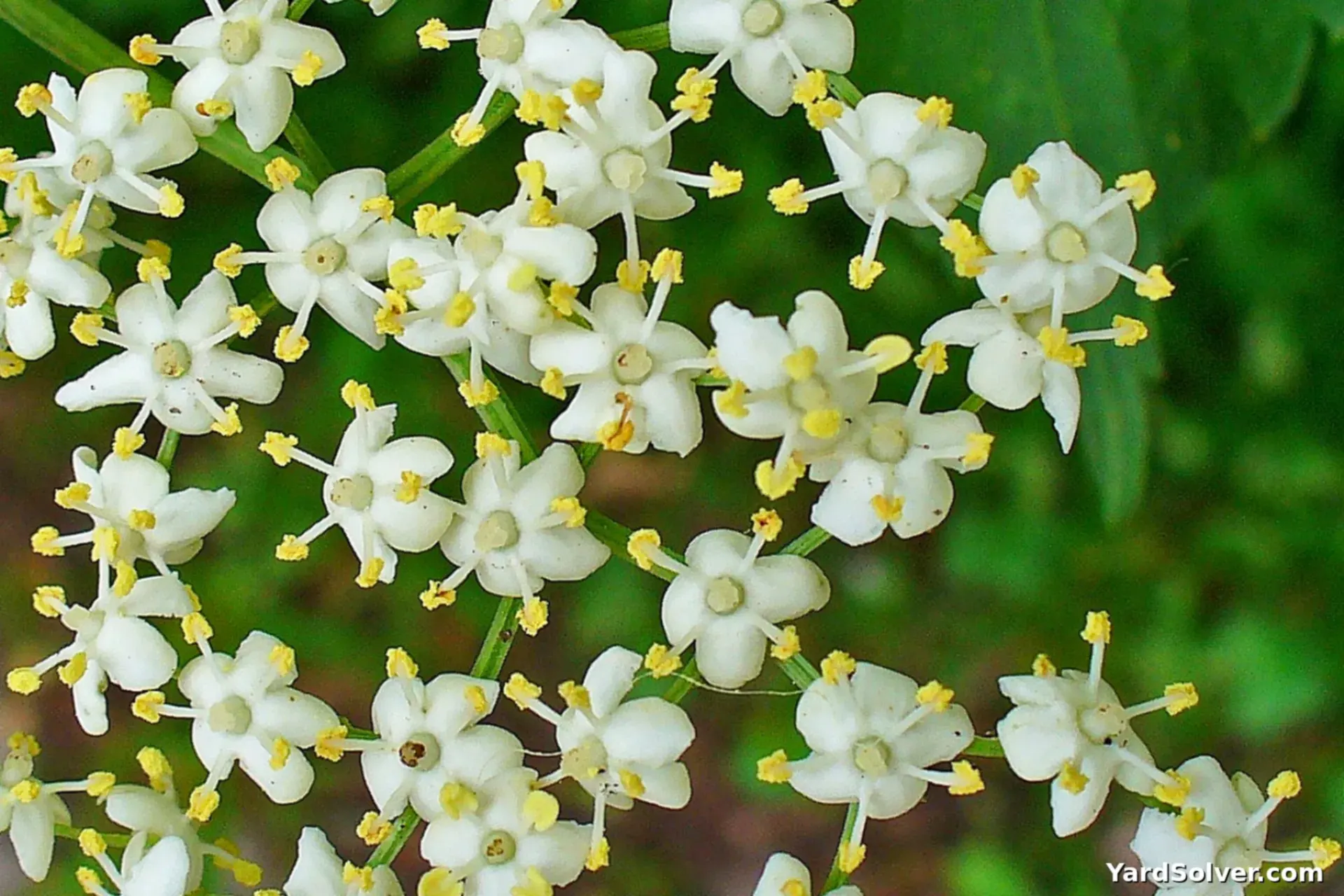
Water: Regular — tolerates wet soil. Feed in spring with compost or a balanced fertilizer — big bushes are hungry bushes. The Fertilizer Calculator turns a bed size into the right amount. Once established, elderberry shrugs off short droughts, but berry size suffers if the soil dries while fruit is swelling in midsummer. A yearly mulch of compost in spring is usually feeding enough; pushing soft growth with strong nitrogen feeds invites aphid colonies on the flower heads.
Step 5 — Care and the problems to watch for
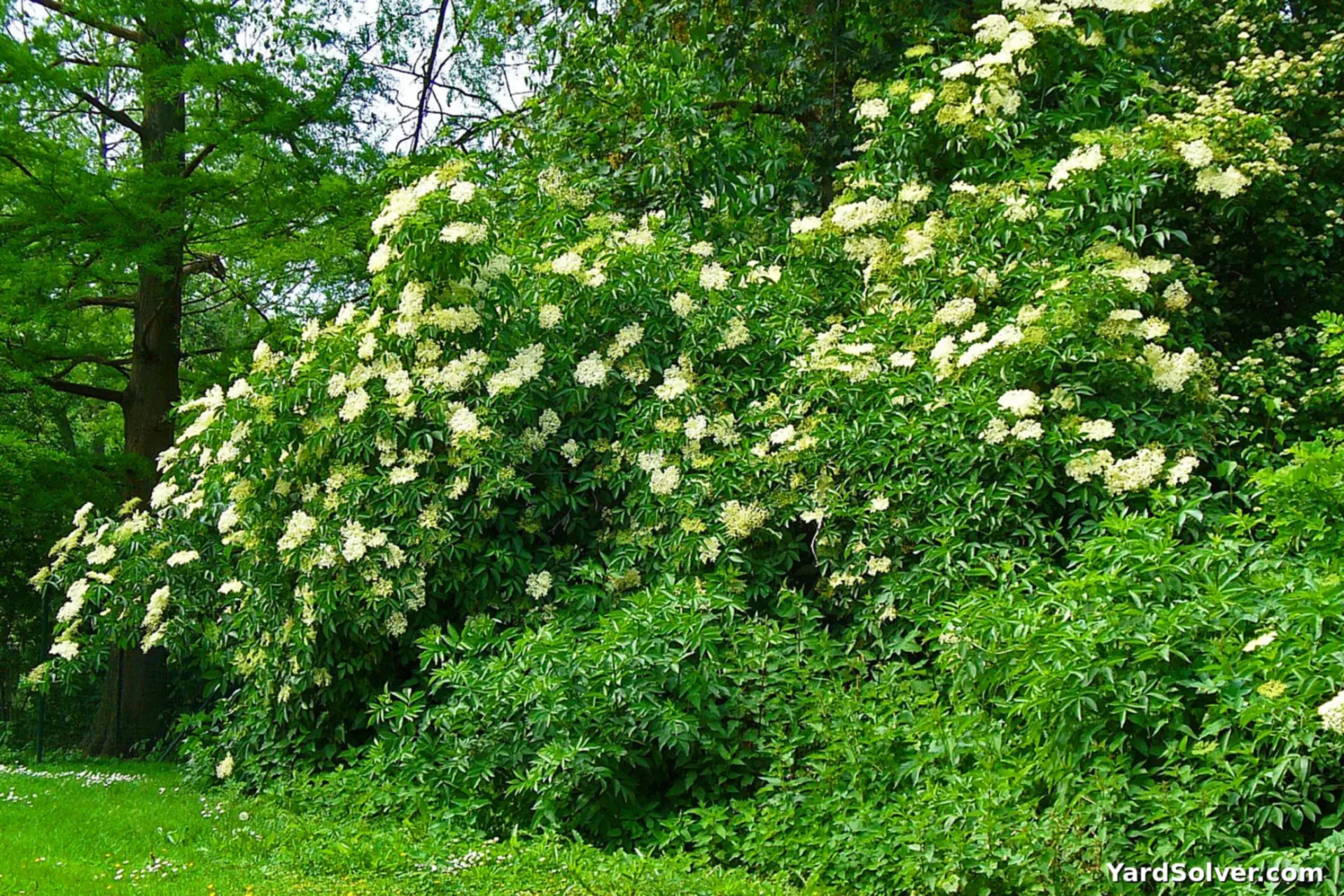
Birds — they strip ripe clusters fast; net the bushes or pick promptly. Japanese beetles — they skeletonise leaves in some regions; hand-pick into soapy water. Raw berries — never eat them raw; cook them for syrups and jellies. Spotted-wing drosophila can infest ripening fruit in some regions, another reason to pick clusters promptly as they turn fully dark. Powdery mildew sometimes whitens leaves late in the season; it rarely matters on a vigorous bush and needs no treatment beyond removing badly affected shoots.
Step 6 — Harvest
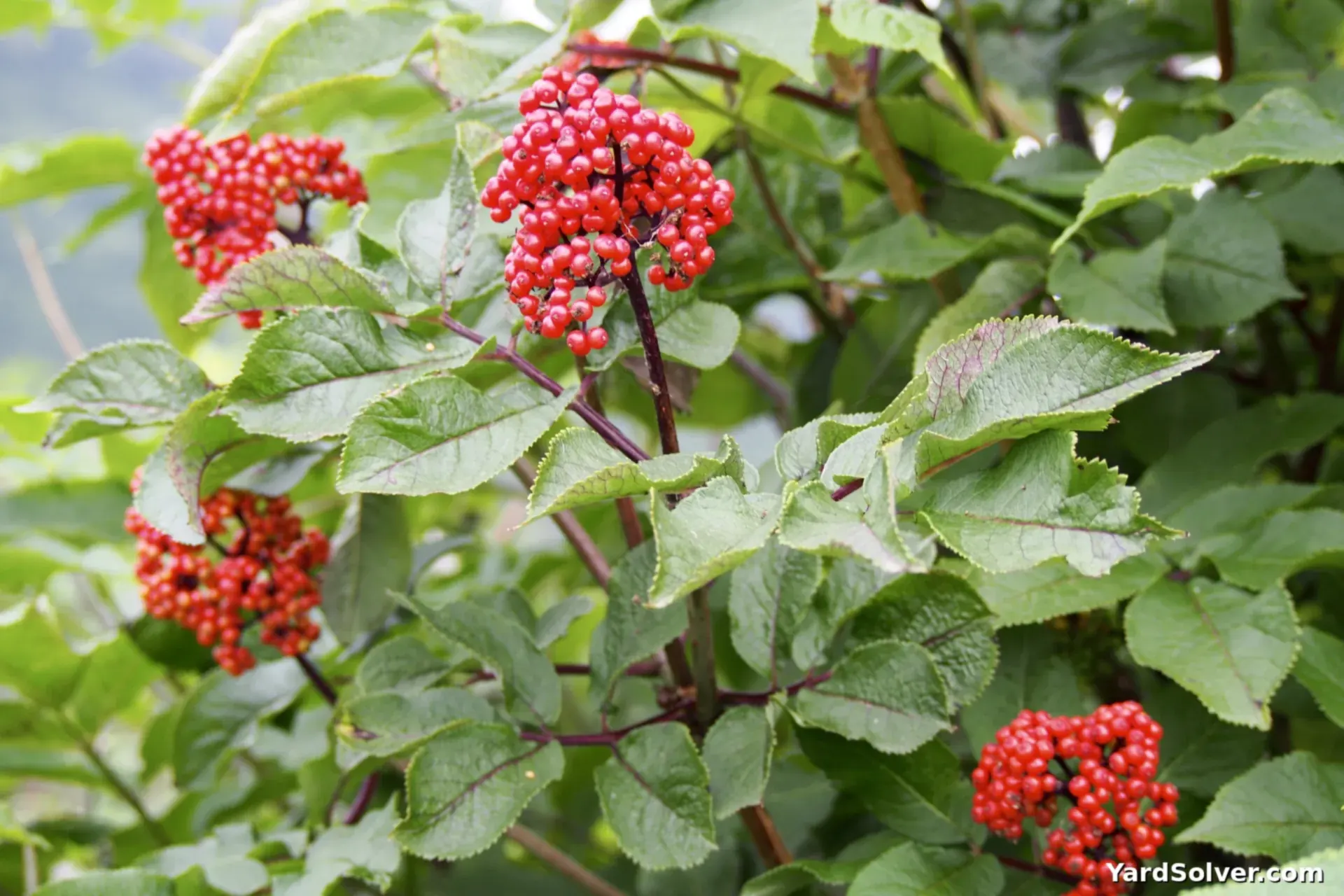
First berries in year 2–3. Cut whole clusters when the berries are fully dark, strip them with a fork, and cook before eating — always. A mature bush commonly yields roughly 12–15 lb of berries in clusters picked over 2–3 weeks, and the whole harvest is easier with two people — one cutting, one holding the bucket. Freeze clusters whole on trays, then strip the berries with a fork; frozen berries come away cleanly with far less stalk.
📅 Your personal Elderberry schedule
Everything here is counted from the day your elderberries were planted, because a fast-growing bush runs to its own clock. Your schedule picks out the few dates that matter for this plant: the deep early waterings, the spring feed, the late-winter prune of old canes, and the short, busy harvest window when clusters turn dark and the birds arrive.
Varieties worth growing
| Variety | Colour | Why gardeners like it |
|---|---|---|
| Adams | Dark purple | An old, reliable American variety — heavy clusters |
| York | Dark purple | Large berries, a good partner for Adams |
| Nova | Dark purple | An early-ripening Canadian selection |
| Black Lace | Dark purple | A cut-leaf ornamental that also fruits |
Good for you — and take care
Benefits
- Flowers AND berries — two harvests from one bush
- Tolerates wet soil where other fruit fails
- Berries are rich in antioxidants and vitamin C
- A wildlife magnet — flowers for insects, berries for birds
Take care
- ⚠️ Always cook elderberries before eating — raw berries can cause nausea.
- Remove stems before cooking — the stems are not edible.
- Cut old canes to the ground every few years to renew the bush.
Problems to watch for
- Birds — they strip ripe clusters fast; net the bushes or pick promptly.
- Japanese beetles — they skeletonise leaves in some regions; hand-pick into soapy water.
- Raw berries — never eat them raw; cook them for syrups and jellies.
A little history — and one good fact
Elder has been used in European folk medicine and kitchens for centuries — elderflower cordial in spring, elderberry wine and syrup in fall. The American elderberry is a close native cousin, now widely planted for the syrup trade.
Fun fact: In folklore, the elder was a protective tree — you asked the Elder Mother's permission before cutting it, or so the old stories say.
Keep going
Guides: How to Harden Off Seedlings · How to Read a Seed Packet
Calculators: Plant Spacing Calculator · Seed Calculator · Fertilizer Calculator · Garden Mix Calculator
Plan it: Garden Planner · Planting Calendar · Companion Planting Chart · Seed Box
← Back to the Plant Library · Get your personal planting dates
From cluster to syrup: processing elderberries safely
Raw elderberries — and the stems, leaves and unripe green berries — contain compounds that cause stomach upset, so every part of the harvest routine is built around cooking. This is the standard kitchen walkthrough:
| Step | What to do | Why it matters |
|---|---|---|
| 1. Pick | Cut whole clusters only when every berry is dark purple-black and slightly soft | Green and red berries are the most unpleasant raw and spoil the batch |
| 2. Strip | Freeze clusters on a tray for a few hours, then draw a fork through them over a bowl | Frozen berries release cleanly with the least stem attached |
| 3. Sort and wash | Pick out stem pieces and any pale berries; rinse in a colander | Stem fragments carry the same raw-berry compounds |
| 4. Cook | Simmer berries for syrup, jelly or wine — a full simmer of at least 15–20 minutes is the usual kitchen practice | Thorough cooking makes the berries safe and brings out the flavour |
| 5. Store | Bottle syrup hot, freeze cooked purée in small tubs, or dry cooked berries for winter teas | Small portions thaw fast and nothing is wasted |
Work in old clothes — elderberry juice stains a deep purple that survives many washes. A 10 lb picking makes roughly 4–5 pints of syrup once cooked and sweetened, which is why most growers plant two bushes rather than one.
Questions people ask
When do I plant elderberries?
Plant in early spring or fall. Elderberries tolerate wet soil where other fruit fails.
How far apart do I space elderberries?
Space bushes 6–10 ft apart. Sun: full sun to part shade.
When will my elderberries fruit?
First berries in year 2–3. Always cook elderberries before eating — raw berries can upset the stomach.
Do I need two elderberry varieties?
One bush fruits on its own, but two different varieties planted near each other cross-pollinate and give clearly heavier crops. Classic pairings include Adams with York, or Nova with Bob Gordon — plant them 6–10 ft apart in the same row.
How do I prune elderberries?
In late winter, remove dead and weak canes and any cane older than about 3 years at ground level — the heaviest fruit comes on 2-year-old canes. A hard renovation, cutting the whole bush down every few years, also works; it fruits again the second season after.
A wetland shrub that wants company: two varieties for pollination, and berries that must be cooked, never eaten raw
The American elderberry is a shrub of stream banks and damp ground, and it grows like one: fast, suckering, and happiest where the soil never fully dries. Planted in a dry, lean corner it survives as a shadow of itself; planted where moisture is steady it can put on two metres in a season and carry its flat white flower heads — themselves a harvest, for fritters and cordial — by early summer.
Two rules decide the fruit crop. Elderberries fruit far more heavily with a second, different variety nearby for cross-pollination, so the planting unit is really a pair. And the ripe berries, dark purple-black and soft, must be cooked before eating: raw elderberries contain compounds that cause nausea, and the traditional jams, syrups and wines all involve heat for good reason. Birds know the harvest date as well as the gardener does — netting the clusters as they colour is the difference between a crop and a donation.
The worked example: two varieties planted in moist ground, pruned by removing the oldest canes each winter and netted as the fruit colours, commonly give kilos of berries a year from the third season. The identical single shrub in dry soil typically gives flowers, a scattering of fruit for the birds, and disappointment. Elderberry is generous, but only on its own wet, sociable terms.
Sources
Key facts on this page — timing, spacing and care — cross-checked against NC State Extension Plant Toolbox — Sambucus canadensis (American elderberry) — culture, pollination, siting and care requirements and Sambucus canadensis — Wikipedia — background on the species, its fruit and traditional uses.
Related page
Read next: Native Plants: Benefits, Regional Picks & How to Grow.
Comments & ratings
No comments yet.
Be the first to share your experience.