
Guides · Seed starting · Published November 20, 2026 · By Faizan Ahmad
Best New Seed Varieties for 2027: The Award Winners Worth Ordering First

The new seed varieties worth ordering first for 2027 are the ones that have already won something in independent trials — and the headline list is short and verified: All-America Selections has named its first three 2027 National Winners, Sunflower 'Always Sunny Gold', Impatiens 'Solarscape XL Red Glow' and Vinca 'Tattoo Boysenberry', with Sakata's Zinnia 'Profusion Double White Improved' taking both the AAS award and the Fleuroselect Gold Medal, and Squash 'Green Lightning' joining the AAS vegetable winners. This guide covers each winner — what it is, what it is for, and who should grow it — plus how to build a 2027 order that mixes proven novelty with the varieties you already trust, before the February sell-outs begin.
The short answer, on one card
Order first: Sunflower 'Always Sunny Gold' (pollen-free, ~5 ft, flowers 63–77 days from sowing), Impatiens 'Solarscape XL Red Glow' (sun-tolerant impatiens, 20% larger than standard Solarscape), Vinca 'Tattoo Boysenberry' (heat- and drought-proof annual colour), Zinnia 'Profusion Double White Improved' (double gold medal winner), Squash 'Green Lightning' (40–45 days). Rule: award winners first, one packet each, slotted into a plan — novelty is a seasoning, not the whole bed.
Why award winners are the safe way to buy "new"
Every winter the catalogues land with hundreds of "new for 2027" badges, and most of those varieties are new only in the sense that the catalogue has not listed them before. Trial awards are different. All-America Selections grows entries side by side with established comparison varieties in trial grounds across North America and only names a winner when it demonstrably outperforms what gardeners already grow; Fleuroselect runs the same discipline in Europe. A variety carrying either badge has survived a season of being measured, not just marketed. That matters because the real cost of a bad variety is never the packet price — it is the bed space, the weeks, and the season. The five varieties below are the 2027 names we can verify today, each checked against the awarding bodies' own announcements rather than a catalogue's adjectives.
Sunflower 'Always Sunny Gold' — the pollen-free giant
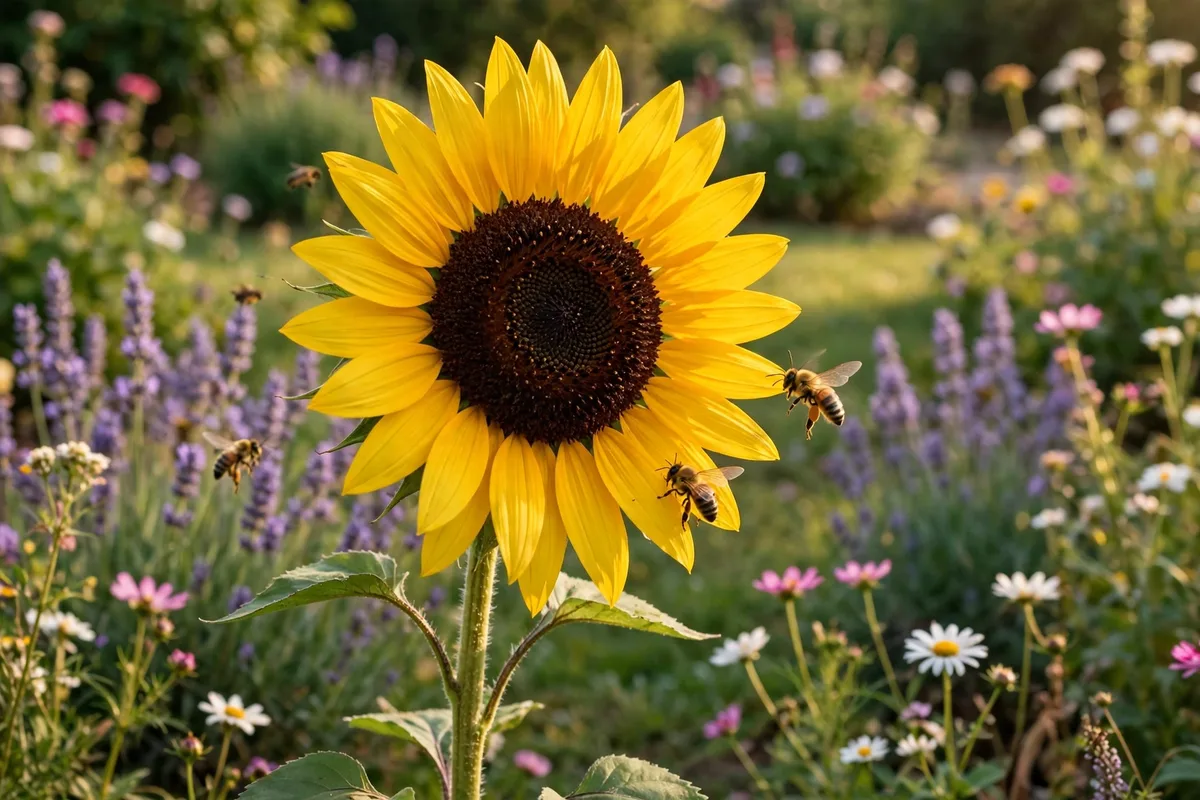
The most garden-useful of the three AAS flower winners. 'Always Sunny Gold' stands about 5 feet tall (AAS lists 36–48 inches in its trial data, with breeder reports of taller plants in rich soil) with velvet-gold petals around a deep chocolate centre — and the centre is 100% pollen-free, so cut stems come indoors without dusting the table in yellow, while the flowers still produce nectar for bees. It is naturally well branched, so there is no pinching to force multiple blooms, and AAS judges noted it outlasts comparable sunflowers by at least two weeks in flower. Days to first flower run 63–77 from sowing depending on day length, which puts a March indoor start into June bloom. Grow it where our Sunflower page puts all sunflowers: full sun, shelter from the worst wind, and soil that does not dry to dust — one plant per 20 inches in a row.
Impatiens 'Solarscape XL Red Glow' — impatiens that take sun
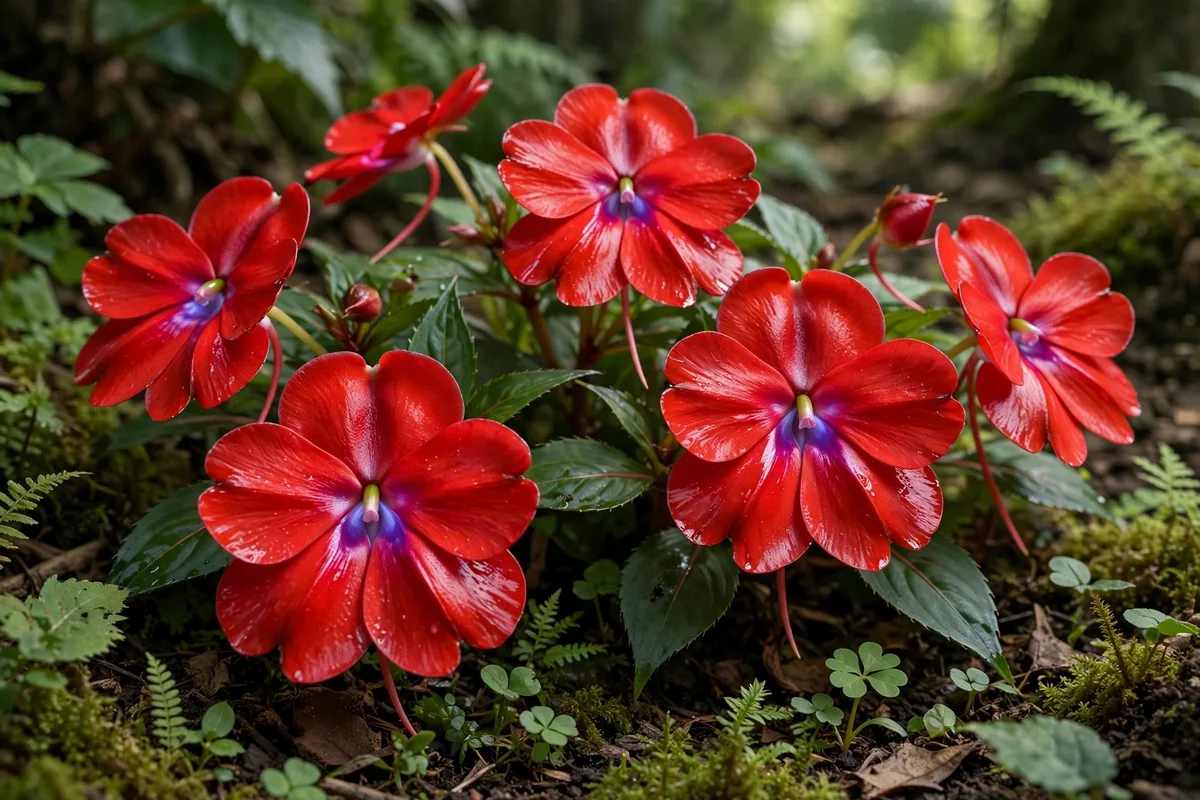
Impatiens built their reputation as shade plants, and the Solarscape series exists to break it: these are seed-grown impatiens bred to flower in full sun while keeping their shade tolerance. The XL generation runs about 20% larger than the standard Solarscape line, and 'Red Glow' carries iridescent red blooms with a glowing violet centre that judges singled out for colour quality. For the gardener, the use case is precise: the sunny bed or the row of pots by a south-facing door where bedding impatiens used to fry by July. It is a seed variety (not cuttings), so a packet raises a whole drift for the price of one nursery tray — start it indoors early, as impatiens seed is slow, and expect the same long season the series is known for, flowering until frost.
Vinca 'Tattoo Boysenberry' — colour that shrugs off heat
The third AAS winner is the one for the hottest, driest spot you own. 'Tattoo Boysenberry' flowers in a moody, velvety dark purple-red ombre with boysenberry brushstrokes that look airbrushed onto each petal — a genuinely unusual colour in annual bedding. Vinca (Catharanthus) is the plant professionals reach for when irrigation is unreliable: it thrives in full sun and stands up to heat and drought that flatten petunias by midsummer. Use it in the strip by the driveway, the pots you forget to water, the bed against a hot wall. One caution for northern gardeners: vinca is a true heat-lover, so it goes out only after nights are reliably warm, and it sulks in a cold spring rather than dying — patience, not replacement, is the fix.
Zinnia 'Profusion Double White Improved' and Squash 'Green Lightning'
Two more verified names complete the order-first list. Sakata's Zinnia 'Profusion Double White Improved' did something rare: it took both the All-America Selections award and the Fleuroselect Gold Medal for 2027 — the highest honour Fleuroselect gives — for a clean white, fully double flower on the compact, disease-resistant Profusion plant that made the series a bedding staple. White zinnias that stay white and clean into September are harder to breed than they look; this is the one to try if zinnias have ever mildewed on you. Our Zinnia page covers the spacing and deadheading that keep any of them flowering. On the vegetable side, Squash 'Green Lightning' is a new AAS national winner bred for speed — 40–45 days from sowing to first pick — which makes it the squash for short seasons and for the second, late sowing that replaces tired plants in July.
How to build the 2027 order without wasting a bed
Step 1 — Audit before you order. The most expensive seed is the packet you already own twice. Work through the box first — our Seed Stash Audit guide is the full routine — and test anything doubtful before it earns a line on the order. Step 2 — Give novelty a quota. A good rule is one bed in five, or one packet in five, for new varieties; the rest of the garden runs on varieties that have already performed for you. Award winners bend the rule a little — their trial record is exactly the evidence a new variety usually lacks — but they still have to earn a second year. Step 3 — Count the seeds, not the packets. A sunflower packet and a celery packet are different universes of plant count. The Seed Calculator turns bed lengths into seed counts with a germination allowance, so the order matches the plan instead of the catalogue's photography. Step 4 — Order in December and January. Seed houses are already running their new-for-2027 collections, and the pattern every winter is the same: the award winners and the fashionable varieties sell out first, usually by February, while the standards sit in stock until spring. Ordering early is not impatience; it is the whole strategy.
What to do when your winner sells out anyway
It happens — a variety makes a magazine list in January and is gone in a week. Three moves, in order. First, check the other country's catalogue of the same seed house and the specialist seed merchants; stock is allocated per catalogue, not per variety. Second, take the comparison variety the trial used: AAS publishes the close market comparison for each winner (for 'Red Glow' it is the earlier winner 'Solarscape Pink Jewel'), and a proven comparison is a better buy than a random substitute. Third, write the sold-out variety at the top of next year's list and order it the week the catalogue opens — sell-outs repeat, and the second-year gardener is the one who planned for it.
The 2027 winners, matched to the job
| The job in your garden | The 2027 variety | Why it wins the spot |
|---|---|---|
| Cut sunflowers without the pollen mess | 'Always Sunny Gold' | 100% pollen-free centre, branched, two weeks longer in flower |
| Impatiens in a sunny bed or hot pots | 'Solarscape XL Red Glow' | Bred for sun, 20% larger than the standard Solarscape line |
| The driest, hottest strip you own | 'Tattoo Boysenberry' vinca | Heat- and drought-proof colour where petunias fail |
| White bedding that stays clean to September | 'Profusion Double White Improved' | The year's only double award winner — AAS plus Fleuroselect Gold |
| A squash for a short season or a late sowing | 'Green Lightning' | 40–45 days from sowing to first pick |
One last discipline for the order itself: buy the seed, not the story around it. Every variety above earned its place in a trial ground, measured against varieties gardeners already grow — and that is the only kind of "new" worth paying a premium, a bed, or a season for. Everything else in the catalogue marked new for 2027 may be excellent, but it is asking you to run the trial yourself, in your soil, at your expense. Run one or two of those experiments a year by all means — that is how next year's proven list gets written — but run them as experiments, in the novelty quota, with the award winners carrying the beds you cannot afford to lose.
Keep going
Slot the new varieties into real beds and dates in the Garden Planner — a winner without a sowing date is just a pretty packet.
Go deeper with the Seed Stash Audit before you order, the January seed-starting list for what these varieties' neighbours need, and the plant pages for Sunflower and Zinnia. Count every packet with the Seed Calculator.
Sources
Variety facts verified against the awarding bodies: All-America Selections — Sunflower 'Always Sunny Gold' (height, spacing, 63–77 days to flower, pollen-free centre) and AAS — Impatiens 'Solarscape XL Red Glow'; the three-winner announcement in Greenhouse Grower — 3 New AAS Winners Announced for 2027; Zinnia 'Profusion Double White Improved' double award per Sakata's announcement of the Fleuroselect Gold Medal and AAS award for 2027.
Questions people ask
What are the AAS winners for 2027?
All-America Selections' first three 2027 National Winners — all bred by PanAmerican Seed — are Impatiens 'Solarscape XL Red Glow', Sunflower 'Always Sunny Gold' and Vinca 'Tattoo Boysenberry', all seed varieties. Sakata's Zinnia 'Profusion Double White Improved' also won an AAS award plus the Fleuroselect Gold Medal, and Squash 'Green Lightning' is a 2027 AAS vegetable winner.
When should I order 2027 seeds?
December and January. Seed houses open their new-for-2027 collections in winter, and the award winners and fashionable varieties reliably sell out first — often by February — while standard varieties stay in stock. Ordering early is how you get the new names at all.
Is Sunflower 'Always Sunny Gold' really pollen-free?
Yes — AAS lists it as 100% pollen-free, with a deep chocolate centre that still produces nectar for bees. Pollen-free means no yellow dust on the table from cut stems; it does not mean the flower is sterile or useless to pollinators.
How many new varieties should I try each year?
A workable rule is about one packet in five, or one bed in five, given to new varieties, with the rest of the garden on proven performers. Award winners are the safest novelties because independent trials have already compared them against established varieties.
What if the variety I want has sold out?
Check the same seed house's other catalogues and specialist merchants first — stock is allocated per catalogue. Then buy the published comparison variety (AAS names one for each winner; it is a proven performer by definition). Finally, put the sold-out variety at the top of next year's list and order in the first week.
Are new varieties always better than old ones?
No. Most 'new' catalogue entries are simply new to that catalogue. Trial awards are the filter that matters: an AAS or Fleuroselect winner has beaten established varieties in independent side-by-side trials, which is evidence — the rest is packaging.
Comments & ratings
No comments yet.
Be the first to share your experience.