
Guides · Seed starting · Published November 20, 2026 · By Faizan Ahmad
Seed Stash Audit: Test, Sort and Plan Your Seeds Before You Order More
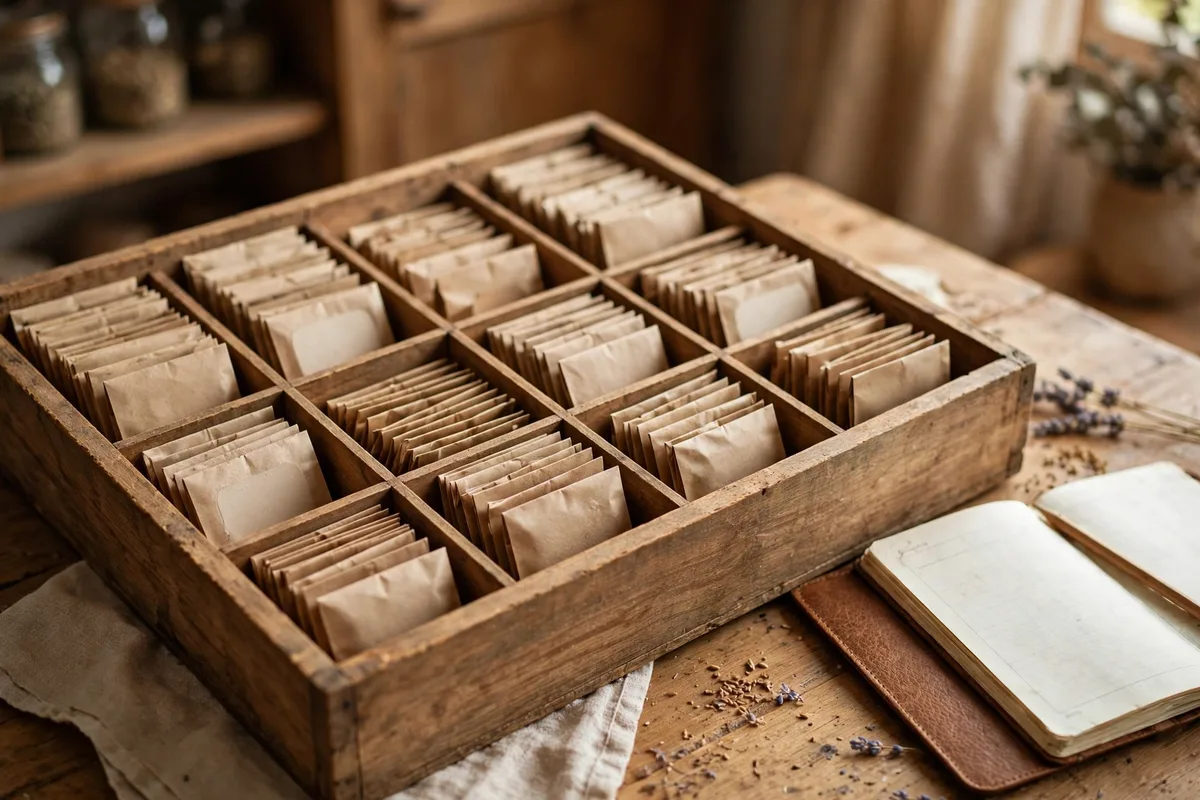
A seed stash audit takes 45 minutes and saves real money: dump every packet in one place, check each crop against its viability life — onion and parsnip seed are usually dead after 1–2 years while tomato seed lasts 4–6 — run the 10-seed germination test on anything doubtful, and only then write the order list. Most gardeners skip the audit and order in January from memory, which is how the box ends up with three packets of the same cucumber and a parsnip packet from four winters ago that will never grow. This guide is the full routine: the viability table, the test, the sort, the storage reset, and how the results feed your sowing rates and your order — so the stash becomes a plan instead of a drawer of good intentions.
The short answer, on one card
Step 1: dump it all — every packet, envelope and saved-seed jar in one pile. Step 2: sort by crop and check the year against the viability table; bin the hopeless. Step 3: germination-test the doubtful (10 seeds, damp paper, count in a week). Step 4: write the order list from the gaps, not the catalogue. Step 5: store the keepers airtight, cool, dry and dark — and record them so next year's audit takes ten minutes.
Step 1–2: The dump and the viability sort
Empty everything onto a table: the seed box, the kitchen drawer, the envelopes of saved seed, the packets in the shed that have been through a summer of heat (those are already suspect — heat is seed's fastest killer). Sort by crop, and within each crop by year. Then apply the viability table. Seed life is a property of the crop, not the packet: some seeds are sprinters, built to germinate the season they are made and dead within two years; others are marathoners that outlast the gardener's memory of buying them. The extension guidance is consistent — Alabama Extension's seed-viability notes and commercial germination guides agree on the shape of the table even where a year differs at the edges.
| Short-lived (1–3 years) | Medium (3–5 years) | Long-lived (5+ years) |
|---|---|---|
| Onion, leek (1–2) | Beans, peas (3–4) | Cucumber, squash (5–6) |
| Parsnip (1–2) | Carrot (3) | Lettuce (5–6) |
| Parsley (1–2) | Pepper (2–3, test early) | Brassicas (4–5) |
| Sweet corn (2–3) | Tomato (4–6) | Beetroot, chard (4–5) |
Anything past its crop's life is not automatically bin material — storage conditions bend the table both ways — but it is automatically test material, and anything two years past is presumed dead until a test says otherwise. Our Are Old Seeds Still Good? guide goes crop by crop through the borderline cases, including why Parsnip seed in particular should simply be bought fresh every year.
Step 3: The 10-seed germination test
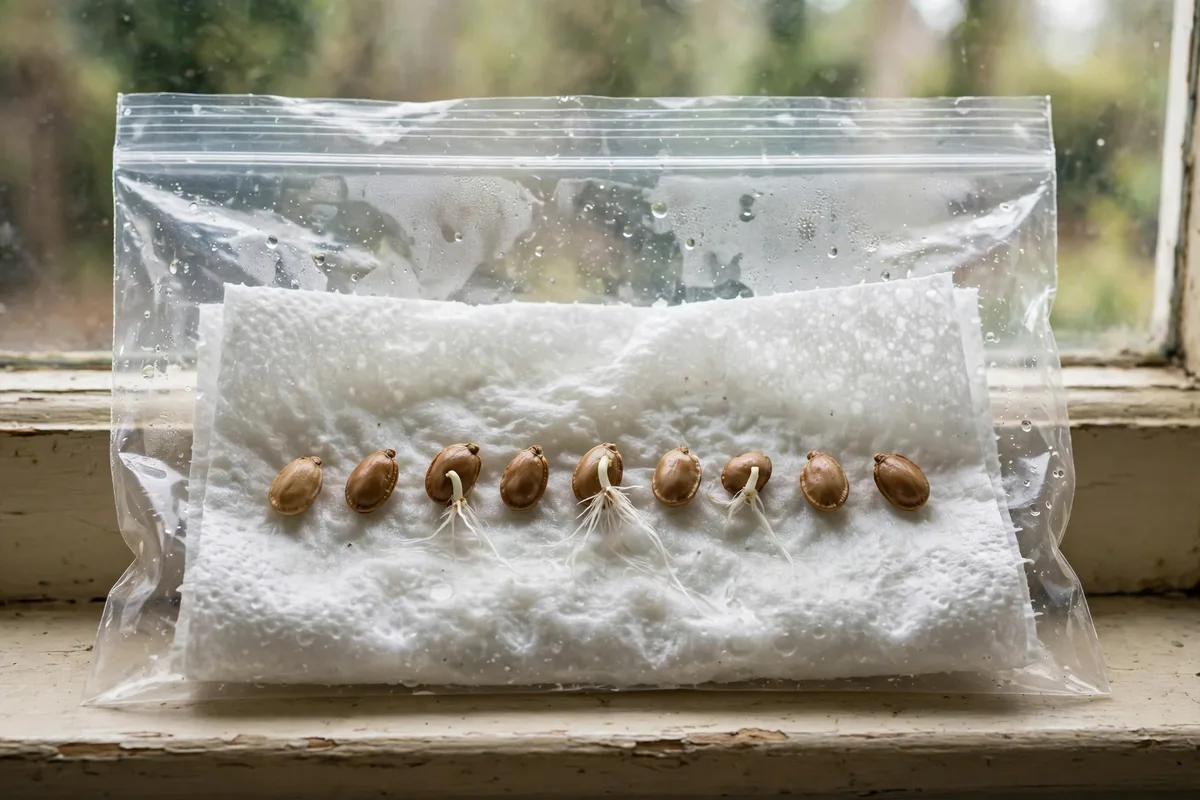
For every doubtful packet, the test is the same and takes a week of doing nothing. Count out 10 seeds, spread them on damp (not dripping) paper towel, fold or roll the towel, seal it in a labelled plastic bag, and put it somewhere warm and steady — an airing cupboard or the top of the fridge. Check from day three; count the sprouted seeds when the crop's normal germination window has passed. The count is the percentage: 8 of 10 sprouted is 80% germination, which is a perfectly sowable packet if you sow a quarter thicker to compensate — and the Seed Calculator takes that percentage as an input and corrects the sowing rate for you. Below 50%, the packet is a liability: weak seeds that do sprout often grow weakly, and a failed row costs more in lost weeks than a fresh packet costs in money. Bin it and write the variety on the order list while the decision is fresh. One test per variety per year is enough — write the result and the date on the packet in pencil, and next winter's audit starts from evidence.
Step 4: The order list, written from the gaps
Now — and only now — the catalogue opens. The audit has produced three lists: keepers (tested or in-date), the bin, and the gaps: crops you grow whose seed is dead, finished, or was never bought. The order list is the gaps list plus your deliberate novelties — for this season, the verified award winners in our 2027 varieties guide — and nothing else. This is the step that pays for the audit: the typical pre-audit order duplicates two or three varieties already in the box and forgets the one crop (parsnip, every time) whose seed actually expired. Check the keepers against the plan in the Garden Planner before ordering, too — a packet of a crop with no bed planned is not a keeper, it is next year's clutter, and it belongs on the swap pile, not in the box.
Step 5: The storage reset
Seed dies from heat, moisture and light, in that order — so the storage rule is the reverse: cool, dry, dark, and airtight. The keepers go into a sealed box or jar (a sachet of silica gel or a spoonful of dry rice keeps the air inside dry), the box goes to the coolest stable spot in the house — not the shed, whose summer heat and winter damp are the two fastest seed killers you own — and each packet carries its year and, where tested, its percentage. Record the final inventory where you will actually look for it: our My Seed Box tool holds the list, or a notebook page taped inside the box lid does the same job. Saved seed gets one extra rule: only save from your best plants, dry it fully before sealing (a week on paper in a warm room), and label it with the year and the plant it came from — our tomato seed saving guide has the ferment-and-dry method that makes saved tomato seed as reliable as bought.
A worked example: one real audit
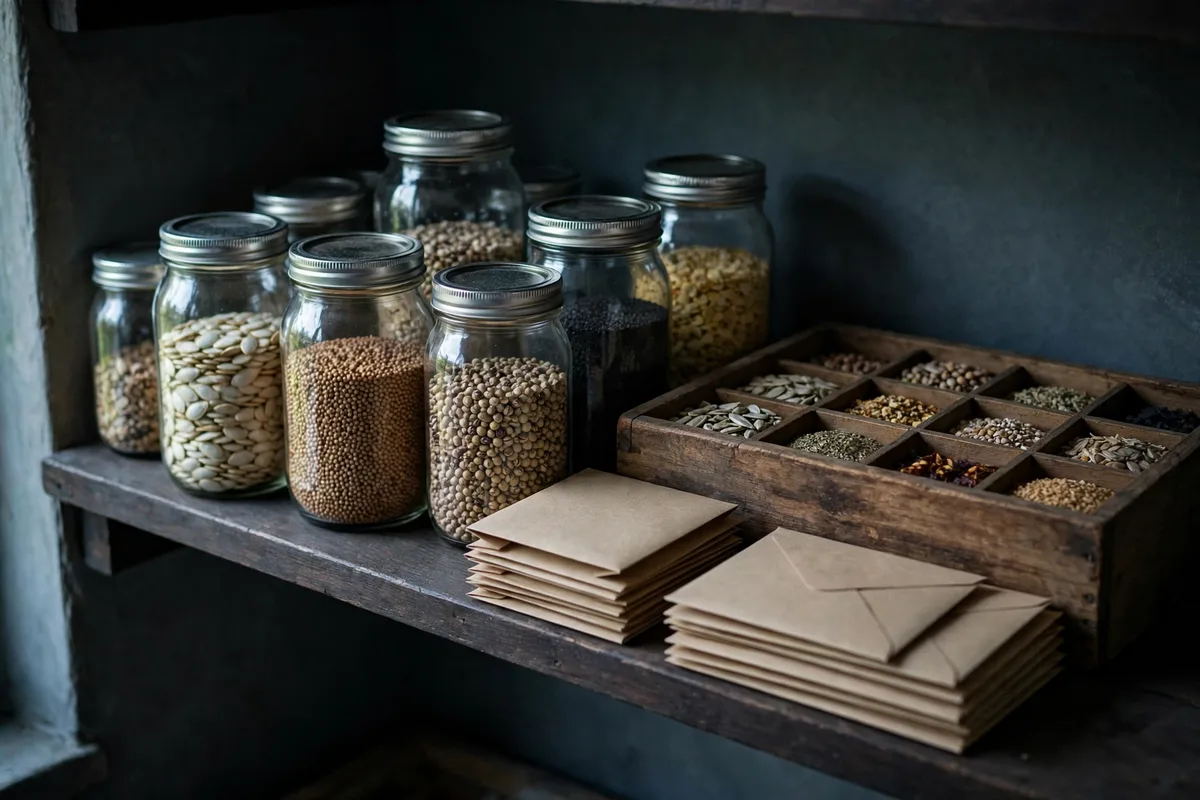
A typical January box, audited honestly, looks like this. Forty-one packets go on the table. Six are binned on sight: parsnip from three winters ago, two onion packets past two years, a sweet corn packet from a shed summer, lettuce with no year written on it (no year means no trust), and a saved-bean envelope that smells of damp. Four packets go to the test tray — tomato (year four, sprouts 9 of 10: a keeper, sowed at the normal rate), pepper (year three, 5 of 10: borderline, kept for one thick-sown tray with a fresh packet ordered as insurance), carrot (year three, 7 of 10: keeper, sow thicker), and cucumber (year five, 10 of 10: the marathoner proves the table). Three duplicates surface — two unopened cucumbers and a second courgette — and move to the swap pile. The order list that results has five lines on it, two of which (parsnip, onion) would never have been ordered without the audit, and three of the catalogue's temptations are missing from it because the box already holds them. That is the audit's whole economics: forty-five minutes, five correct orders, and a sowing season that starts from seed you have verified with your own hands.
Saved seed and swaps: the audit's second pass
Two corners of the stash deserve their own rules. Saved seed — your own envelopes and jars — gets tested without exception, however fresh it feels, because home drying is the variable no table can price: seed sealed a day too early carries its own moisture into the jar and dies quietly by spring. Label discipline matters more here than anywhere — variety, year, and the plant it came from — because an unlabelled envelope of tomato seed is a lottery ticket, not an asset. Save only from open-pollinated varieties if you want the seedlings to resemble the parent; seed from F1 hybrids grows into something else, sometimes interesting, never the variety on the jar. Swap seed — the duplicates the audit surfaced, plus anything from seed swaps and friends — is audited on arrival, not on trust: check the year, run the 10-seed test on anything unlabelled or old, and quarantine the lot from your main box until it has passed. Swaps are how rare varieties travel and how stale seed circulates; the audit treats incoming seed exactly like the seed already in the box, which is to say, kindly and sceptically. Both passes take ten minutes inside the main audit — and they are the difference between a stash that is an asset and a stash that is a rumour.
Keep going
Record the audited inventory in My Seed Box — next January's audit then starts from the list instead of the drawer.
Go deeper with Are Old Seeds Still Good? for the crop-by-crop borderline cases, What Seeds to Start Indoors in January for what the keepers do next, and How to Save Tomato Seeds for next year's saved seed. Correct every sowing rate with the Seed Calculator.
Sources
Viability periods and the germination-test method follow Alabama Cooperative Extension — Are Your Seeds Still Good? (seed life varies by crop; the paper-towel germination test with a 10-seed count) and the crop germination reference at Nourse Farms — Seed Germination Guide. Storage rule (cool, dry, dark, airtight) is the standard extension advice summarised in both.
Questions people ask
How long do vegetable seeds last?
It depends on the crop. Onion, leek, parsnip and parsley seed are short-lived — usually 1–2 years. Beans, peas and carrots last about 3 years, tomato 4–6, and cucumber, squash, lettuce and brassicas 5 years or more. Storage bends the numbers: cool, dry and dark extends life; a hot shed shortens it sharply.
How do I test if old seeds are still good?
The 10-seed test: spread 10 seeds on damp paper towel, fold it, seal it in a labelled bag and keep it warm. Count the sprouted seeds after the crop's normal germination window. The count out of 10 is your germination percentage — 70% or above sows fine with a slightly thicker rate; below 50%, replace the packet.
Can I sow seed with 50% germination?
You can compensate by sowing thicker — roughly double at 50% — and a seed calculator can adjust the rate exactly. But below 50% the better buy is a fresh packet: weakly germinating seed often grows weakly, and a failed row costs weeks that money cannot buy back in season.
Where is the best place to store seeds?
In an airtight box or jar with a silica sachet, in the coolest, driest, darkest stable spot in the house. Not the shed — summer heat and winter damp are the two fastest seed killers — and not the fridge door, whose temperature swings at every opening.
Why does parsnip seed never grow from last year's packet?
Parsnip seed is one of the shortest-lived of all vegetable seeds — often a single season. Even well-stored, year-old parsnip seed germinates poorly and erratically. The professional habit is simple: buy parsnip seed fresh every year and sow it generously.
What do I do with duplicate packets?
Keep the freshest, and move the duplicates to a swap pile for seed swaps, school gardens or friends — unopened in-date seed is a gift, not clutter. Just do not let duplicates sit in the box pretending to be inventory; record only what you will actually sow.
Comments & ratings
No comments yet.
Be the first to share your experience.