
Guides · Home projects · Published November 18, 2026 · By Faizan Ahmad
Board Feet, Explained: How the Calculator Counts Your Lumber
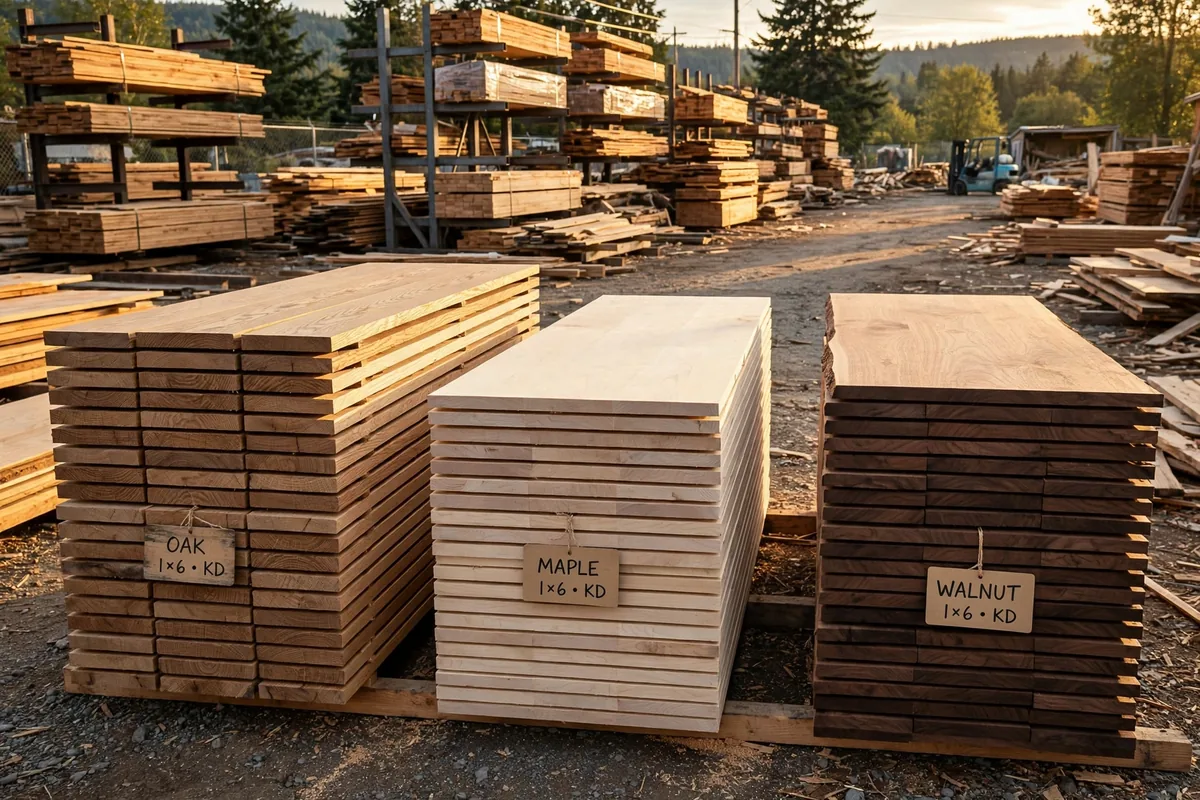
Walk into a hardwood yard with a cut list and the first surprise is the language: nothing is priced by the board. The tally slip speaks in board feet, a unit of volume most of us never met in school, and if you cannot follow the count you cannot tell a fair bill from a padded one. The good news is that the whole system rests on one short multiplication, and it is exactly what our Board Foot Calculator runs for you. This guide shows how the calculator works, the maths underneath it, and the one trap that catches nearly every first-time buyer: the size printed on the tag is not the size of the board in your hands. By the end you will be able to check any yard's tally against your own numbers, board by board.
The short answer, on one card
- The formula: thickness (in) × width (in) × length (ft) ÷ 12 = board feet, per board — then multiply by how many boards
- One board foot is 144 cubic inches of wood — a board 1 inch thick, 12 inches wide and 1 foot long. Twelve board feet make one cubic foot
- Same formula, other form: if your length is in inches, divide by 144 instead of 12 — the answer is identical
- The nominal trap: a construction 2x4 really measures 1.5 × 3.5 inches, so an 8 ft board holds 3.5 board feet of actual wood, not the 5.33 the tag numbers suggest
- Add 10–15% on rough lumber for milling and defects — and always price the size the yard actually charges for
Step 1 — Measure the board: thickness, width, length
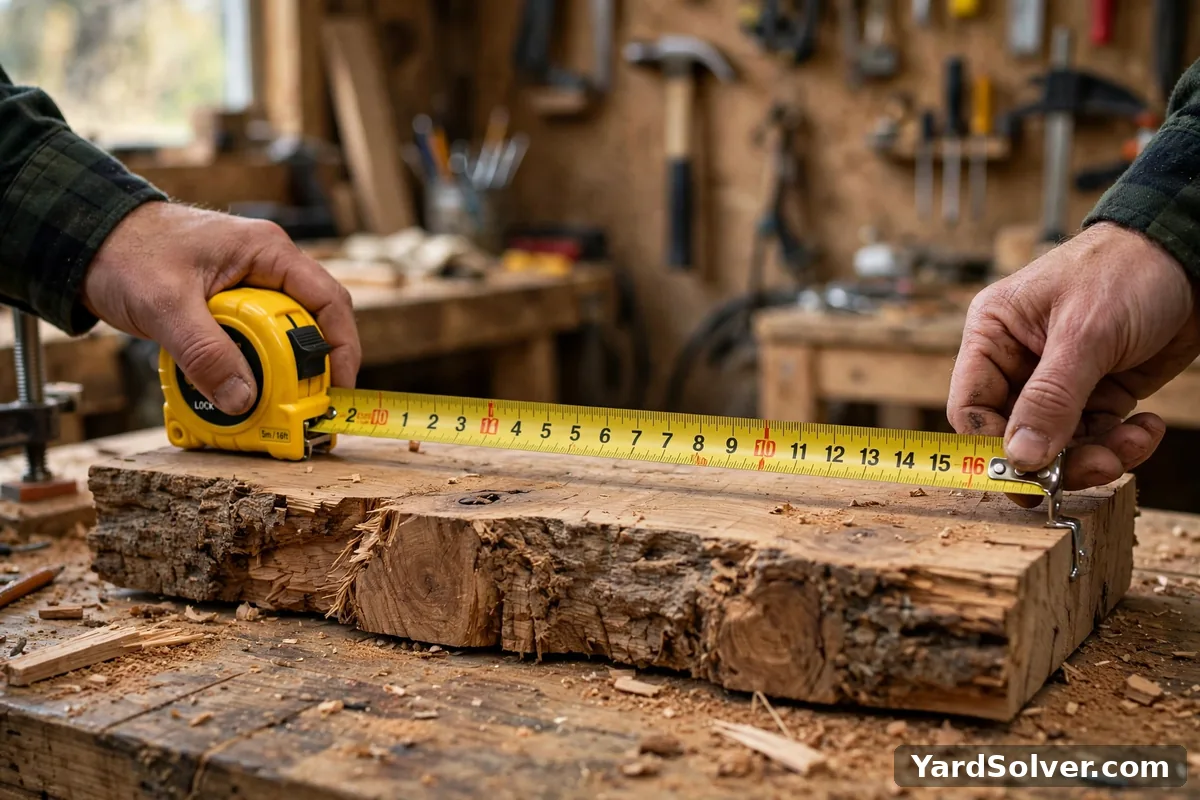
The calculator needs three numbers for each board size on your list. Thickness and width are measured in inches; length is measured in feet. That mixed-unit habit is not carelessness — it is how lumber has been traded for over a century, and the formula in Step 3 is built to swallow the numbers exactly as the tape gives them. Two measuring habits matter more than precision. First, measure hardwood as it stands in the rack, rough face and all: hardwood is tallied on its rough, as-sawn size, so a board sold as 4/4 (pronounced "four-quarter", about 1 inch rough) counts as a full inch even though surfacing will later bring it nearer 3/4 inch. Second, measure the width of the actual board you are taking, not the width you wish it were. Hardwood comes in random widths, and the yard charges for every inch of the board that leaves with you — including the wavy edge you will joint away at home. Length is the easy one: boards are sold by the foot, and a part-inch of length is normally rounded by the yard's own tally rules, which is one more reason your home count and the yard's count can differ by a whisker without anyone cheating.
Step 2 — Run the calculator: what each input does
Open the Board Foot Calculator — lumber volume and cost from your cut list and type in the thickness, width and length from Step 1, then how many boards of that size you need. The quantity box counts identical boards only, and that is deliberate: a real cut list is several sizes, so run each size separately and add the totals, exactly the way a yard tallies a mixed pile line by line. Next, pick the wood — pine, oak, maple or walnut — and your country, Canada or the USA. Watch what those two choices do and do not change. They never touch the board foot total, because volume is volume in any species. What they change is the price: the calculator multiplies your total by the typical per-board-foot range for that species in your country, so switching from walnut to oak shows up as a smaller bill for the same project, not a smaller pile of wood. The answer comes back as board feet per board, the total across all your boards, and the estimated cost range. Press the print button and you have the list to carry into the yard — written in the yard's own language.
Step 3 — The maths the calculator is doing
There is no hidden model here — the calculator runs the same volume maths the yard runs, and you can check it on the back of the tally slip. Board feet = thickness (in) × width (in) × length (ft) ÷ 12. Why divide by 12? Because one board foot is defined as 144 cubic inches — a slab 1 inch thick, 12 inches wide and 12 inches long. When the length is already in feet, one of those twelves is folded into the length itself, leaving a single ÷ 12. Measure the length in inches instead and the same formula reads thickness × width × length (in) ÷ 144. The two forms are not two methods; they are one method wearing two units, and they agree to the decimal: a 1 × 8 board, 6 ft long, is 1 × 8 × 6 ÷ 12 = 4 board feet, and in inches it is 1 × 8 × 72 ÷ 144 = 4 board feet. Why price wood by volume at all? Because a yard sells wood itself, not board-shaped objects. Two boards of the same length can hold twice the wood of each other if one is wider or thicker, and a per-piece price would either rob the yard on the big boards or rob you on the small ones. Volume pricing makes a skinny board and a fat board cost what the wood in them is worth — and it is why species changes the price per board foot rather than the count: you are paying for a volume of oak, not for "a board". The table below is the formula pre-run on common sizes, with the honest second column Step 4 explains.
| Board (nominal size × length) | Board feet at nominal size | Board feet at actual dressed size |
|---|---|---|
| 1×6 × 8 ft | 4.00 | 2.75 (actual 0.75 × 5.5 in) |
| 2×4 × 8 ft | 5.33 | 3.50 (actual 1.5 × 3.5 in) |
| 2×4 × 12 ft | 8.00 | 5.25 (actual 1.5 × 3.5 in) |
| 2×6 × 10 ft | 10.00 | 6.88 (actual 1.5 × 5.5 in) |
| 2×8 × 12 ft | 16.00 | 10.88 (actual 1.5 × 7.25 in) |
| 1×12 × 8 ft | 8.00 | 5.63 (actual 0.75 × 11.25 in) |
Read the table the way the calculator thinks: every row is the same multiplication, and doubling any one dimension — or the number of boards — doubles the answer. Keep the two columns apart in your head. The nominal column is the counting size, the one most construction lumber is billed on. The actual column is the wood physically in your hands after the mill planed the board smooth. Step 4 is about what happens when the two get mixed up.
Step 4 — The nominal-size trap
Here is the trap, stated plainly: a 2x4 is not 2 inches by 4 inches. It starts life that size at the saw, then it is dried and planed smooth, and what reaches the store measures about 1.5 × 3.5 inches. The name never changed — "2x4" is the nominal size, the board's trade name — but the wood shrank by a quarter in each direction. Run both sizes through the formula for an 8 ft board and the gap stops being abstract. Nominal: 2 × 4 × 8 ÷ 12 = 5.33 board feet. Actual: 1.5 × 3.5 × 8 ÷ 12 = 3.5 board feet. Same board, two honest numbers, and a difference of more than a third. Neither number is a lie; they answer different questions. The actual number tells you the volume of wood you can build with — the number that matters when you are checking whether a shelf board is really thick enough. The nominal number is the one construction lumber is conventionally billed on, so it is often the number on the tally. The trap springs when you mix them: estimating a project in actual sizes while the yard bills in nominal ones leaves you a third short on budget, and the reverse leaves you wondering why the bill looks padded when it is not. The defence is one sentence at the counter, asked before the tally starts: "Are you counting that at nominal or actual size?" Then enter into the calculator whichever size the yard is actually charging for, and your estimate and their bill will finally be counting the same board. Hardwood buyers meet the same trap in a different coat: a 4/4 board is billed as a full inch thick while its surfaced face measures nearer 3/4 inch — fair, because you genuinely receive the rough board and the planing loss is yours, but your project's finished dimensions must be planned around the smaller number.
Step 5 — A whole project, worked start to finish
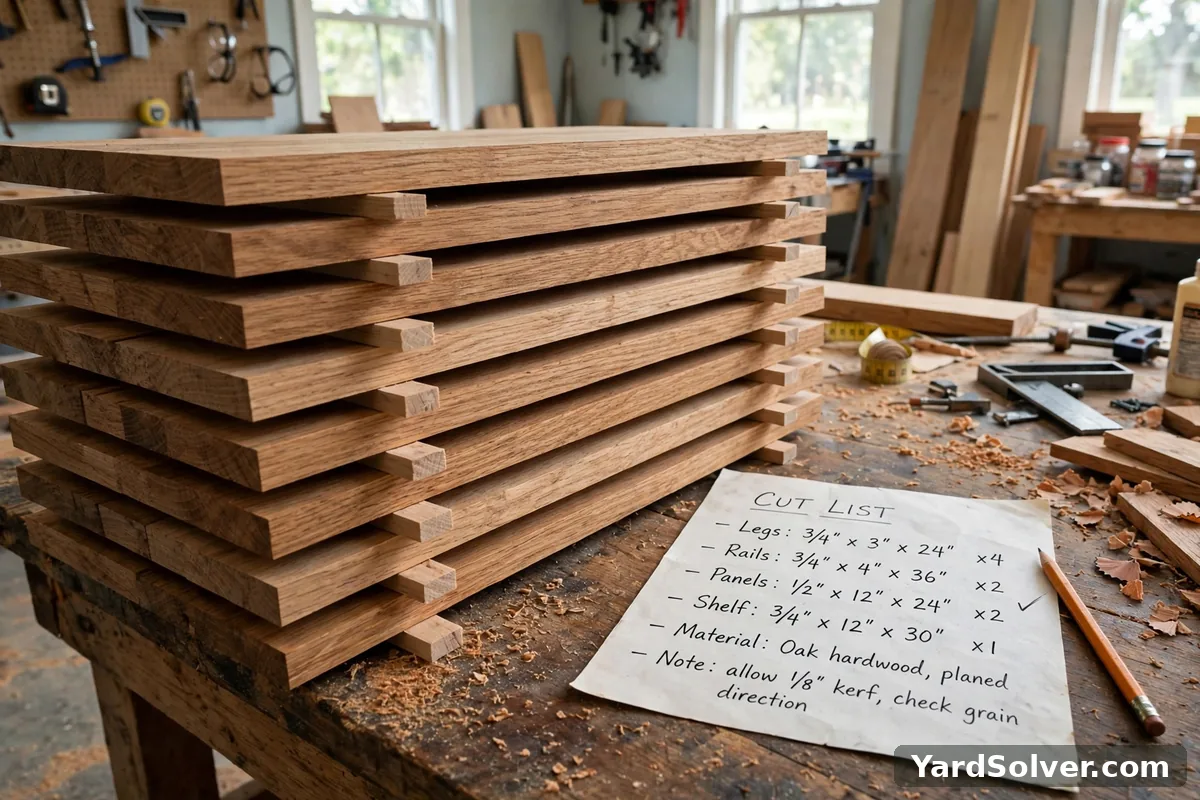
Here is one complete project, done the way the calculator does it. You are building a small oak bookshelf, and the cut list calls for 8 boards, each 1 inch thick, 8 inches wide and 6 feet long. One board first: 1 × 8 × 6 ÷ 12 = 4 board feet. Then the quantity: 4 × 8 boards = 32 board feet — that is the wood in the finished bookshelf's parts, before a single cut is made. Then the allowance: rough boards need jointing and planing before they are furniture, and some wood is always lost to knots, checks and the ends you square off, so yards commonly suggest adding 10 to 15% for milling and defects. At the careful end of that range, 32 × 1.15 = 36.8, so plan to buy about 37 board feet. Then the price: the calculator multiplies those 37 board feet by the typical per-board-foot range for oak in your country — change the species to pine and the 37 stays exactly the same while the cost falls; change it to walnut and the cost climbs. That separation is the whole point of counting in board feet: quantity is geometry, price is species, and the two never contaminate each other. When the shelf is built and the offcuts are stacked, the boards' next job in a bigger project is easy to size too — if those boards were headed for a deck instead of a bookshelf, How Many Deck Boards Do I Need? counts them by coverage rather than by volume.
Step 6 — Fences, mixed lists, and the log question
Most real projects are not one size repeated. A fence, for instance, mixes posts, rails and pickets, each with its own dimensions. The method does not change: run each size through the calculator separately and add the board foot totals, never average the sizes into one imaginary board — averaging quietly undercounts the fat pieces and overcounts the thin ones. If the fence itself is still being sized, the Fence Calculator — posts, rails and pickets for your fence line builds that lumber list from the fence's length and style, and this calculator then prices the hardwood pieces on it by volume. One question the searches behind this guide ask constantly deserves a straight answer: board feet in a log. A standing log is not a board, so the ÷ 12 formula does not apply to it directly. Mills estimate a log's yield with log rules — Doyle, Scribner and International are the common three — which start from the log's small-end diameter inside the bark and its length, and deliberately allow for the slabs and sawdust a saw removes. The three rules give three different answers for the same log, and local custom decides which one a sale uses. Our calculator counts sawn lumber, the wood you can measure with a tape; if someone offers you a log priced by the board foot, ask which rule produced the number before you agree it is a bargain.
What the calculator can't do
Honesty about the edges, so the number earns your trust. The calculator counts the sizes you type: it cannot know whether your yard tallies nominal or actual sizes, rounds each board up to the next quarter board foot, or measures width to the nearest inch — all common, all legitimate, and all capable of moving a tally a few percent. Ask, then type the yard's basis. It cannot see the boards: bow, twist, cup and end splits are yours to inspect for, and a warped board holds its full board feet on the slip while holding far less usable wood. Sight down every board before it joins your pile. It cannot choose your allowance for you — 10% suits clean, straight stock and simple cuts, 15% suits rough, knotty stock and fussy grain matching, and a first project with no spare boards argues for the higher figure. And its costs are typical per-board-foot ranges by species and country, not quotes: a yard's grade, stock and sale week can land outside them in either direction. What it does guarantee is the count itself, checked above in both forms of the formula: get the three measurements and the counting basis right, and the board feet follow.
Cutting that lumber into a raised bed once it is home? The bed's fill is a separate count — and slotting the build into the season is what the Garden Planner is for.
Keep going
Run your own cut list through the Board Foot Calculator, then see where the boards end up with How Many Deck Boards Do I Need? and build the other big lumber list with the Fence Calculator.
Planning the whole season's projects? The Garden Planner lays out building, planting and feeding in one calendar.
Questions people ask
What is a board foot?
A board foot is a unit of lumber volume: 144 cubic inches of wood, the amount in a board 1 inch thick, 12 inches wide and 1 foot long. Any board holds thickness (in) × width (in) × length (ft) ÷ 12 board feet, so a thicker, wider or longer board simply holds more of them. Twelve board feet make one cubic foot.
How many board feet in a 2x4?
By the nominal size on the price tag, an 8 ft 2x4 holds 2 × 4 × 8 ÷ 12 = 5.33 board feet. By the board's real, planed size of 1.5 × 3.5 inches, the same board holds 1.5 × 3.5 × 8 ÷ 12 = 3.5 board feet of actual wood. Which number you pay on is the yard's rule — ask before the tally, not after.
Why does the yard add 10-15%?
That allowance is not a fee — it covers the wood that never reaches your project. Rough boards lose material to jointing and planing, and more is lost to knots, splits, checks and squaring the ends. On rough hardwood, 10-15% over your cut-list total is the normal planning allowance; straight, clean stock needs the low end, knotty stock the high end.
Board feet vs linear feet — what is the difference?
A linear foot measures length only: an 8 ft board is 8 linear feet whatever its thickness or width. A board foot measures volume, so thickness and width count too. Eight linear feet of 1x6 is 4 board feet, while eight linear feet of 2x6 is 8 board feet — same length, twice the wood, and roughly twice the price at a per-board-foot yard.
Should I enter nominal or actual sizes in the calculator?
Enter the size the yard is charging you for. Hardwood is tallied on its rough, as-sawn size, so a 4/4 board counts as a full 1 inch even after surfacing brings it nearer 3/4 inch. Construction lumber is priced on its nominal size at most yards. If you enter the planed size when the yard bills the nominal size, your estimate will come in low every time.
Does the wood species change how many board feet I need?
No. Species changes the price per board foot, never the quantity. Thirty-two board feet is 32 board feet in pine, oak, maple or walnut — the calculator keeps the same total and simply multiplies it by the typical price range for the species and country you pick. That is why the cheapest way to cut a lumber bill is often a species change, not a smaller project.
A board foot is a volume, not a length — 144 cubic inches of wood, however it is arranged
Lumber is sold by volume because a plank's usefulness is its wood, not its footprint: one board foot is a piece one foot long, one foot wide and one inch thick, and every other size is converted to that unit before pricing. The trap for beginners is nominal versus actual size — the 'two-by-four' is sold by its rough-sawn name but measures about 1.5 by 3.5 inches finished, so a calculation run on the name overstates the wood you are actually taking home.
Run the numbers before the yard, not at the till: list each piece's true thickness, width and length, convert, then add a waste allowance — a tenth for straight construction work, more for furniture where grain matching and defects cut deep. Kiln-dried hardwood is priced by the board foot precisely because every board differs; measuring the actual boards in the rack with your own tape is not suspicion, it is how the unit is meant to be used.
Sources
Key facts on this page cross-checked against Board foot — Wikipedia — background on the board foot as a unit of lumber volume and Lumber — Wikipedia — background on lumber, its grading and its dimensions.
Related page
Read next: How Many Deck Boards Do I Need? Joists & Screws Counted — How the Calculator Works.
Comments & ratings
No comments yet.
Be the first to share your experience.