
Guides · Home projects · Published November 18, 2026 · By Faizan Ahmad
How Many Deck Boards Do I Need?
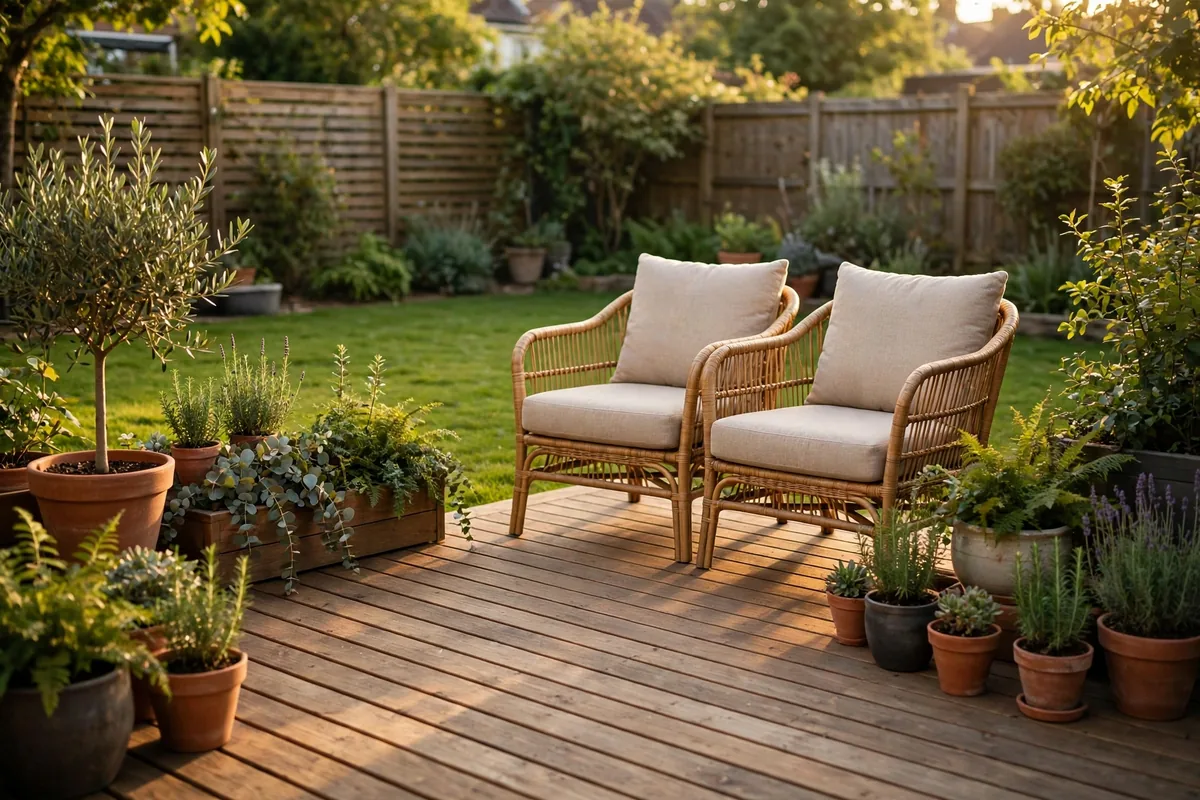
A deck looks like one shopping item and is really three: the boards you walk on, the joists hiding underneath them, and a small mountain of screws holding the two together. Count any one of the three wrong and the job stalls — boards run out two rows from the edge, or the last joist crossing has no screws left to fix it. Our Deck Calculator — boards, joists and screws from two measurements counts all three from just the deck's length and width. This guide shows how the calculator works and the one detail where every hand count goes wrong: each board covers its own width plus the gap beside it. Forget the gap and you come up short; include it and the boards, the stock length to buy, the joists and the screws all fall out of two measurements. By the end you will be able to check any lumber yard's list against your own numbers.
The short answer, on one card
- The board formula: deck width in inches ÷ (board width + 1/4 in gap), rounded up — a 2×6 covers 5.75 in per row, not 5.5
- Board length rounds up to the next stock length — 8, 10, 12, 14 or 16 ft — so each row is one full board, no butt joints
- Joists at 16 in on centre: one every 16 inches along the deck's length, plus one — 13 joists for a 16 ft deck
- Screws: 2 per board at every joist crossing — boards × joists × 2
- The worked deck: 16 × 12 ft with 2×6 boards = 26 boards, 13 joists, about 676 screws
Step 1 — Measure the deck two ways: length and width
The calculator needs exactly two measurements, but they are not interchangeable, so get them the right way round. The length is the direction the boards will run — it decides the stock length you buy. The width is the distance the row of boards has to cover, side to side — it decides how many boards there are. Swap them in your head and you will order the right amount of wood in entirely the wrong lengths. Measure the footprint as it will actually be built: out to the edge of the frame, not to the edge of the lawn or the patio you are replacing. If the deck is still a patch of grass, stake the corners, run string between them, and measure the string — and check the diagonals match, because a deck that is 3 inches out of square still takes the same boards but fights you on every cut. New to measuring a yard accurately? How to Measure Your Yard's Square Footage covers tapes, pacing and awkward corners — the same two numbers feed this calculator, just in feet and inches instead of square feet.
Step 2 — Run the calculator: what each input does
Open the Deck Calculator and type in the length and the width from Step 1, in feet or in metres — the unit switch converts everything behind the scenes. Then pick your board: 2×6 decking, 5.5 inches wide in real life, is the common choice and the one this guide works through; the calculator also offers 2×4 decking at 3.5 inches wide, which needs far more boards to cover the same width. That is the whole form. The answer comes back as a shopping list, not a single number: how many deck boards to buy and the stock length to buy them in, how many joists at 16 inches on centre and their length, roughly how many deck screws the job will eat, and an estimated cost range for the decking in your country's typical store prices — pick Canada or the USA so the range is in the prices you will actually see. Press the print button and the list is ready to take to the yard. What the list deliberately leaves off — beams, posts, footings, railing and stairs — depends on your design, your ground and your local code, and Step 7 is honest about that line.
Step 3 — The maths the calculator is doing
There is no hidden model here — the calculator runs the same three counts a good lumber yard runs, and the first one is where hand counts fail. Boards = deck width in inches ÷ (board width + 0.25), rounded up. The + 0.25 is the gap, and it is not a rounding nicety: a 2×6 board is 5.5 inches wide, but laid with its 1/4 inch gap it covers 5.75 inches of deck. Divide a width by 5.5 instead of 5.75 and on a wide deck you under-order by a full board or two — discovered, traditionally, on the last afternoon, with the store closed. Board length is simpler: your deck length rounded up to the next stock length, 8, 10, 12, 14 or 16 ft, so every row is a single board. Joists = one every 16 inches along the length, plus one for the far edge — a 16 ft deck is 192 inches, 192 ÷ 16 = 12 spaces, 13 joists. Screws = boards × joists × 2, two at every crossing. The table below is the board count pre-run for the common widths, all with 2×6 boards and the gap included; it is worth a screenshot before any store trip.
| Deck width | Width in inches | Boards needed (2×6, with 1/4 in gap) |
|---|---|---|
| 8 ft | 96 in | 17 boards |
| 10 ft | 120 in | 21 boards |
| 12 ft | 144 in | 26 boards |
| 14 ft | 168 in | 30 boards |
| 16 ft | 192 in | 34 boards |
| 20 ft | 240 in | 42 boards |
Read the 12 ft row closely, because it shows the rounding at work: 144 ÷ 5.75 = 25.04, and you cannot buy 0.04 of a board, so the count rounds up to 26. That last board is usually ripped narrower to finish the edge exactly, or the gaps absorb a fraction each — either way, it has to be in the truck. And notice what the table does not do: it never works from square feet. Decks are covered row by row, not by area, which is why square-footage guesses at the store so often miss.
Step 4 — The joists underneath: 16 inches, or 12?
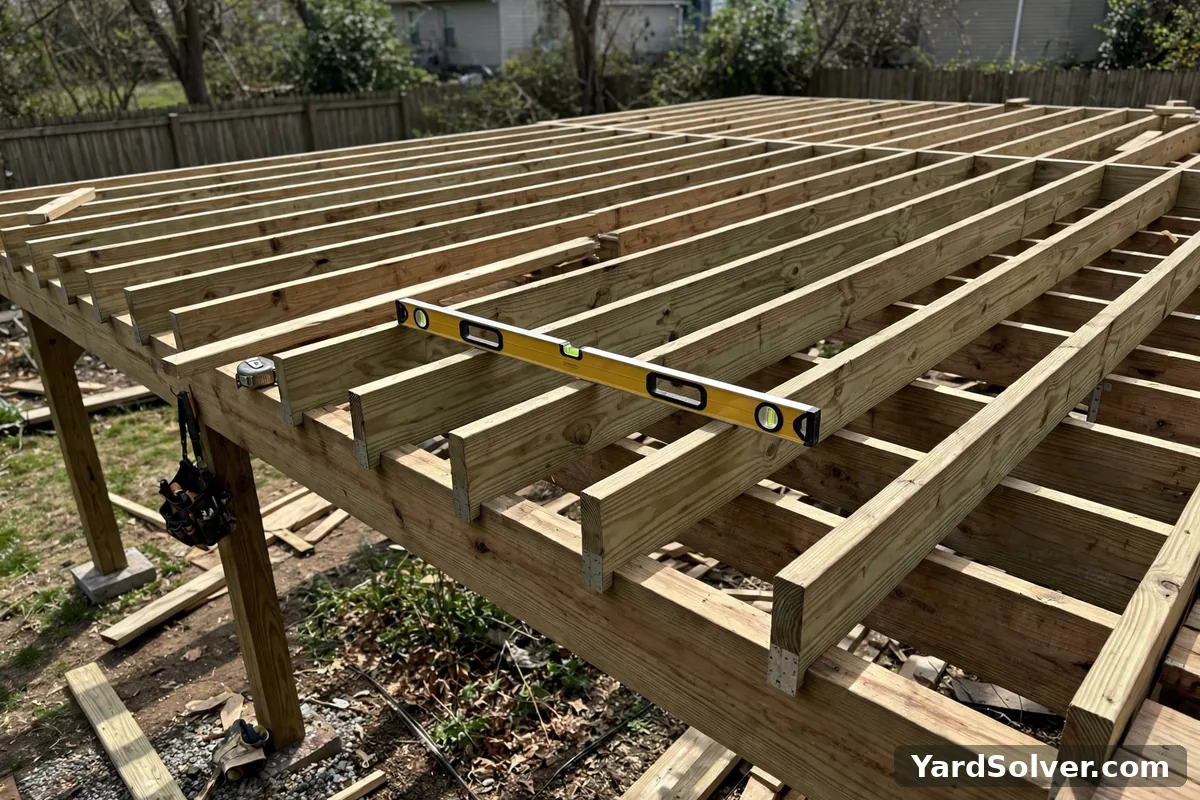
Boards get the attention; joists do the work. The calculator spaces them at 16 inches on centre — measured from the middle of one joist to the middle of the next — which is the standard for 2× wood decking and gives a deck that feels solid underfoot. The count follows the length: one joist every 16 inches, plus one to close the far end. The important exception: thinner 5/4 deck boards and most composite boards want 12 inches on centre. A 5/4 board is only about an inch thick and a composite board flexes more than solid wood, so at 16 inches both can feel springy and can ripple between joists in hot weather. If you are laying either, frame at 12 inches — for a 16 ft deck that is 17 joists instead of 13 — and check the board maker's spec, because some composite warranties require it. Decide before the frame goes down: joist spacing is the one number on the whole list that cannot be fixed later without reframing the deck. Joist length, meanwhile, is simply the deck's width rounded up to stock, the same rule as the boards.
Step 5 — One deck, worked start to finish
Here is the calculator's own example, done slowly. The deck is 16 ft long × 12 ft wide, with 2×6 boards. First the boards: the width is 12 ft = 144 inches, and each board covers 5.5 + 0.25 = 5.75 inches, so 144 ÷ 5.75 = 25.04, rounded up to 26 boards. The length is 16 ft, which is itself a stock length, so the boards are bought as 16 ft stock — one board per row, no joints anywhere on the deck. Next the joists: they run across the 12 ft width and are spaced along the 16 ft length, so 192 ÷ 16 = 12 spaces, plus one, gives 13 joists of 12 ft. Last the screws: every board crosses every joist and takes two screws at each crossing, so 26 × 13 × 2 = about 676 screws — roughly two 5 lb boxes, bought by the box and rounded up, because the count assumes no screw snaps, misses or drops into the grass, and real decks do all three. Three counts, two measurements, one trip to the yard: that is the whole promise of the calculator, and now you have seen every step of its working.
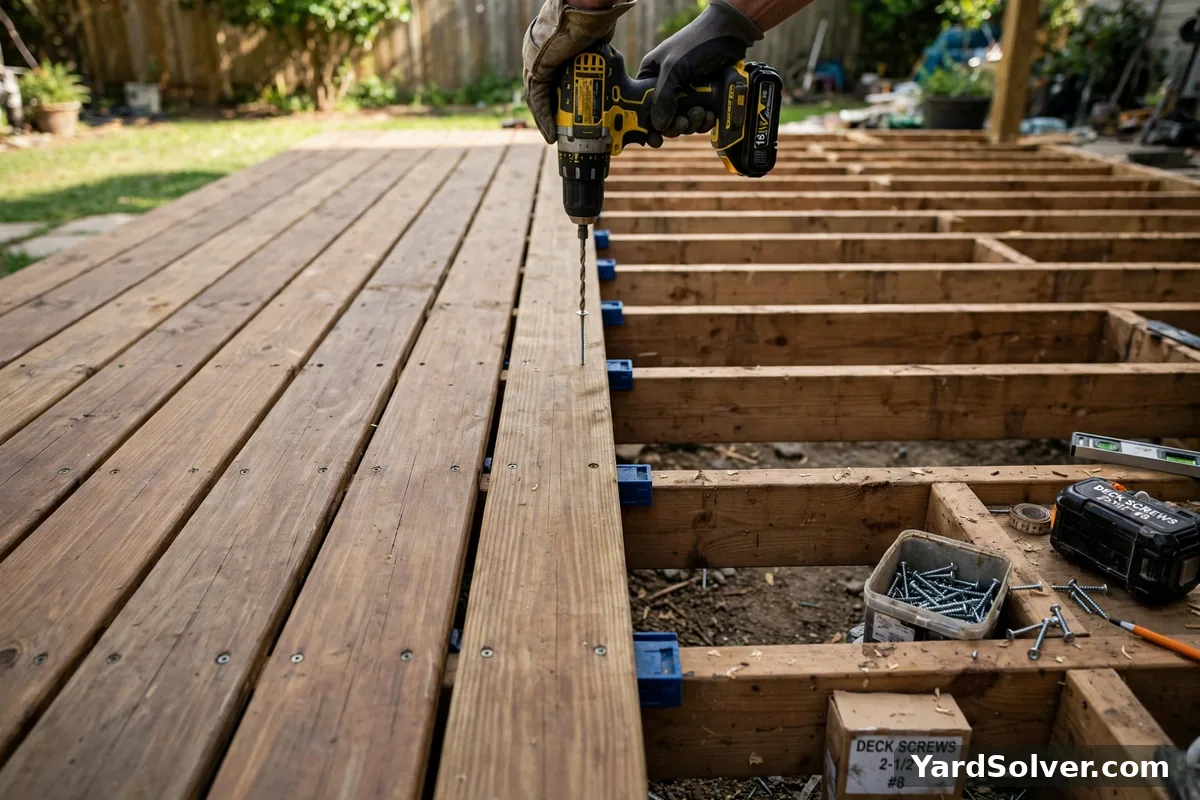
Two habits from that example are worth stealing for any deck size. Buy the screws with the boards, not after them — the screw count is the number people forget entirely, and a deck half-fixed at dusk helps nobody. And pick up one or two boards beyond the count: the maths is exact, but lumber is not, and the board with the twist or the split edge gets exchanged at the rack far more easily before it is cut than after.
Step 6 — Stock lengths, butt joints and the 1/4 inch gap
Why does the calculator insist on rounding the board length up, even when a shorter, cheaper board nearly fits? Because the alternative is a butt joint — two boards meeting end to end somewhere mid-deck — and a butt joint is the weakest, worst-looking point on any deck. It flexes underfoot because two board ends share one joist instead of resting solidly along their length, it drinks water at the cut ends where rot starts first, and it shows: your eye finds the staggered seam every time you cross the deck, forever. One full-length board per row costs a little more per row and removes the problem entirely, which is why stock lengths exist in the first place. The gap deserves the same respect. That 1/4 inch is doing three jobs at once: it drains rain straight through instead of letting water sit in the joints and rot the edges, it leaves room for the boards to expand across their width in hot, wet weather without buckling against each other, and it lets crumbs, leaves and grit fall through instead of packing into a damp seam. Hold it even with a spacer as you lay each board — a wandering gap is the other flaw the eye never un-sees.
What the calculator can't do
Honesty about the edges, so the numbers earn your trust. The calculator counts a clean rectangle with boards running straight across it: a diagonal layout cuts far more offcuts and needs roughly a tenth more boards, a picture-frame border is its own extra count, and an L-shaped deck is best split into two rectangles and run twice, adding the boards before you shop. It is a framing estimate for the decking layer — beams, posts, footings, ledger fixings, railing and stairs all follow your design, your soil and your local building code, and most decks need a permit and an inspection of the frame before the boards hide it. It assumes 16 inch joist spacing, so re-run your joist and screw counts by hand if your boards need 12 inches, as Step 4 explains. And its costs are typical store-price ranges for your country, not quotes — lumber prices move, and your yard's sale week can beat them. What it does guarantee is the counting maths, checked above: get the length, the width and the board size right, and the boards, joists and screws follow.
Building the fence to match the new deck? The Fence Calculator — posts, rails and pickets for the yard around it counts that project the same way, from the run length and fence height.
Keep going
Run your own deck through the Deck Calculator and print the list before you shop, then count the matching fence with the Fence Calculator.
Planning the whole season's yard projects? The Garden Planner lays out the deck build alongside planting, feeding and lawn work in one calendar, so the materials arrive in the order the jobs do.
Questions people ask
How far apart should deck joists be?
16 inches on centre is the standard for 2× wood decking, and that is the spacing the calculator uses. Thinner 5/4 deck boards and most composite boards want 12 inches on centre instead — the board flexes more, so it needs support closer together. Check the board maker's spec before you frame, because changing spacing after the joists are down means reframing the whole deck.
What gap between deck boards?
About 1/4 inch, and the calculator counts it as part of every board's coverage. The gap does three jobs: it drains rain off the deck instead of letting it sit in the joints, it gives the boards room to expand in hot, wet weather, and it lets crumbs, leaves and grit fall through instead of rotting between the boards. Space boards with a spacer or a nail of the right thickness so the gap stays even from end to end.
Which board length should I buy?
The shortest stock length that covers your deck's length in one piece. Stock lengths run 8, 10, 12, 14 and 16 ft, and the calculator rounds your deck length up to the next one. A butt joint where two shorter boards meet mid-deck is a weak point and it shows — it flexes, it collects water, and your eye finds it every time. One full-length board per row is almost always worth the small price difference.
How many screws does a deck take?
Two screws per board at every joist it crosses — boards times joists times two. The worked 16 × 12 ft deck in this guide needs 26 boards × 13 joists × 2, which is about 676 screws. Buy screws by the 5 lb box and round up: running out on the last two rows costs a store trip, and a spare handful covers the screws that snap or miss the joist.
How many deck boards do I need for a 12×12 deck?
With 2×6 boards, a 12×12 ft deck needs 26 boards bought as 12 ft stock: the 144-inch width divided by 5.75 inches of coverage per board is 25.04, rounded up to 26. The joists at 16 inches on centre come to 10, and the screws to 26 × 10 × 2, about 520. Run your own size through the calculator — a 2×4 board changes the count completely, to 39 boards for the same deck.
Should I buy extra deck boards?
Buy one or two extra boards beyond the calculator's count. The count itself is exact for a clean rectangle, but real lumber includes the occasional warped, split or ugly board you will want to reject at the rack or swap out on the deck, and an offcut mistake should not stop the job. Keep the receipt — most yards take clean, uncut returns, and a spare board stored flat is the perfect match for a future repair.
Deck boards are counted by coverage width — the gap is part of every board's span
A deck board covers its own width plus the drainage gap beside it, so the board count is deck width divided by board-plus-gap, times the number of runs the deck's length requires. Run the boards the long way and the count changes; lay them diagonally and both the count and the waste climb by roughly a seventh, because every board ends in a cut that cannot be reused across the pattern.
Allow ten percent waste for straight work and fifteen for diagonal or picture-frame borders, check board lengths against the deck so joints land on joists without slivers, and order the whole deck in one batch — timber and composite both vary enough between runs that a top-up delivery can stripe your deck in two tones. The board-foot guide linked below converts the same list into lumber-yard language where boards are sold by volume.
Sources
Key facts on this page cross-checked against Deck (building) — Wikipedia — background on decks as structures and Lumber — Wikipedia — background on lumber, its grading and its dimensions.
Related page
Read next: Board Foot Calculator: The Formula, Worked Examples & the Nominal-Size Trap.
Comments & ratings
No comments yet.
Be the first to share your experience.