
Guides · Lawn care · Published November 22, 2026 · By Faizan Ahmad
Grass Seed Rates by Type: How Much Seed per 1,000 Sq Ft?
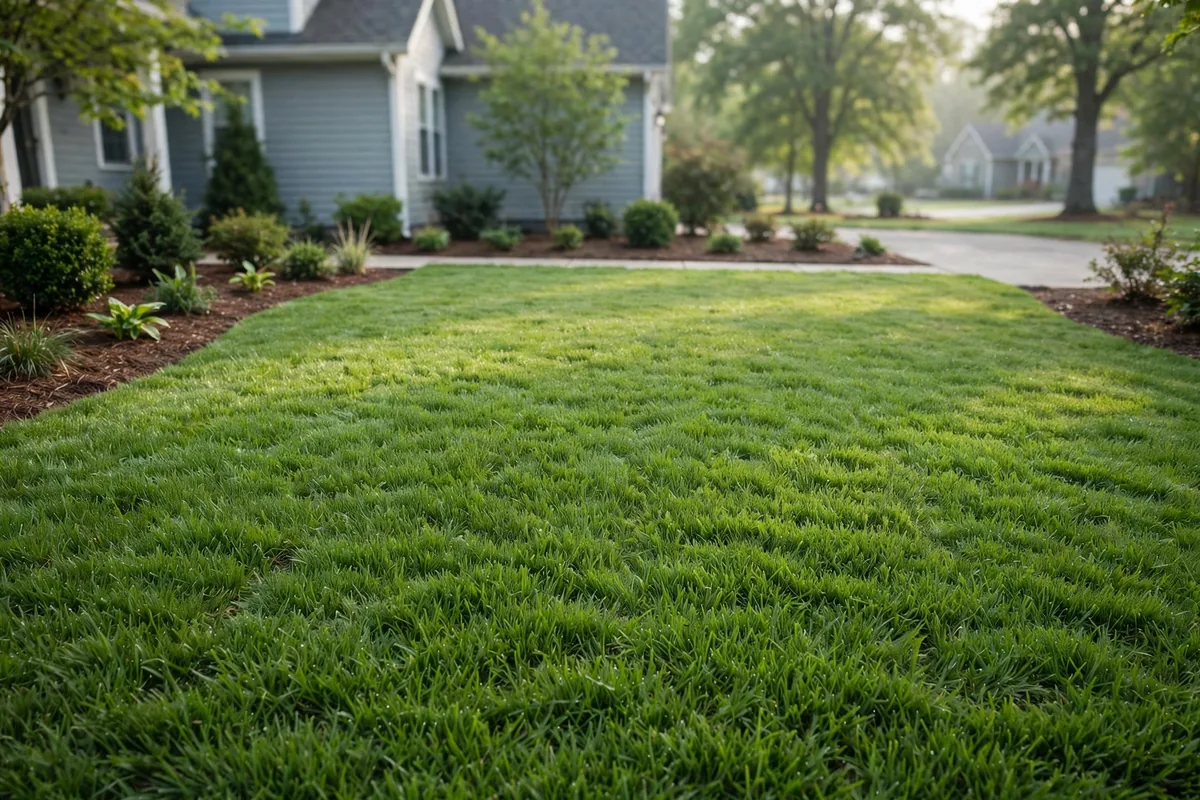
How much grass seed you need per 1,000 sq ft depends entirely on the grass: about 2.5 lb of Kentucky bluegrass, 7 lb of perennial ryegrass, or 8 lb of tall fescue for a new lawn, with overseeding at roughly half those rates. The threefold spread is not marketing — it is seed size, and this guide explains it, tabulates the standard rates, and shows how our Grass Seed Calculator turns them into bags for your lawn.
The short answer, on one card
- New lawn, per 1,000 sq ft: bluegrass 2.5 lb · ryegrass 7 lb · tall fescue 8 lb · fine fescue 5 lb · bermuda 2 lb
- Overseeding: about half the new-lawn rate
- Why: rates deliver a similar count of seeds per sq ft — bluegrass seed is simply far smaller
- More is not better: over-rate sowing crowds seedlings and invites disease
- Blends follow their own label rate — it already accounts for the mix
Step 1 — The seed-size reason behind every rate
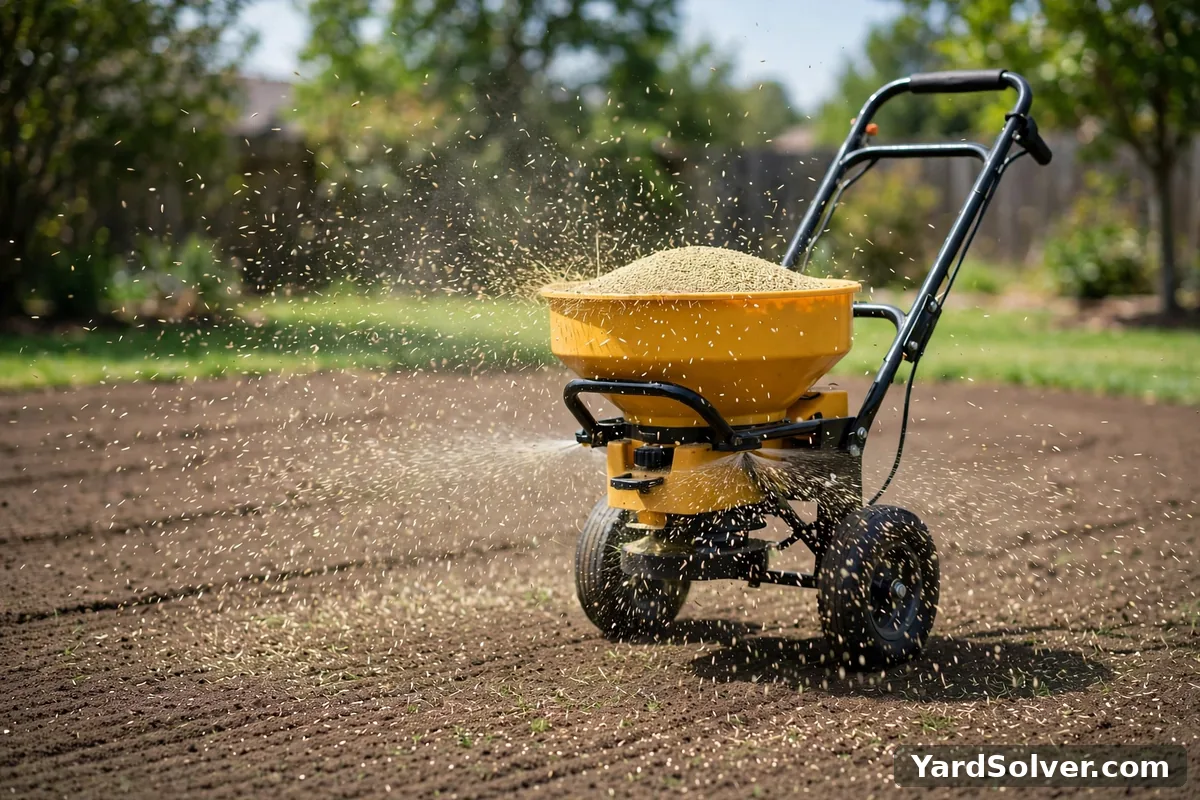
Seeding rates look arbitrary until you count seeds. A pound of Kentucky bluegrass contains well over a million seeds; a pound of tall fescue, roughly a quarter of a million much larger ones. Agronomists set rates to land a target number of viable seeds on each square foot — enough for a dense stand with losses allowed for — so the small-seeded grasses are prescribed in fewer pounds. Weight is the packaging; seeds per square foot is the product.
This is also why “one bag covers 5,000 sq ft” claims cannot be compared across types, and why sowing bluegrass at a fescue rate wastes money four times over while sowing fescue at a bluegrass rate leaves a lawn that never thickens. The rate belongs to the grass, not the garden.
Step 2 — The rate table
These are the mid-range published rates the calculator uses, for pure seed of each type. Ranges exist in the literature (bluegrass 2–3 lb, tall fescue 6–10 lb) because soil preparation and seed quality move the honest answer; the midpoints assume decent preparation and fresh, labelled seed with a germination percentage printed on the bag.
| Grass type | New lawn (lb / 1,000 sq ft) | Overseeding (lb / 1,000 sq ft) | Germination |
|---|---|---|---|
| Kentucky bluegrass | 2.5 | 1.25 | 14–30 days — the patient one |
| Perennial ryegrass | 7 | 3.5 | 5–10 days — the fast one |
| Tall fescue | 8 | 4 | 7–12 days |
| Fine fescue | 5 | 2.5 | 7–14 days — the shade choice |
| Bermudagrass (hulled) | 2 | 1 | 10–30 days, needs warmth |
| Zoysiagrass | 2 | 1 | 14–21 days, needs warmth |
Run your own lawn through the Grass Seed Calculator — pounds and bags by type: area × rate ÷ 1,000, bags of 25 lb rounded up. A 2,000 sq ft new tall fescue lawn: 16 lb, one bag. The same lawn in bluegrass: 5 lb — and a month of patience.
Step 3 — New lawn versus overseeding: why half is right
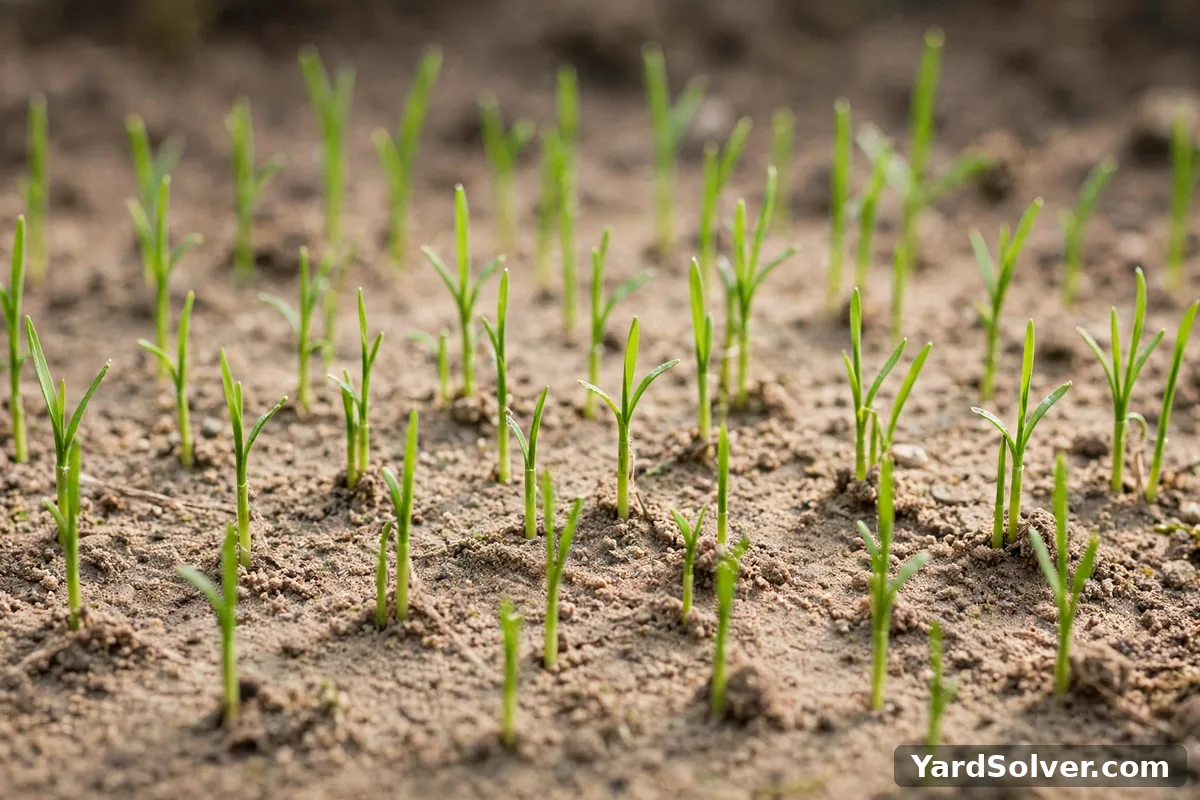
Overseeding is not a failed new lawn at half dose; it is a different job. The existing stand already covers the ground — the new seed only has to fill gaps, thicken thin patches and introduce better varieties. Half rate lands the right density into an occupied lawn; a full rate mostly feeds seedlings that will be shaded out by the grass already there.
What decides overseeding success is not the rate but the contact: mow short, rake or aerate so seed falls to soil rather than sitting in thatch, and keep the surface moist until germination. Seed lying on thatch at double rate loses to seed touching soil at half rate, every time.
Step 4 — Timing, and the label’s final word
Cool-season grasses (bluegrass, fescues, ryegrass) sow best in early fall: soil still warm for germination, air cooling against stress, weed pressure falling, and a whole autumn plus spring of root growth before the first summer. Spring sowing works and fights more weeds. Warm-season grasses invert the calendar — late spring into early summer, once soil is properly warm.
One authority outranks this table: the label on your actual bag. Blended and coated seed, and seed sold for a specific branded programme, carries a rate computed for that product. Where the label states a rate, follow it; where it does not, the table and the calculator are the standard fallback.
Questions people ask
How much grass seed for 5,000 sq ft?
New lawn: bluegrass about 12.5 lb, ryegrass 35 lb, tall fescue 40 lb, fine fescue 25 lb. Overseeding: roughly half. The calculator gives your exact lawn and counts 25 lb bags.
Can I sow extra seed to get a thicker lawn faster?
Past the published rate, no — crowding makes seedlings compete and invites fungal disease, and the stand thins itself back. Thickness comes from the rate, soil contact, water and time, in that order.
Why is my bluegrass taking so long to appear?
Bluegrass is genuinely slow: 14–30 days to germinate is normal. Keep the surface moist and resist re-sowing at day 10 — the second sowing lands on top of the first just as it emerges.
Does old seed need a higher rate?
Seed loses germination with age and poor storage. The bag’s germination percentage and test date tell the story; a bag at 70% germination honestly needs its rate divided by 0.7 — or replacing.
Which grass should I choose for shade?
Fine fescues are the shade specialists among lawn grasses, which is why shade mixes are built on them. Even they need some light — under truly dense shade, groundcover or mulch beats any grass seed.
Sources
Key facts on this page cross-checked against Turfgrass — Wikipedia — background on turf grasses and lawn establishment Lawn — Wikipedia — background on lawn grasses and care.
Related page
Read next: How Much Grass Seed Do I Need? The Bag Maths for Any Lawn
Comments & ratings
No comments yet.
Be the first to share your experience.