
Guides · Planning & layout · Published November 22, 2026 · By Faizan Ahmad
How Much Does a Vegetable Garden Cost? A Line-by-Line Budget
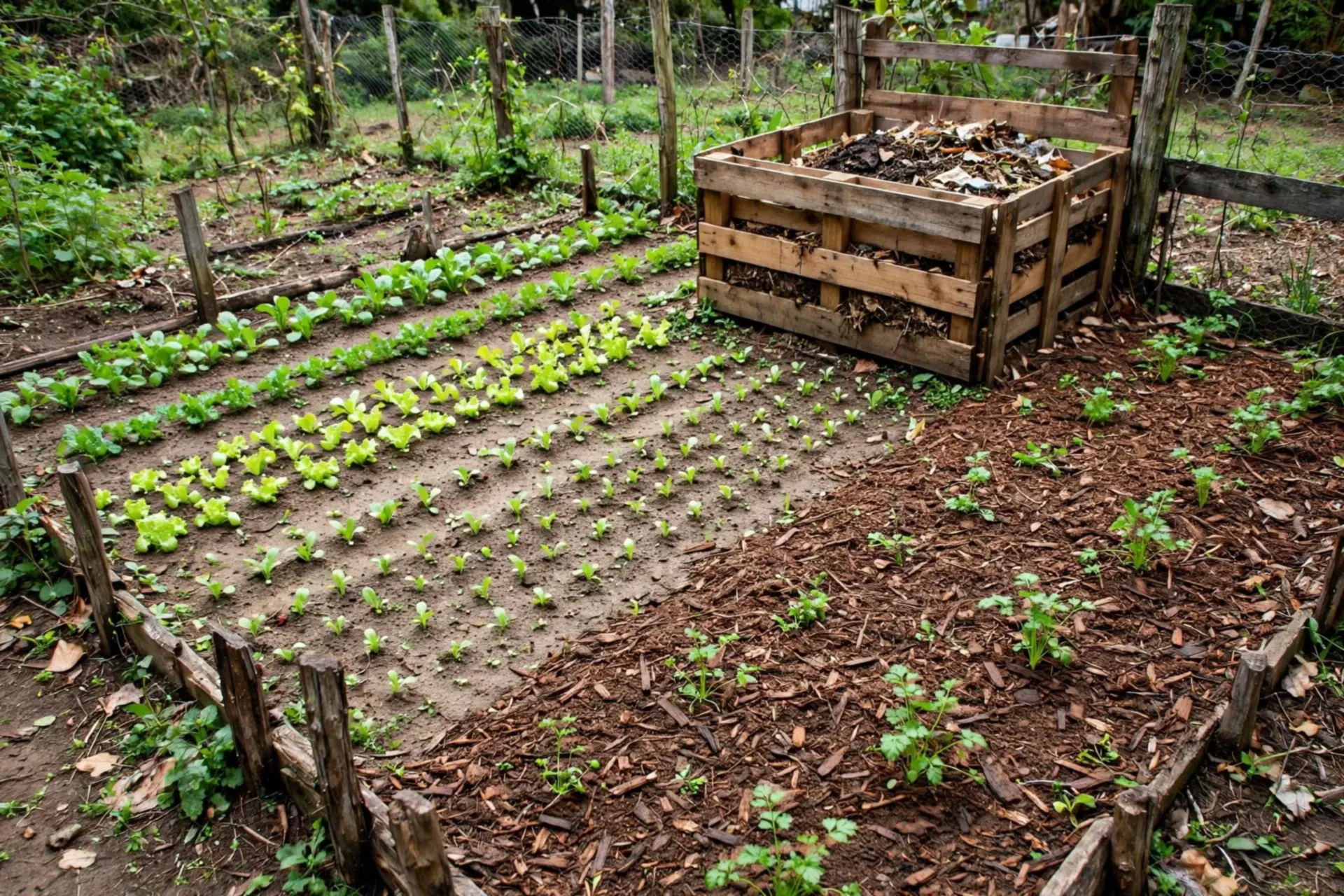
A modest four-bed vegetable garden costs in the hundreds, not the thousands — and the surprise in the budget is never the seeds; it is the soil, which is bought by the cubic yard while gardeners think in bags. Our Garden Cost Estimator builds the budget line by line from your dimensions and your prices. This guide shows where the money actually goes, the bulk-versus-bag break-even, and which corners cut cleanly.
The short answer, on one card
- Soil dominates: four 8 × 4 ft beds a foot deep need 4.7 cubic yards — the budget’s biggest line
- Bulk beats bags past ~1 cubic yard — below that, bags win on delivery alone
- Plants are the second line: seedlings at $4 each outrun a whole seed order in one tray
- The forgotten line is "other": timber, fittings, irrigation — budget it or it budgets you
- Add 10–15% contingency — it is the statistically certain second bag, priced in advance
On this page
Step 1 — Volumes first, prices second
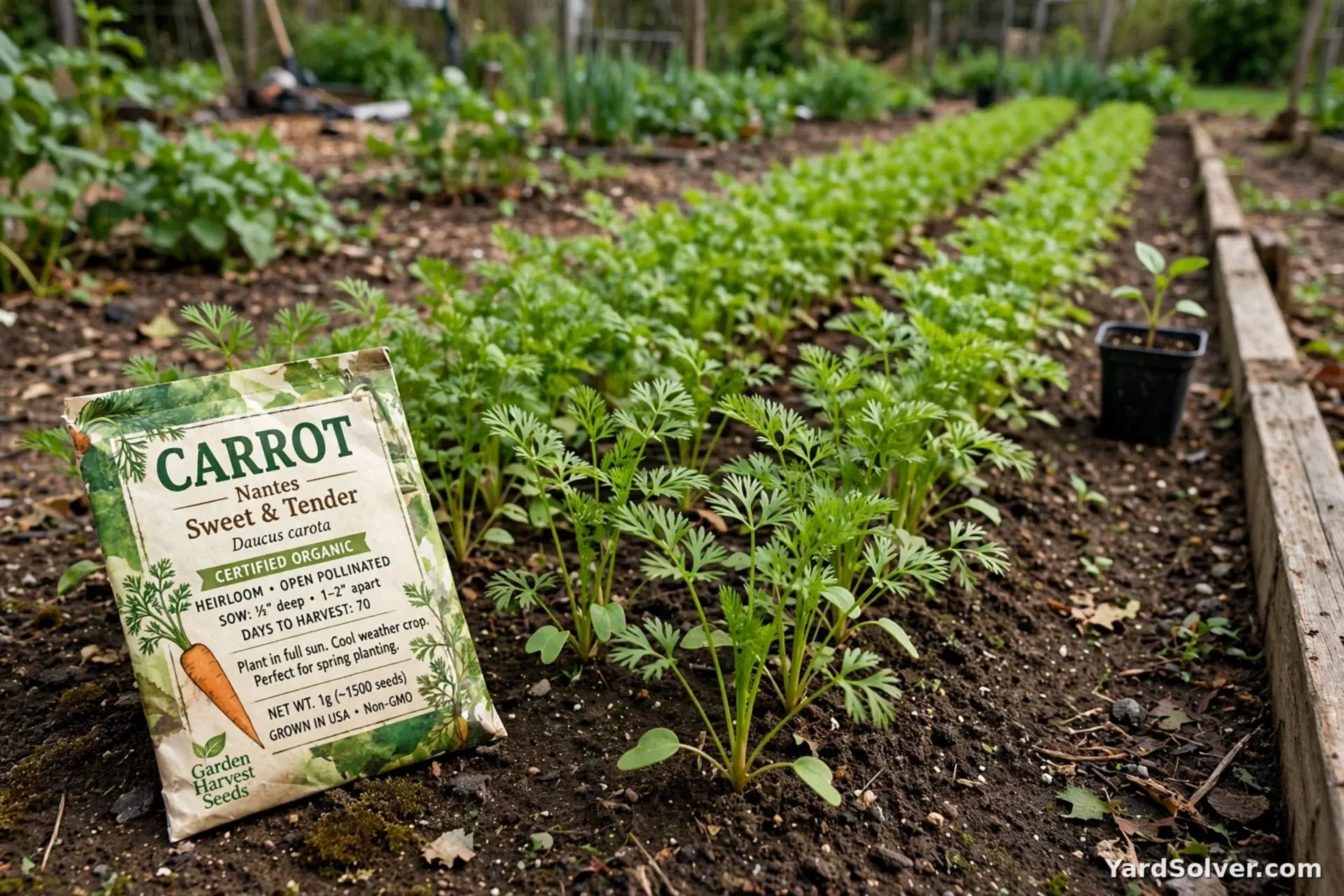
Garden budgets are usually written backwards: prices collected at the garden centre, multiplied by quantities imagined in the car park. The soil line alone punishes the method — a single 8 × 4 bed filled a foot deep is 32 cubic feet, over a cubic yard, and four beds approach five yards, a delivered truckload. Gardeners who budget "some bags" discover the volume at the till, which is the most expensive place to learn arithmetic.
The estimator’s order is the cure: dimensions first (soil and mulch volumes computed), counts second (plants, packets, bags), prices last — and your prices, because soil in one region costs half of another’s and any website’s "average" is a fiction at both ends. A budget built from your shelf prices survives the shop; one built from averages survives only the spreadsheet.
Step 2 — A worked four-bed budget
The estimator’s example, at plausible mid-range prices — substitute your own; the proportions are the lesson. Structure (soil, mulch, timber) is nearly two-thirds of year one, which is why gardens get cheaper every year they survive.
| Line | Quantity | At example prices | Share |
|---|---|---|---|
| Bed soil (bulk) | 4.74 yd³ | $213 at $45/yd³ | 28% |
| Mulch (bulk) | 1.85 yd³ | $74 at $40/yd³ | 10% |
| Plants & seedlings | 60 at $4 | $240 | 31% |
| Seed packets | 12 at $3.50 | $42 | 5% |
| Fertilizer & feed | 3 bags at $18 | $54 | 7% |
| Timber, tools, irrigation, other | — | $150 | 19% |
| Total (before contingency) | $773 | 100% |
Run your own dimensions and prices through the Garden Cost Estimator — your budget, line by line. Bag counts for the soil line come from the Raised Bed Soil Calculator; lumber for the beds from the Board Foot Calculator.
Step 3 — Bulk versus bags: the one-yard rule
Bagged soil is priced for convenience and carries it honestly: below about a cubic yard, bags win — no delivery fee, no pile on the driveway, no barrowing. Past a yard, the arithmetic inverts brutally: the example’s 4.74 yards in 1.5 cu ft bags is over 85 bags, at bag prices typically two to three times the bulk rate per yard, plus the small matter of moving them twice.
The middle path many gardeners miss: bulk soil for the beds’ body, a few bags of premium mix for the seed-starting and the top layer where seedlings actually live. Spend the quality where roots are young; the deep fill can be honest topsoil-and-compost at bulk prices.
Step 4 — Corners that cut, and corners that don’t
Cut safely: seed-starting instead of seedlings (a packet replaces a tray at a tenth of the price), bulk over bags, phased building (two beds this year, two next), saved seed and swapped seedlings, and patience with perennials. The plants line in the example halves if half the seedlings are home-raised — the largest single saving available, bought with a windowsill and a grow light’s honest arithmetic.
Never cut: soil depth and quality (the garden IS the soil; everything else is decoration), drainage where the site needs it, and the contingency. A garden built to the last dollar of a tight budget is one broken tool from abandonment. The budget’s job is not to be small — it is to be true, so the garden that gets built is the garden that was planned.
Questions people ask
Does a vegetable garden actually pay for itself?
Against premium, out-of-season and herb prices, a well-run garden can pay back its structure in two to three seasons; against in-season supermarket staples, the payback is slower and rides on high-value crops. The honest ledger counts year one as construction: by year three, with soil and timber amortised, the running costs are seed, feed and water — and the comparison turns in the garden’s favour.
What is the cheapest respectable way to fill raised beds?
Bulk topsoil-compost blend by the yard for the body of the bed, with bagged quality mix reserved for the top few inches and seed work. Filling the whole depth with bagged premium mix is the single most common overspend in new gardens — the example bed’s deep fill is invisible to roots for most of the season.
How much should tools cost in year one?
Less than enthusiasm suggests: a spade, fork, hoe, hand trowel, watering can or hose, and a kneeler cover ninety percent of a small garden’s work, and used tools of old quality beat new tools of poor quality at the same price. Power tools and gadgets belong to year three’s budget, bought against proven need.
Why does every gardener say the garden cost 'about double' the plan?
Because the plan priced the visible lines and life added the rest: the second bag, the frost fleece in a cold snap, the replacement seedlings after the slug night, the fitting that almost matched the hose. That is precisely what the 10–15% contingency is — the doubling, tamed into a line item.
Is it cheaper to garden in the ground instead of raised beds?
Usually, yes on structure (no timber, no imported fill beyond compost) — in-ground beds on decent soil are the budget classic. Raised beds earn their cost on poor, contaminated, steep or badly drained sites and for gardeners whose backs vote. The estimator prices the raised route; an in-ground garden deletes the soil and timber lines and keeps the rest.
Sources
Key facts on this page cross-checked against Vegetable garden — Wikipedia — background on vegetable garden establishment and practice Planting a Vegetable Garden — University of Minnesota Extension — extension guidance on planning and planting the vegetable garden.
Related page
Read next: Budget Gardening Tips: Where the Money Actually Goes
Comments & ratings
No comments yet.
Be the first to share your experience.