
Guides · Lawn care · Published November 22, 2026 · By Faizan Ahmad
How Much Fertilizer Does My Lawn Need? The Annual Budget Method
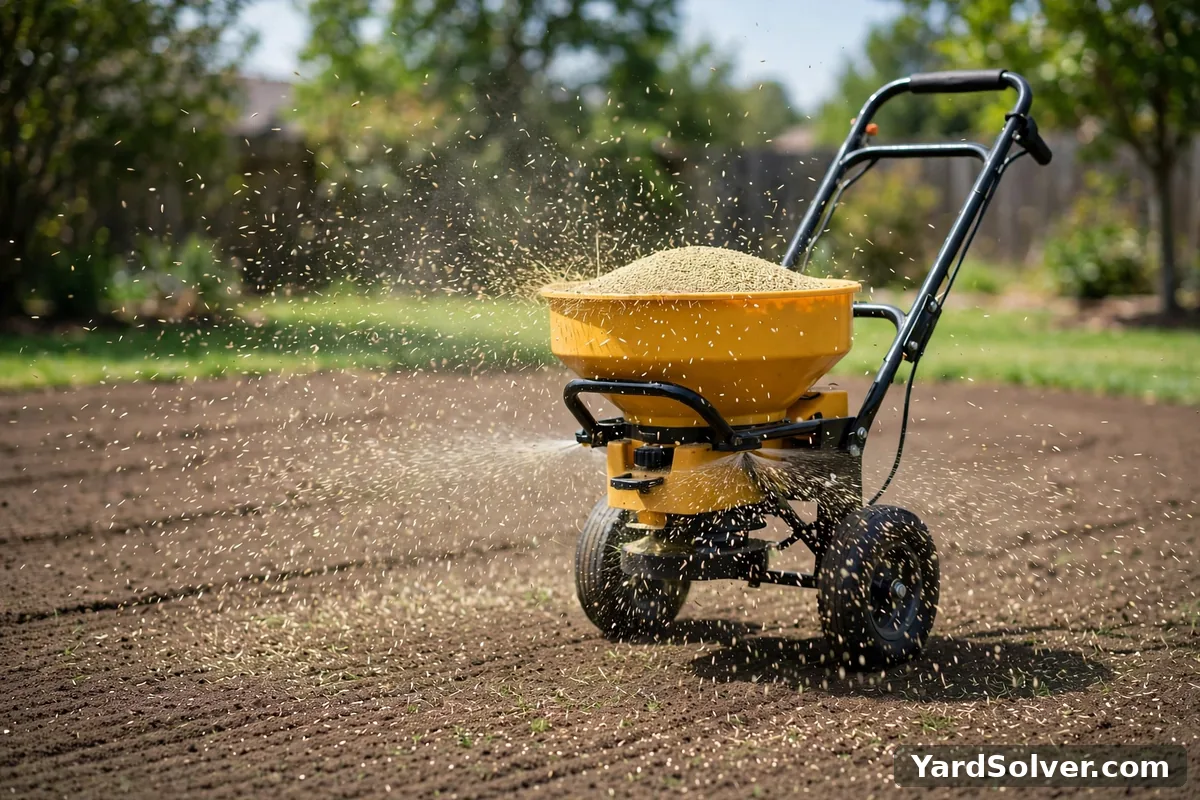
A lawn needs a year’s worth of nitrogen, not a bag’s worth of enthusiasm: published budgets run from 1 lb per 1,000 sq ft for a low-input fescue lawn to 5 for hungry bermuda, split into passes of at most 1 lb. Our Lawn Fertilizer Calculator turns your grass type and product into a per-application amount and a bags-per-year figure. This guide explains the budgets, the timing, and the clippings credit most lawns forget to claim.
The short answer, on one card
- Budget by the year: Kentucky bluegrass 2–4 lb N, tall fescue 2–3, fine fescue 1–2, bermuda 3–5 lb per 1,000 sq ft
- Split it: never more than about 1 lb of N per 1,000 sq ft in a single application
- Fall is the main event for cool-season lawns; late spring–summer for warm-season grasses
- Clippings pay rent: mulch-mowing returns roughly 1 lb of N a year — budget at the low end
- Phosphorus is usually already sufficient on established lawns — and restricted in many regions
On this page
Step 1 — The annual budget, and why one big feeding fails
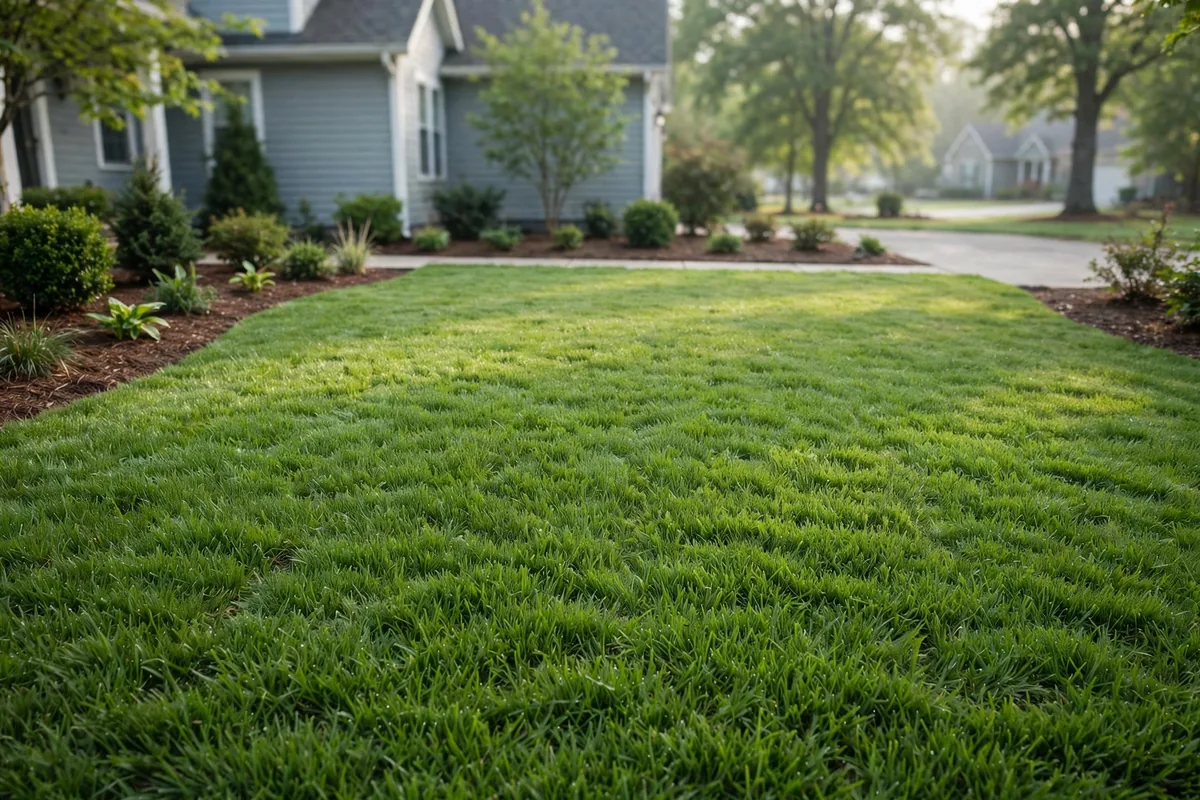
Grass spends nitrogen across the whole growing season, but it can only absorb about a pound per 1,000 sq ft at a time. Feed the year’s 3 lb in one spring blast and the lawn surges into soft, disease-prone growth, the surplus leaches or volatilises, and by August the lawn is hungry again in exactly the heat it least forgives. The budget method — an annual total for your grass, divided into two to four passes — delivers the same nitrogen with none of the feast and famine.
The budgets differ because the grasses do. Kentucky bluegrass and ryegrass are bred hungry and dense; tall fescue makes do with less; fine fescues are the low-input specialists that stay respectable on a pound or two; bermuda in a long southern summer out-eats them all. The calculator carries the midpoint of each published range and shows the range beside it, because a shaded, clippings-returned lawn belongs at the bottom of its range and a showcase lawn at the top.
Step 2 — Budgets by grass type
Annual nitrogen per 1,000 sq ft, from published extension programmes. The calculator uses the midpoint; shade, returned clippings and modest expectations argue for the low end, thin soil and heavy use for the high end.
| Grass | Annual N budget (lb/1,000 sq ft) | Typical passes | Main feeding window |
|---|---|---|---|
| Kentucky bluegrass | 2–4 | 3 | Early fall, then late spring |
| Perennial ryegrass | 2–4 | 3 | Early fall, then late spring |
| Tall fescue | 2–3 | 2–3 | Fall-weighted; light spring |
| Fine fescue | 1–2 | 1–2 | One fall feeding often suffices |
| Bermudagrass | 3–5 | 4 | Late spring through mid-summer |
| St. Augustinegrass | 2–4 | 3 | Late spring through summer |
| Zoysiagrass | 1–2 | 2 | Late spring and early summer |
Your lawn’s size and product go into the Lawn Fertilizer Calculator — per-application pounds and the year’s bags. Feeding a garden bed instead of a lawn? Different programme entirely: the Fertilizer Calculator runs beds by soil-test rates.
Step 3 — Timing: fall for the north, summer for the south
Cool-season grasses grow roots hardest in fall, and nitrogen applied then goes to roots, density and stored carbohydrate — the bank that funds spring green-up without a surge. That is why the fall feeding is the one never to skip, and why the traditional heavy spring feeding is the most overrated date on the lawn calendar: it buys a fortnight of dark green at the price of summer weakness. A modest late-spring pass completes the northern programme.
Warm-season grasses run the opposite calendar: they are dormant or sulking in fall and ravenous from late spring. Feed bermuda and zoysia as they green up and through mid-summer, then stop — nitrogen pushed into a warm-season lawn heading for dormancy feeds winter weeds and tenderness, not the grass. In both calendars, heat waves and drought suspend feeding: a stressed lawn cannot spend nitrogen, and granules on dry, hot grass burn.
Step 4 — The clippings credit and the phosphorus question
A mulching mower returning clippings recycles roughly a pound of nitrogen per 1,000 sq ft across a season, plus useful potassium — clippings are about 4% nitrogen by dry weight and they were the lawn’s own. Gardeners who bag and remove them are exporting a feeding a year and then buying it back. Claim the credit honestly: budget at the low end of your grass’s range and let the lawn’s colour arbitrate.
Phosphorus is the mirror story: established lawns almost always test sufficient, lawns remove very little, and many states and provinces restrict lawn phosphorus outright because runoff feeds algal blooms. Unless a soil test shows a genuine shortage (or you are seeding, when roots need it), a nitrogen-focused product fits the programme — and the test, not the marketing, should make that call.
Questions people ask
What if I don't know my grass type?
Work from the calendar and the look: a lawn green in spring and fall, brown in deep summer heat, is cool-season (bluegrass/fescue/rye family — budget mid-range, fall-fed). One that browns all winter and greens late is warm-season. A local extension office will identify a sample, and seed or sod records name it exactly.
Is one fall feeding enough?
For fine fescue and modest lawns, often yes — 1 to 1.5 lb in early fall is a complete low-input programme. Bluegrass and ryegrass lawns kept dense usually want the second, late-spring pass as well. The budget table is a range precisely because 'enough' depends on the lawn you are keeping.
Slow-release or standard fertilizer?
Slow-release (coated or organic-based nitrogen) forgives timing and feeds evenly over 6–10 weeks — the safer choice for summer-adjacent passes and sandy soils. Standard soluble products are cheaper per pound and act fast, which suits the fall feeding. Many programmes blend both across the year.
My lawn is thin and weedy — will more fertilizer fix it?
It will fix the thinness only if nitrogen was the limit; weeds read extra nitrogen as an invitation too. Density comes from the fall programme plus overseeding — the Grass Seed Calculator rates the seed — while weeds are a separate campaign. Feed the grass you have, seed the lawn you want.
Should I fertilize before rain?
Light rain after application is helpful — it washes granules off blades and starts them dissolving. Heavy forecast rain is a reason to wait: runoff carries the feeding to the drain, not the roots. The reliable routine is dry grass, spread, then a light watering or a gentle rain.
Sources
Key facts on this page cross-checked against Turfgrass Fertilization: A Basic Guide — Penn State Extension — extension guidance on nitrogen rates, timing and grass-type programmes Soil Testing for Lawns — MU Extension — soil-test interpretation for lawns from the University of Missouri.
Related page
Read next: How Much Nitrogen Does My Lawn Need? The Single-Feeding Version
Comments & ratings
No comments yet.
Be the first to share your experience.