
Guides · Soil & feeding · Published November 22, 2026 · By Faizan Ahmad
How Much Gypsum Do I Need? Clay, Calcium and Sodic Soil Rates
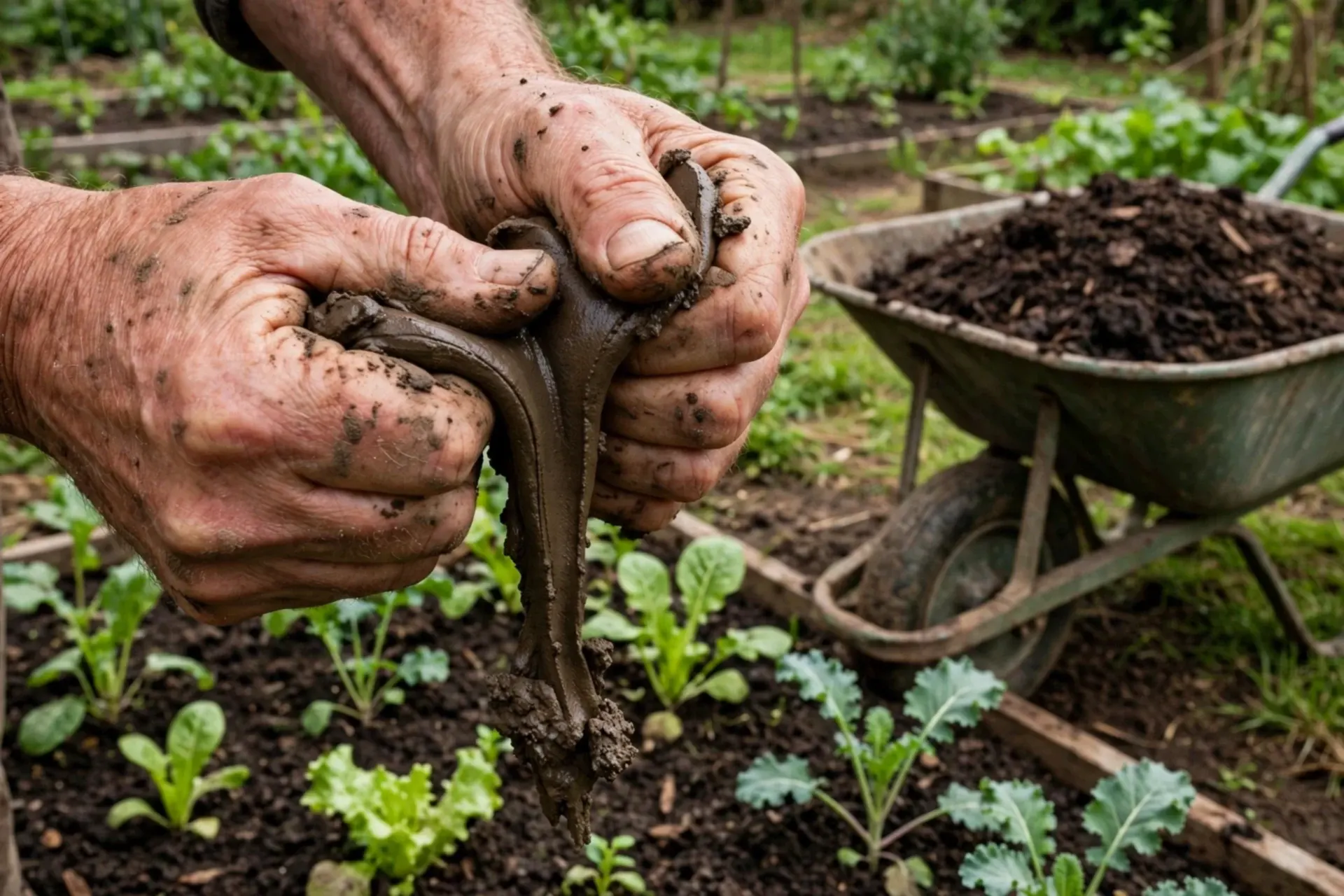
Most soils need no gypsum at all; the ones that do need it for one of three specific reasons — clay conditioning, calcium without a pH change, or sodium removal — and each job has its own rate. Our Gypsum Calculator covers all three, including the soil-lab formula for sodic soil. This guide explains when gypsum earns its keep and when it is money spread on the wrong problem.
The short answer, on one card
- Clay conditioning: 40 lb per 1,000 sq ft (about a ton per acre), repeated yearly at most
- Calcium without pH change: 20 lb per 1,000 sq ft — gypsum is pH-neutral
- Sodic soil: the lab formula — CEC × (ESP now − target) ÷ 100, at 39.5 lb per meq per 1,000 sq ft
- Gypsum is NOT lime: it cannot raise pH or fix acidity, ever
- Blossom end rot is a watering problem in almost every garden — gypsum is rarely the cure
On this page
Step 1 — What gypsum actually does in soil
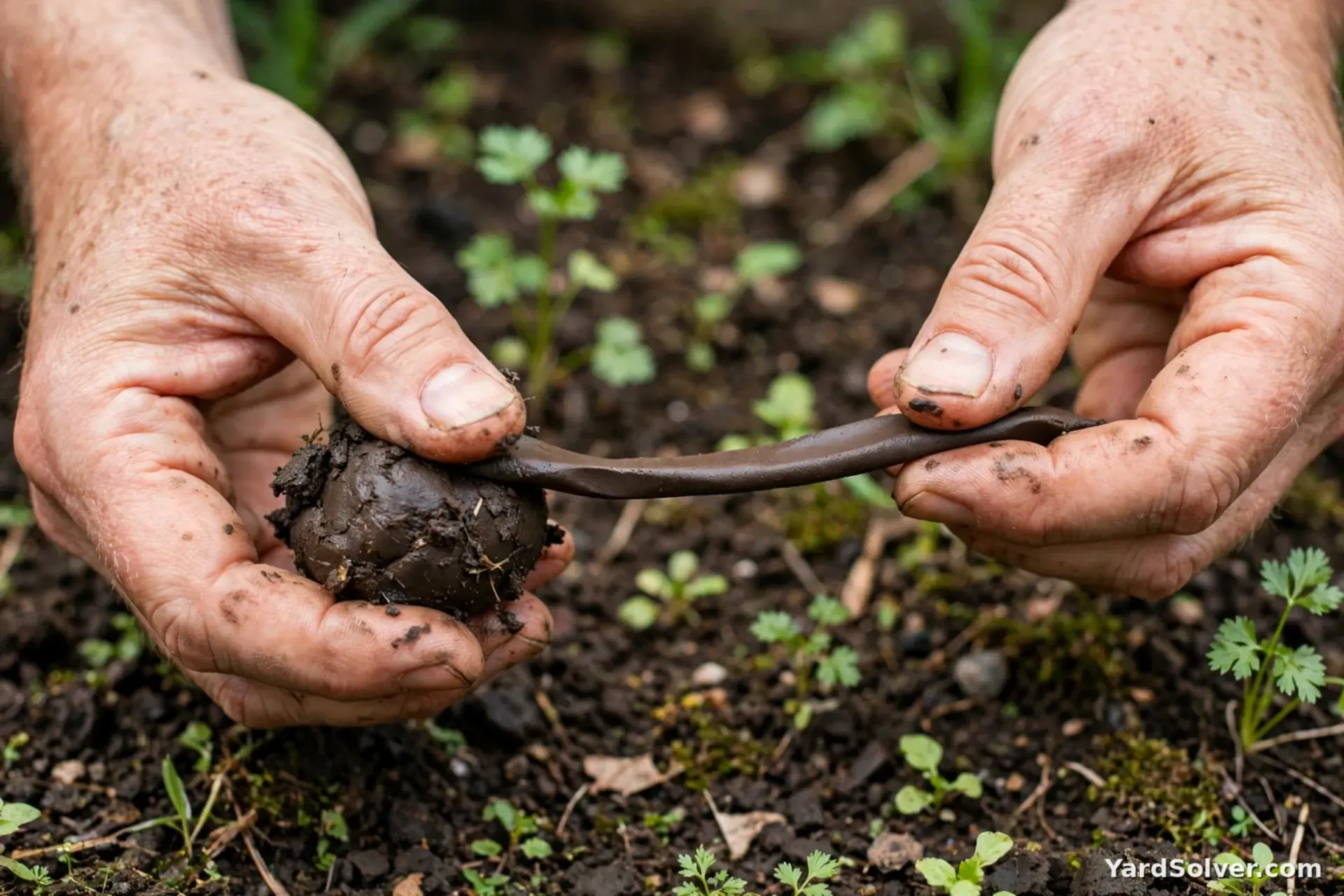
Gypsum is calcium sulfate. Dissolved in soil water, its calcium ions do two useful things: they feed plants calcium without touching pH (there is no carbonate in gypsum to neutralise acid), and on clay they encourage particles to clump into crumbs — flocculation — which opens drainage and makes heavy soil workable sooner after rain. Its sulfate half supplies sulfur, a genuinely short nutrient in many regions.
The limits are just as definite. The flocculation effect is strongest on sodic clays and mildest on ordinary ones, it fades over a season or two, and it does nothing for compaction caused by traffic or working wet soil. Gypsum is a targeted amendment with three jobs — not a general soil tonic, whatever the bag art implies.
Step 2 — The three jobs, the three rates
One bag, three unrelated purposes. The calculator holds all three; the table shows how different the doses are — and why "a bit of gypsum" without a stated job is not a plan.
| Job | Rate per 1,000 sq ft | Basis | Repeat |
|---|---|---|---|
| Condition heavy clay | 40 lb | Standard extension conditioning rate (~1 ton/acre) | Yearly at most, with compost doing the lasting work |
| Add calcium, keep pH | 20 lb | Gentle top-up for calcium-hungry crops on neutral soil | As a soil test directs |
| Remove sodium (sodic soil) | 39.5 lb × meq to exchange | CEC × (ESP now − ESP target) ÷ 100 — from your lab report | Retest after a season of leaching |
Worked example: a sodic soil at CEC 20 with ESP 15% going to 5% must exchange 2.0 meq/100 g — 79 lb per 1,000 sq ft, double the clay rate. Run your own figures through the Gypsum Calculator — all three routes. Acid soil instead? That is lime’s job: the Soil pH Calculator sets the dose.
Step 3 — The sodium job, honestly paced
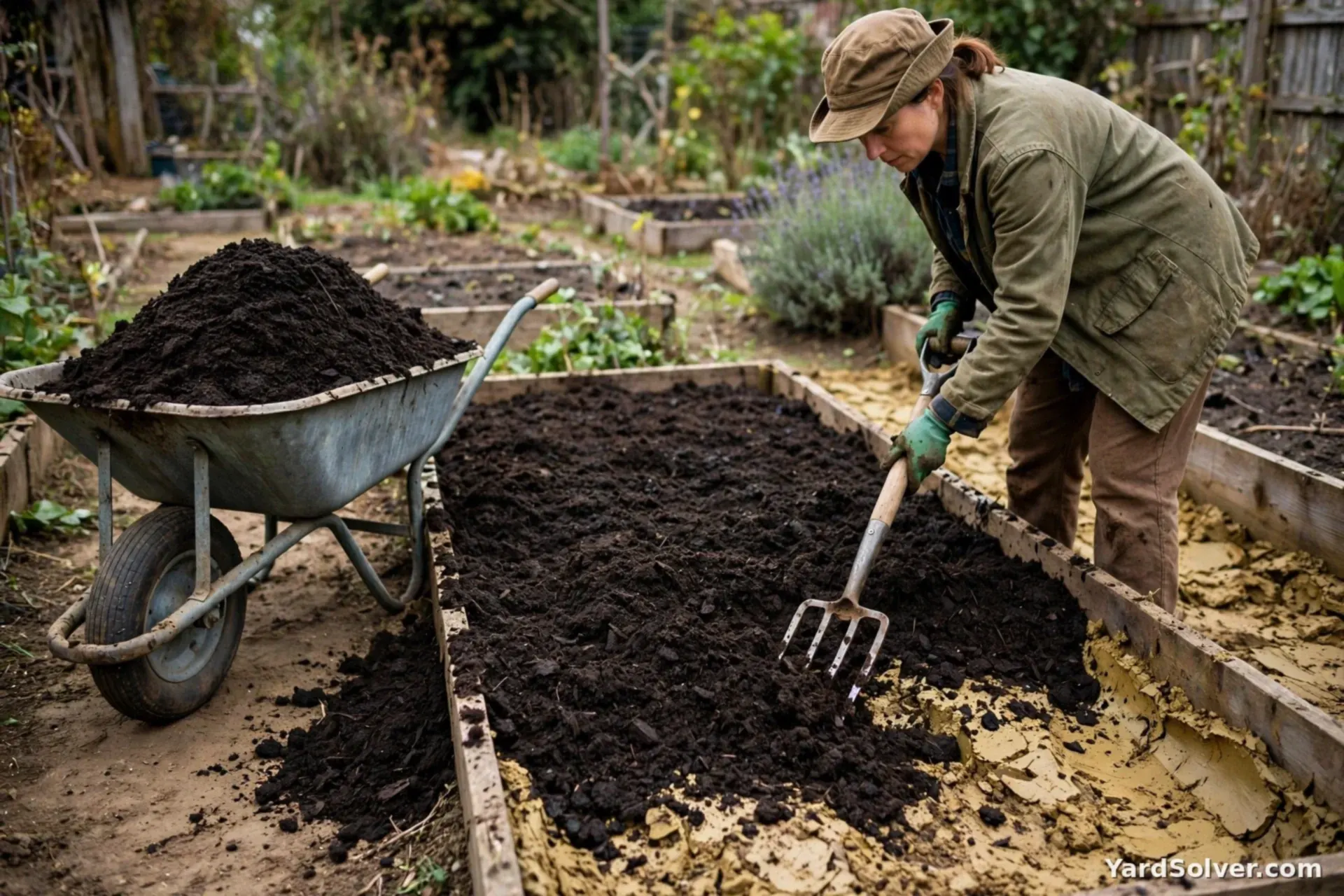
Sodic soil — ESP above roughly 15% — is the one place gypsum is close to indispensable. Sodium disperses clay into a structureless paste that crusts, seals and drains at a crawl. Gypsum’s calcium swaps onto the exchange sites and pushes sodium into the soil water — but the job is only half done there: the sodium must still leach below the roots, which takes drainage and a season of water moving through, not a single heroic watering.
Two consequences follow. First, without drainage there is no cure — a sodic soil in a sealed basin needs a drain before it needs a bag. Second, patience is the method: apply, leach, retest, and only then decide whether a second dose is owed. Gardeners who re-dose on schedule instead of on evidence overshoot into magnesium and potassium tie-ups.
Step 4 — The two famous myths, retired
Myth one: gypsum fixes acid soil. It cannot — pH is set by hydrogen and aluminium chemistry that only a carbonate (lime) or similar base neutralises; gypsum’s sulfate does not consume acidity. Decades of trials show pH unmoved by gypsum. If your test says acid, the honest bag is lime, dosed by the Lime Calculator.
Myth two: gypsum cures blossom end rot. The rot is a calcium shortage inside the fruit, but the cause is almost always interrupted water supply — the calcium sits in the soil, undelivered, while the plant’s plumbing falters. Steady watering and mulch cure the overwhelming majority of cases; gypsum helps only the rare soil that actually tests low in calcium. Treating a watering problem with a mineral is how both persist.
Questions people ask
How do I know if my soil is sodic?
From a full soil test: ESP above about 15% (or a high SAR reading) with the field signs — surface crusting, water ponding on soil that is not steep, and a greasy feel when wet. A basic pH/NPK test does not report sodium; ask the lab for CEC and ESP explicitly.
Can gypsum and lime go on together?
They answer different questions, so yes, when a soil is both acid and sodic or clay-heavy, both may be owed — lime for the pH, gypsum for the sodium or structure. Dose each by its own calculator and test rather than substituting one for the other.
Pelletised or powdered gypsum — does it matter?
The chemistry is identical; the handling is not. Pellets spread evenly in a broadcast spreader and dust less, then need water and time to break down. Powder acts a little faster and blows around a lot more. Buy whichever you will actually spread evenly.
How long until gypsum improves my clay?
Flocculation begins as soon as it dissolves — weeks with good watering — and the visible workability gain usually shows within a season. It also fades: plan on organic matter and roots for permanence, with gypsum as the opener, not the act.
Is gypsum safe around ponds and drains?
It is among the gentlest amendments — calcium sulfate is sparingly soluble and not a nutrient-pollution concern like phosphorus or nitrogen. Still, spread on soil, not pavement, and sweep strays back; tidy practice costs nothing.
Sources
Key facts on this page cross-checked against Gypsum — Wikipedia — background on gypsum chemistry, soil use and the sodic-soil exchange Soil Testing for Lawns — MU Extension — soil-test interpretation — where CEC and ESP figures come from.
Related page
Read next: How to Fix Clay Soil: The Five Steps That Actually Work
Comments & ratings
No comments yet.
Be the first to share your experience.