
Guides · Home projects · Published November 18, 2026 · By Faizan Ahmad
How Much Paint Do I Need?
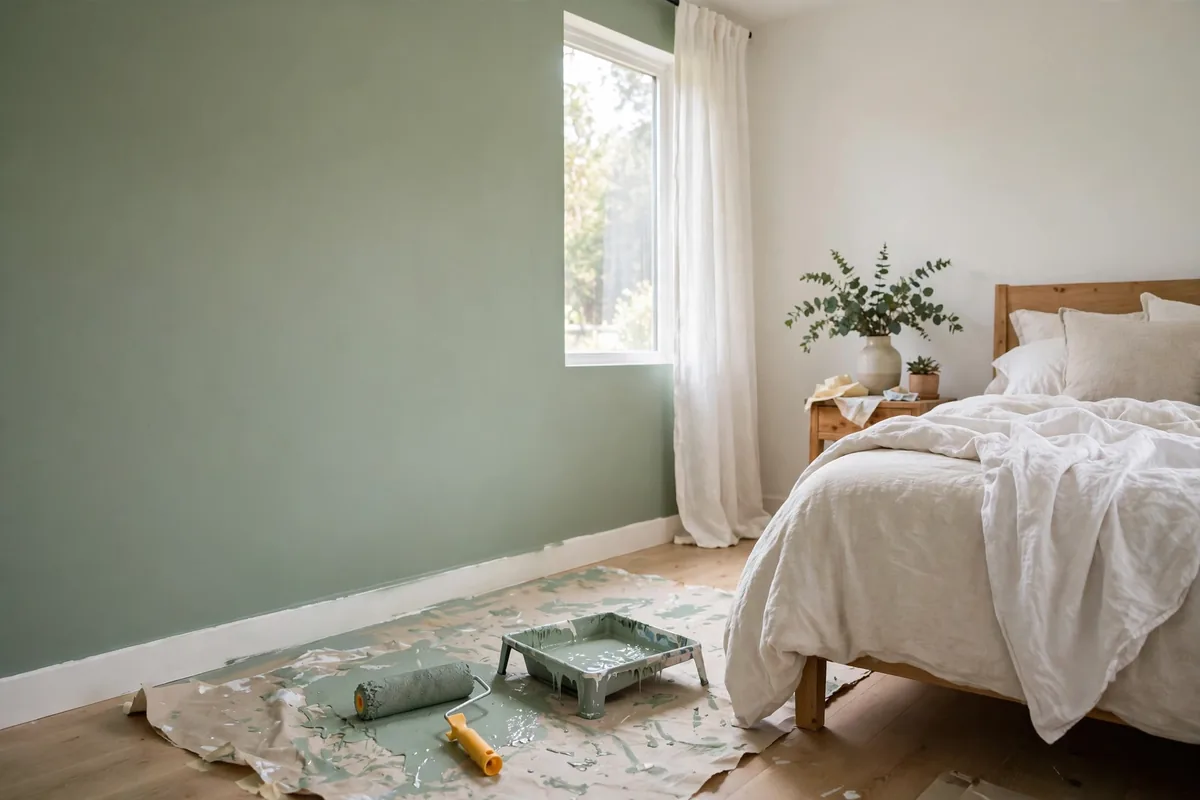
Paint is the one job where the wrong guess announces itself halfway through a wall, with the furniture piled in the middle of the room. Most people estimate from the floor — "it is only a 12 by 10 room" — and the floor is the one surface they are not painting. The walls of that small bedroom hold nearly three times the floor's area, and then two quieter traps finish the job: the doors and windows that should come off the total, and the second coat that doubles it again. Get those two steps right and the gallon count follows almost by itself. That is exactly the sequence our Paint Calculator runs for you. This guide shows how the calculator works, the maths underneath it, and the places where the number on the can stops telling the truth: rough walls, strong colour changes, ceilings, and primer. By the end you will be able to check any rule of thumb — including "one gallon per coat" — against your own room.
The short answer, on one card
- The formula: paintable area = (perimeter × wall height) − 21 sq ft per door − 15 sq ft per window; gallons = paintable area × coats ÷ 350, rounded up
- One gallon covers about 350 sq ft per coat on a smooth wall — closer to 300 on rough or porous walls
- Two coats is the standard: the coats number multiplies the coverage you have to buy, it does not share one gallon between them
- The ceiling adds length × width of paintable area, at the same coverage
- Primer is a separate line: about one coat over the paintable area on bare drywall, never counted as one of the colour coats
Step 1 — Measure the walls, not the floor
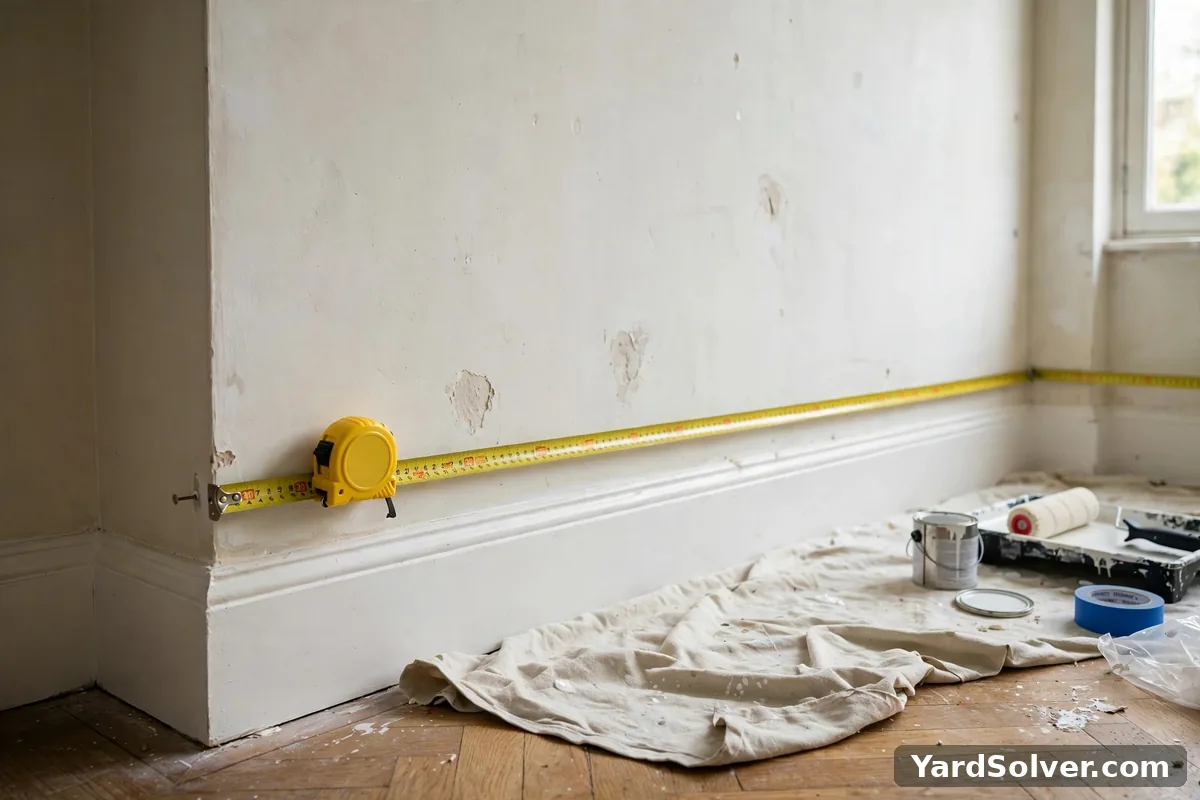
The calculator needs the walls, so measure the walls. Run a tape along one long wall for the length, across the short wall for the width, and from floor to ceiling for the height — 8 ft in most houses, 9 ft in many newer ones, and that extra foot adds a full eighth to the paint. Then count, do not measure: how many standard doors, how many standard windows. The calculator already knows their sizes, about 21 sq ft for a door and 15 for a window, and Step 4 shows what that knowledge is worth. Here is why the floor misleads: a 12 × 10 ft bedroom has 120 sq ft of floor, but its walls — 44 ft of perimeter times 8 ft of height — come to 352 sq ft before deductions. Anyone who sized the job off the 120 bought roughly a third of the paint the walls will drink. If a room is an odd shape, with a bay, an alcove or a sloped ceiling, split it into rectangles, measure each one, and add the pieces — the same split-and-add method our guide to measuring square footage, indoors and out walks through for yards, and it works identically on walls. No tape? Pace the walls: a normal walking pace is roughly 2.5 ft, and an honest pace count beats a confident guess.
Step 2 — Run the calculator: what each input does
Open the Paint Calculator — gallons for any room and type in the length, width and wall height from Step 1, in feet or in metres — the unit switch converts everything behind the scenes. Enter the door and window counts; the calculator subtracts about 21 sq ft per door and 15 sq ft per standard window before it does anything else. Choose the coats: two is the normal plan for any colour change, one can be enough for a same-colour refresh over sound paint, and three is the honest budget for a dramatic jump, as Step 6 explains. Tick the ceiling box if the ceiling gets the same treatment and the calculator adds length × width to the paintable area. Finally, the country toggle, Canada or the USA, is not decoration: it prices the answer with typical per-gallon prices for good interior paint in your country, so the estimate is in the currency and the range you will actually meet at the store. The answer comes back as paintable area, gallons rounded up to whole gallons — you cannot buy 1.72 gallons — the same volume in litres, and an estimated cost range. Press the print button and you have the shopping list: gallons of colour, and primer as its own line if the walls need it.
Step 3 — The maths the calculator is doing
There is no hidden model here either — the calculator runs the same four steps a professional estimator runs, and you can check every one on paper. Step one: gross wall area = perimeter × height, where the perimeter is 2 × (length + width). Step two: paintable area = gross area − 21 sq ft per door − 15 sq ft per window. Step three: coverage to buy = paintable area × number of coats. Step four: gallons = coverage ÷ 350, rounded up, because 350 sq ft per gallon per coat is the fair middle figure for smooth, previously painted walls — the calculator page itself notes the real range is about 300–400, and uses 350. In metric the calculator measures the room in metres, works in square metres behind the scenes, and reports the answer in litres as well as gallons. Sanity-check it against a room you can picture: a 12 × 12 ft room with 8 ft walls is 48 × 8 = 384 sq ft gross; take off one door and two windows and 333 sq ft remains; two coats need 666 sq ft of coverage; 666 ÷ 350 = 1.90, so 2 gallons. The table below is the same maths pre-run for the room sizes people ask about most; it is worth a screenshot before any store trip.
| Room size | Gross wall | After 1 door + 2 windows | Exact gallons (2 coats) | Buy |
|---|---|---|---|---|
| 10 × 10 ft | 320 sq ft | 269 sq ft | 1.54 gal | 2 gallons |
| 12 × 10 ft | 352 sq ft | 301 sq ft | 1.72 gal | 2 gallons |
| 12 × 12 ft | 384 sq ft | 333 sq ft | 1.90 gal | 2 gallons |
| 14 × 12 ft | 416 sq ft | 365 sq ft | 2.09 gal | 3 gallons |
| 16 × 14 ft | 480 sq ft | 429 sq ft | 2.45 gal | 3 gallons |
| 20 × 16 ft | 576 sq ft | 525 sq ft | 3.00 gal | 3 gallons |
Every row assumes 8 ft walls, one standard door and two standard windows, walls only, at 350 sq ft per gallon. Read the table the way the calculator thinks: the jump from 2 gallons to 3 happens sooner than most people expect, because the second coat is not a top-up — it is the whole wall area bought a second time. A taller room moves every row up: the same 12 × 12 room with 9 ft walls has 381 sq ft of paintable wall and needs 2.18 gallons, a 3-gallon buy, before the ceiling is even considered.
Step 4 — The two places every guess goes wrong
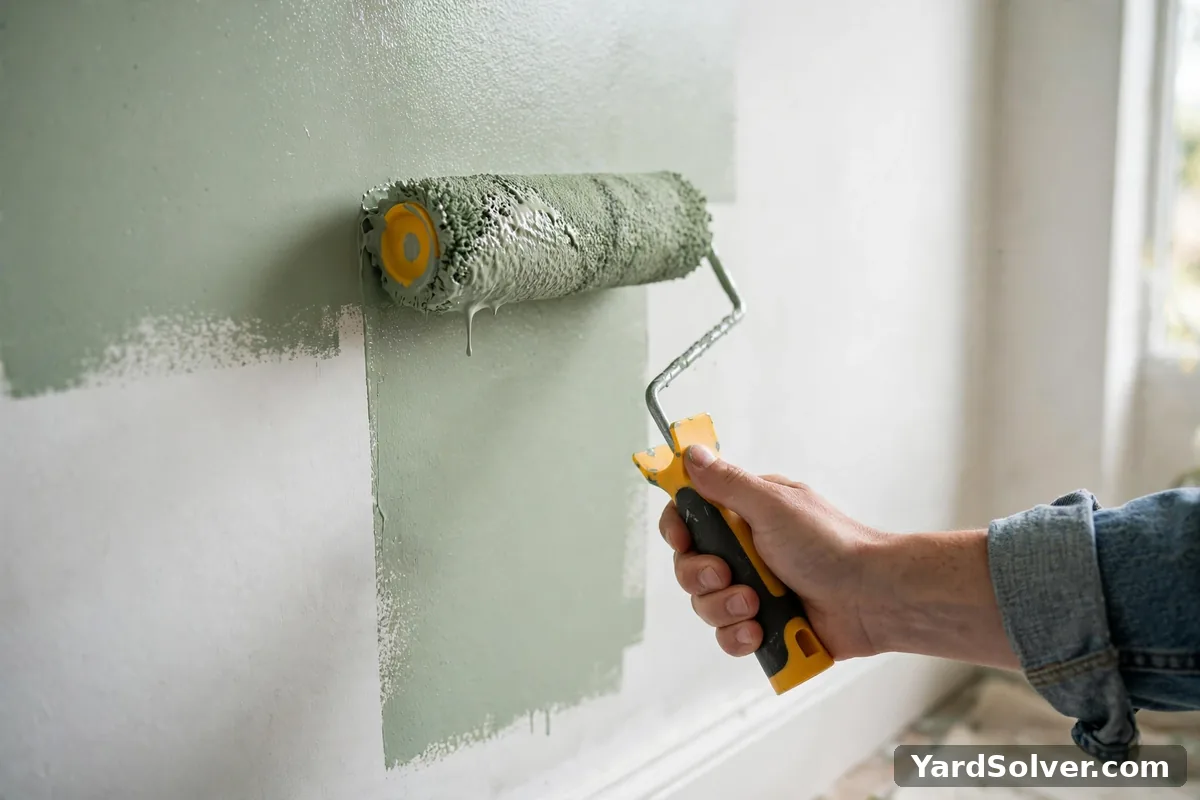
Outdoors, a quantity guess usually fails on area. Indoors, it fails in two specific places, and both are built into this calculator precisely because they are so easy to skip. The first is the deduction. A door is about 21 sq ft you will not paint and a standard window about 15, so an ordinary bedroom with one door and two windows hands back 51 sq ft — roughly a seventh of its gross wall, and on a small room more than a tenth of the whole job. Skip the deduction and you overbuy on small rooms; worse, guess the room from its floor and you have skipped the walls themselves. The second is the coats multiplier. Two coats does not mean the same gallon stretched thinner — it means covering the paintable area twice, so the coverage to buy doubles: 301 sq ft of wall becomes 602 sq ft of coverage. This is where the popular rule "one gallon per coat" quietly breaks. It is true only when the paintable area happens to be about 350 sq ft or less. Our 301 sq ft bedroom looks like a one-gallon room coat by coat, yet it needs 1.72 gallons in total, and anyone who bought one gallon discovers the shortfall three walls into the second coat. The calculator multiplies by coats for you — trust its total over a hopeful guess, because running short on the second coat, on a Sunday evening, is the most common paint story there is.
Step 5 — One bedroom, worked start to finish
Here is the calculator's own example, done the way the calculator does it. A bedroom 12 ft by 10 ft, with 8 ft walls, one door, two windows, in two coats. First the perimeter: 2 × (12 + 10) = 44 ft of wall. Multiply by the height for the gross area: 44 × 8 = 352 sq ft. Now the deduction from Step 4: 352 − 21 for the door − 15 − 15 for the windows = 301 sq ft of actual, paintable wall. Multiply by coats: 301 × 2 = 602 sq ft of coverage to buy. Divide by the coverage rate: 602 ÷ 350 = 1.72, and paint is sold in whole gallons, so the buy is 2 gallons — about 7.6 litres. Now tick the ceiling box. The ceiling adds 12 × 10 = 120 sq ft, so the paintable total becomes 301 + 120 = 421 sq ft; two coats need 842 sq ft of coverage; 842 ÷ 350 = 2.41, so the buy rises to 3 gallons if the ceiling gets the same paint and the same two coats. Last, primer. If those walls are bare drywall, primer goes over the 301 sq ft first — about 1 gallon — and it sits on the shopping list as its own line, not inside the 2 gallons of colour. Type the numbers, see the answer, print your list: 2 gallons of colour, 1 of primer if the walls are new, and no second trip mid-room.
Step 6 — Why the can is a best case, and the honest extras
The 350 sq ft per gallon this calculator plans on is a fair middle figure, not a promise, and knowing when it shrinks is what separates an estimate from a hope. Rough, textured or very porous walls drink more — plan on about 300 sq ft per gallon. Run the worked example at 300 and the exact need becomes 602 ÷ 300 = 2.01 gallons: the safe buy is suddenly 3 gallons, not 2, which is why rough walls deserve the lower figure from the start rather than a rescue trip later. Strong colour changes can demand a third coat — deep red over white, or white over a dark colour, may still show through after two; a tinted primer often saves that third coat, which is one more reason primer is priced separately instead of being waved away. Box your paint: when a room needs more than one gallon, pour the cans into a single larger bucket and mix them, because slight tint differences between cans are real and boxing makes the whole room one consistent colour — buy all the paint for a room at once, from the same tint batch, for the same reason. Quarts are for touch-ups, not rooms: per litre they cost far more than gallons, and a quart covers only about 88 sq ft per coat, so if the calculator says 2 gallons, 2 gallons is the economical buy even with paint left over. And that leftover is not waste: keep it, labelled with the room name and the date, because a labelled can in the cupboard is exactly what future scuffs, nail holes and furniture knocks will need, in the exact colour, months from now.
What the calculator can't do
Honesty about the edges, so the number earns your trust. The calculator works with standard openings — about 21 sq ft for a door, 15 for a window — so a room with patio doors, a picture window or a wall of glass needs those measured and subtracted at their real size, or the answer will run high. It cannot feel your walls: it plans at 350 sq ft per gallon and tells you plainly that rough or porous surfaces run closer to 300, but the judgement about which figure your walls deserve is yours, made with a hand on the wall, not a number on a screen. It cannot promise a colour change away — no calculator can know whether your particular dark-to-light jump will cover in two coats or demand a third, which is why a test patch matters more than any estimate. And its costs are typical store-price ranges for good interior paint in your country, not quotes: a sale week can beat them and a premium line can bury them. What it does guarantee is the sequence, checked above: perimeter times height, openings off, coats multiplied, coverage divided. Get those four steps right and the gallon count follows.
Keep going
Run your own room through the Paint Calculator for its exact gallons and cost range, and measure it the careful way with How to Measure Square Footage — the same split-and-add method works on walls, floors and yards alike.
Painting day is one job in a whole season of projects. The Garden Planner lays out the indoor refresh and the outdoor work — planting, feeding and building — in one calendar, so the room gets finished before the garden calls you back outside.
Questions people ask
How much paint for a 12×12 room?
With 8 ft walls, 1 door and 2 windows, a 12×12 ft room has 384 sq ft of gross wall, minus 51 sq ft of openings, leaving 333 sq ft to paint. Two coats need 666 sq ft of coverage, and at 350 sq ft per gallon that is 1.90 gallons, so buy 2 gallons for the walls. Add the ceiling and the total rises to 2.73 gallons, so buy 3 gallons.
Do I subtract doors and windows?
Yes. You do not paint the openings, so the calculator takes off about 21 sq ft for each standard door and about 15 sq ft for each standard window before it works out gallons. On a small room that deduction is more than a tenth of the wall, and skipping it is one of the two places most guesses go wrong. Measure unusually large openings, such as patio doors or a full-height window, and subtract their real area instead.
One gallon per coat — is that right?
Only if your paintable wall area is about 350 sq ft or less. One gallon covers about 350 sq ft in one coat on a smooth wall, so the rule is one gallon per 350 sq ft per coat, not one gallon per coat for any room. A room with 301 sq ft of wall needs 602 sq ft of coverage for two coats, which is 1.72 gallons, so 2 gallons, even though each single coat looks like a one-gallon job.
Does primer count as a coat?
No. Primer is a separate product doing a separate job: it seals bare drywall, patches and porous surfaces so the colour coats sit evenly. The calculator counts primer as its own line, at roughly one coat over the paintable area. A 301 sq ft bedroom needs about 1 gallon of primer on bare drywall, then the full number of colour coats on top. Over sound paint in a similar colour you can usually skip primer entirely.
Why does the paint cover less than the can promises?
The figure on the can, usually 350 to 400 sq ft per gallon, is a best case on a smooth, sealed wall. Rough, textured or porous walls drink more paint, closer to 300 sq ft per gallon, and bare drywall drinks the most of all until primer seals it. The calculator plans on 350 sq ft per gallon as a fair middle figure. If your walls are rough, work on 300 instead: the same two-coat bedroom then needs 2.01 gallons exactly, so the safe buy is 3 gallons, not 2.
How much paint do I need for one wall?
Multiply the wall width by its height, subtract any door or window in that wall, multiply by the number of coats, then divide by 350. A plain 12 ft wide, 8 ft high wall is 96 sq ft; two coats need 192 sq ft of coverage, which is 0.55 gallons, so buy 1 gallon and keep the leftover, labelled, for touch-ups. A quart covers about 88 sq ft per coat, so a quart only suits a very small single wall or a touch-up job.
Paint amounts are area divided by coverage — and coverage on the tin is the optimistic number
Paint tins state a coverage per litre measured on smooth, sealed surfaces; real walls — porous plaster, strong colours underneath, textured finishes — drink noticeably more. The reliable method is to measure each wall's length times height, subtract doors and windows, divide by a coverage figure discounted for your surface, and multiply by the number of coats, remembering that a colour change usually takes one coat more than a refresh of the same colour.
Buy the whole job in one batch where a colour is mixed, because tinting varies between mixes, and keep the remainder labelled for touch-ups — a dried skin lifts off and the paint beneath keeps for years in a sealed tin stored frost-free. Primer is part of the count on bare plaster, stained or glossy surfaces: skipping it does not save paint, it moves the cost into extra topcoats that still show the stain through.
Sources
Key facts on this page cross-checked against Paint — Wikipedia — background on paint, its composition and its coverage.
Related page
Read next: How Many Tiles Do I Need? Waste by Layout & How the Calculator Works.
Comments & ratings
No comments yet.
Be the first to share your experience.