
Guides · Soil & feeding · Published November 22, 2026 · By Faizan Ahmad
How Much Potassium Do Plants Need? K₂O Rates, Sources & the Chloride Question
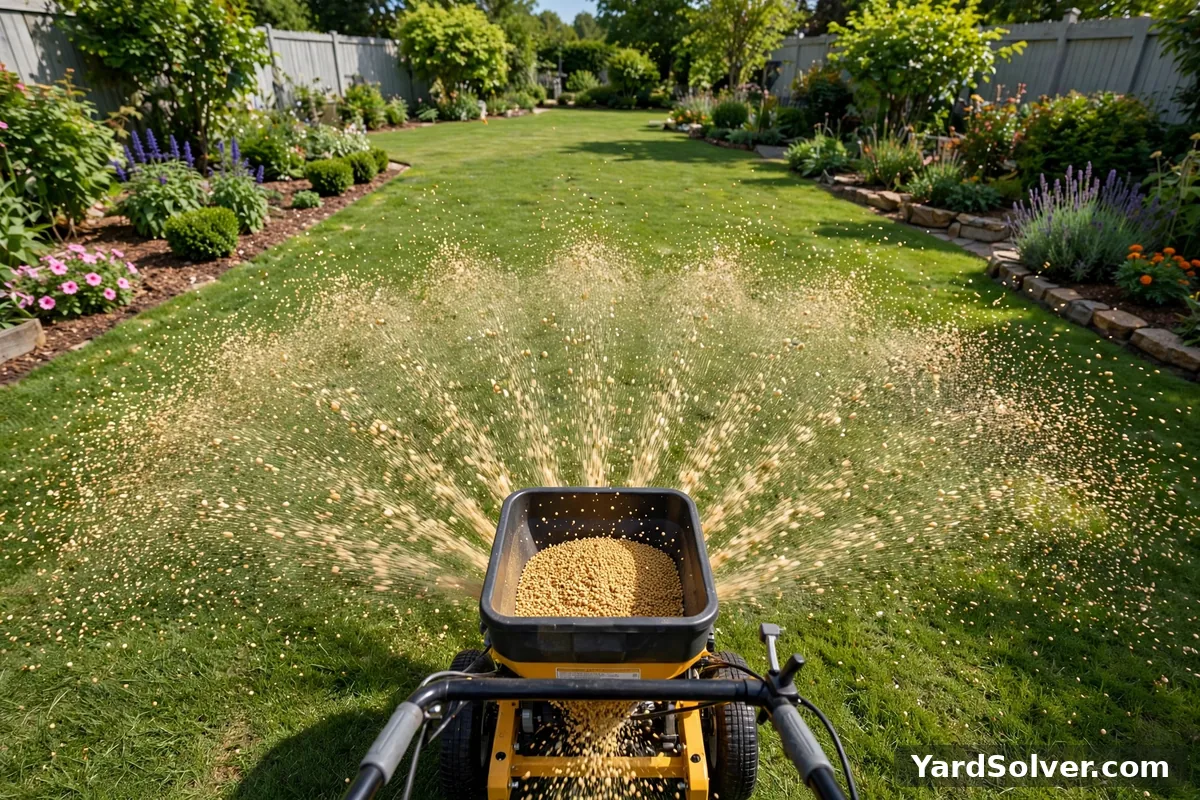
Plants need potassium in quantities second only to nitrogen — it runs their water economy, stiffens stems and fills fruit — yet it is the nutrient most often delivered by guesswork sources: a bucket of wood ash here, a dusting of greensand there. Our Potassium Calculator puts every source on one scale: the K₂O your soil test calls for, divided by the percentage your source actually carries. This guide covers the rates, the sources, and the one real choice in potassium — muriate or sulfate.
The short answer, on one card
- Rates come from a soil test: 0.5–1.5 lb of K₂O per 1,000 sq ft covers maintenance to build-up
- The conversion: product lb = K₂O lb ÷ (third number ÷ 100)
- Muriate of potash (60%): 1.7 lb per lb of K₂O · Wood ash (~5%): about 20 lb
- Clay holds K, sand leaks it: sandy soils need smaller, more frequent doses
- Chloride matters: potatoes, beans and berries prefer sulfate of potash
Step 1 — What potassium does, and who spends it
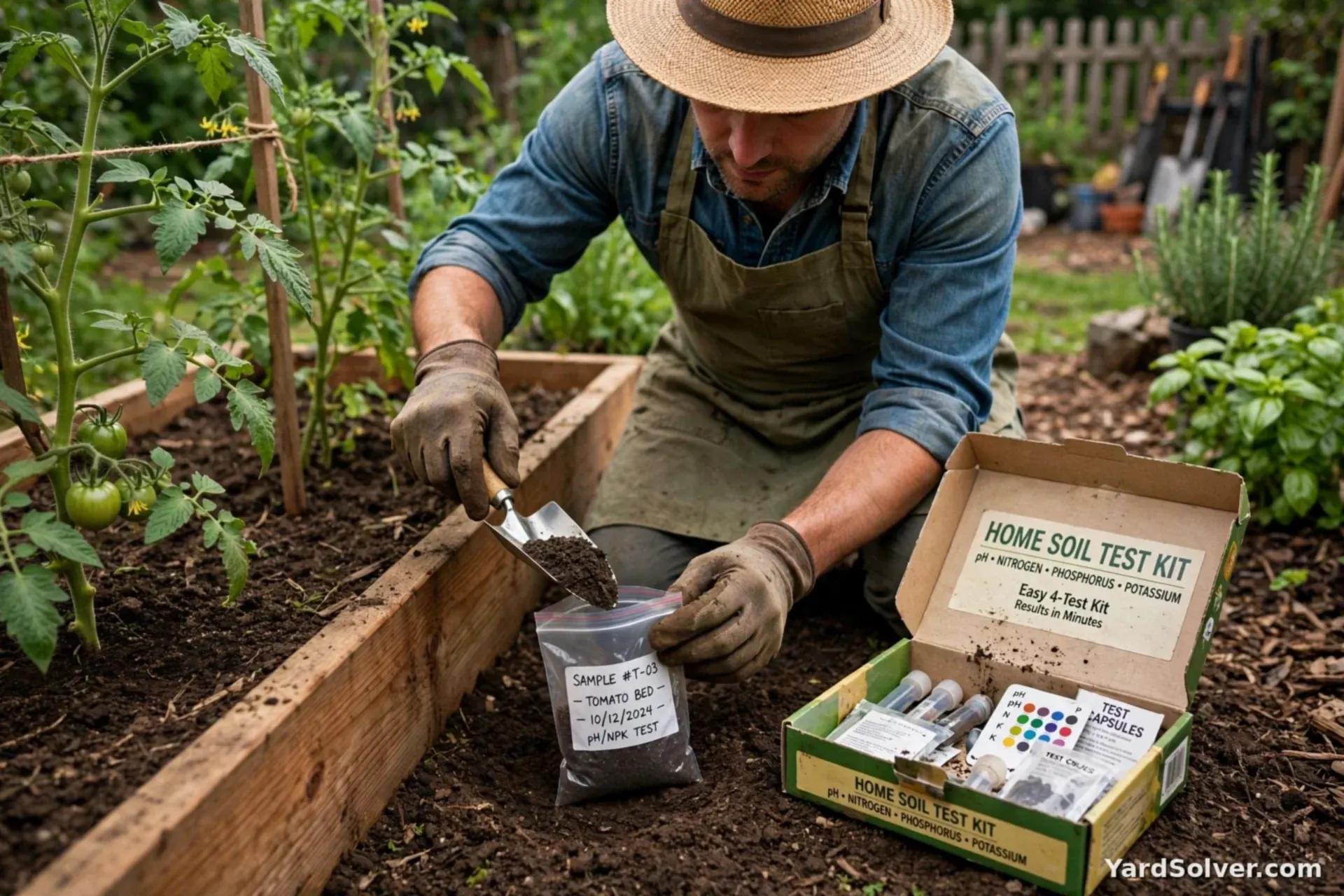
Potassium is the plant’s water manager: it opens and closes the stomata, moves sugars from leaf to fruit, and activates the enzymes behind protein and starch. Crops show the spending in the harvest itself — a bushel of tomatoes, potatoes or corn carries a large weight of potassium off the bed, which is why fruiting and storage crops drain the soil’s K bank faster than leafy ones. Deficiency appears as scorched leaf edges on older leaves, weak stems and poor fruit fill — but by the time leaves scorch, the soil test has been low for a while.
Soil type sets the banking rules. Clay particles hold potassium on their exchange sites and release it steadily; sand has few sites and leaks K downward with drainage water. The same 1 lb rate that lasts a clay garden two seasons may need splitting into two half-doses on sand — the calculator’s targets assume you know which soil you have, and the Soil Texture Calculator settles that question from a jar of your own soil.
Step 2 — Sources on one honest scale
The single-nutrient method the calculator runs: product needed = K₂O needed ÷ (K₂O% ÷ 100). Worked for the standard rate — 1 lb of K₂O per 1,000 sq ft — the traditional sources finally show their true exchange rates against refined potash.
| Source | K₂O % | Product per 1,000 sq ft for 1 lb K₂O | Character |
|---|---|---|---|
| Muriate of potash | 60% | 1.7 lb | Cheapest and strongest; carries chloride |
| Sulfate of potash | 50% | 2.0 lb | No chloride; adds sulfur; the vegetable-bed default |
| Wood ash (hardwood) | ~5% | ~20 lb | Variable; also liming — raises pH as it feeds |
| Greensand | ~3% | ~33 lb | Geological and very slow; a soil conditioner more than a feed |
| Kelp meal | ~1% | ~100 lb | A supplement and soil tonic, not a practical K source at rate |
Your own area and target go into the Potassium Calculator — exact pounds for your source. Feeding a complete NPK bag instead? The Fertilizer Calculator counts the third number along with the other two.
Step 3 — The chloride question: muriate or sulfate
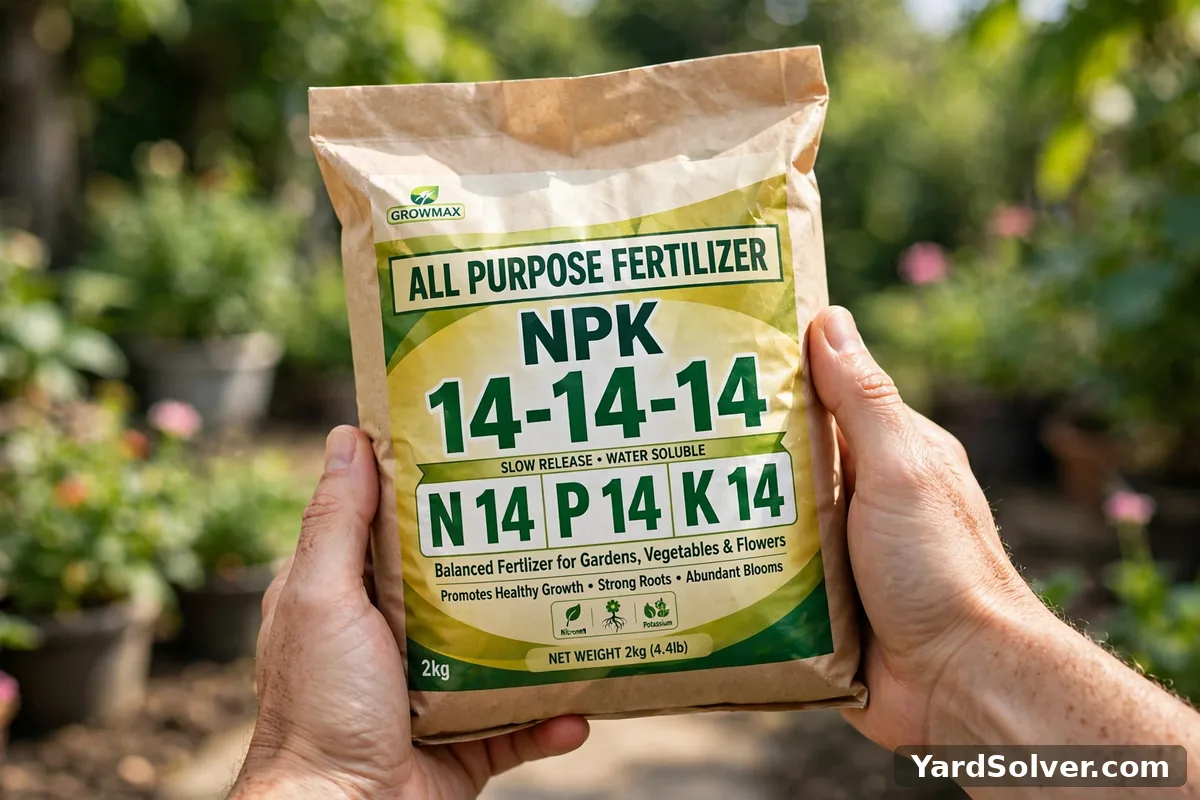
Muriate of potash is potassium chloride, and the chloride half of it is the only real controversy in potassium feeding. Most crops tolerate it well at garden rates, especially applied in fall so winter rain dilutes the chloride. But potatoes (scab and quality), beans, strawberries and other soft fruit are measurably chloride-sensitive, and on already-salty or very sandy soil the chloride adds to a salt burden plants must drink against.
Sulfate of potash costs more per pound of K₂O and sidesteps the question entirely, with a bonus of sulfur — itself a frequently short nutrient. The practical rule used by most vegetable growers: sulfate on the beds, muriate (if any) on the lawn and orchard floor, and never either one beyond the soil test’s rate.
Step 4 — Wood ash, honestly rated
Wood ash deserves its traditional place — it is a real potassium source with calcium and trace minerals besides — but it must be rated honestly: hardwood ash averages about 5% K₂O and varies widely with species and burn, so the calculator’s 20 lb per 1 lb of K₂O is an average dressed as a number. Ash also liming: it raises pH roughly like a mild dose of lime, which makes it a poor partner for blueberries and other acid-lovers, and a double correction on soil already alkaline — check with the Soil pH Calculator before ash becomes a habit.
Two safety lines never move: ash only from untreated, unpainted wood — never from decking offcuts, plywood or coal — and ash stored dry under cover, because rain leaches the potassium out of an open pile before it ever reaches the garden.
Questions people ask
What does potassium actually do for a plant?
It regulates water (opening and closing leaf pores), moves sugars to fruit and roots, activates enzymes and stiffens stems. It is used in nitrogen-like quantities but, unlike nitrogen, it is not built into plant tissue — it works dissolved in the sap, which is why harvests carry so much of it away.
How fast does potassium work?
Refined potash dissolves and is available within days of watering in. Greensand and rock sources release over seasons to years. Wood ash is intermediate — its potassium is largely soluble, its calcium slower.
Can I use banana peels as a potassium fertilizer?
As compost, gladly; as a measured K source, no. Fresh peels carry roughly 0.1% nitrogen, 0.1% P₂O₅ and about 2.3% K₂O by fresh weight in the most generous analyses, and the viral 'banana peel water' releases very little of even that. The banana peel water fact check elsewhere on this site runs the full numbers.
Why do my tomatoes crack and taste flat — is it potassium?
Cracking is a water-swing problem first; flavour follows variety, sun and harvest timing, with genuine K deficiency (scorched older leaf edges, poor fill) a real but later suspect. The soil test separates the stories in one step.
Is there such a thing as too much potassium?
Yes. Beyond the test’s rate, extra K suppresses magnesium and calcium uptake — a garden can show magnesium deficiency caused by potassium generosity. Nutrients are a balance sheet, not a leaderboard.
Sources
Key facts on this page cross-checked against Soil Testing for Lawns — MU Extension — soil-test interpretation and potassium-rate guidance from the University of Missouri Potash — Wikipedia — background on potash sources and potassium in agriculture Wood ash — Wikipedia — background on wood ash composition and garden use.
Related page
Read next: Fertilizer Numbers Explained: Read Any Bag in Seconds
Comments & ratings
No comments yet.
Be the first to share your experience.