
Guides · Patios and paths · Published November 18, 2026 · By Faizan Ahmad
How Much Sand Do I Need?
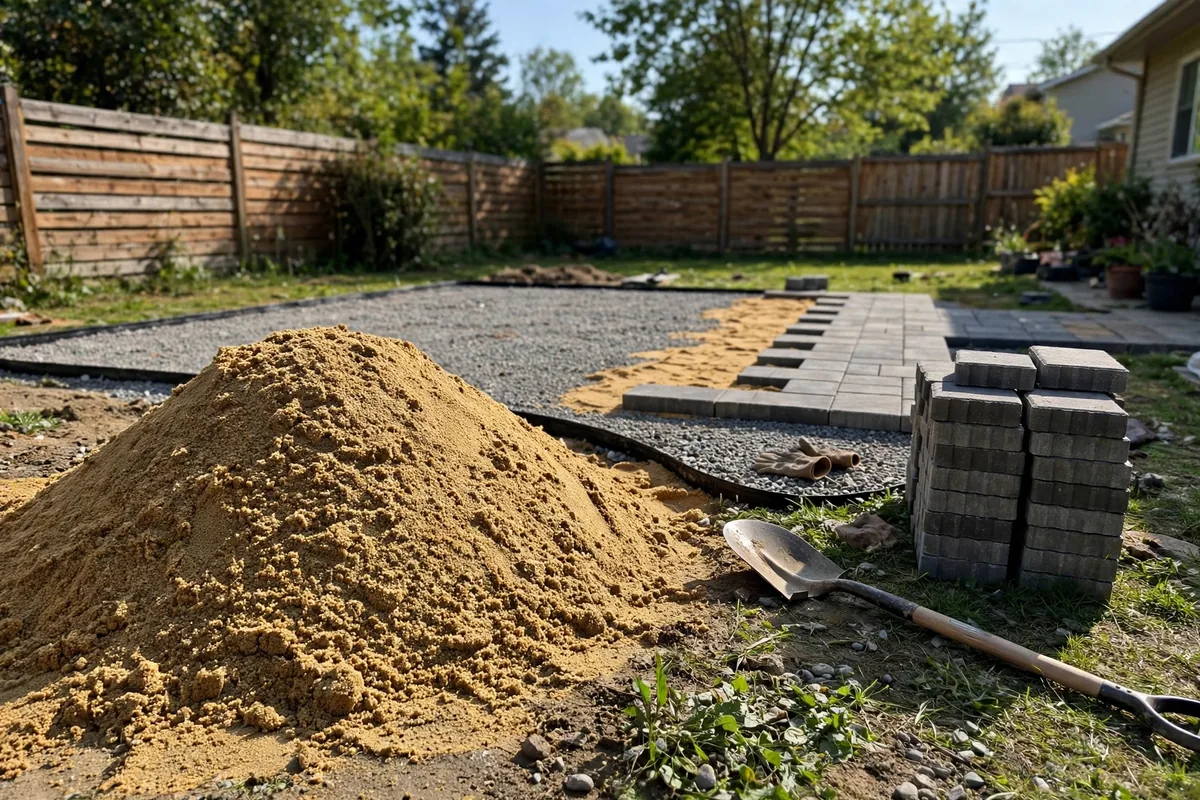
Sand is sold three ways at once — by the 50 lb bag, by the cubic yard and by the ton — and nobody at the store or the landscape yard will convert between them for you. So most people guess, and the guess fails in both directions: too little, and the patio bedding runs out with three rows of pavers still to lay; too much, and a damp, heavy pile sits on the driveway for a year. The fix is one volume worked out once, then read in whichever unit you are buying — and that is exactly what our Sand Calculator does. Type in an area and a depth and it hands back cubic yards, 50 lb bags and tons together, because it is the same pile of sand in all three. This guide shows how the calculator works, the maths underneath it, and the part a number alone cannot tell you: which sand the job actually needs. People search for this as a sand calculator for pavers, for a sandbox, for a pool, in tons and in yards — every one of those is the same question, and it is answered below.
The short answer, on one card
- The formula: length (ft) × width (ft) × depth (inches) ÷ 12 = cubic feet. Divide by 27 for cubic yards, divide by 0.5 for 50 lb bags, and multiply yards by 1.35 for tons
- One 50 lb bag holds about 0.5 cubic feet — so about 54 bags make a cubic yard
- One cubic yard of dry sand weighs about 1.35 tons — roughly 2,700 lb. Damp sand weighs noticeably more
- Depth is set by the job: 1 inch for paver bedding, 2–3 inches under a pool, 6 inches or more in a play area
- Past about half a yard — roughly 27 bags — bulk delivery usually beats bags on price and on your back
Step 1 — Let the job set the depth
Every sand question is really a depth question, because the area is easy to measure and the depth is where jobs differ. A paver patio wants exactly 1 inch of bedding sand — no more. That surprises people, but the strength of a patio is the compacted gravel base underneath, not the sand; the sand is a level bed the pavers sit in, and a bed thicker than an inch stays soft, so pavers rock and settle unevenly. The full layer-by-layer build is in Paver Patio Base: How Deep, and How Much Gravel and Sand. Under an above-ground pool the sand is a cushion, not a structure: 2–3 inches, level and compacted, over ground that is already flat — it protects the liner from small stones and roots, and it cannot fix a slope. Levelling a yard is the opposite extreme: sand for levelling goes on thin, a quarter to a half inch worked into low spots a little at a time, because a thick layer of pure sand over soil just makes a beach your grass roots cannot cross. And a sandbox or play area goes deep — 6 inches or more — because the depth is the product: it is what small diggers and small landings actually use. Pick the depth your job calls for before you touch a calculator; the same 100 square feet needs 17 bags at 1 inch and 100 bags at 6 inches.
Step 2 — Run the calculator: one volume, three units
Open the Sand Calculator — yards, 50 lb bags and tons at your depth and type in the length and width of the area, in feet or in metres — the unit switch converts everything behind the scenes. Then pick the depth from Step 1: the calculator offers 1, 2, 3, 4 and 6 inches, which between them cover bedding, pool bases and play areas. The country toggle, Canada or the USA, looks like decoration and is not: it prices the answer with typical store prices for your country, so the bag cost you see is in the currency you will actually pay. The answer comes back in all three units at once — the volume in cubic feet, the bag count rounded up to whole bags (you cannot buy 33.3 bags), the bulk figure in cubic yards, the weight in tons, and an estimated bag cost. Read whichever line matches how you intend to buy, and press the print button for a list you can hand to the yard. One tip for round jobs — a circular pool base or a round sandbox: enter the diameter as both the length and the width, then take 0.785 of the answer, because a circle covers 0.785 of the square drawn around it.
Step 3 — The maths the calculator is doing
There is no hidden model here — the calculator runs the same volume maths the landscape yard runs, and you can check every line on paper. Cubic feet = length (ft) × width (ft) × depth (inches) ÷ 12. The ÷ 12 simply turns inches of depth into feet so all three dimensions match. From cubic feet, three conversions finish the job: ÷ 27 = cubic yards (a cubic yard is a 3 ft × 3 ft × 3 ft cube), ÷ 0.5 = 50 lb bags, rounded up (one bag holds about half a cubic foot), and cubic yards × 1.35 = tons for dry sand. Run the three backwards and they agree, which is the whole point: a cubic yard is 27 cubic feet, 27 ÷ 0.5 is 54 bags, and 54 bags at 50 lb each is 2,700 lb — the same 1.35 tons the weight line gives you. The table below is that maths pre-run on the calculator's own example area, 10 × 10 ft, at every depth the calculator offers. Screenshot it before a store trip.
| Depth | Cubic feet | Cubic yards | 50 lb bags | Weight (dry) |
|---|---|---|---|---|
| 1 inch — paver bedding | 8.3 cu ft | 0.31 yd³ | 17 bags | 0.42 tons |
| 2 inches — pool base | 16.7 cu ft | 0.62 yd³ | 34 bags | 0.83 tons |
| 3 inches — pool base, deep end | 25.0 cu ft | 0.93 yd³ | 50 bags | 1.25 tons |
| 4 inches | 33.3 cu ft | 1.23 yd³ | 67 bags | 1.67 tons |
| 6 inches — play area | 50.0 cu ft | 1.85 yd³ | 100 bags | 2.50 tons |
Read the table the way the calculator thinks: depth is the lever, and weight is the warning. Doubling the depth doubles everything — including the tonnage you have to move, which is why Step 6 takes hauling as seriously as buying.
Step 4 — The right sand for the job
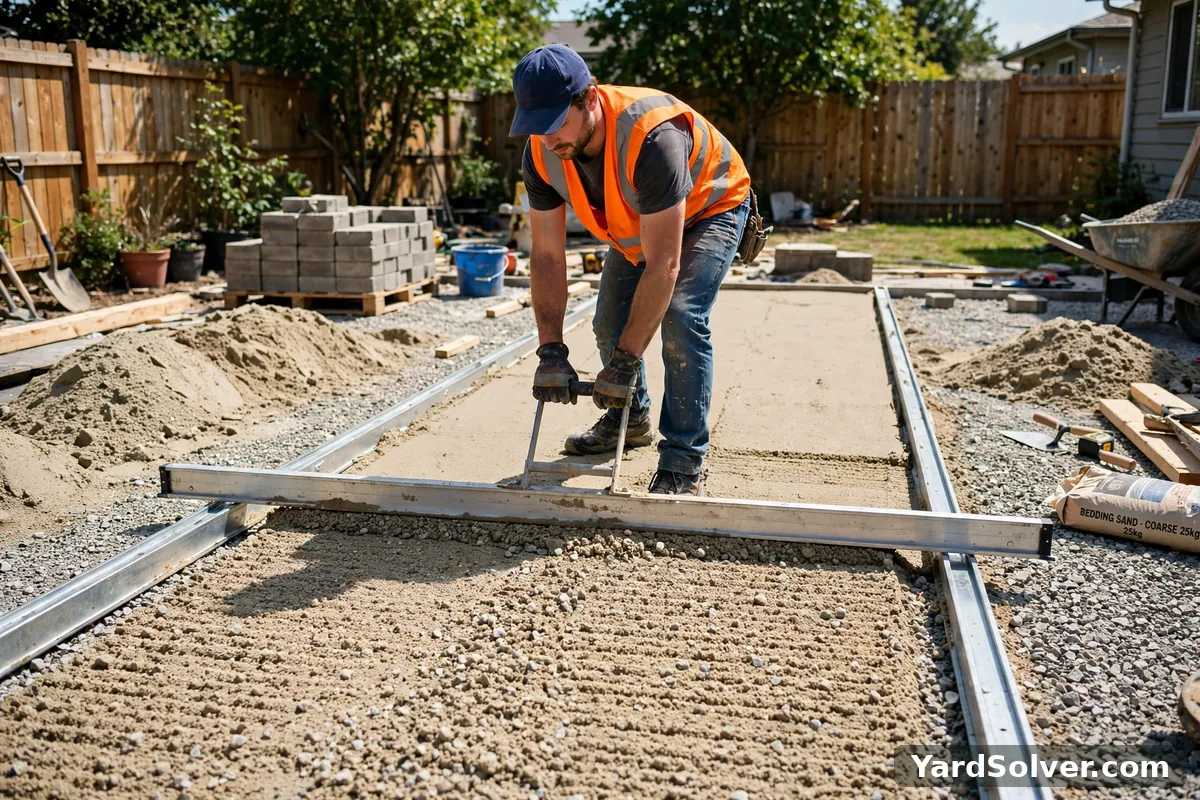
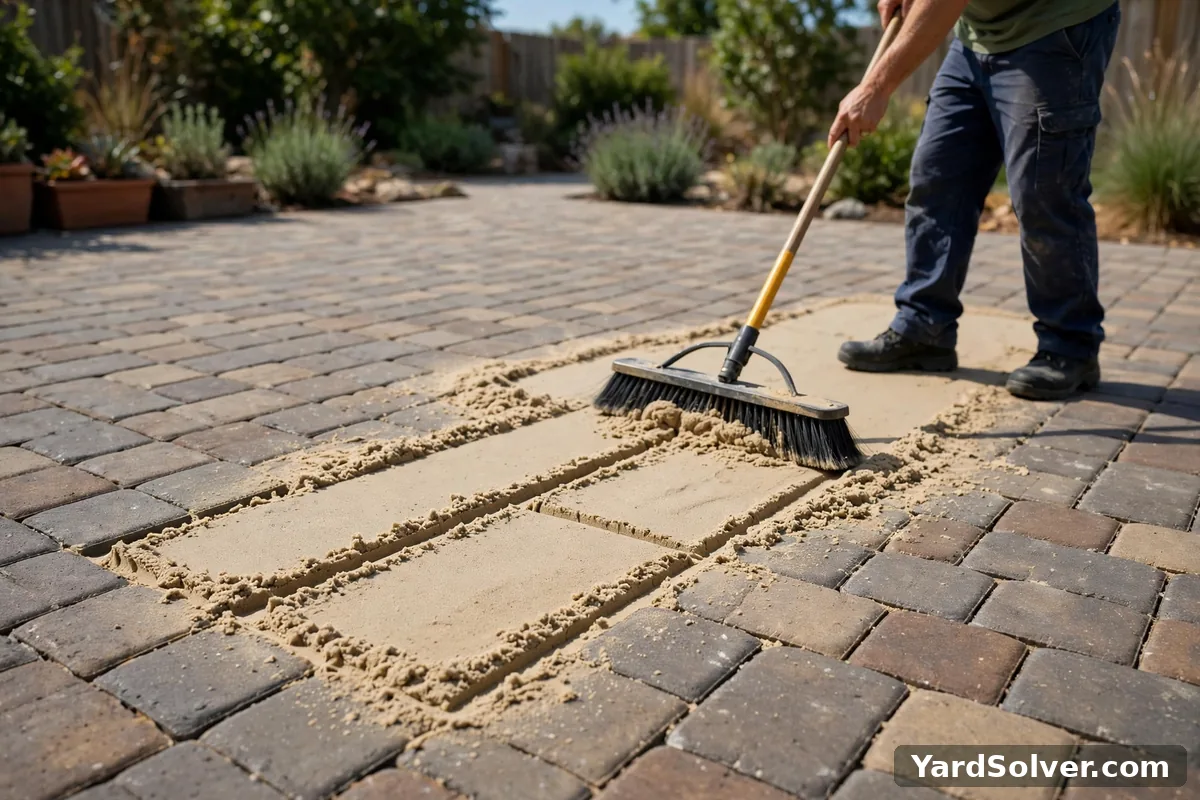
The calculator counts volume; it cannot choose the material, and sand is not one material. For a paver bedding layer, buy coarse concrete sand — washed, angular grains that lock against each other, compact firmly and still drain. Angular is the key word: the grains bite instead of rolling. For the joints between pavers, the sand is different again: polymeric sand, swept in dry and misted with water so its binder sets and locks the joints against weeds and washout. It is sold by coverage rather than by volume, so the bag's coverage chart, not this calculator, sets that count. And the sand that is wrong for bedding is the one people reach for first: play sand. Its grains are fine and rounded — lovely for small hands, hopeless under a paver, because a layer of tiny ball bearings never locks and the patio stays spongy. Play sand has exactly one home, the sandbox, where soft and fine is the point. Under a pool, a finer washed sand is right — the cushion should be smooth against the liner — but remember Step 1: it cushions, it does not level. Buy the sand the job names, not the sand that happens to be on offer.
Step 5 — The calculator's own example, worked start to finish
Here is the worked example from the calculator page itself, done line by line so you can follow the conversions. The area is 10 ft × 10 ft at 2 inches deep — a pool base, say. Area first: 10 × 10 = 100 square feet. Volume: 100 × (2 ÷ 12) = 16.7 cubic feet. In yards: 16.7 ÷ 27 ≈ 0.62 cubic yards. In bags: 16.7 ÷ 0.5 = 33.3, rounded up to 34 bags of 50 lb. In weight: 0.62 × 1.35 ≈ 0.83 tons. Four numbers, one pile of sand — order it as 34 bags from the store, or as roughly two-thirds of a yard from the landscape yard, and you get the same base. Now change one thing and watch the patio version appear: the same 10 × 10 ft area as paver bedding at 1 inch is half of everything — 8.3 cubic feet, 0.31 cubic yards, 17 bags, 0.42 tons. That bedding belongs to a whole patio order, and How Many Pavers Do I Need? counts it together with the pavers themselves and the gravel base under it, so the sand, the stone and the pavers arrive as one list instead of three guesses.
Step 6 — Bags or bulk, and the honest weight of it
The calculator's answer straddles both ways of buying on purpose, because the break-even is a real number: about half a cubic yard, roughly 27 bags. Below that line, bags win — no delivery fee, no pile to tarp, and bags carry through a side gate one at a time. Past it, a bulk load usually costs less than the same volume bagged even after delivery, and the yard loads it in minutes. But do the weight maths before you choose to haul either one yourself. A cubic yard of dry sand is about 2,700 lb — more than the payload of most half-ton pickups, which is a name, not a promise. Even the worked example is not light: 34 bags is 1,700 lb of dead weight, far beyond one trip in a family car, and every bag has to be lifted at the store, lifted out at home, and carried to the job. Then there is moisture. The 1.35 tons per yard figure is for dry sand; water fills the gaps between the grains, and damp sand can approach 1.5 tons per cubic yard — which is why a rain-soaked bulk pile feels heavier per shovel, why a wet load's scale ticket reads high, and why the calculator flags its weight as a dry-sand figure. If the total is past half a yard and the vehicle is not a real truck, delivery is not a luxury; it is the honest option.
What the calculator can't do
Honesty about the edges, so the number earns your trust. The calculator assumes a flat rectangle spread to an even depth: ground that dips needs a little more in the low spots, and hand-spreading is never perfectly even, so adding about 10% for spreading and settling is a sensible habit on any job that cannot pause mid-way. It cannot choose your sand — Step 4 is yours to apply, and the wrong sand at the right volume still fails. It cannot level your ground: under a pool especially, a slope has to be dug out in soil first, because sand copies every bump beneath it and migrates out of hollows. It cannot weigh damp sand exactly, since moisture varies load by load. And its cost figures are typical store-price ranges for your country, not quotes — a sale week can beat them and a delivery fee can bury them. What it does guarantee is the volume maths, checked above three ways: get the area, the depth and the sand type right, and the bags, yards and tons all follow from the same pile.
Building the patio this sand beds? The base comes first — the paver patio base guide, gravel depth and sand layer included walks the whole build from digging out to the last joint.
Keep going
Run your own area and depth through the Sand Calculator, then build the patio it beds with Paver Patio Base: How Deep, and How Much Gravel and Sand and count the pavers themselves with How Many Pavers Do I Need?.
Planning the whole project — patio weekend, pool day, sandbox build — on one calendar? The Garden Planner lays out the season's jobs in order, so the sand arrives the week the base is ready for it, not a month before.
Questions people ask
How much does a cubic yard of sand weigh?
About 1.35 tons (roughly 2,700 lb) dry. Damp sand can weigh noticeably more — water fills the gaps between the grains — which matters if you are hauling it yourself: half a yard of dry sand is already about 1,350 lb, close to the payload limit of many half-ton pickups.
How many 50 lb bags make a cubic yard?
About 54 bags. One 50 lb bag holds roughly 0.5 cubic feet, and a cubic yard is 27 cubic feet, so 27 divided by 0.5 is 54. That is also why bulk usually wins past about half a yard — past 27 bags you are paying bag prices for a bulk-sized job.
Which sand do I buy for pavers?
Coarse concrete sand for the bedding layer — it is angular, so it locks together, compacts and drains — and polymeric sand for the joints, which sets firm when misted. Play sand is wrong for bedding: its grains are fine and round, so the layer stays spongy and pavers rock and settle unevenly.
How deep should sand be under a pool?
2 to 3 inches, level and compacted, over ground that is already flat. The sand is a cushion that protects the liner from small stones and roots, not a leveller — a slope or a dip has to be fixed in the soil first, because sand copies every bump under it and washes out of low spots.
How much sand do I need for a sandbox?
More than most people expect, because play areas go deep: 6 inches or more. A 4 x 4 ft sandbox at 6 inches deep is 8 cubic feet — 16 bags of 50 lb, about 0.30 cubic yards. At 8 inches it rises to about 22 bags. Use washed play sand here, not bedding sand — this is the one job where fine, soft grains are the point.
How much extra sand should I allow for spreading and settling?
About 10 percent. Sand spills, fills low spots you did not see, and compacts a little under pavers and pool walls. On the calculator's worked example — 0.62 cubic yards — 10 percent takes the order to about 0.68 yards, roughly 37 bags or 0.92 tons. One bag over is cheaper than a second trip or a second delivery fee.
Sand is ordered like gravel — volume from area and depth, weight from the conversion
Whether the job is a paver base, a play area or levelling a lawn, sand is calculated the same way: the area multiplied by the depth of the layer, converted from volume to the tonnes or bags it is sold in. Sharp sand for bases and bedding compacts and locks; soft builder's sand is for mortar and play, and the two are not interchangeable however similar they look in the bag — a paver base laid on soft sand moves, and mortar made with sharp sand tears as it is worked.
For paving work, count the bedding layer separately from any sub-base of crushed stone beneath it, screed to a consistent depth, and allow about ten percent over the neat figure for compaction and spillage. For lawn topdressing, the layer is millimetres, not inches, and the same area arithmetic at that shallow depth produces a surprisingly small order — which is exactly why the calculation, not a guess at the merchant, should set the quantity.
Sources
Key facts on this page cross-checked against Sand — Wikipedia — background on sand, its grades and its uses.
Related page
Read next: How Much Gravel Do I Need? Cubic Yards, Tons & How the Calculator Works.
Comments & ratings
No comments yet.
Be the first to share your experience.