
Guides · Soil & feeding · Published November 18, 2026 · By Faizan Ahmad
How Much Soil Do I Need for a Raised Bed?
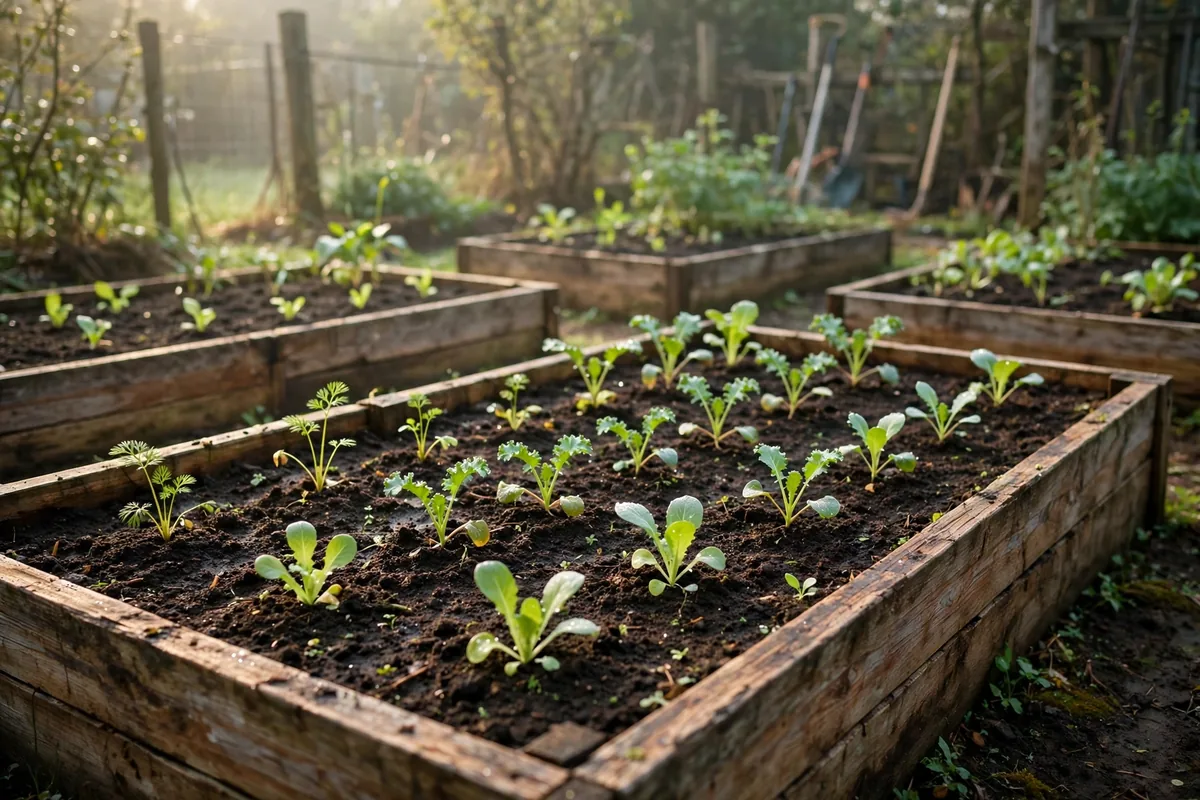
Every raised bed starts with the same store-aisle guess: picturing the empty frame, picking a number of bags, and hoping. The guess is nearly always wrong in one direction or the other — a bed holds far more soil than it looks like it should, so the job ends a few bags short, or the driveway ends up buried under bags nobody needed. The fix is one honest multiplication, and it is exactly what our Raised Bed Soil Calculator runs for you. This guide shows how the calculator works, the maths underneath it, and the part most quantity guides skip entirely: what the soil should actually be. A raised bed is not filled with "soil" — it is filled with a mix, and the mix is where the money is saved or wasted. By the end you will be able to size any bed, split the answer into its three ingredients, and check any store's advice against your own numbers.
The short answer, on one card
- The formula: length (ft) × width (ft) × depth (ft) = cubic feet. Divide by 27 for cubic yards, or by your bag size for bags
- One 8×4 ft bed at 12 inches deep needs 32 cubic feet — about 1.2 cubic yards, 22 US bags of 1.5 cu ft, or 37 Canadian bags of 25 L
- Two 8×4 beds need 64 cubic feet = 2.37 cubic yards — 43 US bags or 73 Canadian bags, which is bulk-delivery territory
- The mix: equal thirds by volume — topsoil, compost, and peat moss or coir (Mel's Mix). Two beds take about 21 cubic feet of each
- Fill to about 1 inch below the rim — soil settles, and you top up with compost in spring
Step 1 — Measure the inside of the bed
The calculator needs the space the soil will actually occupy, so measure the inside of the frame: length and width between the boards, not over them. On a bed built from 2-inch lumber, measuring outside overstates both dimensions and quietly inflates the order. Depth is the third number, and it is the one people get wrong most often: it is the depth of soil you want, not the height of the boards. A 12-inch board filled to 1 inch below the rim holds 11 inches of soil — but the honest way to plan is to size the full depth you intend to fill and let the headroom come out of the settling, as Step 7 explains. Most vegetables are happy in 10–12 inches of mix; shallow-rooted crops like lettuce manage in 6–8 inches, while carrots and other root crops use every inch of 12 or more. If the bed sits on concrete or a balcony, the full frame depth is soil depth, because there is nothing underneath for roots to reach into. On open ground, the soil below still counts for deep roots — another reason 12 inches of good mix over decent ground outperforms 18 inches over rubble.
Step 2 — Run the calculator: what each input does
Open the Raised Bed Soil Calculator — bags, yards and cost by bed size and type in the length, width and soil depth from Step 1, in feet and inches or in metres and centimetres — the unit switch converts everything behind the scenes, and metric shoppers can read the answer in litres (handy for the "raised bed soil calculator in litres" question UK and Canadian gardeners ask). Then set the number of beds — this matters more than it sounds, because the calculator multiplies the volume before rounding up to bags, so two beds priced together never waste a bag the way two separate round-ups do. Finally, pick your country, Canada or the USA. That toggle is not decoration: bag sizes differ — 25 L bags (about 0.88 cubic feet) are the Canadian standard, while 1.5-cubic-foot bags are common in the US — so the calculator divides your volume by the bag size actually sold near you and prices the answer with a typical range for your country. The answer comes back in three units at once: cubic feet (the raw volume), bags rounded up to whole bags, and cubic yards for a bulk order, with litres alongside. Press the print button and you have a shopping list in the unit your store sells.
Step 3 — The maths the calculator is doing
There is no hidden model here — the calculator runs the same volume maths a landscape yard runs, and you can check it on paper. Cubic feet = length (ft) × width (ft) × depth (inches) ÷ 12. The ÷ 12 simply turns inches of depth into feet so all three dimensions match. From cubic feet, three conversions finish the job: ÷ 27 = cubic yards (a cubic yard is a 3 ft × 3 ft × 3 ft cube), × 28.3 = litres, and ÷ bag size, rounded up = bags. Sanity-check it against the bed almost everyone builds: 8 ft × 4 ft at 12 inches deep is 8 × 4 × 1 = 32 cubic feet — 1.19 cubic yards, about 906 litres. That one bed is the calculator's own worked example, and it surprises most people: a single standard bed is already more than a cubic yard of soil. The table below is the same maths pre-run for the sizes gardeners ask about most, all at 12 inches deep.
| Bed size (at 12 in deep) | Cubic feet | Cubic yards | US bags (1.5 cu ft) | Canadian bags (25 L) |
|---|---|---|---|---|
| 4×4 ft | 16 cu ft | 0.59 yd³ | 11 bags | 19 bags |
| 8×4 ft | 32 cu ft | 1.19 yd³ | 22 bags | 37 bags |
| 10×3 ft | 30 cu ft | 1.11 yd³ | 20 bags | 34 bags |
| Two 8×4 ft beds | 64 cu ft | 2.37 yd³ | 43 bags | 73 bags |
Read the table the way the calculator thinks: volume grows with the footprint, but depth is the silent multiplier. Halve the depth to 6 inches and every number in the table halves; raise an 8×4 bed to 18 inches and it alone needs 48 cubic feet. That is why "how much dirt for a raised bed" can never be answered from the bed size alone — anyone who quotes you a bag count without asking the depth is guessing.
Step 4 — Two beds, worked start to finish
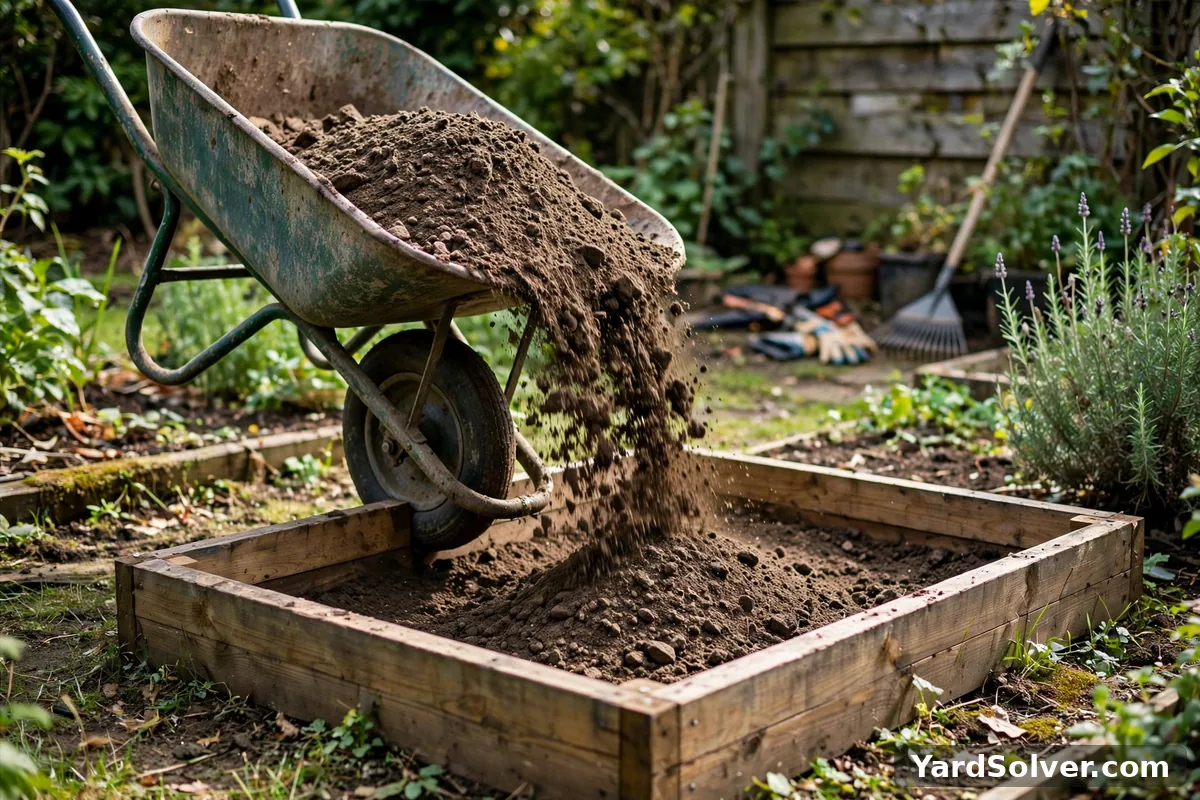
Here is the job this guide is built around: two 8×4 ft beds, filled 12 inches deep — the classic first serious vegetable garden. One bed: 8 × 4 × (12 ÷ 12) = 32 cubic feet. Two beds: 32 × 2 = 64 cubic feet. In bulk units that is 64 ÷ 27 = 2.37 cubic yards. In bags, the country decides: in the US, 64 ÷ 1.5 = 42.7, so 43 bags of 1.5 cubic feet; in Canada, 64 cubic feet is about 1,812 litres, and 1,812 ÷ 25 = 72.5, so 73 bags of 25 L. Stand in the aisle and look at those numbers honestly — 73 bags is a pallet, several car trips, and a sore back. Two beds at this size have crossed the line where bags stop making sense, which is Step 8's subject. But before bags versus bulk, there is a better question: 64 cubic feet of what? Buying all 64 cubic feet as finished bagged garden soil is the most expensive way to fill these beds, and usually not even the best growing medium. The next step splits the volume into the mix that experienced raised-bed gardeners actually use. For the hands-on filling sequence itself — cardboard base, layering, watering in — follow our step-by-step guide to filling a raised bed, which walks the physical job this calculator sizes.
Step 5 — The mix: thirds, not straight bagged soil
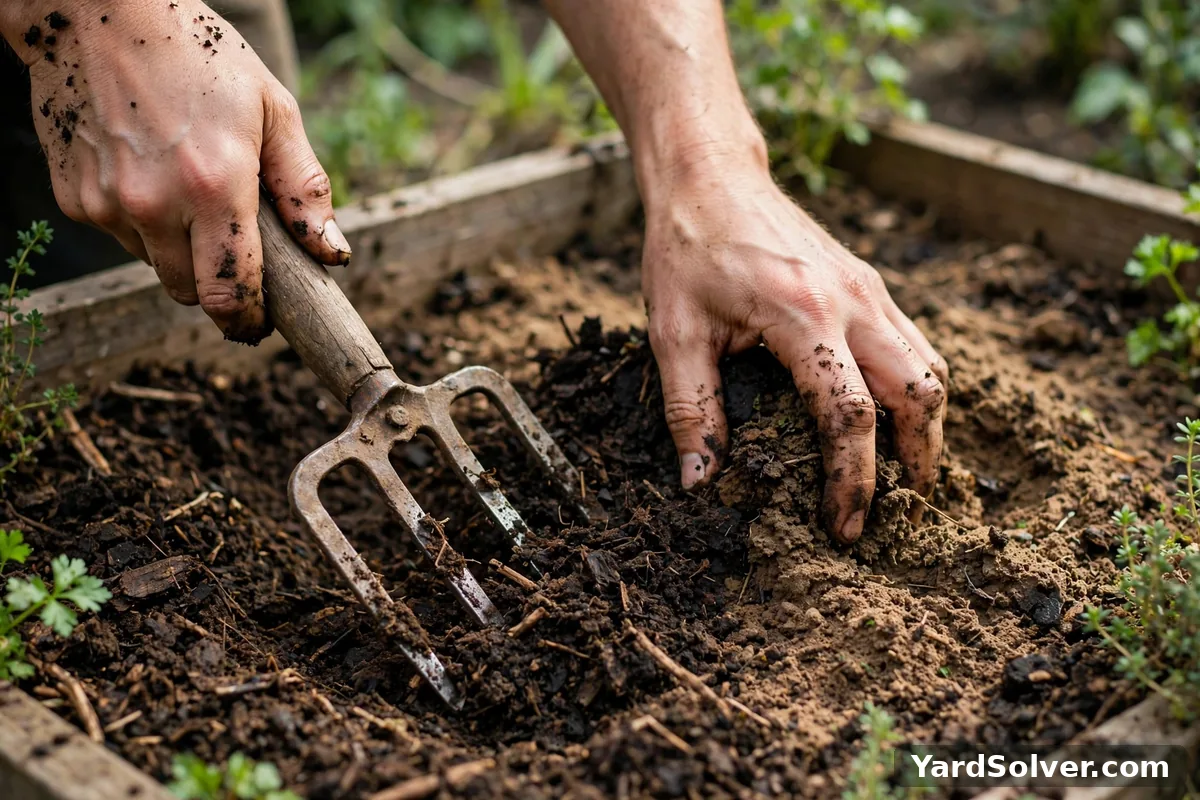
The classic recipe is Mel's Mix, from square-foot gardening: equal thirds by volume — one third topsoil, one third compost, one third peat moss or coir. Each third earns its place. The topsoil is the mineral backbone: weight, structure, and the trace minerals compost alone lacks. The compost is the engine: nutrients, biology, and water-holding organic matter. The peat or coir is the sponge and the air: it keeps the mix from packing into a brick over the season, which is exactly what straight topsoil does in a confined bed, and what straight compost does once it finishes shrinking. For our two beds, the thirds are simple arithmetic: 64 ÷ 3 ≈ 21 cubic feet each of topsoil, compost and peat or coir — roughly 0.79 cubic yards apiece, or about 600 litres of each. In practice you buy the topsoil and compost by the bulk yard (Step 8) and the peat or coir in compressed bales, which expand dramatically when fluffed — a single large bale covers the third for both beds. Blend as you fill: a layer of each, forked together in the bed, beats three separate layers that roots meet one at a time.
Why not simply buy 43 or 73 bags of ready-made garden soil and be done? Because you would be paying bagged, branded prices for the topsoil third — the cheapest ingredient in the mix — and because most bagged "garden soil" is itself mostly topsoil and bark fines with a little compost, mixed to a price rather than to a recipe. The thirds mix, bought as ingredients, typically costs noticeably less per cubic foot than the same volume in finished bags, holds moisture better, and starts with a full third of real compost instead of a dusting. The honest exception: for one small bed, or a bed you must carry soil to — a balcony, a rooftop, a long flight of steps — the convenience of bags can be worth the premium, and the calculator's bag count is the number to take.
Step 6 — Deep beds: fill the bottom cheaply
Everything above assumes the whole depth is growing mix — true for a 12-inch bed, and an expensive mistake for a deep one. An 18- or 24-inch bed filled entirely with Mel's Mix is paying premium prices for the bottom 6–12 inches, a zone roots barely use in the first seasons. The old answer is hugelkultur-style deep fill: lay logs, branches and woody prunings in the bottom of the bed — roughly the bottom third of a deep bed — cover them with leaves, straw or flipped turf, and only then add your proper mix on top, in the top 10–12 inches where roots actually feed. The maths changes completely: an 8×4 bed at 18 inches nominally needs 48 cubic feet, but with the bottom 6 inches as woody fill, the mix order drops to the 12-inch figure — 32 cubic feet — and the bottom is filled with material most gardens produce free every autumn. As the wood slowly rots it holds moisture like a sponge and releases it in dry spells, which is why these beds often need less watering in their second and third years. Two honest cautions. Fresh wood ties up a little nitrogen as it starts to decay, which is another reason to keep it below the root zone rather than mixed through it. And the woody layer settles more than soil does, so deep-filled beds drop further in the first two springs — the top-up in the next step is bigger, and it is still far cheaper than the mix it replaces.
Step 7 — Settling, and the spring top-up
Fresh mix is full of air. Water it in, let gravity and the first rains work, and a bed filled level will sit noticeably lower within weeks — this is settling, and the calculator's guidance handles it the simple way: fill to about 1 inch below the rim, not to the brim and not mounded above it. That inch is your working allowance: it keeps soil and mulch from washing over the boards when you water, and the level you end with after settling is the level the bed keeps. Then expect the rhythm every raised bed settles into: each spring, the surface wants a top-up — an inch or so of compost, spread over the bed and forked lightly into the surface. That annual inch is not a repair; it is the feeding programme. It replaces the organic matter last year's crops consumed, and it is why a bed filled with the thirds mix improves for years instead of exhausting itself. Budget it with the same maths: an 8×4 bed topped with 1 inch of compost needs 32 × (1 ÷ 12) ≈ 2.7 cubic feet — two US bags, or about three 25 L bags in Canada — per bed, per spring. Small numbers, but they are the difference between a bed that peaks in year one and one that gets better.
Step 8 — Bags or bulk? The half-to-one-yard rule
The calculator's answer straddles both worlds on purpose, because the break-even is a real threshold: bulk usually wins past about half to one cubic yard, once the delivery fee is spread over enough soil. Below that, bags win — no delivery fee, no minimum order, no pile on the driveway, and bags carry to a back garden far more easily than a wheelbarrow relay. Our two beds, at 2.37 cubic yards, are well past the line: a bulk delivery of topsoil and compost, with the peat or coir in bales, will almost always beat 43 US bags or 73 Canadian bags on price, and it arrives in one tip instead of dozens of lifts. Two honest caveats. A bulk yard is a bigger pile than most people picture — 2.37 yards is a serious heap — so choose the tarp spot before the truck arrives, as close to the beds as the truck can reach. And bulk quality varies more than bagged: you want screened topsoil and finished compost that smells earthy, not a sour, steaming load that is still cooking. If a yard will let you see and smell the pile before ordering, take the trip; the calculator guarantees the volume, but only your nose guarantees the compost.
What the calculator can't do
Honesty about the edges, so the number earns your trust. The calculator assumes a rectangular bed filled to an even depth: an L-shaped bed should be split into two rectangles, volumes added, and converted to bags once — rounding up per section wastes a bag almost every time. It measures the frame you describe, so if you give it outside dimensions on a thick-timber bed, it will faithfully over-order for you; inside measurements are the ones that count. It cannot judge the ingredients: one yard of screened topsoil and one yard of unscreened fill hold the same 27 cubic feet on paper and grow very different gardens. And its cost figures are typical store-price ranges for your country, not quotes — a sale week can beat them, and a remote delivery fee can bury them. What it does guarantee is the volume maths, checked above: get the length, the width and the true soil depth right, and the bags, yards and litres all follow.
Keep going
Run your own beds through the Raised Bed Soil Calculator, then do the physical fill with our step-by-step guide to filling a raised bed — cardboard base, deep-fill layers, watering in and levelling, in order.
Planning the whole season around the new beds? The Garden Planner lays out filling, planting and feeding in one calendar, so the spring compost top-up lands on the list before the beds tell you they need it.
Questions people ask
How much soil does a 4×8 raised bed need?
Filled 12 inches deep, a 4×8 bed needs 32 cubic feet of soil — about 1.2 cubic yards. That is roughly 22 bags of 1.5 cubic feet in the US (32 divided by 1.5, rounded up) or about 37 bags of 25 litres in Canada. At 8 inches deep it drops to about 21 cubic feet, and at 18 inches it rises to 48 cubic feet — depth is the number that moves the answer most.
Should I fill the bed right to the top?
No — fill to about 1 inch below the rim. Fresh soil settles as it is watered in, and that inch of headroom keeps soil and mulch from washing over the boards when you water. Expect to top up with compost next spring as the level drops again.
What is the best soil mix for a raised bed?
Mel's Mix is the proven recipe: equal thirds by volume — one third topsoil, one third compost, and one third peat moss or coir to hold moisture and keep the mix light. For two 8×4 beds (64 cubic feet in total) that is about 21 cubic feet of each ingredient. Pure bagged garden soil grows plants fine, but you pay bagged prices for the topsoil third that bulk yards sell far more cheaply.
Bagged soil or bulk — which is cheaper?
Bulk usually wins past about half to one cubic yard, once the delivery fee is spread over enough soil. Two 8×4 beds need 2.37 cubic yards, so a bulk delivery of topsoil and compost — with the peat or coir bought in compressed bales — almost always beats 43 to 73 individual bags. For a single small bed, bags win on simplicity: no pile on the driveway and no minimum order.
How much soil do I need in litres for a raised bed?
Multiply cubic feet by 28.3 to get litres. One 8×4 bed at 12 inches deep is 32 cubic feet, about 906 litres — roughly 37 Canadian bags of 25 litres. Two beds are about 1,812 litres, or 73 bags. Metric shoppers can switch the calculator to metres and centimetres and read the same answer in litres.
How do I fill a deep raised bed without paying for 18 inches of mix?
Fill the bottom third with cheap material that breaks down slowly — logs, branches and woody prunings laid hugelkultur-style, then leaves or straw — and put your proper soil mix only in the top 10 to 12 inches, where roots actually feed. An 18-inch bed filled this way needs roughly the mix of a 12-inch bed, and the wood holds moisture as it rots down. Keep the woody layer below the root zone and expect to top up a little more in the first two springs as it settles.
Raised-bed soil is the bed's internal volume — measure inside, and allow for settling
A raised bed holds its internal length times width times depth of soil, and that simple volume is where most orders go wrong: external measurements overstate it, and a bed filled to the brim settles by roughly a tenth in its first season as the mix consolidates and organic matter begins its slow digestion. Work the calculator with inside dimensions and the depth you actually intend — many beds are built taller than they are filled, for sitting and for future top-ups.
Fill in the classic proportions — roughly sixty percent topsoil, thirty percent compost, ten percent aeration material where drainage demands it — mixed rather than layered, and price the total both ways: bags are convenient to a few cubic feet, while a bulk load wins clearly beyond that. Any surplus is a top-up reserve, because the bed will ask for it after its first winter; the gardener who kept the spare barrowful tops up in minutes.
Sources
Key facts on this page cross-checked against Raised-bed gardening — Wikipedia — background on raised-bed gardening and its soil mixes and Soil — Wikipedia — background on soil and its composition.
Related page
Read next: How to Build a Raised Bed: DIY Steps, Board List and Costs.
Comments & ratings
No comments yet.
Be the first to share your experience.