
Guides · DIY build · Published October 31, 2026 · By Faizan Ahmad
How to Build a Raised Bed
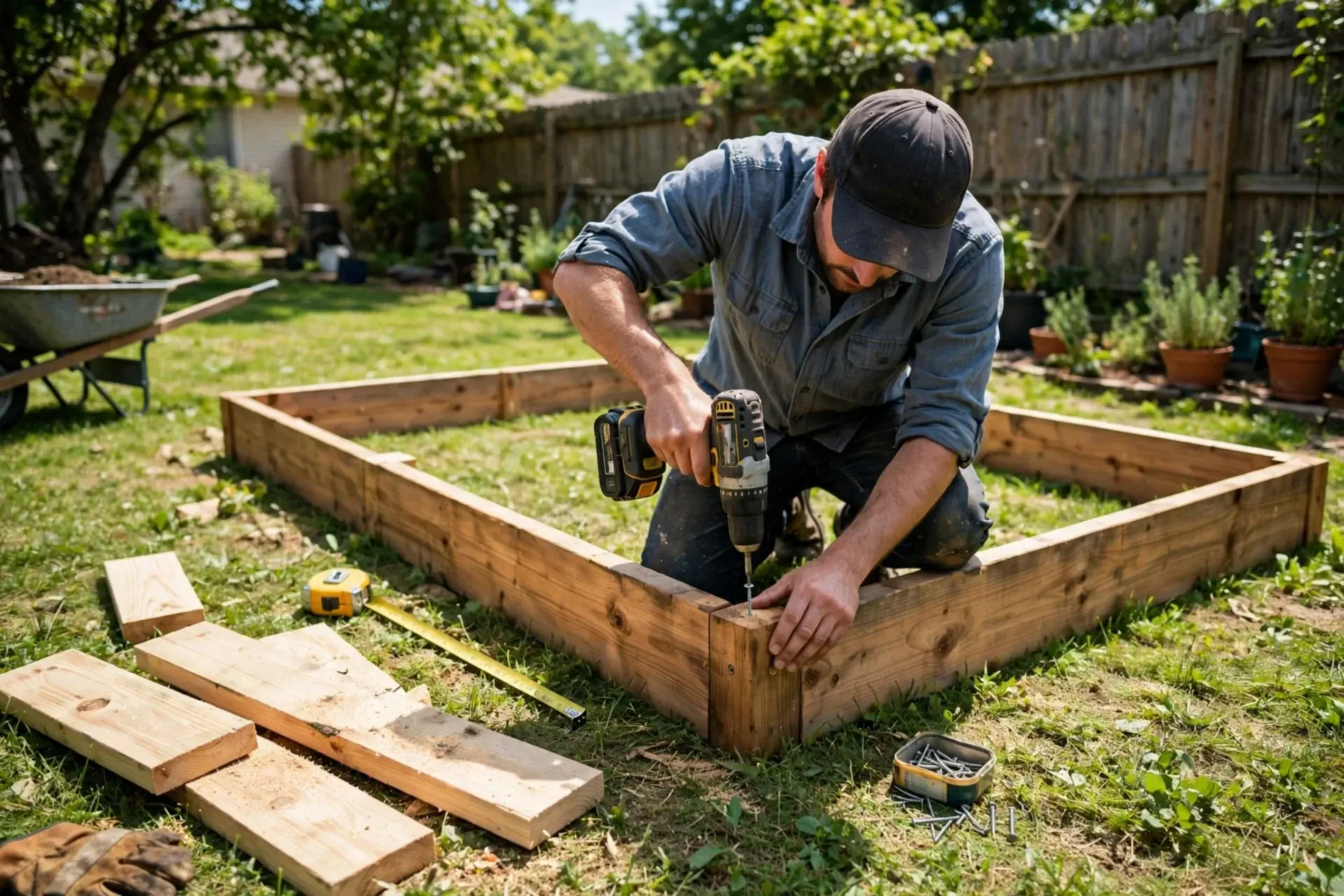
An 8 × 4 raised bed is one afternoon of work with basic tools — if the board list is right and the corners are built to resist soil pressure. This build uses the standard two-board depth, corner posts, and a mid-span brace, the three details that separate a bed that lasts a decade from one that bows apart in year two. New to raised beds entirely? Start with Raised Bed Gardening for Beginners.
The board list (8 × 4 bed, about 11 inches deep)
- Long sides: 4 boards, 2 × 6, 8 feet long (two stacked per side)
- Short sides: 4 boards, 2 × 6, 4 feet long (cut from two 8-foot boards)
- Corner posts: 1 piece of 4 × 4 or 2 × 4, cut into 4 posts of about 11 inches
- Screws: exterior deck screws, 2.5–3 inch — about 24
- Optional but wise: one extra board or a length of strapping as a mid-span cross-tie
Check your lumber maths with the Board Foot Calculator. Cedar lasts longest; standard spruce or pine is the budget route and still gives several seasons.
Step 1 — Cut and pre-drill
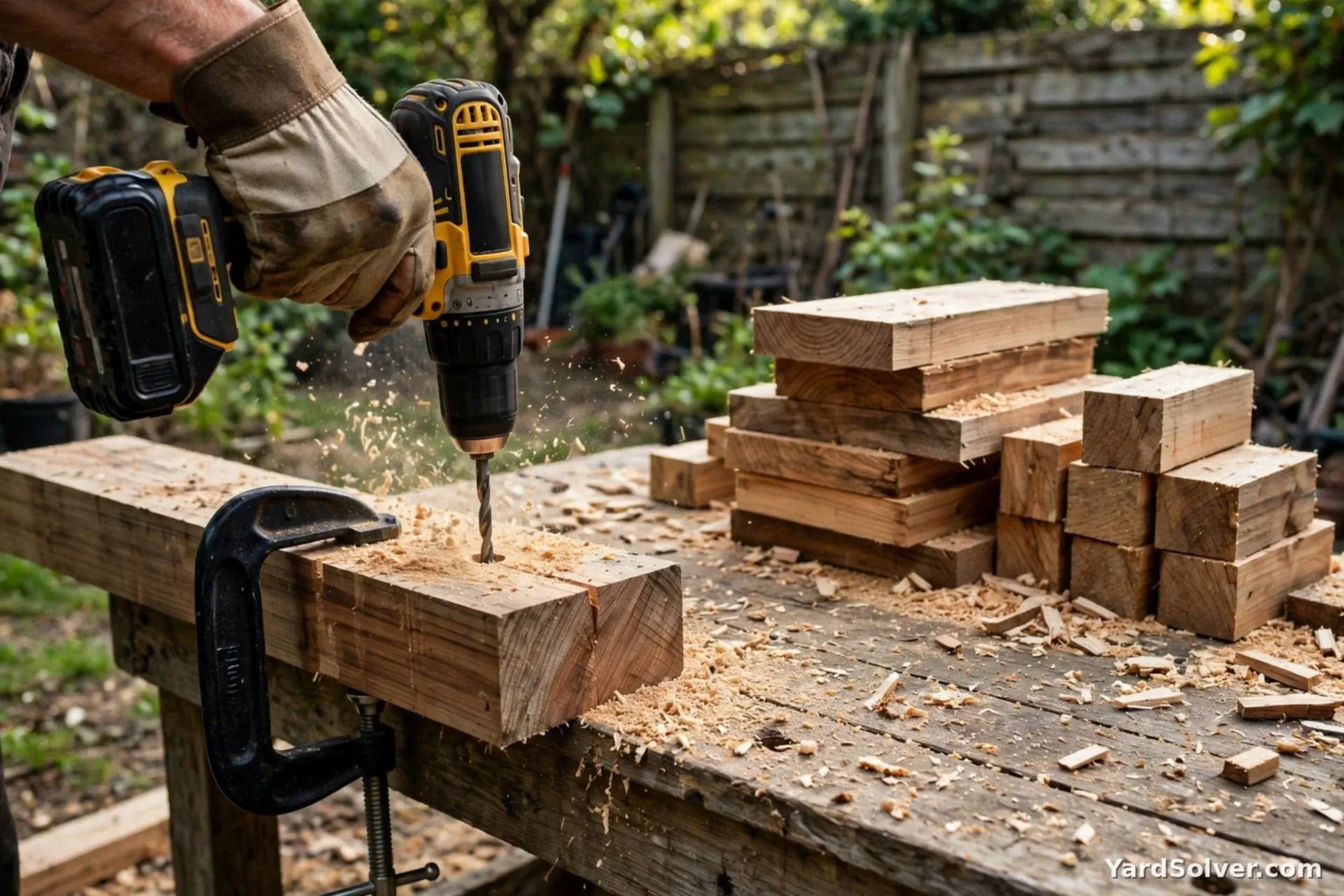
Cut the 4-foot boards and the corner posts. Pre-drill the board ends — boards split at the ends without pilot holes, especially cedar. Lay out each side flat on the ground: two long boards with a post at each end, posts flush with the top edge.
Step 2 — Build the two long sides first
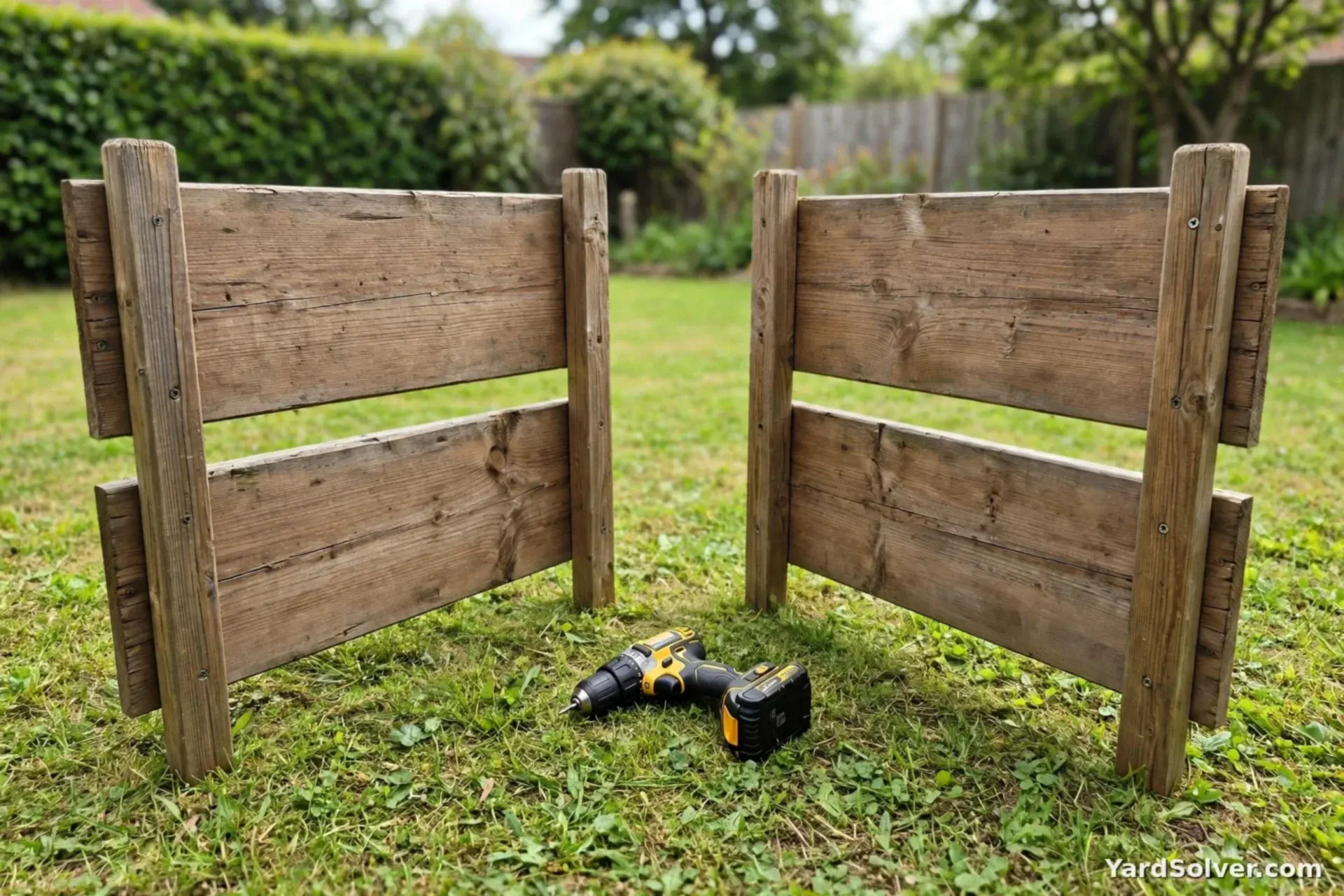
Screw each long side's boards to its corner posts, 2–3 screws per board end, driving from the outside of the board into the post. You now have two rigid panels. Stand them up 4 feet apart where the bed will live.
Step 3 — Add the short sides and square the frame
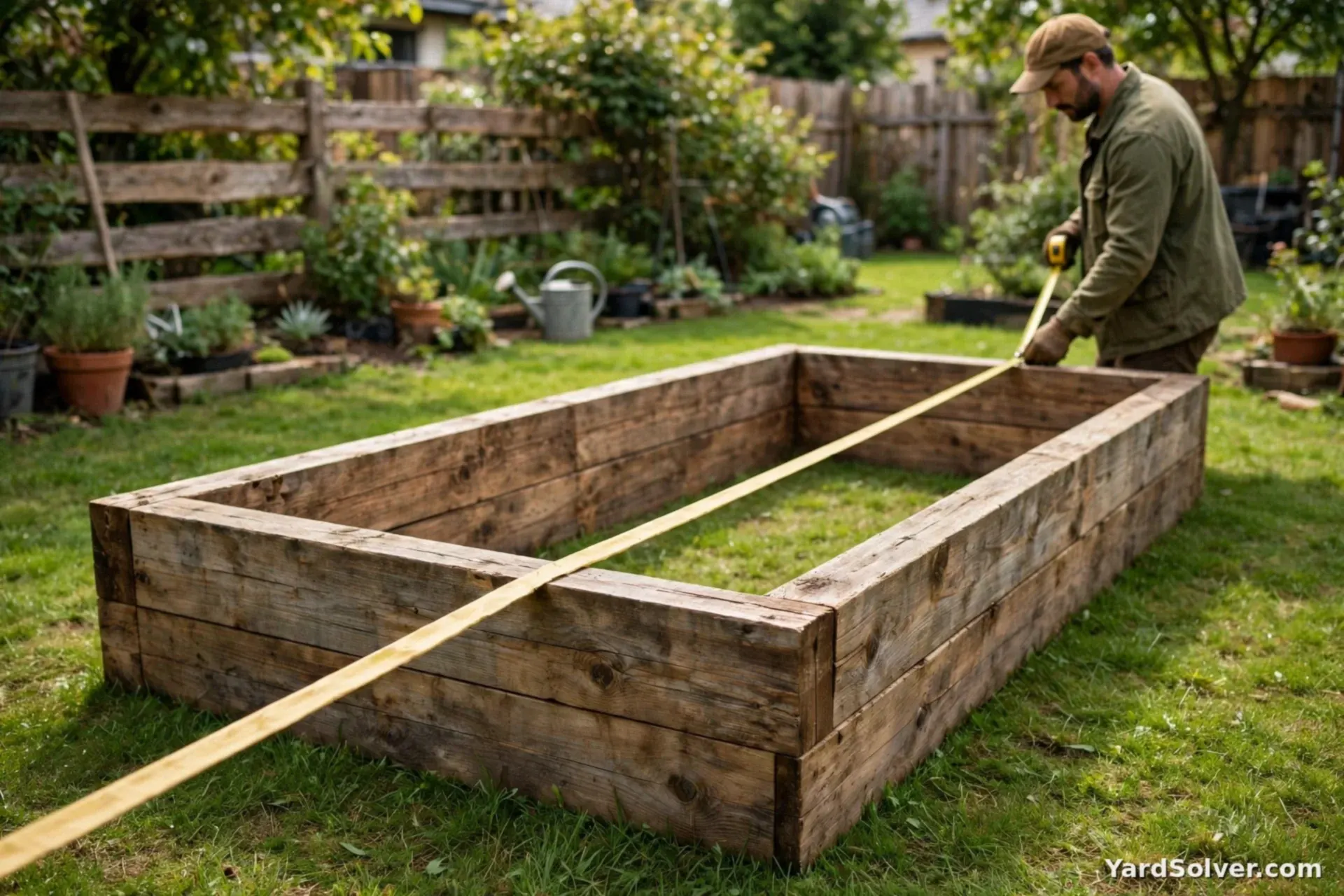
Screw the short-side boards to the corner posts the same way. Then measure the diagonals: equal diagonal measurements mean a square bed. Nudge a corner until they match — this two-minute check decides whether the bed looks built or homemade.
Step 4 — Add the mid-span brace
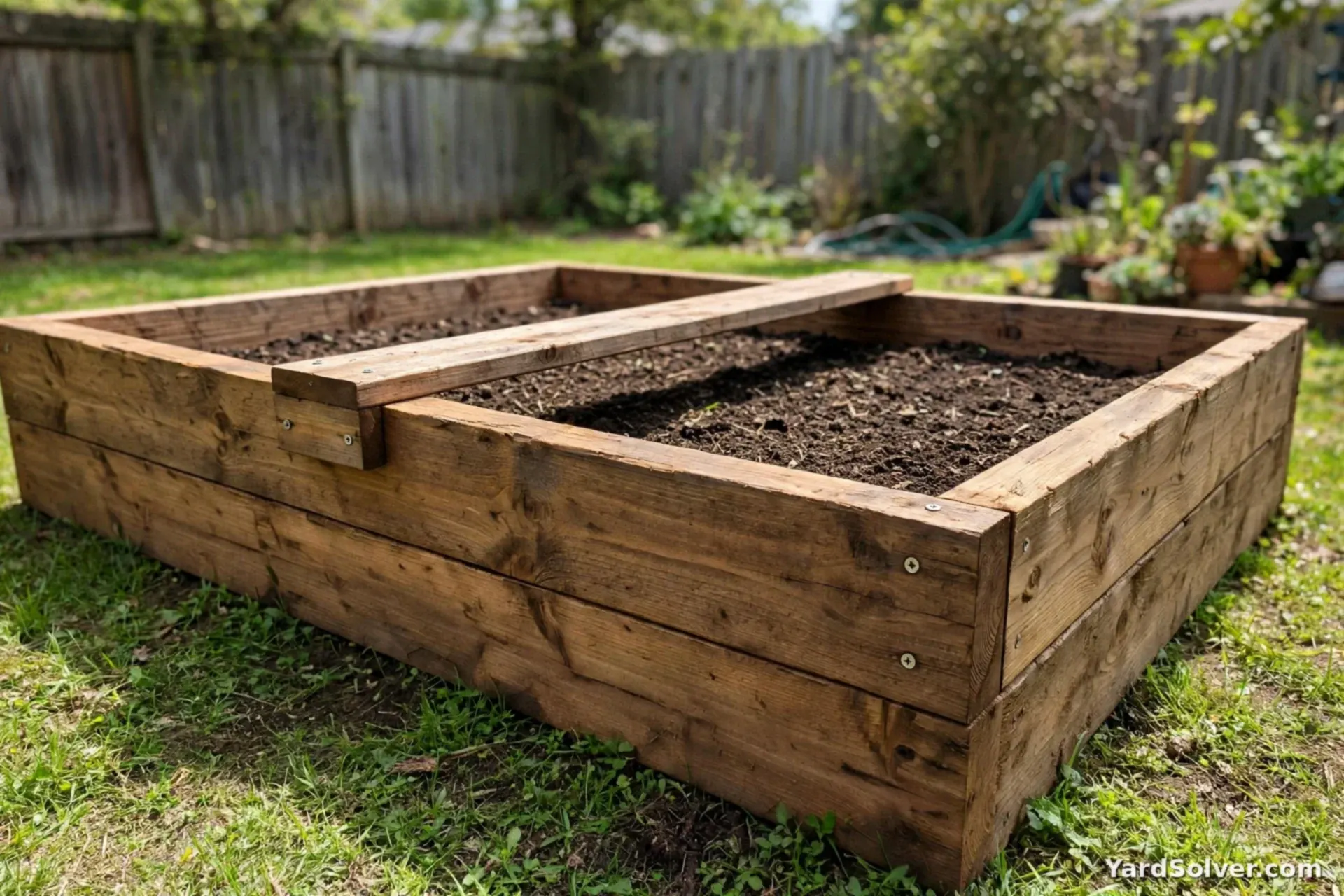
Soil pushes hardest at the middle of the 8-foot sides. Screw a cross-tie board across the top middle of the bed (it doubles as a handy seat and a divider for planting) or strap the two long sides together at mid-height before filling. On beds taller than 12 inches, add an outside stake at each long side's midpoint too.
Step 5 — Level the ground and set the bed
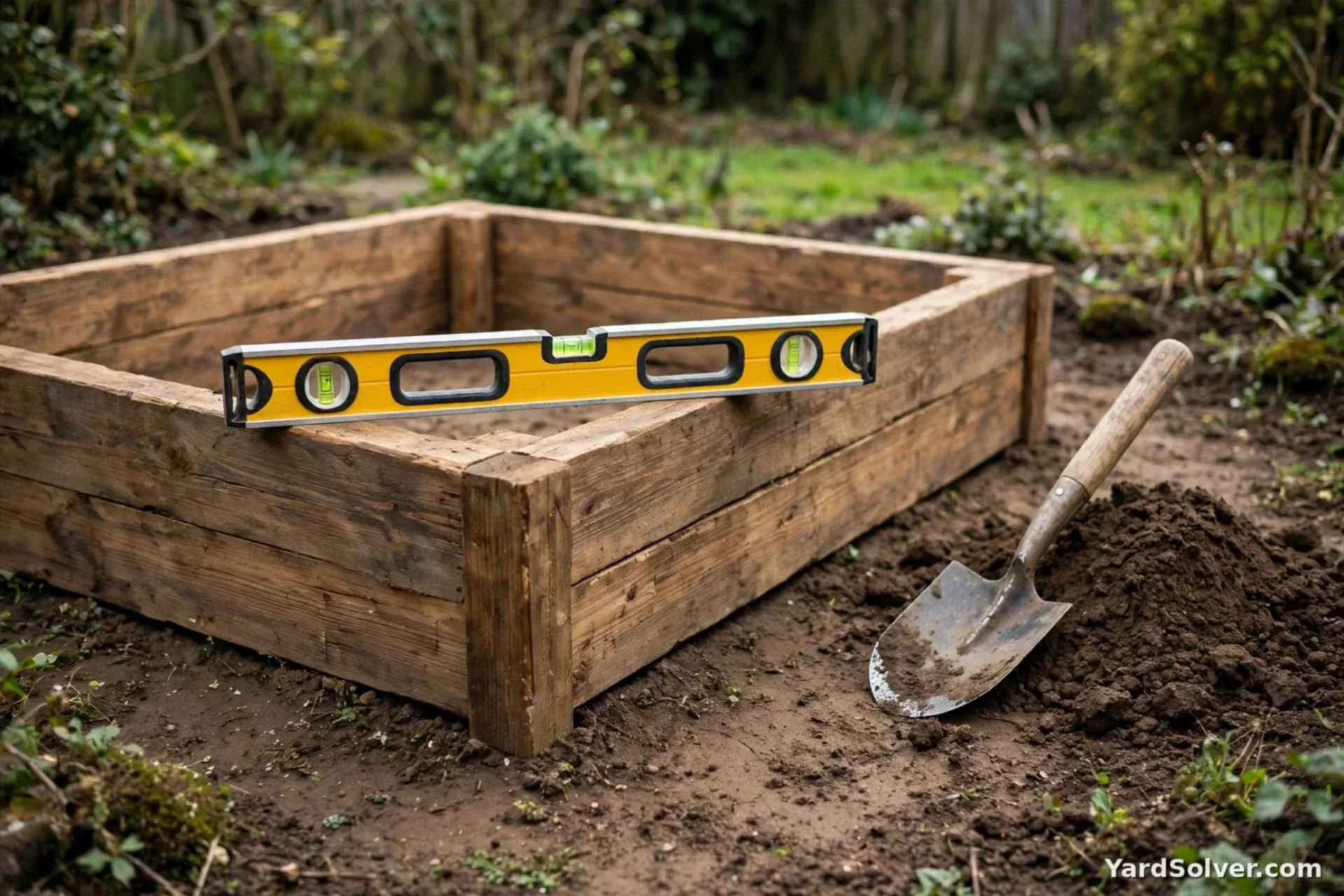
A bed on sloping ground leaks soil at the low corner and waters unevenly. Scrape or add soil until the frame sits level in both directions — check with a level on the top edges. Remove sharp rocks under the frame so it rests evenly.
Step 6 — Cardboard, fill, water, top up
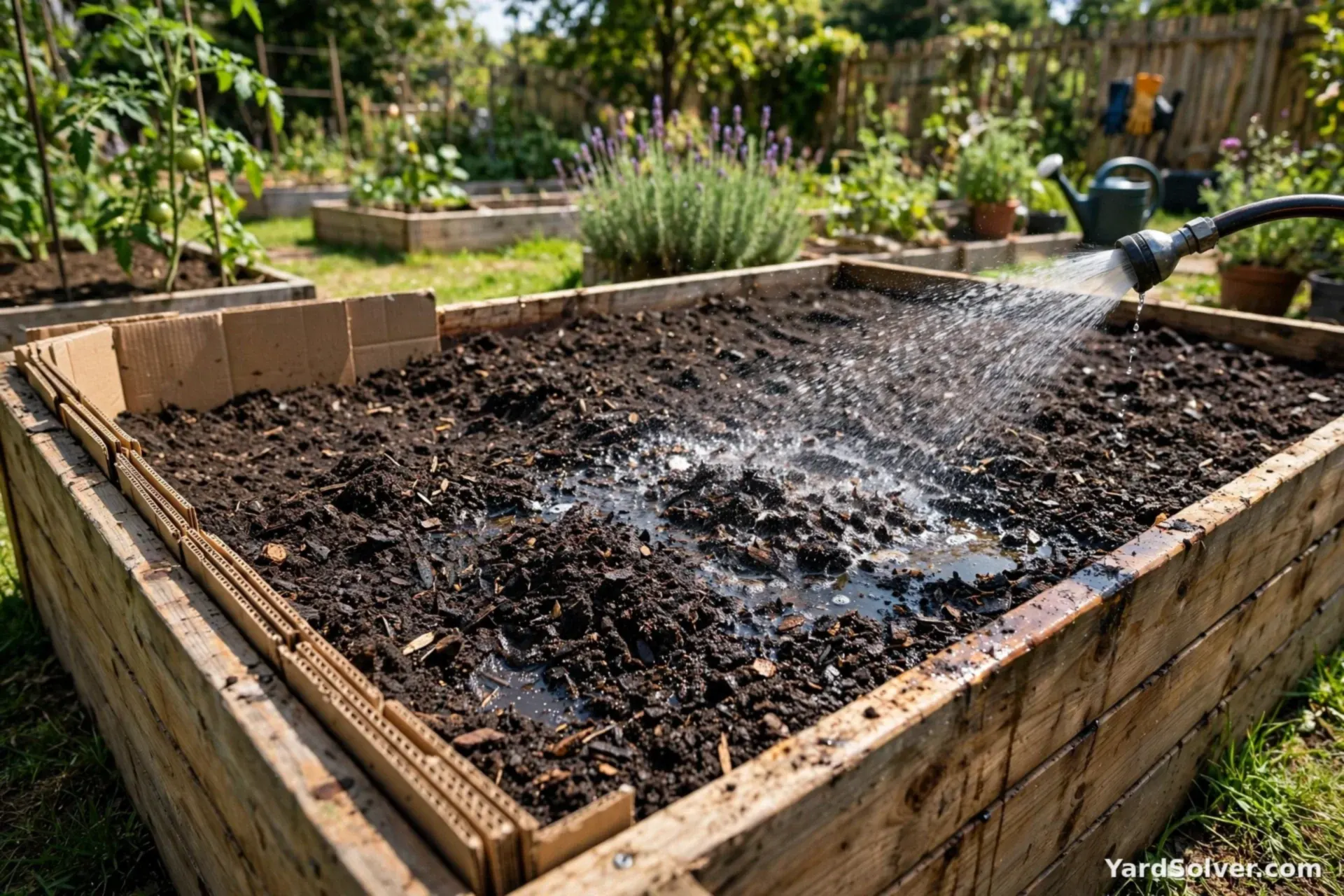
Lay overlapping cardboard over the base to smother grass (it rots away; skip plastic sheeting, which blocks drainage). Fill with your soil mix — for this bed at 11–12 inches deep, that is about 30–32 cubic feet; get your exact number from the Raised-Bed Soil Calculator before ordering. Water deeply, let it settle, and top up to within an inch of the rim. A layer of mulch (quantities here) finishes the job.
Keep going
Using the bed: Raised Bed Gardening for Beginners · How to Prepare Garden Soil in Spring.
Built it deep? Fill it for half the soil with Hugelkultur Raised Beds — logs and branches in the bottom half, bought soil only on top.
Questions people ask
What wood should I use?
Cedar lasts longest; larch and hemlock are regional budget options; plain spruce or pine is cheapest and lasts several seasons. Ground-contact pressure-treated lumber is considered acceptable by most extension services — line the inside walls with landscape fabric if you prefer a barrier.
How deep should a raised bed be?
10–12 inches grows nearly all vegetables. Two stacked 2 × 6 boards give about 11 inches. On concrete or very poor ground, go 16–18 inches.
How do I stop the long sides bowing out?
A mid-span cross-tie or brace, sturdy corner posts, and — on taller beds — an outside stake at each long side's midpoint.
A raised bed is built level, lined with depth in mind, and filled in layers that are mixed
The build itself is simple joinery — boards, sleepers, blocks or metal panels forming a rectangle — and the decisions that decide its life are three: level the frame on the ground it will sit on (a bed built to a slope shows it in every watering), keep the width to what you can reach into the middle of without stepping on the soil, about four feet, and choose a depth by crop, with nine to twelve inches serving most vegetables and deeper suiting roots and poor ground beneath.
Site it in the sun the crops need before a single board is cut, lay cardboard over turf inside the frame rather than digging it out, and fill with a mixed topsoil-compost blend rather than layers that stay separate. Paths around beds are part of the build, not an afterthought — wide enough for a barrow, surfaced so winter work does not churn them to mud. A bed built level, reachable and filled once, properly, outlasts a decade of crops; a bed built fast is rebuilt within three.
Sources
Key facts on this page cross-checked against Raised-bed gardening — Wikipedia — background on raised-bed gardening and how beds are built and filled.
Related page
Read next: How Much Soil Do I Need for a Raised Bed? Bags, Yards & the Mix — How the Calculator Works.
Comments & ratings
No comments yet.
Be the first to share your experience.