
Guides · Quinoa · Published November 11, 2026 · By Faizan Ahmad
How to Grow Quinoa: The Complete Beginner's Guide
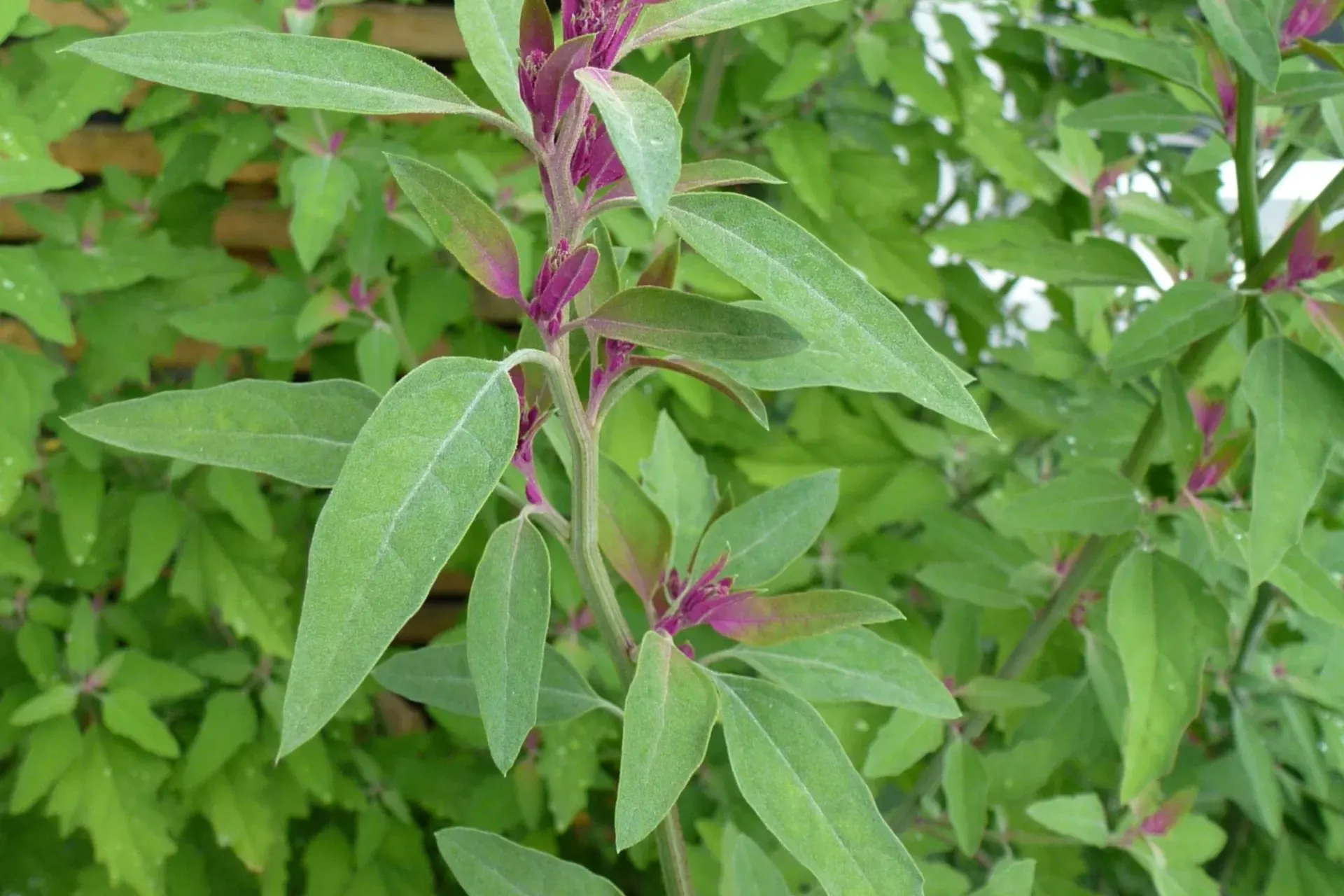
Quinoa is the Andean grain that is really a seed — a complete protein with all nine essential amino acids — and it grows like a tall, handsome relative of lamb's quarters. It needs 90–120 days, cool nights to set seed, and dry air: it struggles in humid heat, but in a cool, sunny garden it is an easy, striking crop. This guide is the whole routine on one page, in order. For the one-screen version — light, water and care at a glance — see the Quinoa plant page; this is the deep guide it points to. Your personal dates for every step are in the Planting Calendar.
The quinoa season at a glance
- When: Direct sow 1–2 weeks before last frost. Seedlings tolerate light frost, and the plant needs cool nights to set seed.
- Soil: Well-drained, average soil — quinoa dislikes wet feet and very rich soil, which makes it fall over.
- Sowing: Sow 1/4 in deep, 10–14 in apart in rows 24 in apart. Thin once seedlings are a few inches tall.
- Water & feed: Moderate — drought-tolerant; avoid wet leaves — Feed little or nothing — too much nitrogen makes tall, weak plants that lodge in wind.
- Harvest: 90–120 days
Step 1 — Sow before the last frost
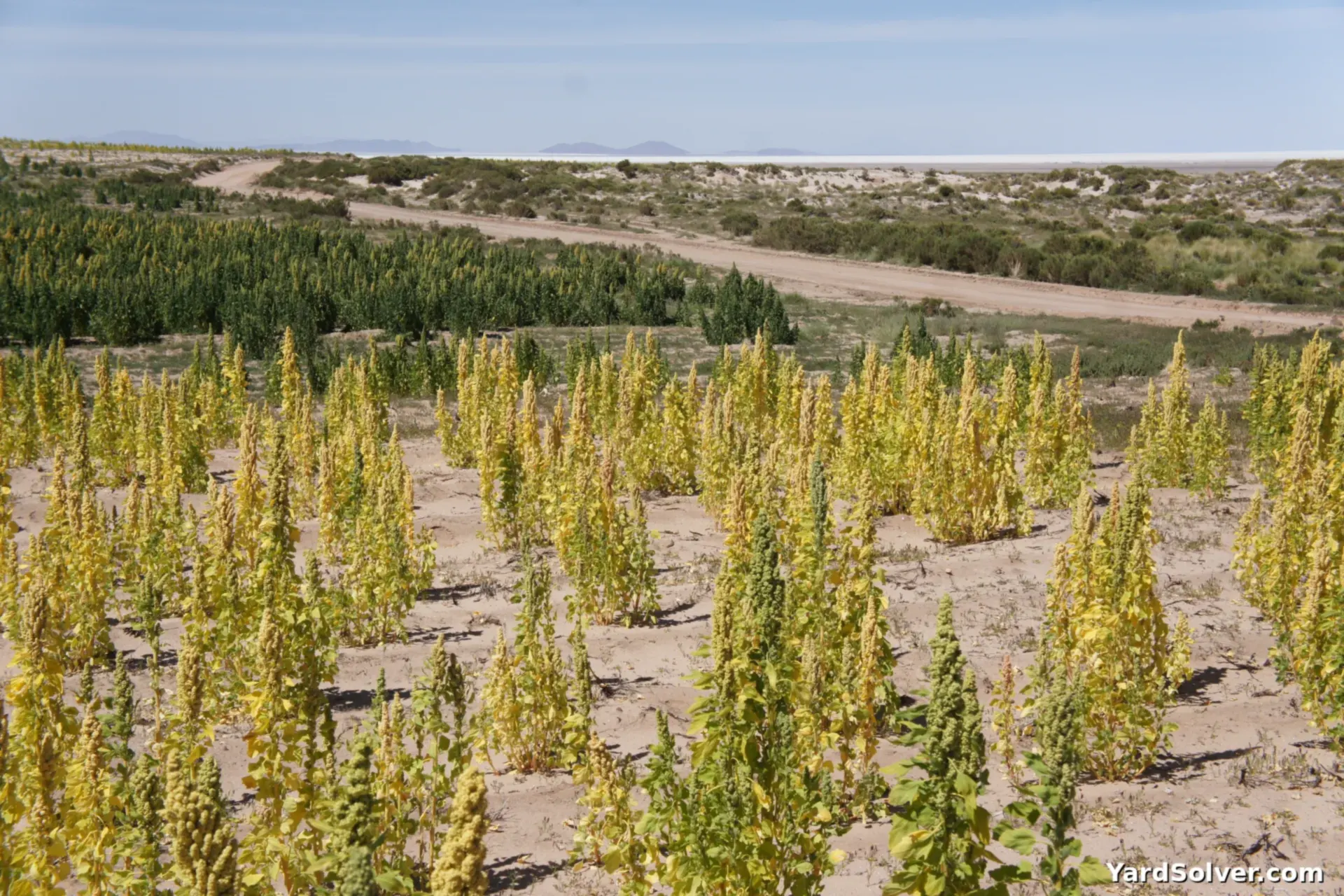
Quinoa seedlings tolerate light frost. Sow 1–2 weeks before your last frost, and remember it needs cool nights to set seed. Direct sow 1–2 weeks before last frost. Seedlings tolerate light frost, and the plant needs cool nights to set seed.
Step 2 — Full sun, drained soil
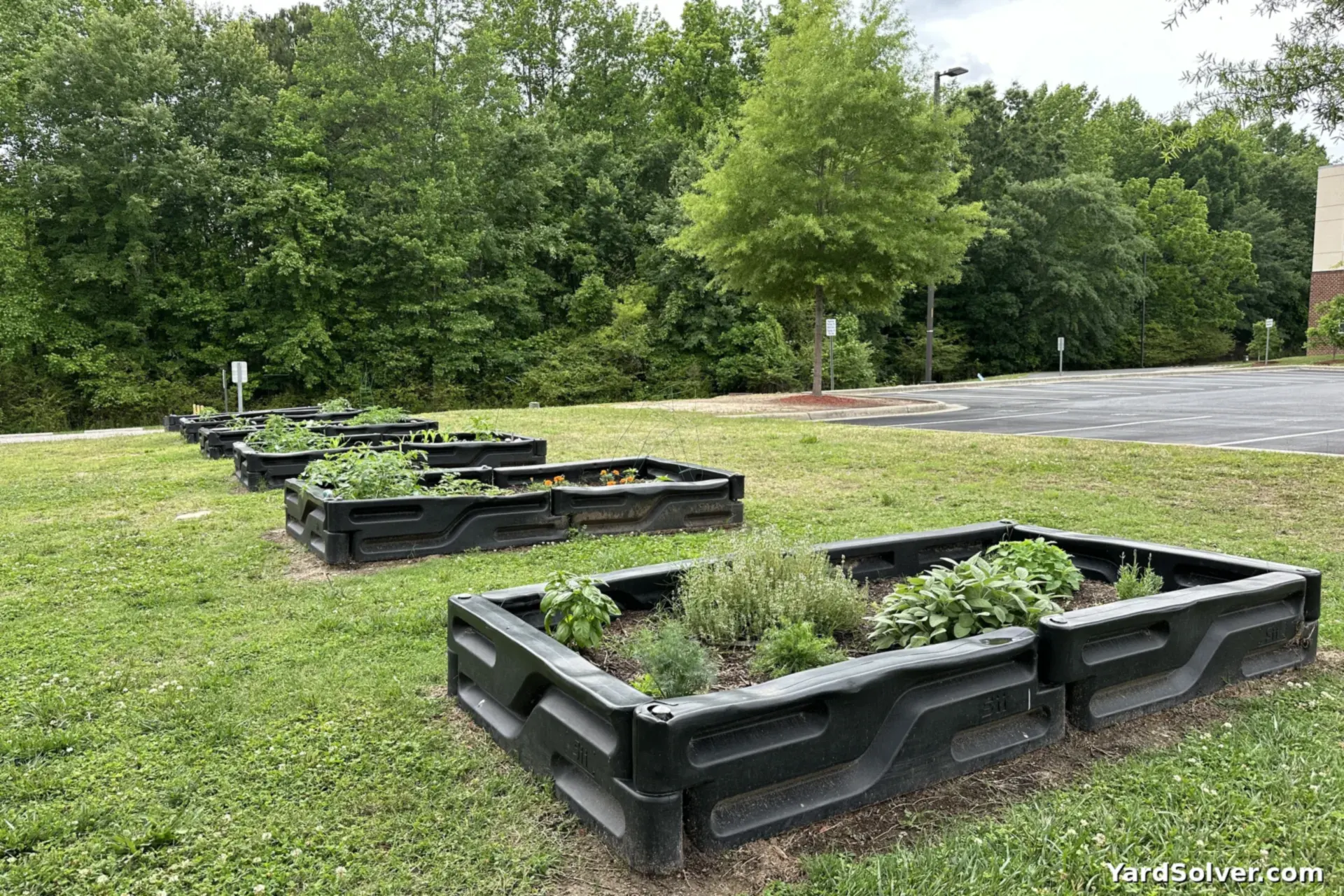
Quinoa dislikes wet feet and very rich soil, which makes tall plants fall over. Average, well-drained soil is right. Well-drained, average soil — quinoa dislikes wet feet and very rich soil, which makes it fall over.
Step 3 — Sow shallow and thin
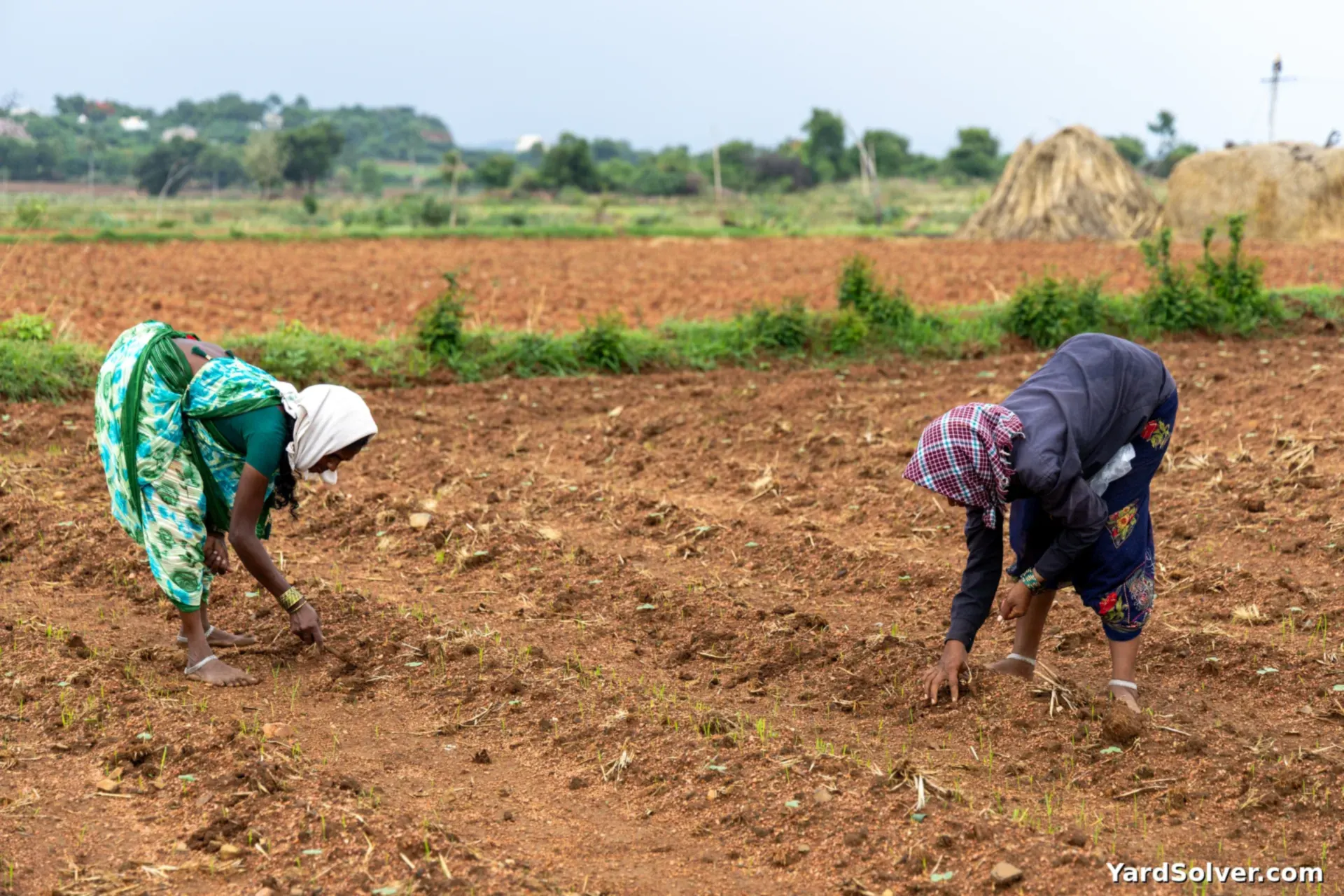
Sow 1/4 in deep, 10–14 in apart in rows 24 in apart, and thin once seedlings are a few inches tall. Sow 1/4 in deep, 10–14 in apart in rows 24 in apart. Thin once seedlings are a few inches tall.
Step 4 — Feed little
Too much nitrogen makes weak, tall plants that lodge in wind. A lean soil suits quinoa. Feed little or nothing — too much nitrogen makes tall, weak plants that lodge in wind.
Step 5 — Harvest dry and rinse
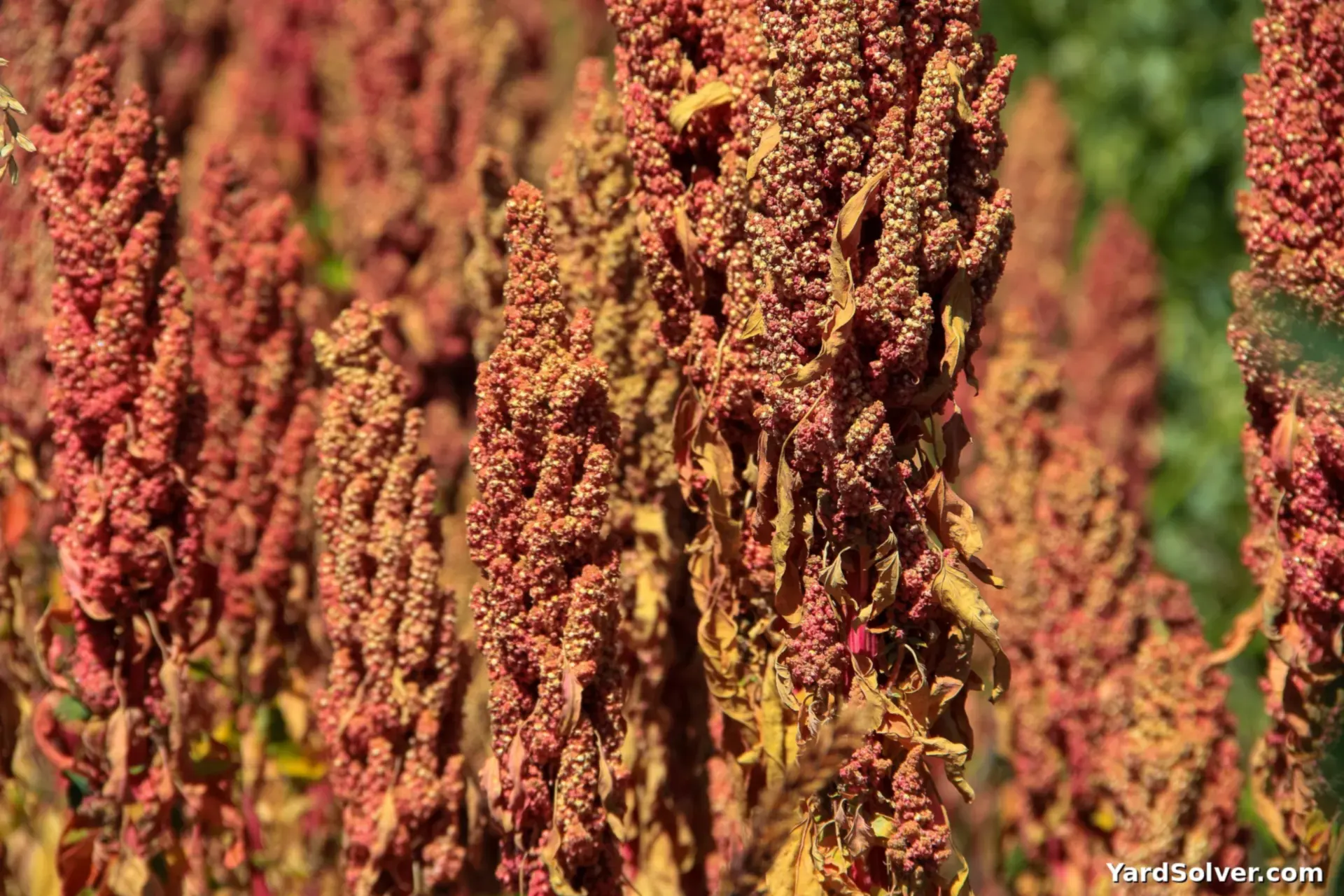
Cut heads when dry, rub the seed out, and rinse well in several changes of water — the bitter saponin coating must come off before cooking. Aphids — they gather on the seed heads; a jet of water helps.
Keep going
The at-a-glance version, with light and water needs: Quinoa — Plant Library.
Plan the bed: Garden Planner · Planting Calendar · Companion Planting Chart · Plant Spacing Calculator
Questions people ask
When do I plant quinoa?
Direct sow 1–2 weeks before last frost. Seedlings tolerate light frost, and the plant needs cool nights to set seed.
How far apart do I space quinoa?
Space plants 10–14 in apart in rows 24 in apart, with seed sown 1/4 in deep. Sun: full sun.
When is quinoa ready to harvest?
90–120 days after sowing, when the seed heads are dry and the seed rubs out easily. Rinse well before cooking.
Quinoa is a seed crop, not a grain — the harvest skill is washing the bitterness away
Quinoa is a pseudocereal from the high Andes, grown for seed heads that form on tall, colourful plants strikingly tolerant of poor soil, drought and light frost — the conditions of its mountain home. What defeats beginners is not growing it but finishing it: the seeds are coated in saponins, bitter natural soaps that must be rinsed away thoroughly before eating, and a harvest eaten unwashed is memorably unpleasant. The plant itself is easy; the processing is the crop.
Sow after frost into soil that is fertile enough but not rich — excess nitrogen buys leaf at the expense of seed — and keep the young plants weeded, because quinoa starts slowly before growing fast in warm weather. Harvest when the leaves have fallen and the seed heads have dried and coloured, thresh the seed free, winnow it, then rinse until the water runs clear with no foam. Expect a modest bowl per plant and grow it for the experience and the seed-saving, not for bulk.
Sources
Key facts on this page cross-checked against Quinoa — Wikipedia — background on quinoa, its Andean origins and its saponin coating.
Related page
Read next: How to Grow Amaranth: A Beginner's Step-by-Step Guide.
Comments & ratings
No comments yet.
Be the first to share your experience.