
Guides · Winter jobs · Published November 20, 2026 · By Faizan Ahmad
How to Overwinter Potted Perennials: Garage, Buried-Pot and Cluster Methods That Keep Roots Alive
To overwinter potted perennials, protect the roots, not the tops: choose plants at least two hardiness zones tougher than your climate, water them well before the soil freezes, then bury the pots in the ground, move them into an unheated garage or shed, or cluster them together in a sheltered spot and bury them in mulch — checking every few weeks that the soil stays barely moist, and waking them gradually in spring. The reason is simple physics that catches gardeners out every year: hardiness zones describe a plant in the ground, where a deep volume of soil buffers the roots, while roots in an above-ground pot can fall to the temperature of the winter air itself, freeze-thawing with every swing. A perennial that laughs at January in your border can die in February in a pot on the deck. This guide explains the two-zone rule, compares the three proven methods honestly, covers the pots that crack and the plants that are not worth saving, and gives the winter watering and spring wake-up routines — for Canadian and northern-US gardeners who buy good perennials in fall sales, grow shrubs in containers, or simply ran out of autumn before the planting was done.
The short answer, on one card
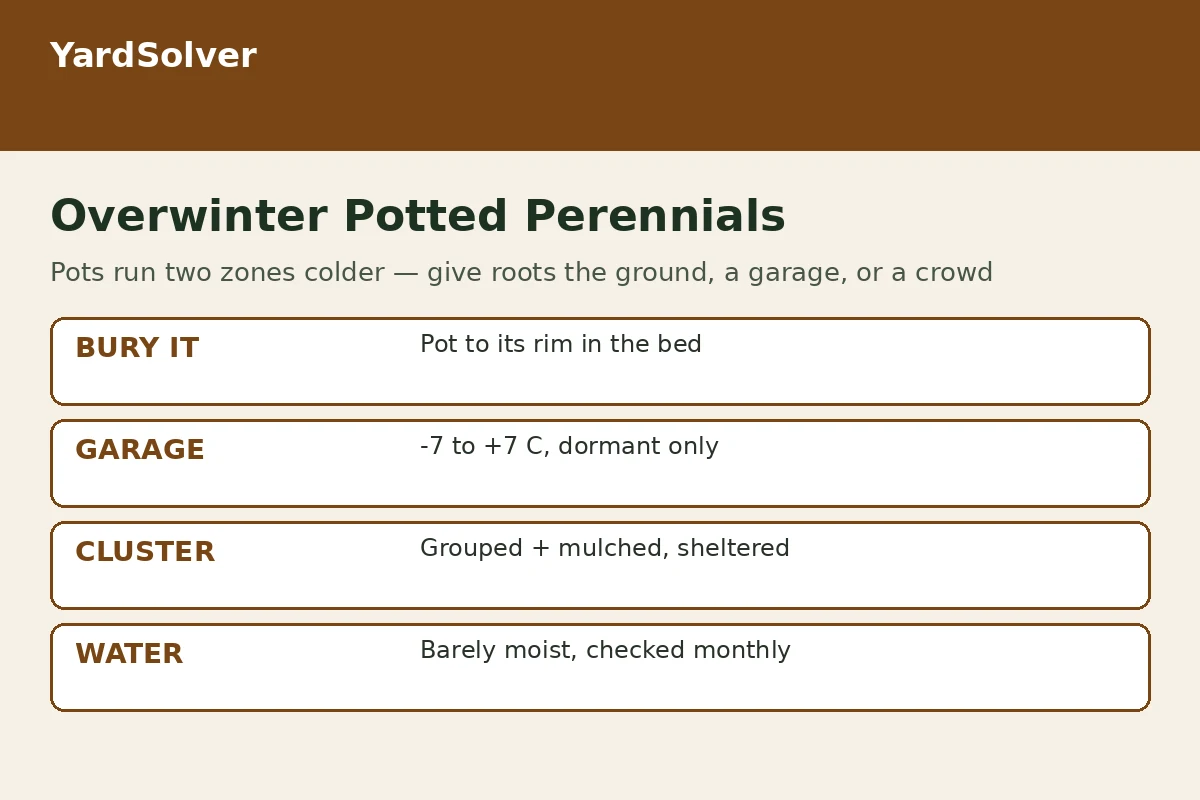
Rule: a potted plant behaves as if it were two zones less hardy — a Zone 6 perennial in a pot needs Zone 4 conditions or protection. Most reliable method: bury the pot to its rim in a garden bed and mulch over it. Garage method: unheated space holding roughly −7 to +7°C (20–45°F), dormant plants only, moisture checked every few weeks. Cluster method: pots grouped tight in a sheltered corner, insulated with straw, leaves or mulch. Water: thoroughly before freezing, then keep barely moist — never bone dry, never soggy. Spring: uncover and move out gradually as the worst cold passes.
Why pots are colder than the ground (the two-zone rule)
Penn State Extension's guidance on overwintering container plants states the core fact directly: the hardiness zone on a plant label is based on the plant in the ground, while the roots of an above-ground container plant can be the same temperature as the winter air — so go two zones colder with container plants, use larger pots for their extra insulation, and provide protection. Every part of that sentence earns its place. In the ground, soil a shovel's depth down changes temperature slowly and rarely reaches the extremes the air does; in a pot, a small volume of mix surrounded by air on five sides tracks the thermometer almost exactly, and it freezes and thaws repeatedly — and it is the cycling, as much as the cold itself, that ruptures roots and heaves crowns out of the mix. Pot size is insulation: a big planter's core may never freeze as hard as a small pot does in a single night, which is why very large wooden or concrete planters can often stay in place while small pots cannot. The quotable version: in winter, a pot is not a small garden — it is a thermometer with roots in it. Plan from that, and the methods below are just three ways of giving the roots back the buffer they lost.
Method 1 — Bury the pot (the most reliable)
Iowa State University Extension calls heeling pots into the ground one of the most reliable ways to overwinter perennials that could not be planted in time, and it is equally right for perennials that live in pots permanently. Dig holes in a garden bed — the emptied vegetable garden is perfect — after the plants have gone dormant but before the soil freezes, typically within a few weeks after the first fall frost. Set each pot in its hole, backfill soil around it as if you were planting it, water it in, and once the ground starts to freeze, cover the whole area with a loose mulch of straw or shredded leaves. The surrounding soil does what soil does: it holds the root zone at a steady, survivable cold instead of the air's violent swings. In spring, when extreme temperatures have passed and the soil has thawed enough to dig, lift the pots, clean them, and carry on. Choose a bed that does not flood in the spring melt, label everything (a buried pot in March is a guessing game otherwise), and keep a simple map. For a gardener with bed space, this method has the highest survival rate and the lowest winter workload of the three — the garden itself does the babysitting.
Method 2 — The unheated garage, shed or cold frame
The second proven route is a cold, dark rest indoors. Move dormant, deciduous perennials, shrubs and small trees into an unheated garage, shed, cold frame or basement where temperatures hold roughly between −7 and +7°C (20–45°F) — cold enough to keep plants dormant, mild enough to spare the roots the worst of the air. Iowa State gives the same 20–45°F window for garage storage. Water the pots well before they go in, then check the soil every few weeks through winter and water lightly only when it is drying out: the goal is barely moist, because dormant roots drink almost nothing and wet, cold mix is an invitation to rot. Light is not needed for fully dormant deciduous plants, which is what makes a dark garage workable; evergreens are the exception and do better with the light of a garage window or the buried or clustered methods outdoors, since they keep their leaves and lose water all winter. Bring pots in after dormancy, not before — a plant moved indoors while still in soft growth meets the cold unprepared — and resist the warm room entirely: a heated house breaks dormancy, and a perennial growing weakly on a January windowsill is spending the reserves it needed for spring.
Method 3 — Cluster, wrap and mulch in place
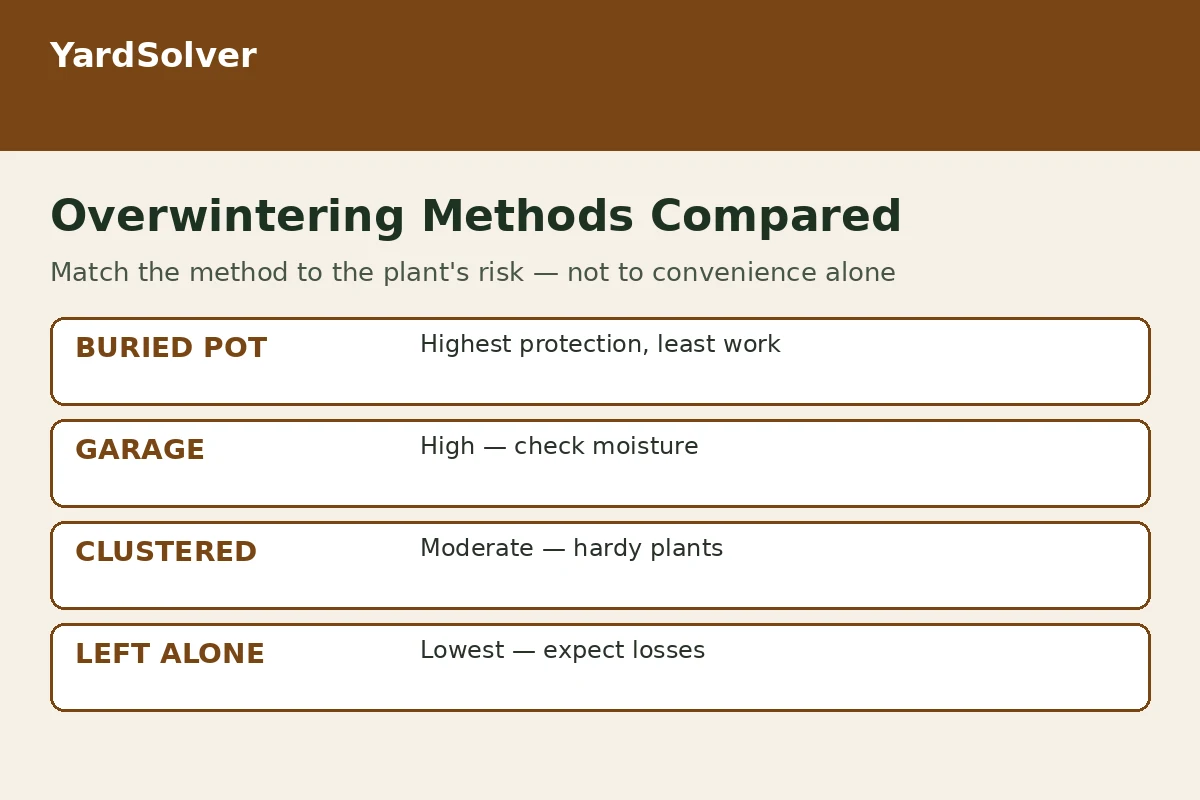
| Method | Protection level | Best for | Winter workload |
|---|---|---|---|
| Bury the pot in the ground | Highest — full soil buffering | Unplanted perennials, prized plants, coldest zones (3–5) | Almost none until spring digging |
| Unheated garage or shed (−7 to +7°C / 20–45°F) | High — no wind, moderated cold | Dormant shrubs, small trees, tender perennials, fig and citrus growers' stock | Moisture check every few weeks |
| Cluster + insulate outdoors | Moderate — shared warmth, wind shelter | Hardy perennials and shrubs in zones 5–7, big pots that cannot move | Occasional check after thaws and storms |
| Left alone on a deck or patio | Lowest — full air exposure | Only the very hardiest plants in large, frost-proof planters | None — and the losses to match |
Where pots are too big to bury or no garage exists, group them: push the pots tight together in the most sheltered spot you have — against a house wall, in a corner out of the prevailing wind — water them, then pack straw, compost, shredded leaves, bark mulch or evergreen boughs around and over them, or set smaller pots inside a larger box or pot and fill the gap with insulating material. Penn State lists exactly this grouping-and-covering approach, including wrapping pots that must stay out in bubble wrap or similar insulation under a waterproof cover. Clustering works because pots in a crowd share their edges — only the outside of the group faces the full cold — and the mulch blanket slows the freeze-thaw cycling that does the real damage. It is the right method for hardy plants in the middle zones and the wrong one to trust with a borderline plant in Zone 4; match the method to the risk, using the table above, rather than to convenience alone.
Pots, plants and honest exceptions
Protect the container as well as the plant. Clay, ceramic and glazed pottery left exposed can crack as their absorbed water freezes — another Penn State warning — so those pots go indoors empty, get wrapped and covered, or get retired to the garage while their plants overwinter by another method; wood, concrete, fiberglass and thick plastic are the outdoor survivors. Water every plant well before its soil freezes, and give evergreens an anti-desiccant spray or a wind screen if they must winter outdoors, since their leaves keep losing water they cannot replace from frozen mix. Then the honest triage. Annuals in pots are done — compost them. Tender tropicals are not overwintered by these cold methods at all; they come indoors as houseplants, the route our guides take for geraniums, peppers and fig trees. Dahlia tubers and other tender bulbs are lifted and stored bare, not left in pots. And a cheap, easily replaced perennial that is two zones too tender for your deck is sometimes most honestly treated as an annual — the methods in this guide are for the plants worth the shelf, the hole or the mulch.
Spring wake-up: gradual, or the winter was wasted
More overwintered plants are lost in March than in January, killed by kindness at speed. As the extreme cold passes and soil thaws, remove covers and lift buried pots gradually, giving plants days to re-acclimate rather than one sunny afternoon: a pot moved straight from a dark garage into full spring sun and a warm room scorches and breaks dormancy before the roots are awake to support it. Move garage plants to a sheltered, bright outdoor spot, water them properly for the first time since fall, and wait — dormant perennials can look dead for weeks, and the verdict is the crown, not the tops: scratch for firm, pale tissue at the base before you compost anything. Trim the winter-killed tops once new growth shows where the living line is. Then feed lightly, pot on if roots have filled the container, and record what survived by which method — one winter of notes turns next November's decisions from guesses into your own local data, which is worth more than any zone map, including ours.
Keep going
Store tender bulbs the bare way with Storing Dahlia Tubers Over Winter, bring the tender pot plants indoors with How to Overwinter Geraniums and How to Overwinter a Fig Tree, and finish the beds themselves with Putting Your Garden to Bed.
Sources
The two-zones-colder rule for container plants, larger-pot insulation, the buried-pot, garage and cluster-and-mulch methods, cracked clay and ceramic warnings, pre-freeze watering and gradual spring uncovering follow Penn State Extension, Overwintering Plants in Containers. Heeling pots into the ground after dormancy and before freeze-up, spring lifting after thaw, and the 20–45°F garage window follow Iowa State University Extension, Overwintering Unplanted Perennials (Iowa State). Mulch depths and watering before cold spells follow the Canadian guidance at Gardenworks — Winter Protection Guide.
Questions people ask
Why did my hardy perennial die in a pot over winter?
Because hardiness zones describe roots in the ground, where soil buffers temperature. In an above-ground pot, roots can fall to air temperature and freeze-thaw repeatedly. Extension guidance is to treat a potted plant as two zones less hardy — a Zone 6 plant in a pot needs Zone 4 conditions, or one of the protection methods in this guide.
What is the best way to overwinter potted perennials?
Burying the pot to its rim in a garden bed is the most reliable method: the surrounding soil insulates the roots at a steady cold. An unheated garage or shed holding about −7 to +7°C (20–45°F) is a close second for dormant plants, and clustering pots together under mulch suits hardy plants in milder zones.
How cold can an unheated garage be for overwintering plants?
Aim for roughly −7 to +7°C (20–45°F): cold enough to keep deciduous plants fully dormant, mild enough to protect roots from the worst air temperatures. Water pots well before storing them, then check every few weeks and water lightly only if the mix is drying out.
Should I water potted perennials during winter storage?
Yes, sparingly. Water thoroughly before the soil freezes — dry soil freezes faster than moist soil — then keep stored pots barely moist with a light watering every few weeks if they dry out. Soggy mix around dormant roots invites rot, so never keep them wet.
Can I leave potted perennials outside all winter?
Only with protection, unless the plant is at least two zones hardier than your climate and the pot is large and frost-proof. Group pots in a sheltered corner and insulate them with straw, leaves or mulch, or wrap them — a small pot left alone on an exposed deck is the highest-loss setup there is.
When and how should I bring overwintered pots back out in spring?
Gradually, once extreme cold has passed and the soil has thawed. Remove covers in stages, move garage plants to a sheltered bright spot rather than full sun and warmth at once, water properly, and wait for the crown to show life before judging a plant dead — many perennials look dead for weeks.
Comments & ratings
No comments yet.
Be the first to share your experience.