
Guides · Fall and winter · Published November 23, 2026 · By Faizan Ahmad
How to Store Carrots and Beets for Winter: Months of Sweet Roots, No Root Cellar Needed
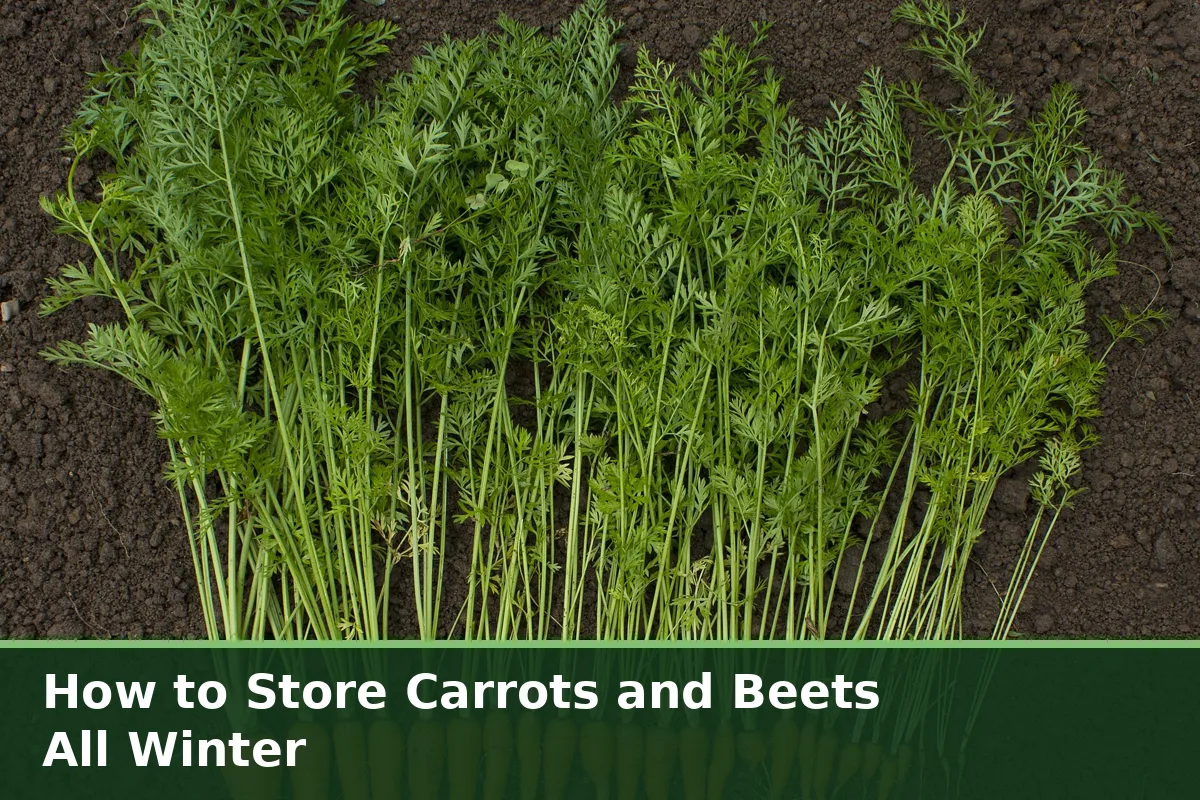
Carrots and beets store for months at 32 to 40°F with high humidity — cold and moist is the whole secret, and a box of damp sand in an unheated garage or basement delivers it without a root cellar. Prep is minimal: harvest before deep cold damages the shoulders, brush the soil off (never wash), clip the tops to an inch, and pack the roots so they do not touch.
Done right, November's harvest is still crisp and sweet in February — and frost actually improves the flavour, converting starches to sugars as the roots defend themselves against the cold.
The two conditions that decide everything: cold and moist
Storage guides group vegetables by what they need, and carrots and beets sit firmly in the cold-and-moist group: temperatures of 32–40°F and humidity around 90 percent. Cold slows the roots almost to a stop; moisture stops them shrivelling into rubber. Fail on warmth and they sprout and soften; fail on humidity and they dry out even in the cold.
A fridge crisper drawer hits the same conditions for small lots — roots in a perforated bag keep for weeks to a couple of months. For a real harvest, the damp-sand box in the coldest corner of a garage, basement or outbuilding is the classic scaled-up version of the same idea.
Harvest and prep: brush, don't wash
Timing matters at the front end: get roots out before temperatures drop below about 25°F, which can damage the exposed shoulders of carrots and beets in the ground. Loosen the row with a fork rather than pulling, and handle the harvest gently — every cut and bruise is a rot entry point in storage.
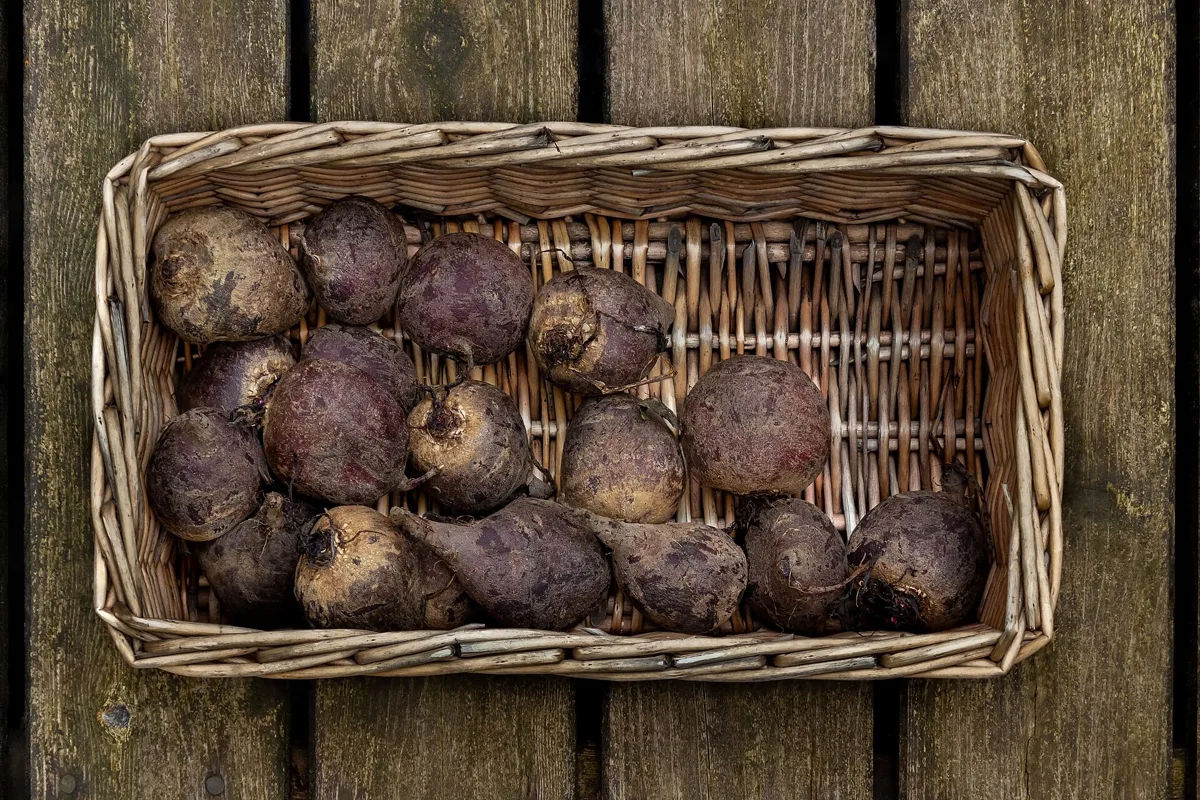
Prep is three quick jobs. Twist or cut the tops off to about an inch — left on, greens draw moisture out of the root. Brush the soil off with your hands and let the skins dry for an hour or two; never wash storage roots. Sort ruthlessly: damaged, forked or tiny roots go to the kitchen for this week, and only sound roots go into the box.
Packing in damp sand — and the in-ground alternative
Set a sturdy box or crate in your cold spot. Lay down an inch of damp sand, peat or sawdust, then a layer of roots side by side but not touching, then more damp medium, and repeat until the box is full, finishing with medium on top. “Damp” means like a wrung-out sponge — moist to the touch, never dripping. Check monthly, use any root that starts to soften, and re-dampen the medium if it dries.
The laziest method skips the box entirely: in milder cold climates, leave carrots where they grew under a thick blanket of straw and dig them as needed before the ground freezes hard. It works beautifully until a deep freeze locks the bed — so treat it as the early-winter option and box the rest. More no-cellar methods are in the Almanac's guide linked below, and this job belongs on the November garden checklist before the ground freezes.
Keep going
Storage is one line on the November garden checklist — work the rest of the list before the ground freezes, and see storing dahlia tubers for the same cold-and-dark logic applied to flowers.
Questions people ask
How long will carrots keep in damp sand?
Several months — typically through to late winter — if the box stays at 32–40°F and the sand stays damp. Check monthly and use any root that begins to soften before it affects its neighbours.
Should I wash carrots and beets before storing them?
No. Brush the soil off and let the skins dry on the surface. Washing adds water that encourages rot and strips the root's natural protective surface.
Can I just leave carrots in the ground all winter?
In milder cold climates, yes, under a thick straw mulch, digging as needed. Where the ground freezes hard for months, the roots become impossible to dig and can be damaged below about 25°F — box those in damp sand instead.
Why did my stored carrots go rubbery?
They dried out — the storage spot was too warm or the medium too dry. Roots need cold and about 90 percent humidity together; a fridge crisper or a re-dampened sand box fixes it next time.
The fact worth remembering
Carrots and beets keep for months at 32–40°F packed in damp sand — cold slows them down, moisture stops them shrivelling, and the sand keeps each root from touching, and rotting, its neighbour.
Sources
Key facts on this page cross-checked against The Old Farmer's Almanac — Storing Vegetables Over Winter and The Old Farmer's Almanac — Storing Your Harvest Without a Root Cellar.
Researched and written by Faizan Ahmad for YardSolver. Photos: Wikimedia Commons contributors, CC-licensed.
Related page
Read next: November Garden Checklist: 12 Jobs Before the Freeze, Putting Your Garden to Bed for Winter and How to Store Dahlia Tubers Over Winter.
Comments & ratings
No comments yet.
Be the first to share your experience.