
Guides · Seasonal · Published November 20, 2026 · By Faizan Ahmad
Living Christmas Tree Care: Keep a Potted Tree Alive Through Christmas (and Plant It After)
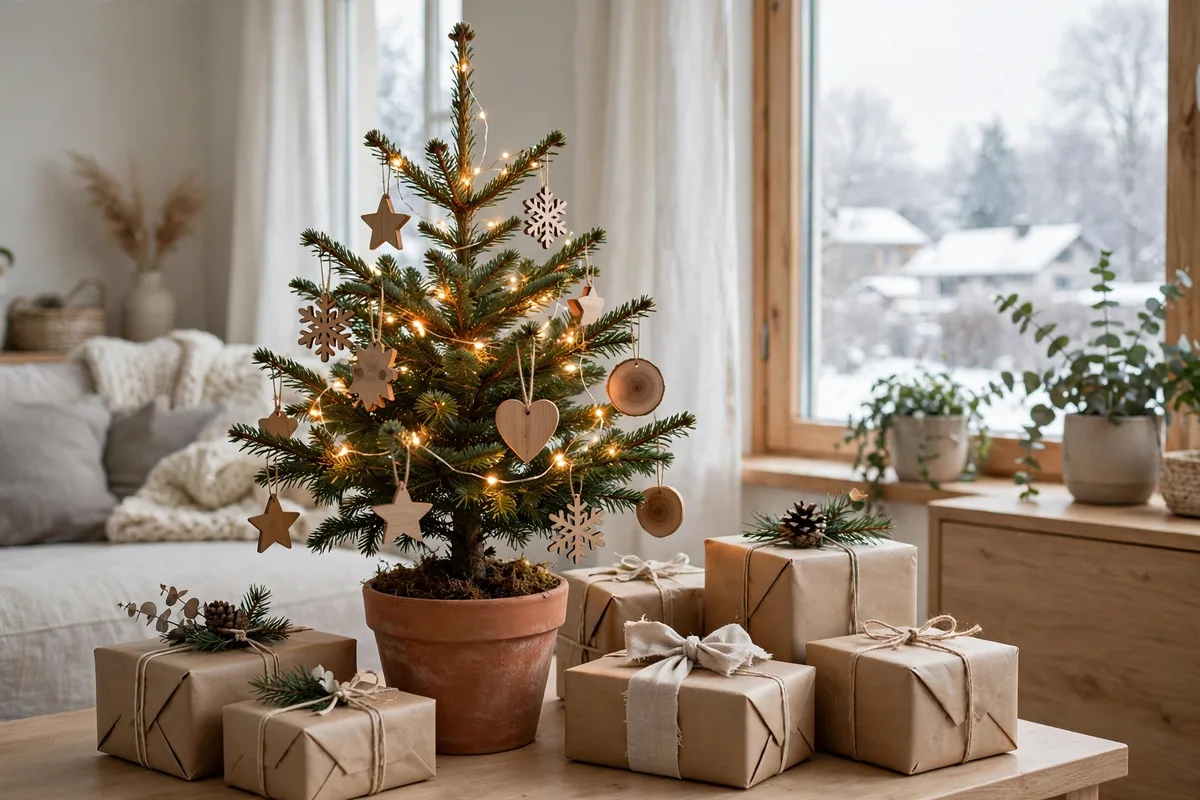
A living Christmas tree — a real conifer growing in a pot — survives the holidays on one rule above all: keep its time indoors to 7 days at most, and 5 if you can; acclimatise it through an unheated garage or porch for a few days on the way in and on the way out; and never let the root ball dry out. Colorado State University Extension puts the indoor limit at 7 days, NC State Extension allows a week to 10 days, and both agree on the reason: a warm room tells a dormant tree that spring has come, and a tree that breaks dormancy indoors cannot safely go back out into the winter. This guide is the full protocol — choosing a tree that can actually live, the acclimatisation steps most people skip, the indoor week done right, and the planting-out that turns a decoration into a tree. It is the companion to our cut-tree watering guide: that tree is already cut and needs a reservoir; this one is alive and needs a plan.
The short answer, on one card
Buy: pot-grown (not dug up and stuffed in a pot), healthy, and no taller than 5–6 ft if it is destined for the garden. In: a few days in an unheated garage or porch first, then indoors. The week: coolest spot you have, away from radiators and fires; root ball kept moist; LED lights only; 7 days maximum, 5 better. Out: garage again for a few days, then plant promptly — or pot it up and keep it outside. Never: a month indoors, a dry root ball, or a tree put straight from a warm room into a frost.
Choose a tree that can live: pot-grown beats potted-up
The first decision is made at the garden centre, and it is the one that decides everything else. A pot-grown tree has lived its whole life in its pot: its root system is complete, compact and undamaged, and it can stay in containers for years or plant out whenever you are ready. A potted-up tree was dug from a field days or weeks ago and rammed into a pot for the season — most of its roots were left in the field, and it is, functionally, a cut tree with a root ball attached. Both look identical on the forecourt. Ask which it is; check that the tree is firm in its pot (a dug tree often rocks), that the roots are not a solid mat escaping the drainage holes, and that the foliage is a healthy colour with no browning at the branch tips. Species, in order of indoor tolerance: Norway spruce is the classic and the cheapest, with the sharpest needles and the strongest scent; Nordmann fir holds its needles best and tolerates the indoor week most gracefully; Colorado spruce brings blue foliage and toughness; Scots pine is the budget native option. If the tree's final home is your garden, follow the NC State guidance and keep it to 5–6 feet or less — a bigger tree means a root ball too heavy to move and a transplant shock too large to survive reliably.
Acclimatisation: the step that decides survival
A tree standing in a frosty garden centre is fully dormant and hardened to cold. Your living room is 40 degrees warmer and desert-dry. Moving the tree directly between the two is a shock in both directions, and the return journey — warm room to January frost — is the one that kills. The extension method inserts a buffer: stand the tree in an unheated garage, shed or sheltered porch for a few days before bringing it indoors, and reverse the step on the way out. During the buffer days, check the root ball and water it if it is dry — the tree should go into the house fully hydrated. If you buy the tree in November, do not bring it in early to "get your money's worth": keep it outside, in its sheltered spot, until the week you actually want it decorated. The calendar is part of the care: buy late, acclimatise, one short week indoors, acclimatise back, plant out. Every day added to the indoor week is borrowed against the tree's survival.
The indoor week, done right
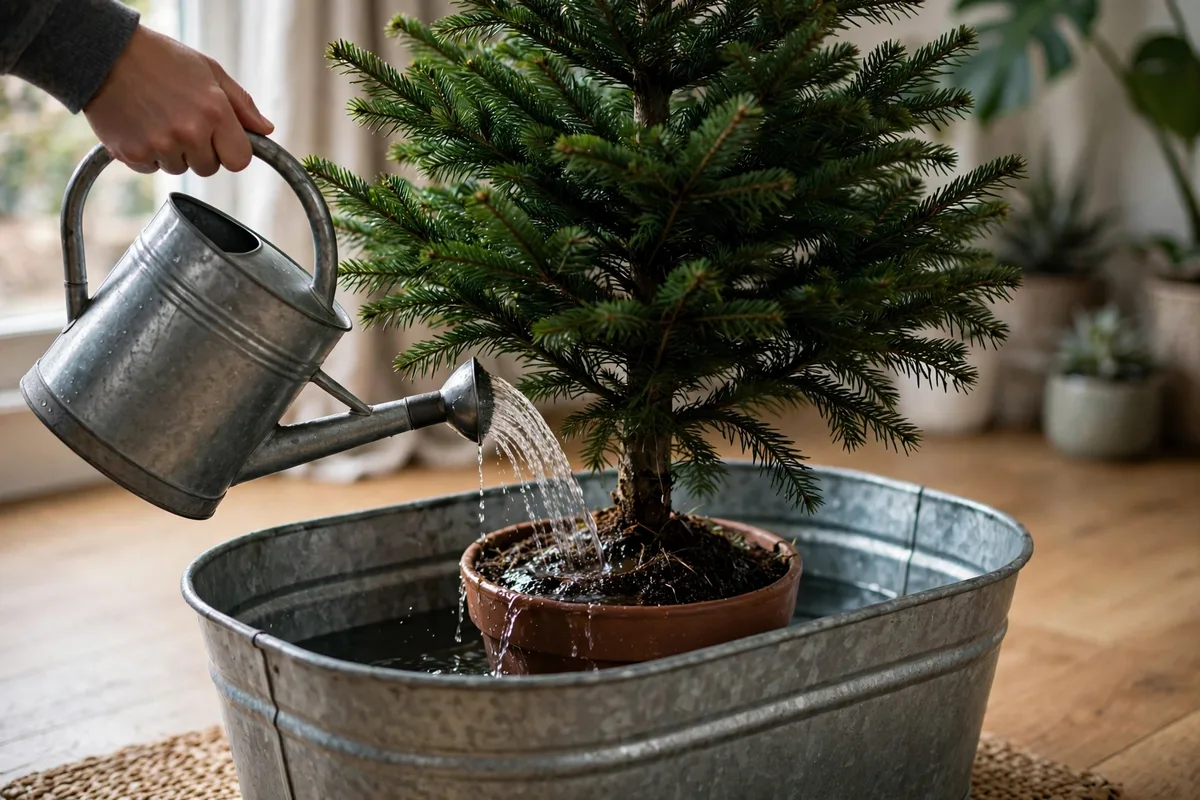
Position is the first care decision: the coolest place that still works as a Christmas tree — near a window, away from radiators, fires, heat vents and the blast of a frequently opened door's warm side. A hallway or a cool conservatory beats the fireside corner by a distance. Water is the second: the root ball must never dry out, which in a heated room means checking daily and watering as needed — the pot should stand in a waterproof saucer or tray, both to catch the water and to protect the floor. Do not feed it; fertiliser is a spring signal the tree does not need. Lights should be LED: they run cool, where old filament strings warm the foliage they touch and dry the tree unevenly. Decorations go light — a young potted tree's branches are not the engineered limbs of a cut tree, and heavy ornaments bend them into shapes they keep. And the clock rules everything: extension services put the safe indoor stay at a week, with Colorado State's 7-day maximum the figure to plan around and 5 days the kinder target. The RHS allows pot-grown trees in cool rooms up to about 12 days — treat that as the outer edge for a genuinely cool room, not a licence for a fortnight by the fire.
After Christmas: plant it out, or pot it on
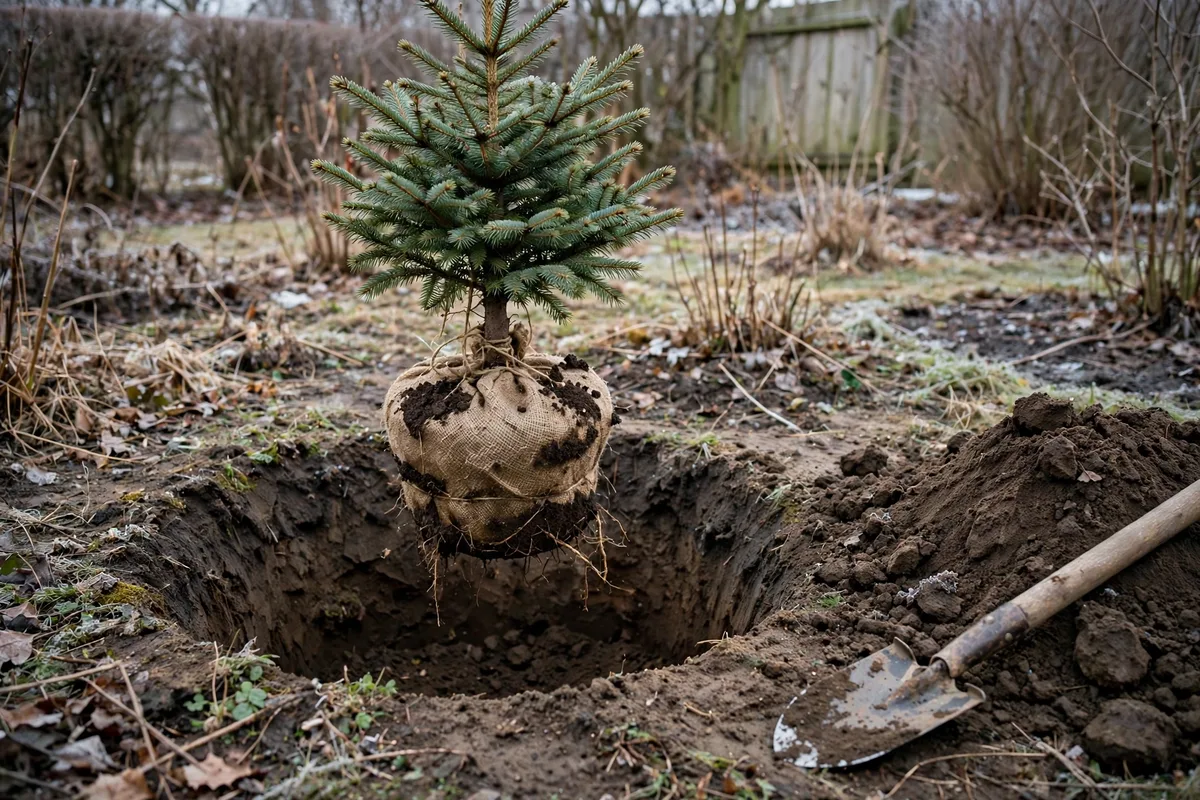
When the week ends, reverse the acclimatisation: garage or porch for a few days, then out. Two futures are open. Planting out is the better one for a pot-grown tree of landscape size: choose the spot with its mature size in mind (a Norway spruce is a 60-foot tree; the 5–6 ft rule for buyers exists because of what it becomes), dig the hole as for any tree in our winter planting guide — wide, at the same depth, root flare at the surface — water it in, mulch, and keep it watered through its first dry spring. If the ground is frozen, hold the tree in its sheltered outdoor spot and plant on the first workable day; an outdoor wait does it no harm at all. Potting on suits the tree you intend to bring in again: move it up one pot size in spring with fresh compost, keep it outside all year in a spot that gets water (pots dry out in summer faster than any other planting you own), feed lightly through the growing season, and expect two to three Christmas tours from a tree before its size retires it to the garden. A tree that has spent its week well comes out of the house looking exactly as it went in; a tree that has started to drop needles indoors or push pale new growth has been in too long, and it should go out — through the garage step, quickly — rather than be nursed in the warm.
The failure modes, so you can recognise them
Nearly every dead living tree dies of one of four causes, and all four are in this guide because all four are avoidable. Too long indoors — the tree breaks dormancy, pushes soft growth, and cannot re-harden for the frost waiting outside. A dry root ball — a pot holds a few days of water in a heated room, not a week, and a conifer that dries out at the roots rarely recovers its foliage. Heat — the radiator-side position, which combines drying air with spring temperatures. The instant exit — straight from the warm room into a hard frost with no garage step between. The living tree asks for less total care than the cut tree it replaces — no reservoir to top up, no stand to level — but it asks for it on a schedule. Keep the week short, the roots wet and the transitions gentle, and next Christmas the same tree can come in again, a foot taller for the year it spent in the garden doing what trees do. Plan the planting spot in the Garden Planner before the tree comes home, and the whole protocol — centre, garage, room, garage, garden — is a path you have already walked on paper.
Keep going
Choose the tree's permanent garden spot in the Garden Planner before you buy it — a living tree is a 20-year planting decision wearing tinsel.
Go deeper with the companion How Much Water Does a Christmas Tree Need? for the cut tree's rules, Poinsettia Care After Christmas for the other living decoration, and How to Plant Bare-Root Trees, Roses and Fruit for the planting-out method.
Sources
The indoor limits and acclimatisation method follow the extension consensus summarised in Wikifarmer — Potted Christmas Tree Care (Colorado State University Extension: 7 days maximum indoors; NC State Extension: a week to 10 days; acclimatise via an unheated garage; trees destined for the landscape no taller than 5–6 ft; root ball never allowed to dry out) and Urbaki — Living Christmas Tree Care (gradual transitions each way; cool indoor position away from heat sources).
Questions people ask
How long can a living Christmas tree stay indoors?
Seven days at most — Colorado State University Extension's maximum — and five days is kinder. NC State Extension allows a week to 10 days, and the RHS up to about 12 days for a pot-grown tree in a genuinely cool room. The limit exists because warmth breaks the tree's dormancy, after which it cannot safely return to frost.
What is the difference between a pot-grown and a potted-up Christmas tree?
A pot-grown tree has lived its whole life in its pot, with a complete, undamaged root system — it can live in pots for years or plant out any time. A potted-up tree was dug from a field shortly before sale with most of its roots cut away; it looks the same but survives far less reliably. Always ask which you are buying.
How often should I water a potted Christmas tree indoors?
Check the root ball daily and water whenever the surface of the compost is dry — in a heated room that can mean watering every day or two. The root ball must never dry out completely. Stand the pot in a waterproof saucer, and never feed the tree during its indoor week.
Can I plant my potted Christmas tree in the garden afterwards?
Yes — that is the point of buying pot-grown. Acclimatise it back through a garage or porch for a few days first, then plant it as you would any young tree: wide hole, same depth, root flare at the surface, water in and mulch. Buy with the mature size in mind and keep landscape-bound trees to 5–6 ft or less.
Why is my living Christmas tree dropping needles indoors?
Usually heat, dryness, or too long in the room. Move it to the coolest spot, check and water the root ball, and if needles keep falling, end the indoor stay early — acclimatise it out through the garage step rather than nursing it in the warm, which makes the dormancy problem worse.
Can the same living tree be used again next Christmas?
Yes, if it was pot-grown and kept in a pot: pot it up one size in spring, keep it outside and watered all year, feed lightly in the growing season, and bring it in for another short week next year. Most trees manage two or three tours before their size retires them to a permanent garden planting.
Comments & ratings
No comments yet.
Be the first to share your experience.