
Guides · Planting · Published November 20, 2026 · By Faizan Ahmad
How to Plant Bare-Root Trees, Roses and Fruit (Winter Is the Cheap Season)
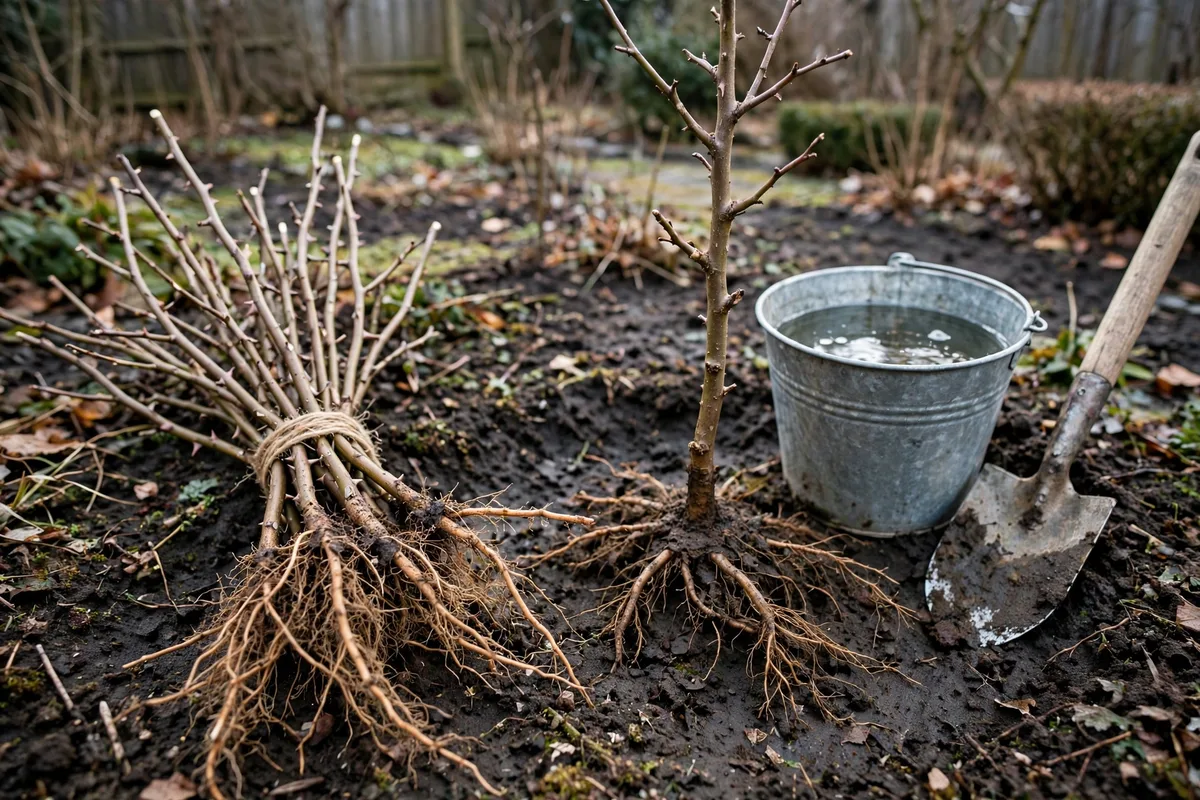
A bare-root plant is a dormant tree, rose or fruit bush dug from a nursery field and sold with no pot and no soil — and planted the winter way, it is cheaper than the same plant in a pot and often establishes better. The whole method rests on three facts: the roots must never dry out, the hole must be wide rather than deep (about three times the spread of the roots), and the plant goes in at exactly the depth it grew at in the field. This guide walks the complete workflow — what to do in the first hour after the parcel arrives, how to soak and heel in, the planting steps for trees, roses and fruit, and the frozen-ground holding pattern for cold-zone gardeners.
The short answer, on one card
When: any time from late autumn to early spring while the plant is dormant and the soil is neither frozen nor waterlogged. On arrival: unpack, check the roots are damp, soak them in a bucket of water for about 30 minutes before planting. Can't plant yet? Heel the plants into a shallow trench with the roots covered in soil. Planting: hole at least 3× the root spread and no deeper than the roots; root flare level with the surface; for roses, the graft union sits at soil level; stake trees before backfilling; firm, water, mulch — leaving a bare collar around the stem.
What "bare-root" actually means, and why growers prefer it
Through summer, the plants stand in rows in a nursery field. Once they drop their leaves and go dormant, the nursery lifts them, shakes the soil from the roots, and ships them as bundles of stems and roots in a damp sack. Because there is no pot, no compost and no weight of soil, the same variety typically costs noticeably less than its container-grown twin — and the choice is wider, because mail-order nurseries can list hundreds of varieties they could never stock as pots. The Royal Horticultural Society's position, repeated across its bare-root guidance, is that these plants often establish better than container plants: a field-grown root system is wide, fibrous and undamaged by years of circling a pot, and a plant set into the ground in winter spends the cold months doing nothing but growing roots, so it wakes in spring already plumbed in. Our Rose page and Apple Tree page both assume this winter start, because for both plants it is the professional default.
The trade-off is the calendar. Bare-root stock exists only while plants are dormant — roughly November to March in most northern gardens, a little longer in cold zones, shorter in mild ones — and it cannot sit in its sack. A potted plant forgives a fortnight on the patio; a bare-root plant gives you days. Everything in this guide flows from that single pressure: protect the roots from drying, and plant at the first moment the ground allows.
The first hour after the parcel arrives
Open it the day it comes. Unpack somewhere cool and sheltered, out of wind and sun — drying air kills the fine root hairs that do the actual drinking, and it kills them in minutes, not hours. Check the roots. They should feel damp and smell like soil. If the bundle has dried in transit, stand the roots in a bucket of water straight away and leave them while you prepare. Trim the damage. Snip any root that is broken, torn or blackened back to clean, pale wood with sharp pruners; leave every healthy root as long as it arrived — length is root power. Keep them covered. Until the moment of planting, the roots live in their damp sack, in a bucket of water, or buried — never laid out on a path "for a minute" while you dig. Gardeners who lose bare-root plants almost always lose them here, on the ground, before the hole is even dug.
Soak, or heel in: the two holding moves
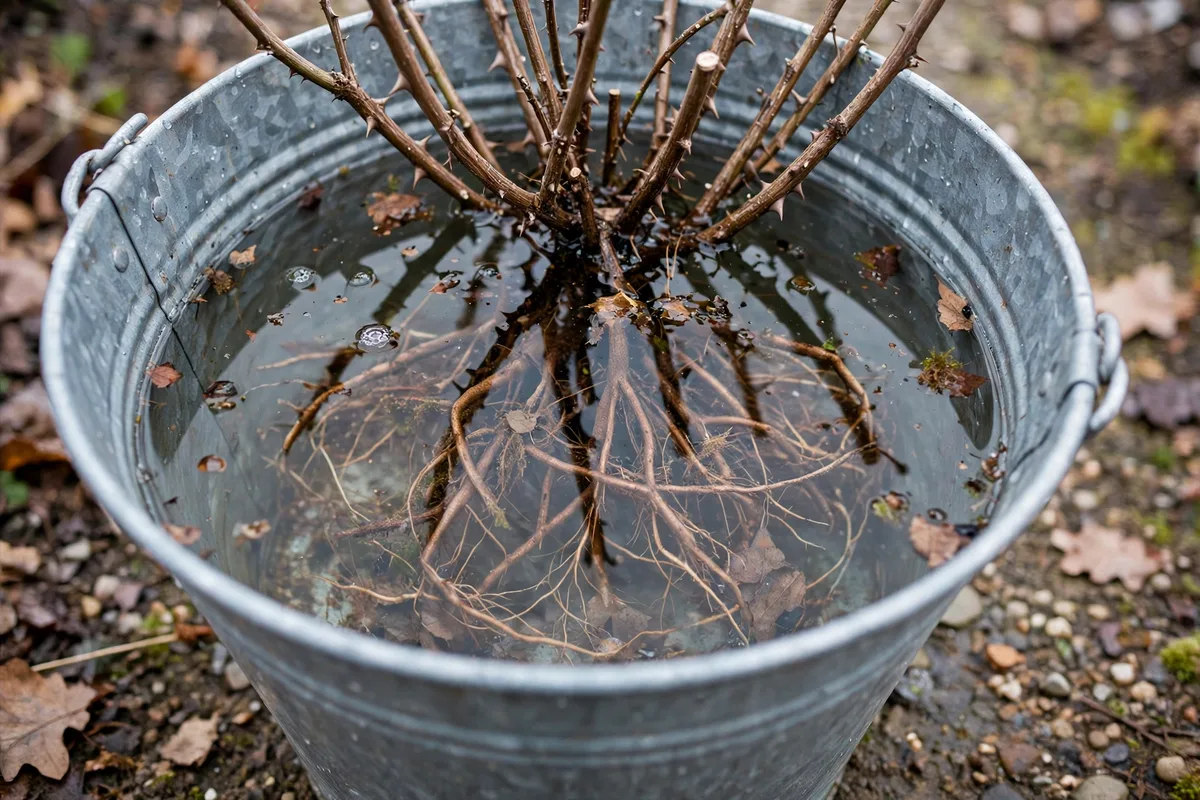
The soak. Before planting trees and shrubs, the RHS suggests standing the roots in a bucket of water for about 30 minutes; roses that have travelled far or feel dry benefit from longer — up to a couple of hours. You can plant straight from the bucket, lifting one plant at a time so the rest stay wet. Heeling in. If the ground is frozen, waterlogged, or you simply cannot plant within a day or two, heel the plants in: dig a shallow trench in any workable, sheltered patch, lay the plants in at a slant with the roots in the trench, and cover the roots completely with soil, firming gently. Heeled-in plants are not on a countdown — they can sit safely for weeks until conditions improve, which is what makes bare-root buying practical in cold zones where a November parcel can meet a December deep-freeze. For roses waiting only a few days, the RHS alternative is a container of slightly moist peat-free compost in a cool shed. Whichever hold you use, the rule is identical: roots covered, roots damp, plants dormant and cold.
Planting, step by step
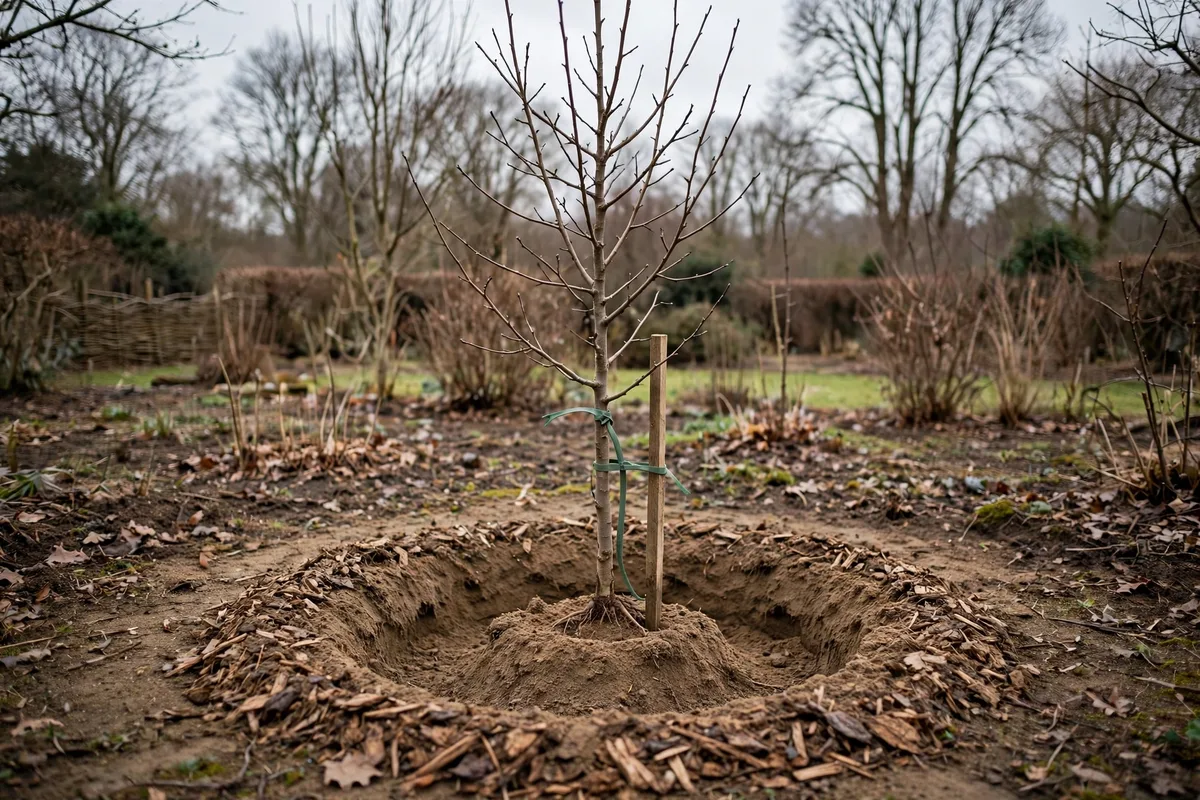
Step 1 — Dig wide, not deep. The hole should be at least three times the diameter of the root spread, but no deeper than the roots need. A wide hole gives the roots loosened soil to run into; a deep hole buries the stem and invites rot. If the sides come out smooth and glazed — common in clay — rough them up with a fork so roots can push through. Step 2 — Set the depth by the root flare. Spread the roots in the hole and look for the flare where the first roots leave the stem: that flare finishes level with the soil surface. The old soil mark on the stem is your guide. Too deep is the classic bare-root failure; too shallow can be corrected with mulch, too deep cannot. Step 3 — Stake trees before you backfill. For a tree, drive the stake now, while you can see the roots, placing it between them on the side the prevailing wind comes from. Staking after backfilling spears roots you cannot see. Step 4 — Backfill with the soil you dug out. For trees and most shrubs, the RHS advises against enriching the planting hole — a pocket of rich compost teaches roots to circle in luxury instead of exploring. Roses are the exception (next section). Work the soil between the roots with your fingers, firming in layers so no air pockets remain. Step 5 — Water and mulch. Water thoroughly to settle soil against root, then mulch the surface, keeping a hand's width of bare soil as a collar around the stem so the mulch never sits against the bark. Sizing that mulch ring — and the compost for the rose exception — is a two-minute job with the Mulch Calculator and Compost Calculator.
Roses: the graft-union rule and the one enrichment exception
A bare-root rose is two plants in one: the flowering variety grafted onto a vigorous rootstock, joined at the knobbly swelling — the graft union — where the stems meet the roots. The RHS rule is that the graft union sits at soil level: lay a spade handle across the hole and set the union level with it. Burying the union is linked to a higher risk of dieback; perching it high invites rocking and drying. Roses are also the one bare-root plant where you do enrich: fork at least a bucketful of well-rotted organic matter into each square metre of the topsoil around the planting area before you dig, because roses are heavy feeders planted for decades. One warning with a long memory: if a rose grew in that exact spot before, replant disease can stunt the new one — the RHS fix is to swap the soil in the planting area for soil from another part of the garden. An optional extra many growers swear by is mycorrhizal fungi granules dusted over the roots at planting — the fungal network extends the root system from week one; if you use them, skip any fertiliser at planting, which suppresses the fungi.
Check Price on Amazon — USCheck Price on Amazon — Canada
Buttons open a search on each store, so you see today's price and current products — we never print prices here because they change daily.
Fruit trees and bushes: same method, two tweaks
Fruit trees follow the tree method exactly, with one addition: keep the graft union clearly above the soil — on a fruit tree the union is the swelling a few inches above the roots, and if it touches soil the variety can root itself and throw away the dwarfing effect of the rootstock you paid for. Currants, gooseberries and raspberry canes are more forgiving: currants and gooseberries go in a fraction deeper than their nursery mark to encourage stems from below ground, and raspberry canes are set in a shallow trench with roots spread like a fan, just 2–3 inches deep. For a hedging run or a fruit row, measure the line first — the Square Footage Calculator turns the row's length and spacing into a plant count before you order, not after the parcel arrives.
Frozen or waterlogged ground? Wait — properly
Never plant into soil that is frozen hard or sitting in water: roots set into a flooded hole suffocate, and a plant levered into frozen ground never makes soil contact. The professional answer is not the garage floor — it is the heel-in trench described above, in the most sheltered, workable corner you have. Check heeled plants after storms (wind can rock them loose), keep the trench soil damp in a dry cold snap, and plant into position on the first mild, workable day. A bare-root plant heeled in for six weeks and planted well in February will out-grow a plant forced into bad ground in November, every time.
Aftercare: the first season decides it
A winter-planted bare-root tree needs almost nothing until spring — then it needs water discipline. From the first dry spell of spring, water deeply once a week through the first growing season whenever rain fails, and keep the mulch ring topped up and the circle around the plant free of competing grass. Check the tie after storms and loosen it as the trunk thickens; most stakes come off after the first full season. Pruning waits: beyond removing damaged wood at planting, leave the shaping cuts for the dormant-season routine in our winter fruit-tree pruning guide. The plant that was a bundle of sticks in November should carry its first real growth by May — and because its roots never stopped working all winter, it usually passes the potted plant bought beside it by the second summer.
Keep going
Plan where the new trees, roses and fruit rows go — sun, spacing and beds — in the Garden Planner before the parcel arrives, not after.
Go deeper with the Rose and Apple Tree plant pages, size soil work with the Compost Calculator and Mulch Calculator, and pair this guide with How to Prune Fruit Trees in Winter and Putting Your Garden to Bed.
Sources
Method follows the Royal Horticultural Society's bare-root guidance as summarised and cross-checked in Potted Club — How to Plant Bare-Root Roses, Trees and Hedges (soak about 30 minutes, hole at least three times the root spread, graft union at soil level for roses, heel in when ground is frozen or waterlogged) and The Gardening Notebook — When to plant bare-root hedging, trees, roses (plant October–April while dormant; stake before backfilling; tie low). Seasonal context from Hortulani — Bare-Root Season.
Questions people ask
What is a bare-root plant?
A tree, rose, shrub or fruit bush dug from a nursery field while dormant and sold with its roots bare — no pot, no soil. Because there is nothing to ship but the plant itself, bare-root stock is cheaper, lighter and available in far more varieties than container-grown plants, and it often establishes faster because the root system is wide and natural rather than pot-shaped.
When can I plant bare-root trees and roses?
Any time while the plant is dormant and the soil can be worked — roughly late autumn to early spring (the RHS window is October to April). November is the ideal month for roses. Never plant into ground that is frozen hard or waterlogged; heel the plants in and wait for a workable day.
How long should I soak bare roots before planting?
About 30 minutes in a bucket of water for trees and shrubs, per RHS guidance. Roses that have travelled a long way or feel dry can soak for up to two hours. Plant straight from the bucket so the roots never sit in drying air.
What does 'heel in' mean?
Heeling in is temporary planting: lay the plants at a slant in a shallow trench and cover the roots completely with soil. It keeps bare-root plants safe and dormant for weeks when the ground is frozen, waterlogged, or you cannot plant yet — far better than leaving them in their sack.
How deep should a bare-root rose be planted?
So the graft union — the knobbly joint where the stems meet the roots — sits exactly at soil level. Use a spade handle laid across the hole as your level. The RHS links a buried graft union to a higher risk of dieback.
Do I add compost to the planting hole?
For trees and most shrubs, no — backfill with the soil you dug out, so roots grow outward into the real ground. Roses are the exception: fork well-rotted organic matter into the surrounding topsoil. Mycorrhizal fungi granules on the roots are an optional extra; if you use them, add no fertiliser at planting.
Comments & ratings
No comments yet.
Be the first to share your experience.