
Plant Library · Flowers · By Faizan Ahmad
🌸 How to Grow Aster
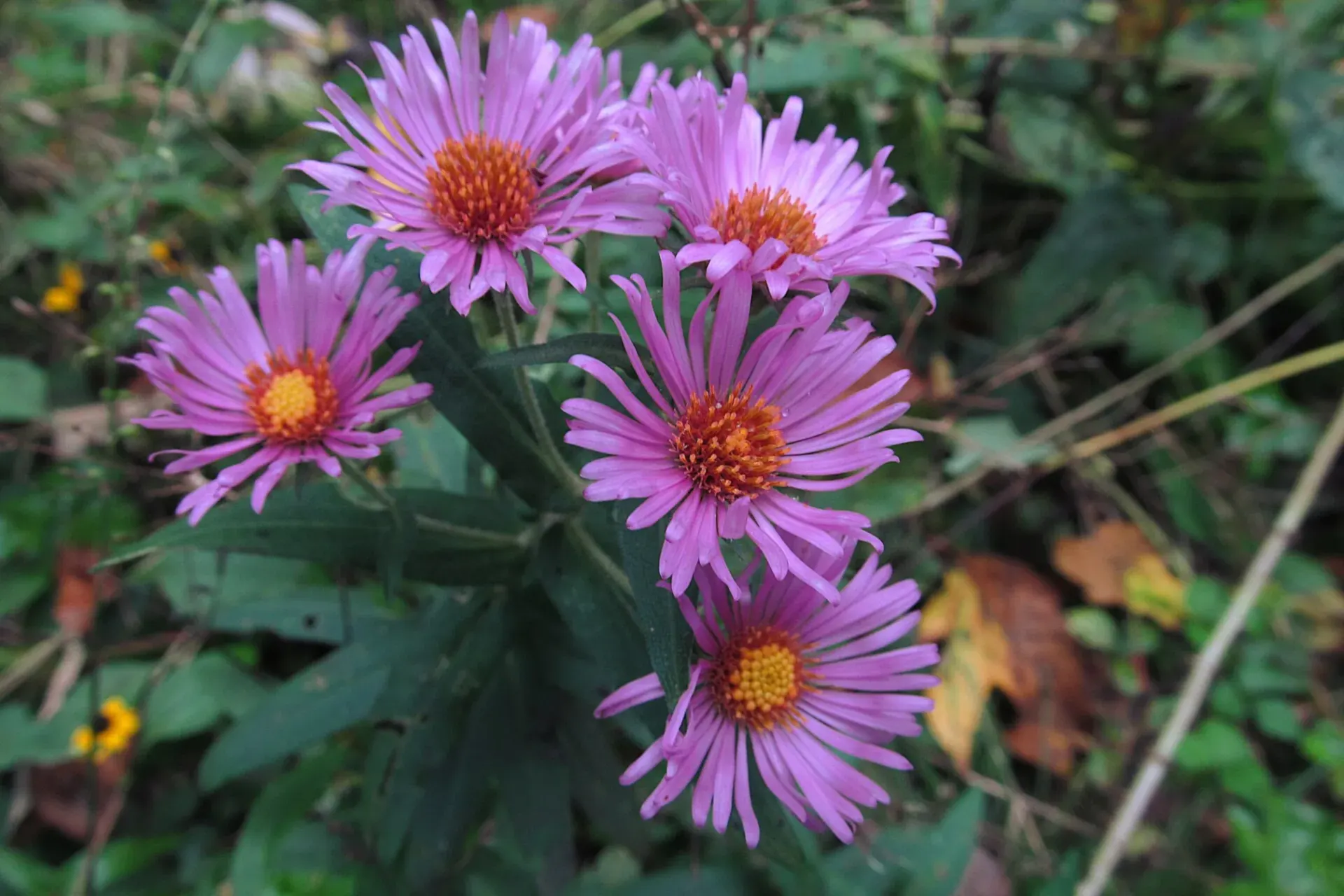
The autumn finale — clouds of purple, pink and white daisies when the rest of the garden is packing up. Garden asters (Symphyotrichum, the North American kinds) are hardy perennials: plant them in spring, pinch them in early summer for bushiness, and they carry the border — and the late bees — from August to the frosts. One good clump is divided into a drift in three years.
Grow Aster with us — step by step
Everything for this plant is written step by step below — what to do, and exactly when. Read it through first if you like: you can grow it entirely on your own with that guide. Or start with us here — tell us your planting day and we lay out your personal schedule on this page, every next step on its own day, counted from your planting date. No guessing, no forgetting.
Step 1 — today: Buy a potted aster in spring or beg a division from a friend's clump — asters divide as easily as any plant in the garden.
Aster at a glance
Plant out: Spring, as divisions or bought plants
Sow indoors: 8 weeks before last frost, for first-year flowering strains
Sow outdoors: Seed is slow — divisions are the gardener's route
Spacing: 18 in apart
Sun: Full sun
Water: Regular — moist soil suits them best
Bloom: August to October; pinch by early July for bushy plants
Timing counts from your average last spring frost — get your own dates in the Planting Calendar. Guidance follows standard extension-service practice for Canada and the US.
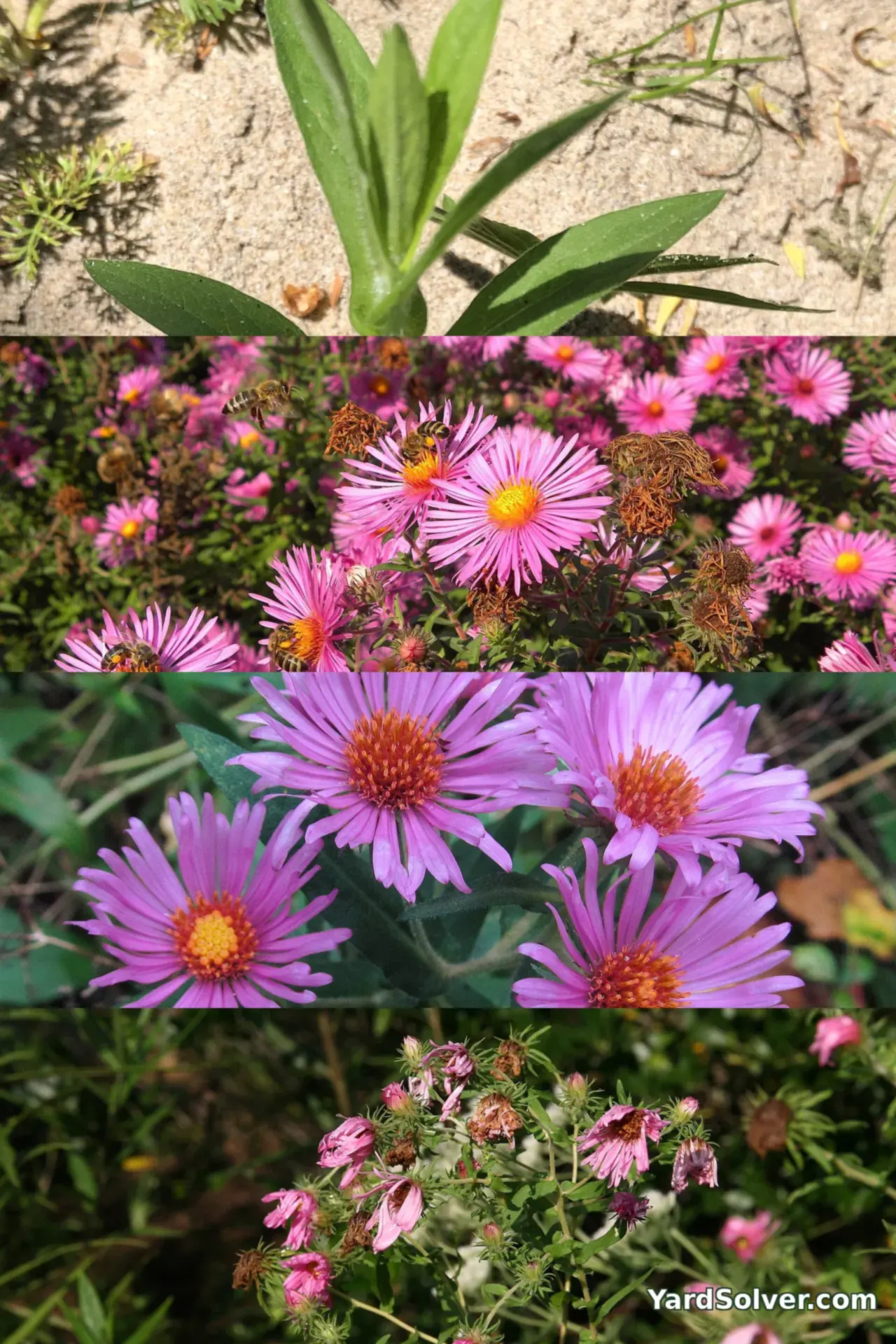
How to plant and grow aster, step by step
Step 1 — Time it right
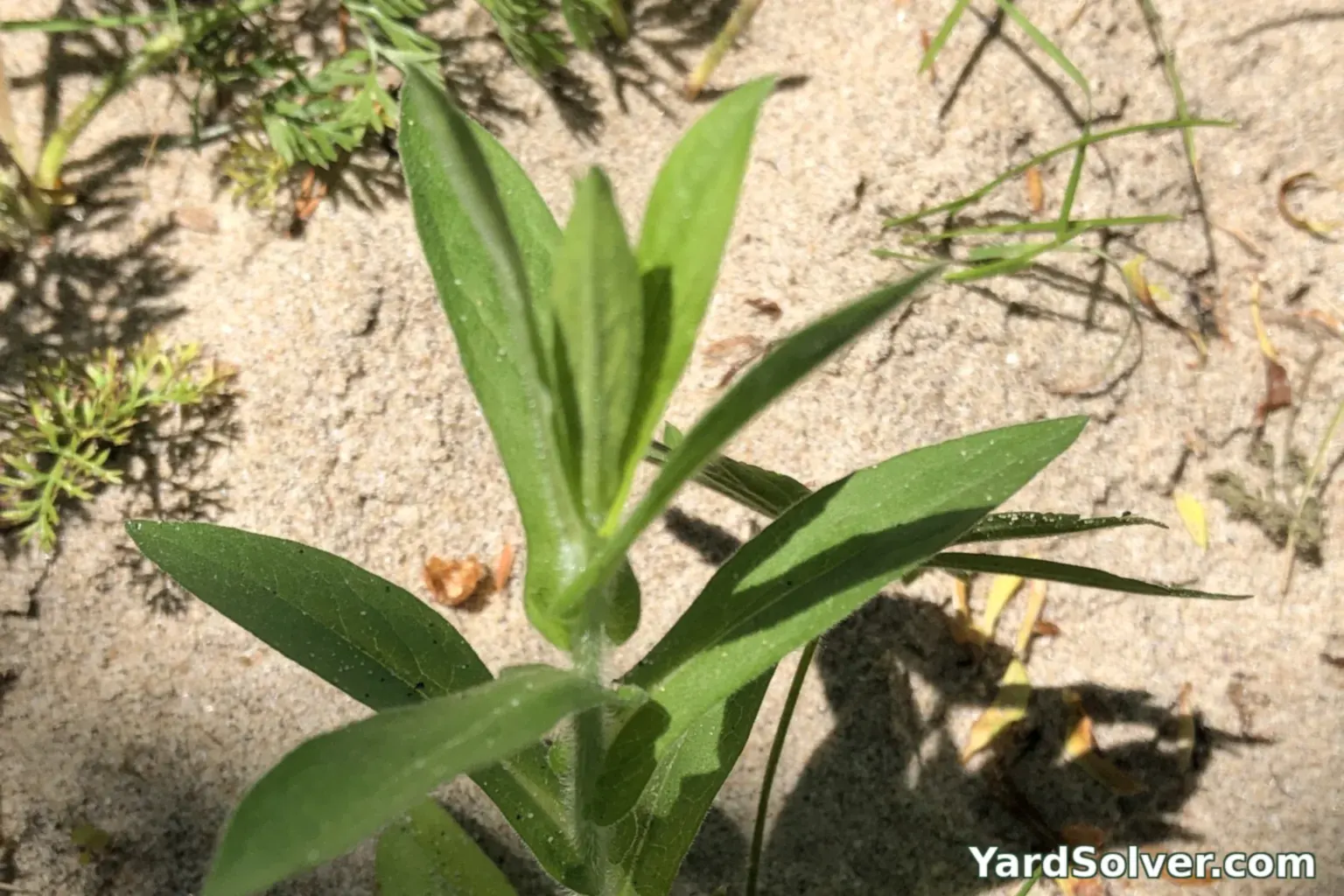
Plant out: in spring, as divisions or potted plants; Sow indoors: 8 weeks before last frost if you want seed-raised plants. All dates count from your average last spring frost — the Planting Calendar turns them into real dates for your garden. Asters are hardy perennials (zones 4–8 for most garden kinds) that establish fast from spring-planted divisions or pots — expect flowers the first autumn. Seed is a slow route to variable plants; named varieties (the mildew-resistant colours) come only from divisions, which any established clump provides generously every spring.
Step 2 — Prepare the spot
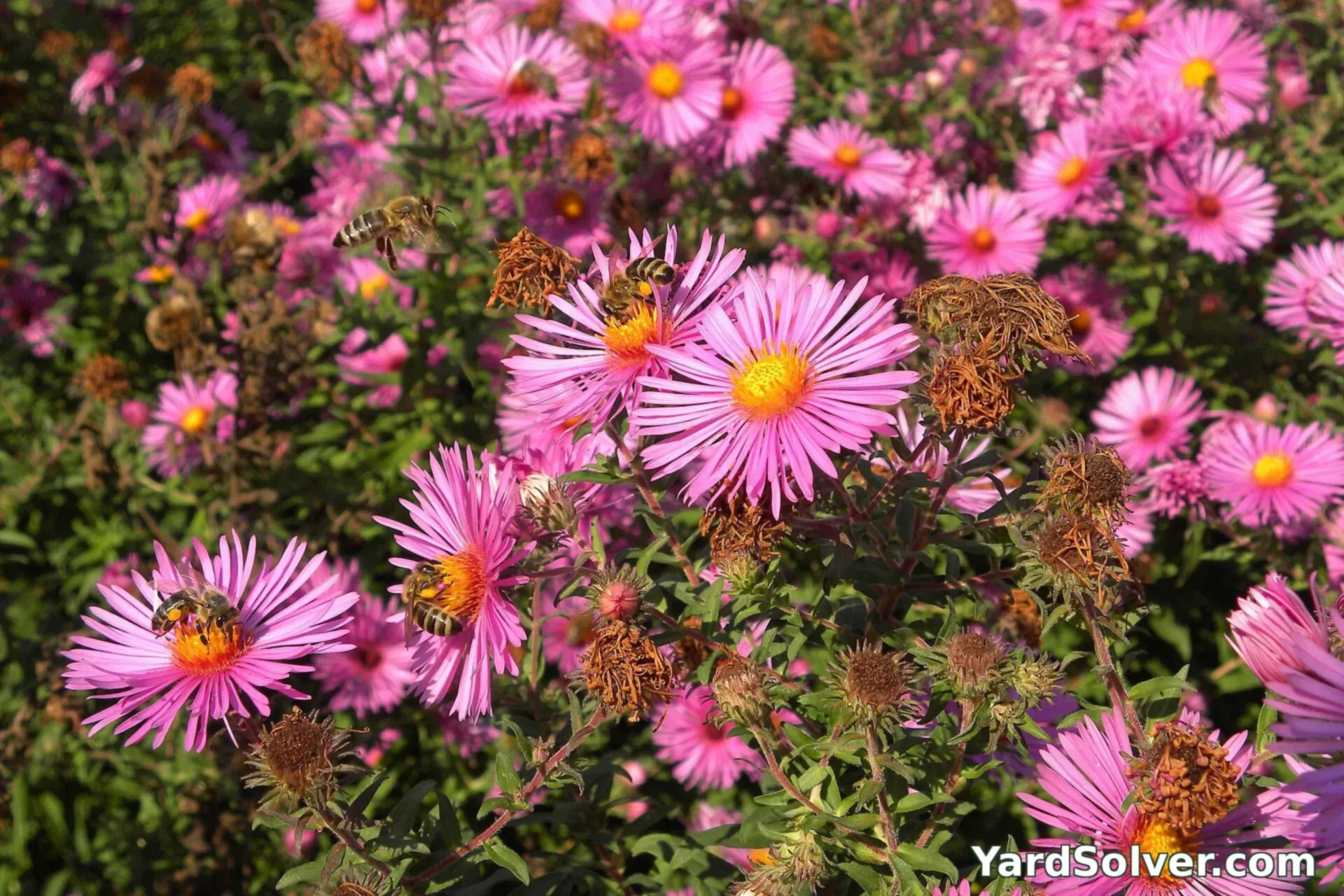
North American asters come from meadows and woodland edges: fertile soil that holds moisture, in full sun. Dig in compost before planting, and site them where they'll get water in a dry August — the difference shows in the flowering. For a raised bed, the Raised Bed Soil Calculator counts the bags for you; mixing your own? The Garden Soil Calculator gives the compost-rich split to aim for.
Step 3 — Sow and plant out
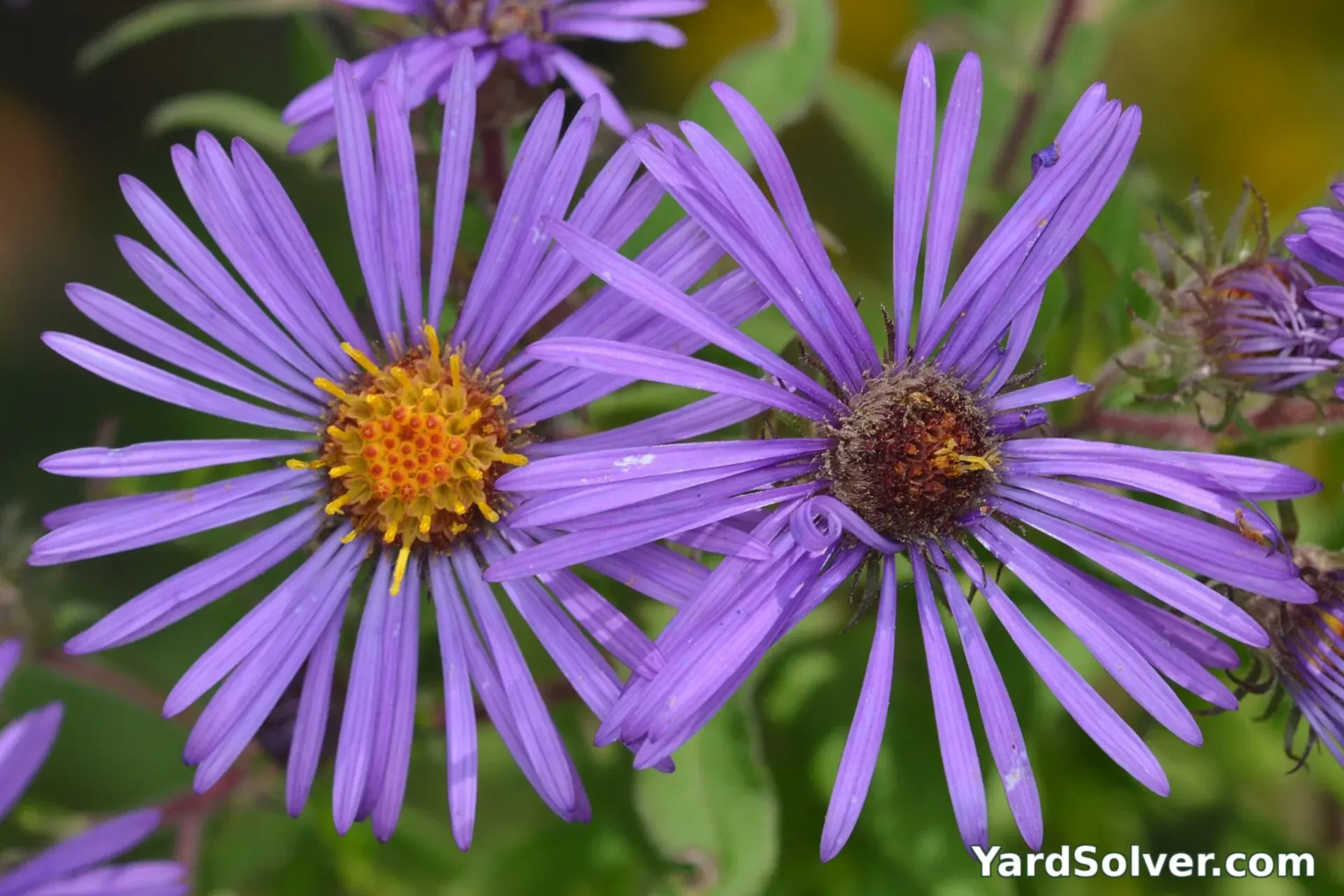
Set plants 18 in apart, at the depth they grew, and water in well. The Plant Spacing Calculator turns your bed size into an exact plant count. Good neighbours: asters are the autumn partners for goldenrod and ornamental grasses — the classic prairie finale — and their flowers feed migrating monarchs.
Step 4 — Water and feed
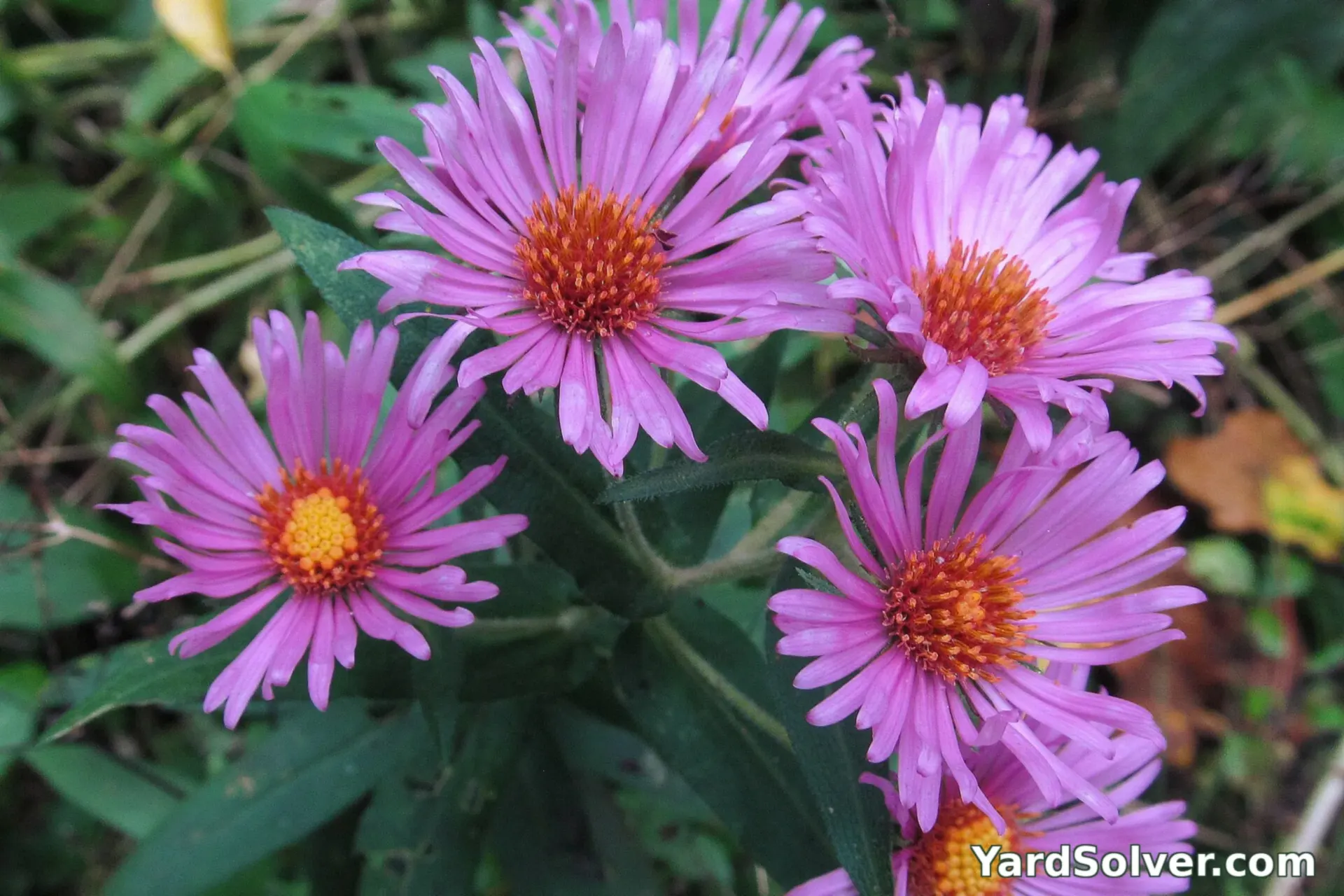
Water asters in dry spells, especially from bud formation onward. A spring feed of compost or one balanced fertilizer application keeps clumps vigorous — the Fertilizer Calculator turns your bed size into exact amounts. Mulch to hold the moisture in.
Step 5 — Care and the problems to watch for
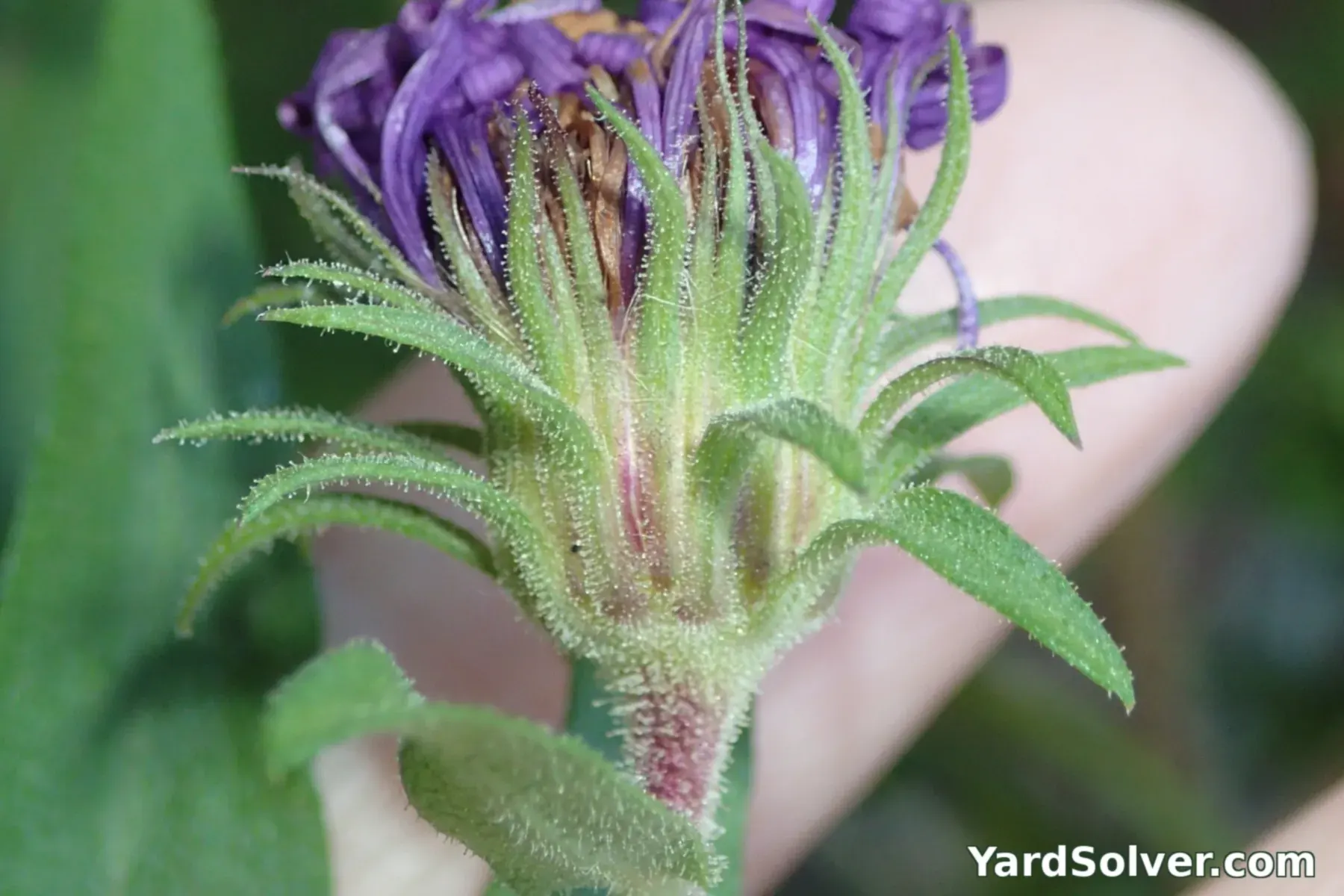
Pinch the growing tips once, when plants are about a foot tall (no later than early July — later pinching delays flowering into the frosts). Divide clumps every 2–3 springs to keep them young.
- Powdery mildew on lower leaves — the aster weakness; space for air, water at the base, and choose resistant modern varieties.
- Bare, woody middles — an old clump asking to be divided; lift, split, replant the edges.
- Flopping tall types — pinch on time, or grow through a support ring.
Step 6 — Harvest
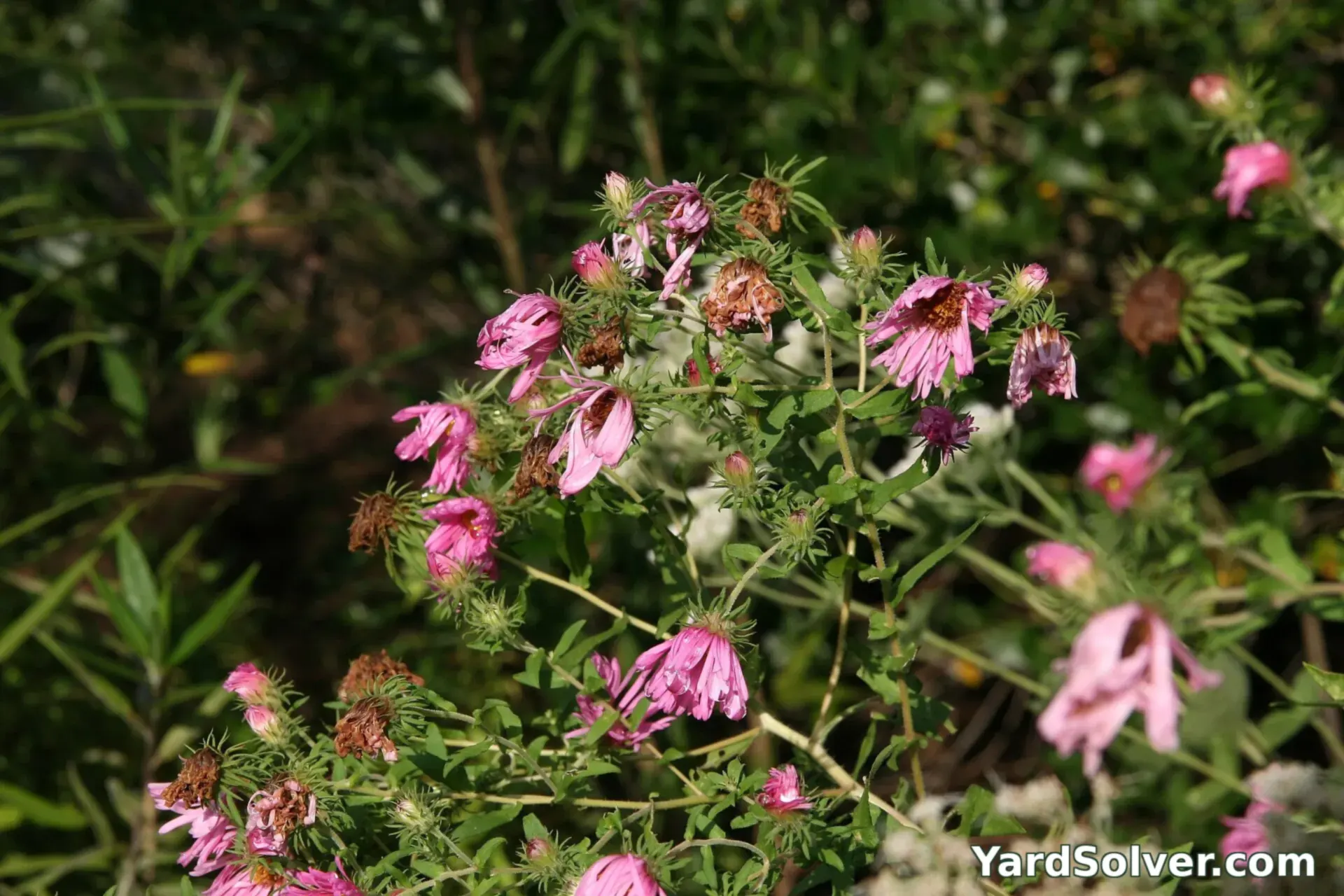
Cut stems in the morning when about a third of the flowers have opened; they last a week or more in water and bring the autumn garden indoors. Leave the last stems standing — late bees work them until the frosts, and the seed heads feed small birds into winter. Cut everything down in spring, not autumn, so the crowns overwinter under their own insulation.
📅 Your personal Aster schedule
Counted from your planting day — not a generic calendar. Day 0 is the day the seed went in the ground or the young plant went out.
Varieties worth growing
| Variety | Colour | Why gardeners like it |
|---|---|---|
| Wood's Purple | Violet-purple, compact | Mildew-resistant and tidy — the modern standard for smaller gardens. |
| October Skies | Sky blue, bushy | Aromatic aster selection — clouds of blue on a self-supporting mound. |
| Alma Pötschke | Salmon-pink, tall | A famous New England aster in an unusual watermelon pink. |
Good for you — and take care
Benefits
- The autumn garden's main event — flowers when almost nothing else does.
- Peak-season fuel for bees, butterflies and migrating monarchs.
- Divides freely — one plant becomes a drift in a few springs.
Take care
- Powdery mildew loves them — airflow and resistant varieties matter.
- Pinch by early July or tall types flop and flower late.
- Divide every 2–3 years to keep clumps vigorous.
A little history — and one good fact
Most garden asters are North American natives (botanists moved them to Symphyotrichum, gardeners kept the name). Michaelmas daisies — their old English name — flower around St Michael's Day, September 29, and have marked the turn of the gardening year for centuries.
Fun fact: An aster head is a whole bouquet: dozens of tiny florets, the outer ones with a single petal each, which is why bees can work one 'flower' for minutes at a time.
Keep going
Guides: Pollinator garden guide · Companion planting basics · Crop rotation basics
Calculators: Plant Spacing Calculator · Garden Mix Calculator · Fertilizer Calculator
More flowers: Goldenrod · Joe-Pye Weed · Black-Eyed Susan · Echinacea · Shasta Daisy
← Back to the Plant Library · Get your personal planting dates
Questions people ask
When should I pinch asters?
Once, when the plants are about a foot tall and no later than early July. Pinching then gives bushy, self-supporting plants; pinching later pushes flowering back into the frost season.
Why do my asters get powdery mildew?
Still, humid air and crowded clumps invite it. Space for airflow, water at the base, divide regularly, and plant modern mildew-resistant varieties — they make the biggest difference.
When do I divide asters?
In spring, every two to three years, as growth starts. Lift the clump, split it into fist-sized pieces with roots, replant the vigorous outer parts, and compost the tired centre.
Pinch in early summer, bloom in autumn: the timing that keeps asters compact and covered in flowers
Asters earn their place by flowering when almost nothing else does, but left alone many varieties grow tall, flop open in the first autumn rain and bloom mostly at the top. The fix is one early-summer habit: pinch or cut the stems back by about a third before midsummer. The plant answers with side branches, each carrying its own cluster of buds, so the same plant ends the season shorter, sturdier and carrying noticeably more flowers. Pinch too late — after midsummer — and you simply remove the season's flower buds, which is why the calendar, not enthusiasm, decides this job.
Asters are also one of the last serious meals of the year for pollinators. Bees and butterflies work the open daisy flowers hard in September and October precisely because so little else is still offering nectar, so a clump of asters beside the vegetable patch is working infrastructure, not decoration. Give them sun and air movement — crowded, shaded asters are the ones that powdery mildew finds first — and divide established clumps every few years in spring, discarding the woody centre and replanting the vigorous outer pieces.
The worked example: a clump pinched back by a third in early summer typically finishes around two-thirds the height of an unpinched neighbour, stands through autumn rain without staking, and carries flowers over the whole plant instead of a ring at the top. The unpinched clump beside it needs a cane and string by September and still blooms less. One pass with the secateurs in June is the entire difference.
Sources
Key facts on this page — timing, spacing and care — cross-checked against NC State Extension Plant Toolbox — Aster — culture and care requirements.
Related page
Read next: Native Plants: Benefits, Regional Picks & How to Grow.
Comments & ratings
No comments yet.
Be the first to share your experience.