
Plant Library · Herbs · By Faizan Ahmad
Updated November 17, 2026
🌿 How to Grow Dill
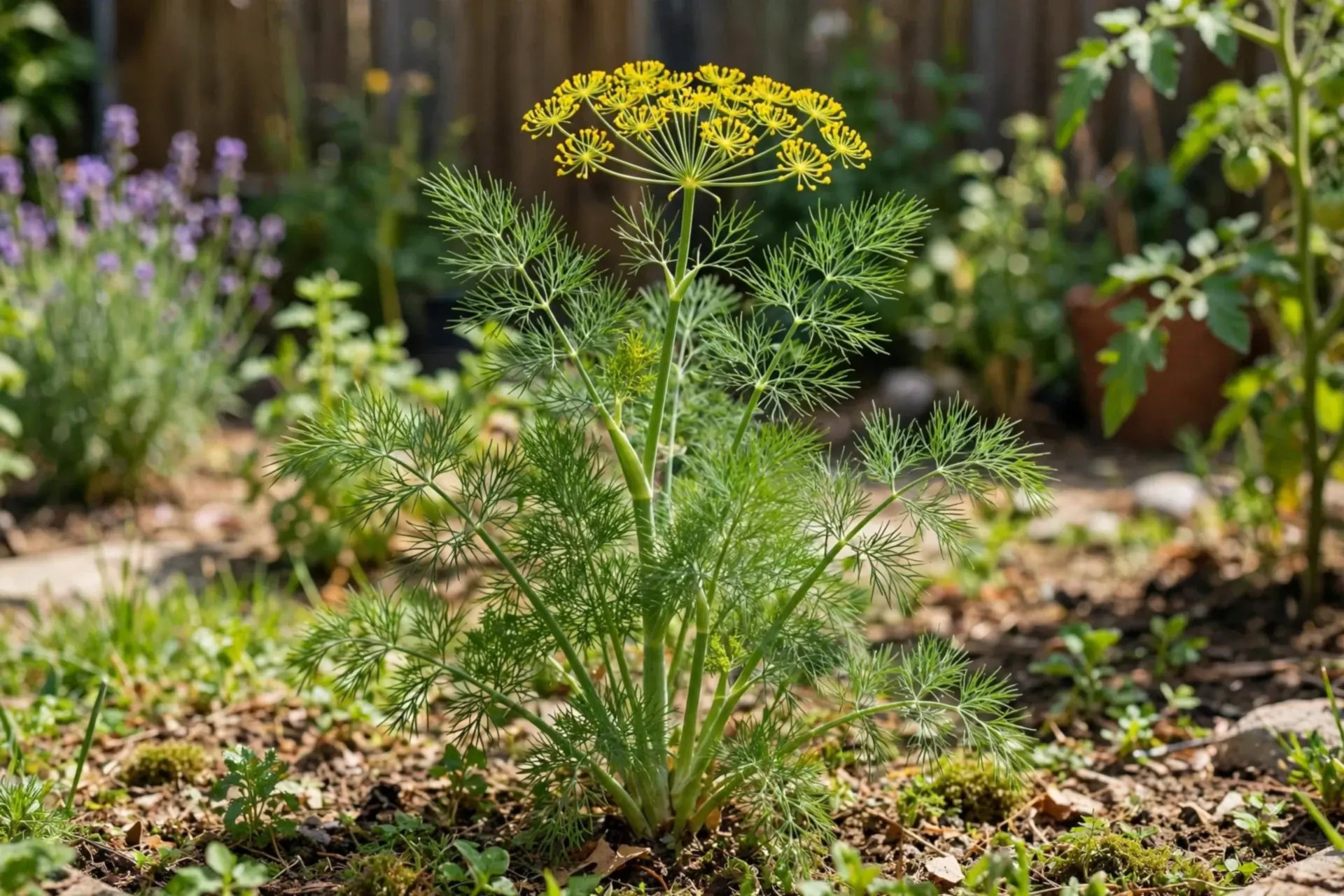
Direct sow — it dislikes transplanting. Let a few plants go to seed for pickling and next year. Dill is best direct sown around your last frost date, right where it will grow — it dislikes being transplanted, and letting a few plants go to seed gives you next year's patch for free.
Grow Dill with us — step by step
Dill is two harvests in one plant: feathery leaves in early summer, then the seed heads that flavour pickles. Because it hates transplanting and bolts as days lengthen, the trick is sowing little and often, right where it will grow. The guide below shows you how — add your sowing day and we will build your personal dill schedule from it.
Step 1 — today: Sow your Dill seeds today: 1/4 in deep, spaced 12 in apart, in full sun. Water the row in well and keep it moist while seeds sprout.
Dill at a glance
Sow outdoors: at last frost
Spacing: 12 in · Seed depth: 1/4 in
Sun: Full sun
Water: Regular
Harvest: 60–70 days
Timing counts from your average last spring frost — get your own dates in the Planting Calendar. Guidance follows standard extension-service practice for Canada and the US.
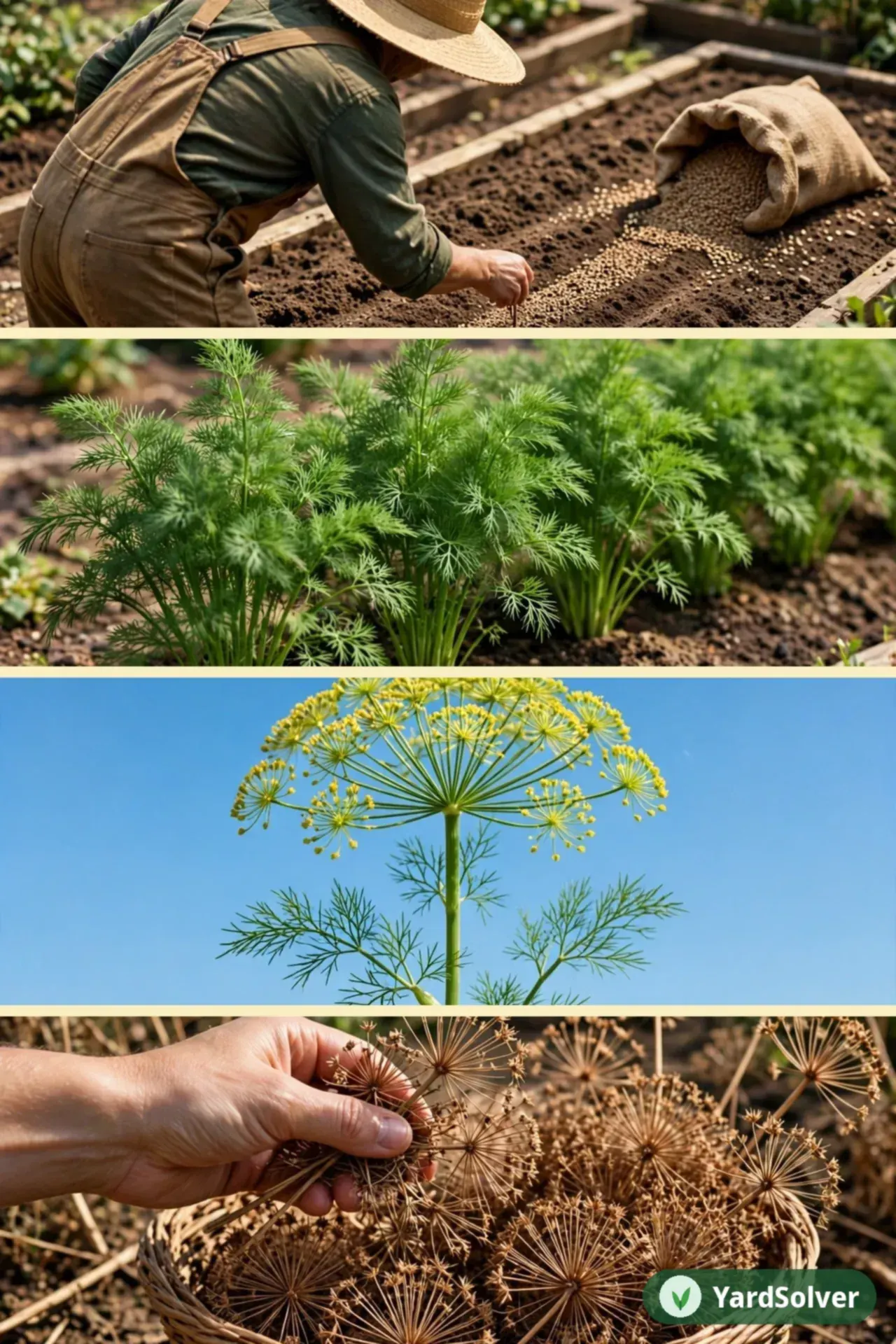
How to plant and grow dill, step by step
Step 1 — Time it right
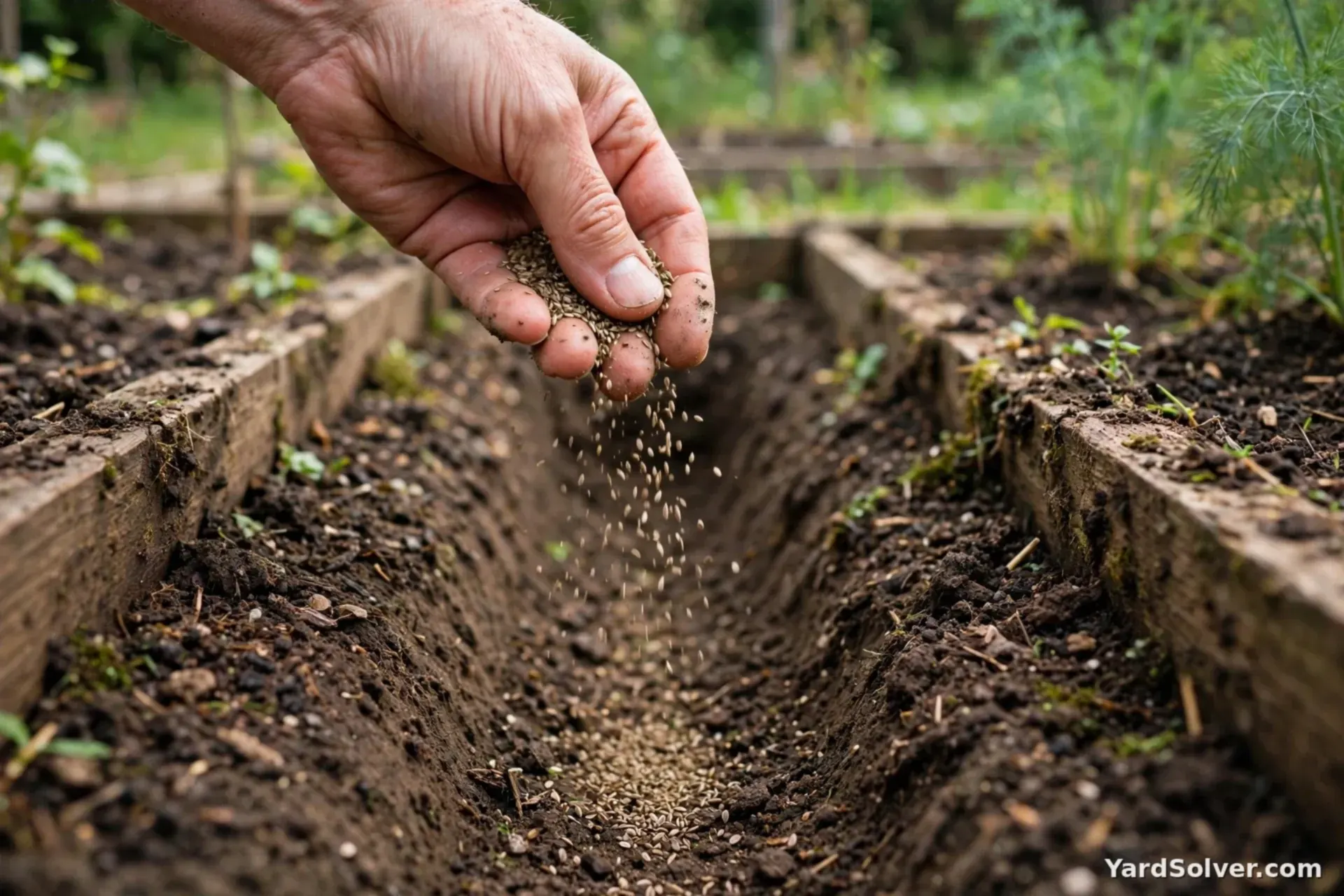
Sow outdoors: at last frost. All dates count from your average last spring frost — the Planting Calendar turns them into real dates for your garden. Dill is best direct sown around your last frost date, right where it will grow — it dislikes being transplanted, and letting a few plants go to seed gives you next year's patch for free. Start once the soil reaches about 50 to 60 F; below that, germination is slow and seedlings sit still. For steady leaves, sow a short row every 2 to 3 weeks until about 8 weeks before first fall frost.
Step 2 — Prepare the spot
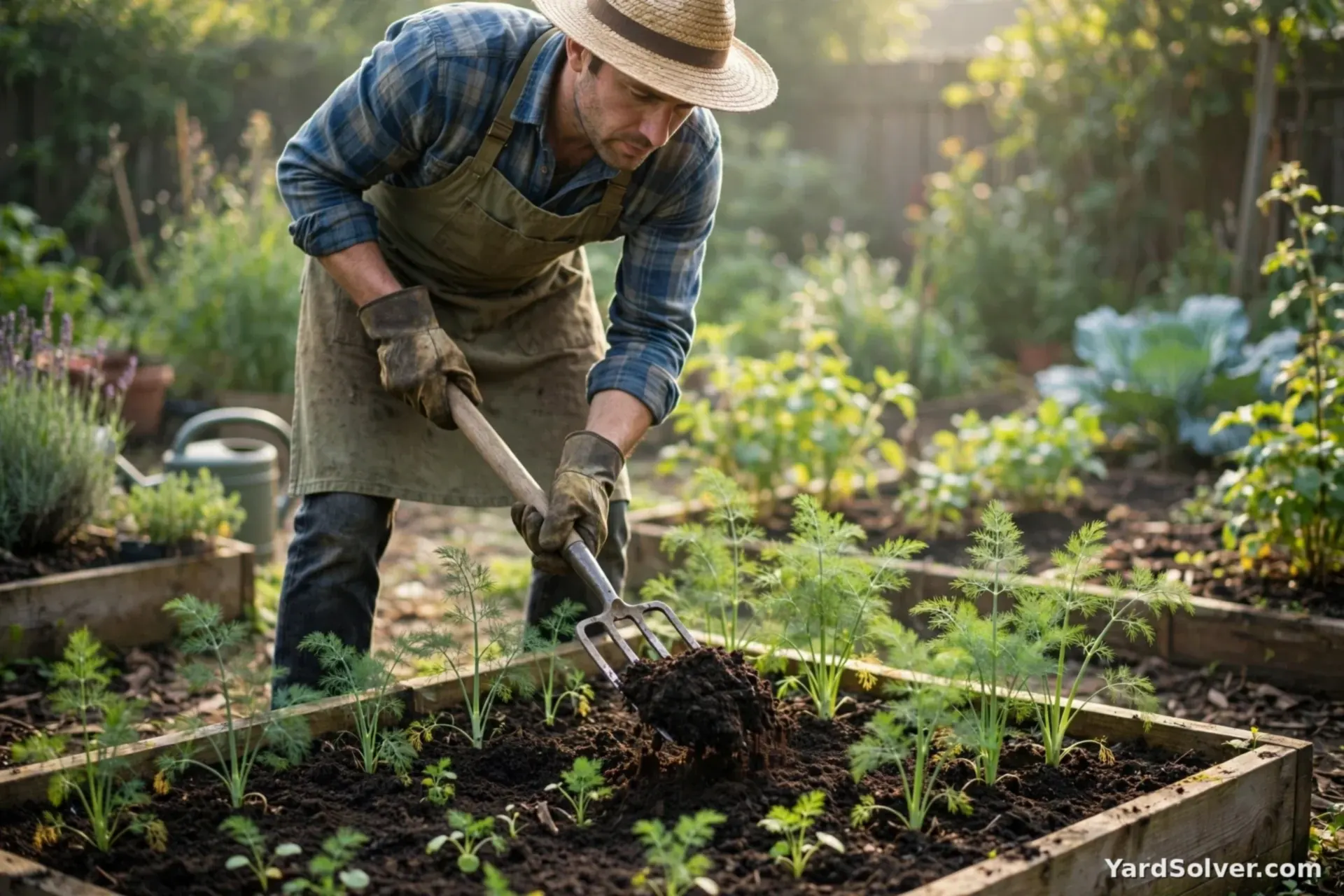
Sun: Full sun. Moist, compost-rich soil in a spot with morning sun. Soft herbs grow fast and are picked often, so keep the water coming. Work out how much you need with the Garden Mix Calculator or the Raised Bed Soil Calculator. The long taproot is why dill refuses to transplant, and a deep, loosened bed outperforms a shallow one. Soil pH 5.5 to 6.7 is ideal, and a sheltered corner matters — hollow 3 to 4 ft stems snap in wind.
Step 3 — Sow and plant out
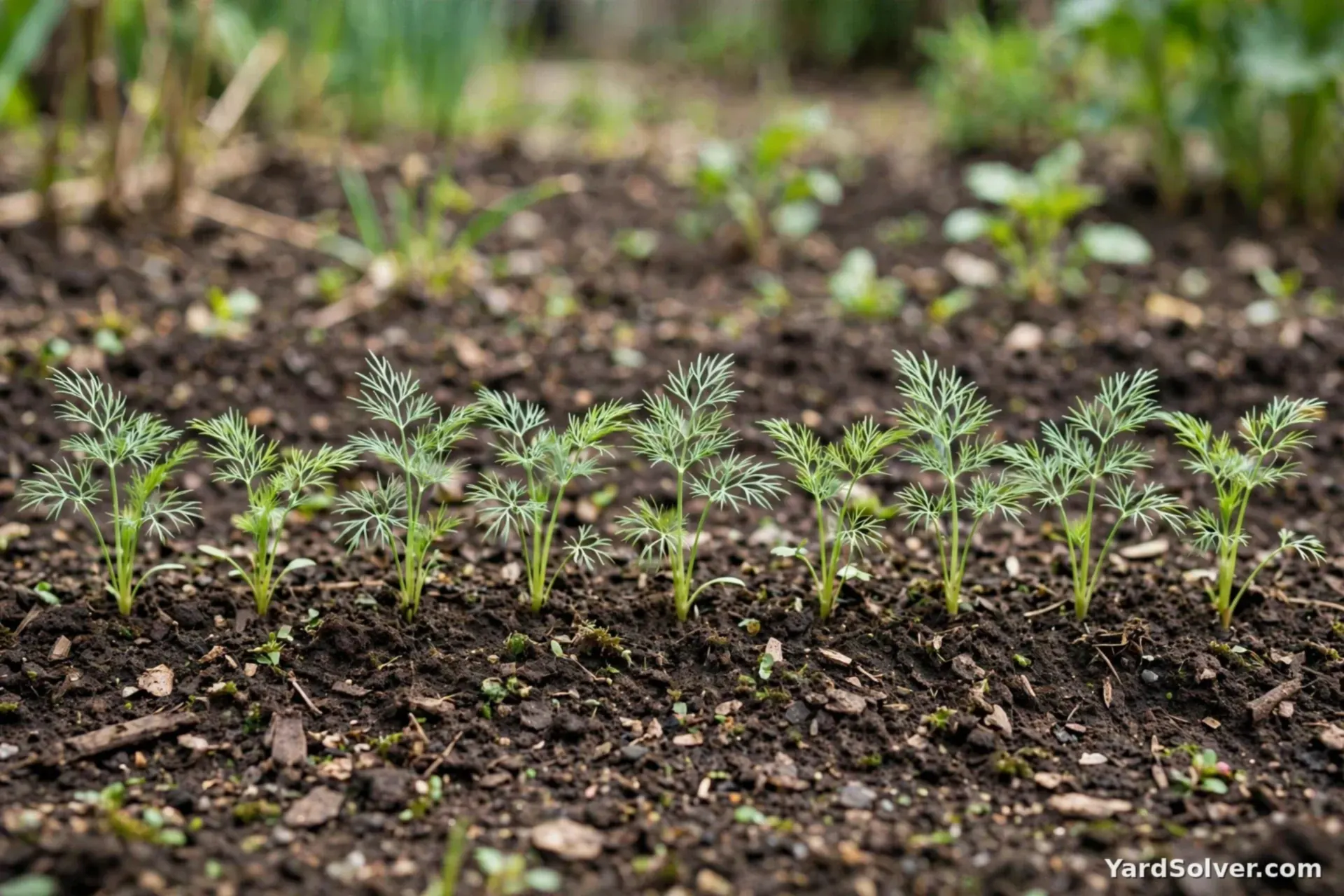
Sow directly where they will grow, at last frost, 1/4 in deep and 12 in apart (thin seedlings to that spacing once they are up). The Seed Calculator works out how much seed a bed needs. Dill seed needs light, so cover with no more than 1/4 in of fine soil and press it down. Keep the bed moist for the 10 to 14 days germination takes; a board over the row for the first week helps noticeably.
Step 4 — Water and feed
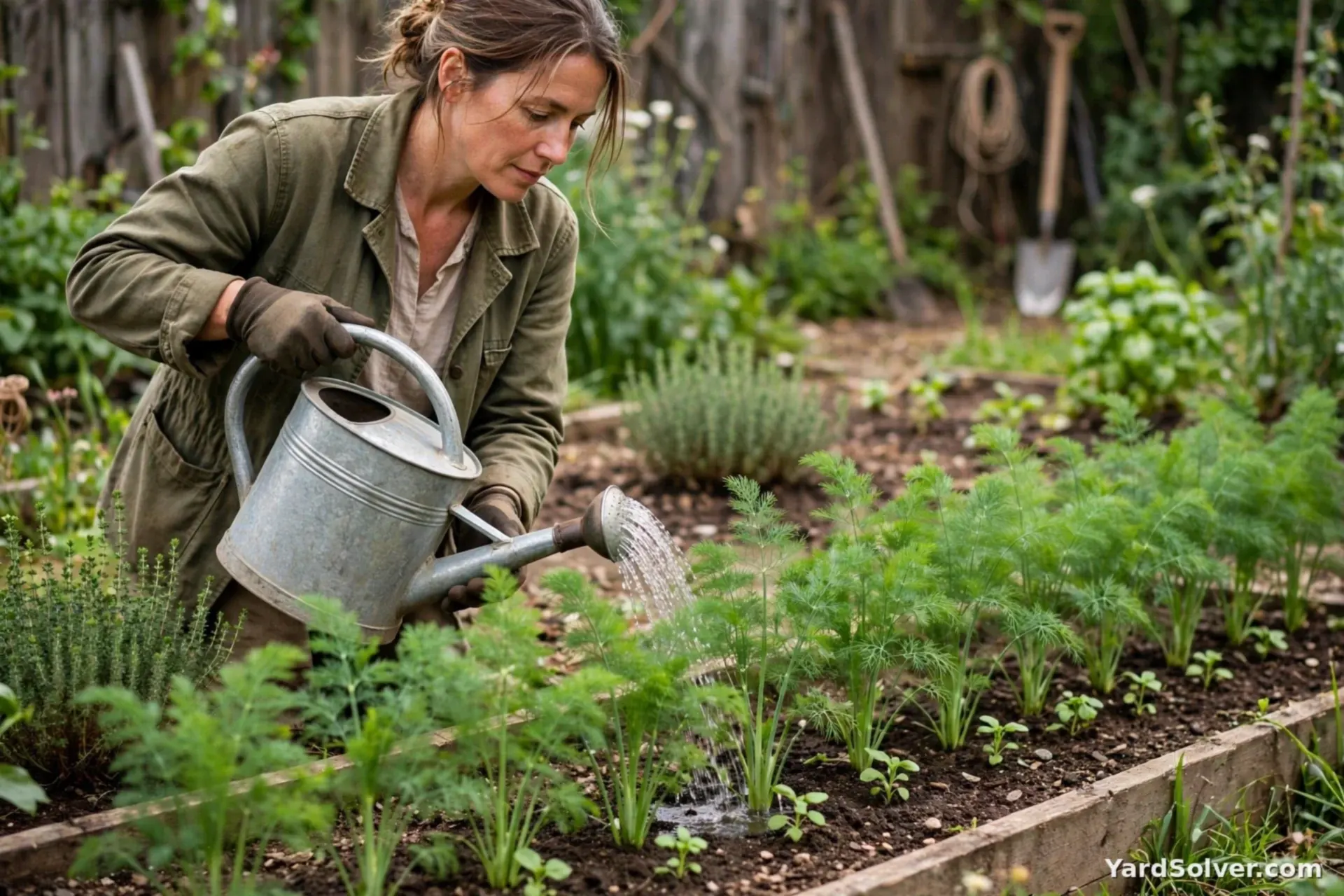
Water: Regular. The Fertilizer Calculator turns a bed size into the right amount. Let the bed dry out and plants bolt straight to flower with few leaves worth cutting. Mulch thinly once plants are 6 in tall, and give one light balanced feed after the first big leaf cut.
Step 5 — Care and the problems to watch for
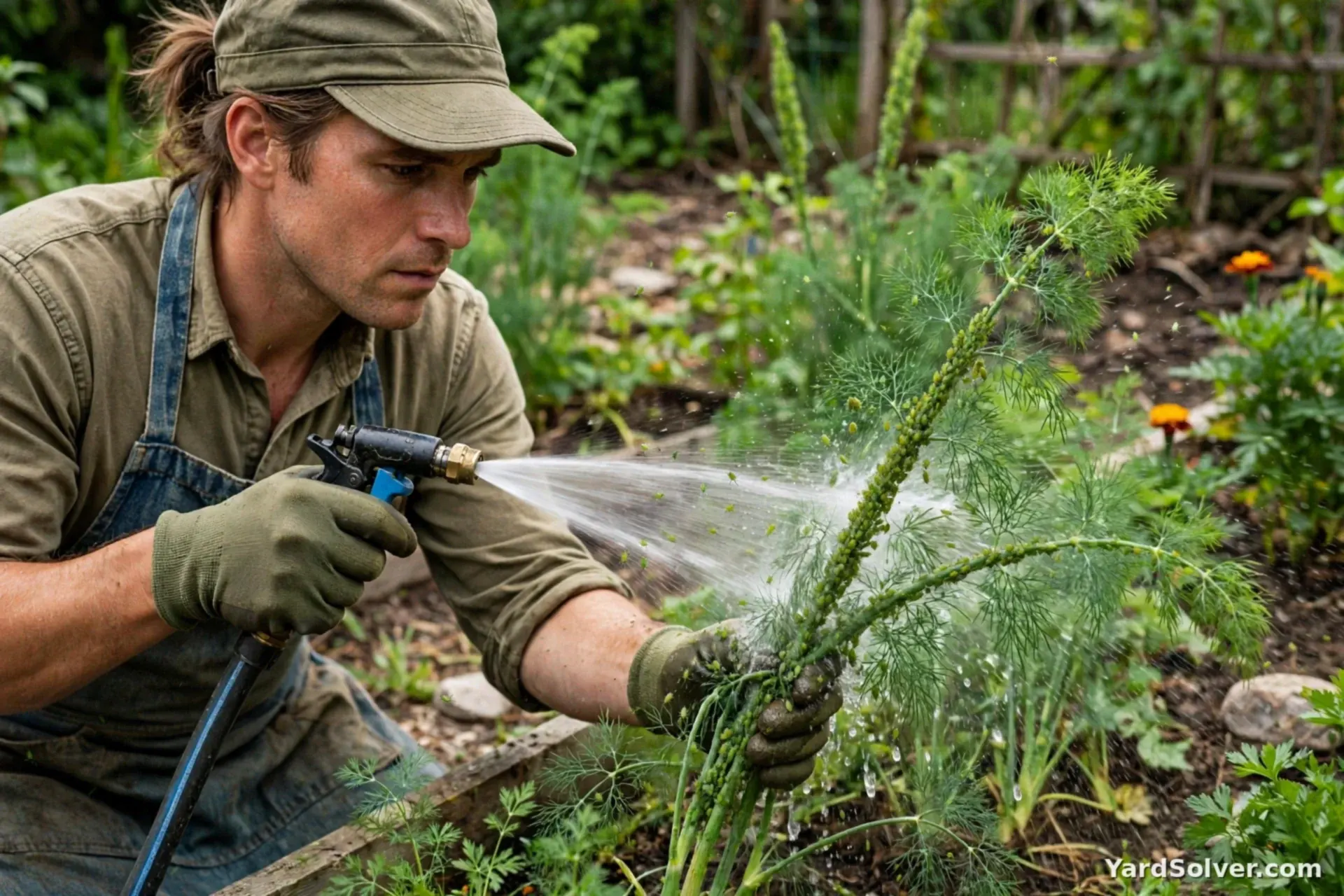
- Aphids — rinse off with a jet of water.
- Swallowtail caterpillars — dill is their host plant; most gardeners share a few leaves.
- Self-seeding everywhere — snip seed heads if you do not want volunteers.
Take care: Dill is in the carrot family, so people who react to carrots or celery sometimes react to dill too. Handling large amounts of dill in strong sun can irritate sensitive skin — wash hands after a big harvest.
Black swallowtail caterpillars — green with black and yellow bands — are a feature, not a failure: dill is their nursery plant, so sow a few extra for them. Ladybird larvae usually clear aphids on the heads within days.Step 6 — Harvest
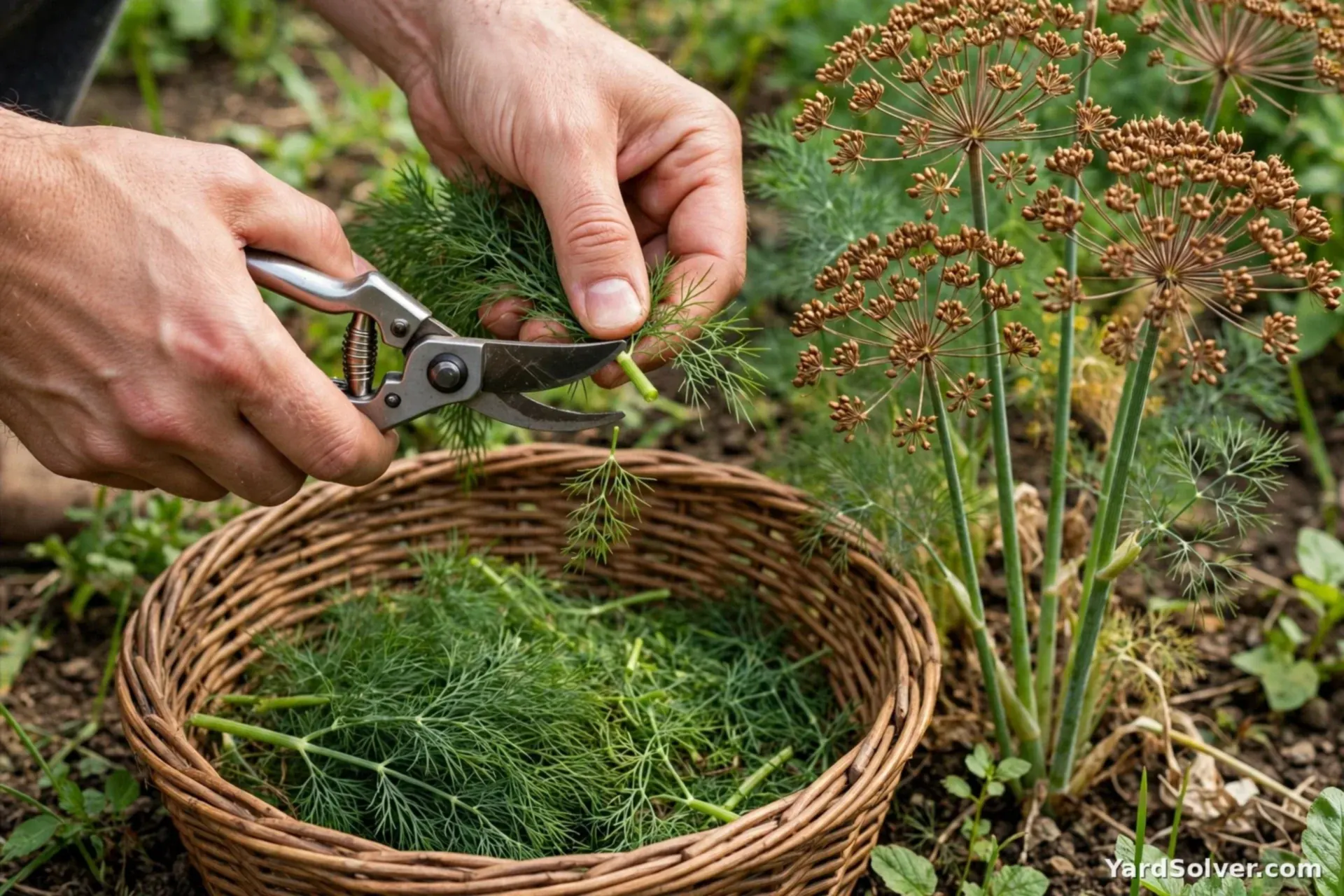
Ready in: 60–70 days. Harvest runs from about day 60 to 70 — cut leafy fronds as needed, and leave a few heads to ripen seed for pickling. Cut leaves in the morning once plants are 8 in tall, taking outer fronds first; a plant cut by a third regrows for more cuts. For seed, cut heads into a paper bag once the lowest seeds turn tan.
📅 Your personal Dill schedule
Dill is quick, and bolting is quicker, so this schedule counts from your sowing day to the first leaf cuts and the seed harvest. Day 0 is the day the seed went in the ground.
Varieties worth growing
| Variety | Colour | Why gardeners like it |
|---|---|---|
| Bouquet | Green | The standard pickling dill, with early, heavy seed heads |
| Mammoth | Green | Tall plants with big flower umbrellas for pickling and seed |
| Fernleaf | Dark green | A compact dwarf type made for pots and small gardens |
| Dukat | Green | A leafy type bred for lots of foliage before it flowers |
Good for you — and take care
Benefits
- Provides vitamin C for the immune system
- A source of vitamin A for an herb
- The seeds provide calcium and iron in spice amounts
- Feathery leaves add fresh flavour with almost no calories
- Provides small amounts of manganese
Take care
- Dill is in the carrot family, so people who react to carrots or celery sometimes react to dill too
- Handling large amounts of dill in strong sun can irritate sensitive skin — wash hands after a big harvest
A little history — and one good fact
Dill comes from the Mediterranean and western Asia, where it has flavoured food for thousands of years. Its name is linked to an old Norse word meaning 'to soothe'. Cooks in northern and eastern Europe made it famous with new potatoes, fish and pickled cucumbers.
Fun fact: One dill plant left to drop its seed can start next year's whole patch by itself.
Keep going
Guides: Grow Herbs Indoors in Winter · Companion Planting Basics · When to Start Seeds Indoors · How to Grow Dill: A Beginner's Step-by-Step Guide
Calculators: Plant Spacing Calculator · Seed Calculator · Garden Mix Calculator
More herbs: Basil · Cilantro · Parsley · Fennel
← Back to the Plant Library · Get your personal planting dates
A dill succession plan for one small bed
One bed, sown four times, gives leaves from early summer to frost. Dates count from last spring frost.
| Sowing | What it gives you |
|---|---|
| At last frost | First leaves from about day 40; earliest pickling heads |
| 3 weeks later | The main midsummer crop of heads for pickles |
| 6 weeks later | Fresh fall leaves when the first plants finish |
| Last sowing, 8 weeks before frost | A final leaf crop; let one plant self-seed |
One mature head gives roughly a tablespoon of seed — enough for several jars of pickles.
Questions people ask
When do I plant dill?
Count from your average last spring frost: sow outdoors at last frost. Dill is best direct sown around your last frost date, right where it will grow — it dislikes being transplanted, and letting a few plants go to seed gives you next year's patch for free.
How far apart do I space dill?
Space plants 12 in apart, with seed sown 1/4 in deep. Sun: full sun.
When is dill ready to harvest?
60–70 days. Direct sow — it dislikes transplanting. Let a few plants go to seed for pickling and next year.
Why did my dill bolt before I got any leaves?
Dill bolts in response to lengthening days and hot, dry roots, so a late spring sowing into warm soil often runs straight to flower. Sow earlier, keep the bed mulched and moist, and choose slow-bolt varieties such as Mammoth or Dukat for leaves.
How do I save dill seed for next year?
Cut heads when most seeds have turned tan but before they shatter, and dry them upside down in a paper bag for one to two weeks. Rub the seed free and store it cool and dry; it stays viable about two to three years.
A taproot that hates transplanting and a plant that bolts by design: sow little, sow often, and let one plant seed itself
Dill fails in pots and transplants for a structural reason: it grows a taproot, and any check to that root — a small pot, a disturbed planting-out — tells the plant to flower and finish. Sow it directly where it will grow, in full sun, and sow successionally every few weeks through the season, because a dill plant's leafy stage is brief by design: it is an annual in a hurry to make seed, and heat accelerates the hurry.
That hurry is also the crop, twice over. The fronds are the herb of spring and early summer; the flower heads and ripe seed are the pickling spice of late summer — a sowing left to flower is not a failure but the second harvest. Those flowers earn their place ecologically too: dill is a host plant for swallowtail butterfly caterpillars and a nectar source for the tiny parasitic wasps that control aphids, so a flowering plant at the bed's end is pest control, not untidiness.
The worked example: three or four small direct sowings across the season, the last left to flower and self-seed, commonly give fresh fronds for months, seed for pickling, and free plants the following year. The identical dill bought as a pot-grown transplant typically bolts within a fortnight and gives a tablespoon of leaves. Dill does not need skill — it needs sowing in place and sowing again, which is the opposite of how most herbs are bought.
Sources
Key facts on this page — timing, spacing and care — cross-checked against NC State Extension Plant Toolbox — Anethum graveolens (dill) — culture, sowing, bolting and care requirements and Dill — Wikipedia — background on the herb, its seed and uses.
Related page
Read next: Companion Planting Basics: Good & Bad Neighbours.
Comments & ratings
No comments yet.
Be the first to share your experience.