
Plant Library · Vegetables · By Faizan Ahmad
🌿 How to Grow Fennel
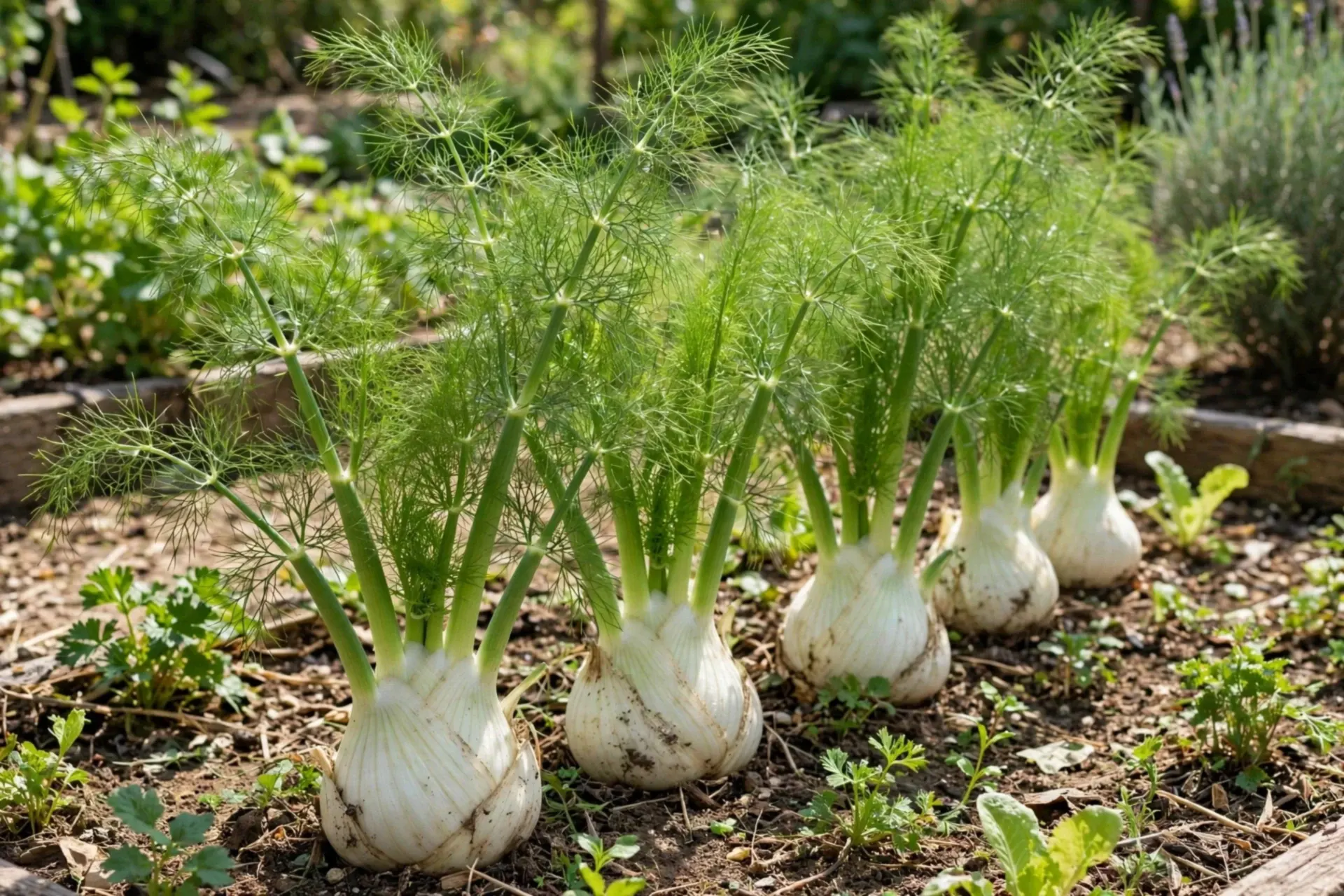
Florence fennel is grown for its swollen, anise-flavoured bulb: sow it where it will grow, keep it watered, and lift bulbs before they bolt. Fennel is a warm-season crop that dislikes root disturbance: direct sow about 1 week after your last frost, in the spot where it will grow — it bolts if the soil dries out or its roots are checked.
Grow Fennel with us — step by step
Everything for this plant is written step by step below — what to do, and exactly when. Read it through first if you like: you can grow it entirely on your own with that guide. Or start with us here — tell us your planting day and we lay out your personal schedule on this page, every next step on its own day, counted from your planting date. No guessing, no forgetting.
Step 1 — today: Sow your Fennel seeds today: 1/4 in deep, spaced 9–12 in apart, in full sun. Water the row in well and keep it moist while seeds sprout.
Fennel at a glance
Sow outdoors: 1 week after last frost
Spacing: 9–12 in · Seed depth: 1/4 in
Sun: Full sun
Water: Regular — dry soil makes bulbs bolt instead of swell
Harvest: 70–90 days
Timing counts from your average last spring frost — get your own dates in the Planting Calendar. Guidance follows standard extension-service practice for Canada and the US.
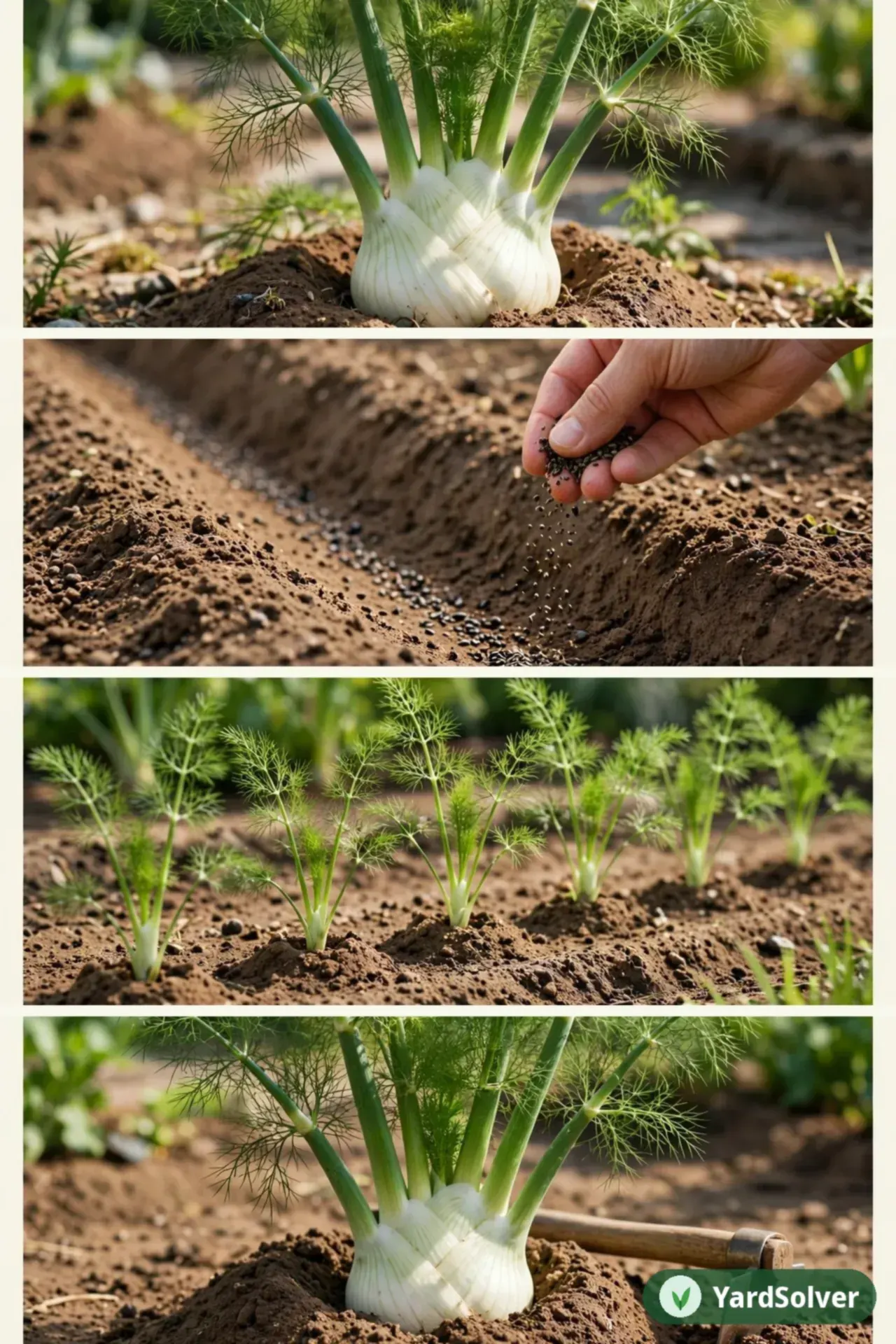
How to plant and grow fennel, step by step
Step 1 — Time it right
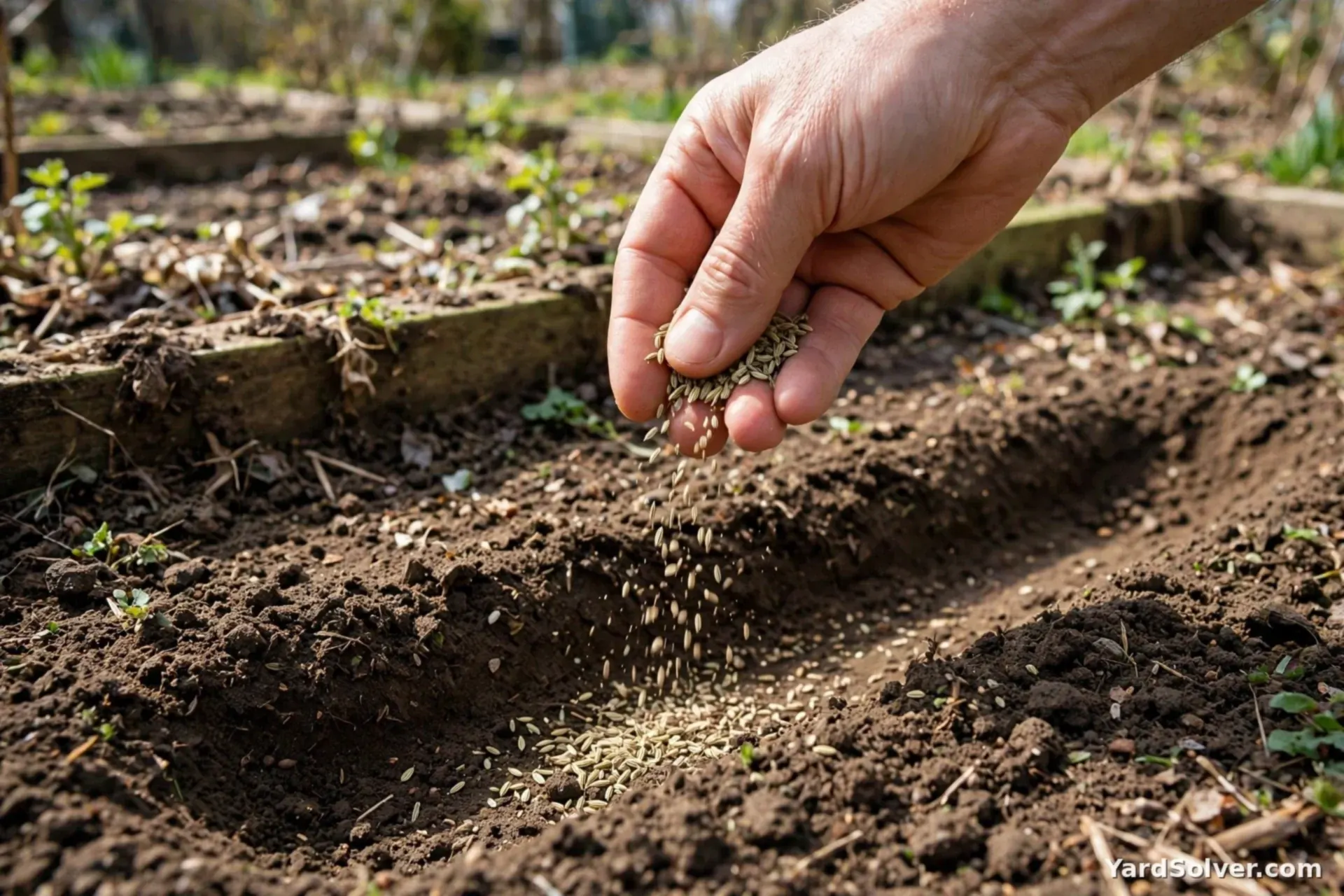
Sow outdoors: 1 week after last frost. All dates count from your average last spring frost — the Planting Calendar turns them into real dates for your garden. Fennel is a warm-season crop that dislikes root disturbance: direct sow about 1 week after your last frost, in the spot where it will grow — it bolts if the soil dries out or its roots are checked.
Step 2 — Prepare the spot
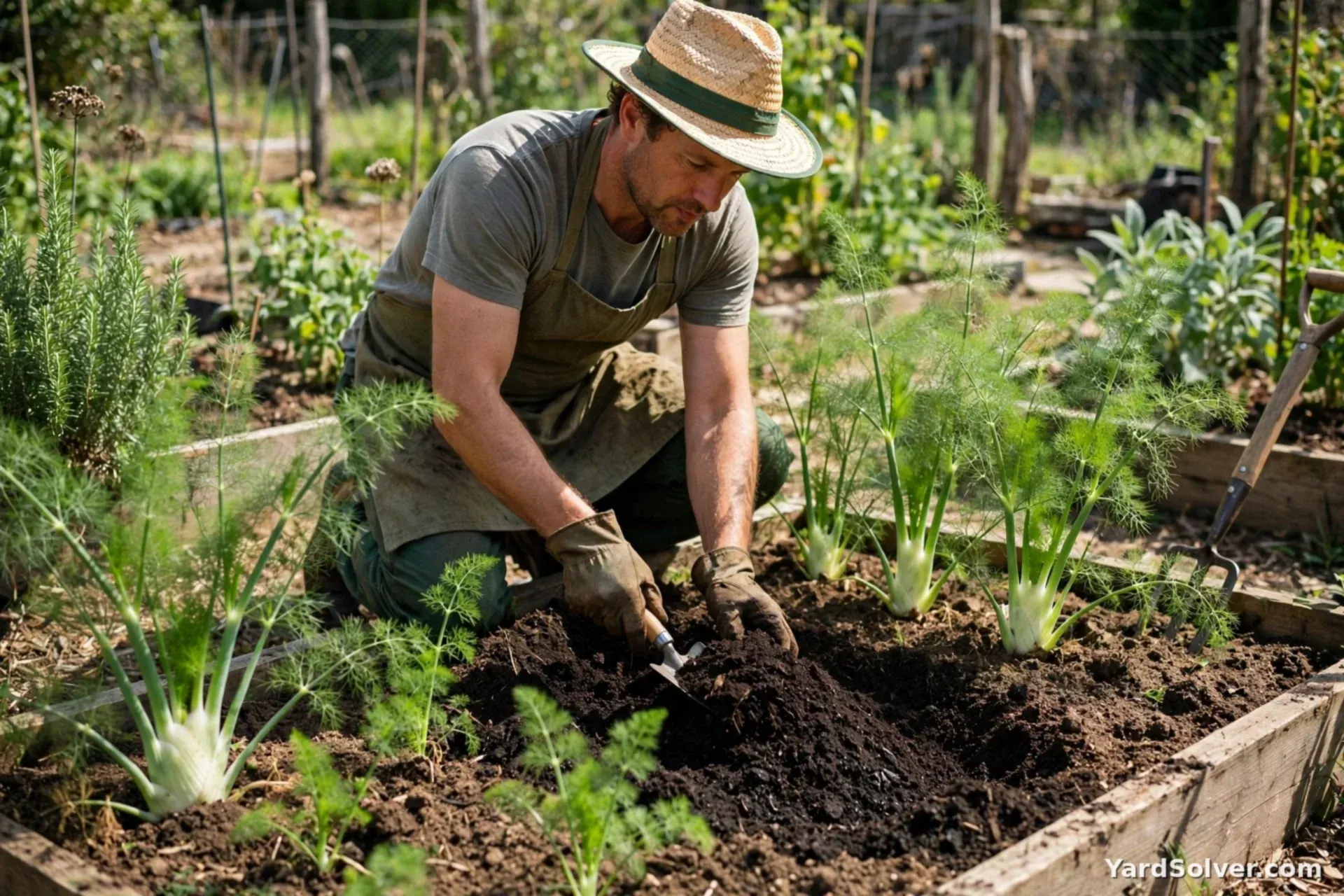
Sun: Full sun. Well-drained, fertile soil in full sun, with compost worked in before sowing — fennel makes a taproot and resents being moved, so it stays where it is sown. Work out how much you need with the Garden Mix Calculator or the Raised Bed Soil Calculator.
Step 3 — Sow and plant out
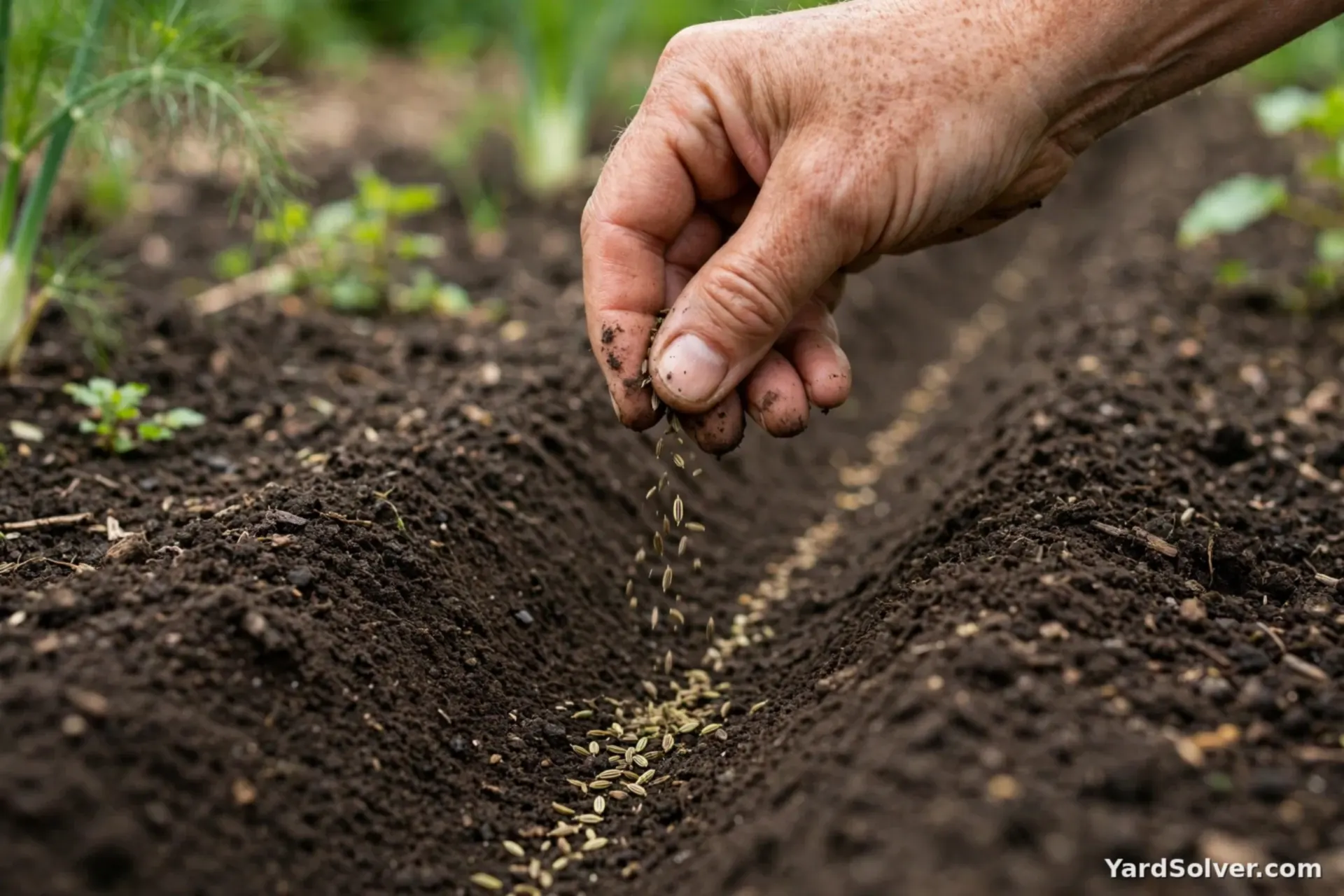
Sow directly where they will grow, 1 week after last frost, 1/4 in deep and 9–12 in apart (thin seedlings to that spacing once they are up). The Seed Calculator works out how much seed a bed needs.
Step 4 — Water and feed
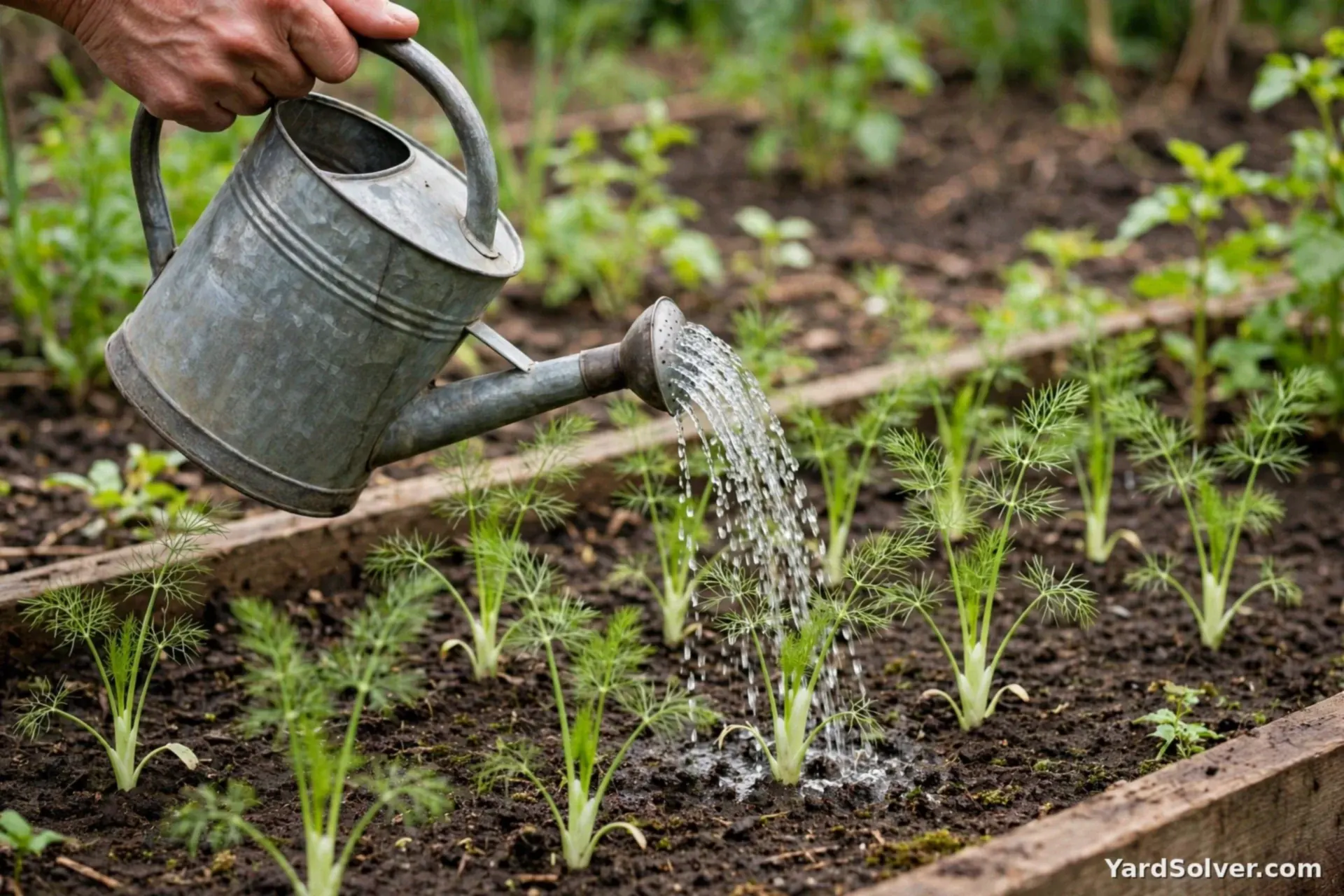
Water: Regular — dry soil makes bulbs bolt instead of swell. The Fertilizer Calculator turns a bed size into the right amount.
Step 5 — Care and the problems to watch for
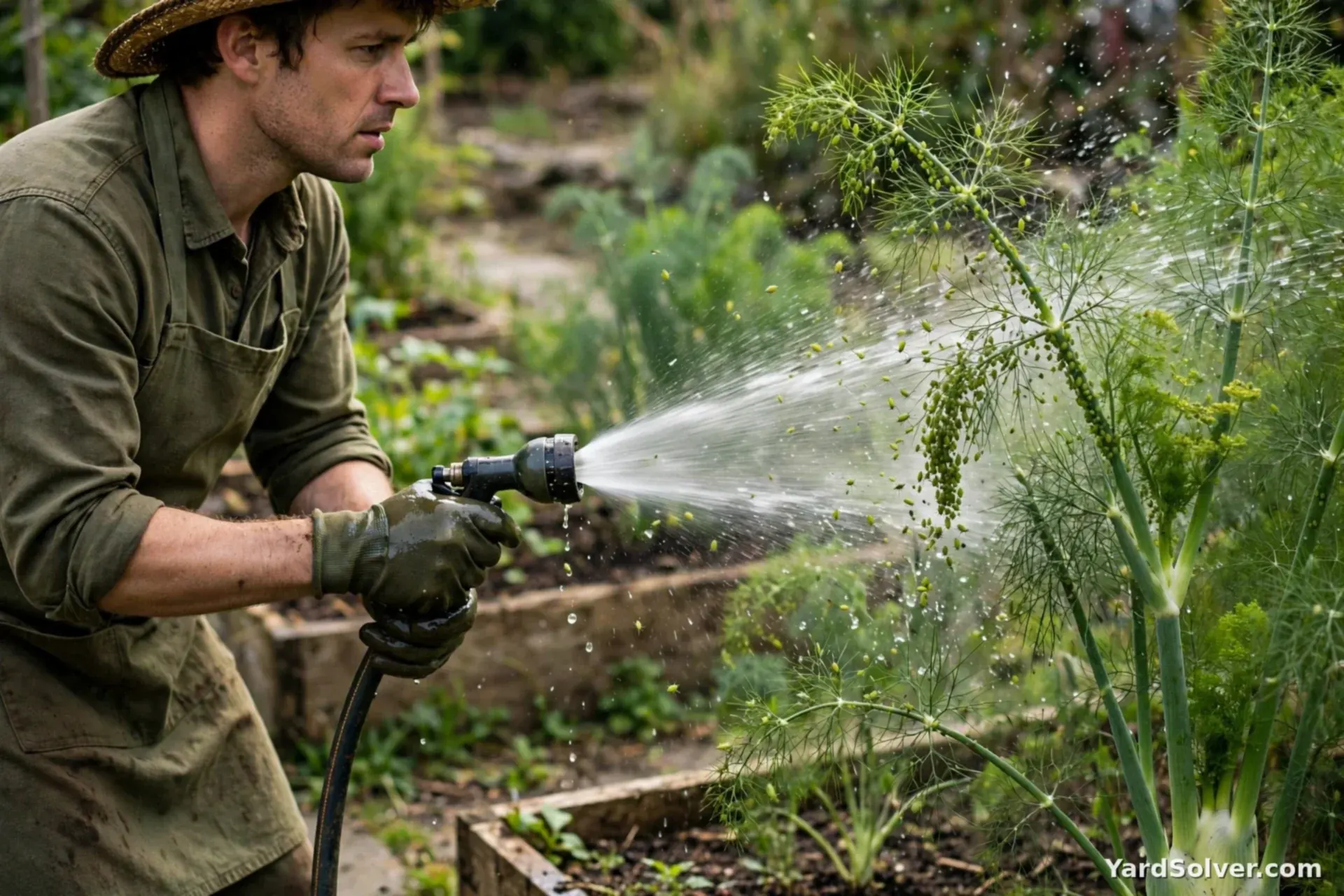
- Bolting — a flower stalk shoots up before the bulb swells; keep the soil moist and sow at the right time for your season.
- Aphids on the feathery leaves — blast them off with water.
- Bases staying thin — plants are crowded or dry; thin boldly and water deeply.
Take care: Fennel is in the carrot family — people allergic to carrots, celery or mugwort can also react to fennel.
Step 6 — Harvest
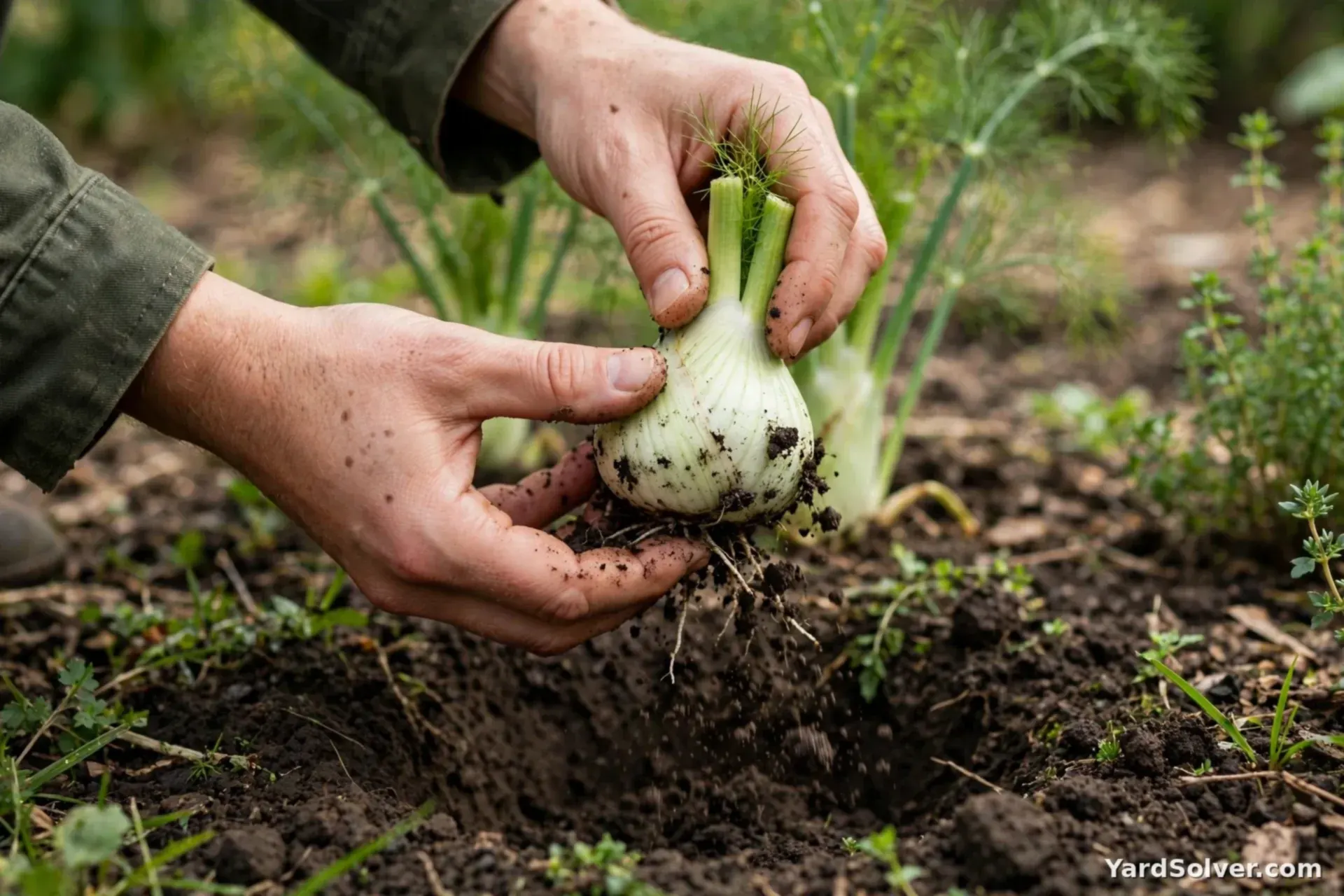
Ready in: 70–90 days. Harvest runs from about day 70 to 90 — lift bulbs when they are about the size of a tennis ball, before a flower stalk shoots up.
📅 Your personal Fennel schedule
Counted from your planting day — not a generic calendar. Day 0 is the day the seed went in the ground or the young plant went out.
Varieties worth growing
| Variety | Colour | Why gardeners like it |
|---|---|---|
| Florence | White-green | The traditional Italian bulb fennel — the one to grow for classic bulbs |
| Zefa Fino | White-green | Bred to resist bolting, so bulbs swell instead of flowering |
| Orion | White-green | Large, round, uniform bulbs on strong plants |
| Dragon | White-green | A modern hybrid that is slow to bolt and quick to size up |
| Perfection | White-green | Reliable bulbs with a good anise flavour, widely grown in Europe |
Good for you — and take care
Benefits
- Provides vitamin C and potassium
- Provides fibre that supports good digestion
- Its seeds are used as a traditional digestive after meals
- Low in calories
- Provides small amounts of folate and manganese
Take care
- People allergic to carrots, celery or mugwort can react to fennel too (same plant family)
- Fine as a vegetable at the table; concentrated fennel oils and supplements are best avoided in pregnancy unless a doctor advises them
- Raw fennel is strongly flavoured — slice it thin for salads
A little history — and one good fact
Fennel comes from the Mediterranean, where Greeks and Romans grew it for its seeds, stalks and feathery leaves; the swollen-bulb form — Florence fennel — was selected in Italy in the 1600s and is the one grown for the vegetable patch today.
Fun fact: Every part of fennel is edible — bulb, fronds, flowers and seeds — and the whole plant tastes faintly of aniseed.
Keep going
Guides: How to Prepare Garden Soil in Spring · Companion Planting Basics · How to Protect Plants from Frost
Calculators: Plant Spacing Calculator · Seed Calculator · Fertilizer Calculator · Garden Mix Calculator
More vegetables: Lettuce · Celeriac · Green Beans
← Back to the Plant Library · Get your personal planting dates
Questions people ask
When do I plant fennel?
Count from your average last spring frost: sow outdoors 1 week after last frost. Fennel is a warm-season crop that dislikes root disturbance: direct sow about 1 week after your last frost, in the spot where it will grow — it bolts if the soil dries out or its roots are checked.
How far apart do I space fennel?
Space plants 9–12 in apart, with seed sown 1/4 in deep. Sun: full sun.
When is fennel ready to harvest?
70–90 days. Florence fennel is grown for its swollen, anise-flavoured bulb: sow it where it will grow, keep it watered, and lift bulbs before they bolt.
Two plants in one name: bulb fennel bolts in long days, herb fennel is a perennial — and both hate being moved
Fennel comes in two forms that share a name and a flavour and little else. Bulb (Florence) fennel is an annual grown for the swollen stem base, and it is famously prone to bolting: sown too early, into the lengthening days and cool nights of spring, it runs to flower before any bulb forms — reliable bulbs come from sowings made from midsummer on, as the days shorten. Herb fennel is a tall perennial grown for fronds and seed, self-sowing freely once established.
Both share the family taproot, and with it the family rule: sow where the plant will grow, because transplanting checks the root and — in the bulb type — triggers the bolting the gardener was trying to avoid. Fennel also keeps a traditional distance in the bed: gardeners have long observed that many vegetables grow poorly near it, so it is given its own corner rather than a place inside the mixed planting, a habit cheap to follow whether the chemistry behind it is strong or not.
The worked example: bulb fennel sown direct from midsummer, watered steadily so the bulbs swell without interruption, commonly gives fat, anise-sweet bulbs by autumn. The identical seed sown in spring typically gives a forest of feathery stems and no bulbs at all. With fennel, the variety choice and the sowing date are the same decision — get those two right and the plant does the rest.
Sources
Key facts on this page — timing, spacing and care — cross-checked against NC State Extension Plant Toolbox — Foeniculum vulgare (fennel) — culture, bolting, sowing and care requirements and Fennel — Wikipedia — background on fennel, its bulb and seed forms.
Related page
Read next: Companion Planting Basics: Good & Bad Neighbours.
Comments & ratings
No comments yet.
Be the first to share your experience.