
Plant Library · Vegetables · By Faizan Ahmad
Updated November 17, 2026
🫘 How to Grow Green Beans
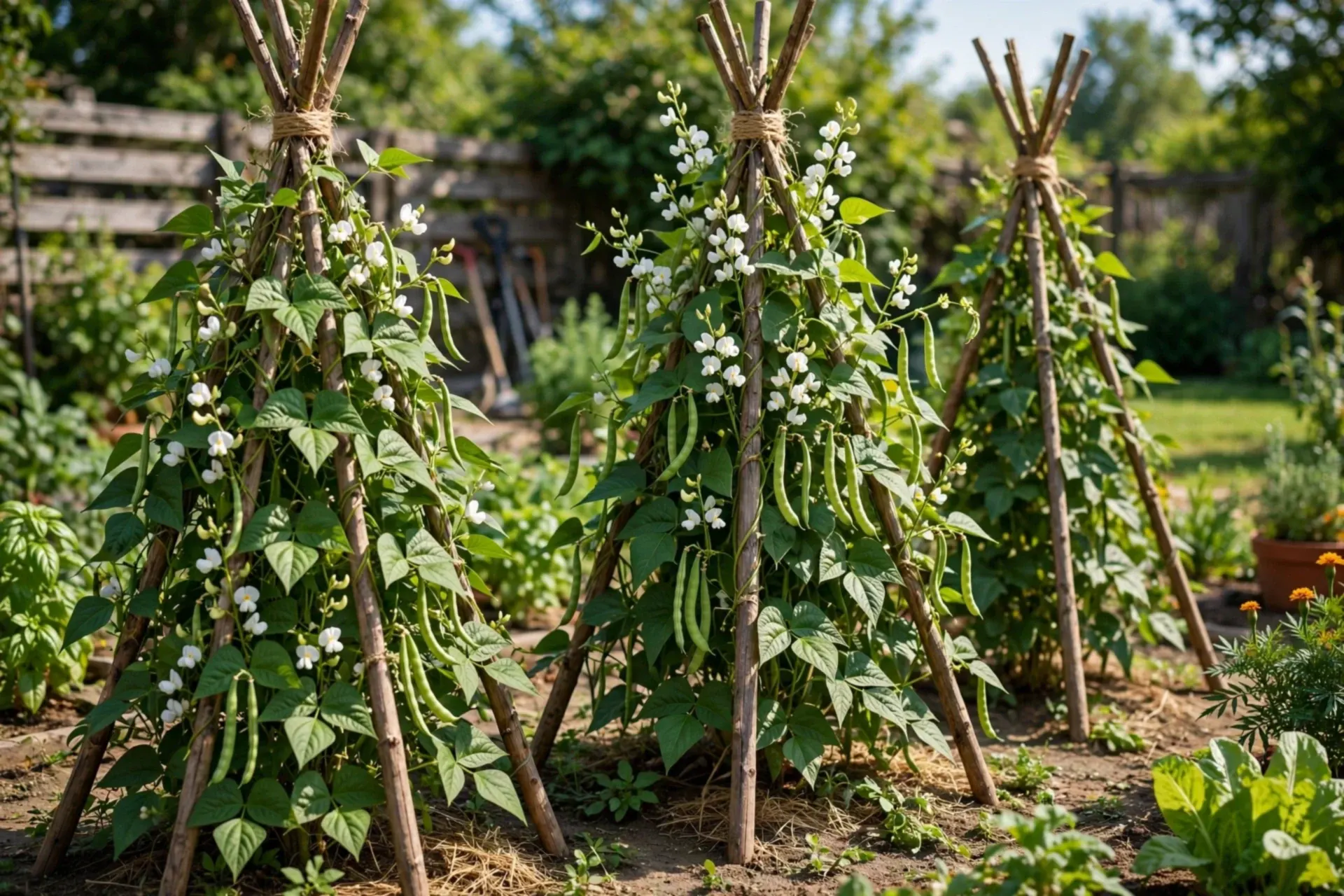
Sow a short row every 2 weeks for a longer harvest. Beans are a warm-season crop: direct sow about a week after your last frost, then sow a short row every 2 weeks to keep the harvest coming.
Grow Green Beans with us — step by step
Green beans are the fastest route from bare soil to a picked supper, and the secret is rhythm: sow little, pick often, and never let a pod grow old on the plant. This guide covers bush and pole types, inoculant, and the succession sowings that stretch the crop across summer. Tell us your sowing day here and we will lay out your personal bean schedule from it.
Step 1 — today: Sow your Green Beans seeds today: 1 in deep, spaced 4–6 in apart, in full sun. Water the row in well and keep it moist while seeds sprout.
Green Beans at a glance
Sow outdoors: 1 week after last frost
Spacing: 4–6 in · Seed depth: 1 in
Sun: Full sun
Water: Regular
Harvest: 50–60 days
Timing counts from your average last spring frost — get your own dates in the Planting Calendar. Guidance follows standard extension-service practice for Canada and the US.
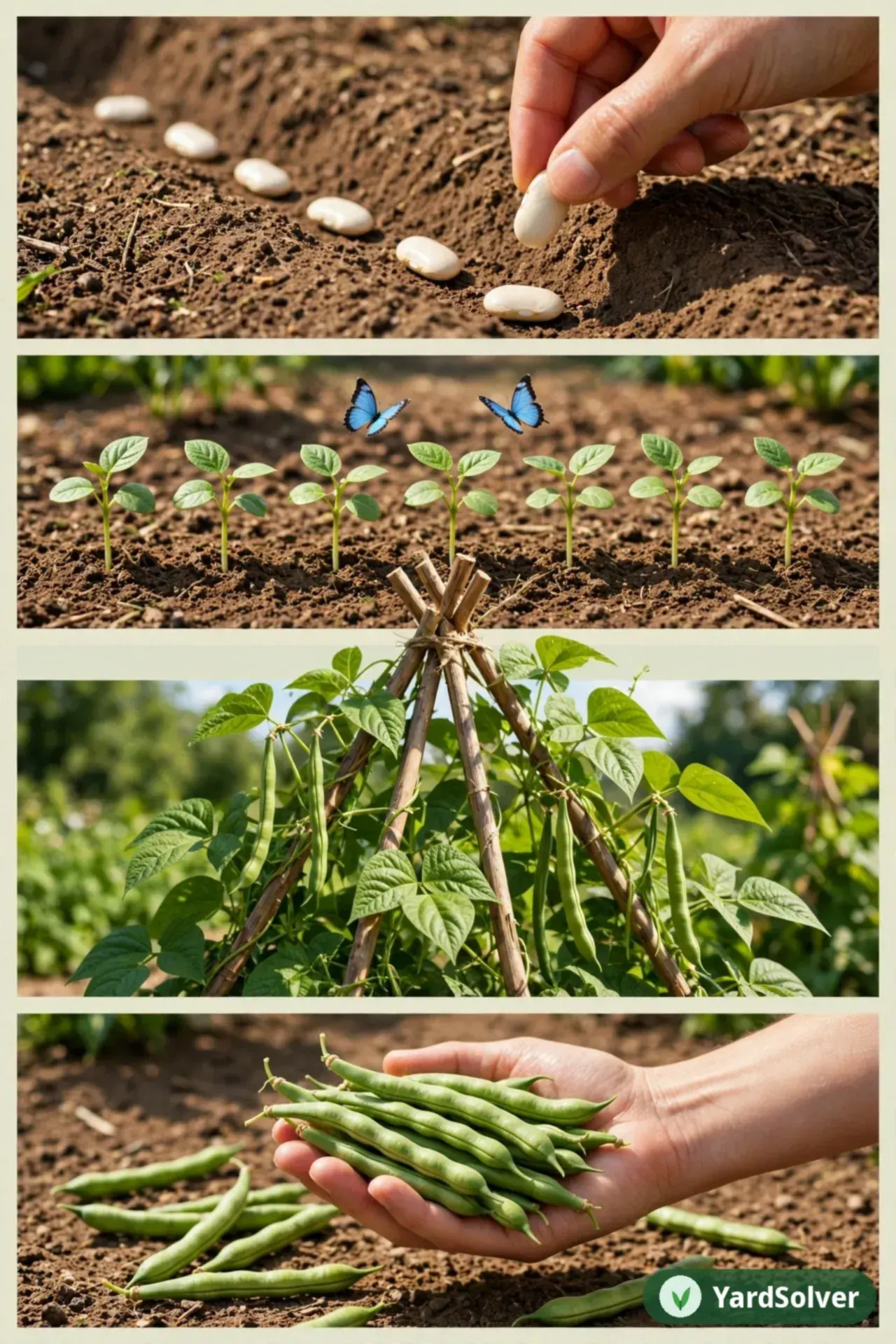
How to plant and grow green beans, step by step
Step 1 — Time it right
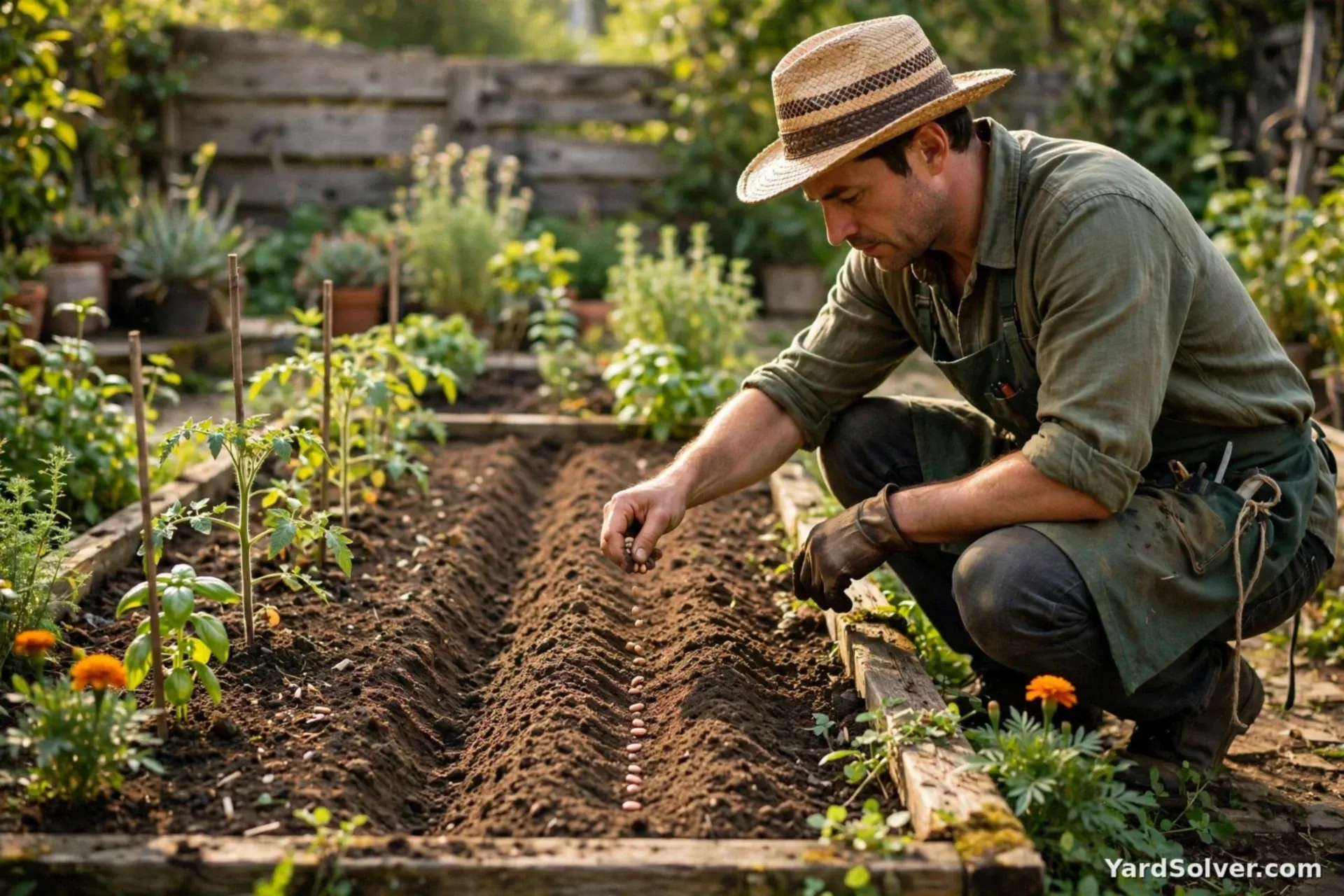
Sow outdoors: 1 week after last frost. All dates count from your average last spring frost — the Planting Calendar turns them into real dates for your garden. Beans are a warm-season crop: direct sow about a week after your last frost, then sow a short row every 2 weeks to keep the harvest coming. Beans tell you when the soil is right: seed in soil colder than about 60 F rots more often than it sprouts, and germination is fastest near 77 F. A late sowing in warm soil overtakes an early one in cold soil.
Step 2 — Prepare the spot
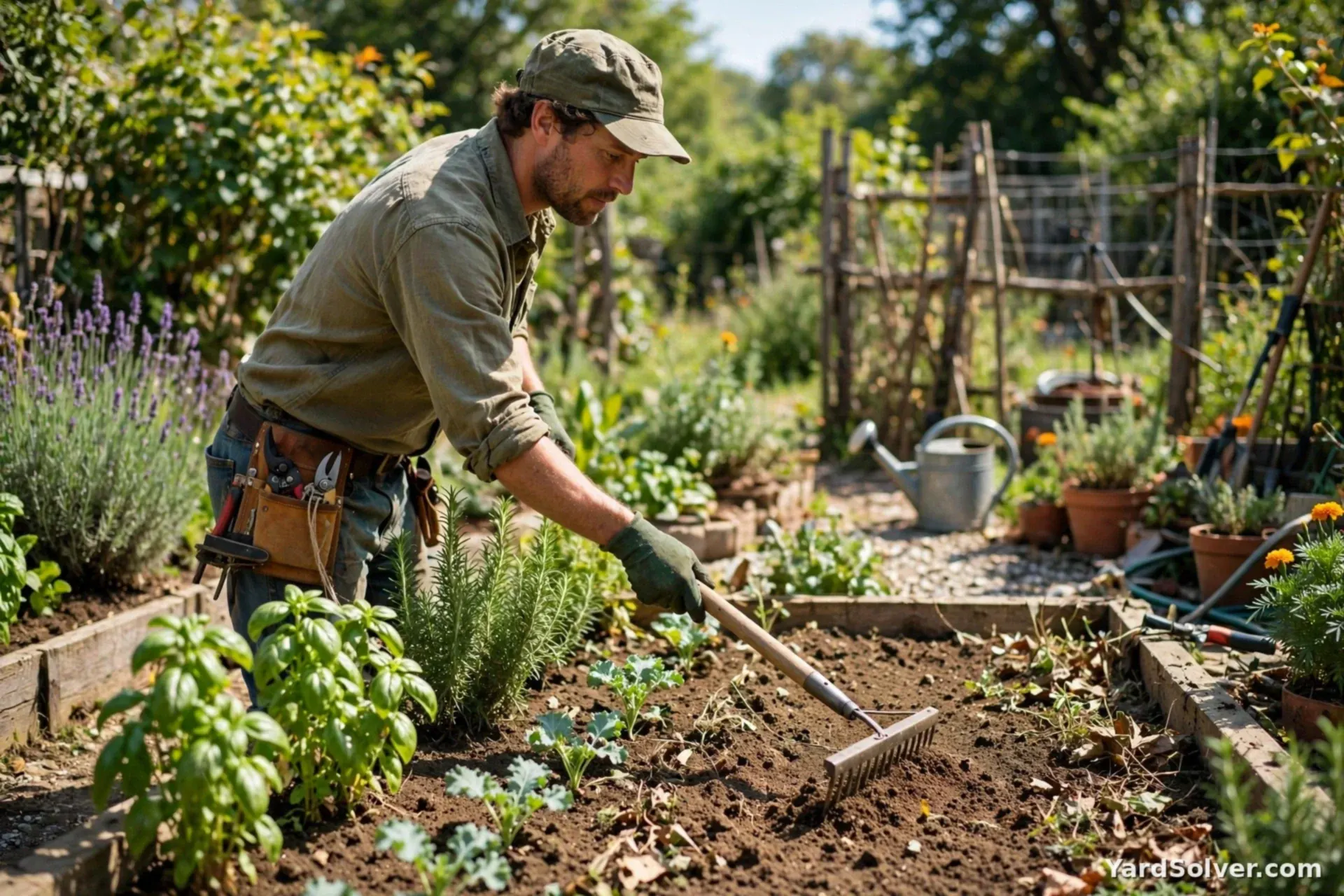
Sun: Full sun. Average soil is genuinely fine — beans and peas make much of their own nitrogen with their roots. Too much fertilizer grows leaves instead of pods. Work out how much you need with the Garden Mix Calculator or the Raised Bed Soil Calculator. Beans prefer pH 6.0 to 7.0 and resent fresh manure, which grows leaves instead of pods. If beans or peas have not grown in the bed for years, legume inoculant on the damp seed genuinely improves the stand.
Step 3 — Sow and plant out
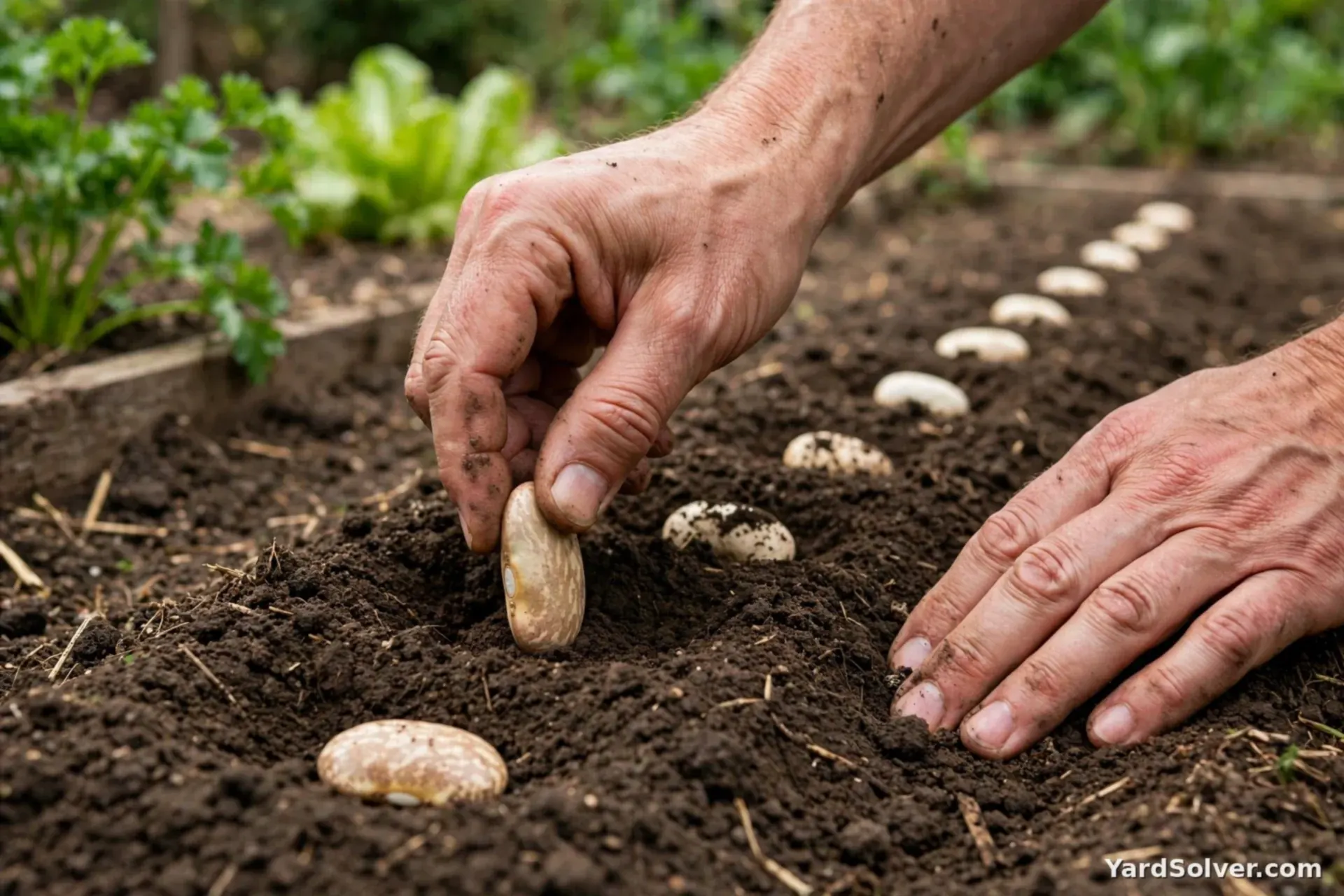
Sow directly where they will grow, 1 week after last frost, 1 in deep and 4–6 in apart (thin seedlings to that spacing once they are up). The Seed Calculator works out how much seed a bed needs. Pole beans need support up first: 6 to 8 ft canes or a teepee, two seeds per cane thinned to one. Bush beans at 4 to 6 in in rows 18 in apart give about 25 plants per 10 ft row.
Step 4 — Water and feed
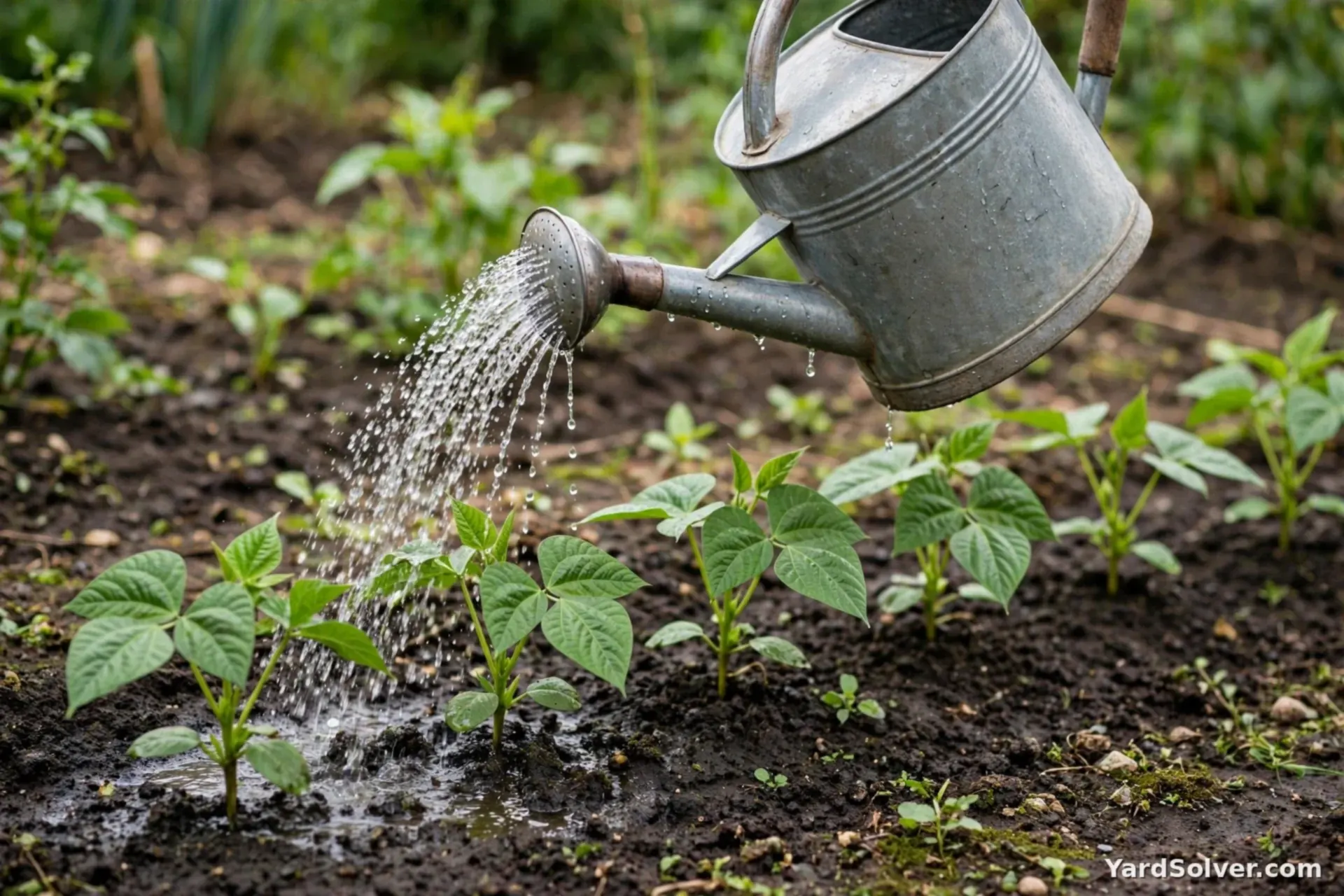
Water: Regular. The Fertilizer Calculator turns a bed size into the right amount. Water at the base and keep it steady from flowering on: drought at bloom drops flowers and curves the pods. Mulch once the soil has warmed — it keeps roots cool and can cut watering by roughly a third.
Step 5 — Care and the problems to watch for
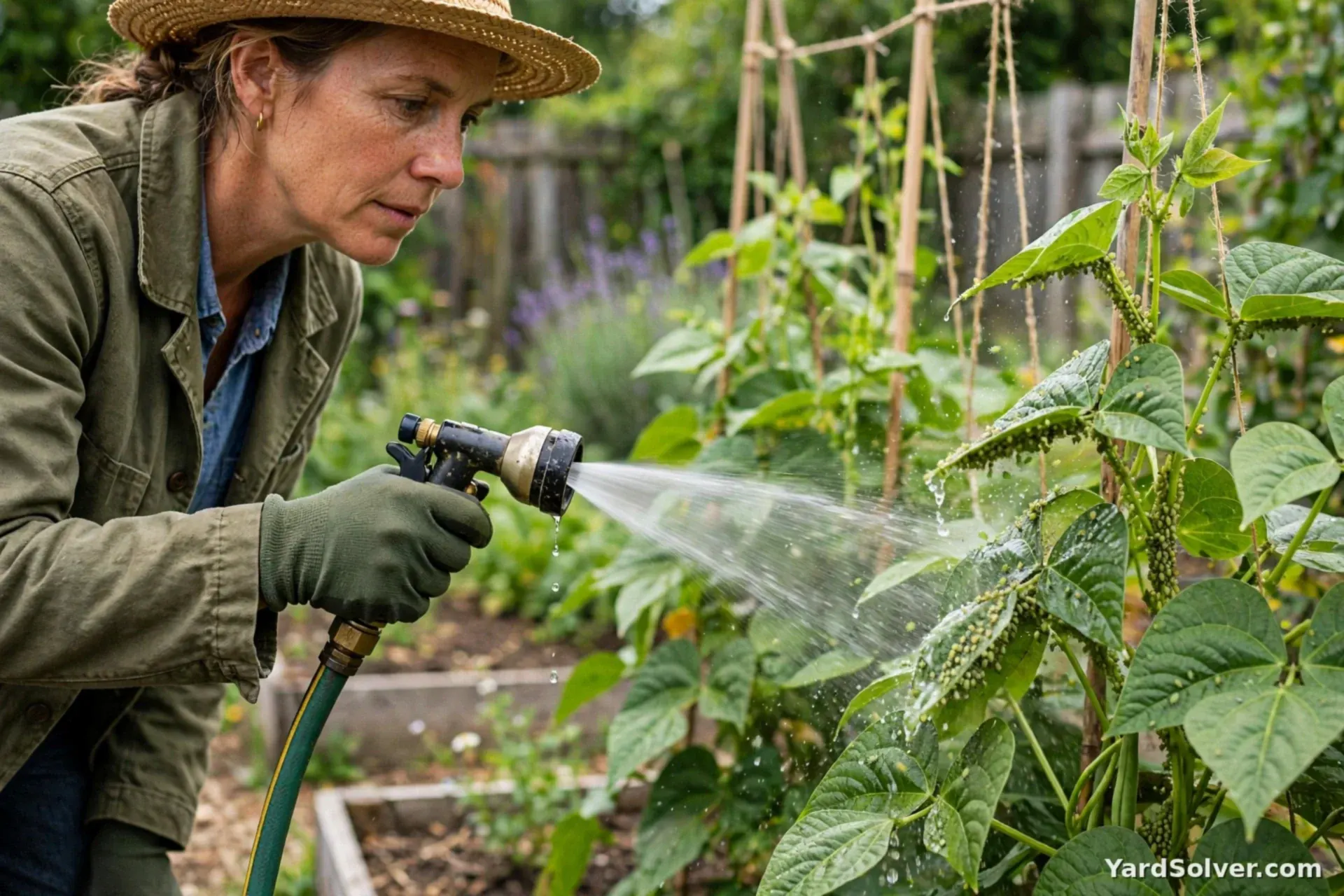
- Bean beetles and aphids — check leaf undersides and pick or spray off with water.
- Rust — orange-brown spots on leaves in wet weather; avoid overhead watering.
- Poor pod set in heat waves — pods return when nights cool.
Take care: Eat beans cooked, not raw — raw common beans contain natural lectins that cooking destroys. Some people find beans cause gas until their stomach gets used to them.
Mexican bean beetle larvae, yellow and spiky, skeletonise leaves from underneath — check undersides twice a week. Picking every 2 to 3 days is also pest control: plants carrying old pods stop flowering weeks early.Step 6 — Harvest
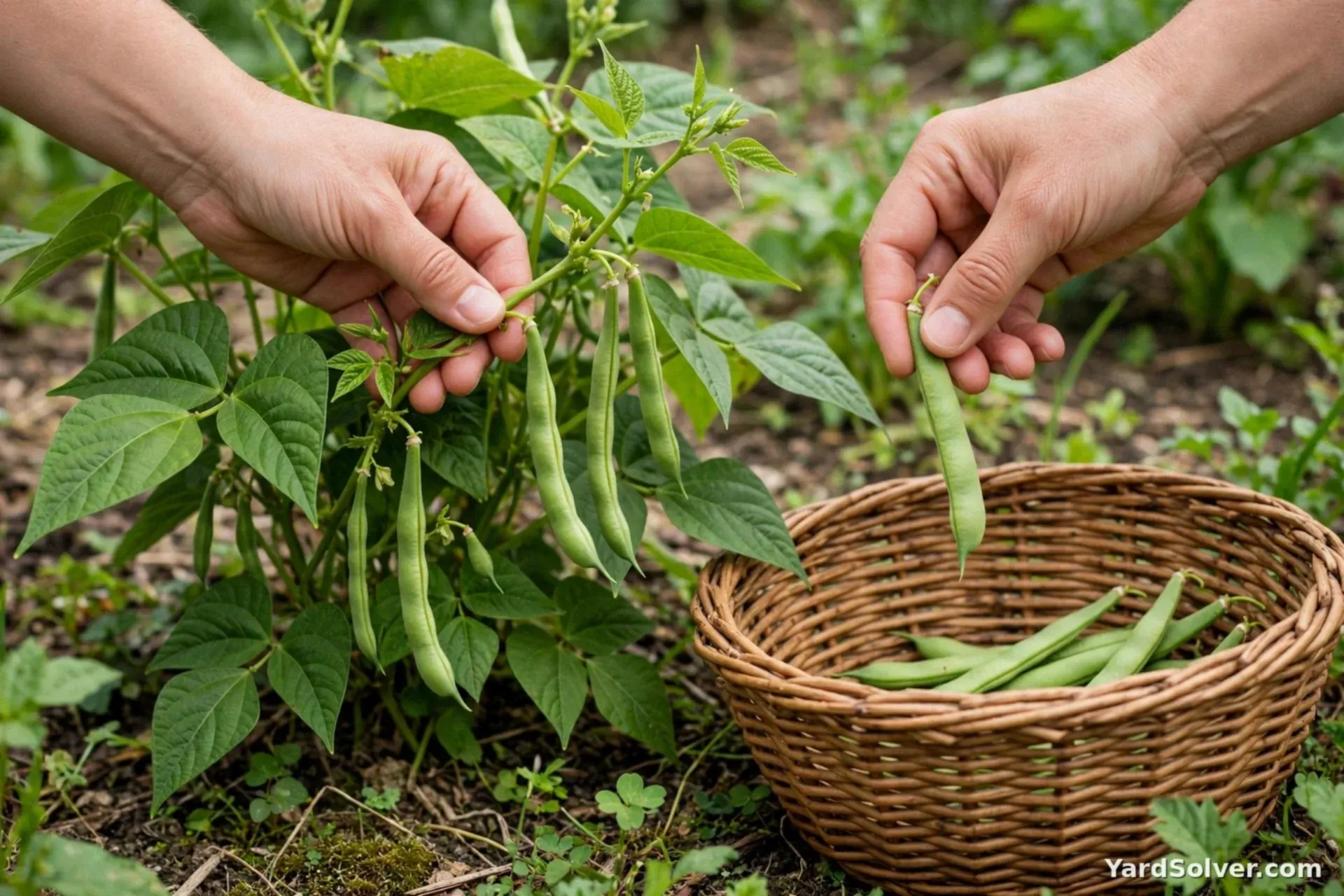
Ready in: 50–60 days. Harvest runs from about day 50 to 60 — pick pods young and crisp every couple of days. The pencil test never fails: a pod that snaps cleanly and is no thicker than a pencil is at its best. Expect roughly 1/2 lb per bush plant across its picking life, gathered little and often.
📅 Your personal Green Beans schedule
Beans move in weeks, not months, so this schedule counts from your sowing day to the first picks and the follow-up sowings that keep them coming. Day 0 is the day the seed went in the ground.
Varieties worth growing
| Variety | Colour | Why gardeners like it |
|---|---|---|
| Provider | Green | A bush bean that sprouts well even in cool soil and crops early |
| Blue Lake | Green | The classic canning bean — straight, stringless pods (pole and bush forms exist) |
| Kentucky Wonder | Green | A pole bean that climbs tall and yields heavily all season |
| Royal Burgundy | Purple | Purple pods that magically turn green in the cooking pot — easy for kids to spot and pick |
| Dragon Tongue | Cream with purple streaks | A flat-podded bush bean with a rich flavour, eaten fresh or shelled |
Good for you — and take care
Benefits
- Provides fibre that supports good digestion
- A source of plant protein for a vegetable
- Provides vitamin C and vitamin K
- Provides folate, important for growing bodies
- Low in calories and contains almost no fat
Take care
- Eat beans cooked, not raw — raw common beans contain natural lectins that cooking destroys
- Some people find beans cause gas until their stomach gets used to them
A little history — and one good fact
Green beans come from the common bean, a plant first grown in the Americas thousands of years ago. Indigenous farmers in Mexico and Central America grew beans together with corn and squash — the famous 'Three Sisters' — because each plant helps the others. Beans reached Europe in the 1500s and spread from there around the whole world.
Fun fact: Green beans are simply unripe bean pods — leave them on the plant and the seeds inside swell and dry into the kind of beans used in soups and chili.
Keep going
Guides: When to Start Seeds Indoors · How to Prepare Garden Soil in Spring · How to Harden Off Seedlings
Calculators: Plant Spacing Calculator · Seed Calculator · Garden Mix Calculator
More vegetables: Tomato · Pepper · Cucumber · Fava Beans · Lima Beans · Peanuts · Lentils
← Back to the Plant Library · Get your personal planting dates
Bush bean succession plan for a 10-foot row
Three short sowings beat one long row: each crops hard for about three weeks, then hands over. Seed need is about 1 oz per sowing.
| Sowing | Picking window |
|---|---|
| Sowing 1 — a week after last frost | First picks from about day 50, for roughly 3 weeks |
| Sowing 2 — three weeks later | Takes over as the first row tires |
| Sowing 3 — three weeks after that | Carries the harvest into early fall |
| Each sowing — plants | About 25 bush plants in the 10 ft row |
| Each sowing — yield | Roughly 6 to 12 lb of pods, picked young |
Stop sowing about 8 weeks before first expected frost — later pods never fill.
Questions people ask
When do I plant green beans?
Count from your average last spring frost: sow outdoors 1 week after last frost. Beans are a warm-season crop: direct sow about a week after your last frost, then sow a short row every 2 weeks to keep the harvest coming.
How far apart do I space green beans?
Space plants 4–6 in apart, with seed sown 1 in deep. Sun: full sun.
When is green beans ready to harvest?
50–60 days. Sow a short row every 2 weeks for a longer harvest.
Why are my bean plants all leaves and no pods?
Too much nitrogen is the usual cause, especially after fresh manure or a high-nitrogen feed: beans make their own nitrogen, and extra feed grows foliage, not flowers. Heat does it too — pods fail to set in very warm nights, then return when weather breaks.
Can I save seed from my green beans?
Yes. Beans are self-pollinating and come true from saved seed. Leave the last pods on healthy plants until dry and papery, shell them out, and dry the seed indoors another week before storing. It keeps about three years in a cool, dry jar.
Warm soil or nothing: the sowing rule that decides whether bean seed grows or rots
Bean seed is honest about temperature: sown into cold, wet soil it does not wait patiently — it rots. The germination floor is warm soil, which in practice means sowing after the last frost into ground that feels warm to a wrist pressed into it, or starting a first batch in pots under cover for planting out once nights settle. Gardeners who sow on the calendar date that worked last year, into a cold spring, re-sow twice and conclude the seed was bad; the seed was fine, the soil was not. A handful of compost in the drill and patience of a week beats three sowings into cold ground.
Once up, green beans repay rhythm more than richness. The soil wants to be fertile but not freshly manured into leafy excess, the roots want steady moisture once flowering starts — dry spells at flowering are when pods fail to set — and the harvest wants to be frequent: pick every two or three days and the plants keep flowering and setting; leave pods to swell and seed, and the plant reads its job as done and slows down. Bush beans crop in a flush and finish, so sow them in succession every few weeks; climbing beans crop over a long season from one sowing on sturdy supports.
The worked example: two short rows sown three weeks apart into warm soil, picked every couple of days, commonly hand back a colander of pods every few days from midsummer into autumn. One early sowing into cold soil beside them typically loses half its seed to rot, crops in a single glut, and stops. The succession rows cost the same packet of seed — the calendar does all the work.
Sources
Key facts on this page — timing, spacing and care — cross-checked against NC State Extension Plant Toolbox — Phaseolus vulgaris (common bean) — culture, spacing and care requirements.
Related page
Read next: Succession Planting Guide: Sow Little and Often.
Comments & ratings
No comments yet.
Be the first to share your experience.