
Plant Library · Vegetables · By Faizan Ahmad
🫘 How to Grow Fava Beans
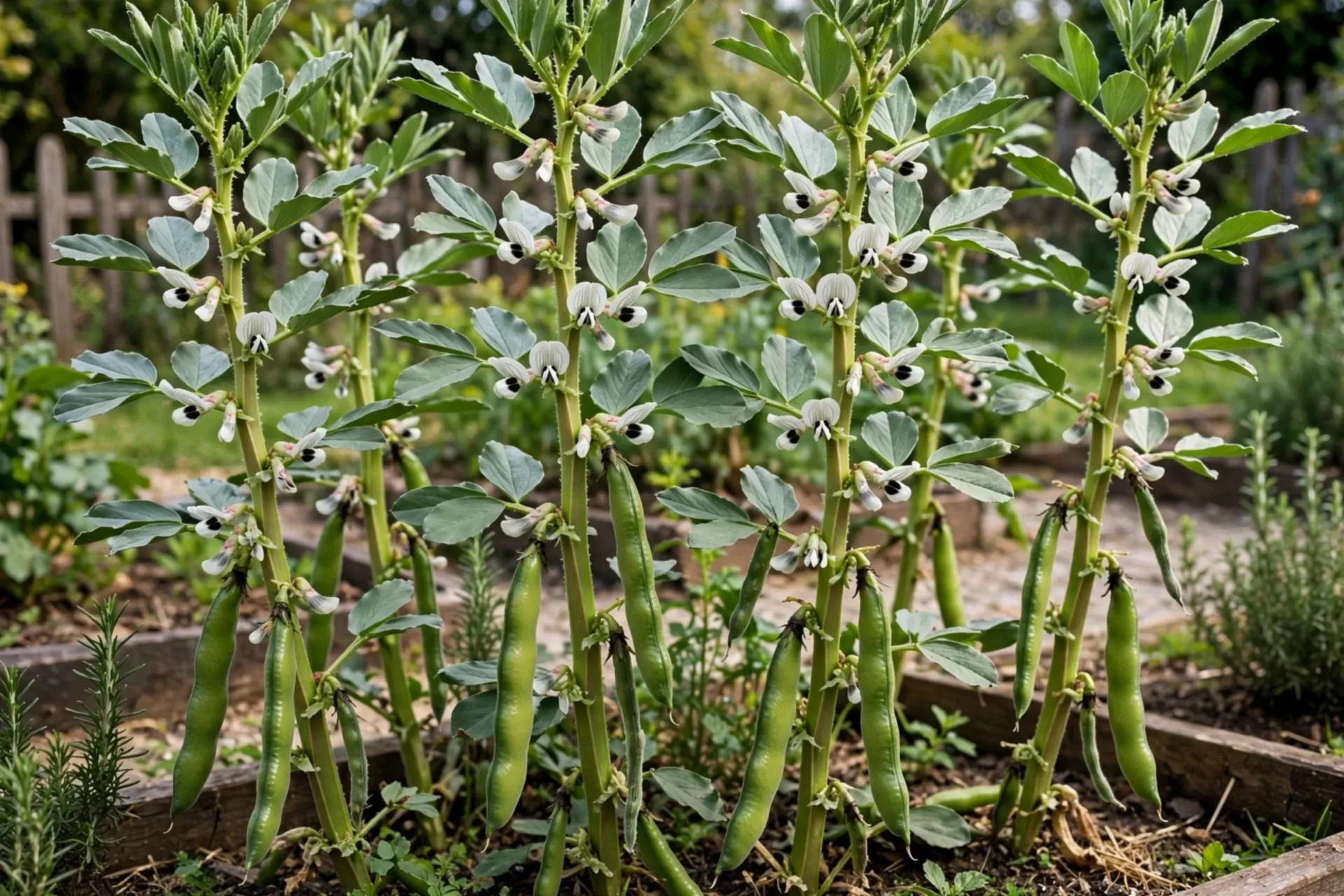
The hardy broad bean of cool climates — one of the few beans sown in early spring (or fall, in mild gardens): it flowers and pods best in cool weather and sulks in summer heat. Fava beans — broad beans — play by opposite rules to other beans: they are hardy, not tender. Sow them early, about 4 weeks before your last frost, because they flower and set pods best while the weather is cool; in mild-winter gardens they are sown in fall and crop in spring.
Grow Fava Beans with us — step by step
Everything for this plant is written step by step below — what to do, and exactly when. Read it through first if you like: you can grow it entirely on your own with that guide. Or start with us here — tell us your planting day and we lay out your personal schedule on this page, every next step on its own day, counted from your planting date. No guessing, no forgetting.
Step 1 — today: Sow Fava Bean seed today where the plants will grow, 1–2 in deep with the dark scar facing down, and water the row in well. These beans like the cold start.
Fava Beans at a glance
Sow outdoors: 4 weeks before last frost
Spacing: 4–6 in · Seed depth: 1–2 in
Sun: Full sun
Water: Regular, especially at flowering and pod fill
Harvest: 75–90 days
Timing counts from your average last spring frost — get your own dates in the Planting Calendar. Guidance follows standard extension-service practice for Canada and the US.
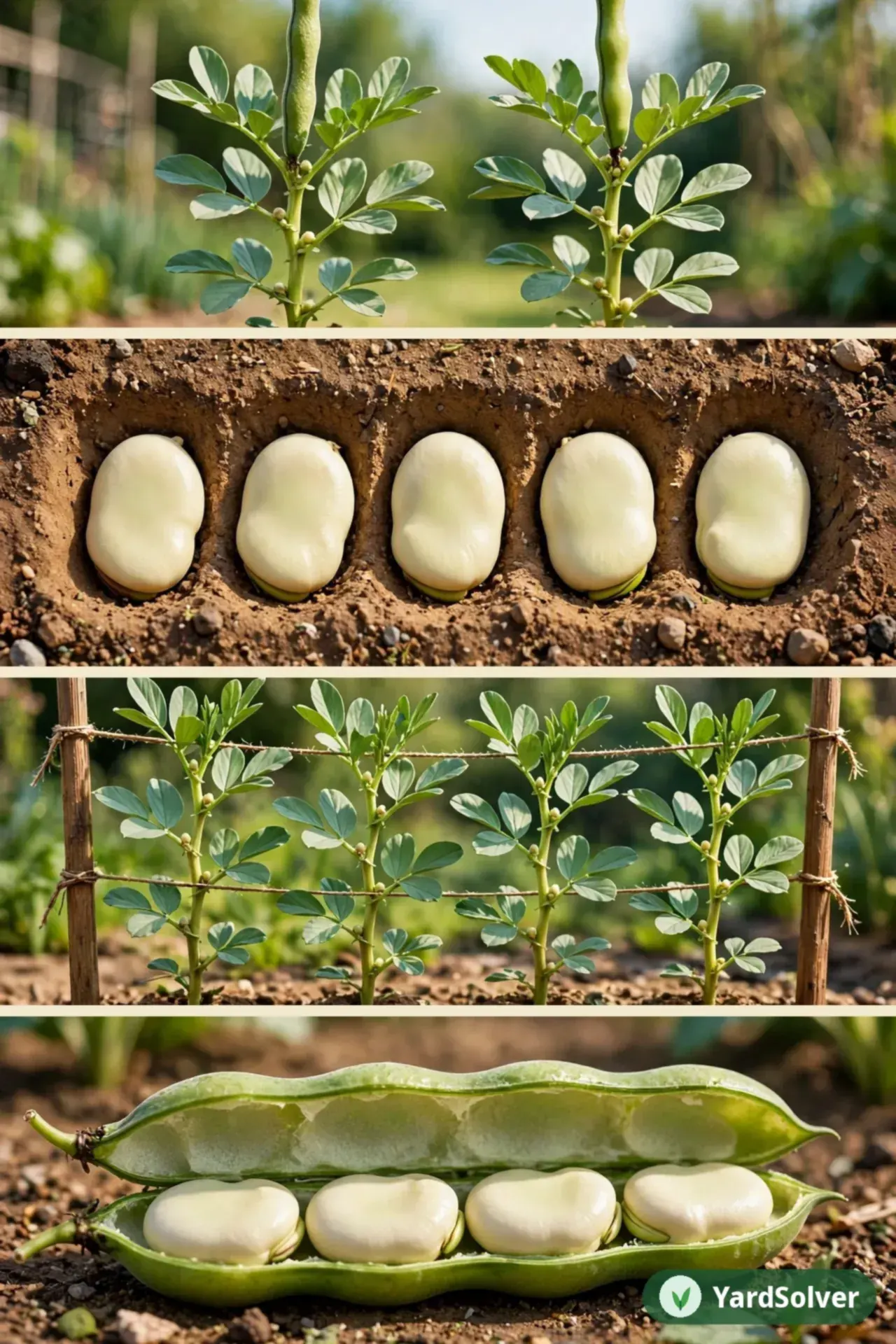
How to plant and grow fava beans, step by step
Step 1 — Time it right
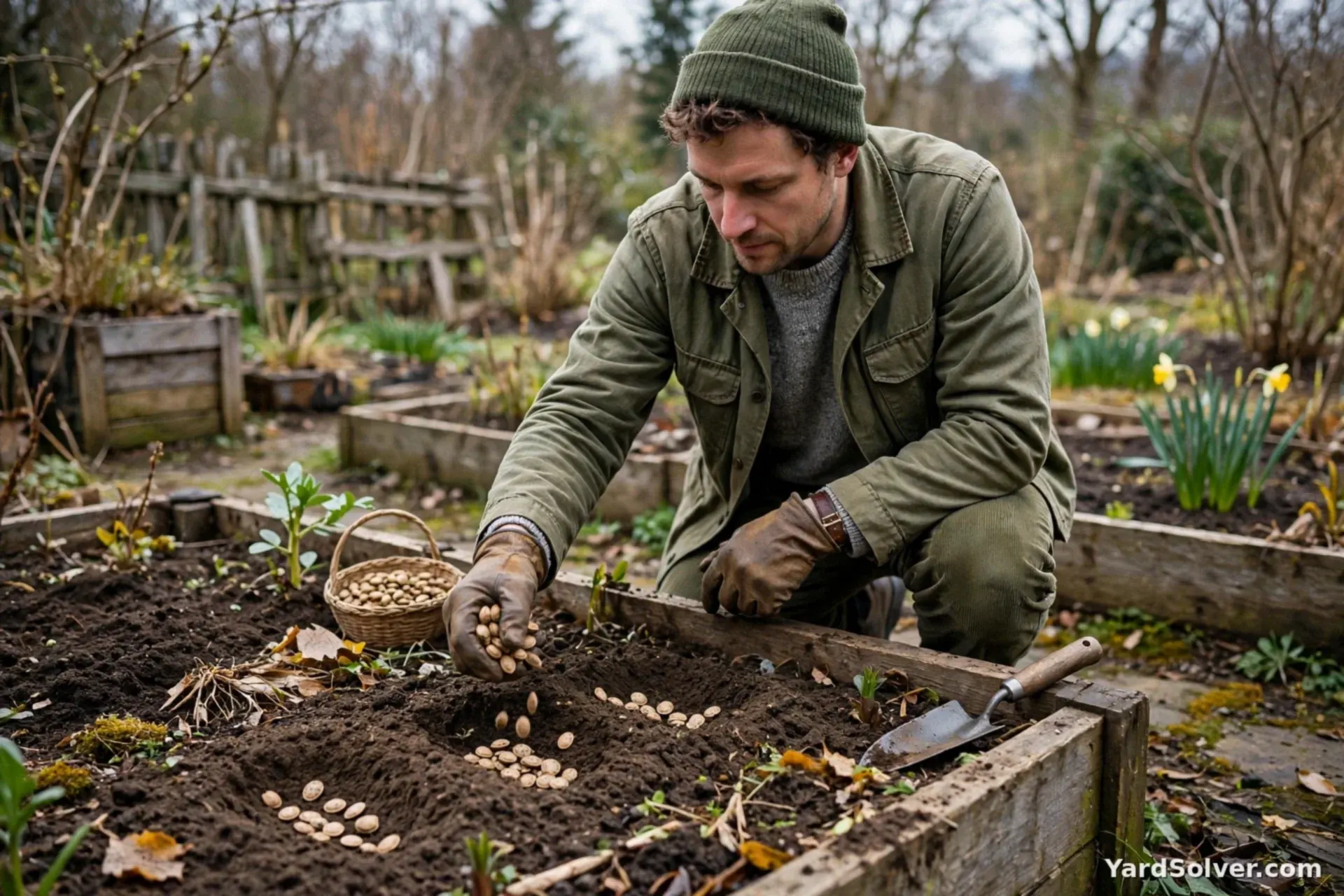
Sow outdoors: 4 weeks before last frost. All dates count from your average last spring frost — the Planting Calendar turns them into real dates for your garden. Fava beans — broad beans — play by opposite rules to other beans: they are hardy, not tender. Sow them early, about 4 weeks before your last frost, because they flower and set pods best while the weather is cool; in mild-winter gardens they are sown in fall and crop in spring.
Step 2 — Prepare the spot
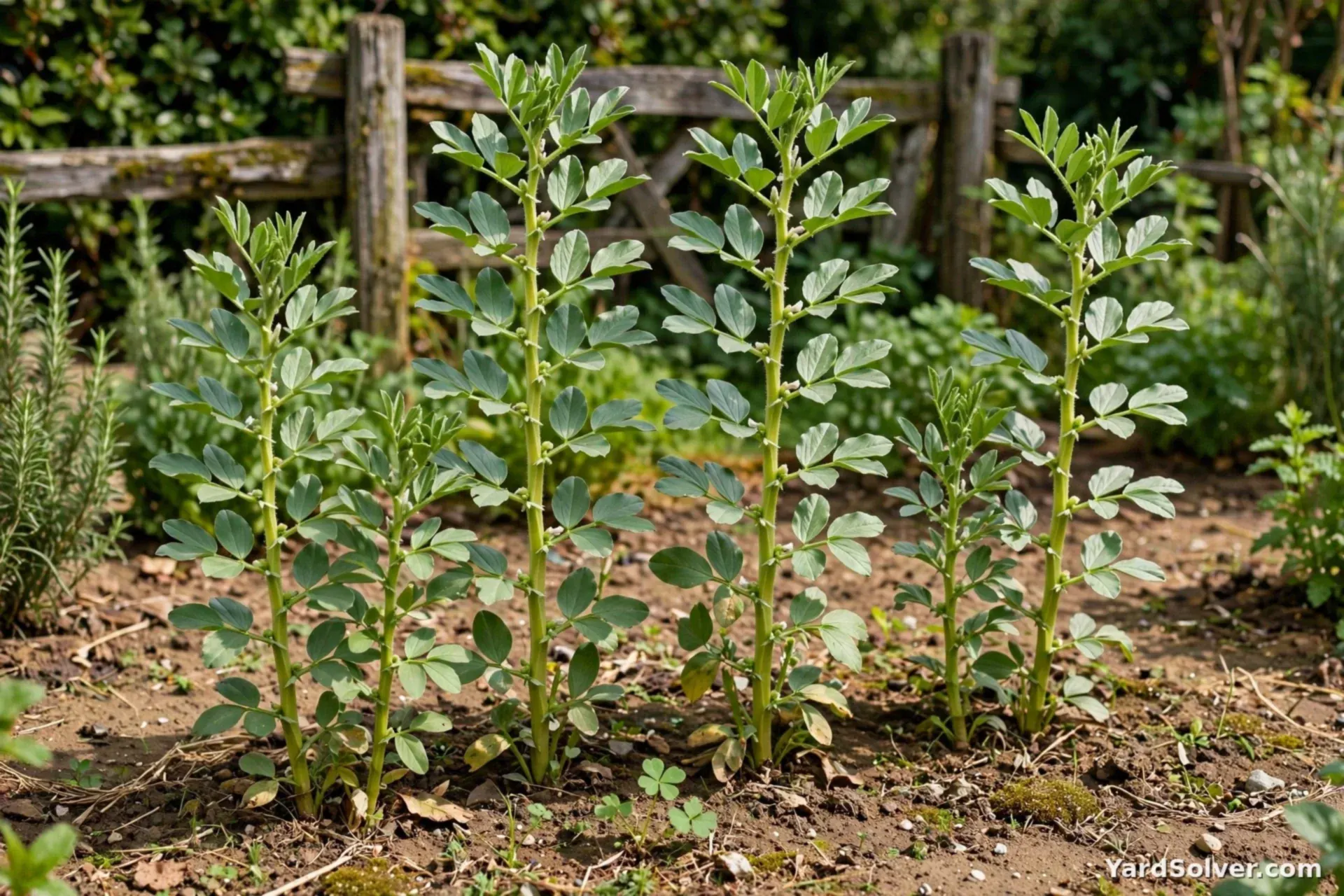
Sun: Full sun. Any decent garden soil — favas are not fussy; work in compost on poor ground, and choose a spot sheltered from strong wind, as the tall plants rock loose. Work out how much you need with the Garden Mix Calculator or the Raised Bed Soil Calculator.
Step 3 — Sow and plant out
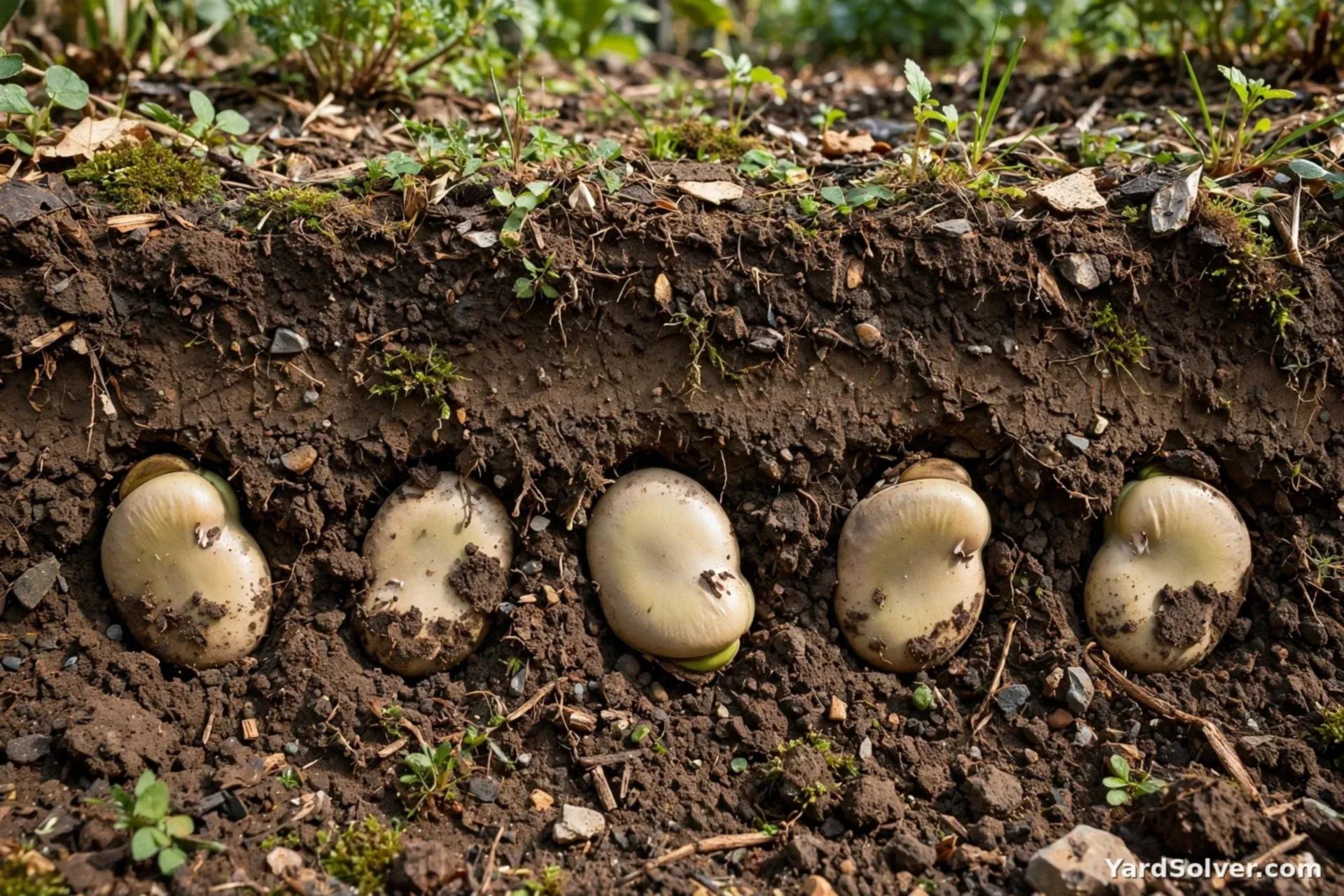
Sow directly where they will grow, 4 weeks before last frost, 1–2 in deep and 4–6 in apart, with the seed's dark scar facing down. The Seed Calculator works out how much seed a bed needs. In mild-winter areas (little frost), sow in fall instead for a spring crop.
Step 4 — Water and feed
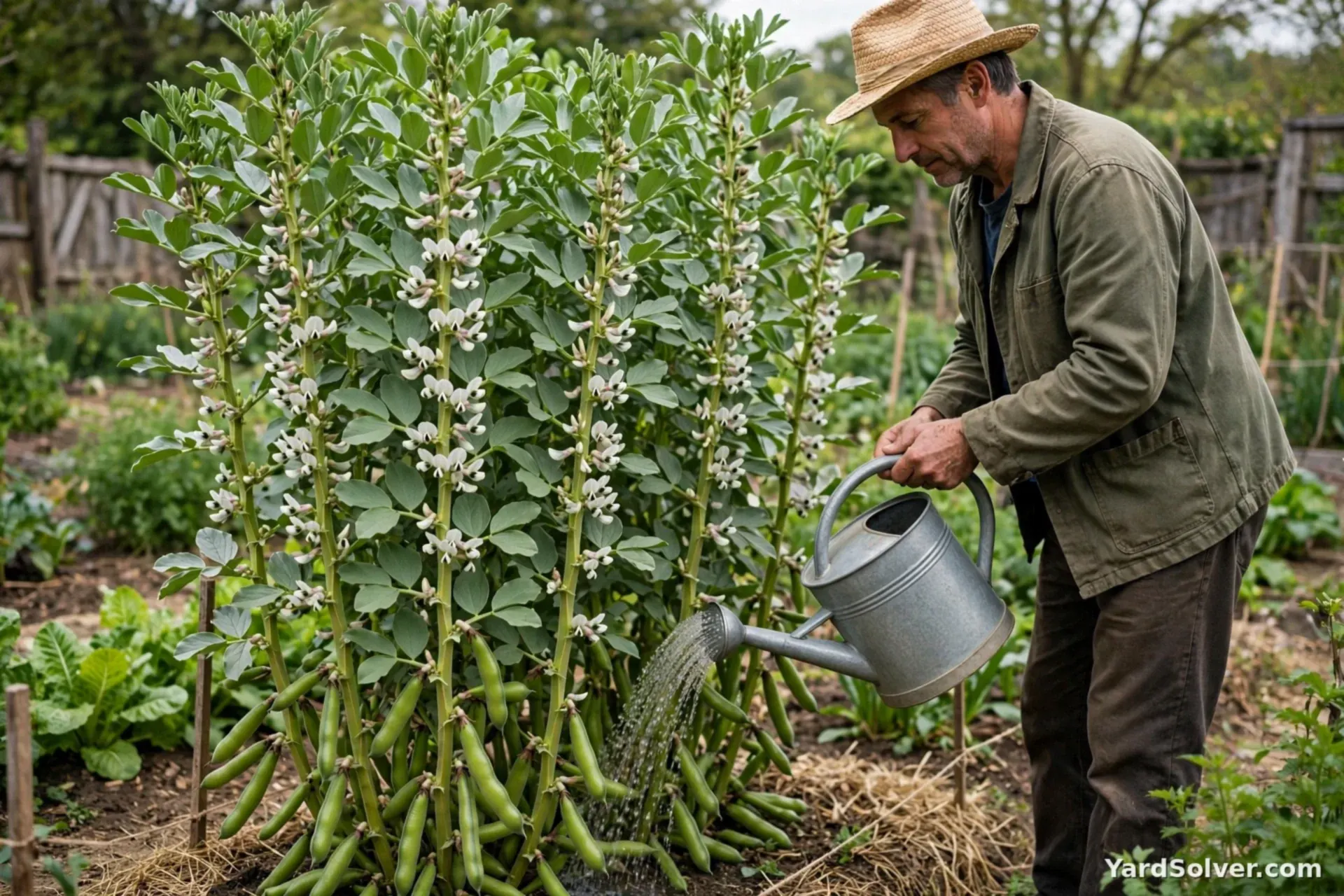
Water: Regular, especially at flowering and pod fill. The Fertilizer Calculator turns a bed size into the right amount.
Step 5 — Care and the problems to watch for
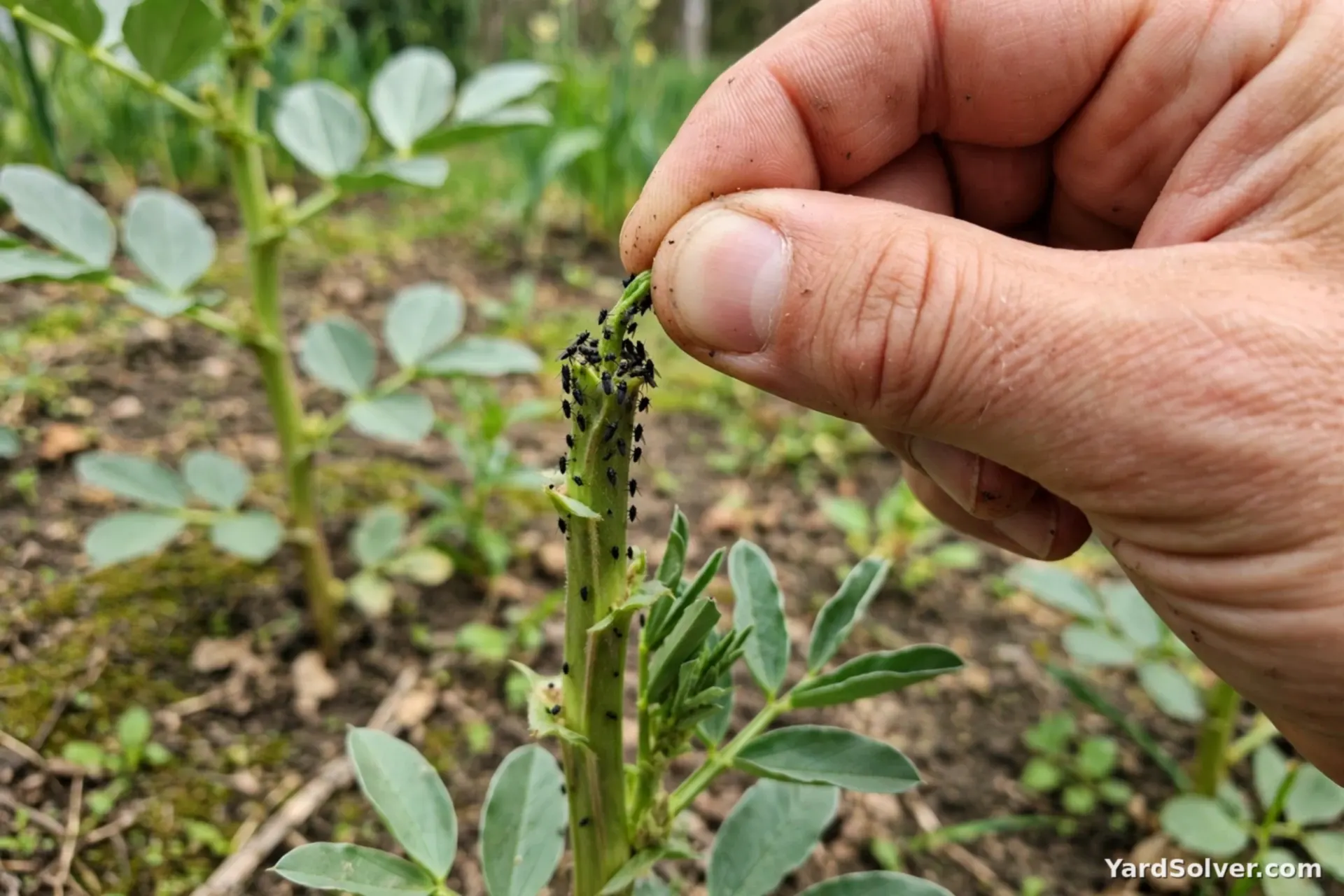
- Blackfly (aphids) crowding the shoot tips — pinch out the top 2 inches of each plant once pods form; the tips are edible and the aphids lose their favourite spot.
- Flowers but few pods — a hot spell during flowering; favas set pods in cool weather, which is why they are sown so early.
- Chocolate spot — brown speckles on leaves in wet weather; space plants for air flow and water at the base.
Take care: Some people have an inherited condition (G6PD deficiency, called favism) that makes fava beans dangerous for them — if favas are new to your family, this is worth knowing before serving them widely.
Step 6 — Harvest
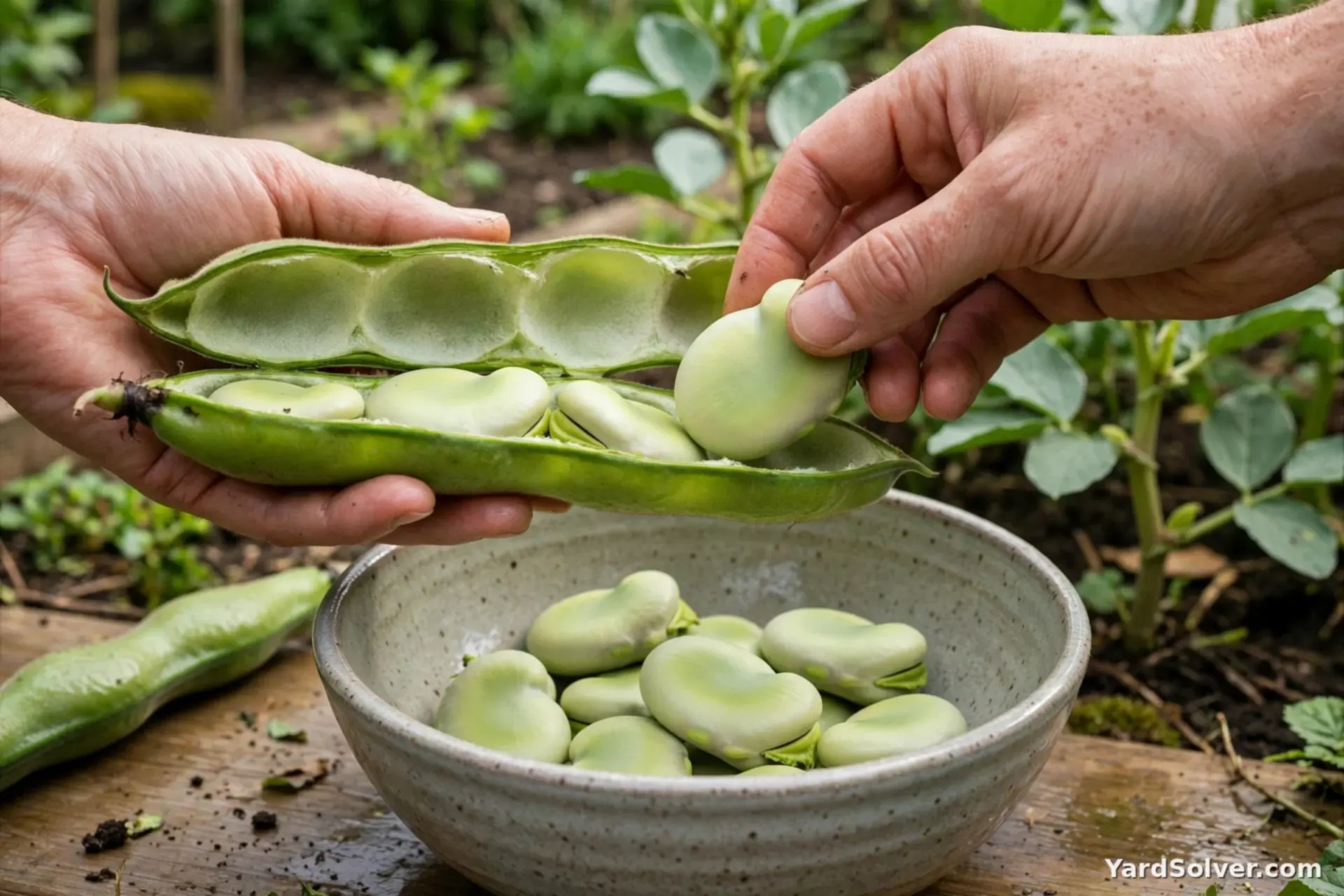
Ready in: 75–90 days. Pick pods from about day 75 as the beans swell inside; for dried beans, let pods blacken on the plant, then shell and dry fully.
📅 Your personal Fava Beans schedule
Counted from your planting day — not a generic calendar. Day 0 is the day the seed went in the ground or the young plant went out.
Varieties worth growing
| Variety | Colour | Why gardeners like it |
|---|---|---|
| Broad Windsor | Pale green | The classic broad bean — big pods with large, flavoursome beans |
| Aquadulce Claudia | Pale green | The variety to choose for fall sowing in mild gardens — very hardy |
| Stereo | Pale green | A compact plant carrying small pods that are delicious picked young and eaten whole |
| Karmazyn | Pink-flushed | Unusual pink beans with fine flavour, from Polish breeding |
| Bunyards Exhibition | Pale green | A tall, heavy-cropping exhibition variety from the 1800s still going strong |
Good for you — and take care
Benefits
- Provides plant protein and fibre in the same serving
- A source of folate, iron and manganese
- One of the most nutritious of all beans per serving
- The plants fix nitrogen and leave the soil richer
- Flowers feed early bees when little else is in bloom
Take care
- People with G6PD deficiency (favism) must not eat fava beans — the reaction can be serious
- Cook fava beans before eating — never eat them raw in quantity
- Double-podding (slipping the skins off shelled beans) is optional but makes them sweeter and more tender
A little history — and one good fact
Favas are among the oldest cultivated beans — grown around the Mediterranean for at least 8,000 years, and for centuries they were Europe's main bean, the bean of every old recipe and saying, until American beans arrived in the 1500s.
Fun fact: In ancient Rome, fava beans were used as voting ballots — a pale bean for yes, a dark one for no.
Keep going
Guides: How to Get Rid of Aphids · How to Protect Plants from Frost · Companion Planting Basics
Calculators: Plant Spacing Calculator · Seed Calculator · Fertilizer Calculator · Garden Mix Calculator
More vegetables: Peas · Green Beans · Edamame
← Back to the Plant Library · Get your personal planting dates
Questions people ask
When do I plant fava beans?
Count from your average last spring frost: sow outdoors 4 weeks before last frost. Fava beans — broad beans — play by opposite rules to other beans: they are hardy, not tender. Sow them early, about 4 weeks before your last frost, because they flower and set pods best while the weather is cool; in mild-winter gardens they are sown in fall and crop in spring.
How far apart do I space fava beans?
Space plants 4–6 in apart, with seed sown 1–2 in deep. Sun: full sun.
When is fava beans ready to harvest?
75–90 days. The hardy broad bean of cool climates — one of the few beans sown in early spring (or fall, in mild gardens): it flowers and pods best in cool weather and sulks in summer heat.
The bean that grows through the cold: sow when peas go in, pinch out the tips, and let it feed the soil
Fava beans — broad beans — reverse the bean calendar. Where French and runner beans die at a whisper of frost, favas are hardy, slow, cool-season plants: sown in very early spring, or in autumn where winters are mild, and growing steadily through weather that stops everything else in the legume family. They are also statuesque — tall, square-stemmed plants that need the shelter of each other's company, or a string corral, against wind rock.
The crop's one reliable pest has a ritual answer. Black aphids colonise the soft growing tips in late spring; pinching out those tips once the first pods have set removes the aphids' favourite feeding ground, stops the plant growing taller, and sends its energy into the pods — and the pinched tips, cooked, are themselves a spring delicacy. The pods are picked while the beans inside are still small and sweet; left too long, the beans grow large, floury skins that need slipping off after cooking.
Like all legumes, favas leave the bed richer than they found it, their roots fixing nitrogen that the following crop inherits — which is why they earn a place in the rotation even where the harvest is modest. The worked example: an early sowing, grown in a block, tips pinched at first pod set, commonly gives weeks of picking and a noticeably better crop on that bed the next year. The identical plants left un-pinched typically end the season as aphid hotels with a handful of overgrown pods.
Sources
Key facts on this page — timing, spacing and care — cross-checked against NC State Extension Plant Toolbox — Vicia faba (fava bean) — culture, sowing, hardiness and care requirements and Vicia faba — Wikipedia — background on the broad bean, its history and uses.
Related page
Read next: Winter Cover Crops: Rye, Clover, Vetch, Oats.
Comments & ratings
No comments yet.
Be the first to share your experience.