
Plant Library · Vegetables · By Faizan Ahmad
🫘 How to Grow Edamame
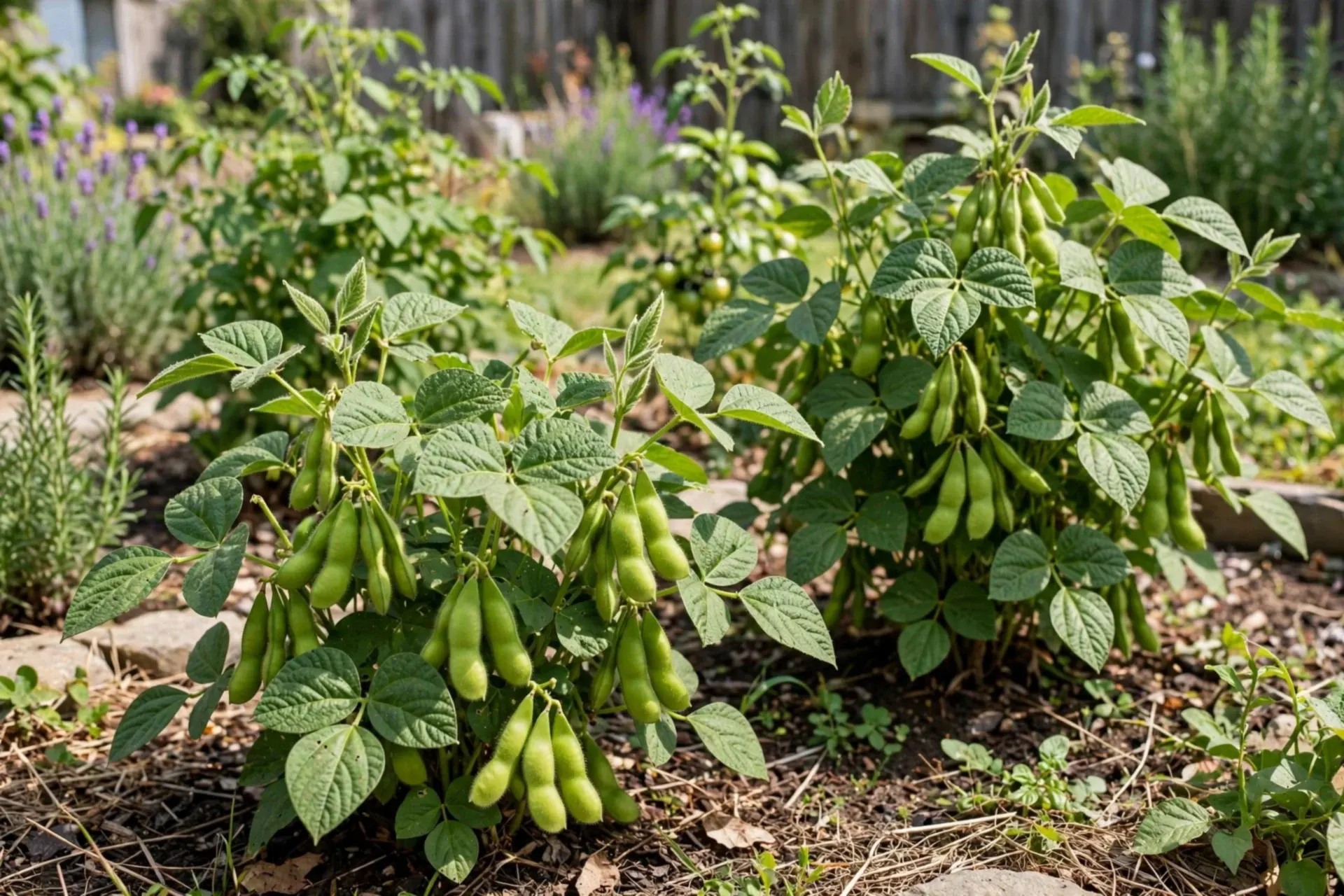
Vegetable soybeans picked green, while the pods are plump and bright: sow the whole patch at once after frost, because the whole crop comes ready together in one short harvest window. Edamame is simply soybean harvested young — picked while the pods are plump, bright green and the beans inside are still sweet and tender. Unlike the field soybean in our library, this is a garden crop: sow it after frost into warm soil and plan to pick the whole sowing within about two weeks.
Grow Edamame with us — step by step
Everything for this plant is written step by step below — what to do, and exactly when. Read it through first if you like: you can grow it entirely on your own with that guide. Or start with us here — tell us your planting day and we lay out your personal schedule on this page, every next step on its own day, counted from your planting date. No guessing, no forgetting.
Step 1 — today: Sow Edamame seed today where the plants will grow, 1 in deep, and water the row in well. Sow the whole patch in one go — the crop comes ready together.
Edamame at a glance
Sow outdoors: 1 week after last frost
Spacing: 4–6 in · Seed depth: 1 in
Sun: Full sun
Water: Regular, especially at flowering and pod fill
Harvest: 75–90 days
Timing counts from your average last spring frost — get your own dates in the Planting Calendar. Guidance follows standard extension-service practice for Canada and the US.
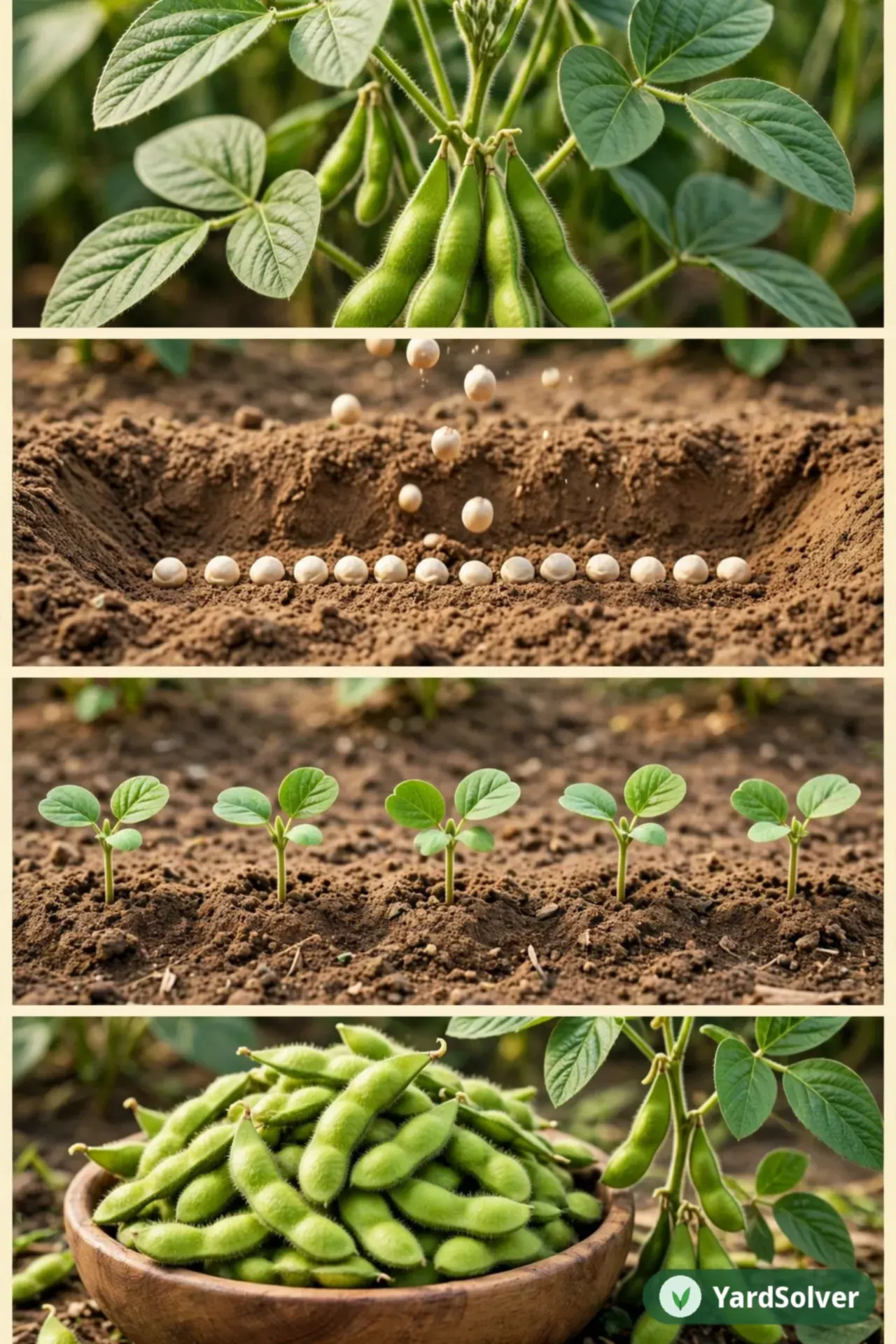
How to plant and grow edamame, step by step
Step 1 — Time it right
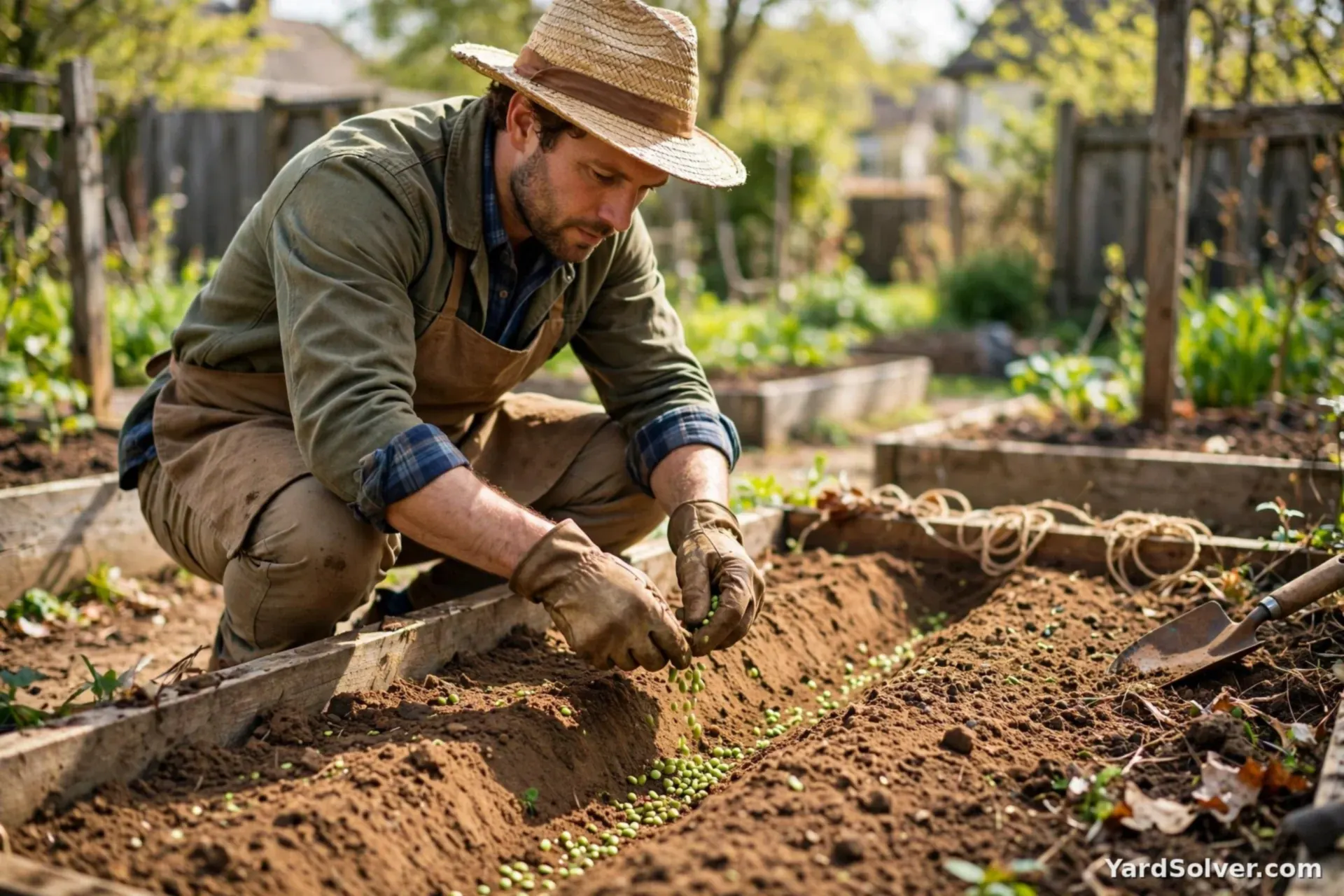
Sow outdoors: 1 week after last frost. All dates count from your average last spring frost — the Planting Calendar turns them into real dates for your garden. Edamame is simply soybean harvested young — picked while the pods are plump, bright green and the beans inside are still sweet and tender. Unlike the field soybean in our library, this is a garden crop: sow it after frost into warm soil and plan to pick the whole sowing within about two weeks.
Step 2 — Prepare the spot
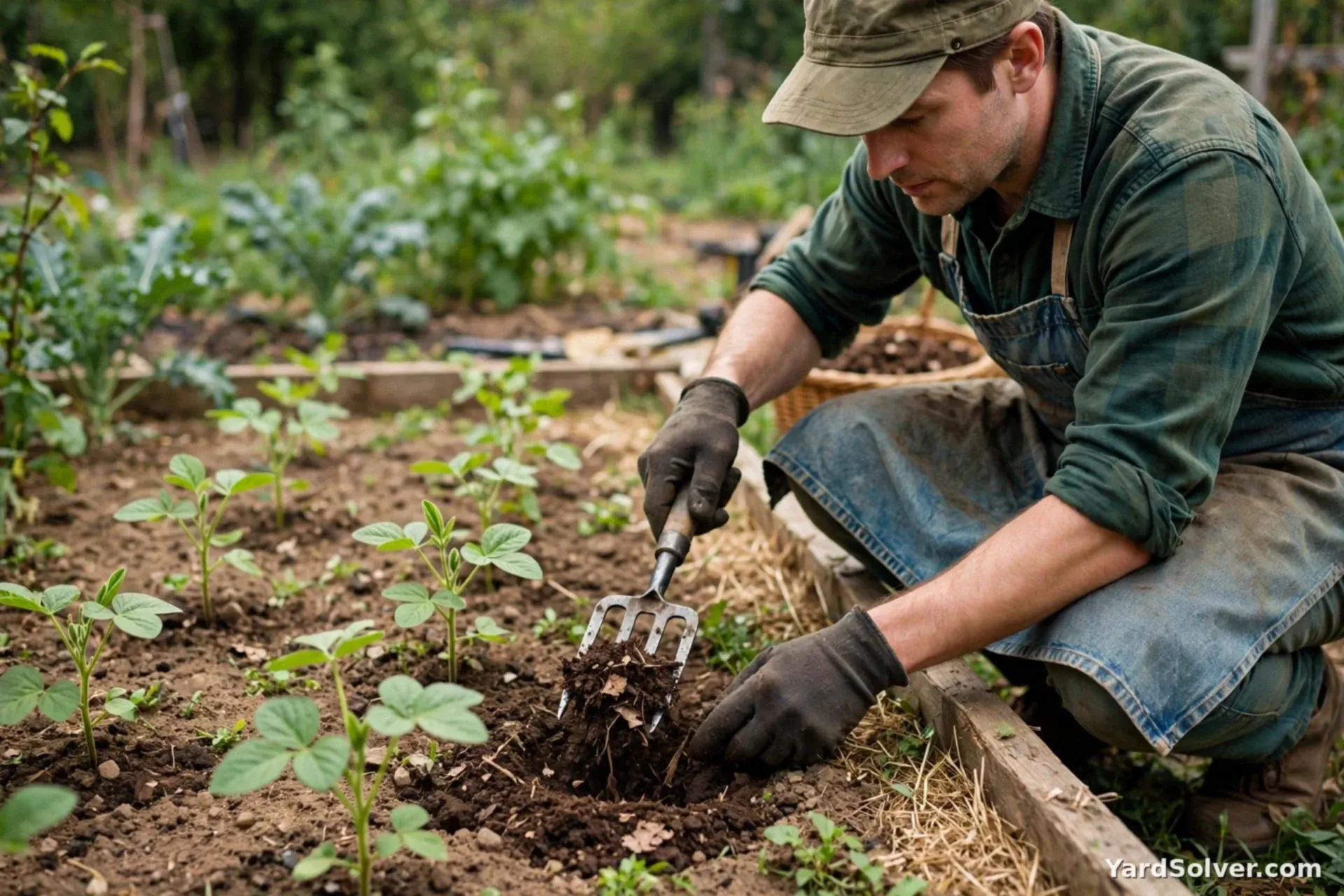
Sun: Full sun. Ordinary garden soil that drains well — edamame, like other beans, fixes its own nitrogen with its roots, so rich feeding is unnecessary; work in a little compost and let it grow. Work out how much you need with the Garden Mix Calculator or the Raised Bed Soil Calculator.
Step 3 — Sow and plant out
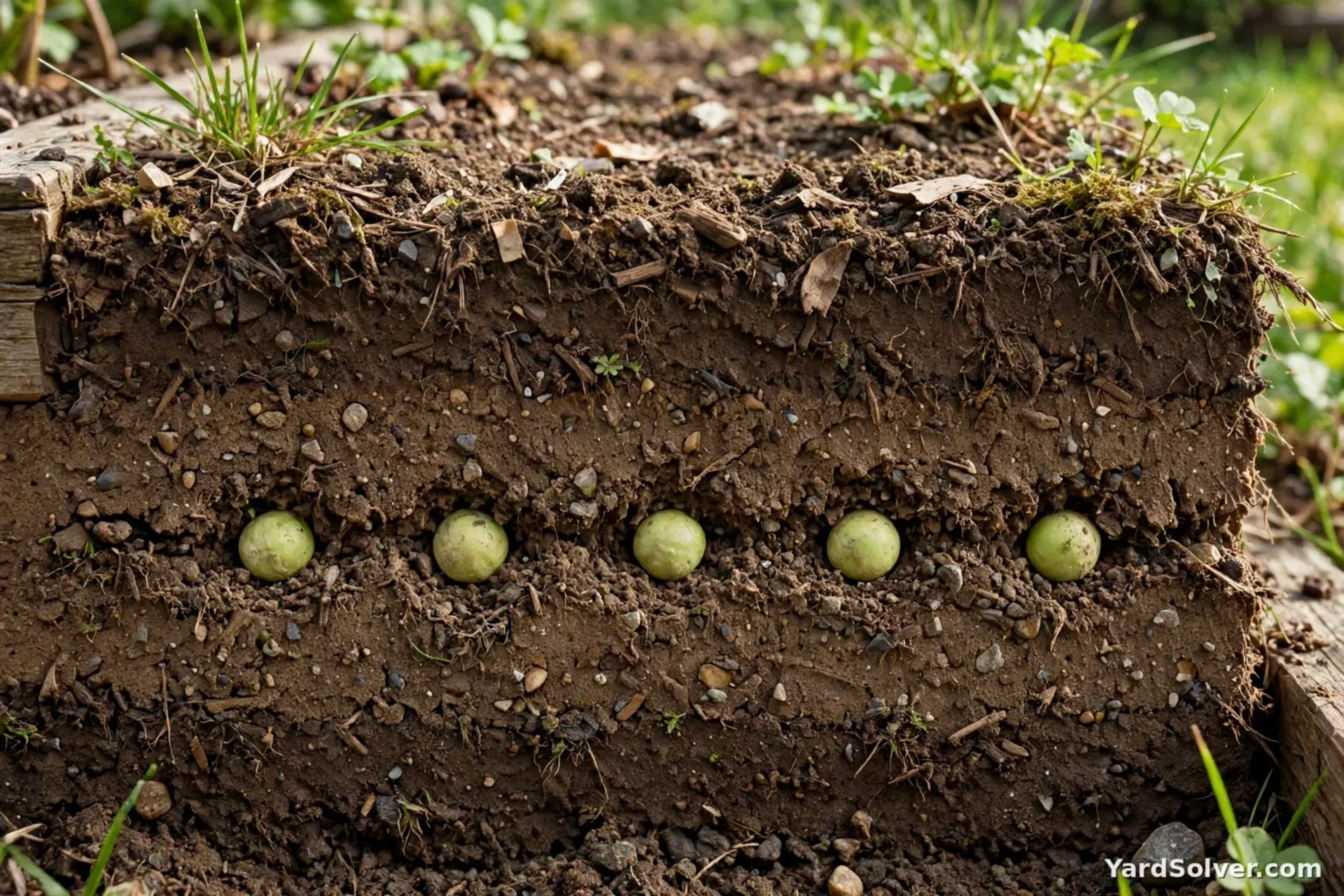
Sow directly where they will grow, 1 week after last frost, 1 in deep and 4–6 in apart. The Seed Calculator works out how much seed a bed needs. Warm soil matters: seed sown into cold, wet ground rots instead of sprouting.
Step 4 — Water and feed
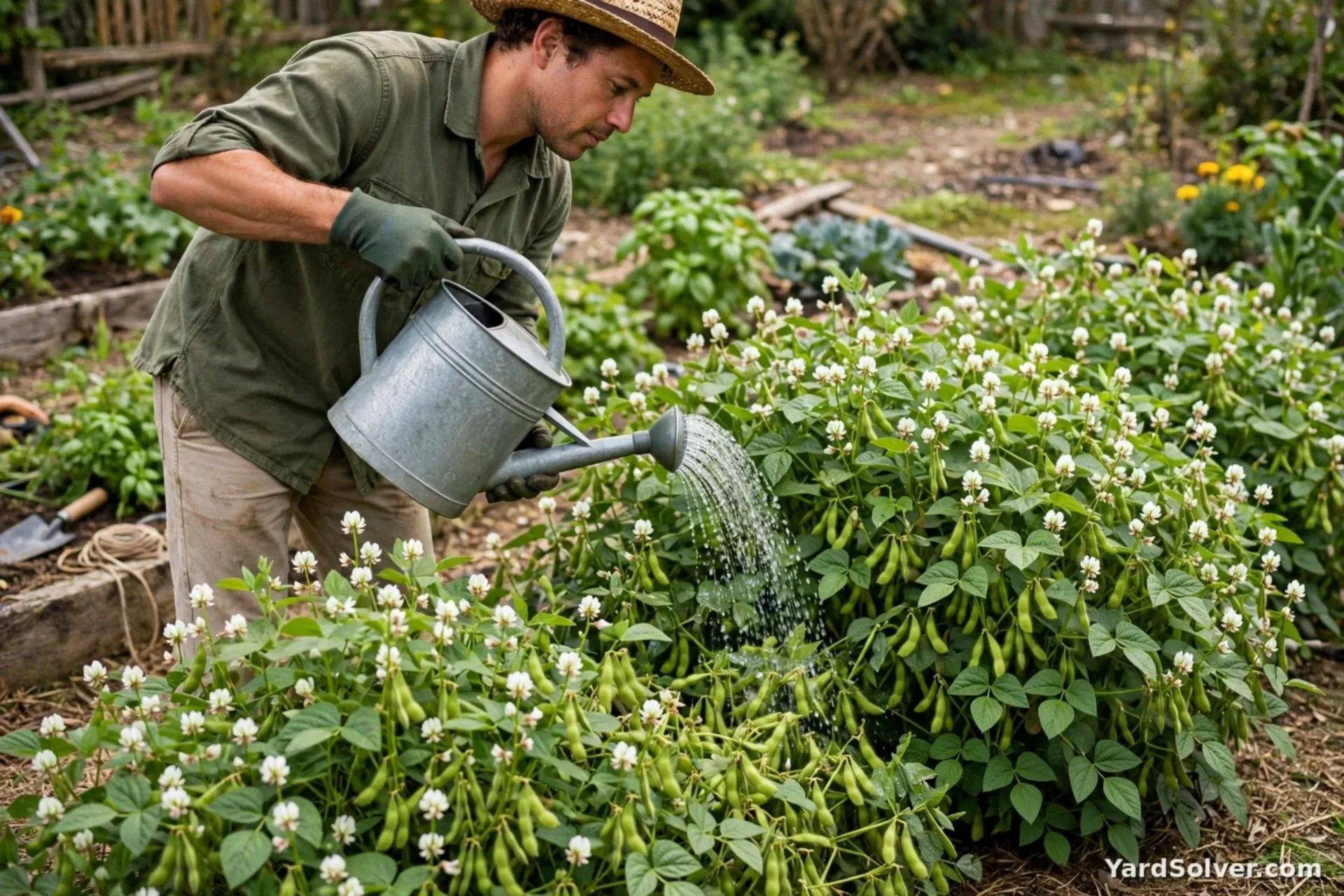
Water: Regular, especially at flowering and pod fill. The Fertilizer Calculator turns a bed size into the right amount.
Step 5 — Care and the problems to watch for
- Poor sprouting — seed rotted in cold soil; wait until the soil has warmed after frost, and sow shallow in heavy ground.
- Yellow, tough pods at picking — left too long; edamame has a short window, so check pods daily once they fill out.
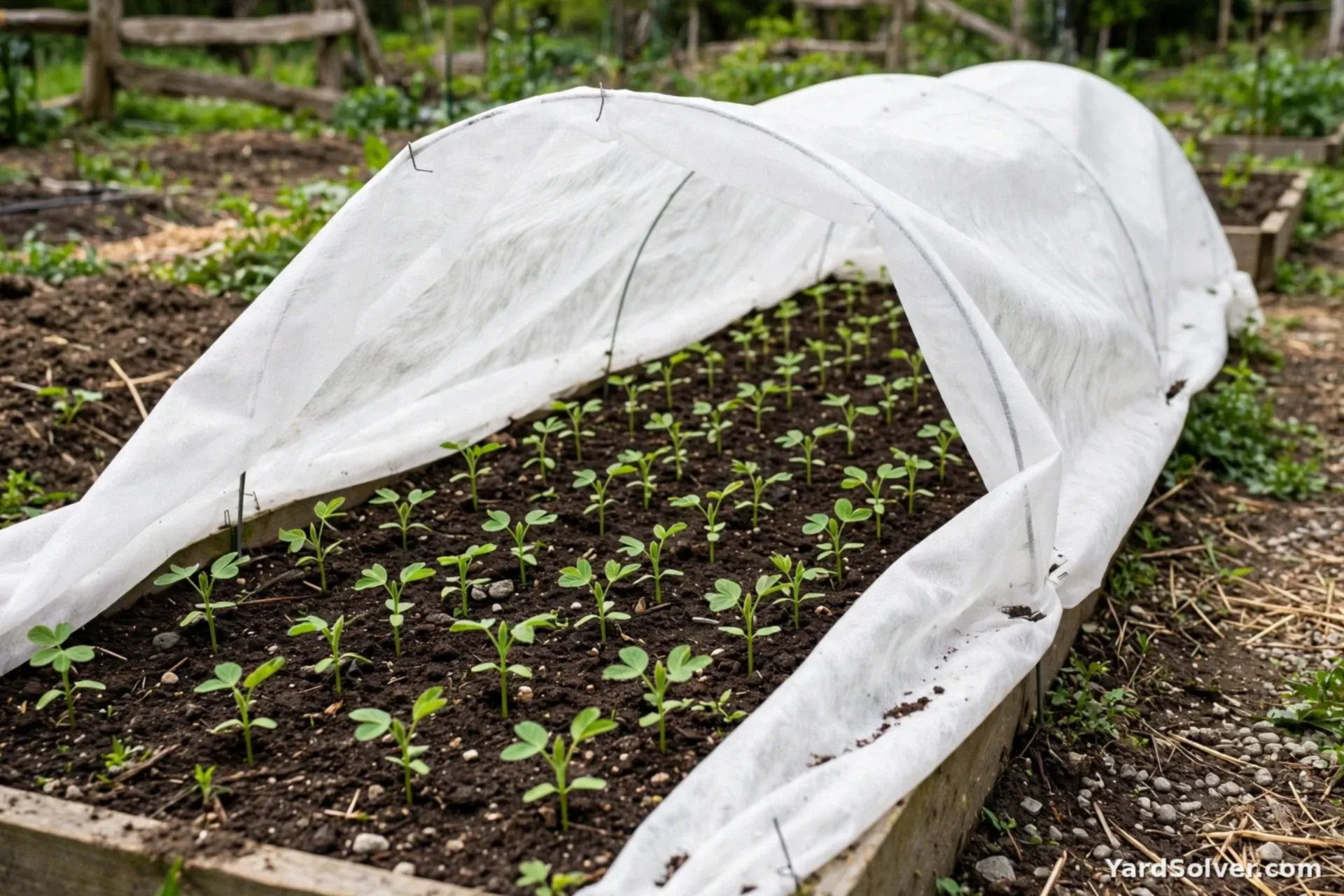
- Bean beetles and rabbits — both love young edamame; a row cover until flowering keeps most trouble off.
Take care: Never eat edamame raw — the pods are always cooked (a few minutes in boiling salted water), and you eat the beans, not the pod.
Step 6 — Harvest
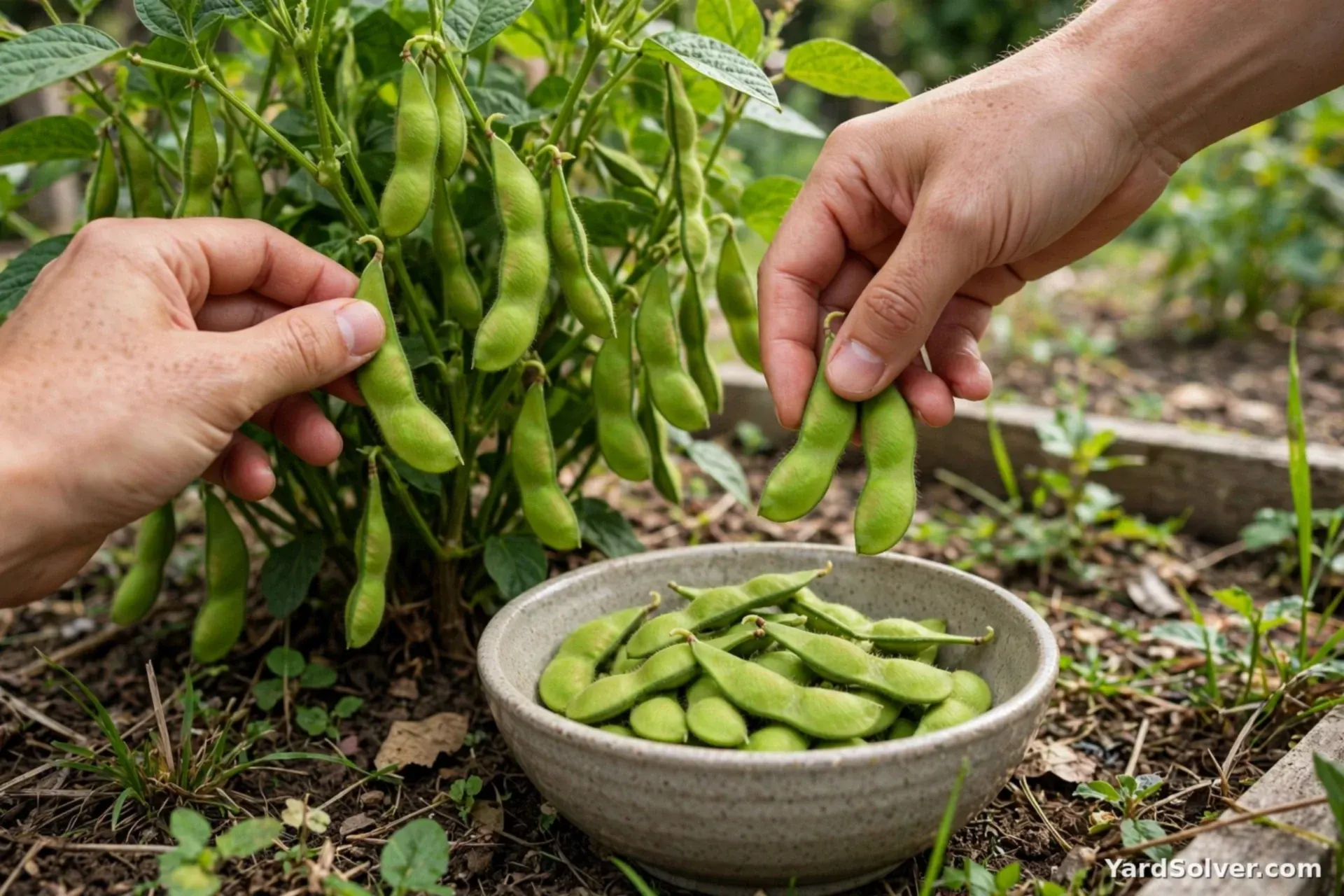
Ready in: 75–90 days. Pick pods from about day 75 as they plump up; once pods start to yellow, pick everything the same day and blanch and freeze what you cannot eat.
📅 Your personal Edamame schedule
Counted from your planting day — not a generic calendar. Day 0 is the day the seed went in the ground or the young plant went out.
Varieties worth growing
| Variety | Colour | Why gardeners like it |
|---|---|---|
| Envy | Green | A short-season favourite bred for northern gardens — ready earlier than most |
| Midori Giant | Green | Large pods and beans with a rich, buttery flavour |
| Butterbeans | Green | Despite the name, an edamame — plump pods with sweet, tender beans |
| Shirofumi | Green | A reliable, early variety that sets pods heavily |
| Chiba Green | Green | Bred for uniform pod fill — most pods carry three beans |
Good for you — and take care
Benefits
- Provides complete plant protein — unusual among vegetables
- A source of fibre, folate and iron
- Provides isoflavones, plant compounds researchers study with interest
- Filling and satisfying for a vegetable
- The plants feed the soil with nitrogen for the next crop
Take care
- Always cook edamame — never eat the beans raw
- People with a soy allergy must avoid edamame entirely — it is soybean
- Eat the beans, not the pods — the pods are tough and fibrous
A little history — and one good fact
Edamame has been eaten in Japan for centuries — the name means beans on a branch, from the habit of boiling pods still on the stem, sold as a snack with beer. Seed reached North America in the early 1900s, but the crop only became a common garden vegetable here in the last few decades.
Fun fact: Traditional Japanese vendors sold edamame pods still attached to the branch — the name literally describes how it was sold.
Keep going
Guides: Why Are My Bean Leaves Turning Yellow? · Companion Planting Basics · How to Prepare Garden Soil in Spring
Calculators: Plant Spacing Calculator · Seed Calculator · Fertilizer Calculator · Garden Mix Calculator
More vegetables: Green Beans · Peas · Yardlong Beans · Lima Beans
← Back to the Plant Library · Get your personal planting dates
Questions people ask
When do I plant edamame?
Count from your average last spring frost: sow outdoors 1 week after last frost. Edamame is simply soybean harvested young — picked while the pods are plump, bright green and the beans inside are still sweet and tender. Unlike the field soybean in our library, this is a garden crop: sow it after frost into warm soil and plan to pick the whole sowing within about two weeks.
How far apart do I space edamame?
Space plants 4–6 in apart, with seed sown 1 in deep. Sun: full sun.
When is edamame ready to harvest?
75–90 days. Vegetable soybeans picked green, while the pods are plump and bright: sow the whole patch at once after frost, because the whole crop comes ready together in one short harvest window.
Edamame is a soybean picked young: warmth, patience, then harvest the week the pods plump up
Edamame is not a separate plant — it is the ordinary soybean harvested green, while the beans inside the pods are full-sized but still soft and sweet. That one fact sets its whole calendar: soybeans are warmth-loving and slow to germinate in cold soil, so seed goes in only after the last frost, into warm ground, and the plants then grow steadily through the heat of summer without asking for much beyond water at flowering.
Two soybean habits surprise vegetable gardeners. First, like other legumes it fixes nitrogen with the help of root bacteria — on ground where soy has never grown, a seed inoculant genuinely helps, while on old legume beds it is usually unnecessary. Second, the harvest window is short and unforgiving: pods are picked when they are bright green and plump, with the beans pressing visibly against the pod; a week later the same pods yellow, the beans turn starchy, and the edamame moment has passed into dry-soybean territory.
The worked example: seed sown into warm soil after frost, watered through flowering and picked pod by pod in the plump green week, commonly gives basket after basket of sweet beans for steaming. The identical seed sown into cold spring soil typically rots or staggers up unevenly — and a harvest left a fortnight late gives mealy beans nobody finishes. With edamame, the calendar does the cooking before the pot does.
Sources
Key facts on this page — timing, spacing and care — cross-checked against NC State Extension Plant Toolbox — Glycine max (soybean) — culture, sowing, soil and care requirements and Edamame — Wikipedia — background on edamame, its harvest stage and use.
Related page
Read next: Succession Planting Guide: Sow Little and Often.
Comments & ratings
No comments yet.
Be the first to share your experience.