
Plant Library · Fruits · By Faizan Ahmad
Updated November 17, 2026
🐉 How to Grow Dragon Fruit
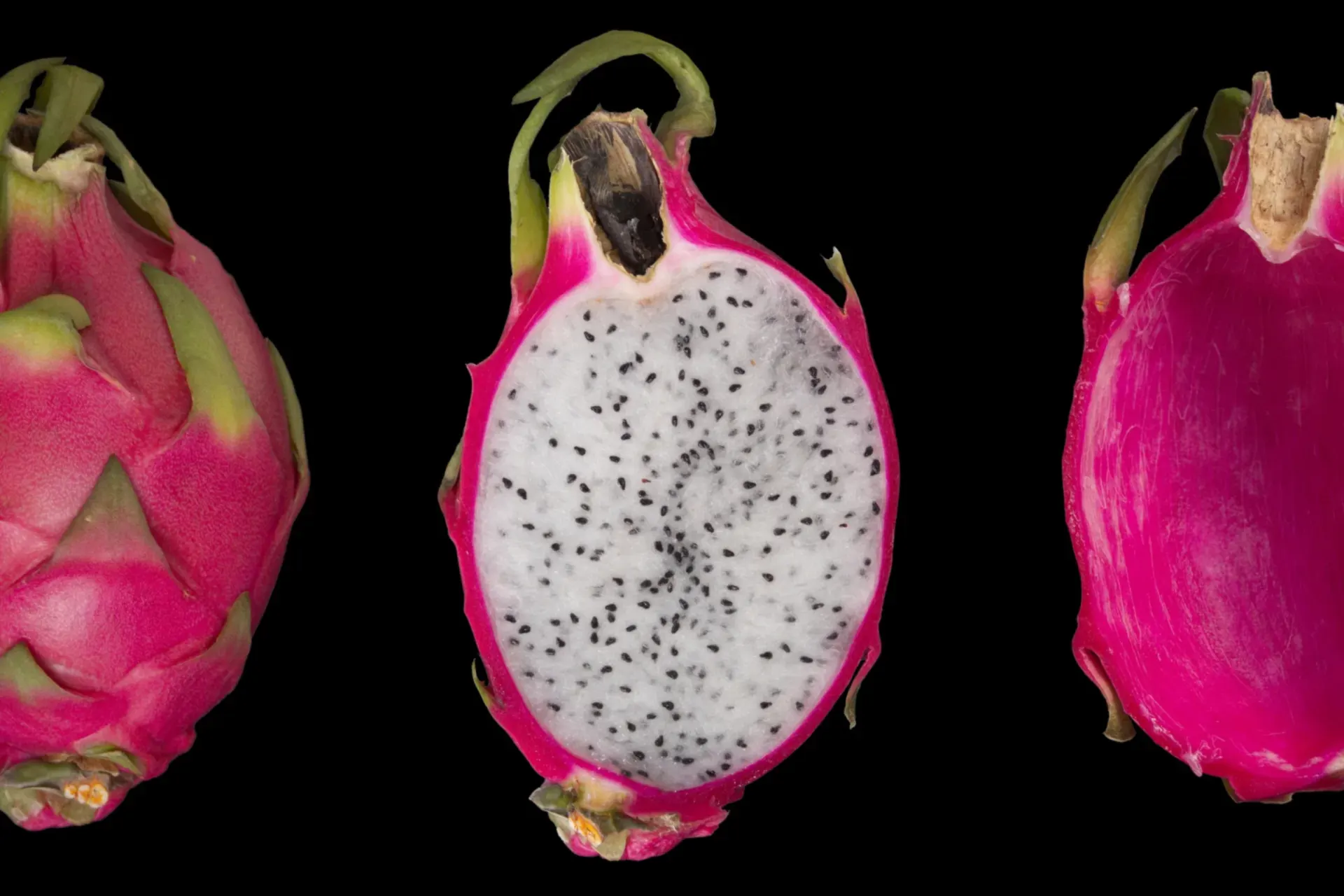
Dragon fruit grows on a climbing cactus that needs something serious to climb — a heavy post with a support at the top, 6–10 ft per plant — and warm zones (10–11) or a big pot you shelter in winter. The payoff is fast for a tropical fruit: cuttings fruit in 12–18 months. The huge, fragrant flowers open for one night only, and the fruit that follows is as dramatic as the flower.
Grow Dragon Fruit with us — step by step
Dragon fruit is a climbing cactus that fruits from a post, not a patch of ground, and the setup — one strong post, a frame at the top, stems trained up and over — is most of the craft. Below are planting, tying, feeding and the night-flowering pollination trick in order. Add your planting day here and we will count out a personal dragon fruit schedule from it.
Step 1 — today: Plant your Dragon Fruit today: build a heavy post with a top support, plant at its base in very well-drained soil, and tie the stems up as they climb. Full sun.
Dragon Fruit at a glance
Spacing: 6–10 ft on a post in · Seed depth: As in the pot
Sun: Full sun
Water: Moderate — cactus: do not overwater
Harvest: Fruit in 12–18 months from cuttings
Timing counts from your average last spring frost — get your own dates in the Planting Calendar. Guidance follows standard extension-service practice for Canada and the US.
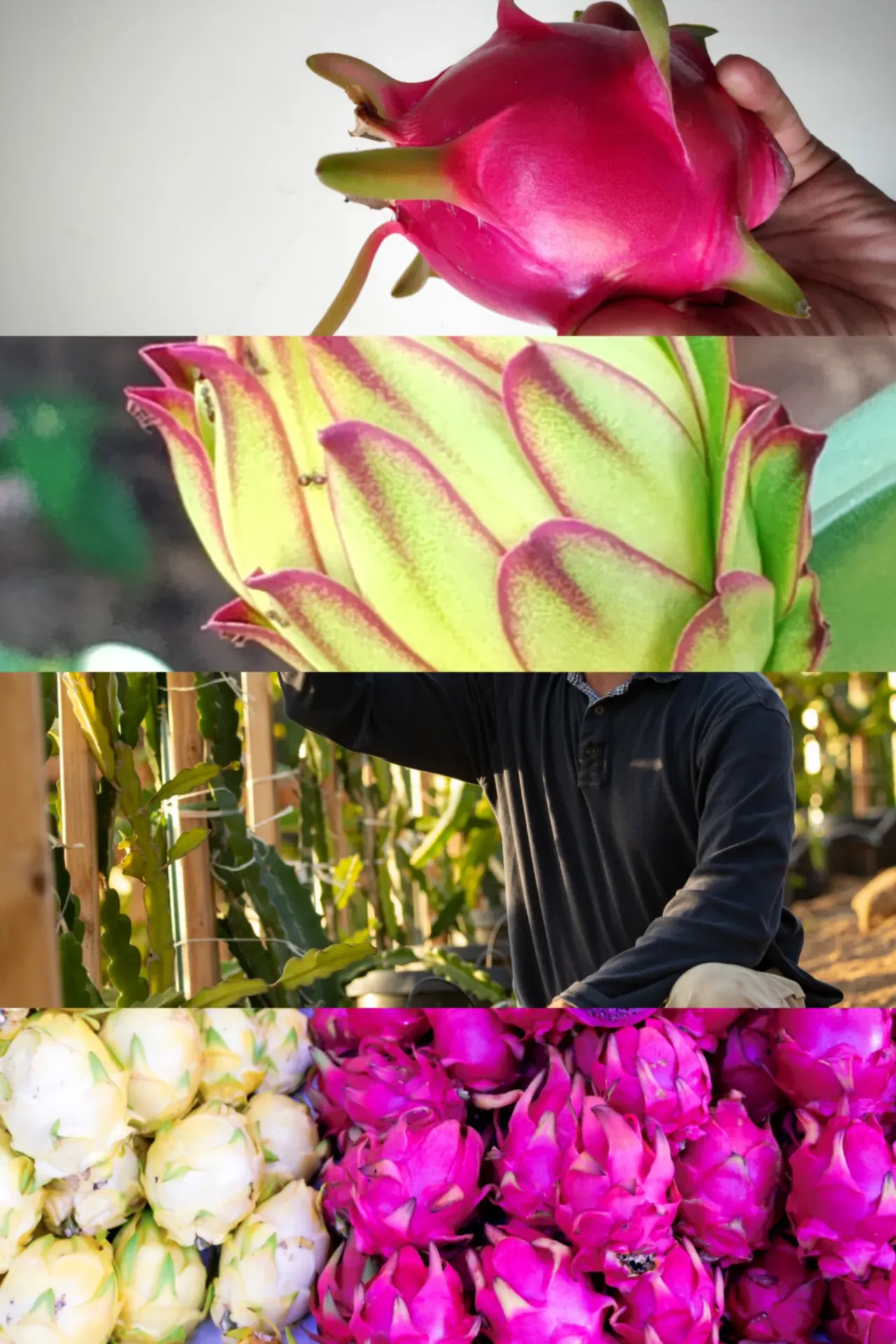
How to plant and grow dragon fruit, step by step
Step 1 — Time it right
Plant cuttings or plants in spring, after frost danger passes — in the ground in zones 10–11, or in a large pot elsewhere. Cuttings root fastest in warm weather: let a cut end callus 5 to 7 days in shade first, and it roots in 2 to 4 weeks. A cutting fruits in 12 to 18 months; a seed-grown plant can take 5 to 7 years.
Step 2 — Prepare the spot
Sun: Full sun. Very well-drained, sandy, cactus-type soil in full sun. Dragon fruit is a cactus: wet feet rot it faster than anything. Work out how much you need with the Garden Mix Calculator or the Raised Bed Soil Calculator. The mix should drain like a cactus mix with something to eat: about two-thirds gritty, sandy material to one-third compost in pots. In the ground in zones 10 to 11, a raised mound keeps the crown dry through wet winters.
Step 3 — Plant it
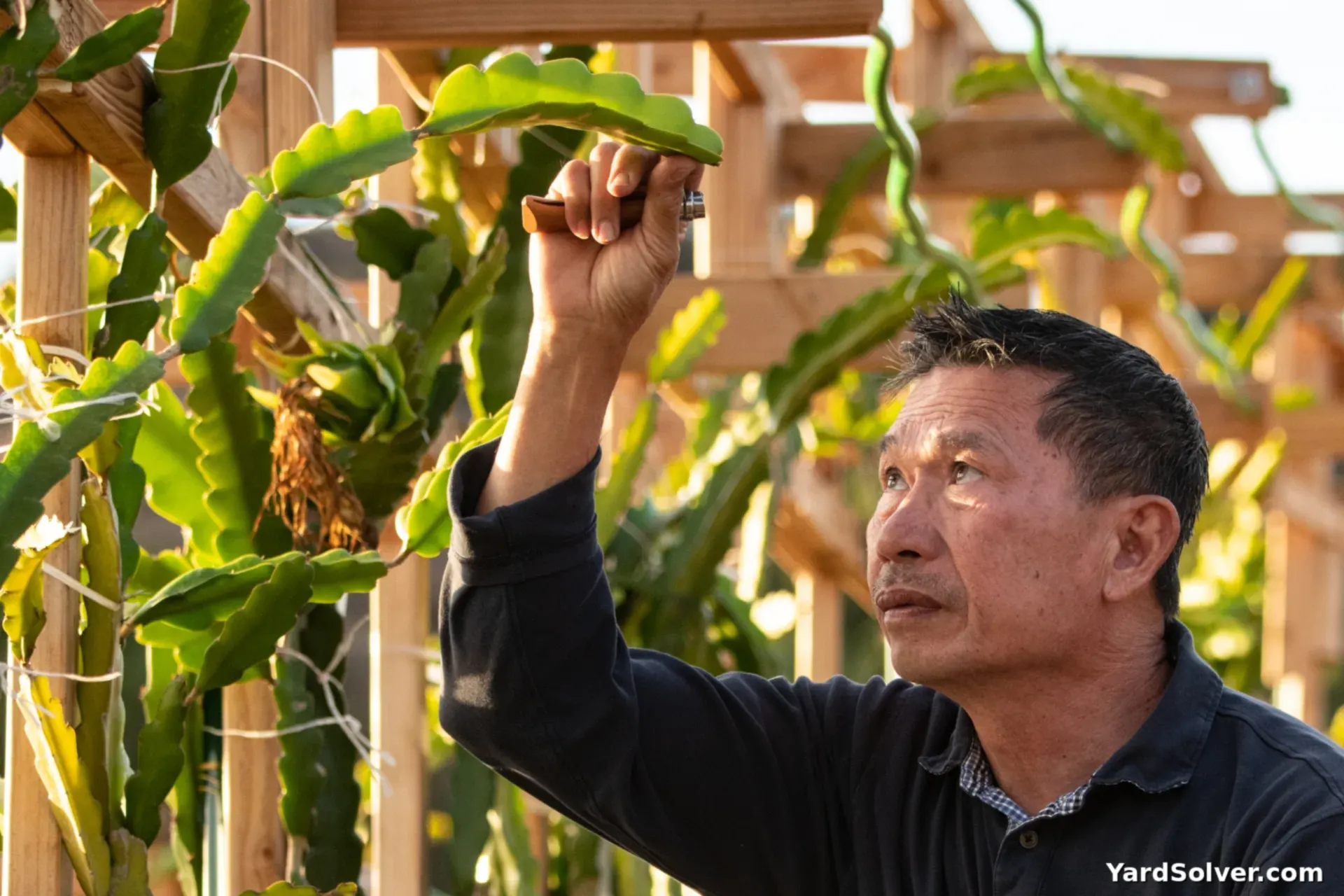
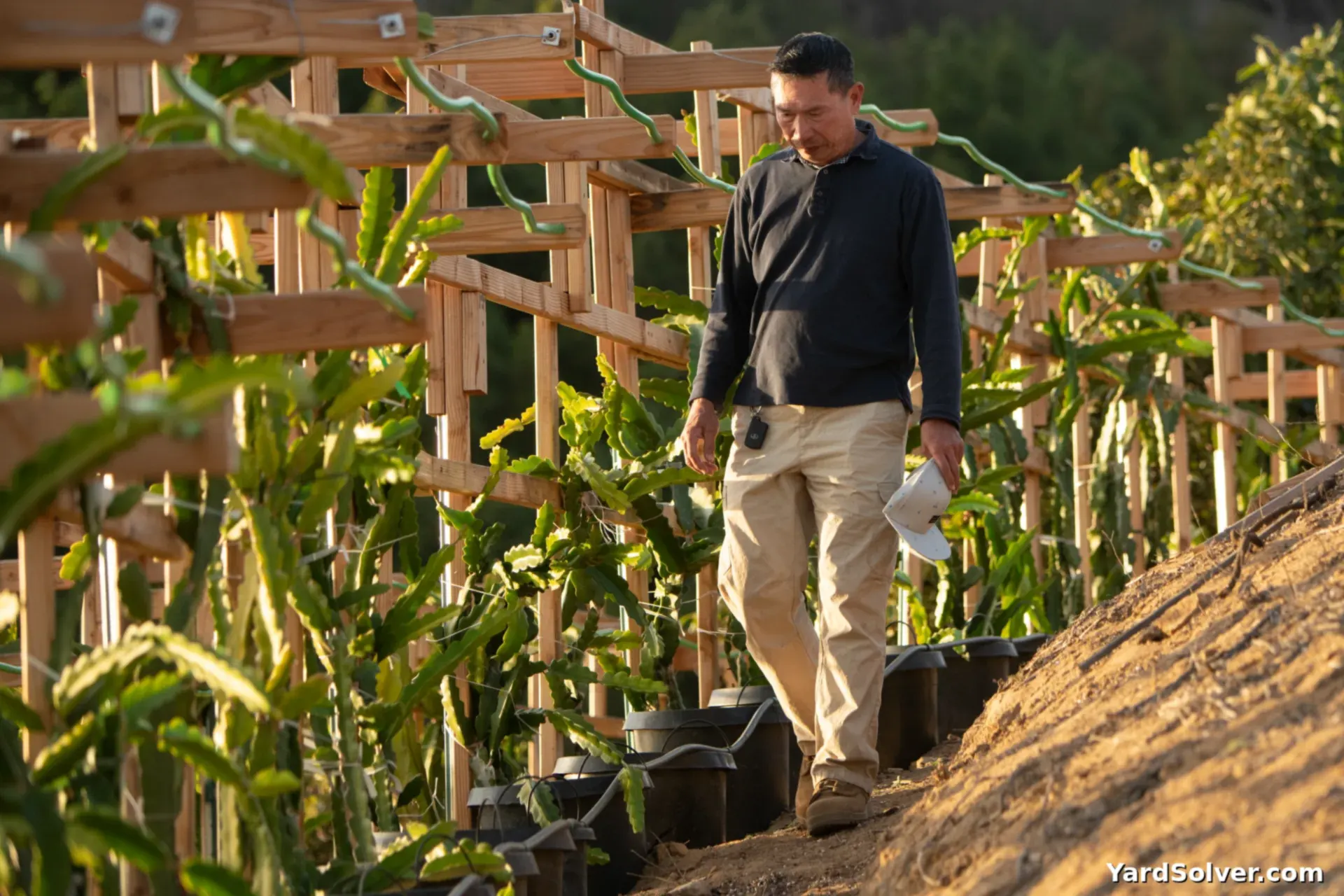
Build the post first — a sturdy post with a top support. Plant at its base, tie the stems up as they climb, and let them spill over the top, where they fruit. The Plant Spacing Calculator turns that spacing into plants-per-row. Plant one cutting at each side of the post — up to four per post — tying stems flat as they climb. Pinch the tip when a stem reaches the top: the forced side branches arch over and carry the fruit.
Step 4 — Water and feed
Water: Moderate — cactus: do not overwater. Feed monthly through the growing season with a balanced fertilizer — a fruiting cactus is hungrier than a desert one. The Fertilizer Calculator turns a bed size into the right amount. Feed little and often in the growing season, and stop in winter. Yellow stems mean too much sun or too little feed; soft, dark patches mean too much water — check the mix before reaching for the can.
Step 5 — Care and the problems to watch for
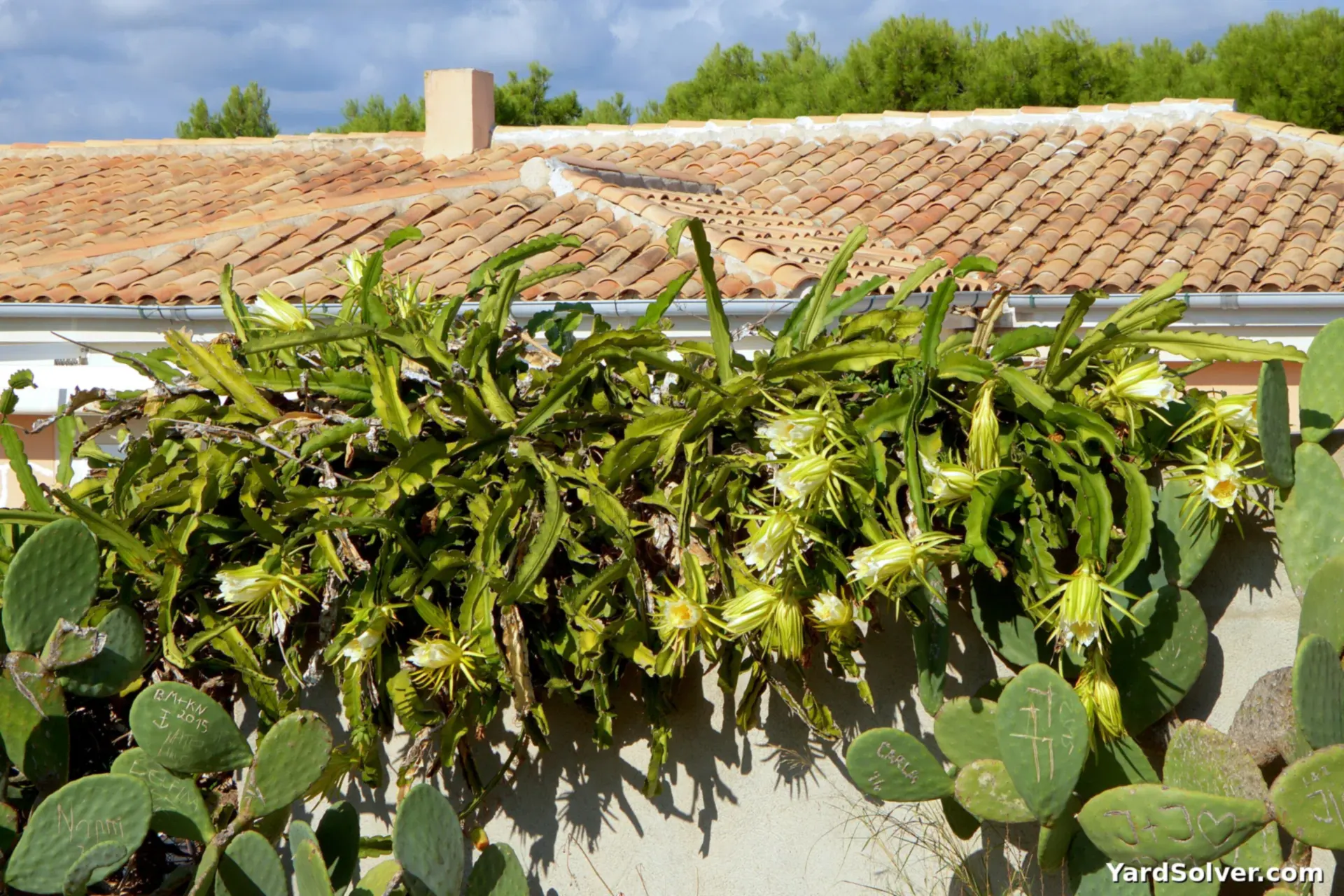
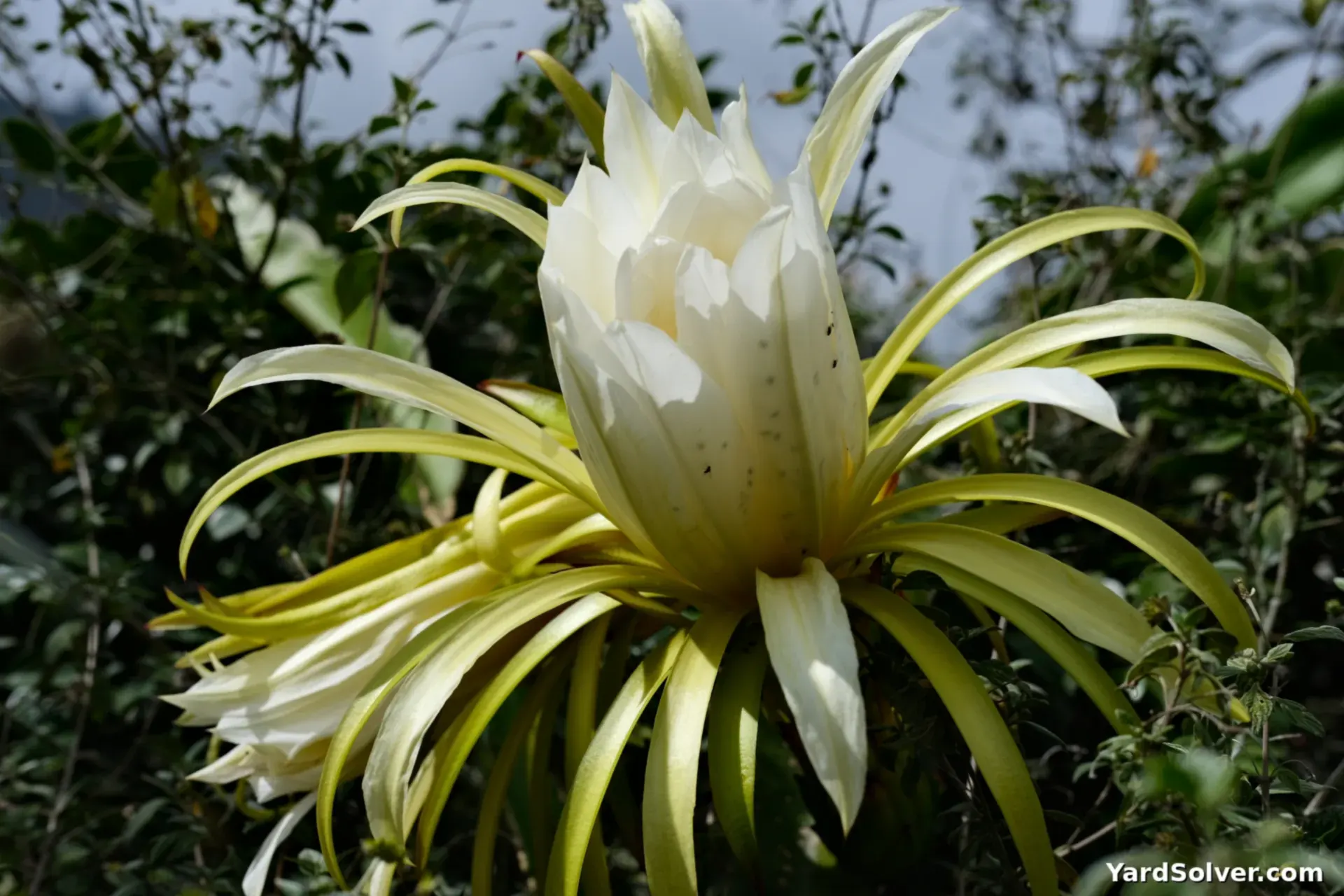
Rot — overwatering and poor drainage are the number one killers; water like a cactus, not a tomato. Sunburn — in extreme heat the stems scorch; light afternoon shade in desert zones helps. No fruit — hand-pollinate the night flowers, or keep a second variety; some types need cross-pollination. Ants farming scale on the stems are the everyday nuisance: wash scale off with a cloth and soapy water early. Flowers open for one night, roughly 9 pm to dawn, so hand-pollination is same-night evening work.
Step 6 — Harvest
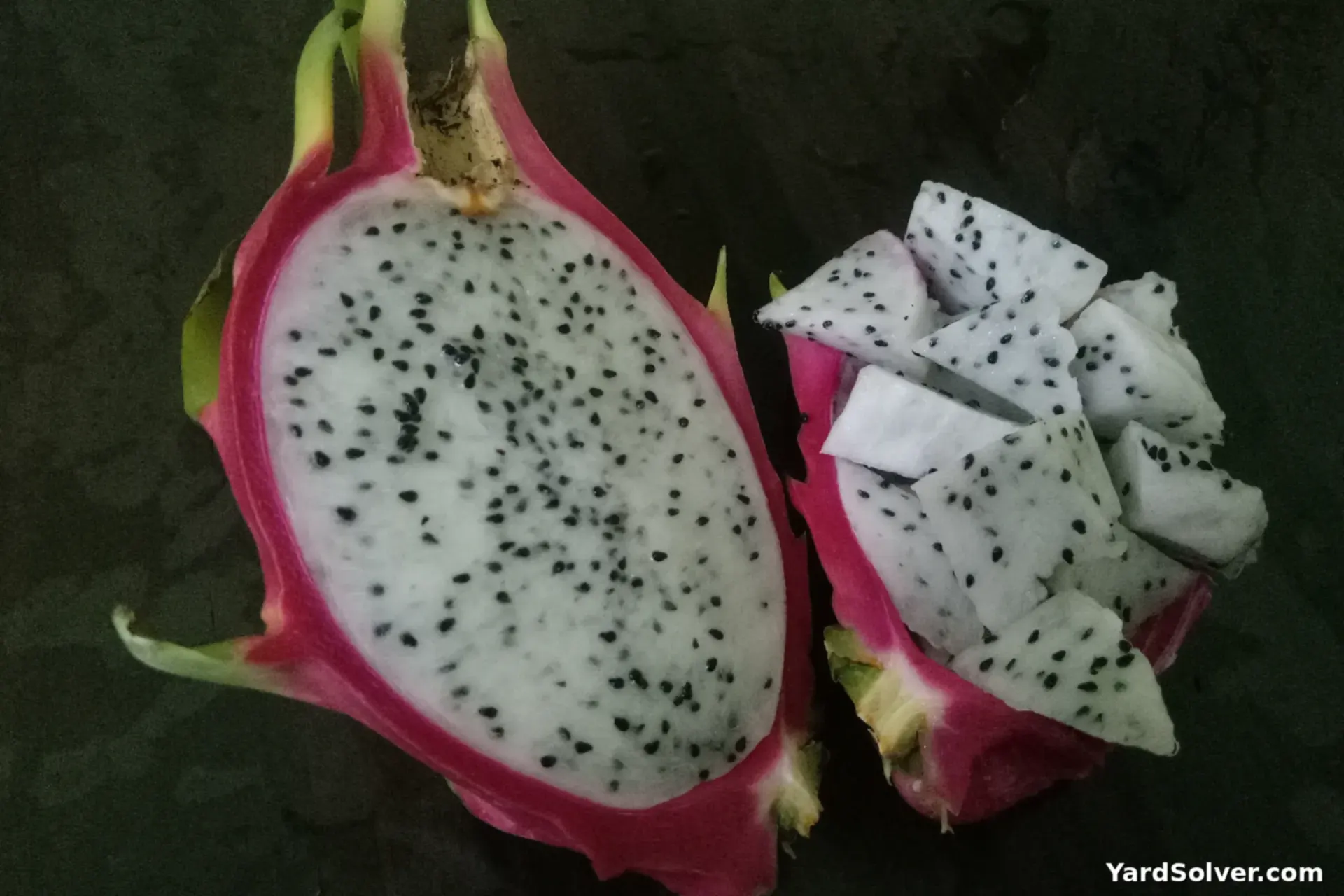
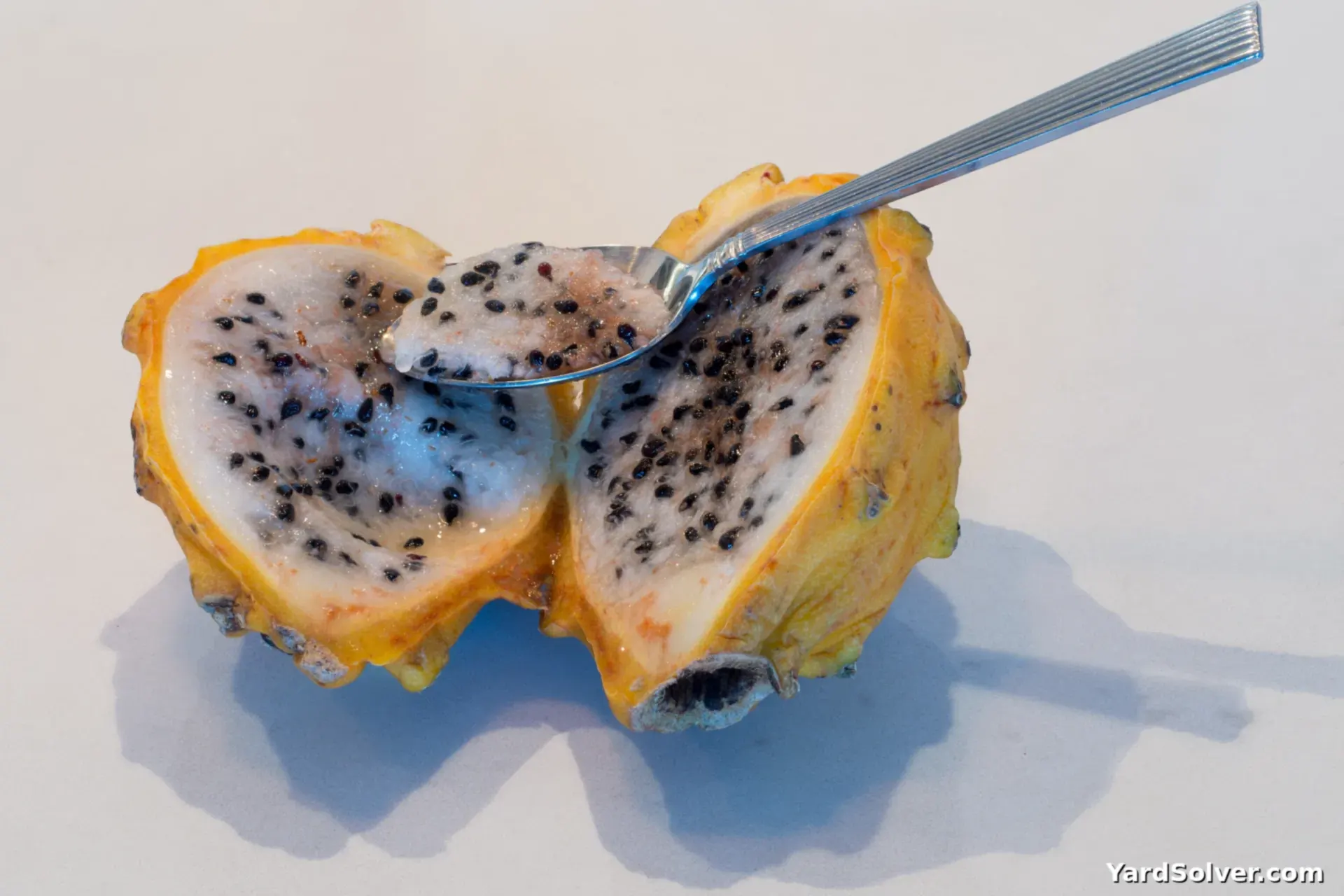
Fruit in 12–18 months from cuttings. Pick 30–40 days after flowering, when the skin is fully coloured and the scales begin to dry at the tips. Judge ripeness by colour and give: skin fully pink or yellow, fruit yielding slightly to a squeeze, usually 30 to 40 days after flowering. Cut fruit off with a short stem, and chill it — it tastes noticeably better cold.
📅 Your personal Dragon Fruit schedule
Dragon fruit is a project of seasons, so this schedule counts from your planting day through training the stems up the post to the first harvest. Day 0 is the day your cutting or plant went in.
Varieties worth growing
| Variety | Colour | Why gardeners like it |
|---|---|---|
| Halley's Comet | Pink skin, pink flesh | A sweet, self-fertile type — good for beginners |
| Vietnamese White | Pink skin, white flesh | The classic commercial type — needs a pollinator for best crops |
| American Beauty | Pink skin, magenta flesh | Self-fertile and richly flavoured |
| Yellow Pitaya | Yellow skin, white flesh | The sweetest of all — slower and spikier |
Good for you — and take care
Benefits
- Fruits fast — 12–18 months from a cutting
- The night flowers are spectacular
- Rich in fibre, vitamin C and antioxidants
- Grows in a pot where winters are cold
Take care
- Give it a heavy post — a fruiting plant is heavy and a flimsy support will fall.
- The flowers open for one night — hand-pollinate with a brush if fruit set is poor.
- Water sparingly: it is a cactus first and a fruit plant second.
Problems to watch for
- Rot — overwatering and poor drainage are the number one killers; water like a cactus, not a tomato.
- Sunburn — in extreme heat the stems scorch; light afternoon shade in desert zones helps.
- No fruit — hand-pollinate the night flowers, or keep a second variety; some types need cross-pollination.
A little history — and one good fact
Dragon fruit — pitaya — comes from Central America, where the climbing cacti grow wild in forests. French growers carried it to Vietnam in the 1800s, and Vietnam made it famous: the name dragon fruit comes from its scaly, flame-like skin.
Fun fact: A dragon fruit flower blooms for a single night — it opens after dark, is pollinated by bats and moths, and is finished by sunrise.
Keep going
Guides: How to Harden Off Seedlings · How to Read a Seed Packet
Calculators: Plant Spacing Calculator · Seed Calculator · Fertilizer Calculator · Garden Mix Calculator
Plan it: Garden Planner · Planting Calendar · Companion Planting Chart · Seed Box
More tropical fruit: Passion Fruit · Avocado
← Back to the Plant Library · Get your personal planting dates
Dragon fruit in a pot: the full container spec
Outside zones 10 to 11, the pot is the planting. Build to this spec once, and wheel it under cover when frost threatens.
| Part | Spec |
|---|---|
| Pot | 15 to 20 gallons, about 20 in wide, free-draining |
| Post | Sturdy post 4 to 5 ft above the pot, frame or old tyre on top |
| Plants per pot | One cutting (up to four per post in the ground) |
| Mix | About two-thirds gritty, sandy material to one-third compost |
| Winter move | Under cover before frost; stems are damaged by real frost |
Set the pot on a wheeled base from the start — a fruiting plant on a 5 ft post is too heavy to carry in a hurry.
Questions people ask
When do I plant dragon fruit?
Plant cuttings or plants in spring, after frost danger passes — in the ground in zones 10–11, or in a large pot.
How far apart do I space dragon fruit?
One plant per heavy post, posts 6–10 ft apart. Sun: full sun.
When will my dragon fruit fruit?
Fruit in 12–18 months from cuttings. The flowers open for one night only — hand-pollinate if fruit set is poor.
Why does my dragon fruit flower but never set fruit?
Some varieties are self-incompatible and need pollen from a different variety, not another flower on the same plant. Hand-pollinate at night with pollen from a second variety; if you grow only one plant, borrowed pollen keeps a few days in the fridge.
How cold can dragon fruit take?
Established plants survive a brief brush with about 32 F, but stems are damaged by real frost and growth stalls in prolonged cold. In zone 9 and colder, grow it in a large pot you can move under cover, or take fall cuttings as insurance.
A climbing cactus that fruits only with a post to climb, flowers for one night, and dies at the first real frost
Dragon fruit is not a bush or a vine in the ordinary sense — it is a climbing forest cactus that in the wild scrambles up trees, and in the garden must be given a stout post with a support frame at the top, up which the fleshy stems are trained and over which they are allowed to cascade. Fruit forms on those hanging, mature stems; a plant sprawling unsupported on the ground grows plenty of cactus and almost no fruit.
The flowers explain the fruit's price: each huge, scented bloom opens for a single night, and while some varieties are self-fertile, many need cross-pollination — in practice, a gardener with a paintbrush at midnight, moving pollen between flowers, or between plants of different varieties. The plant's other limit is absolute: it is a tropical cactus with no frost tolerance, so outside warm climates it lives in a large container that winters under cover, and cuttings — which root readily and fruit years sooner than seedlings — are how it is normally propagated.
The worked example: a cutting trained up a post, tipped to branch at the frame, hand-pollinated on its flowering nights and kept frost-free, commonly fruits from its second or third year. The identical plant left to sprawl in a frost-prone bed typically gives one season of cactus and a blackened end at the first frost. Dragon fruit is not difficult — it is architectural: build the post, and the plant does the rest.
Sources
Key facts on this page — timing, spacing and care — cross-checked against NC State Extension Plant Toolbox — Selenicereus undatus (dragon fruit) — culture, support, pollination and care requirements and Dragon fruit — Wikipedia — background on the fruit, its night flowers and cultivation.
Related page
Read next: Best Vegetables for Containers: Pots, Soil & Watering.
Comments & ratings
No comments yet.
Be the first to share your experience.