
Plant Library · Fruits · By Faizan Ahmad
Updated November 17, 2026
🌺 How to Grow Passion Fruit
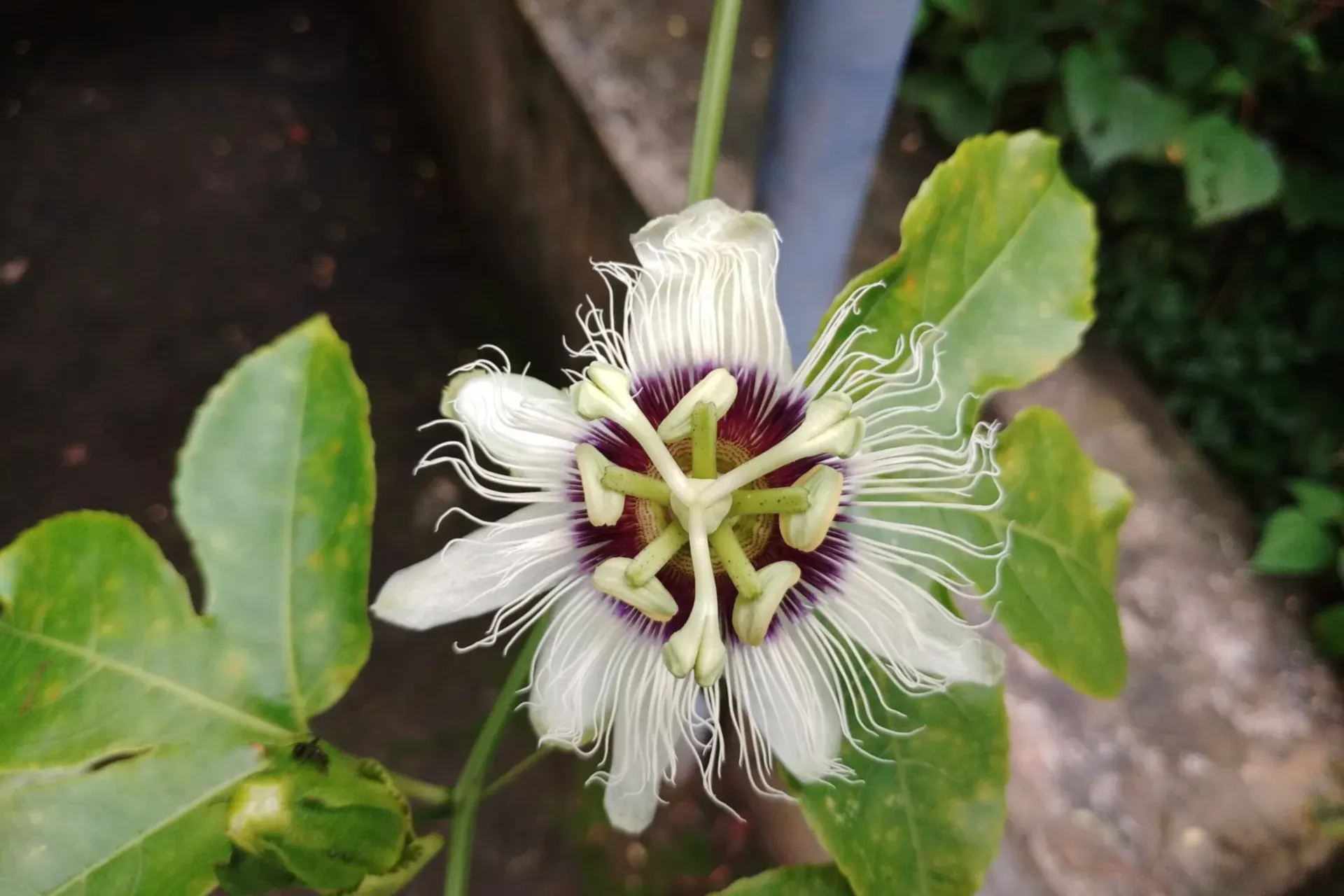
Passion fruit is a vigorous vine with the most intricate flowers in the fruit garden — and a crop in 12–18 months, fast for a vine. It needs a strong trellis, 10–15 ft of room, warm zones (9–11) or a big greenhouse pot, and steady moisture. Keep it away from potatoes: passion vines and potatoes share virus risks, and an infected vine crops poorly for life.
Grow Passion Fruit with us — step by step
Passion fruit grows with tropical enthusiasm and a tropical weakness: one frost can cut the vine down, and the whole plant is short-lived, usually cropping hard for about 5–7 years before it needs replacing. In between, a healthy vine covers a fence in a single season and drops ripe fruit at your feet. The steps below match that pace. Set your planting date and the page builds your passion fruit schedule from it — feeding, pruning and the daily fallen-fruit harvest.
Step 1 — today: Plant your Passion Fruit today, at nursery depth, 10–15 ft apart along a strong trellis in full sun — away from potatoes — water deeply and mulch.
Passion Fruit at a glance
Spacing: 10–15 ft on a trellis in · Seed depth: As in the pot
Sun: Full sun
Water: Regular — keep evenly moist
Harvest: Fruit in 12–18 months
Timing counts from your average last spring frost — get your own dates in the Planting Calendar. Guidance follows standard extension-service practice for Canada and the US.
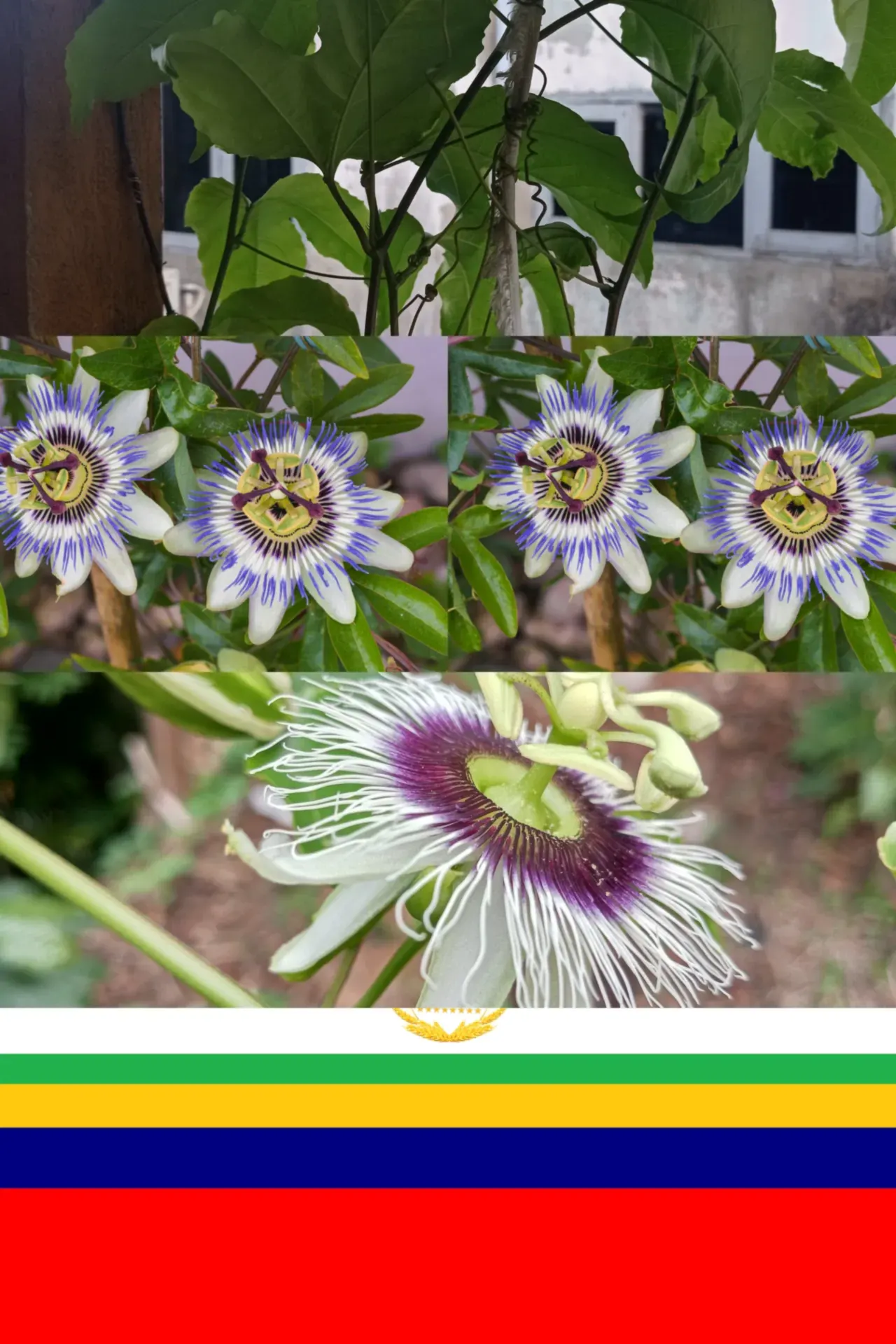
How to plant and grow passion fruit, step by step
Step 1 — Time it right
Plant in spring after frost danger passes. Purple passion fruit tolerates light frost; the yellow tropical type does not. Seedlings are cheap but variable and slow; a grafted or cutting-grown plant of a named variety fruits sooner and truer. Purple types are partly self-fertile, while yellow tropical types usually need cross-pollination from a different vine — and hand-pollinating yellow flowers is often the difference between fruit and none.
Step 2 — Prepare the spot
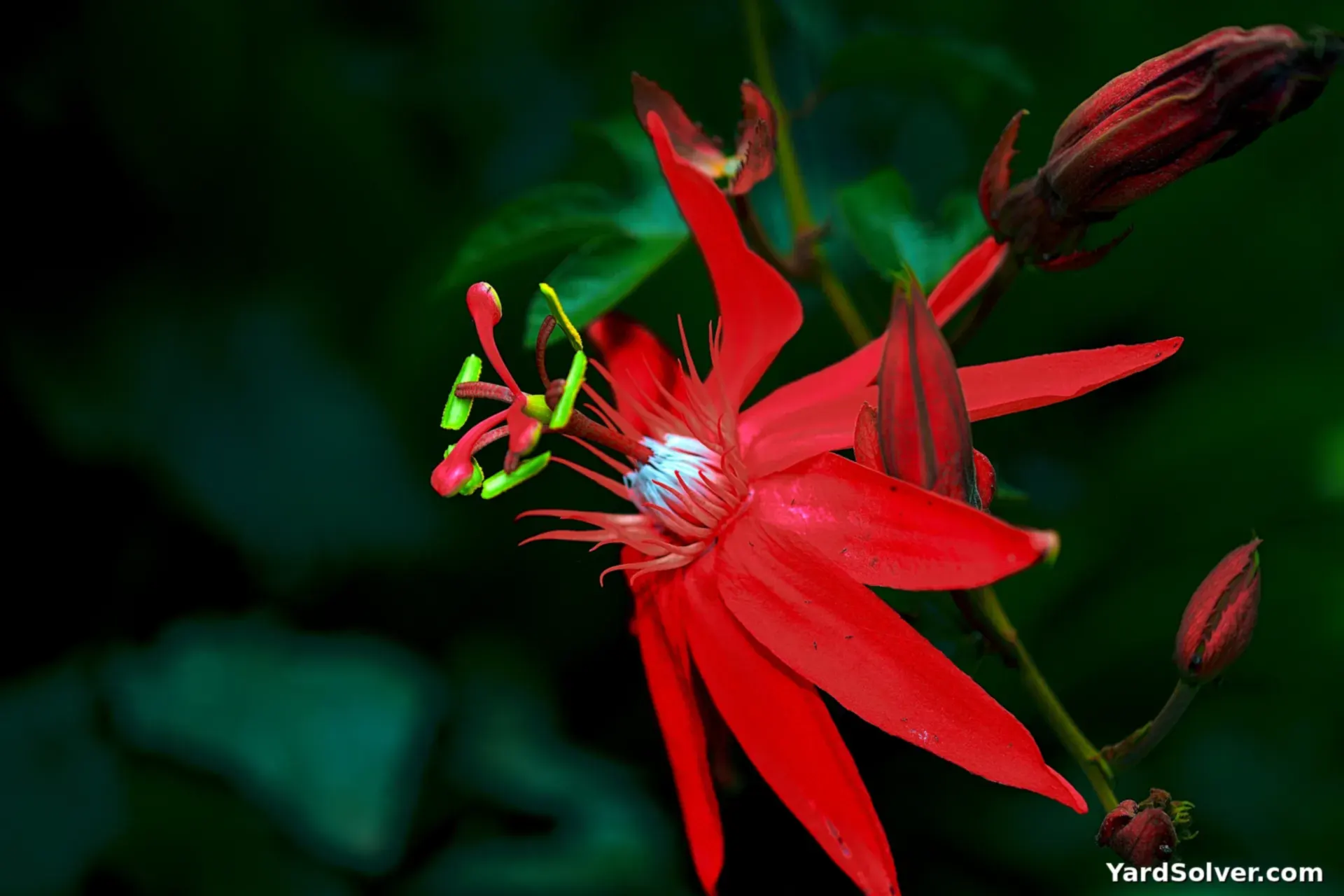
Sun: Full sun. Rich, well-drained soil in full sun, sheltered from wind. Passion vines are hungry and thirsty. Work out how much soil you need with the Garden Mix Calculator or the Raised Bed Soil Calculator. Give the roots a rich start: dig a wide hole and work in compost and a balanced fertilizer, because this vine can extend 15–20 ft in its first warm season. A north-facing wall or fence (south-facing in the southern hemisphere) stores heat and can carry a vine through winters that kill free-standing plants.
Step 3 — Plant it
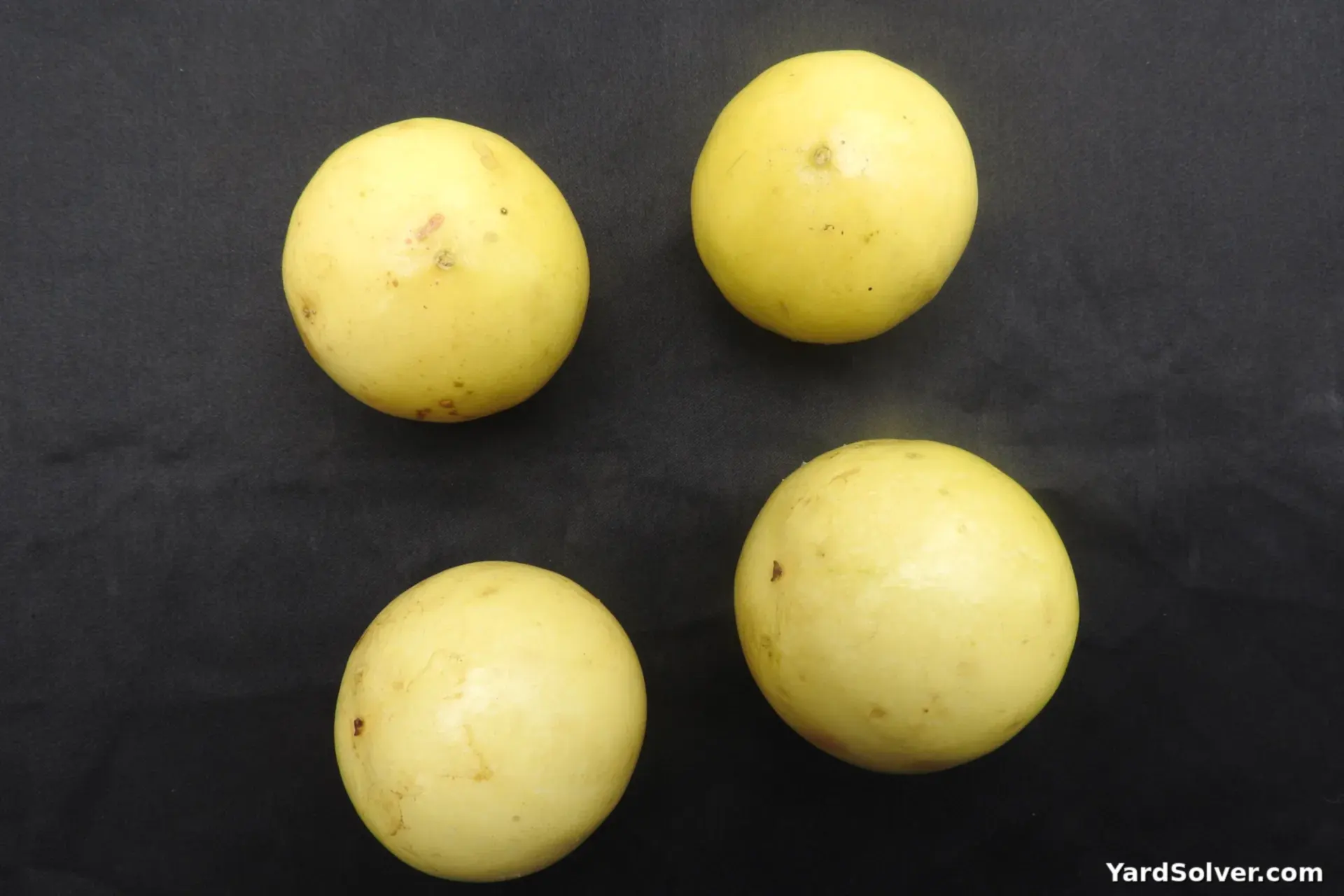
Set plants 10–15 ft apart along a strong trellis or fence at nursery depth, water deeply and mulch — keeping mulch off the stem. The Plant Spacing Calculator turns that spacing into vines-per-row. Train one or two leaders up to the wire, pinching out side shoots until the leader reaches the top, then let it branch and drape — fruit hangs from the current season's hanging laterals. Keep a clear stem near the ground; foliage touching soil is where fungal problems start in wet weather.
Step 4 — Water and feed
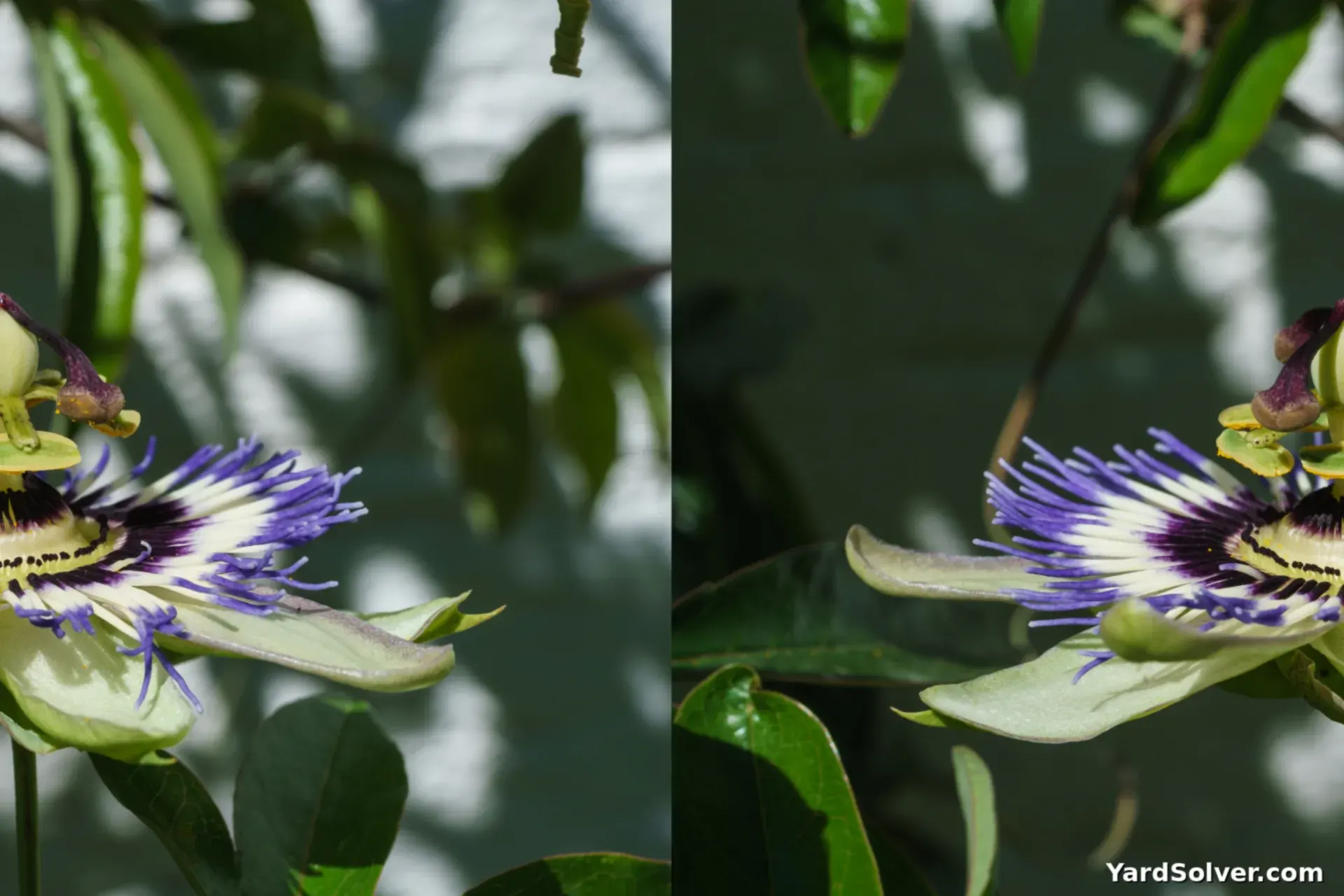
Water: Regular — keep evenly moist. Feed monthly through the growing season — a vine that grows 15 ft a year needs fuel. The Fertilizer Calculator turns a bed size into the right amount. Potassium matters at flowering: a feed richer in potash as buds form supports fruit set, while heavy nitrogen at that stage makes leaf at the expense of flowers. Water deeply during flowering and fruit swell — even a short dry spell then drops young fruit wholesale.
Step 5 — Care and the problems to watch for
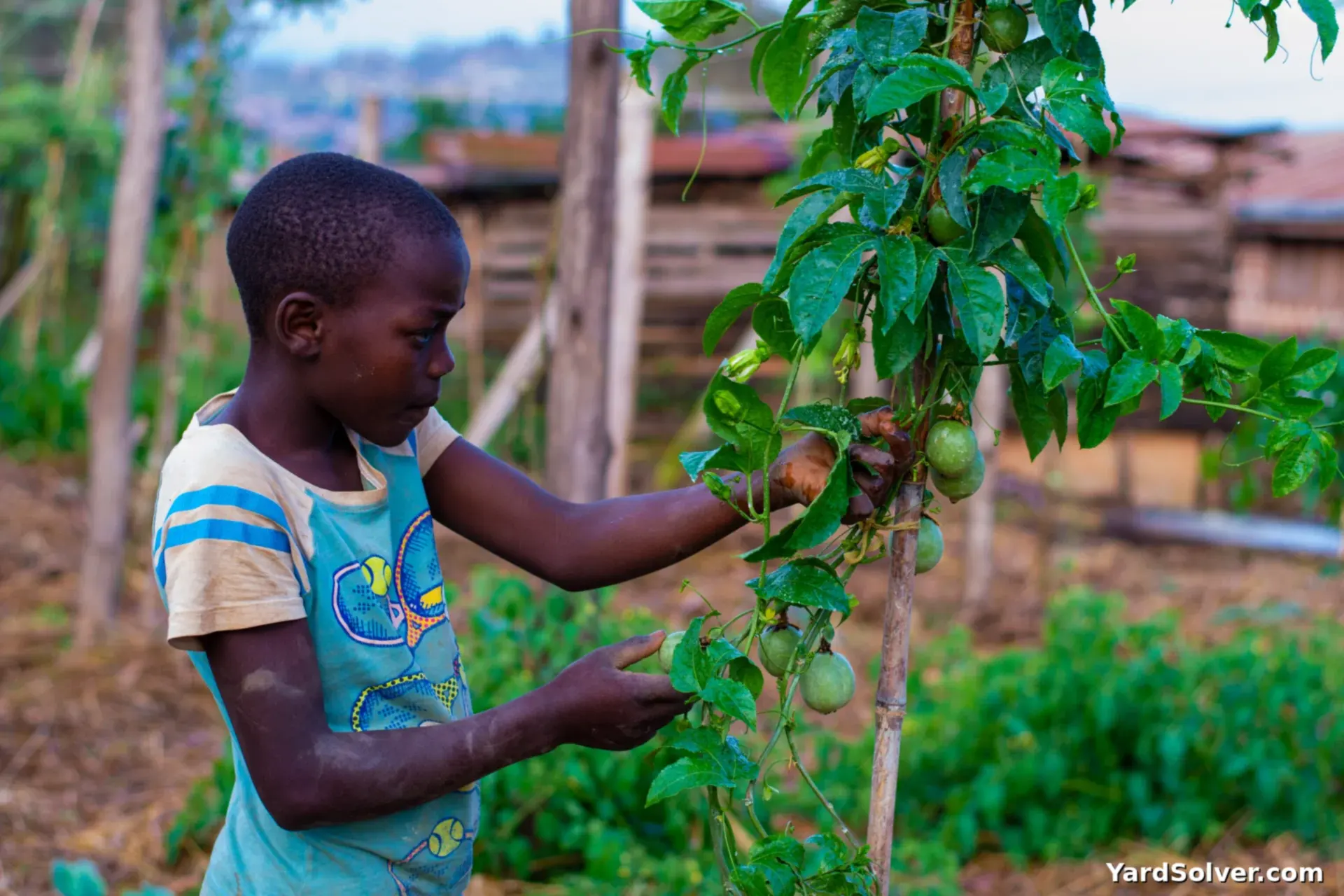
Virus — mottled, distorted leaves; there is no cure, so buy certified virus-free plants and keep the vine away from potatoes. Cold — frost cuts the vine to the ground; it may resprout from the base. Fruit drop — drought stress drops young fruit; keep the soil evenly moist. Flowers open for a single day, and bees — especially large carpenter bees — are the main pollinators; if fruit set is poor, hand-pollinate at midday by transferring pollen flower to flower with a soft brush. Prune after the main crop, cutting laterals back to healthy buds and removing tangled growth, but never strip the vine bare in cold weather.
Step 6 — Harvest
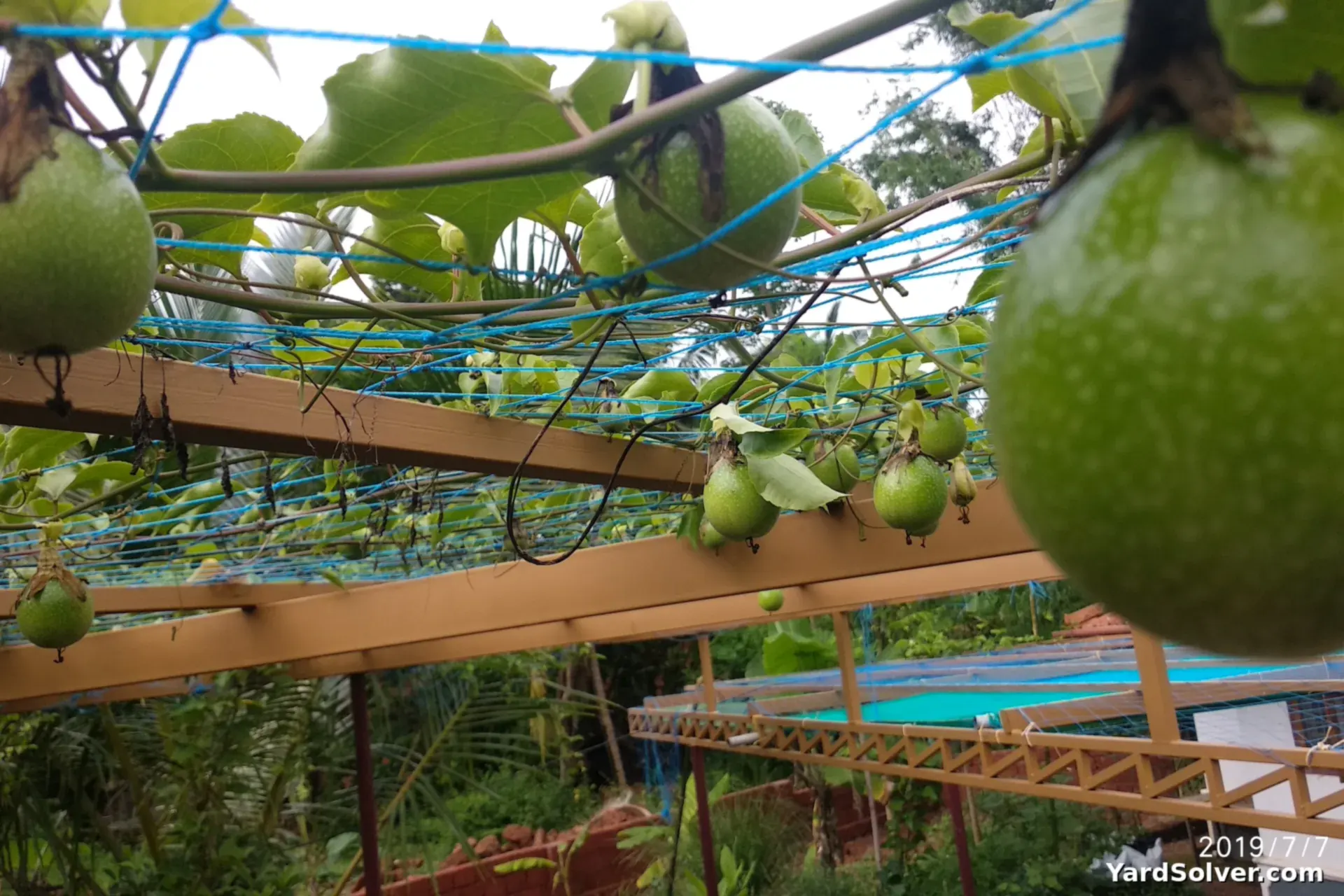
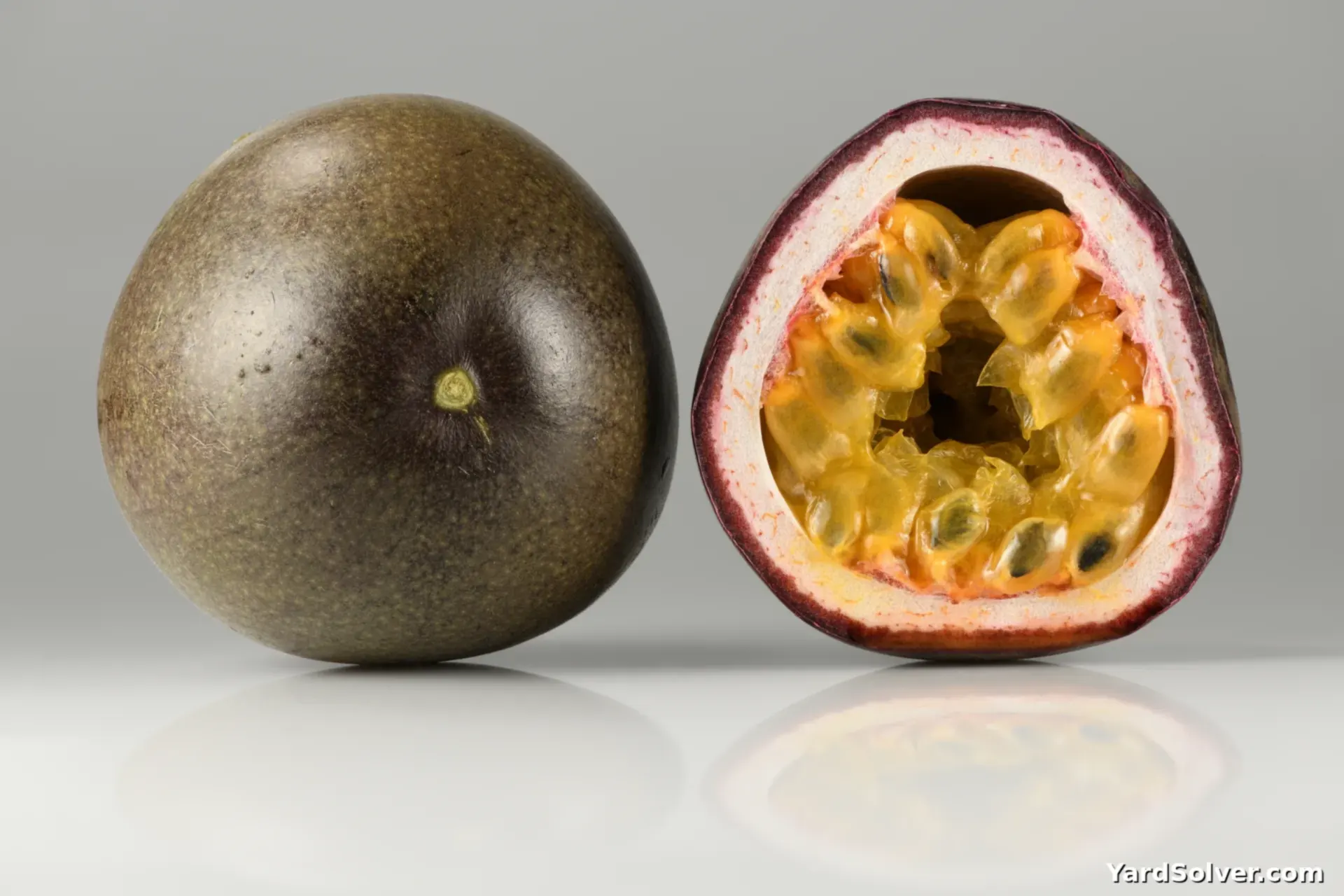
Fruit in 12–18 months. Passion fruit is ripe when it falls — gather fallen fruit daily, and let smooth fruit wrinkle for a few days for the sweetest flavour. A vigorous vine in a warm district can drop several hundred fruit across its long season, so gather daily — fallen fruit left on wet ground rots and breeds fruit fly. Smooth-skinned fruit left 2–3 days until lightly wrinkled is at its sweetest; pulp freezes perfectly in ice-cube trays for year-round use.
📅 Your personal Passion Fruit schedule
Passion fruit does nothing slowly, so this schedule counts from your planting day and keeps up with the vine. It times the monthly feeding through the growing season, the midday hand-pollination habit when flowers open, the prune after the main crop, and the daily gathering of fallen fruit once the harvest starts, about 12–18 months after planting.
Varieties worth growing
| Variety | Colour | Why gardeners like it |
|---|---|---|
| Purple Possum | Purple | A heavy-cropping purple type for home gardens |
| Frederick | Purple | Large fruit, vigorous vine, good for cooler edges |
| Yellow Passion Fruit | Yellow | The tropical type — bigger, tangier, frost-tender |
| Panama Gold | Yellow | A sweet yellow selection for warm zones |
Good for you — and take care
Benefits
- Fruit in 12–18 months — fast for a vine
- The flowers are extraordinary
- Heavy crops — hundreds of fruit per vine
- Rich in vitamin C, fibre and antioxidants
Take care
- Keep passion fruit away from potatoes — they share virus risks.
- Buy certified virus-free plants — virus stays for the life of the vine.
- Fruit is ripe when it falls: gather fallen fruit daily.
Problems to watch for
- Virus — mottled, distorted leaves; there is no cure, so buy certified virus-free plants and keep the vine away from potatoes.
- Cold — frost cuts the vine to the ground; it may resprout from the base.
- Fruit drop — drought stress drops young fruit; keep the soil evenly moist.
A little history — and one good fact
Passion fruit comes from South America — Brazil, Paraguay and Argentina — where Indigenous peoples grew it long before Spanish missionaries named the flower for the Passion of Christ, seeing symbols of the crucifixion in its parts.
Fun fact: The passion flower was named by missionaries who saw the crown of thorns, the nails and the apostles in its intricate parts.
Keep going
Guides: How to Harden Off Seedlings · How to Read a Seed Packet
Calculators: Plant Spacing Calculator · Seed Calculator · Fertilizer Calculator · Garden Mix Calculator
Plan it: Garden Planner · Planting Calendar · Companion Planting Chart · Seed Box
Keep apart: Potato — see the Companion Planting Chart for the full picture.
More fruiting vines: Grapes · Kiwi · Dragon Fruit
← Back to the Plant Library · Get your personal planting dates
One flower, one day: hand-pollinating passion fruit
A passion flower is open and receptive for a single day, and yellow types in particular often flower abundantly yet set almost nothing without help. Hand-pollination takes two minutes and transforms the crop:
| Step | What to do | Timing and detail |
|---|---|---|
| 1. Pick your moment | Work in the middle of the day, when flowers are fully open and the pollen is dry and dusty | Morning flowers may not be fully receptive; wet pollen does not transfer |
| 2. Find the parts | Locate the five pollen-bearing anthers hanging under the flower and the three sticky stigma lobes standing above them | On many flowers the stigmas start upright and bend down toward the anthers by afternoon |
| 3. Transfer | Brush pollen from the anthers of one flower onto the stigmas of another with a soft brush or fingertip | For yellow types, use pollen from a different vine or a purple type for the best set |
| 4. Mark the day | Note the date or tie a thread below pollinated flowers | Successfully set fruit swells visibly within about a week |
| 5. Count forward | Expect ripe, falling fruit roughly 2–3 months after pollination in warm weather | Cooler weather stretches the wait; the vine ripens fruit in waves |
If every hand-pollinated flower still drops, suspect water stress or a virus-infected vine rather than your technique — and replace a mottled, distorted plant with certified clean stock.
Questions people ask
When do I plant passion fruit?
Plant in spring after frost danger passes. Purple types tolerate light frost; yellow tropical types do not.
How far apart do I space passion fruit?
Space vines 10–15 ft apart on a strong trellis. Sun: full sun.
When will my passion fruit fruit?
Fruit in 12–18 months. Ripe fruit falls — gather it daily. Keep the vine away from potatoes (shared virus risk).
Why does my passion vine flower but set no fruit?
The usual causes are poor pollination — passion flowers are open for one day only and rely on large bees — or a yellow type flowering without a compatible vine nearby. Hand-pollinate at midday with a soft brush, moving pollen between flowers (and between vines for yellow types), and keep the roots evenly moist while fruit sets.
How long does a passion fruit vine live?
About 5–7 productive years is normal — passion vines are naturally short-lived. Plant a replacement vine in year 4 or 5 in a fresh spot so it is cropping as the old vine fades, and take the old vine out once the young one is established.
Passion fruit is a vigorous vine with a frost line: give it a wall, a trellis, and a winter plan
Passion fruit (Passiflora edulis) is a fast, scrambling vine from South America that can cover a trellis in a single warm season, flowering with some of the most intricate blooms in the garden and following them with egg-shaped fruit that ripens, wrinkles and drops. Purple forms tolerate light cold better than the larger yellow forms, but neither takes real frost — cold-climate growers keep plants in large pots and move them under cover for winter.
The method is structure plus restraint: a strong support from day one, full sun, sharp drainage, and regular water while fruit swells. Overfeeding with nitrogen buys leaves at the expense of flowers. Hand-pollination helps where bees are scarce or flowers open in dull weather. Pruning is light and purposeful — fruit forms on new growth, so the winter tidy removes fruited wood and keeps the framework open.
The worked example: a potted vine trained on a sunny trellis, watered in growth and sheltered from frost, typically flowers and fruits within its first full season. The same vine left to scramble over cold, wet ground typically mildews and sulks — with passion fruit, warmth and structure are the crop.
Sources
Key facts on this page — timing, spacing and care — cross-checked against Passiflora edulis — Wikipedia — background on passion fruit and its cultivation.
Related page
Read next: Best Vegetables for Containers: Pots, Soil & Watering.
Comments & ratings
No comments yet.
Be the first to share your experience.