
Plant Library · Fruit & Melons · By Faizan Ahmad
🍇 How to Grow Grapes
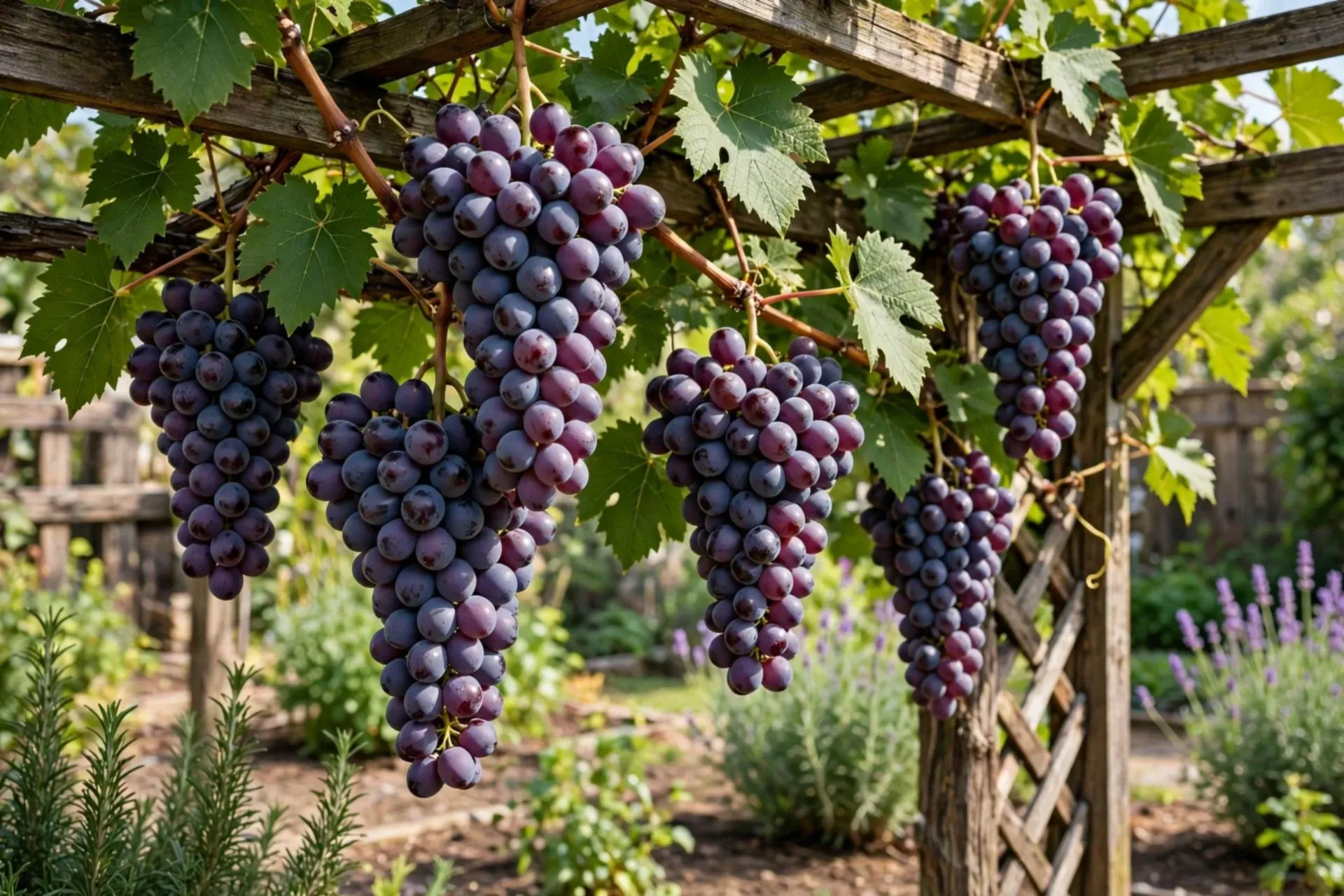
A perennial vine planted in early spring against a fence, trellis or pergola; yearly pruning is what makes the fruit. Grapes are a perennial vine: plant in early spring in full sun against a fence, trellis or pergola, prune every year, and expect your first real harvests from year 3 onward.
Grow Grapes with us — step by step
Everything for this plant is written step by step below — what to do, and exactly when. Read it through first if you like: you can grow it entirely on your own with that guide. Or start with us here — tell us your planting day and we lay out your personal schedule on this page, every next step on its own day, counted from your planting date. No guessing, no forgetting.
Step 1 — today: Start your Grapes today — sow As in the pot in deep, spaced 72–96 in apart — and water in well.
Grapes at a glance
Spacing: 72–96 in · Seed depth: As in the pot in
Sun: Full sun
Water: Deep weekly while young; established vines need little
Harvest: From year 3 onward
Timing counts from your average last spring frost — get your own dates in the Planting Calendar. Guidance follows standard extension-service practice for Canada and the US.
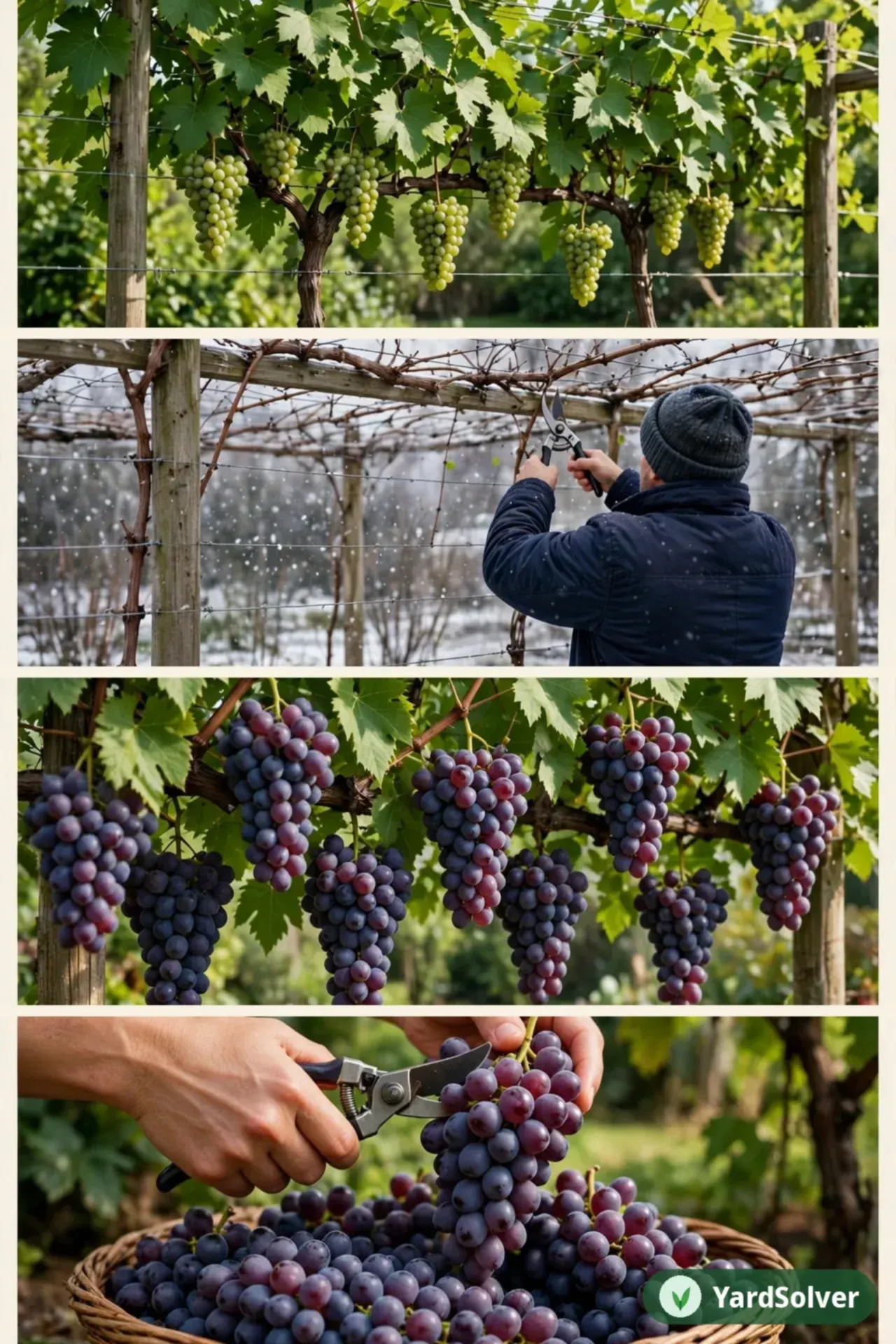
How to plant and grow grapes, step by step
Step 1 — Time it right
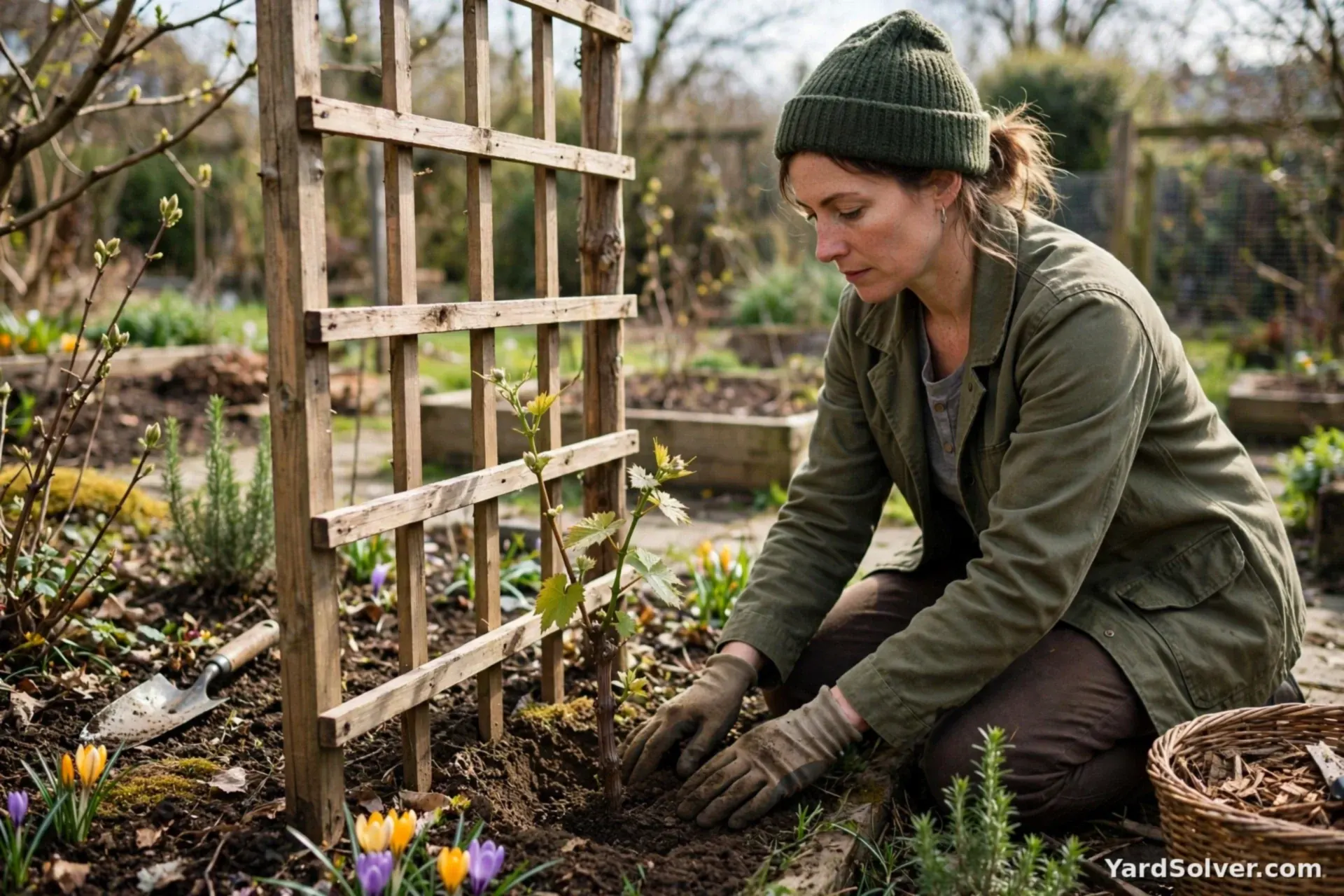
. All dates count from your average last spring frost — the Planting Calendar turns them into real dates for your garden. Grapes are a perennial vine: plant in early spring in full sun against a fence, trellis or pergola, prune every year, and expect your first real harvests from year 3 onward.
Step 2 — Prepare the spot
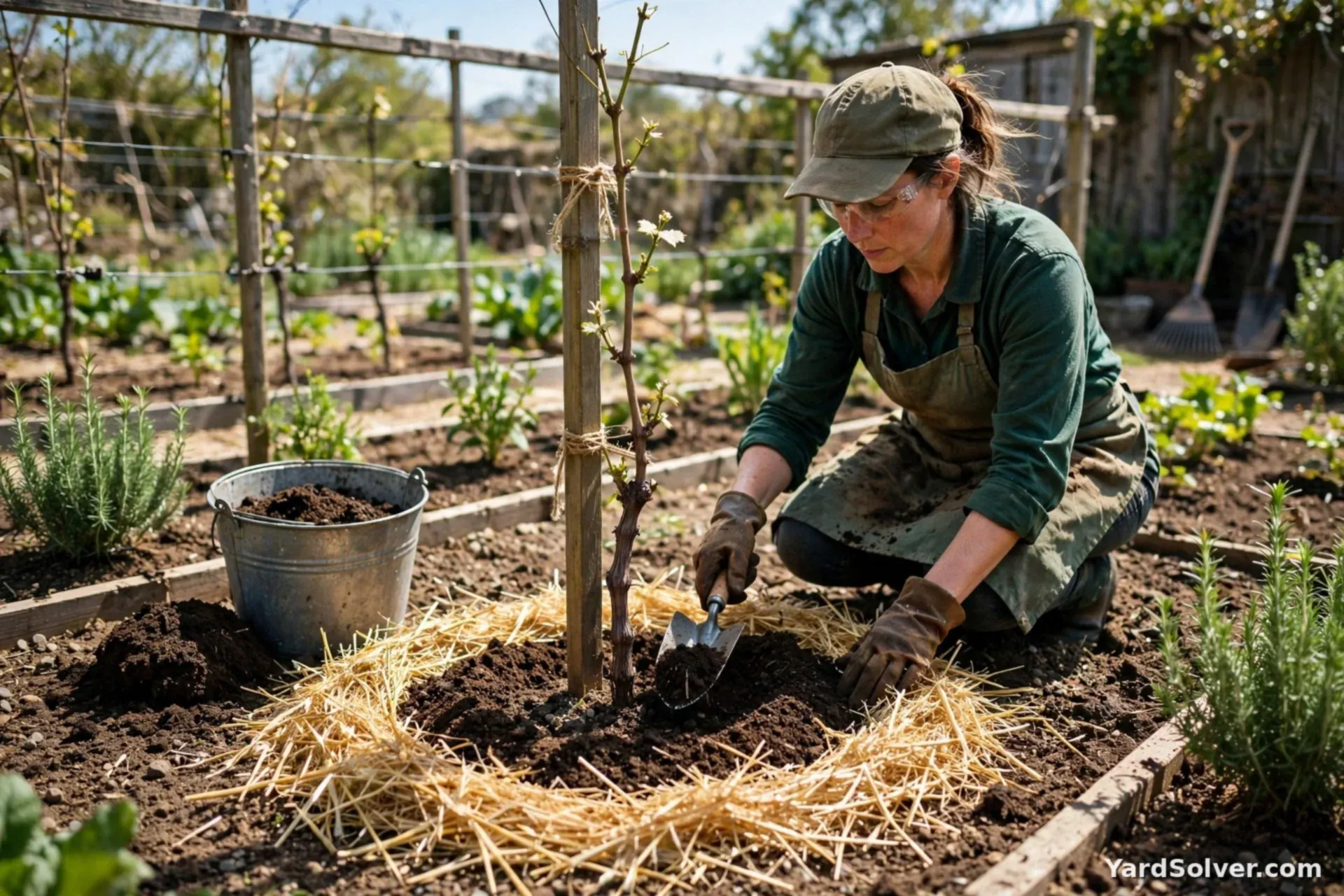
Sun: Full sun. Rich, well-drained soil with compost, and a mulch to hold moisture. Blueberries are the exception: they need acidic soil (about pH 4.5–5.5) — test before planting. Work out how much you need with the Garden Mix Calculator or the Raised Bed Soil Calculator.
Step 3 — Plant out
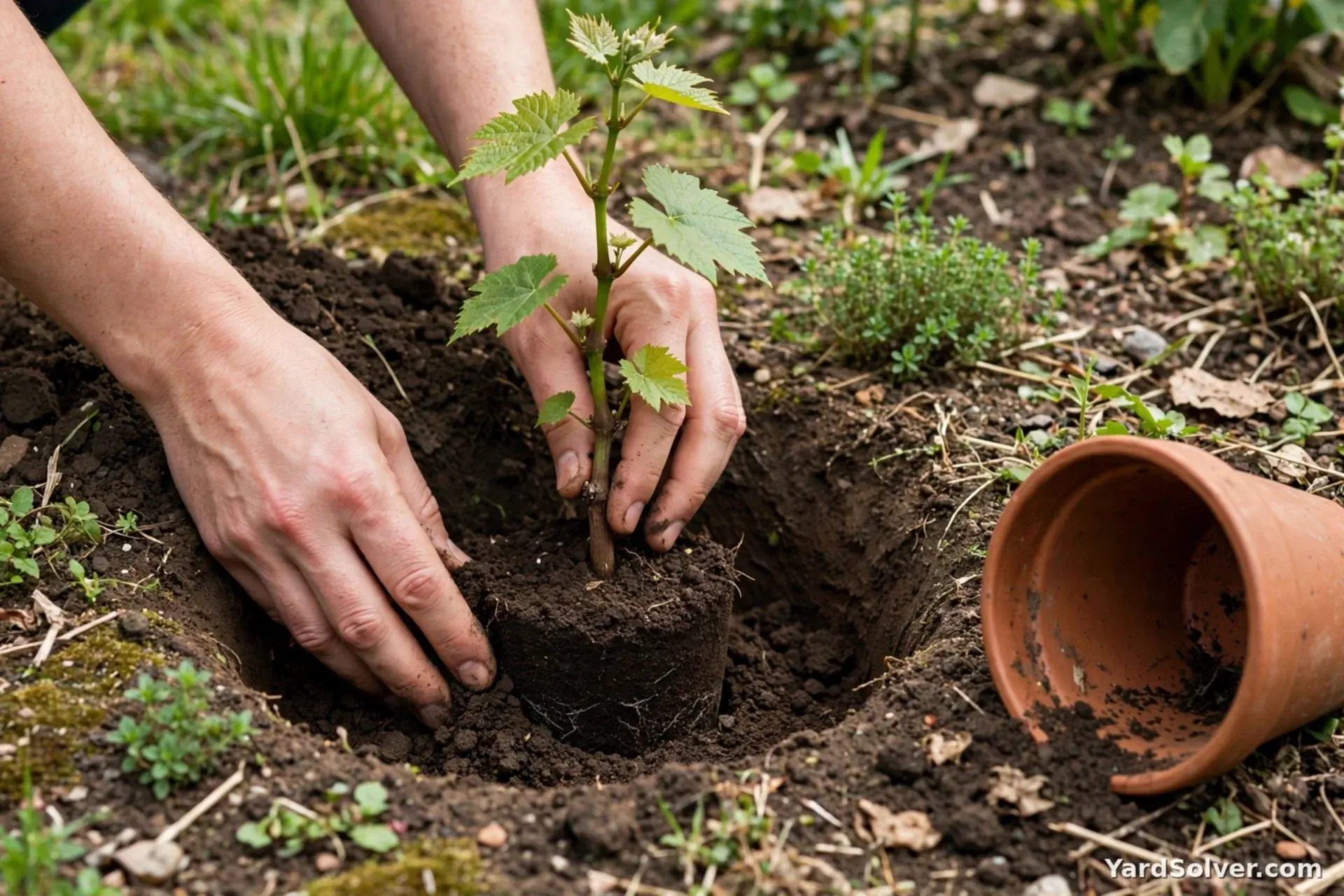
Start indoors None at As in the pot in deep, or sow outdoors None; plants finish spaced 72–96 in apart. Harden off indoor-started plants before they move out for good.
Step 4 — Water and feed
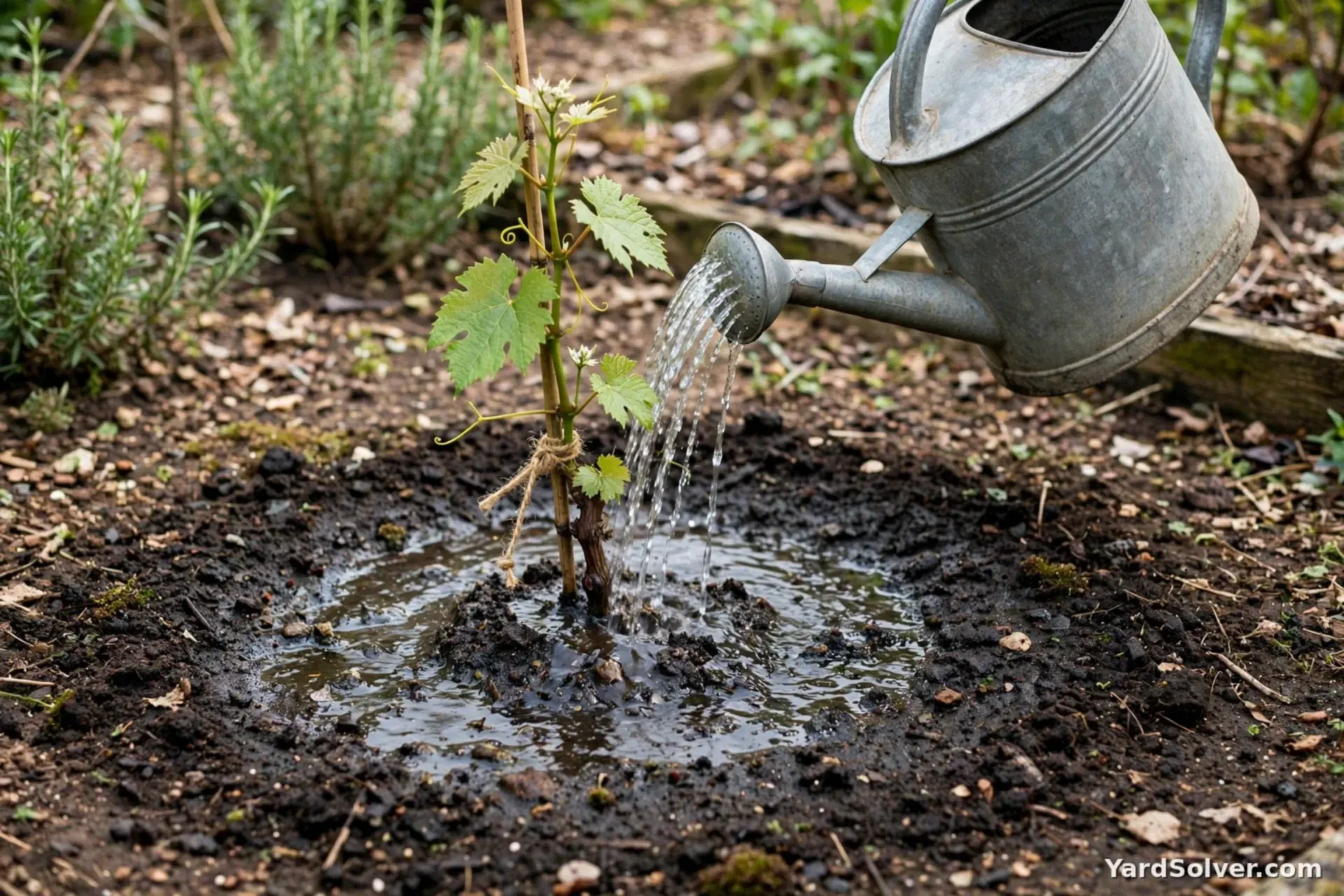
Water: Deep weekly while young; established vines need little. The Fertilizer Calculator turns a bed size into the right amount.
Step 5 — Care and the problems to watch for
- Powdery mildew — white dust on leaves and fruit; airflow from good pruning is the prevention.
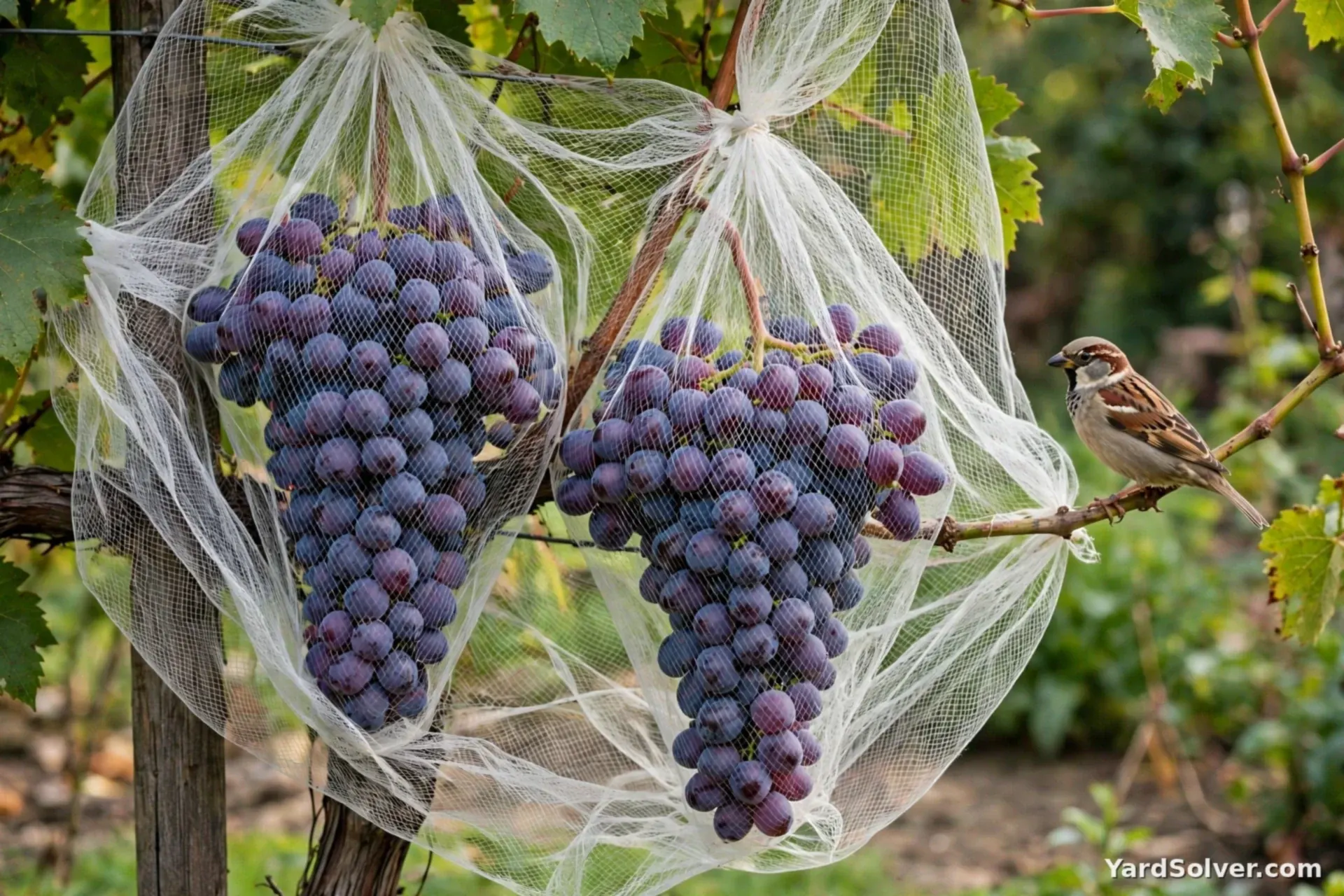
- Birds and wasps at ripening — net the bunches.
- Too much fruit — thin bunches so the rest ripen properly.
Take care: A grape vine needs strong support and yearly pruning — left unpruned it makes a tangle of leaves and very little fruit. Grapes and raisins are poisonous to dogs, so clear up fallen fruit where dogs roam. Like other fruit trees, a vine asks for patience — the harvests start in year 3.
Step 6 — Harvest
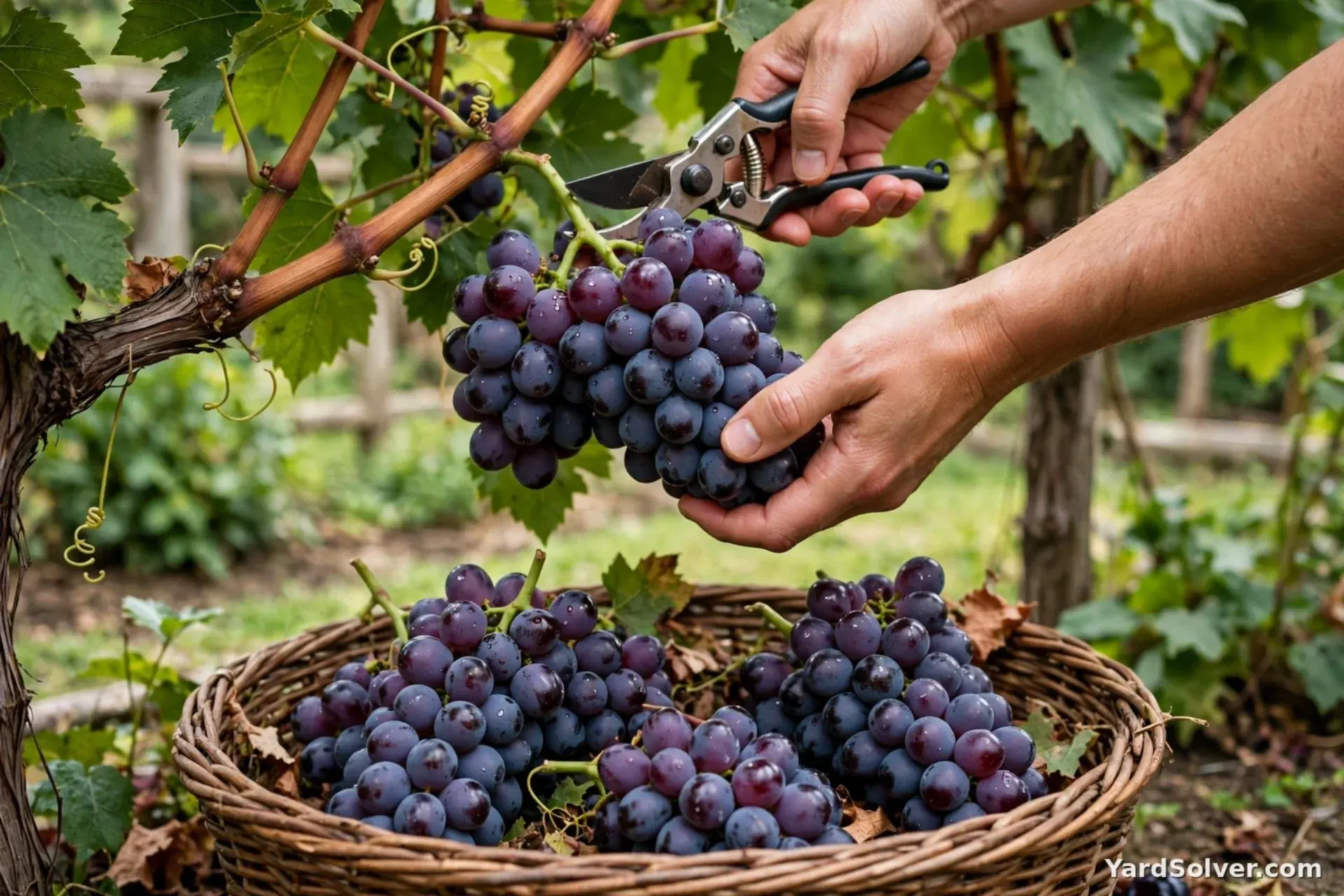
Ready in: From year 3 onward. Thin out crowded shoots so air and light reach the vine — crowded grapes ripen poorly and mildew easily.
📅 Your personal Grapes schedule
Counted from your planting day — not a generic calendar. Day 0 is the day the seed went in the ground or the young plant went out.
Varieties worth growing
| Variety | Colour | Why gardeners like it |
|---|---|---|
| Concord | Deep purple-blue | The classic slip-skin grape for juice, jelly and fresh eating — very hardy |
| Himrod | Pale gold-green | A sweet, seedless table grape that ripens early and handles cold winters |
| Canadice | Red | A seedless red table grape, hardy and productive in northern gardens |
| Marquette | Dark blue-black | A cold-hardy wine grape bred in Minnesota for short seasons |
| Vanessa | Red | A crisp, sweet seedless red grape that stores well after picking |
Good for you — and take care
Benefits
- Provides vitamin C and vitamin K
- Dark-skinned grapes are rich in natural plant antioxidants
- Provides potassium, which the body needs for normal fluid balance
- Juicy and hydrating on a hot day
- Eating them with their skins adds fibre
Take care
- A grape vine needs strong support and yearly pruning — left unpruned it makes a tangle of leaves and very little fruit
- Grapes and raisins are poisonous to dogs, so clear up fallen fruit where dogs roam
- Like other fruit trees, a vine asks for patience — the harvests start in year 3
A little history — and one good fact
Grapes are among the oldest farmed fruits in the world, grown around the Mediterranean and the Middle East for thousands of years and carried by traders across Europe and later to the Americas. North America had its own wild grapes too, and the hardy varieties bred from them are what most northern home gardeners plant today.
Fun fact: A well-kept grape vine can live and produce for 50 years or more — planting one is a gift to your future self.
Keep going
Guides: How to Protect Plants from Frost · Putting Your Garden to Bed · How to Prepare Garden Soil in Spring
Calculators: Plant Spacing Calculator · Seed Calculator · Fertilizer Calculator · Garden Mix Calculator
More fruit & melons: Muskmelon (Cantaloupe) · Watermelon · Strawberry · Kiwi · Passion Fruit
← Back to the Plant Library · Get your personal planting dates
Questions people ask
When do I plant grapes?
Count from your average last spring frost: see the season guide on this page. Grapes are a perennial vine: plant in early spring in full sun against a fence, trellis or pergola, prune every year, and expect your first real harvests from year 3 onward.
How far apart do I space grapes?
Space plants 72–96 in apart, with seed sown As in the pot in deep. Sun: full sun.
When is grapes ready to harvest?
From year 3 onward. A perennial vine planted in early spring against a fence, trellis or pergola; yearly pruning is what makes the fruit.
Fruit comes from this year's shoots on last year's wood: the winter prune is the harvest decision
A grape vine (Vitis vinifera for wine and table grapes, Vitis labrusca for the hardy American kinds) fruits in a pattern that confuses beginners: the bunches form on new green shoots, but those shoots only grow from buds left on one-year-old wood at winter pruning. Prune away all of last year's wood and you prune away the crop; leave all of it and you get a shaded tangle of small, sour bunches.
The winter job is therefore ruthless and simple: keep a permanent trunk and arms, and cut the previous season's canes back to short spurs or a few chosen canes carrying the bud count the vine can ripen — often 90 percent of the growth comes off. Sunlight on the fruiting zone is the second rule: grapes need full sun, air movement to dry the leaves, and deep but infrequent watering once established.
The worked example: a vine pruned hard each winter and trained on wires in full sun ripens full bunches reliably, year after year, for decades. The identical vine left unpruned typically crops heavily once, then declines into mildew, shade and bird food — with grapes, the secateurs do more for the harvest than the fertiliser bag ever will.
Sources
Key facts on this page — timing, spacing and care — cross-checked against NC State Extension Plant Toolbox — Vitis vinifera — culture, training and pruning requirements and Vitis — Wikipedia — background on the grape genus and its cultivation.
Related page
Read next: How to Prune Fruit Trees in Winter (Without Ruining Fruit).
Comments & ratings
No comments yet.
Be the first to share your experience.