
Plant Library · Flowers · By Faizan Ahmad
💙 How to Grow Forget-Me-Not
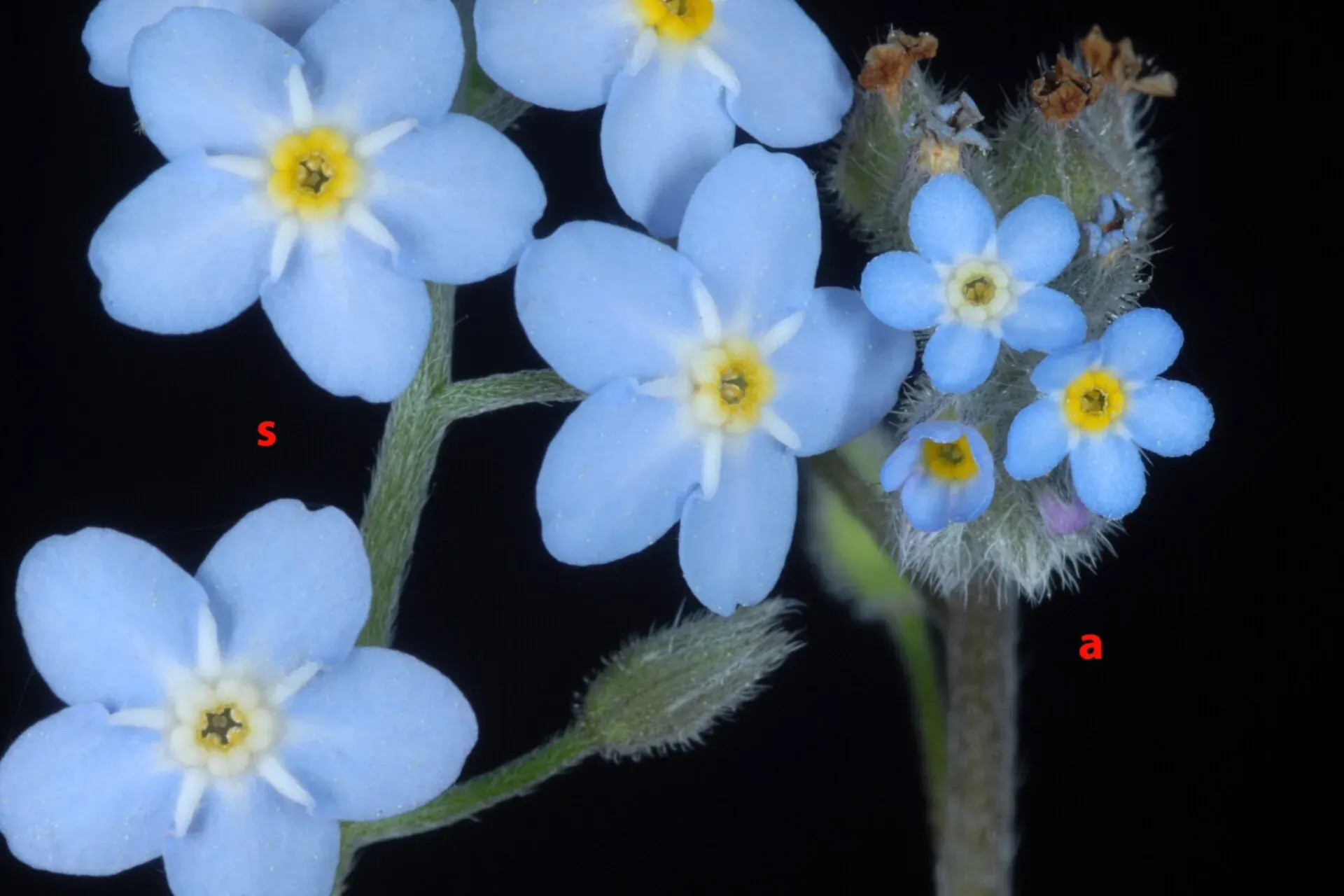
Clouds of sky-blue stars over spring bulbs — the self-sowing biennial that knits a garden together. Forget-me-not (Myosotis sylvatica) is sown in summer, plants itself out in autumn (often literally, via its own seedlings), and erupts the following spring in the classic blue haze beneath tulips. Grow it once and simply edit where it appears forever after.
Grow Forget-Me-Not with us — step by step
Everything for this plant is written step by step below — what to do, and exactly when. Read it through first if you like: you can grow it entirely on your own with that guide. Or start with us here — tell us your planting day and we lay out your personal schedule on this page, every next step on its own day, counted from your planting date. No guessing, no forgetting.
Step 1 — today: Sow forget-me-not seed in early summer — in a spare corner, a tray, or straight into the beds it will flower in next spring.
Forget-Me-Not at a glance
Sow indoors: In pots in early summer, for autumn planting
Move outside: Plant out in autumn for spring flowers
Sow outdoors: Early summer, in a nursery bed or where it will flower
Spacing · Seed depth: 9 in apart · barely cover — seed needs light
Sun: Part shade to full sun
Water: Regular — a plant of damp places
Bloom: April to June the spring after sowing
Timing counts from your average last spring frost — get your own dates in the Planting Calendar. Guidance follows standard extension-service practice for Canada and the US.
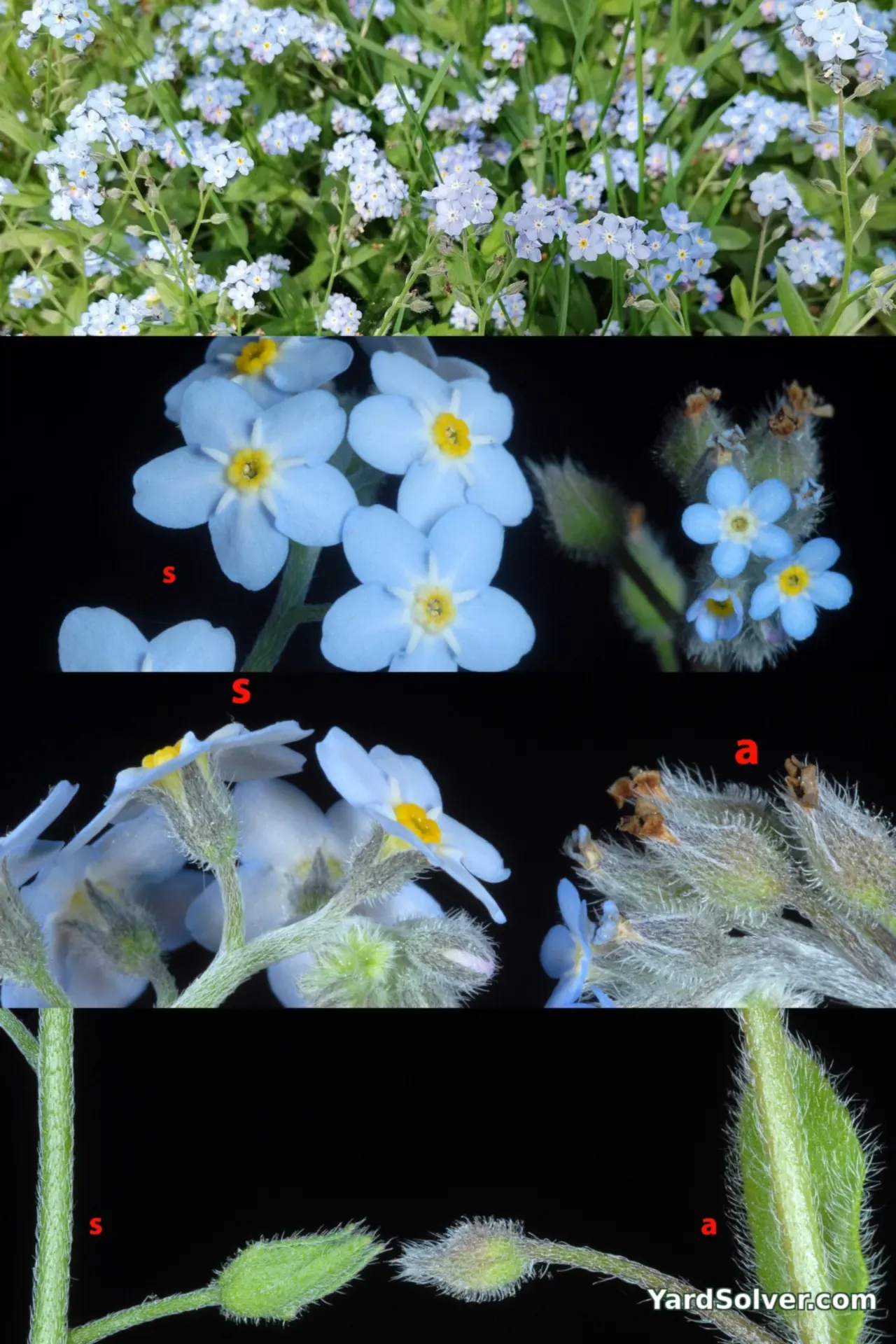
How to plant and grow forget-me-not, step by step
Step 1 — Time it right
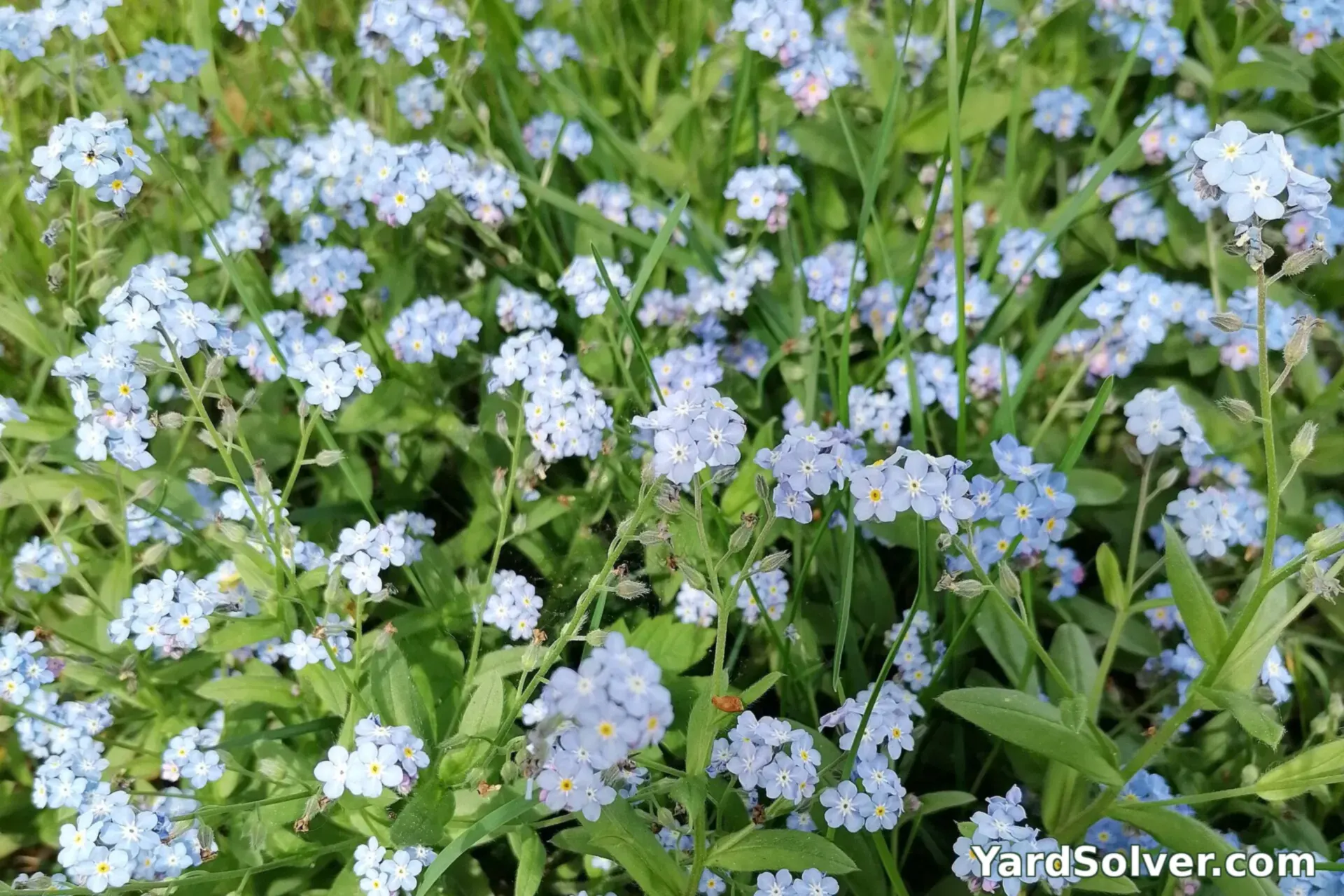
Sow outdoors: in early summer, in a nursery corner or in place; Plant out: in autumn, where they will flower the following spring; Sow indoors: in pots in early summer if you prefer. All dates count from your average last spring frost — the Planting Calendar turns them into real dates for your garden. Forget-me-not is a biennial: summer-sown seed makes leafy rosettes by autumn, rests over winter, and flowers the following April–June. Germination takes about 2 weeks on the surface of moist soil (the seed needs some light). After the first flowering, your only job is moving the self-sown seedlings it leaves behind — the colony runs itself.
Step 2 — Prepare the spot
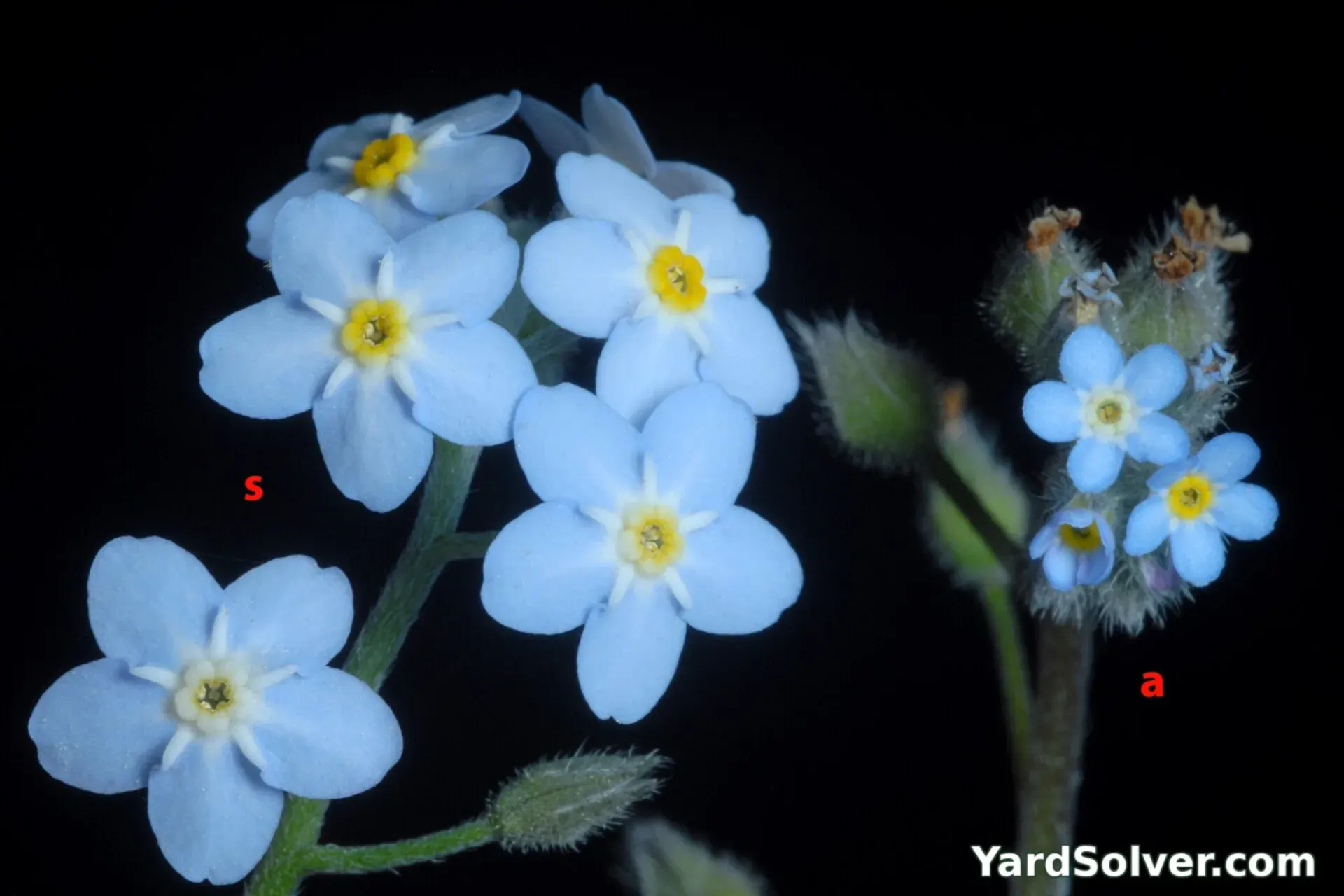
Forget-me-not is a woodland-edge plant: it wants moisture-retentive soil in part shade (it tolerates sun where the ground stays damp). Dig in compost or leaf mould where the soil is thin. The classic placement is through and under the spring bulb beds, where its roots share the bulbs' season perfectly. For a raised bed, the Raised Bed Soil Calculator counts the bags for you; mixing your own? The Garden Soil Calculator gives the compost-rich split to aim for.
Step 3 — Sow and plant out
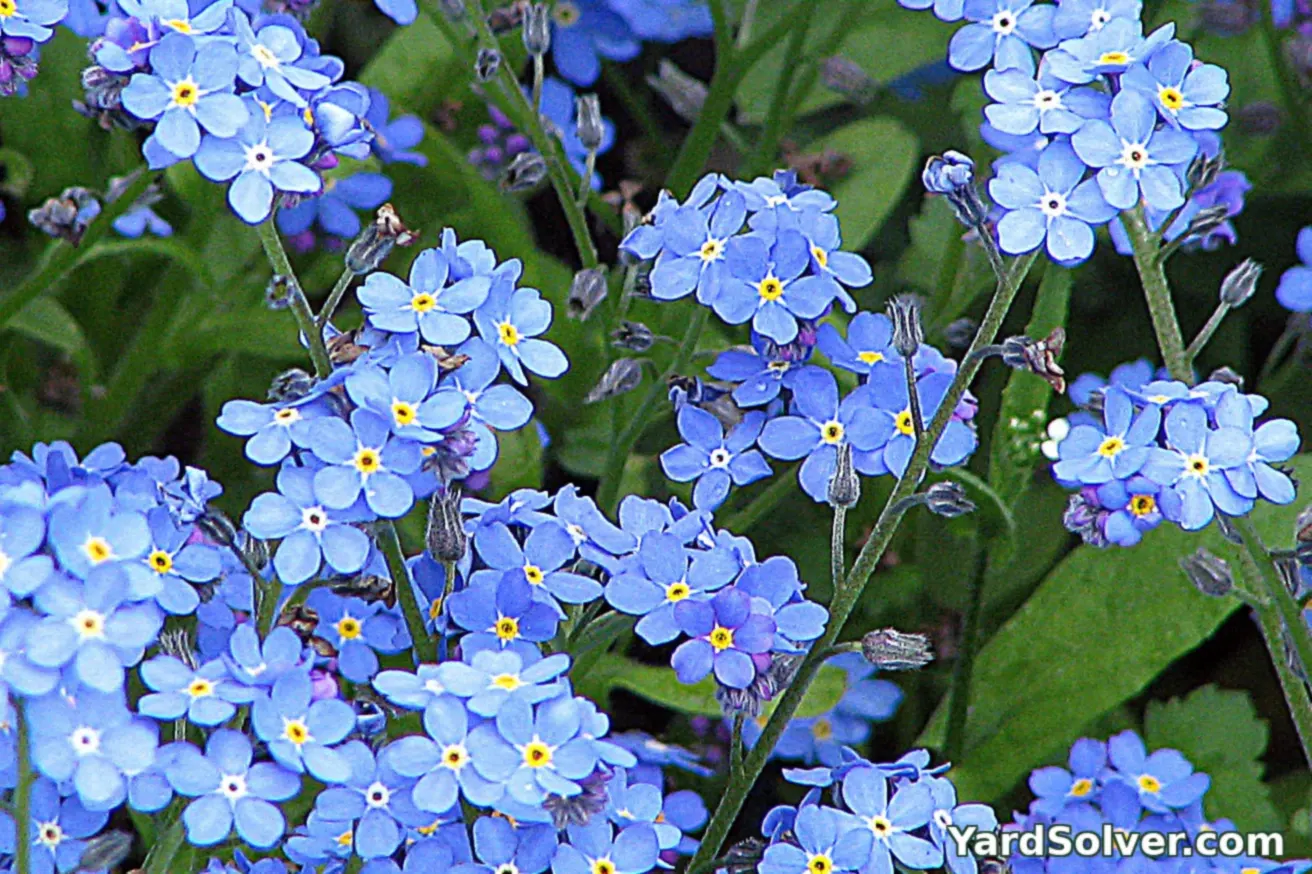
Plant autumn rosettes 9 in apart, firm them in, and water. The Plant Spacing Calculator turns your bed size into an exact plant count. Good neighbours: forget-me-not under tulips and daffodils is the definitive spring picture — the blue haze hides the bulbs' dying foliage as it ripens.
Step 4 — Water and feed
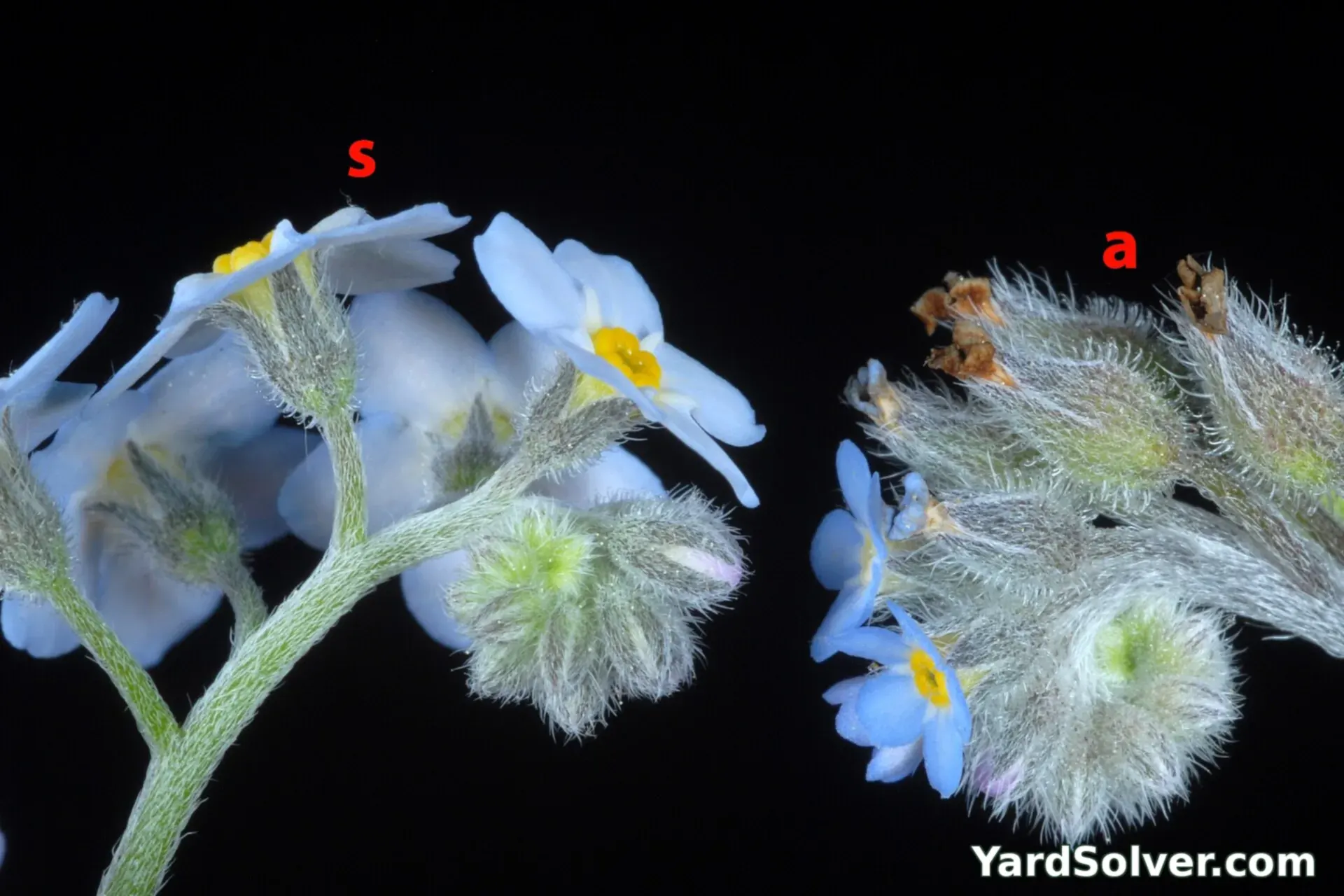
Keep the beds moist through autumn establishment and again in a dry spring — forget-me-nots wilt visibly when thirsty and recover just as fast after watering. Feeding is unnecessary beyond the compost at planting; rich soil makes floppy, mildew-prone plants — the Fertilizer Calculator turns your bed size into exact amounts (for neighbours).
Step 5 — Care and the problems to watch for
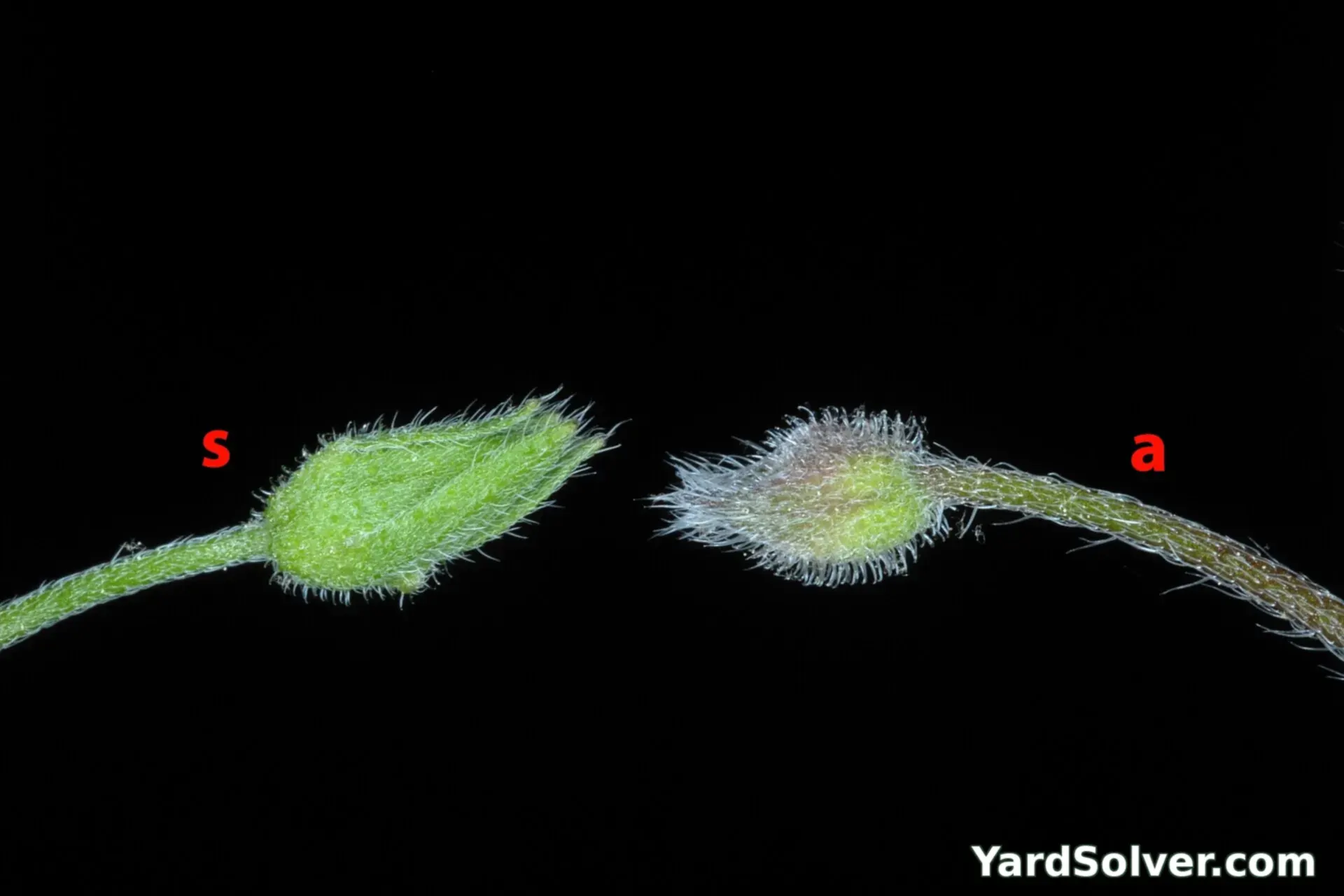
Care is a single annual edit: as flowering fades in June, pull the spent plants (shake them first over the bed to scatter seed) and thin or transplant the seedlings that carpet the ground by autumn.
- Powdery mildew — arrives as plants tire in June; pulling them on time is the cure.
- Seedlings in the path — they're shallow-rooted; scoop them to a better spot or the compost.
- Sparse flowering — usually a dry spring or starved soil; water and mulch with compost in autumn.
Step 6 — Harvest
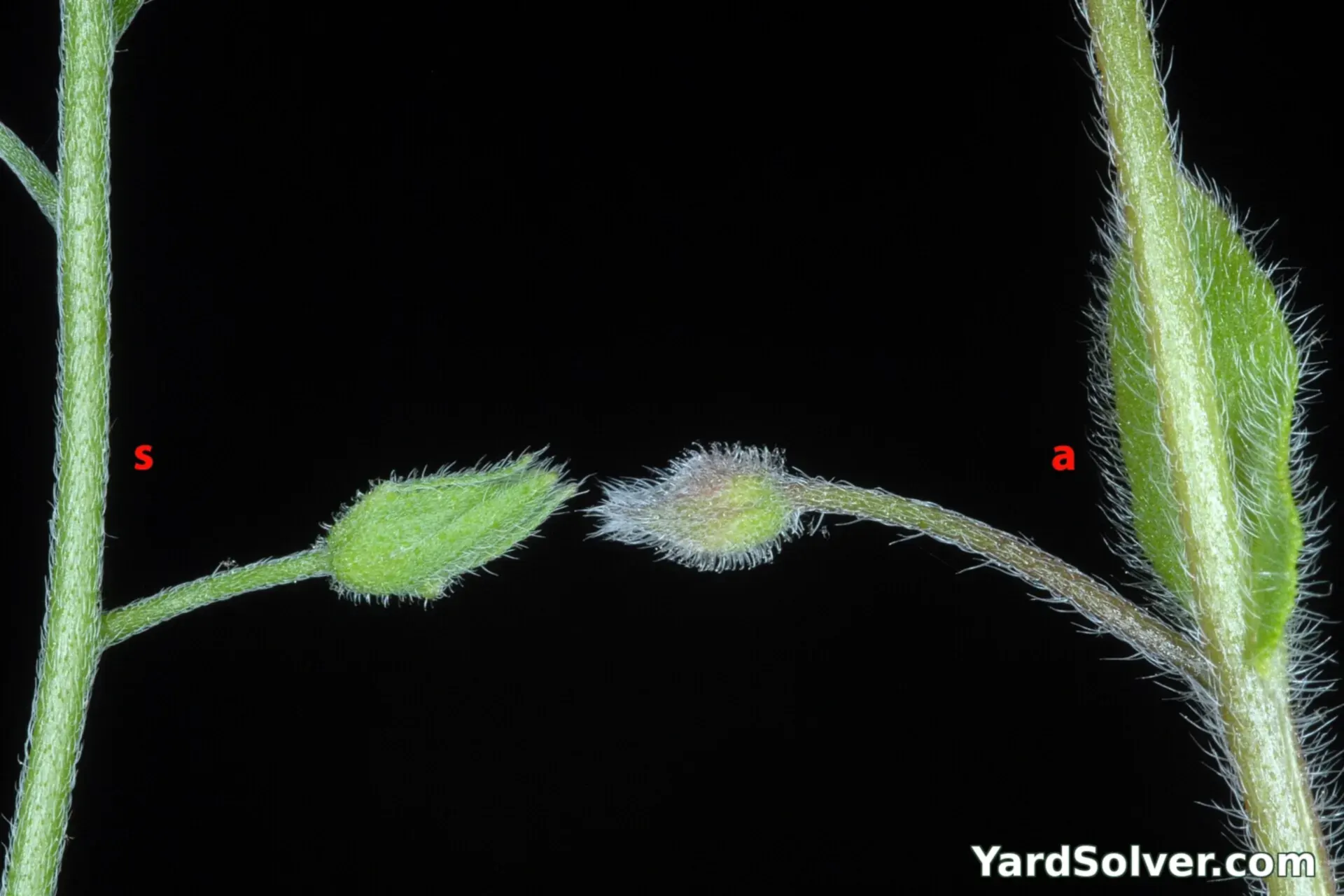
Cut small bunches as the flower sprays unfurl — they last only a few days in water, but no flower says more in a posy. The real harvest is the seed rain in June: shake the pulled plants over the beds and the colony renews itself. Gardeners who like control collect a pinch of seed and sow the nursery tray each summer instead.
📅 Your personal Forget-Me-Not schedule
Counted from your planting day — not a generic calendar. Day 0 is the day the seed went in the ground or the young plant went out.
Varieties worth growing
| Variety | Colour | Why gardeners like it |
|---|---|---|
| Victoria Blue | Deep gentian blue, compact | Neat, early and very blue — the bedding standard. |
| Indigo | Rich dark blue | Deeper colour for contrast under pale tulips. |
| Snowsylva | White | The white form — lovely under pink tulips and in moonlit corners. |
Good for you — and take care
Benefits
- The definitive spring carpet under tulips and daffodils.
- Self-sows forever — buy seed once, garden for decades.
- Early nectar for bees emerging in April.
Take care
- A biennial — sow in summer or there are no flowers next spring.
- Needs moisture; dry springs shrink the display.
- Pull spent plants in June or mildew moves in.
A little history — and one good fact
Forget-me-not's name is a love story told across Europe — in the German legend, a knight drowned fetching the flower for his lady, crying 'forget me not' as the river took him. Botanically it's Myosotis — 'mouse ear', for the soft little leaves — and it has carpeted spring gardens since at least the 1500s.
Fun fact: Forget-me-not is the official flower of Alaska and of the Armenian genocide remembrance — and the little yellow 'eye' at each flower's centre changes to white after pollination, a signal to bees that the nectar is gone.
Keep going
Guides: Succession planting · Companion planting basics · Pollinator garden guide
Calculators: Plant Spacing Calculator · Garden Mix Calculator · Fertilizer Calculator
More flowers: Chinese Forget-Me-Not · Tulip · Daffodil · Pansy
← Back to the Plant Library · Get your personal planting dates
Questions people ask
Why didn't my forget-me-nots flower this spring?
They are biennials — plants flower in the spring after the summer they were sown. If you sowed this spring, you'll get leaves this year and the blue cloud next April. Once established, self-sown seedlings keep the cycle rolling.
Do forget-me-nots really self-sow?
Abundantly. Pull the spent plants in June, shaking them over the bed first, and a carpet of seedlings appears by autumn. Move them to where you want flowers, and thin the rest.
Can forget-me-nots grow in sun?
Yes, where the soil stays moist — but their natural home is light shade with damp roots, under trees and through bulb beds. In hot, dry sun they flower briefly and tire fast.
A biennial that gardens by self-seeding: plant it once, then manage where its children land
Forget-me-not (Myosotis sylvatica) is best understood as a short-lived biennial rather than a permanent perennial. Seed sown in summer makes a leafy rosette the first year, a cloud of blue spring flowers the second, and then the parent plant usually dies — having scattered enough seed to repeat the cycle wherever the soil stays moist and lightly shaded.
That life cycle explains the two mistakes gardeners make with it. Planting it in dry, full-sun soil gives thin, mildew-prone plants that finish early, because the species is a woodland-edge plant that expects cool roots and steady moisture. And deadheading every stem, in the name of tidiness, ends the display permanently — the correct routine is to let most plants set seed, shake the ripe stems where you want next year's flowers, and only then clear them away.
The worked example: a patch sown under spring bulbs in damp soil flowers as the bulbs fade, seeds itself into the gaps, and returns every spring with no further sowing. The identical seed scattered on a dry sunny bank typically gives one weak season and disappears — forget-me-not is not fussy, but it is honest about wanting moisture.
Sources
Key facts on this page — timing, spacing and care — cross-checked against NC State Extension Plant Toolbox — Myosotis sylvatica — culture, sowing and care requirements and Myosotis sylvatica — Wikipedia — background on the species and its life cycle.
Related page
Read next: Companion Planting Basics: Good & Bad Neighbours.
Comments & ratings
No comments yet.
Be the first to share your experience.