
Plant Library · Flowers · By Faizan Ahmad
💙 How to Grow Chinese Forget-Me-Not
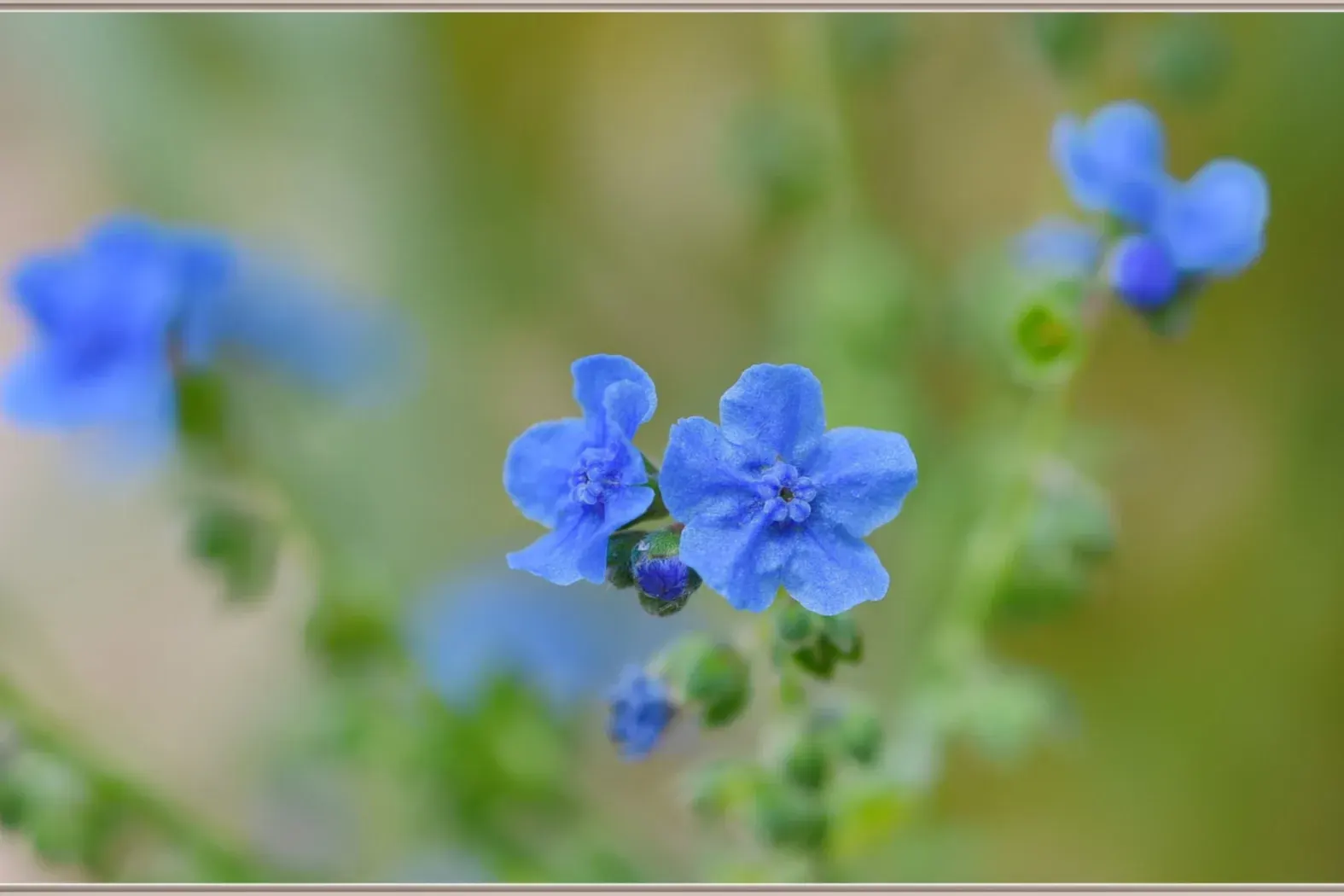
Sprays of sky-blue stars for bouquets — the cut-flower grower's forget-me-not, taller and longer-lasting than its woodland cousin. Chinese forget-me-not (Cynoglossum amabile) is a quick annual (sometimes short-lived biennial) that flowers the same summer from a spring sowing, fills vases like blue gypsophila, and dries to a soft haze. It self-sows politely where it's happy.
Grow Chinese Forget-Me-Not with us — step by step
Everything for this plant is written step by step below — what to do, and exactly when. Read it through first if you like: you can grow it entirely on your own with that guide. Or start with us here — tell us your planting day and we lay out your personal schedule on this page, every next step on its own day, counted from your planting date. No guessing, no forgetting.
Step 1 — today: Sow chinese forget-me-not seed in pots indoors — the seedlings transplant easily, unlike most of its borage-family kin.
Chinese Forget-Me-Not at a glance
Sow indoors: 6 weeks before last frost
Move outside: At last frost
Sow outdoors: 1 week before last frost
Spacing · Seed depth: 10 in apart · 1/4 in deep
Sun: Full sun
Water: Moderate — steady while young
Bloom: June to September; cut sprays as they open
Timing counts from your average last spring frost — get your own dates in the Planting Calendar. Guidance follows standard extension-service practice for Canada and the US.
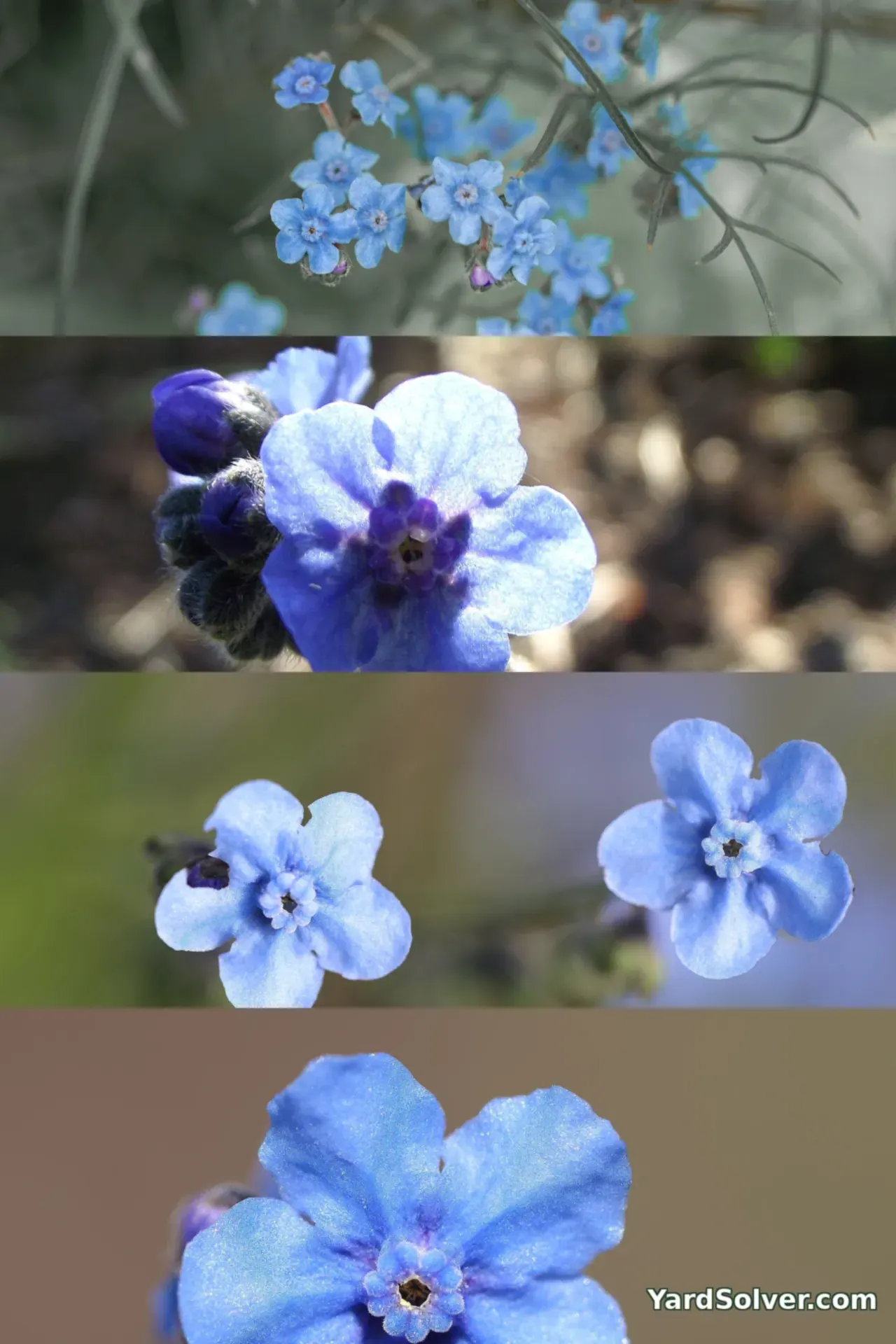
How to plant and grow chinese forget-me-not, step by step
Step 1 — Time it right
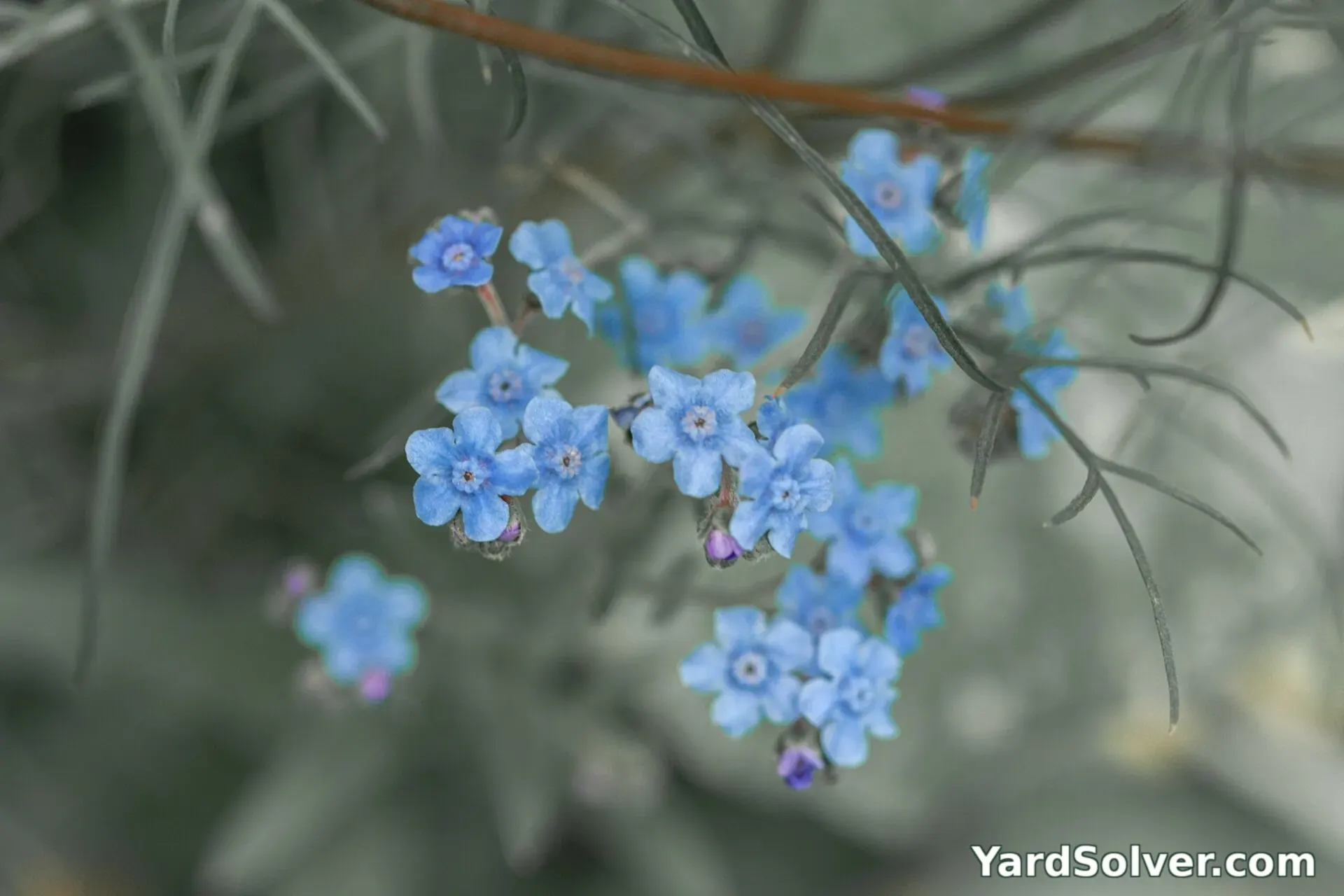
Sow indoors: 6 weeks before last frost; Move outside: at last frost; Sow outdoors: 1 week before last frost. All dates count from your average last spring frost — the Planting Calendar turns them into real dates for your garden. Chinese forget-me-not germinates in 7–14 days at room temperature and grows away without fuss. Spring-sown plants flower from about June; a second sowing in June extends cutting into autumn. Some plants overwinter in mild districts and flower again as biennials — a bonus where it happens.
Step 2 — Prepare the spot
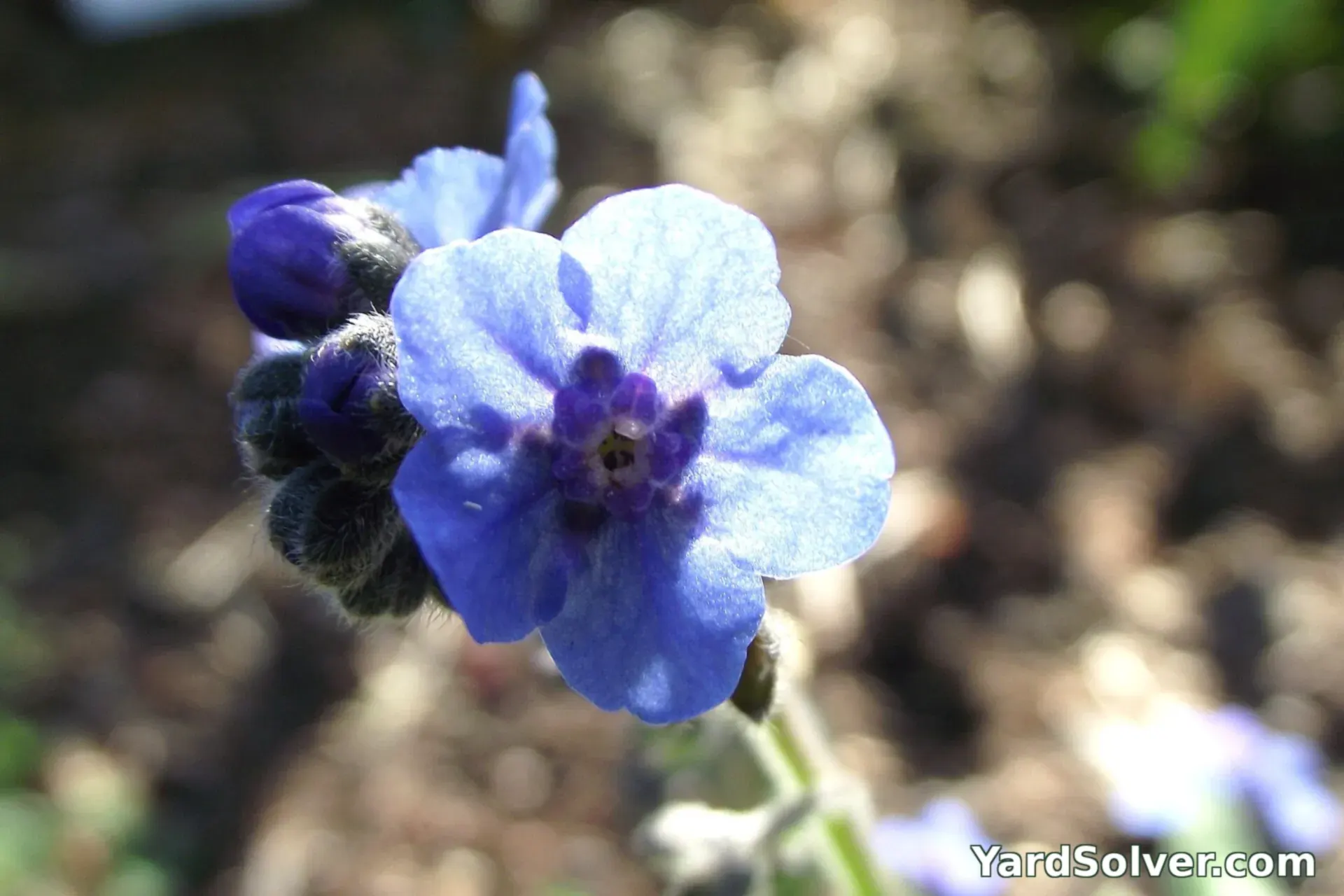
Average, well-drained soil in full sun is all it asks. As a cut flower it earns a cutting-bed row rather than a border throne: it is charming but slightly sprawling, and its job is to be picked. Rake the bed fine and sow or plant in rows for easy cutting. For a raised bed, the Raised Bed Soil Calculator counts the bags for you; mixing your own? The Garden Soil Calculator gives the compost-rich split to aim for.
Step 3 — Sow and plant out
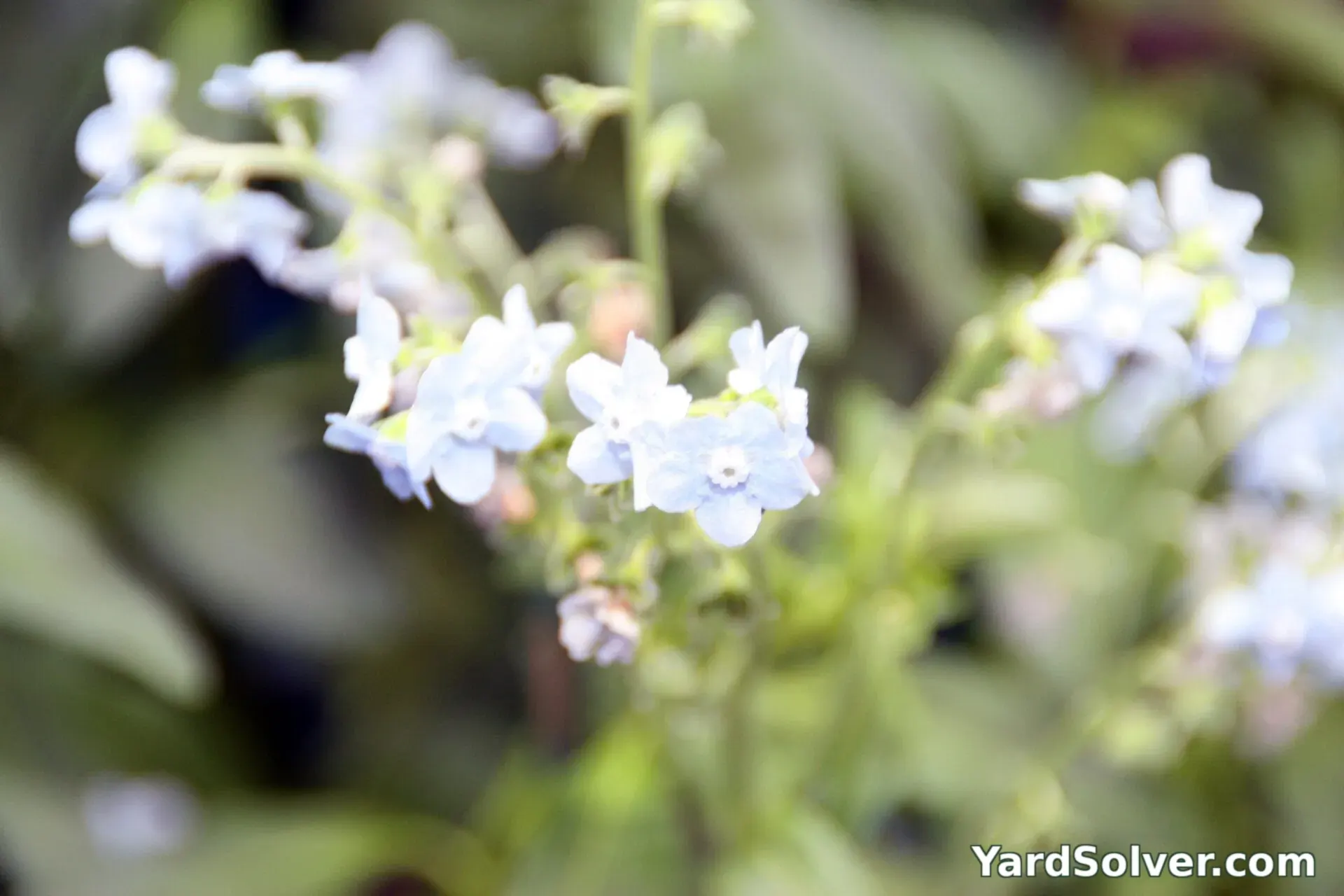
Set plants 10 in apart and water in. The Plant Spacing Calculator turns your bed size into an exact plant count. Push a few pea sticks into the row if the site is exposed — laden sprays lean in wind. Good neighbours: the blue sprays are the perfect foil in the vase and the bed for zinnias, snapdragons and everything orange.
Step 4 — Water and feed
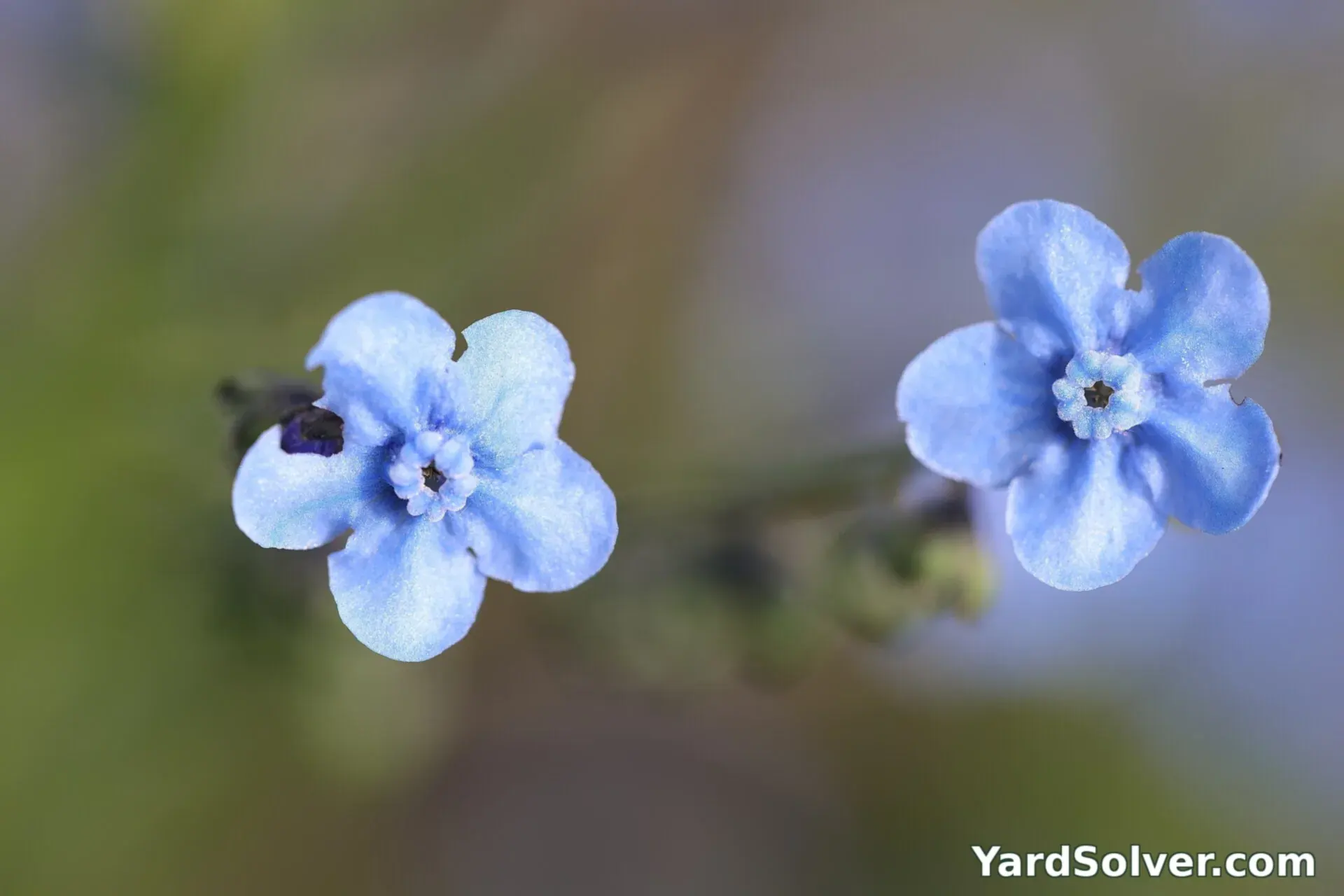
Water through establishment and in dry spells if you want long cutting stems. One light feed at planting on thin soil is enough; overfed plants sprawl. Use the Fertilizer Calculator turns your bed size into exact amounts for anything more ambitious.
Step 5 — Care and the problems to watch for
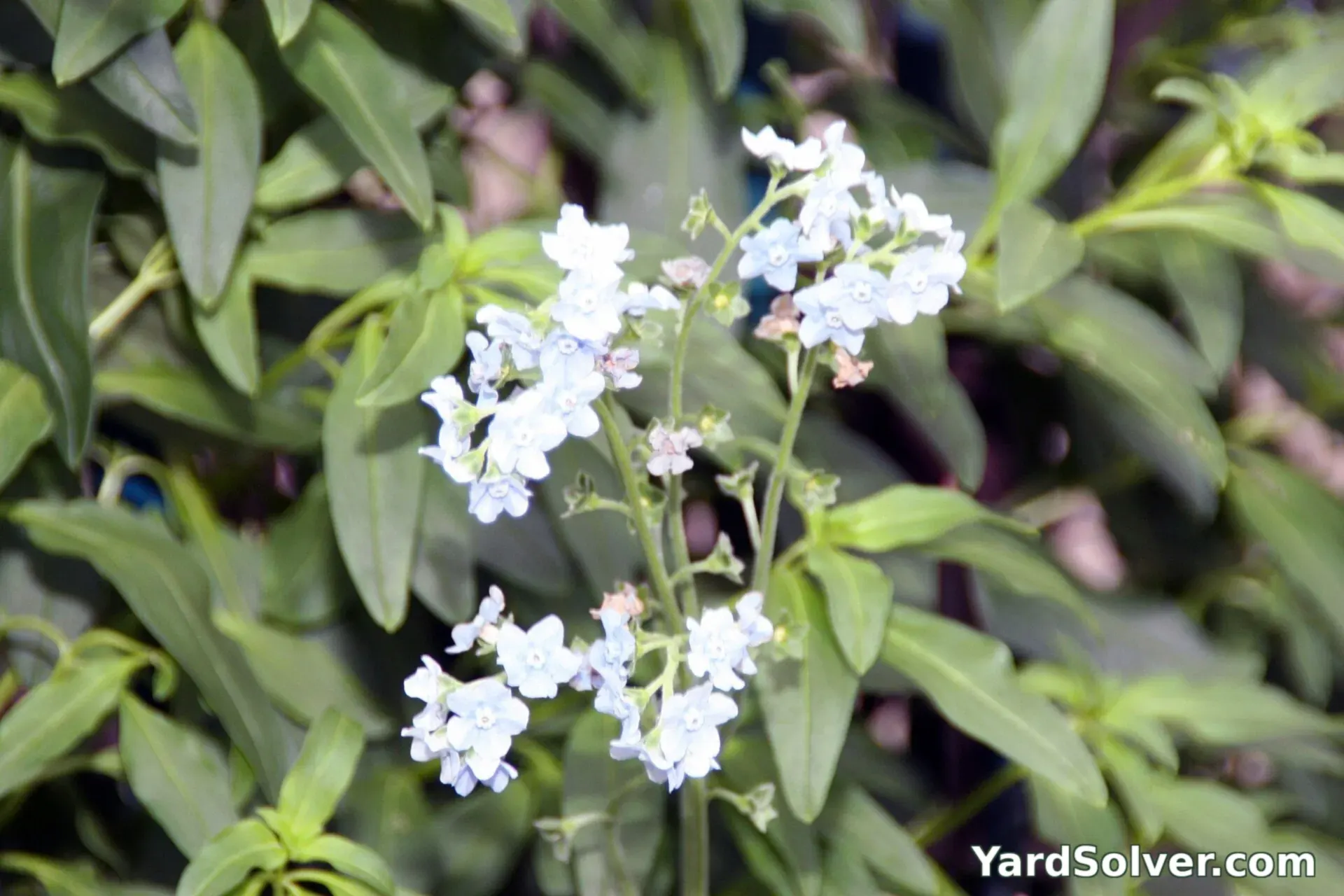
The care is the harvest: pick sprays constantly and the plants branch and re-flower for months.
- Powdery mildew in late summer — common on tired plants; by then the second sowing is taking over.
- Sprawling stems — light support or a closer spacing next year.
- Self-sown seedlings — leave a few; rogue out the rest in spring.
Step 6 — Harvest
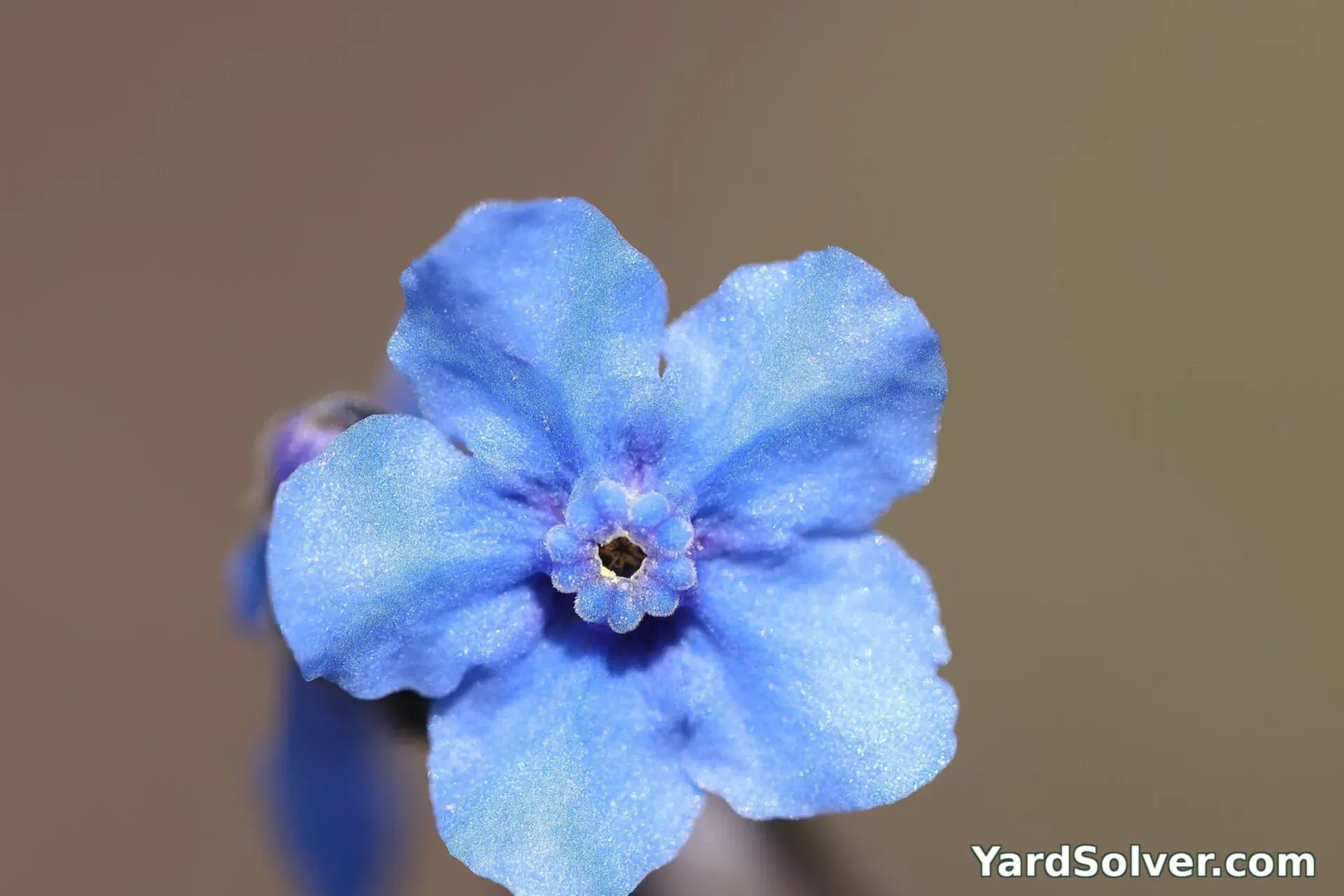
Cut sprays in the morning when roughly half the buds have opened; the rest open indoors over a week of vase life. The sprays also dry well — hang small bunches and the blue softens to a misty haze for winter arrangements. Leave the last sprays of one plant to seed if you want next year's volunteers.
📅 Your personal Chinese Forget-Me-Not schedule
Counted from your planting day — not a generic calendar. Day 0 is the day the seed went in the ground or the young plant went out.
Varieties worth growing
| Variety | Colour | Why gardeners like it |
|---|---|---|
| Blue Shower | Sky blue, tall | The florist's strain — long sprays bred for cutting. |
| Firmament | Deep indigo blue | A richer, darker blue on compact plants. |
| Mystery Rose | Soft pink | The pink form — pretty mixed with the blues in a jug. |
Good for you — and take care
Benefits
- The cut flower grower's blue filler — like gypsophila, but sky-blue.
- Flowers the same summer from seed, for months.
- Dries to a soft blue haze for winter arrangements.
Take care
- A vase flower, not an edible — borage-family alkaloids; keep off food.
- Mildew takes tired plants late in summer; succession sowing covers it.
- Sprawls a little — give it light support in the cutting row.
A little history — and one good fact
Cynoglossum amabile comes from China and the Himalayan foothills — amabile means 'lovely', and Victorian seed collectors agreed. Florists adopted it as the blue answer to gypsophila, and it has held that job in the cutting garden ever since.
Fun fact: Its family shows in the seed: like its cousin borage, the little nutlets are covered in hooked bristles that hitch rides on socks and fur — that's how it self-sows around your garden.
Keep going
Guides: Succession planting · Companion planting basics · Pollinator garden guide
Calculators: Plant Spacing Calculator · Garden Mix Calculator · Fertilizer Calculator
More flowers: Forget-Me-Not · Borage · Cornflower · Statice
← Back to the Plant Library · Get your personal planting dates
Questions people ask
Is chinese forget-me-not the same as forget-me-not?
No — they are cousins in the borage family with similar little blue flowers. True forget-me-not (Myosotis) is a low, shade-tolerant biennial of damp places; the Chinese kind (Cynoglossum) is a taller, sun-loving annual grown for cutting.
Can I dry chinese forget-me-not?
Yes — hang small bunches upside down in a dark, airy place. The blue fades to a soft, misty tone that works beautifully in dried arrangements.
Is chinese forget-me-not edible?
No — treat it as a vase flower only. Like several plants in the borage family it contains trace alkaloids, so keep the pretty blue petals off salads and cakes.
A biennial that behaves like a promise: sow it one year for the blue haze the next — then let it self-seed
Chinese forget-me-not (Cynoglossum amabile) is not the true forget-me-not of damp shade — it is a sun-loving biennial or short-lived perennial grown for sprays of clear blue flowers that cut well and fill borders the way few annuals can. The biennial rhythm is the thing to plan around: sown in late spring or summer, it makes a leafy rosette the first year and flowers the second. Gardeners who sow in spring expecting flowers by midsummer are a season early, not doing anything wrong.
Once the rhythm is understood, the plant is generous. It prefers sun and sharply drained, even poor soil; rich, wet ground shortens its life. Flowering stems cut back after the first flush can give a second, and the real secret of a permanent display is to let the last stems ripen seed in place — self-sown seedlings appear around the parent and carry the planting forward year after year, which is how a single packet becomes a recurring feature of the border.
The worked example: a summer sowing left to overwinter as rosettes, then allowed to self-seed after flowering, commonly gives a self-renewing blue drift for years. A spring sowing in rich, wet soil, dug out when it 'failed' to flower the first year, gives nothing at all. This flower pays gardeners who think a year ahead — and then keeps paying them.
Sources
Key facts on this page — timing, spacing and care — cross-checked against NC State Extension Plant Toolbox — Cynoglossum amabile (Chinese forget-me-not) — life cycle, culture, soil and care requirements.
Related page
Read next: Companion Planting Basics: Good & Bad Neighbours.
Comments & ratings
No comments yet.
Be the first to share your experience.