
Plant Library · Flowers · By Faizan Ahmad
🌸 How to Grow Pansy
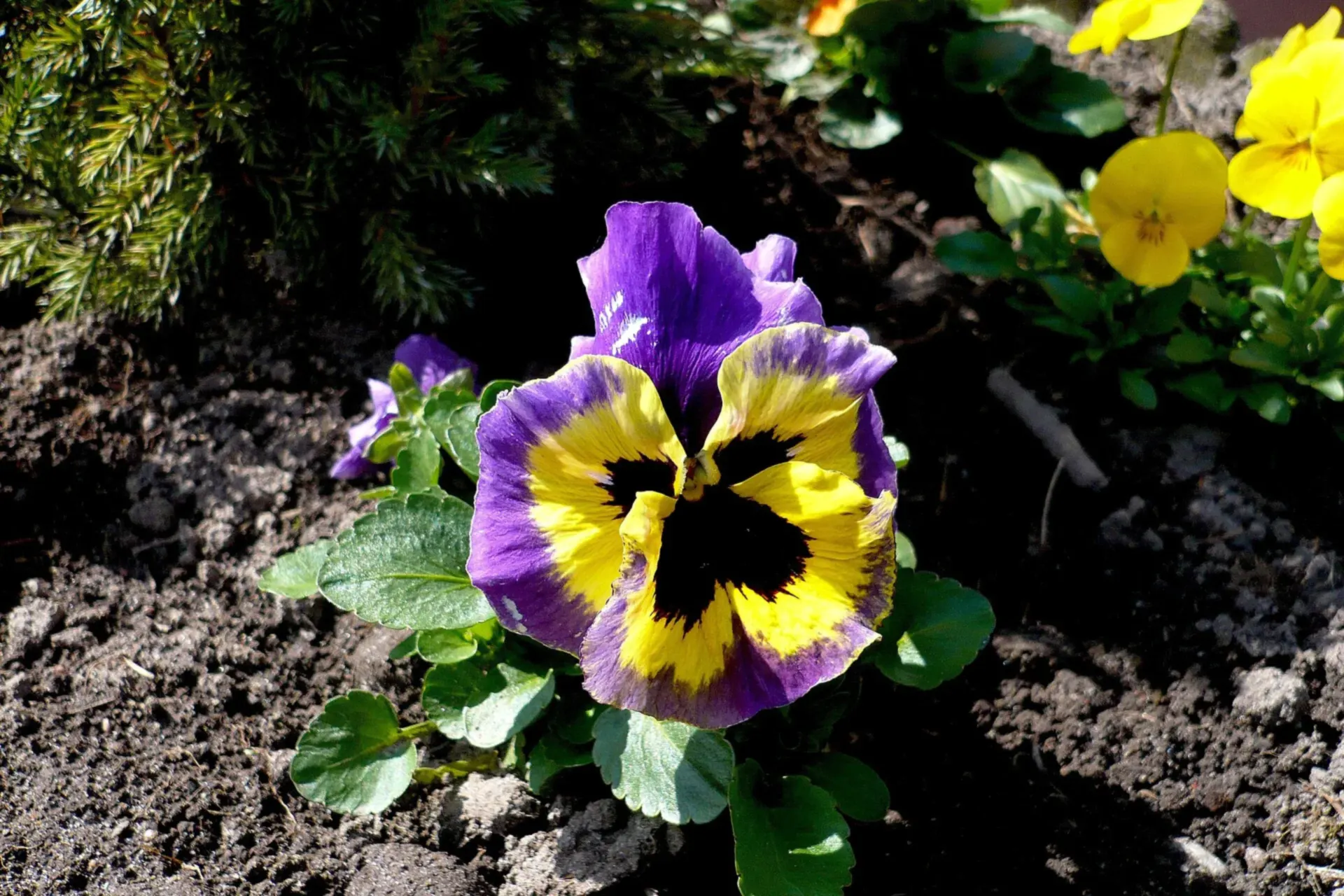
The cheerful faces of spring and autumn — cool-season colour when little else dares. Pansies (Viola × wittrockiana) are short-lived perennials grown as annuals: plant them in autumn for a winter-and-spring show in mild districts, or in early spring everywhere else. They sulk in summer heat — that is not failure, it is their calendar — and their petals are edible, for the cook who wants to prove it.
Grow Pansy with us — step by step
Everything for this plant is written step by step below — what to do, and exactly when. Read it through first if you like: you can grow it entirely on your own with that guide. Or start with us here — tell us your planting day and we lay out your personal schedule on this page, every next step on its own day, counted from your planting date. No guessing, no forgetting.
Step 1 — today: Sow pansy seed in a tray and keep it cool and dark until sprouts show — or buy autumn plants, the route most gardeners take.
Pansy at a glance
Sow indoors: 10 weeks before planting out — slow at first
Move outside: 2 weeks before last frost — pansies laugh at light frost
Sow outdoors: In summer, in a shaded nursery bed, for autumn planting
Spacing · Seed depth: 8 in apart · 1/8 in deep
Sun: Full sun to part shade
Water: Regular — keep evenly moist
Bloom: Autumn and spring flushes; revives after summer with a trim
Timing counts from your average last spring frost — get your own dates in the Planting Calendar. Guidance follows standard extension-service practice for Canada and the US.

How to plant and grow pansy, step by step
Step 1 — Time it right
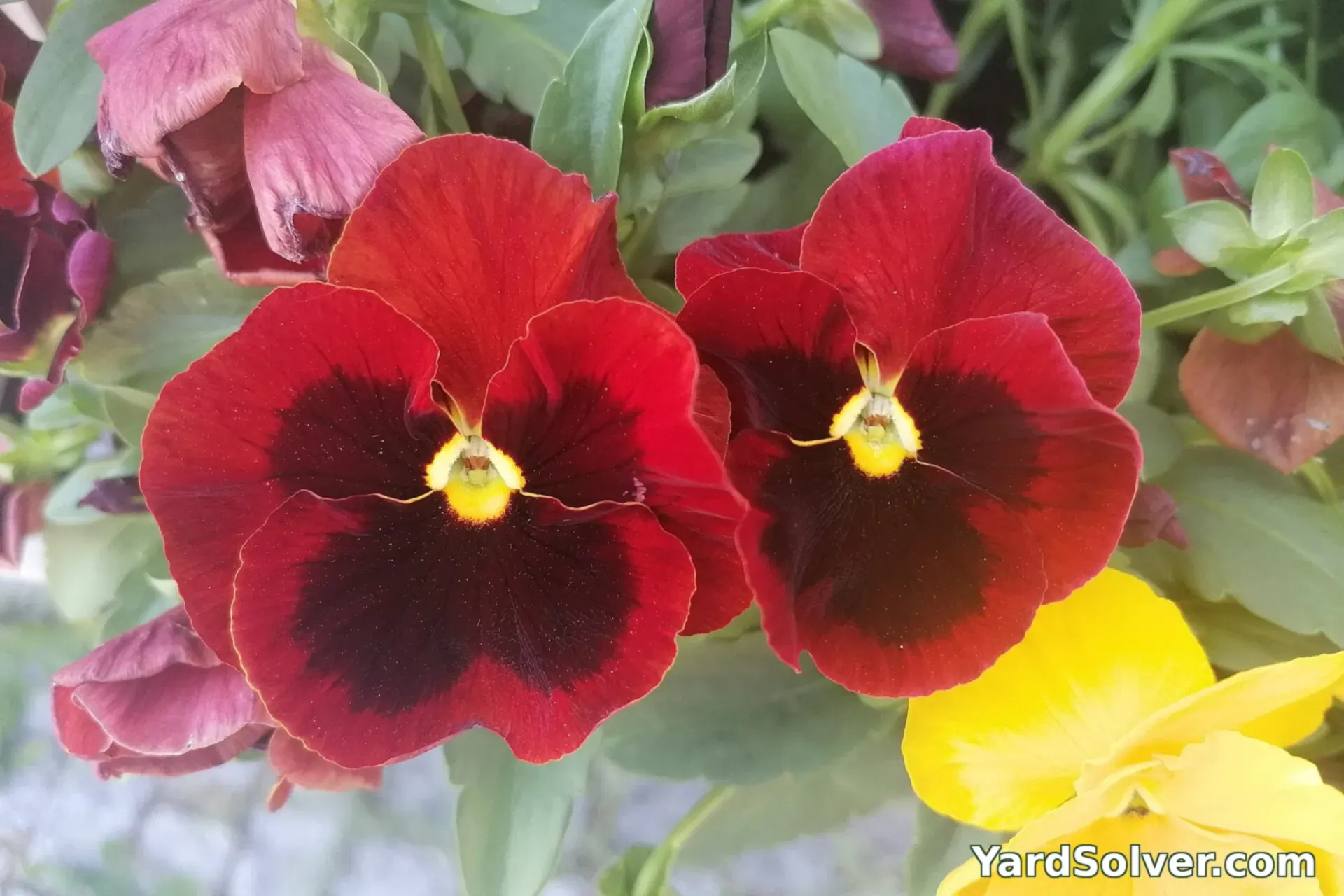
Sow indoors: 10 weeks before you plant them out; Move outside: 2 weeks before last frost — pansies shrug off light frost; Sow outdoors: in summer in a shaded bed, for autumn planting. All dates count from your average last spring frost — the Planting Calendar turns them into real dates for your garden. Pansy seed germinates in 7–14 days in darkness at about 18 °C / 65 °F (cover the tray), then grows slowly and steadily in cool, bright conditions. There are two plantings: autumn (plants overwinter and explode in spring — the professional way in mild districts) and early spring (plants flower until summer heat). Summer heat, not cold, is the pansy's limit.
Step 2 — Prepare the spot
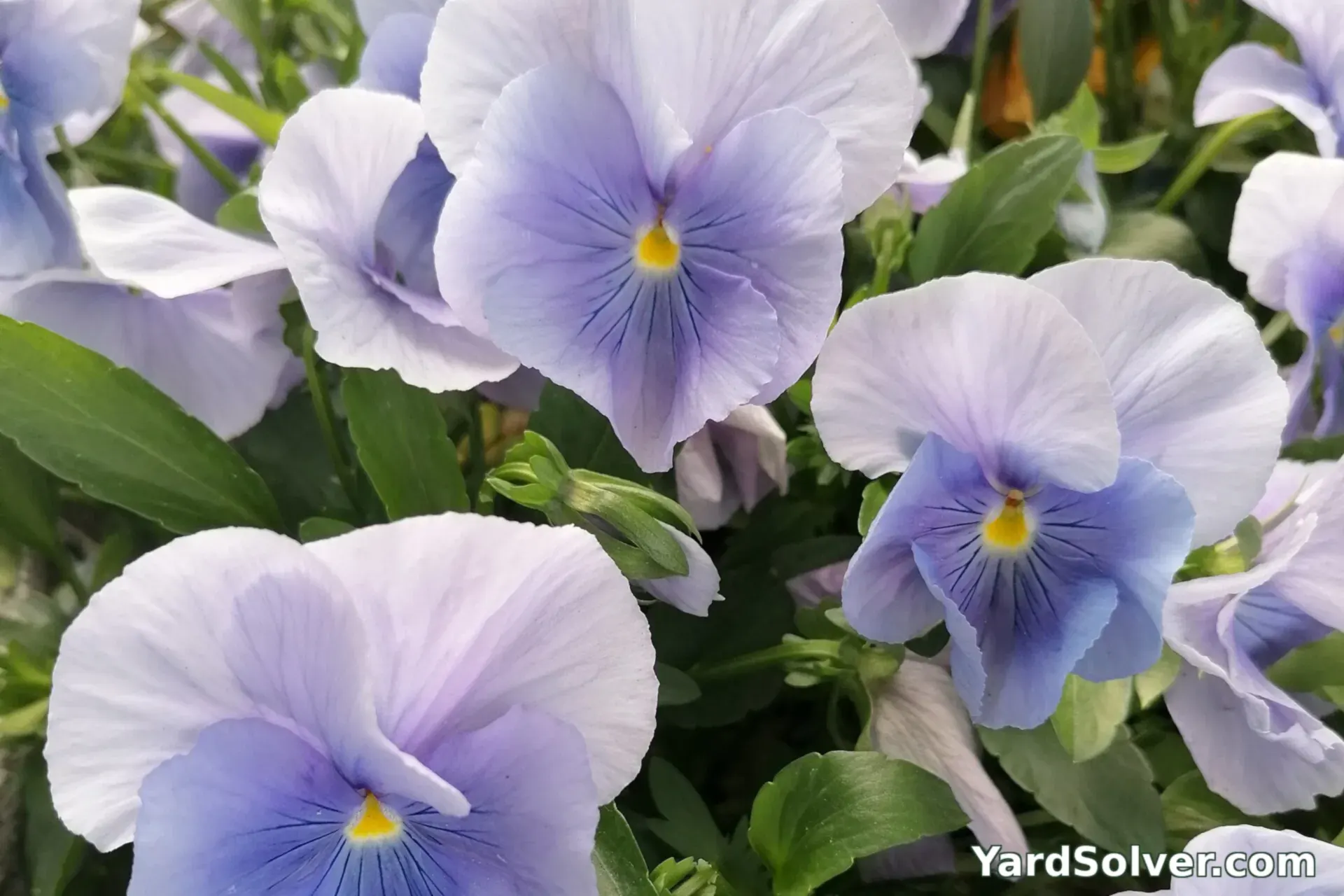
Pansies want the good life: fertile, moisture-holding soil with compost worked in, in sun or part shade. In pots and baskets use rich compost and expect to water. A bed that grew hungry summer annuals deserves a fresh dressing of compost first. For a raised bed, the Raised Bed Soil Calculator counts the bags for you; mixing your own? The Garden Soil Calculator gives the compost-rich split to aim for.
Step 3 — Sow and plant out
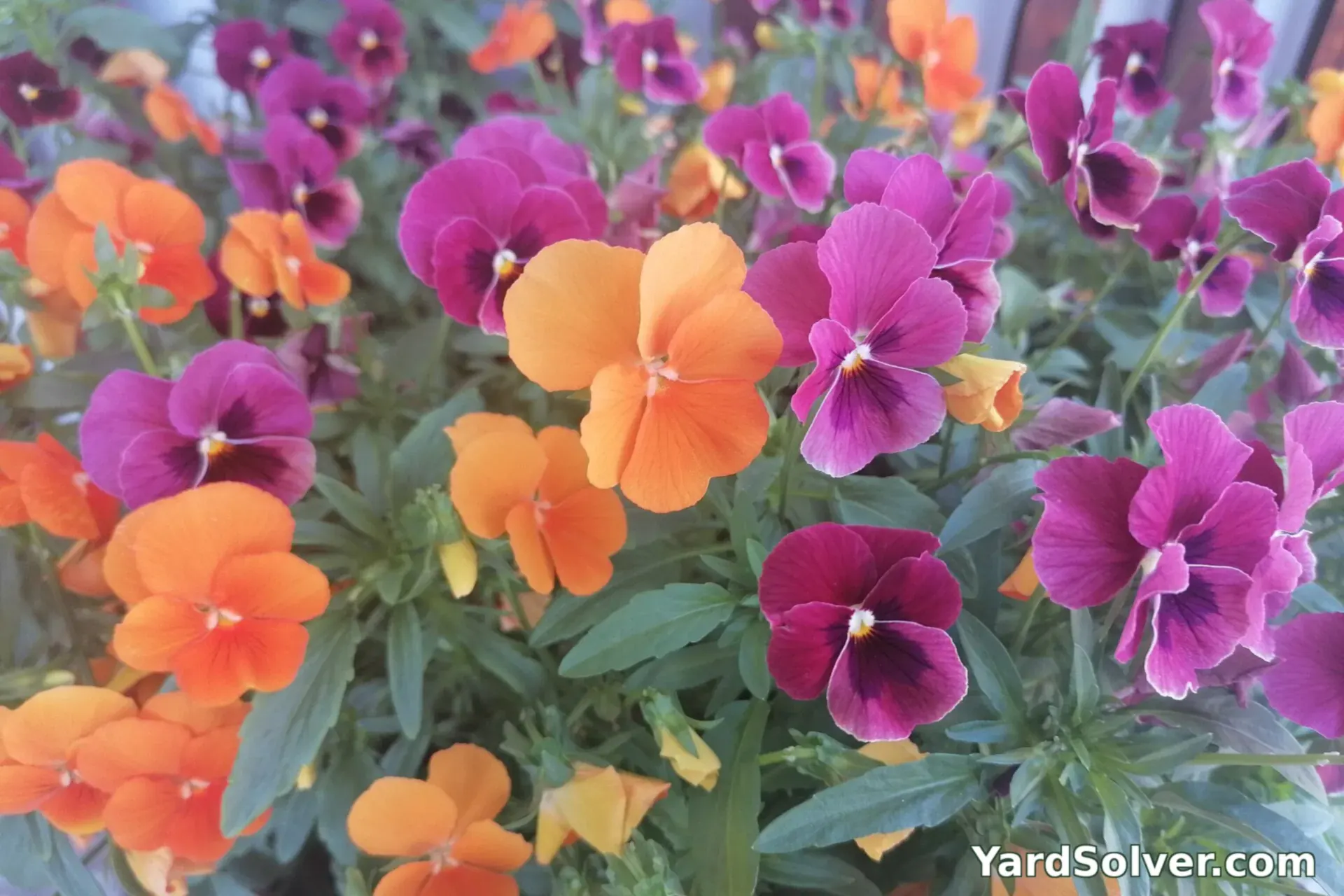
Set plants 8 in apart, firm them in, and water well. The Plant Spacing Calculator turns your bed size into an exact plant count. Good neighbours: pansies are the spring partner for tulips and forget-me-nots in the classic bedding schemes, and they edge the vegetable garden cheerfully while the soil warms.
Step 4 — Water and feed
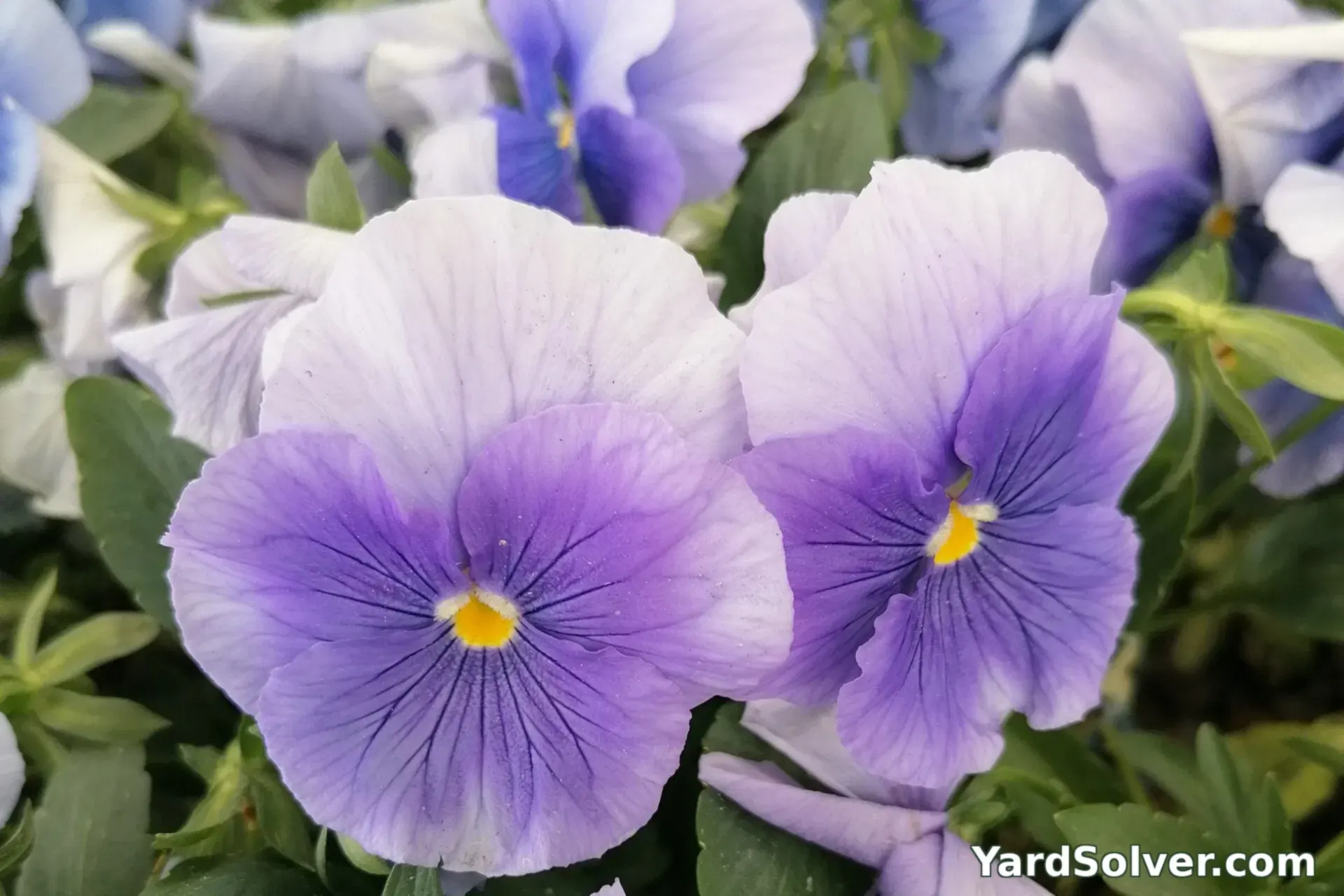
Keep pansies evenly moist, especially in containers. Feed every two weeks with a balanced liquid feed through the flowering season — pansies in full face are heavy feeders — the Fertilizer Calculator turns your bed size into exact amounts.
Step 5 — Care and the problems to watch for
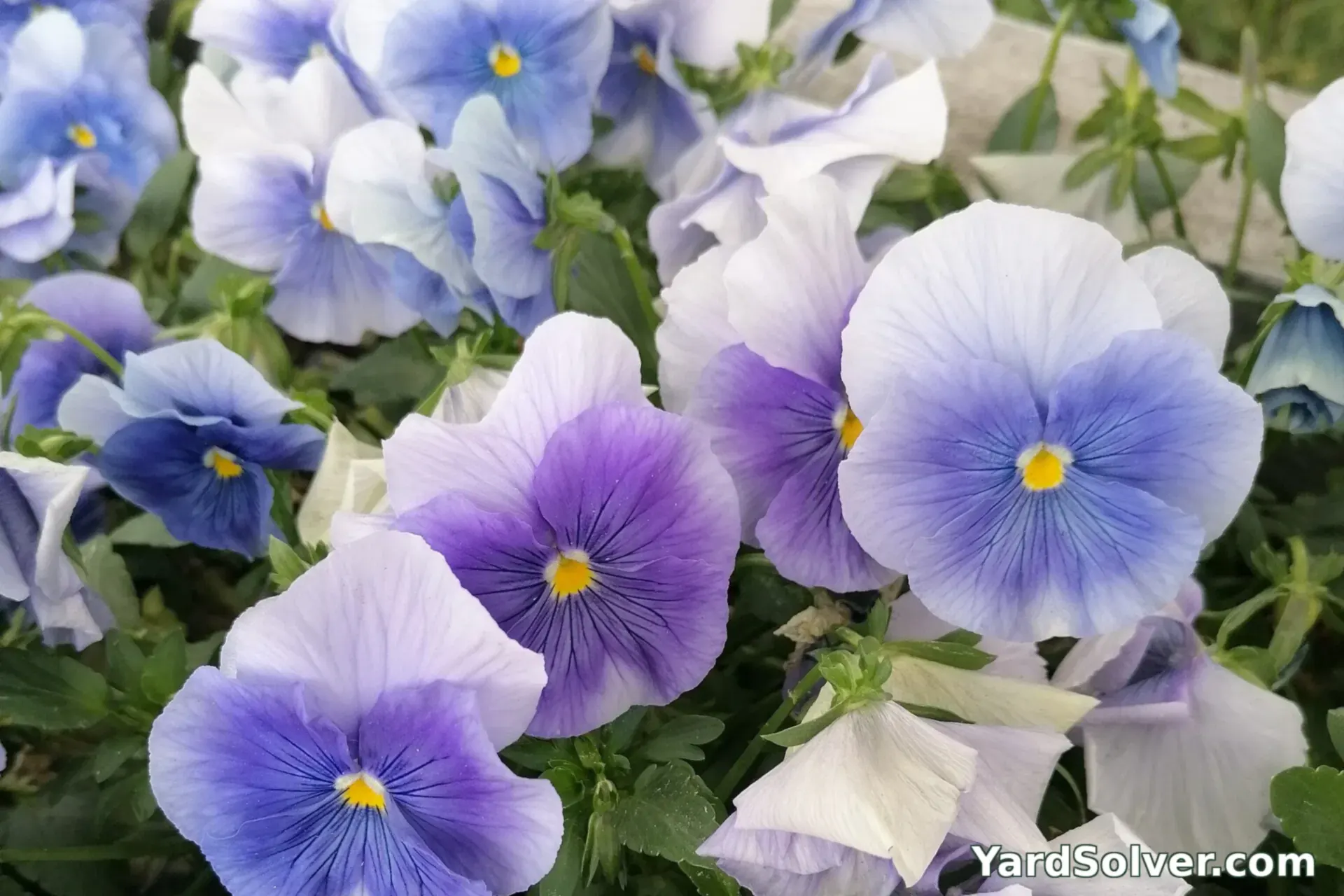
Deadhead spent flowers weekly (pinch the stalk at the base) and the plants flower for months. When summer heat makes spring plants leggy and tired, shear them back by half, water and feed — many revive for an autumn flush as nights cool.
- Slugs and snails — the pansy's public enemies in damp spring weather; your usual defences.
- Downy mildew in wet springs — space for air and remove marked leaves.
- Leggy, flowerless plants in June — heat, not disease; shear, feed, and wait for autumn.
Step 6 — Harvest
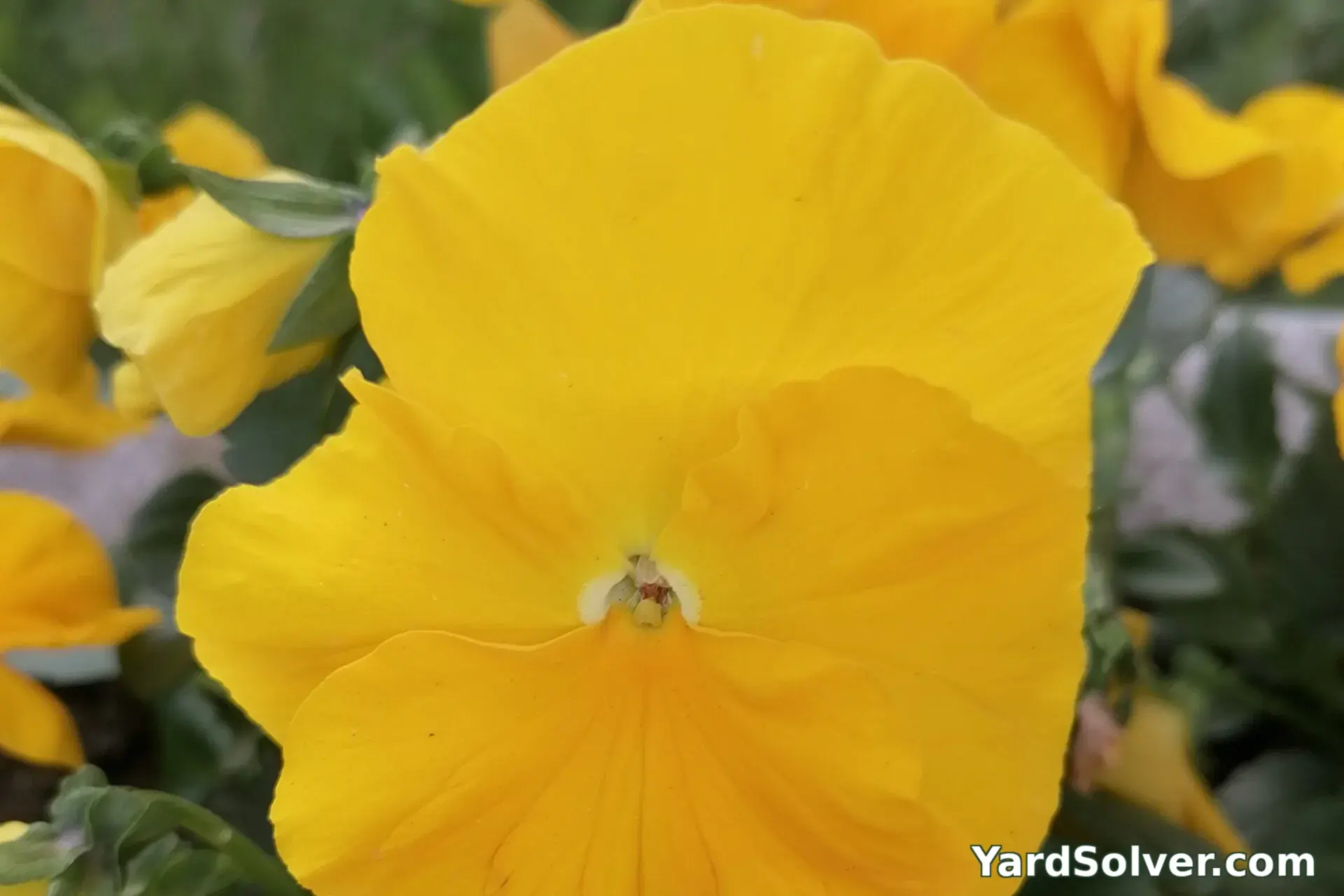
Pick whole flowers in the morning for decorating salads, cakes and drinks — or freeze them in ice cubes for summer glasses. The bigger harvest is simply the display: a well-fed, deadheaded pansy bed flowers from autumn through spring in mild districts, a shift few plants of any kind will work.
📅 Your personal Pansy schedule
Counted from your planting day — not a generic calendar. Day 0 is the day the seed went in the ground or the young plant went out.
Varieties worth growing
| Variety | Colour | Why gardeners like it |
|---|---|---|
| Swiss Giants | Huge faces, classic colours | The old-fashioned giants — enormous blotch-faced flowers. |
| Matrix series | Uniform, many colours | Modern bedding bred for even flowering in packs and pots. |
| Cool Wave | Trailing, spreading | A trailing pansy for baskets that shrugs off cold snaps. |
Good for you — and take care
Benefits
- Spring and autumn colour when the garden needs it most.
- Edible flowers for cakes, salads and drinks.
- Tough little plants — light frost doesn't touch them.
Take care
- Summer heat ends the spring show; shear for an autumn encore.
- Slugs love them as much as gardeners do.
- Keep them watered and fed — pansies sulk when hungry.
A little history — and one good fact
The pansy was bred in the early 1800s from wild heartsease (Viola tricolor) by gardeners including Lady Mary Bennet and her gardener — within a generation the little wildflower had become the giant-faced bedding plant of Victorian parks. Its name is French pensée — a thought — for the face that seems to think.
Fun fact: In Shakespeare, pansies are 'love-in-idleness' — the flower whose juice Oberon uses to cause all the trouble in A Midsummer Night's Dream.
Keep going
Guides: Succession planting · Container gardening for beginners · Companion planting basics
Calculators: Plant Spacing Calculator · Garden Mix Calculator · Fertilizer Calculator
More flowers: Forget-Me-Not · Sweet Alyssum · Dianthus · Stock
← Back to the Plant Library · Get your personal planting dates
Questions people ask
Why do my pansies stop flowering in summer?
Heat is their limit — pansies are cool-season plants. Shear tired plants back by half, water and feed them, and many return with an autumn flush when the nights cool down.
Can pansies really survive frost?
Light frost, yes — pansies are among the hardiest bedding plants and autumn-planted ones overwinter in mild districts to flower hugely in spring. Hard freezes in exposed pots can still damage them.
Are pansy flowers edible?
Yes — pansy petals are a traditional garnish for salads, cakes and drinks, with a mild wintergreen taste. Use only unsprayed, home-grown flowers, as with any edible bloom.
Pansies are cool-season performers: plant them for spring and autumn, and expect summer heat to end the show
The garden pansy (Viola × wittrockiana) is bred for flower size, but its season is inherited from its wild viola parents: it grows and flowers in cool weather, and hot summer nights make it leggy, mildew-prone and reluctant. Gardeners in cold-winter regions plant in autumn for flowers that overwinter and peak in spring; elsewhere they are the first bedding of spring and a second wave for autumn.
Deadheading and steady moisture stretch the display, but no care repeals the temperature rule — when heat arrives, the honest move is to let pansies go and fill the space with summer bedding. Cool roots help at the margins: a mulch, and afternoon shade in warm districts, buy extra weeks. Colours and faces vary enormously; the blotched types are the classic pansy look, clear colours the modern one.
The worked example: plants set out in early autumn, overwintered and deadheaded, typically flower from early spring for months. The same plants bought in flower in late spring typically collapse by midsummer — with pansies, the planting date is the performance.
Sources
Key facts on this page — timing, spacing and care — cross-checked against NC State Extension Plant Toolbox — Viola × wittrockiana — culture and care requirements and Pansy — Wikipedia — background on pansies and their cultivation.
Related page
Read next: Germination Temperature Chart: 30 Vegetables.
Comments & ratings
No comments yet.
Be the first to share your experience.