
Plant Library · Flowers · By Faizan Ahmad
🌸 How to Grow Sweet Alyssum
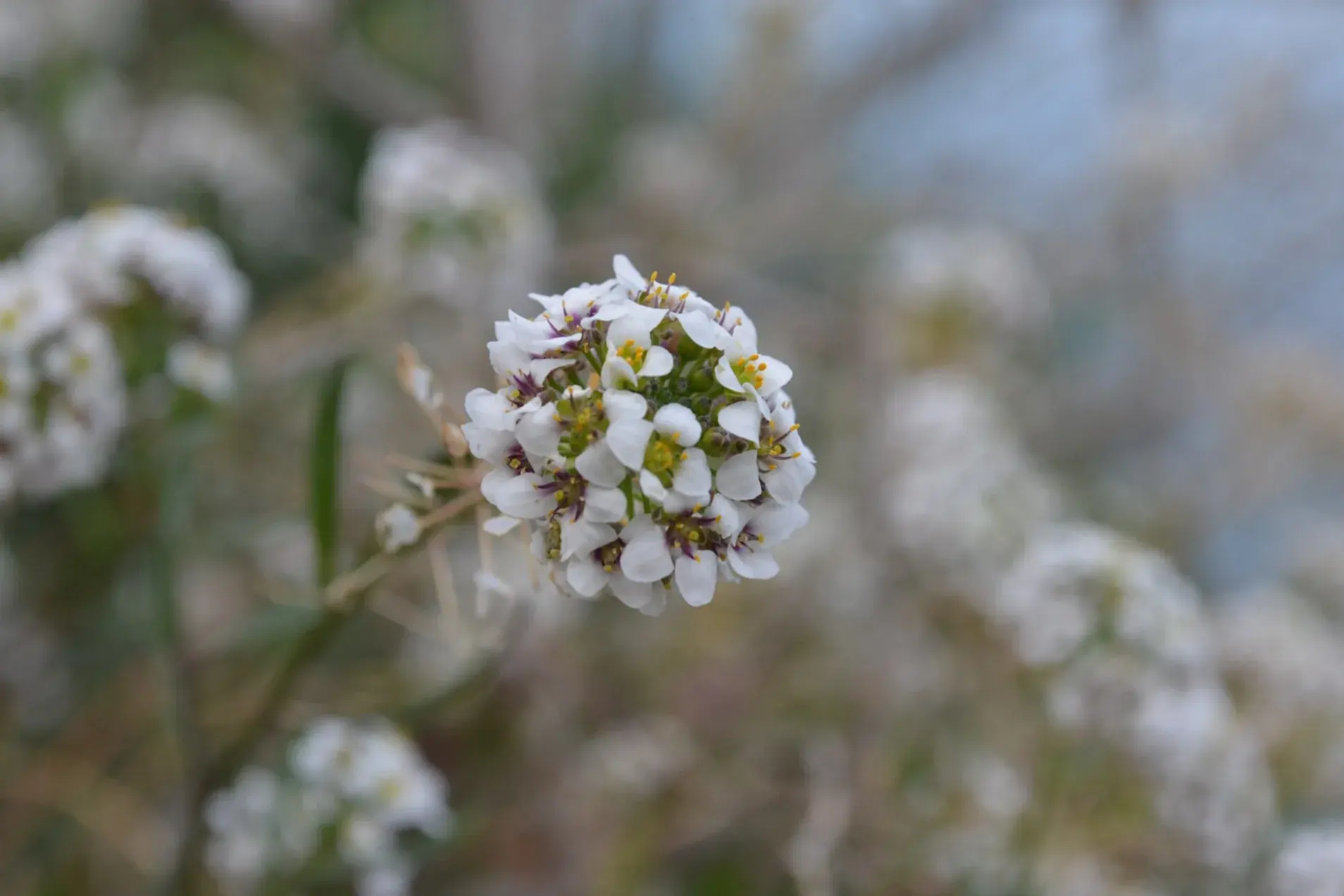
A honey-scented carpet for edges, baskets and the feet of taller plants — and a working café for beneficial insects. Sweet alyssum (Lobularia maritima) covers itself in tiny white, pink or purple blooms from spring to frost. It is technically a short-lived perennial, grown as an annual almost everywhere; sow it once and it often seeds next year's edging itself.
Grow Sweet Alyssum with us — step by step
Everything for this plant is written step by step below — what to do, and exactly when. Read it through first if you like: you can grow it entirely on your own with that guide. Or start with us here — tell us your planting day and we lay out your personal schedule on this page, every next step on its own day, counted from your planting date. No guessing, no forgetting.
Step 1 — today: Sow alyssum seed on the surface of seed mix under light, in a wide shallow tray — you'll plant it out in little tufts, not singles.
Sweet Alyssum at a glance
Sow indoors: 8 weeks before last frost
Move outside: At last frost, hardened off
Sow outdoors: At last frost
Spacing · Seed depth: 8 in apart · surface — seed needs light
Sun: Full sun to part shade
Water: Moderate — keep moist while young
Bloom: Spring to autumn; shear after the first flush for a second wave
Timing counts from your average last spring frost — get your own dates in the Planting Calendar. Guidance follows standard extension-service practice for Canada and the US.
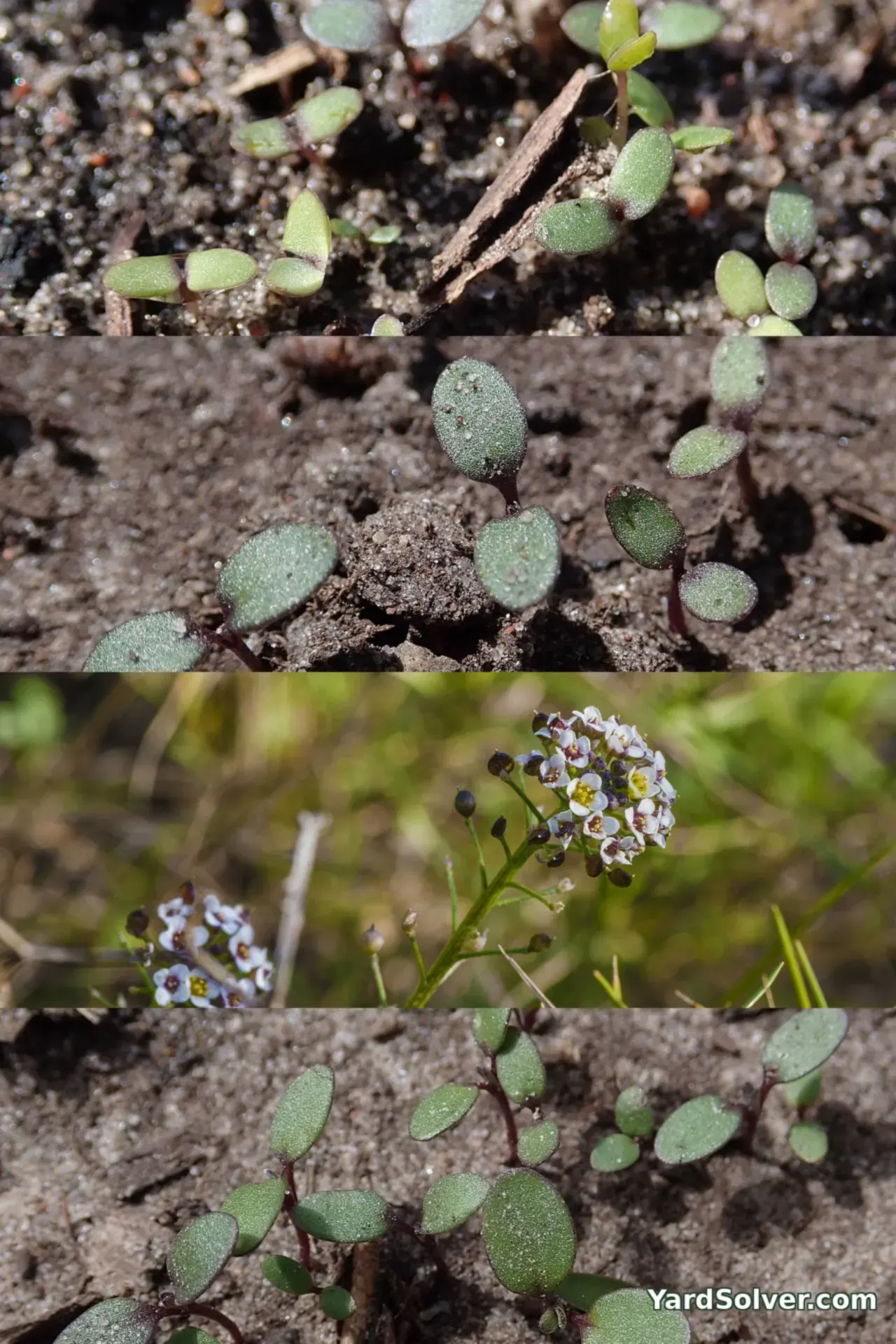
How to plant and grow sweet alyssum, step by step
Step 1 — Time it right
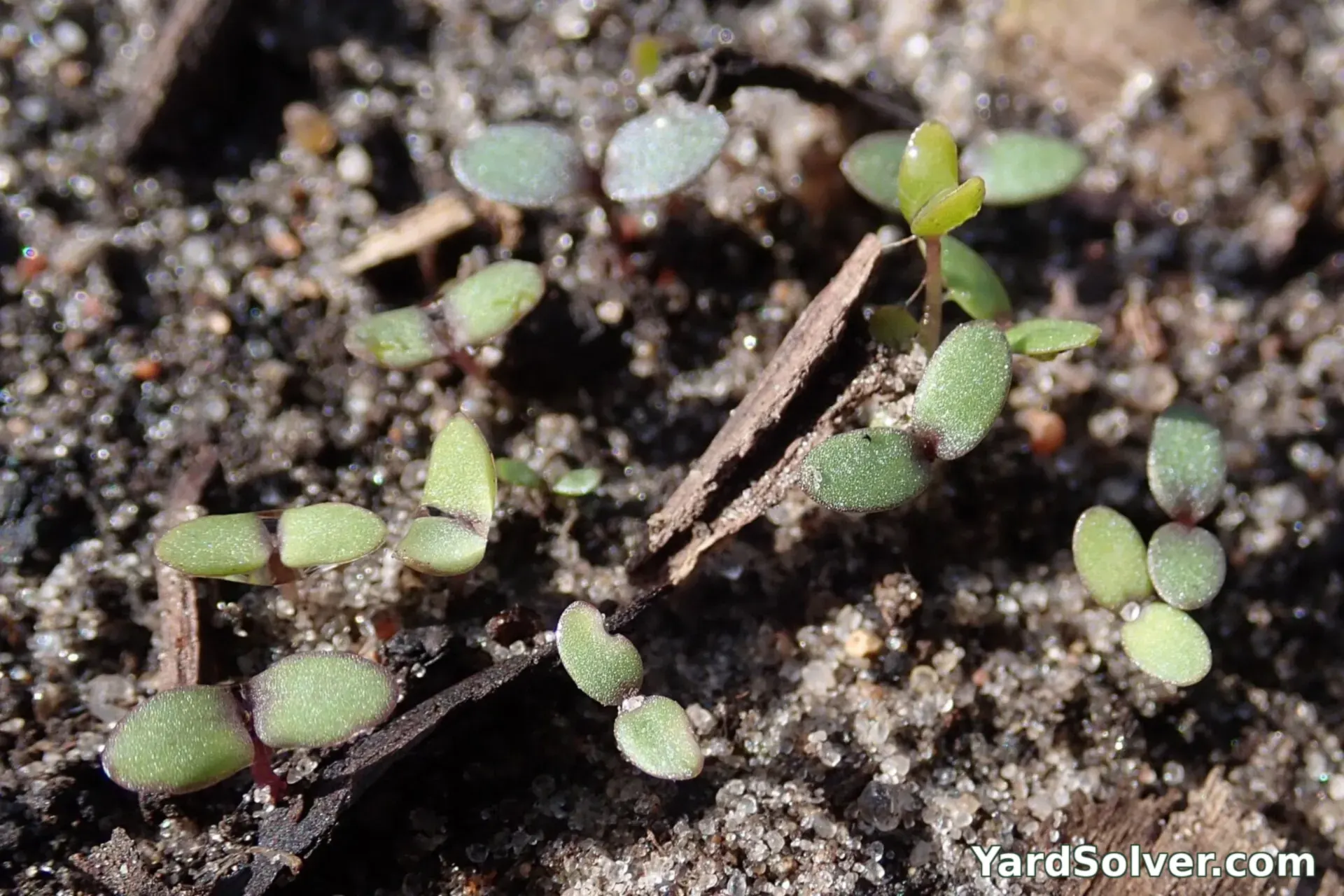
Sow indoors: 8 weeks before last frost; Move outside: at last frost, hardened off; Sow outdoors: at last frost. All dates count from your average last spring frost — the Planting Calendar turns them into real dates for your garden. Alyssum germinates in 5–10 days at room temperature when the seed sits in the light. Don't prick out individuals — the seedlings are thread-fine; instead, lift small tufts with a teaspoon when you plant out. It tolerates light frost once hardened, and a spring sowing flowers within about 8 weeks.
Step 2 — Prepare the spot
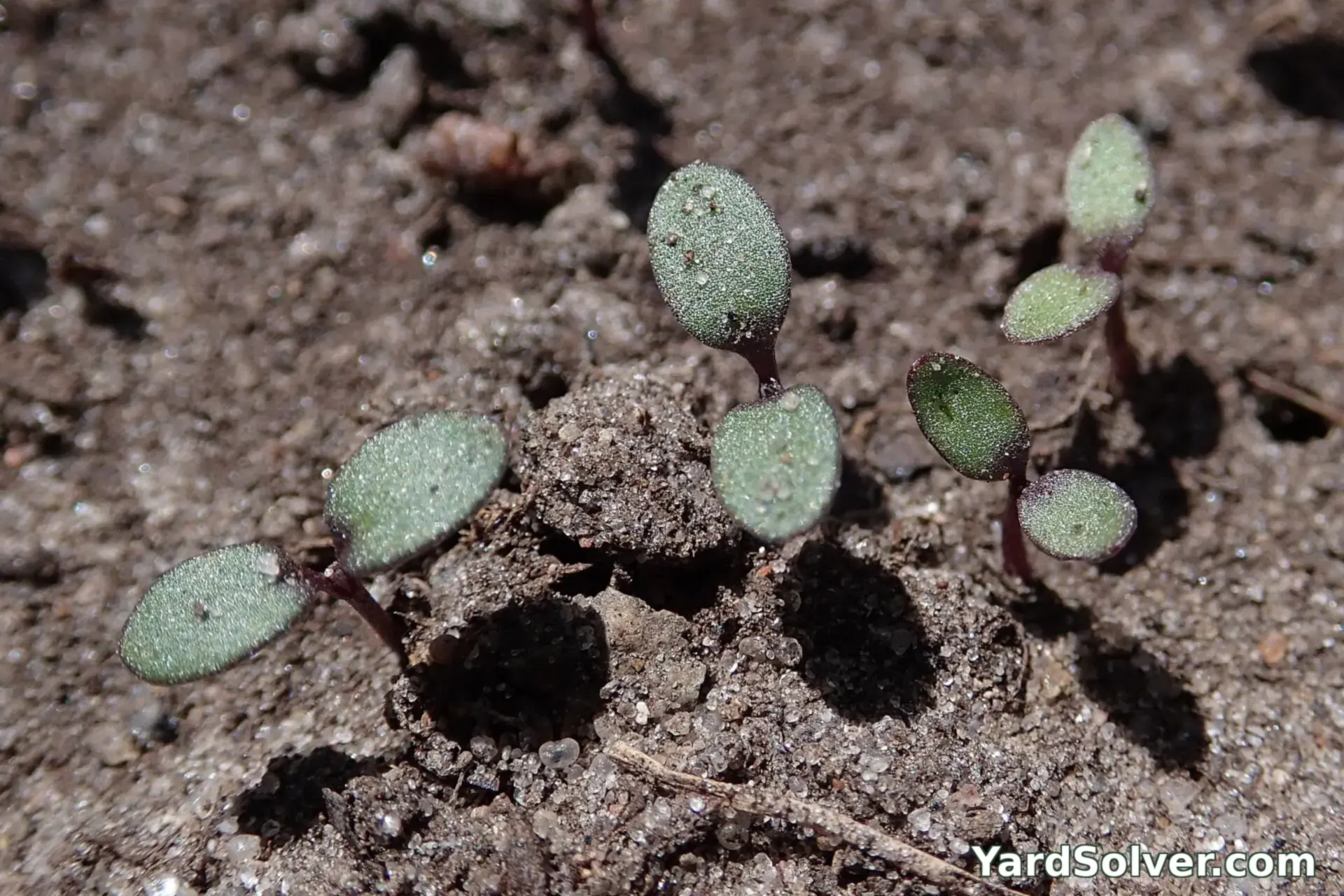
Alyssum is a plant of Mediterranean cliffs and paths: average soil, decent drainage, and no fuss. Work a little compost into the top of the bed if it's poor, and rake it level — the carpet will hide everything under a sheet of bloom. It is equally at home in baskets and window boxes. For a raised bed, the Raised Bed Soil Calculator counts the bags for you; mixing your own? The Garden Soil Calculator gives the compost-rich split to aim for.
Step 3 — Sow and plant out
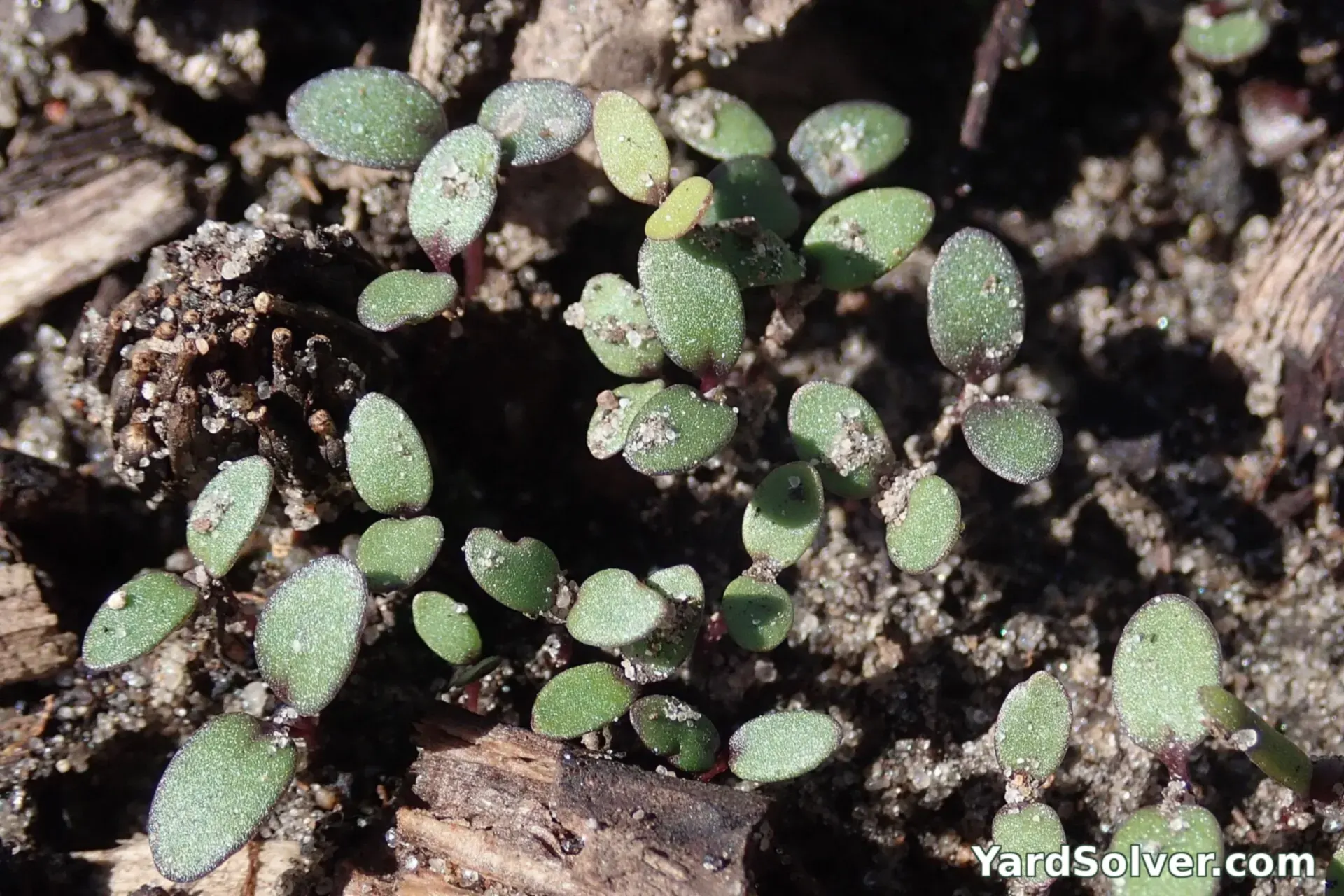
Set tufts 8 in apart, firm them in, and water gently. The Plant Spacing Calculator turns your bed size into an exact plant count. Good neighbours: alyssum is the companion-planting champion for pest control — its flowers feed hoverflies whose young devour aphids, which is why lettuce and brassica growers edge their beds with it (see the companion planting guide).
Step 4 — Water and feed
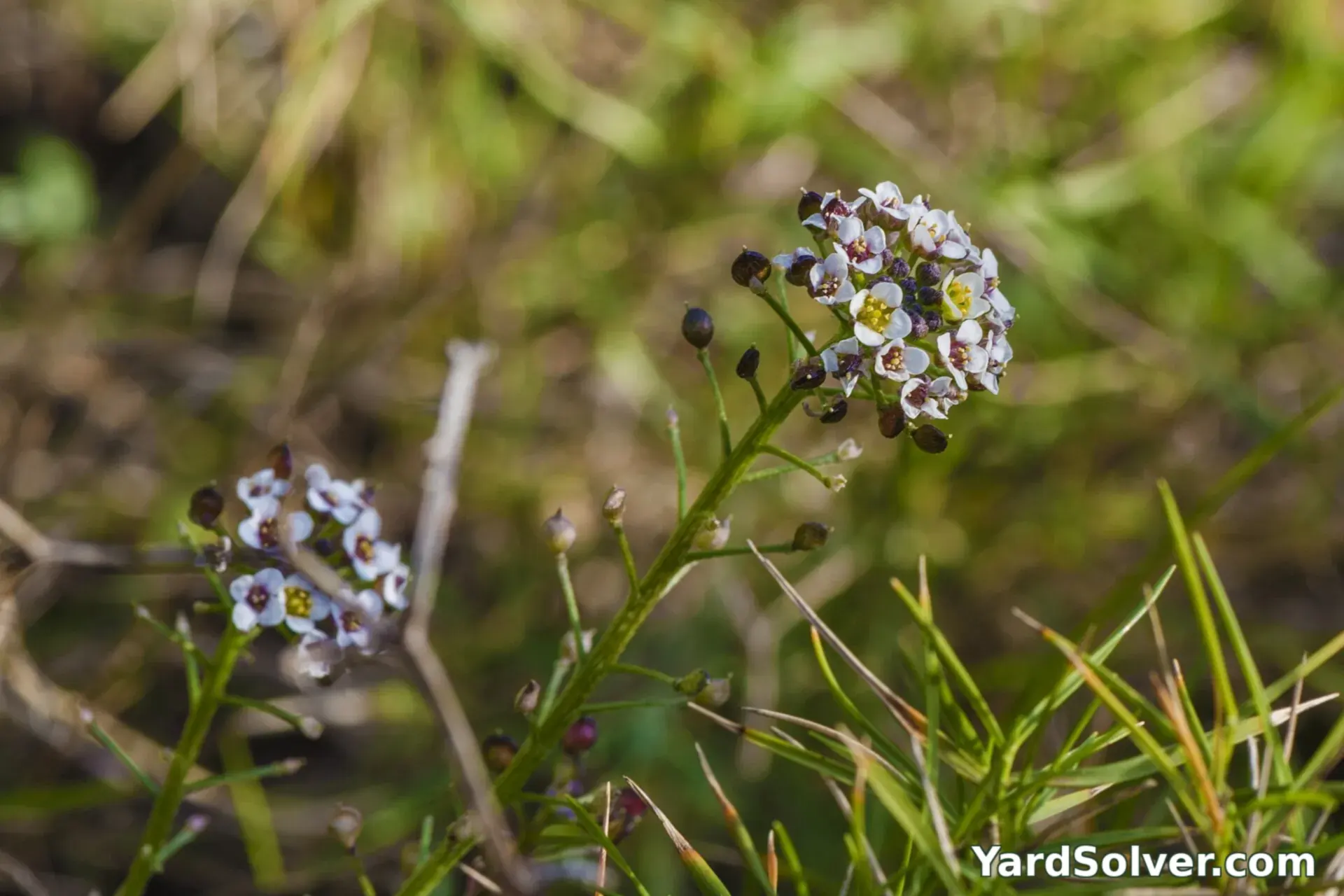
In the ground, water until the carpet knits, then only in drought. In baskets and boxes, shallow roots dry fast — expect to water daily in heat. Feeding is minimal: a half-strength liquid feed every few weeks in containers keeps bloom coming — the Fertilizer Calculator turns your bed size into exact amounts.
Step 5 — Care and the problems to watch for
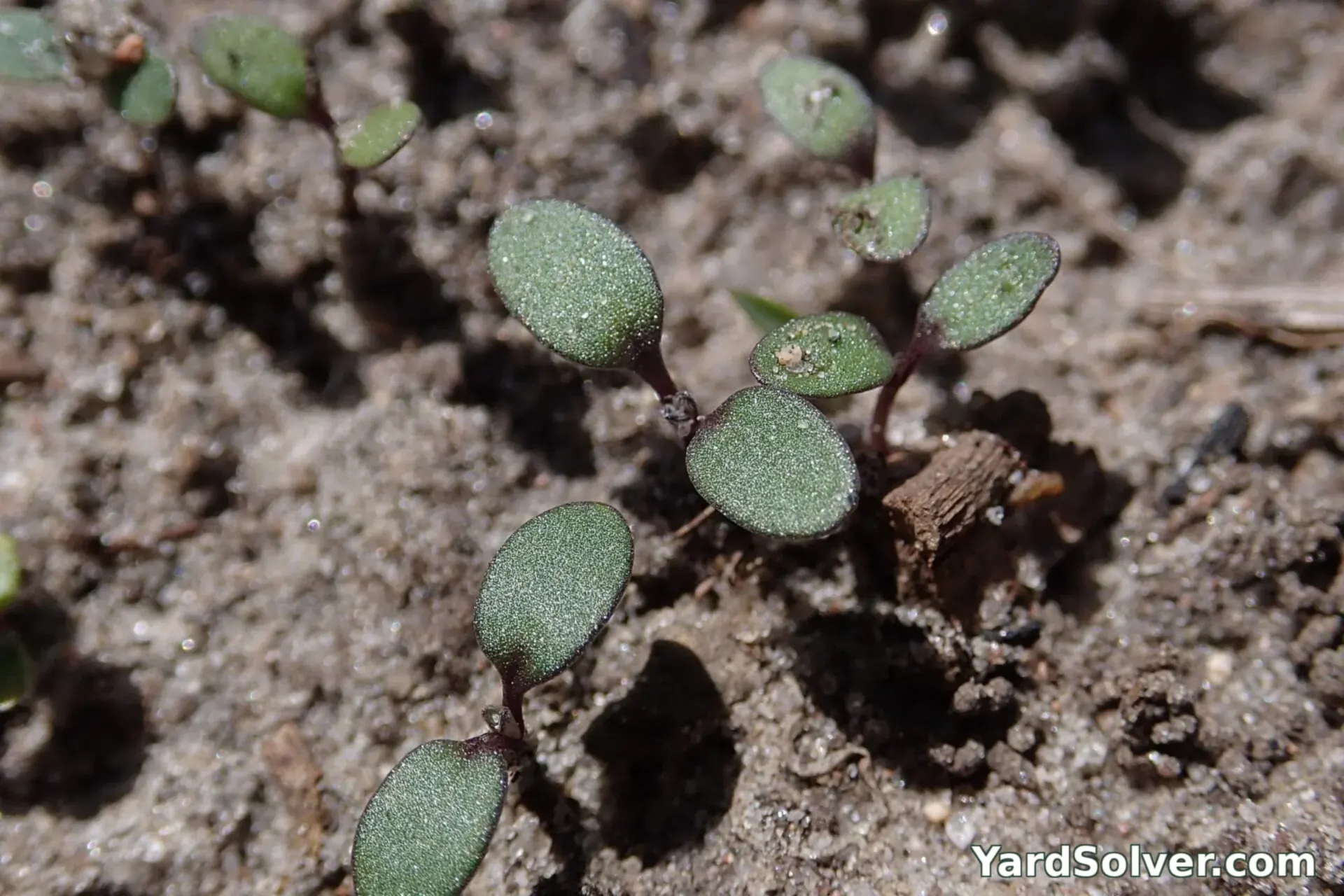
The one essential job: when the first great flush fades and plants look tired (heat does this in mid-summer), shear the whole carpet back by half with scissors. Water it, and within 2–3 weeks you get a fresh, tight flush that runs to frost.
- Plants melting in heat — shear, water, and wait; alyssum revives as nights cool.
- Patchy germination — buried seed; it needs light, so surface-sow and press in only.
- Self-sown seedlings — usually a bonus edging; move or hoe the ones you don't want.
Step 6 — Harvest
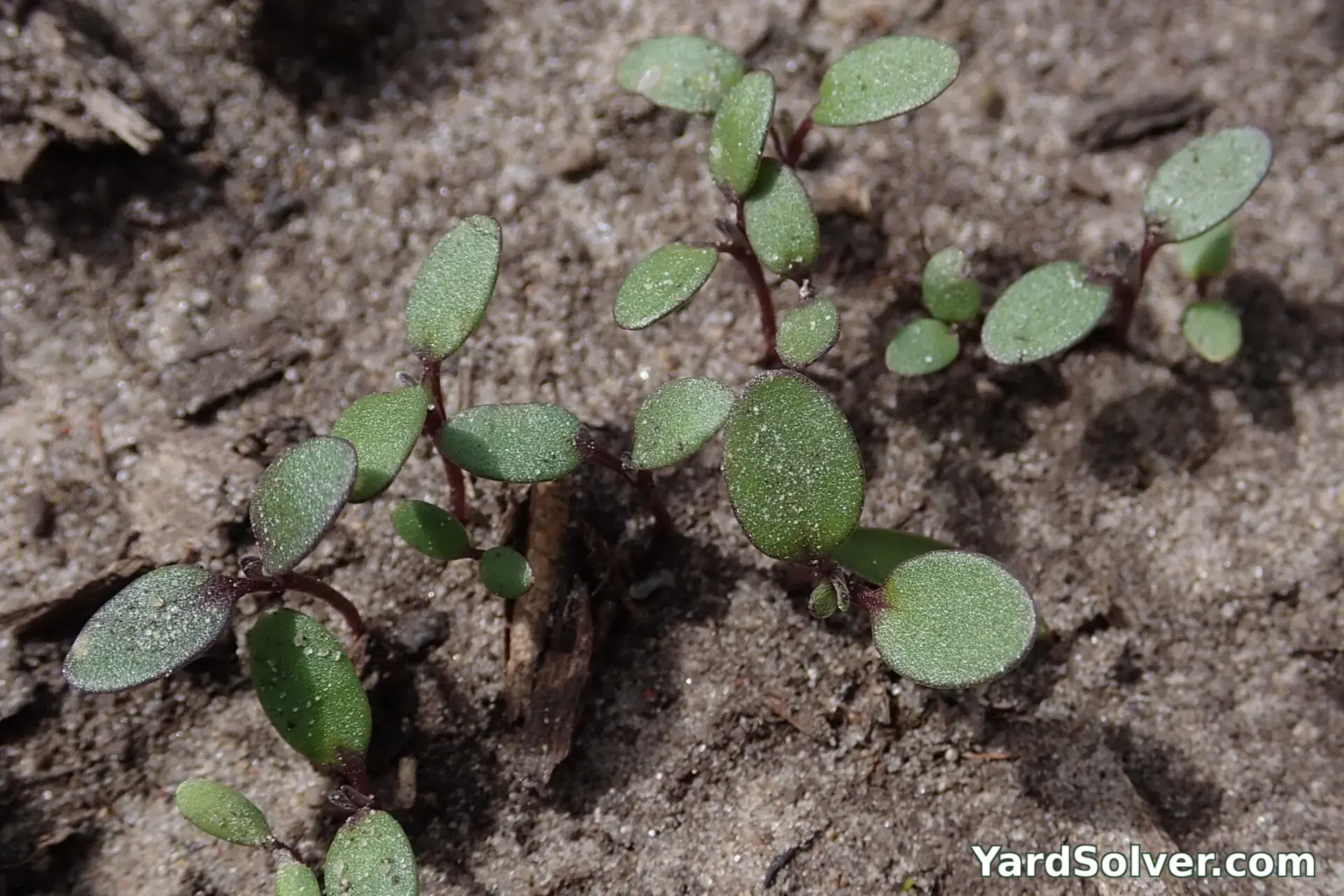
Alyssum's crop is perfume and pollinators rather than cut flowers (the stems are too short for a vase). Enjoy the carpet from spring to frost, let one patch ripen seed if you want volunteers, and breathe in on warm evenings — the honey scent is strongest then. In mild climates (zone 8+) plants may overwinter and bloom again; everywhere else, the seedlings take over.
📅 Your personal Sweet Alyssum schedule
Counted from your planting day — not a generic calendar. Day 0 is the day the seed went in the ground or the young plant went out.
Varieties worth growing
| Variety | Colour | Why gardeners like it |
|---|---|---|
| Carpet of Snow | White | The classic low white carpet — the hoverfly favourite for vegetable beds. |
| Rosie O'Day | Rose pink | A soft pink form that warms up white-and-green plantings. |
| Easter Bonnet Violet | Deep violet-purple | Rich colour for baskets; slightly more compact than the whites. |
Good for you — and take care
Benefits
- Feeds hoverflies and lacewings — front-line aphid control for the vegetable garden.
- Honey-scented ground cover that suppresses weeds at bed edges.
- Blooms from spring to frost with one mid-season haircut.
Take care
- Shear after the first flush or it stalls in summer heat.
- Surface-sow — buried seed rarely germinates.
- In containers it dries out fast; keep the watering can handy.
A little history — and one good fact
Sweet alyssum comes from the rocky coasts of the Mediterranean and the Canary Islands, where it scents sea cliffs. Victorian gardeners took it to their hearts for carpet bedding, and vegetable growers later discovered its second career as an insectary plant — few flowers feed so many pest-eating allies.
Fun fact: A single alyssum plant can carry thousands of tiny flowers over a season — which is why the hoverflies always seem to find your patch first.
Keep going
Guides: Companion planting basics · Pollinator garden guide · Succession planting
Calculators: Plant Spacing Calculator · Garden Mix Calculator · Fertilizer Calculator
More flowers: Lobelia · Pansy · Calibrachoa · Cornflower
← Back to the Plant Library · Get your personal planting dates
Questions people ask
Does sweet alyssum come back every year?
The plants are short-lived perennials in mild zones (8+), but most gardeners treat alyssum as an annual. It self-sows so willingly that a patch usually reappears on its own each spring.
Why did my alyssum stop flowering in summer?
Heat is the usual reason — the first flush exhausts it in hot weather. Shear the whole plant back by half, water well, and it returns with a fresh flush that lasts into autumn.
Why do vegetable growers plant alyssum?
Its tiny flowers feed hoverflies and other beneficial insects whose larvae eat aphids in large numbers. Edging lettuce and brassica beds with alyssum is a classic companion-planting trick.
Shear it back hard: the midsummer haircut that brings sweet alyssum back into flower
Sweet alyssum flowers itself to exhaustion. By midsummer a spring-sown edging that was a white carpet in June often turns leggy, sparse and mostly seed heads — and most gardeners assume it is finished. It is not. Take shears or scissors and cut the whole plant back by half, flowers, stems and all, then water deeply and feed once with a balanced liquid feed. In warm weather the plant re-branches and is flowering again within two to three weeks, and it will repeat the trick once more before frost if you shear it again when the second flush fades.
Heat is the other half of the story. Alyssum is a cool-season flower that sulks in hot nights, so in warm districts it performs best with afternoon shade and never-dry soil, and it often does its finest work in the autumn cool rather than high summer. It also self-sows freely where it is happy — let the last autumn flush set seed and seedlings appear next spring in the same cracks and edges, which is why one packet can stock a path edge for years. Those volunteers are rarely identical to named varieties, but for a fragrant white edging the difference hardly matters.
The worked example: a 3-metre path edge sown in spring, sheared twice — once in midsummer, once in late summer — commonly carries flower for five to six months of the year from a single sowing. The unsheared edge next to it gives a superb six weeks, then turns to seed heads and gaps while the sheared edge is on its second and third carpets. Five minutes with shears, twice a season, is the whole cost of the difference.
Sources
Key facts on this page — timing, spacing and care — cross-checked against NC State Extension Plant Toolbox — Lobularia maritima (sweet alyssum) — culture, bloom and care requirements.
Related page
Read next: Companion Planting Basics: Good & Bad Neighbours.
Comments & ratings
No comments yet.
Be the first to share your experience.