
Plant Library · Flowers · By Faizan Ahmad
🌸 How to Grow Gladiolus
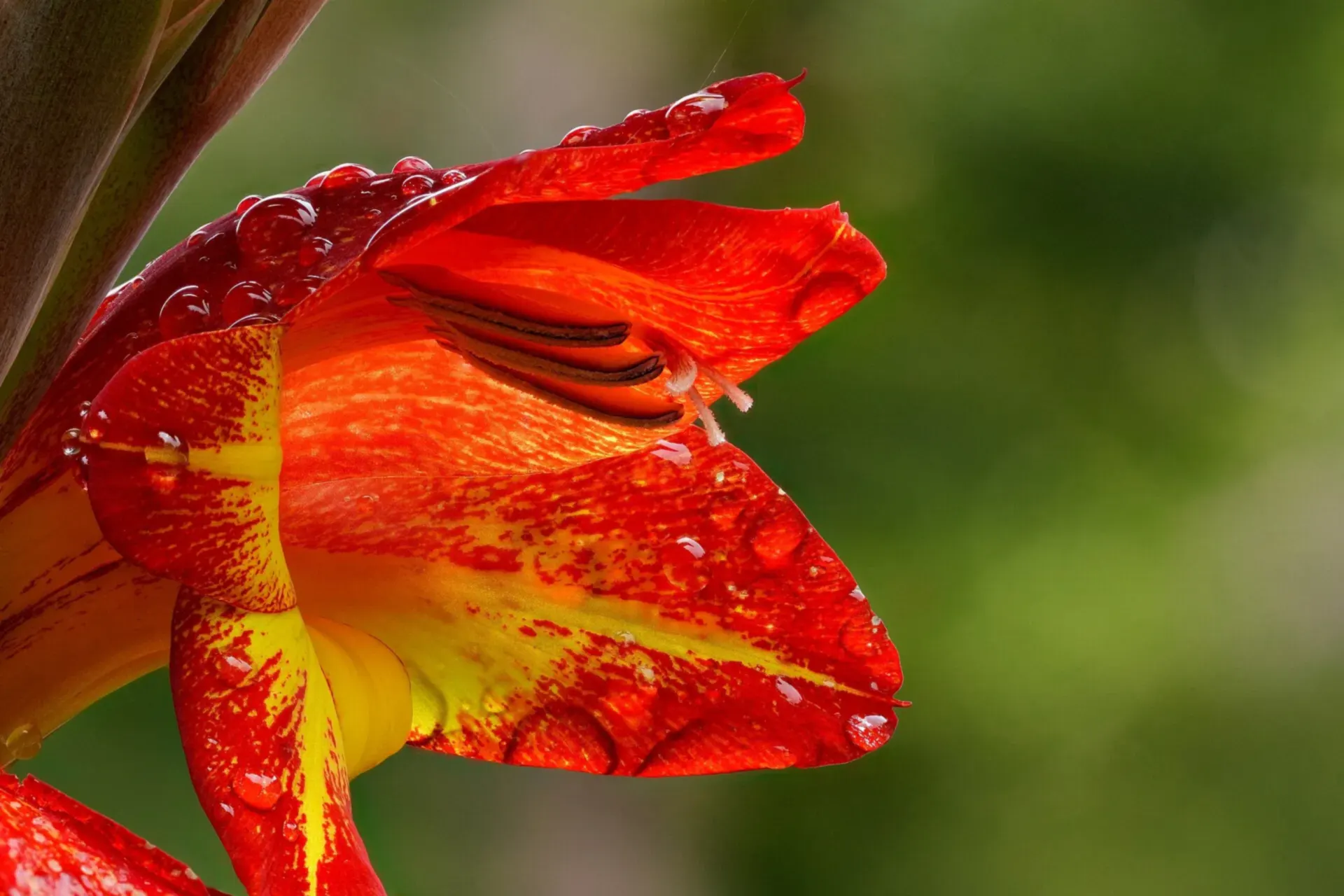
Swords of colour on 4 ft spikes — plant the corms in batches and cut flowers all summer. Gladiolus is a tender bulb (a corm, properly) planted in spring: sow a row every two weeks from the last frost to midsummer and you harvest spikes from July to September — about 70–100 days after each planting. Stake them, water them, and lift the corms in autumn where winters bite.
Grow Gladiolus with us — step by step
Everything for this plant is written step by step below — what to do, and exactly when. Read it through first if you like: you can grow it entirely on your own with that guide. Or start with us here — tell us your planting day and we lay out your personal schedule on this page, every next step on its own day, counted from your planting date. No guessing, no forgetting.
Step 1 — today: Buy firm, plump gladiolus corms in spring and plant the first batch as soon as frost passes — the succession starts here.
Gladiolus at a glance
Plant corms: From last frost, then every 2 weeks until midsummer
Sow outdoors: From seed takes years — plant corms
Spacing · Planting depth: 6 in apart · 4–6 in deep, point up
Sun: Full sun
Water: Regular — an inch a week while growing
Bloom: 70–100 days after planting; cut as the lowest buds open
Timing counts from your average last spring frost — get your own dates in the Planting Calendar. Guidance follows standard extension-service practice for Canada and the US.
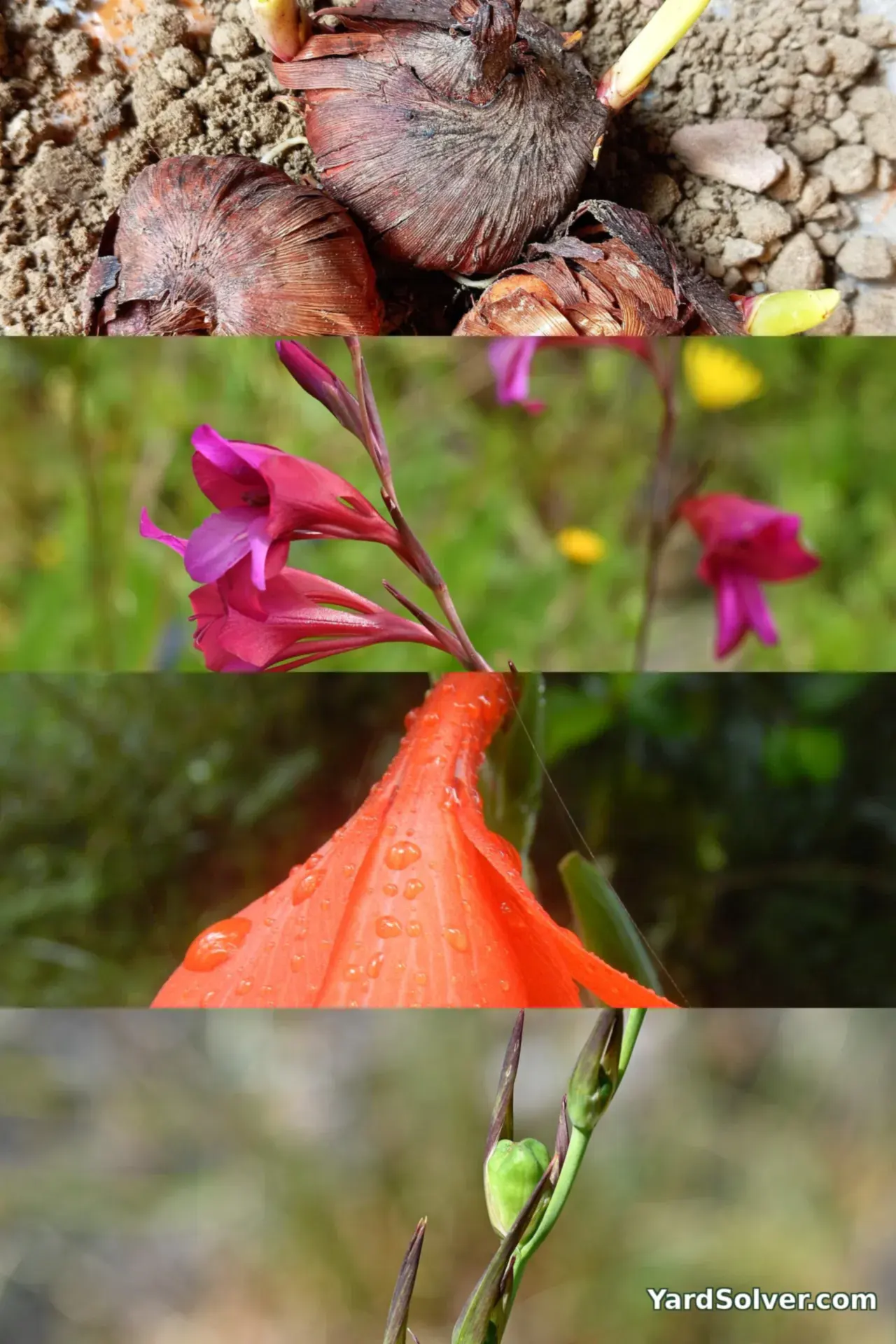
How to plant and grow gladiolus, step by step
Step 1 — Time it right
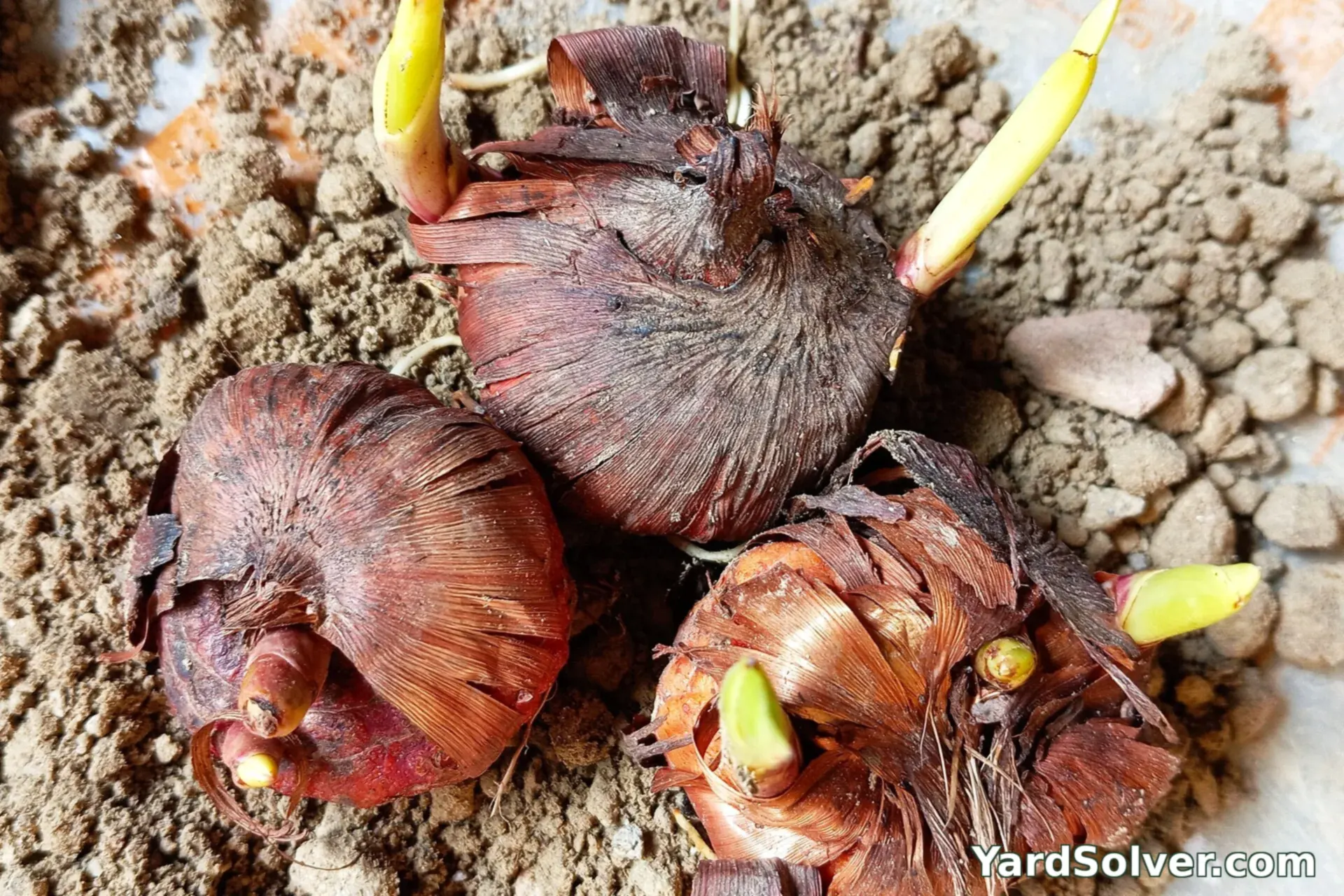
Plant corms: from last frost, then every 2 weeks until midsummer for a nonstop succession; From seed: not practical — corms flower the same summer. All dates count from your average last spring frost — the Planting Calendar turns them into real dates for your garden. A gladiolus corm flowers once, about 70–100 days after planting (earlier varieties first), so the professional trick is batches: plant a dozen every two weeks from the last frost to early July. By August the batches overlap into a continuous harvest. Choose big corms (3–4 in across is not too big) — corm size is spike size.
Step 2 — Prepare the spot
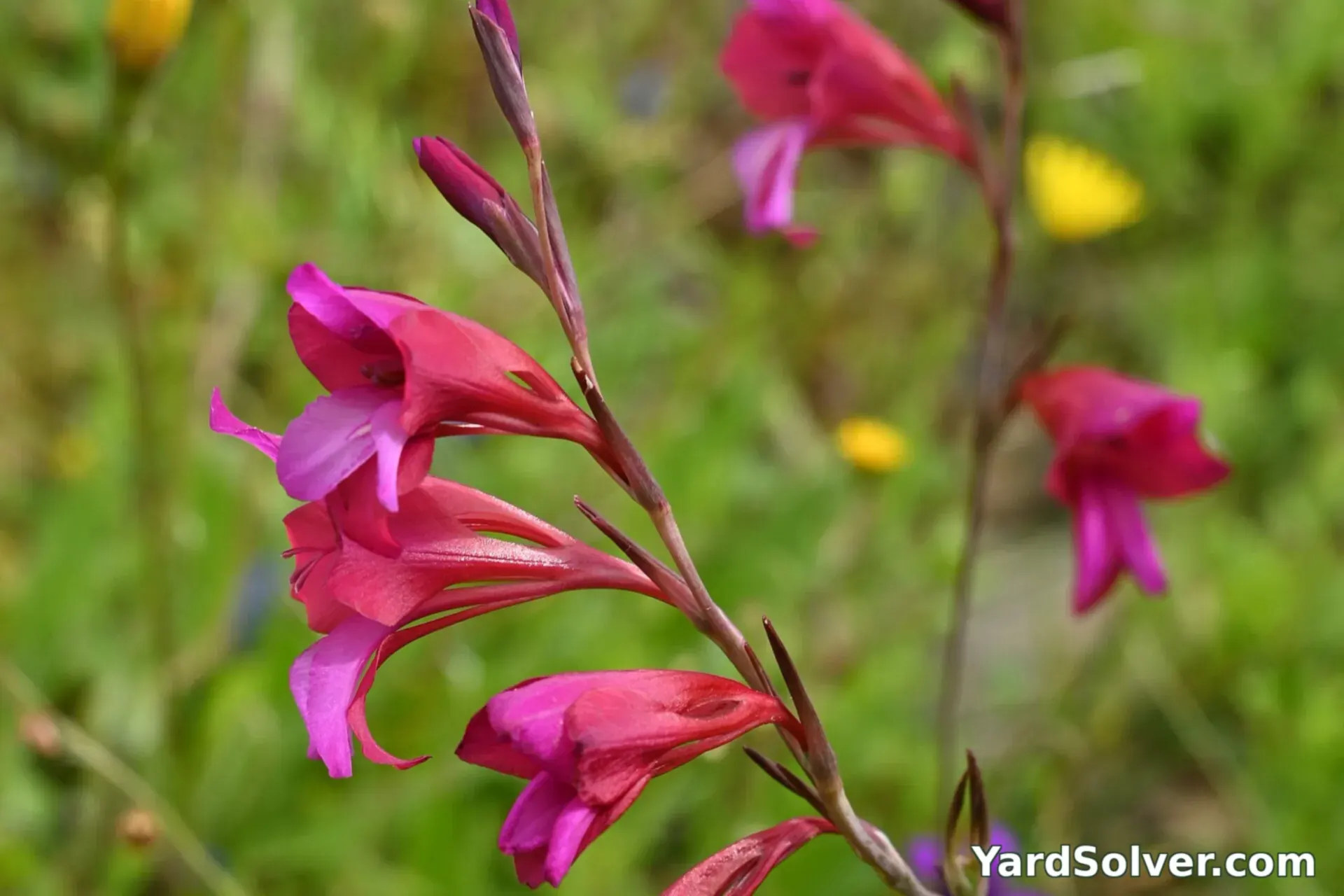
Gladiolus wants full sun and well-drained, fertile soil. Dig a trench about 6 in deep, scatter compost or balanced fertilizer in the base, and cover it with an inch of soil so corms don't sit on raw feed. Heavy, wet ground rots corms — lighten it or use a raised bed. For a raised bed, the Raised Bed Soil Calculator counts the bags for you; mixing your own? The Garden Soil Calculator gives the compost-rich split to aim for.
Step 3 — Sow and plant out
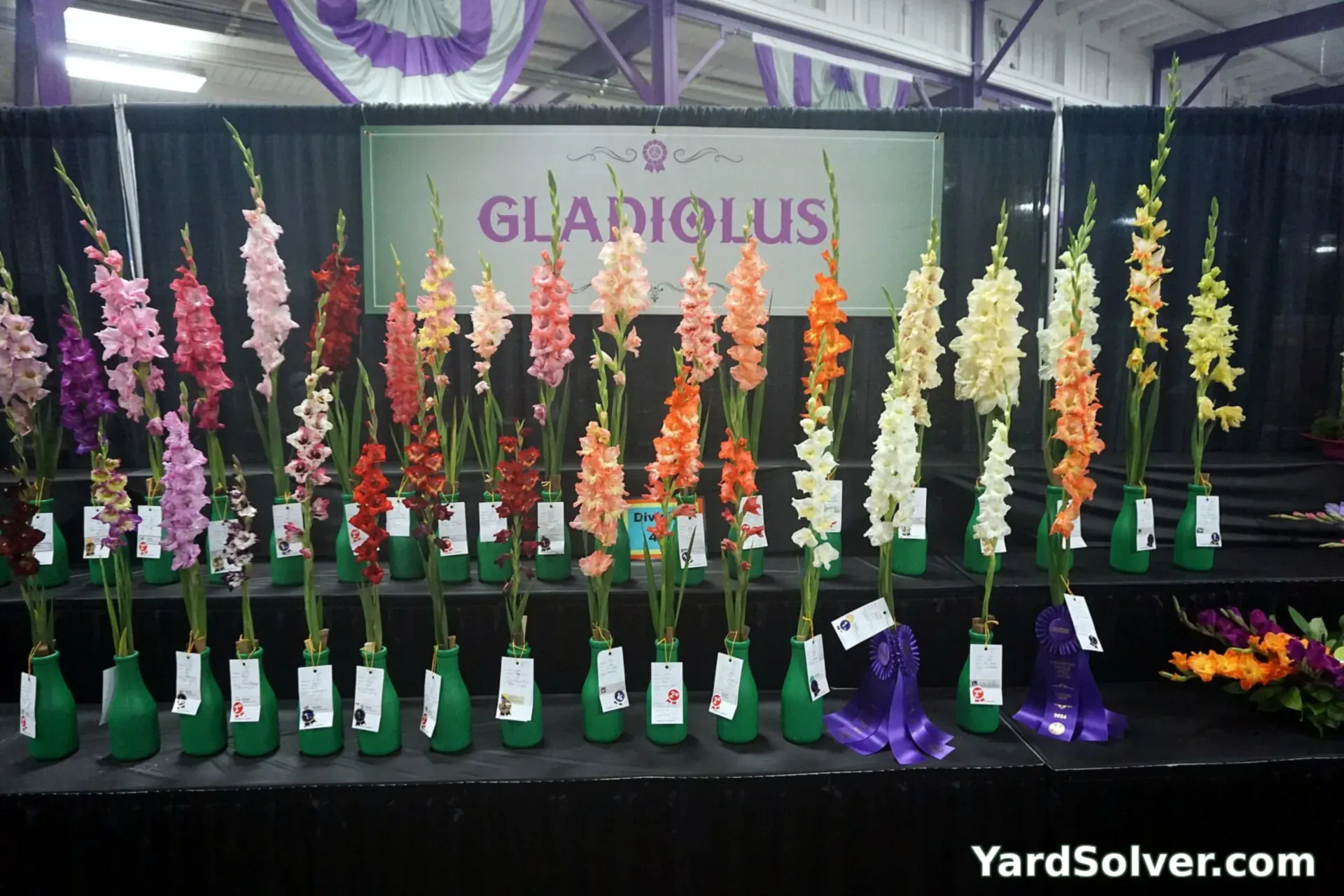
Set corms point-up, 6 in apart and 4–6 in deep — deeper in sand, shallower in clay. The Plant Spacing Calculator turns your bed size into an exact plant count. Fill the trench and water in. Good neighbours: gladiolus rows stand behind lower summer bedding, and a row through the vegetable garden is the classic cutting-garden move — they take almost no ground space.
Step 4 — Water and feed
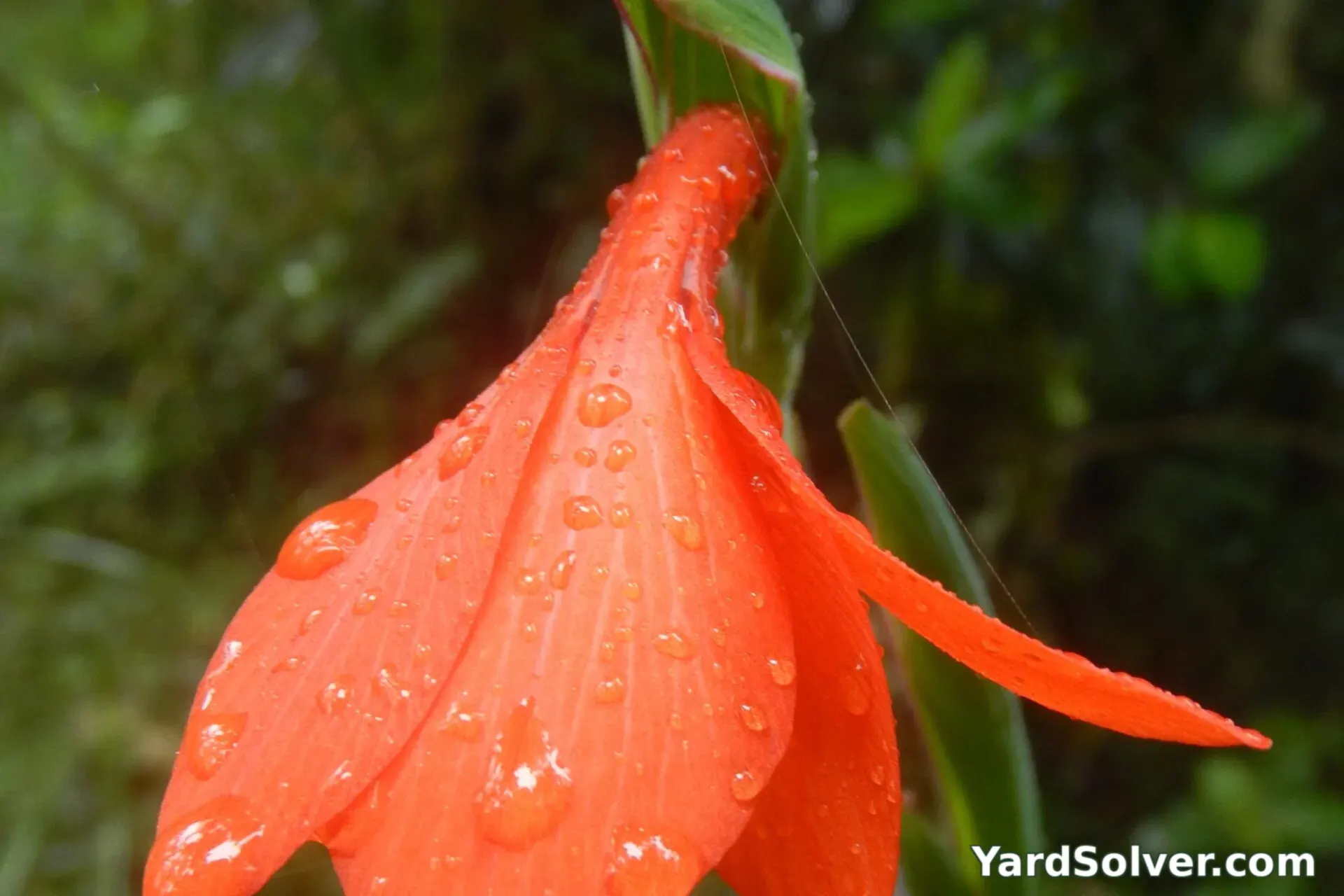
Water deeply once a week (twice in heat) from emergence to flowering: spikes are made of water as much as anything. Feed with a balanced fertilizer when the shoots are a foot tall and again as the spike emerges — the Fertilizer Calculator turns your bed size into exact amounts. Mulch to hold the moisture in.
Step 5 — Care and the problems to watch for
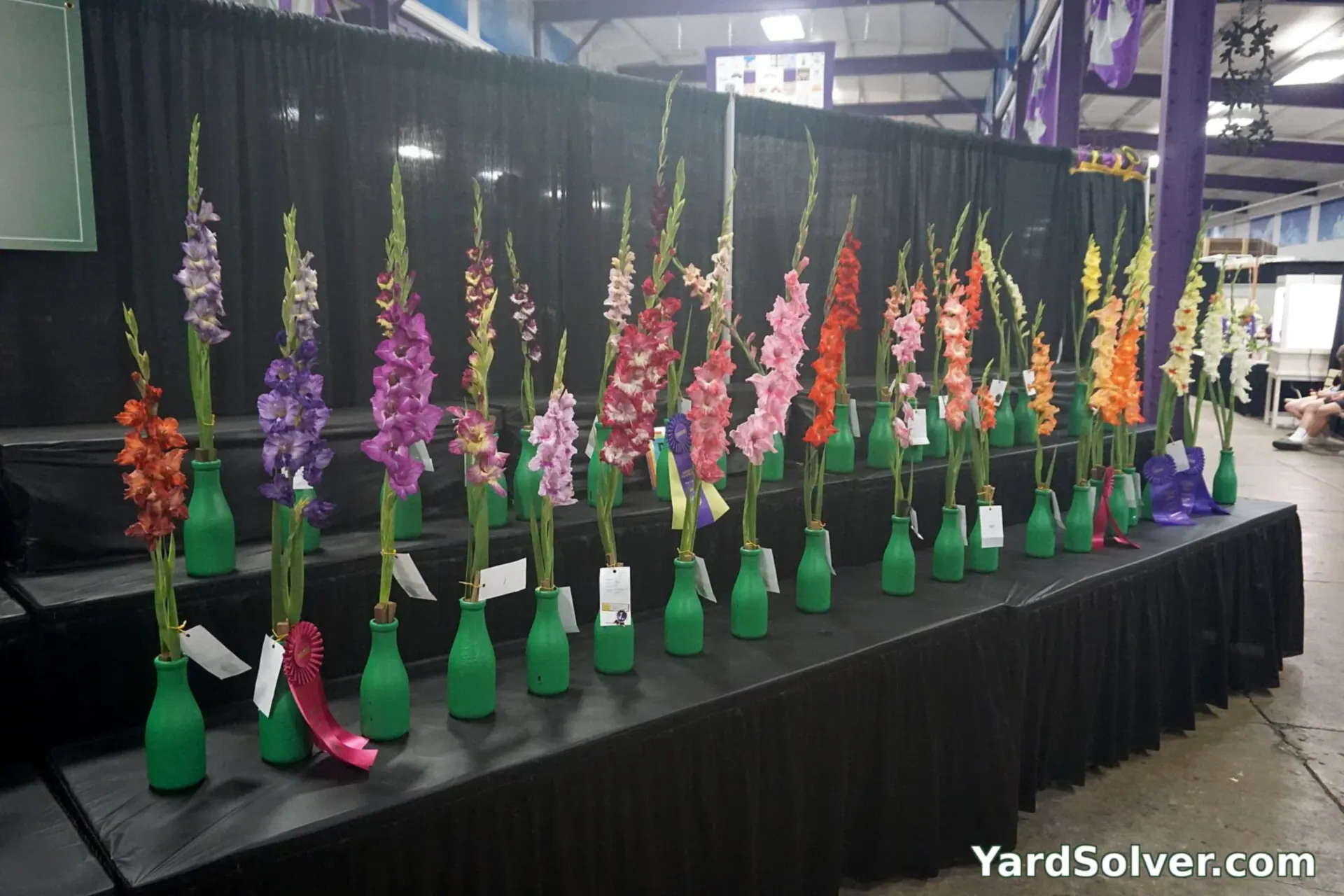
Tall spikes in wind or rain will fall, and a fallen spike never recovers its line. Run canes and string along the row, or grow them through a support net.
- Thrips — tiny insects that silver the leaves and blast the buds; they overwinter on stored corms, so dust stored corms and discard infested ones.
- Corm rot — plant only firm corms; spongy or mouldy ones go in the bin, not the bed.
- Crooked spikes — drought or crowding at spike-forming time; water steadily.
Step 6 — Harvest
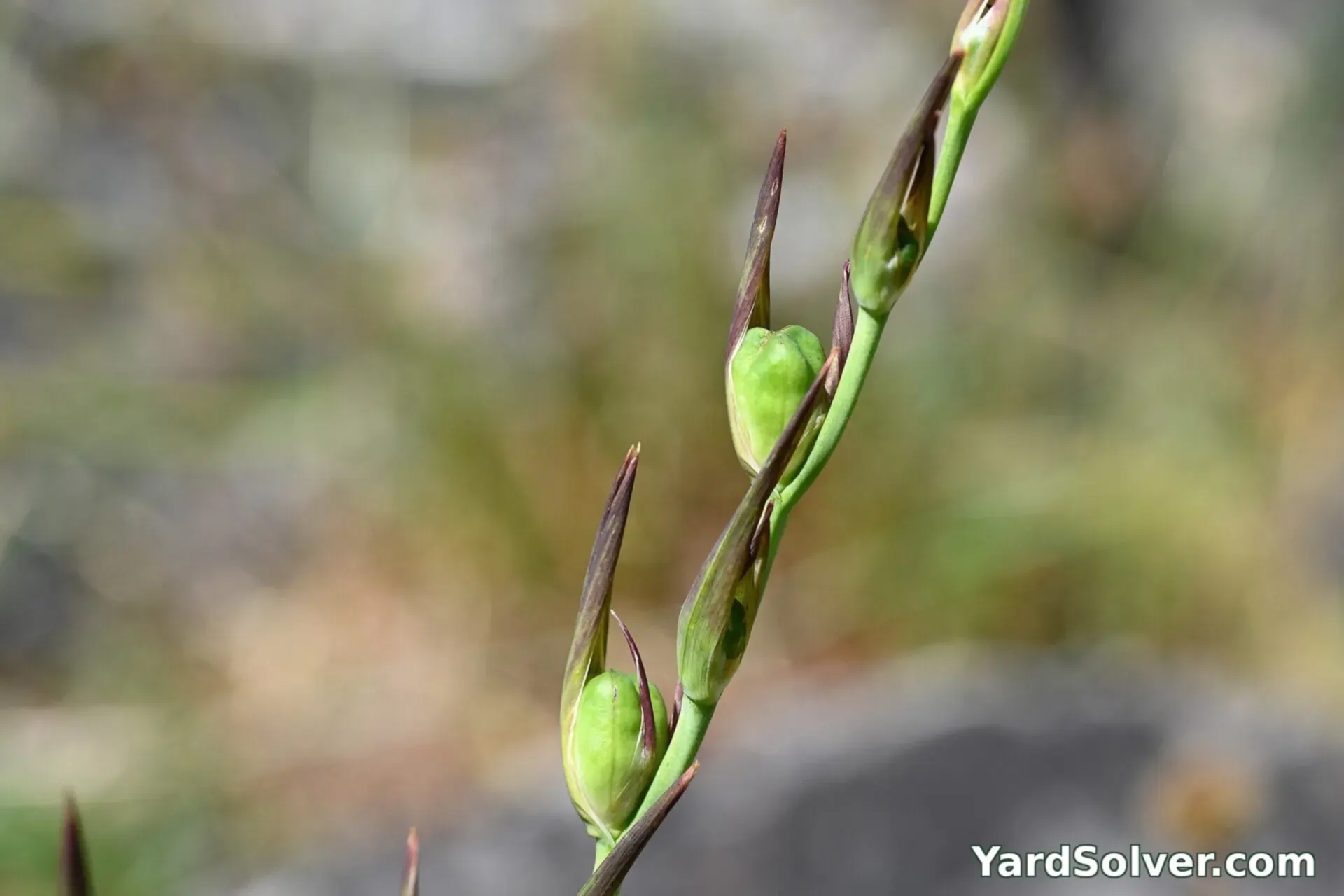
Cut spikes in the morning when the lowest 2–3 flowers have opened, leaving at least 4 leaves on the plant — the leaves rebuild the new corm forming at the base. Stand spikes deep in water; they last 7–10 days with the water refreshed. After flowering, let foliage yellow for 6 weeks, then lift the corms, dry them, and store frost-free in a paper bag where winters are cold; in zones 8+ they may stay in the ground under mulch.
📅 Your personal Gladiolus schedule
Counted from your planting day — not a generic calendar. Day 0 is the day the seed went in the ground or the young plant went out.
Varieties worth growing
| Variety | Colour | Why gardeners like it |
|---|---|---|
| Priscilla | White with pink edges | A florist's favourite — huge, ruffled, romantic spikes. |
| Black Surprise | Deep burgundy-black | Dramatic dark spikes for late-summer arrangements. |
| Atom | Red with silver edging, dwarf | A charming small glad for the front of borders and pots. |
Good for you — and take care
Benefits
- The florist's spike — weeks of cut flowers from spring batches.
- Huge colour range on statuesque 4 ft stems.
- Almost no ground footprint — rows fit anywhere sunny.
Take care
- Stake tall spikes before wind and rain take them.
- Lift corms for winter below zone 8; thrips ride stored corms.
- Leave 4+ leaves when cutting or next year's corm shrinks.
A little history — and one good fact
Gladiolus — 'little sword' in Latin — grew wild around the Mediterranean and through Africa, where most of the 250 species live. Victorian hybridisers and later Dutch breeders built the giant florist's forms; the sword lily has been a top-five cut flower ever since.
Fun fact: A gladiolus spike opens from the bottom up over about a week — florists remove the top buds to push the plant's energy into the open flowers.
Keep going
Guides: Succession planting · Companion planting basics · Crop rotation basics
Calculators: Plant Spacing Calculator · Garden Mix Calculator · Fertilizer Calculator
More flowers: Lily · Alstroemeria · Daffodil · Tulip
← Back to the Plant Library · Get your personal planting dates
Questions people ask
Do gladiolus come back every year?
The corm you plant flowers once and is replaced by a new corm forming above it. In zones 8 and warmer the new corms overwinter in the ground; in colder zones, lift them after the foliage yellows, dry and store them frost-free, and replant in spring.
Why did my gladiolus fall over?
Top-heavy wet spikes in wind — gladiolus almost always needs support. Stake the row or grow through a net when plants are knee-high; a fallen spike won't straighten again.
How do I get gladiolus flowers all summer?
Succession-plant: a small batch of corms every two weeks from the last frost to early July. Each batch flowers 70–100 days later, so the batches overlap into a continuous supply.
Corms in fortnightly batches, stakes before the spikes lean, and corms lifted where winters bite
Gladiolus grow from corms — swollen stem bases, renewed each season — and their one great garden trick is succession. A single spring planting flowers all at once and is gone in a fortnight; planting a small batch every two weeks from the last frost to midsummer spreads the spikes across the whole summer, which is how cutting gardens keep vases filled.
Height is the second fact to plan around: flower spikes commonly reach a metre or more and topple in wind or after rain just as they open, so plant corms deeper than instinct suggests (10–15 cm), in their final sunny position, and put support in early rather than rescuing leaning stems. Thrips are the standing pest — tiny insects that silver the leaves and blast the buds — best answered early with insecticidal soap on the foliage, because a bud damaged inside its sheath never opens clean.
In cold-winter regions the corms are lifted after the foliage yellows, cured, and stored dry and frost-free like dahlia tubers; in mild regions they can stay in the ground with a mulch. The worked example: fortnightly batches, planted deep and supported, give cutting spikes from early summer to autumn. One big April planting gives one glorious week — and eleven weeks of foliage.
Sources
Key facts on this page — timing, spacing and care — cross-checked against Gladiolus — Wikipedia — background on the genus, its corms and its cultivation.
Related page
Read next: How to Store Dahlia Tubers Over Winter (Dig, Cure, Store).
Comments & ratings
No comments yet.
Be the first to share your experience.