
Plant Library · Flowers · By Faizan Ahmad
🌺 How to Grow Alstroemeria (Peruvian Lily)
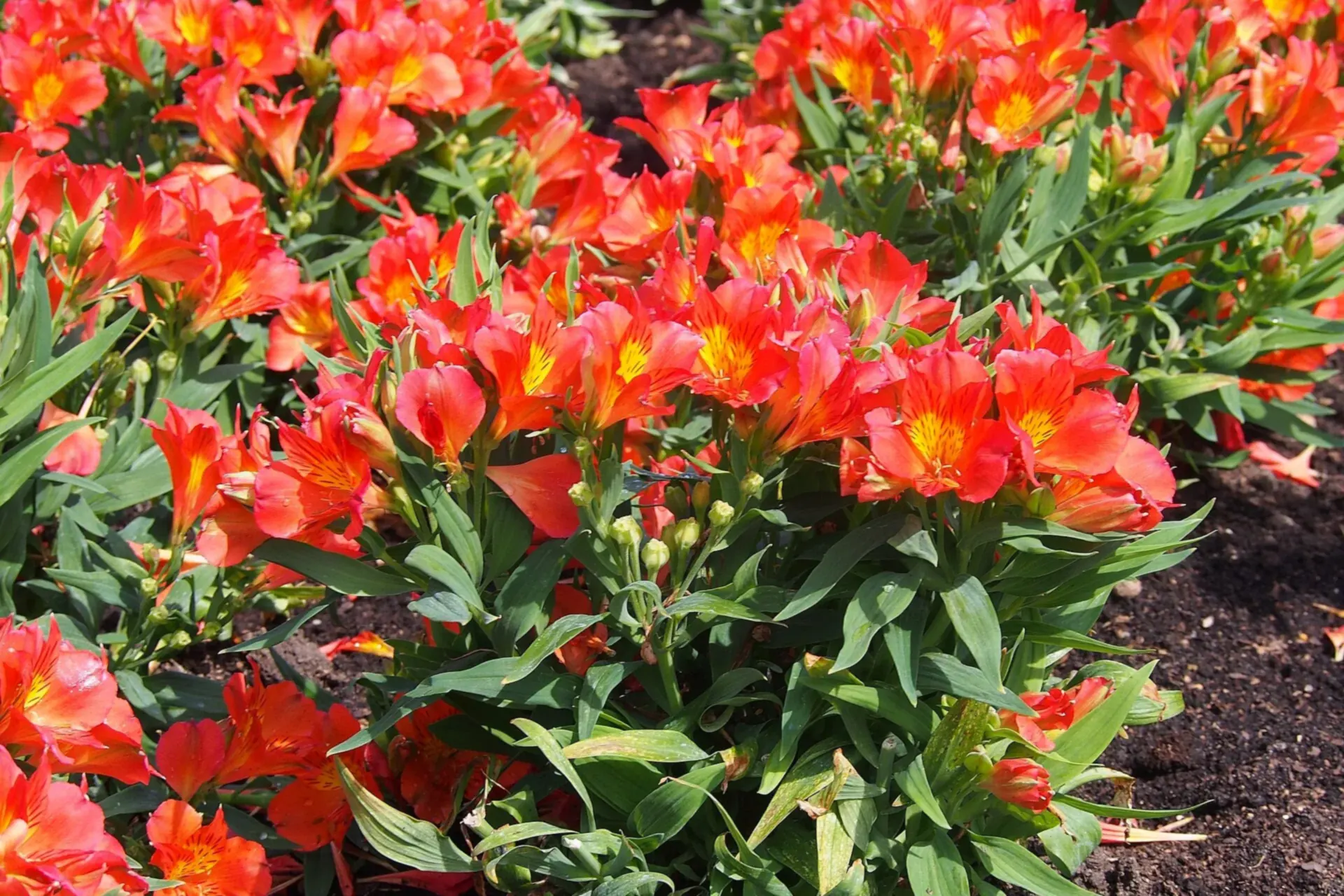
The florist's longest-lasting cut flower, from your own border — plant the tubers once and pick for a decade. Garden alstroemerias (Peruvian lilies) are rhizomatous perennials, reliably hardy in zones 8–10 and worth mulching deeply in zone 6–7. One rule makes the harvest: pull stems from the base like rhubarb — never cut them — and the plant answers with more.
Grow Alstroemeria (Peruvian Lily) with us — step by step
Everything for this plant is written step by step below — what to do, and exactly when. Read it through first if you like: you can grow it entirely on your own with that guide. Or start with us here — tell us your planting day and we lay out your personal schedule on this page, every next step on its own day, counted from your planting date. No guessing, no forgetting.
Step 1 — today: Buy alstroemeria tubers or a potted plant in spring — the brittle, finger-like roots demand gentle handling from day one.
Alstroemeria (Peruvian Lily) at a glance
Plant out: Spring, as potted plants or tubers, after frost
Sow outdoors: Not practical — seed is slow; plant tubers or pots
Spacing · Planting depth: 15 in apart · tubers 6–8 in deep
Sun: Full sun to part shade
Water: Regular — keep moist while growing
Bloom: June to September; pulled stems last up to 2 weeks in a vase
Timing counts from your average last spring frost — get your own dates in the Planting Calendar. Guidance follows standard extension-service practice for Canada and the US.
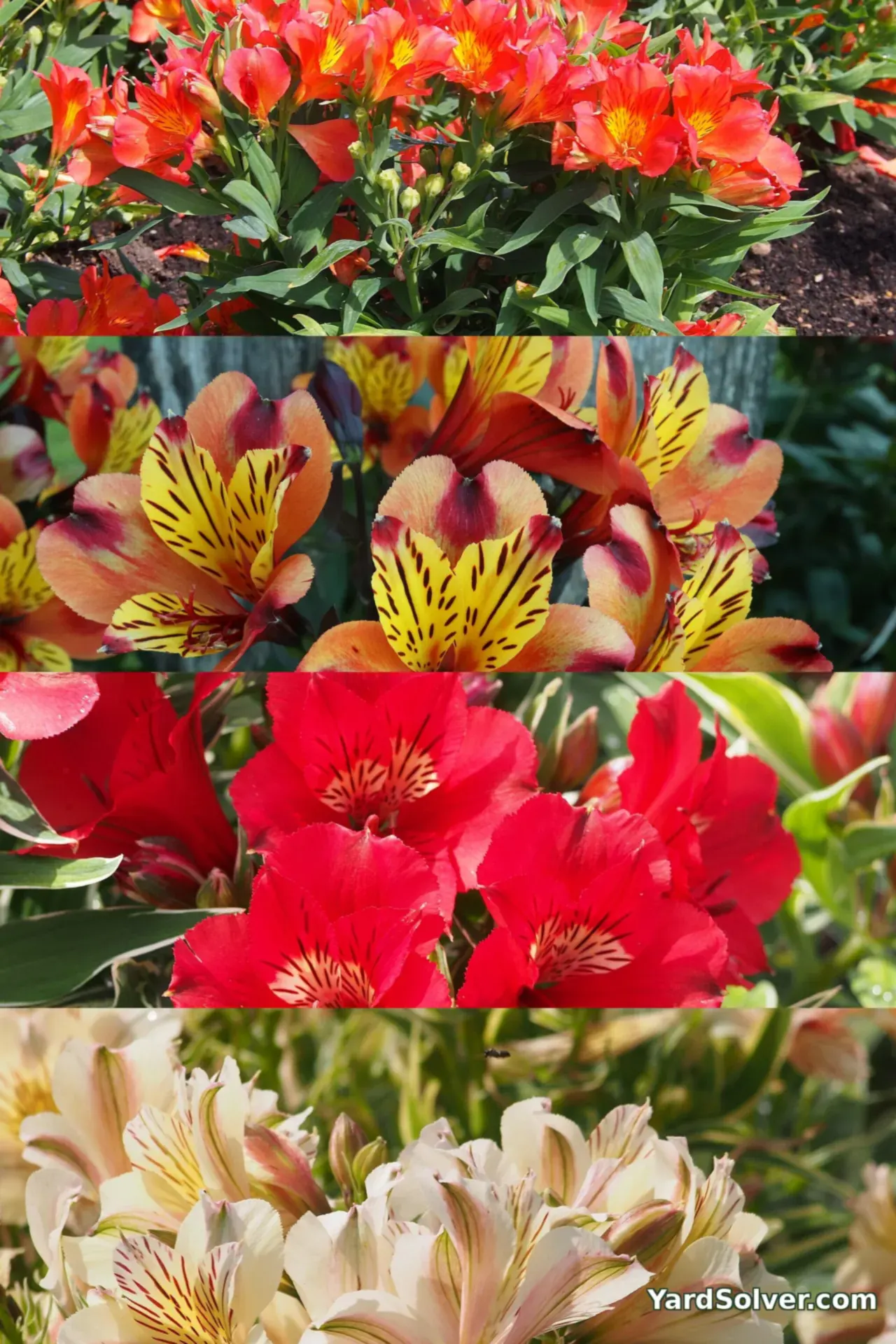
How to plant and grow alstroemeria, step by step
Step 1 — Time it right
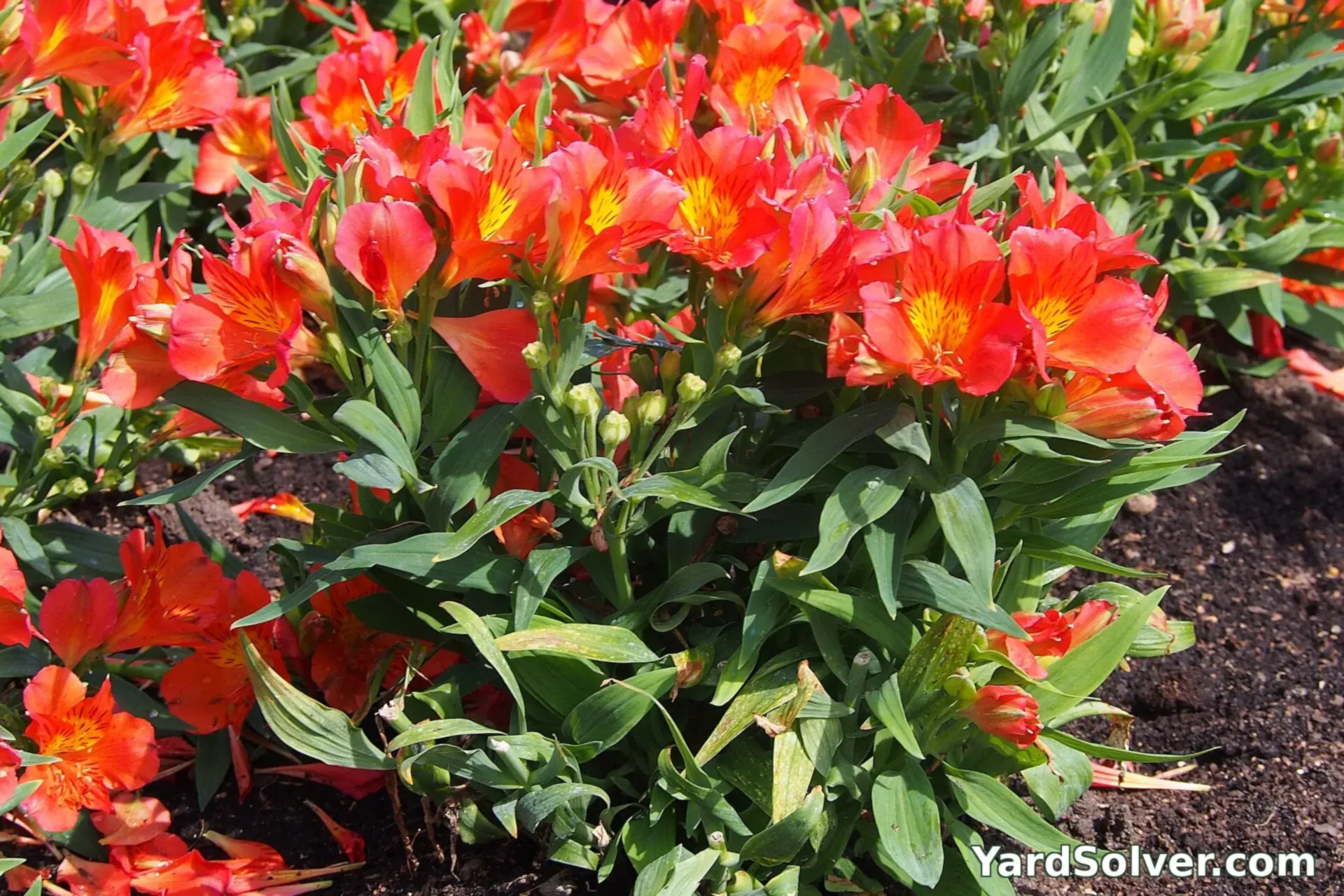
Plant out: in spring after frost, as tubers or potted plants; Sow: not practical — seed takes years to flower. All dates count from your average last spring frost — the Planting Calendar turns them into real dates for your garden. Alstroemeria grows from brittle, fleshy tubers that resent disturbance — which is why you plant them deep, once, in a spot they can occupy for years. Buy potted plants (easiest) or dormant tubers in spring. In zones 8–10 they are straightforward perennials; in zones 6–7, hardy 'garden' series survive with a thick winter mulch; colder gardens treat them as pot plants moved under cover.
Step 2 — Prepare the spot
Alstroemeria wants fertile, moisture-holding but well-drained soil, ideally cool at the root and sunny at the top. Dig in generous compost before planting — you won't get another easy chance. Heavy clay that puddles rots the tubers; lighten it or use a raised bed. For a raised bed, the Raised Bed Soil Calculator counts the bags for you; mixing your own? The Garden Soil Calculator gives the compost-rich split to aim for.
Step 3 — Sow and plant out
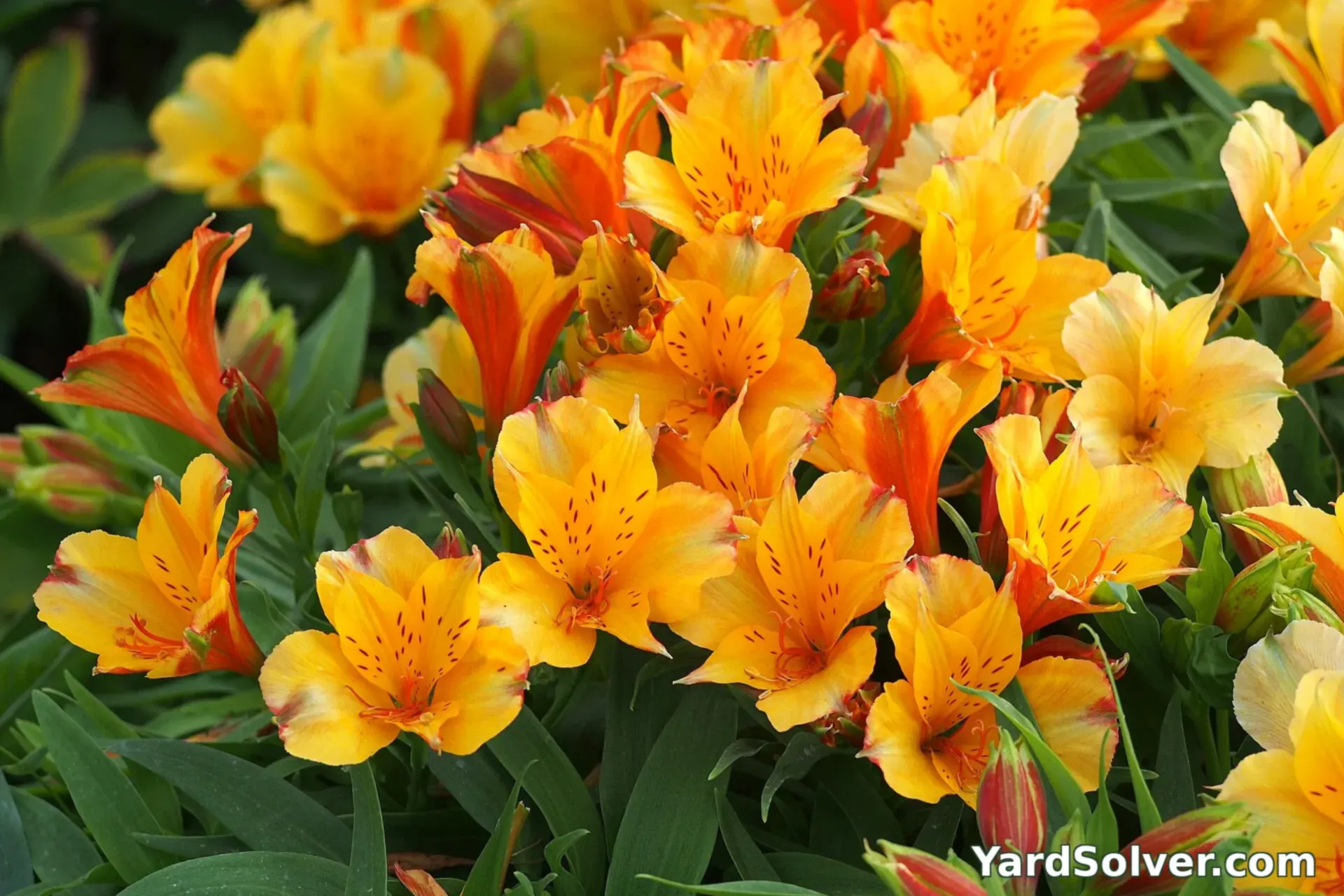
Set tubers 6–8 in deep and 15 in apart, spreading the roots downward like fingers, and water in well. Potted plants go in at the same depth, rootball undisturbed. The Plant Spacing Calculator turns your bed size into an exact plant count. Mark the spot — shoots are slow to show in the first spring, and a forgotten fork is the tubers' worst enemy.
Step 4 — Water and feed
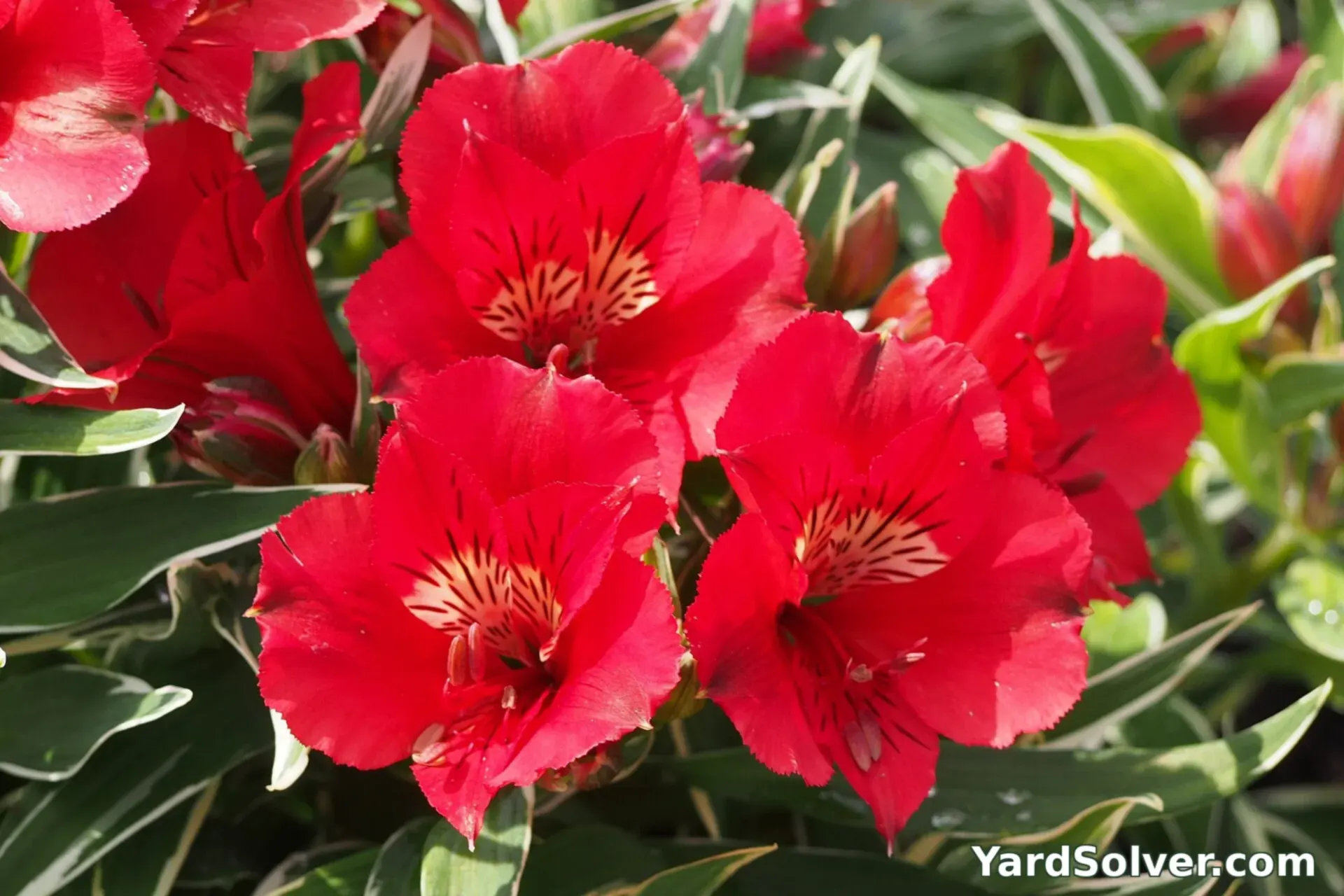
Keep the bed evenly moist from spring growth to autumn die-back — alstroemeria is a thirsty grower in flower. Feed with a balanced feed in spring and again after the first flush; pot plants want liquid feed every couple of weeks — the Fertilizer Calculator turns your bed size into exact amounts.
Step 5 — Care and the problems to watch for
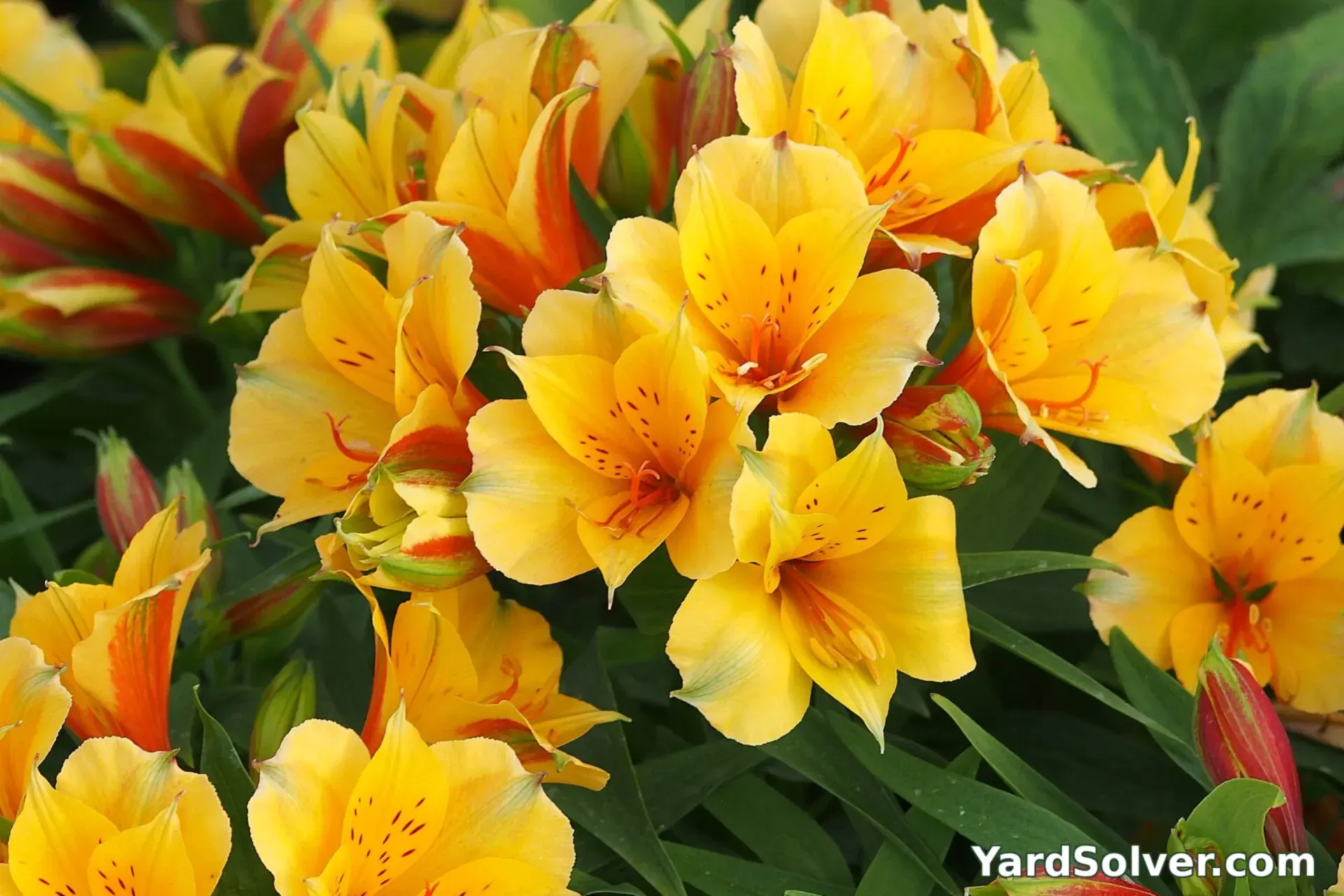
Alstroemeria leaves twist so their underside faces up (a quirk called resupination — the plant is not sick). Mulch deeply after the first frost in cold districts, and never dig the clump casually.
- Few flowers, much leaf — too much shade or nitrogen; move the feed balance toward potash.
- Slugs on new shoots — the spring shoots are a delicacy; protect until stems toughen.
- Winter losses — wet, not cold, is usually the killer; improve drainage and mulch thickly.
Step 6 — Harvest
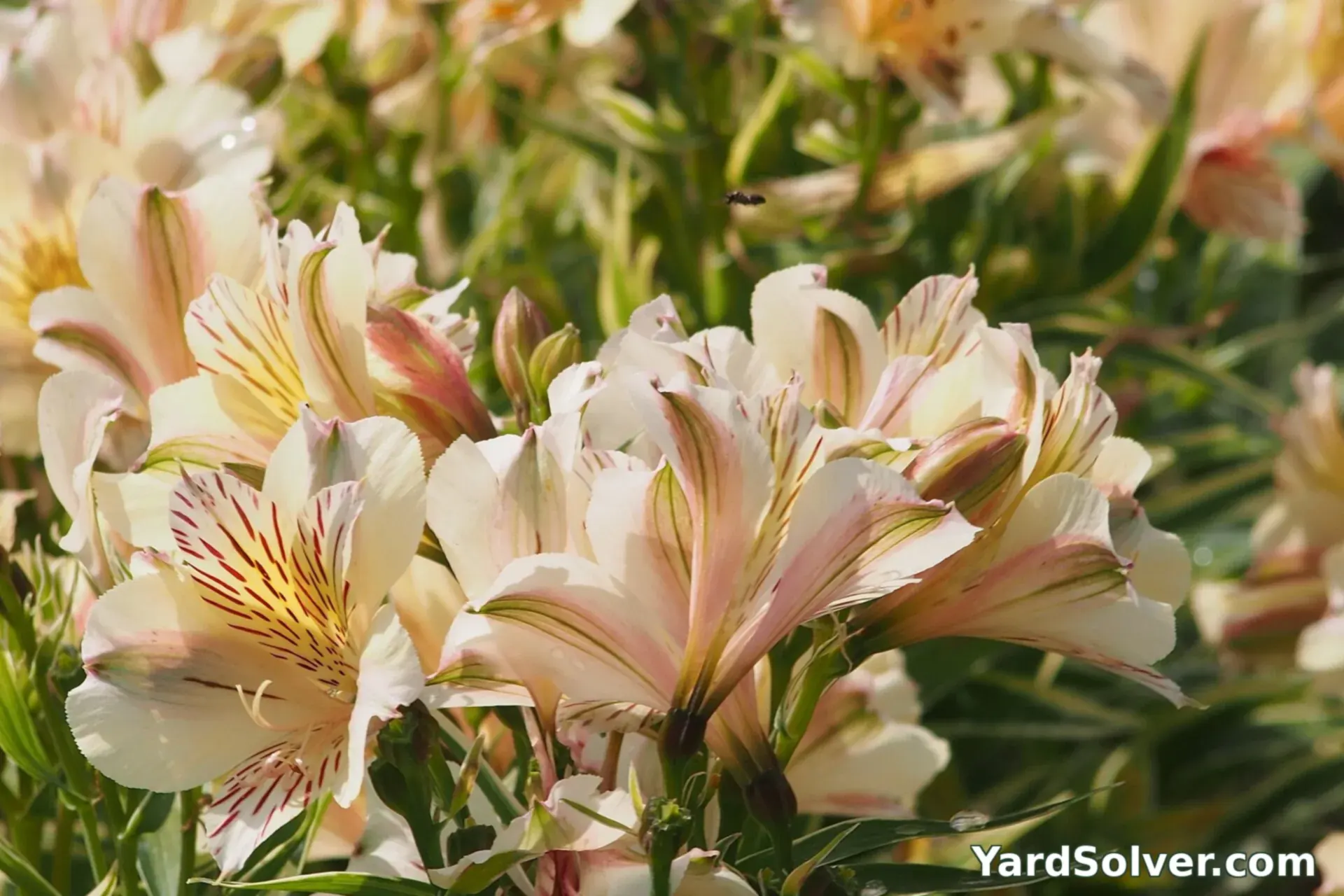
Pick stems when the first buds in the cluster are opening. Grip low and pull with a steady tug — the stem comes away from the tuber cleanly, and that tug is the signal that starts new flowering shoots. (Cut stems just sit there and sulk.) In water, pulled stems last 10–14 days — strip leaves below the waterline and refresh the water once mid-week.
📅 Your personal Alstroemeria (Peruvian Lily) schedule
Counted from your planting day — not a generic calendar. Day 0 is the day the seed went in the ground or the young plant went out.
Varieties worth growing
| Variety | Colour | Why gardeners like it |
|---|---|---|
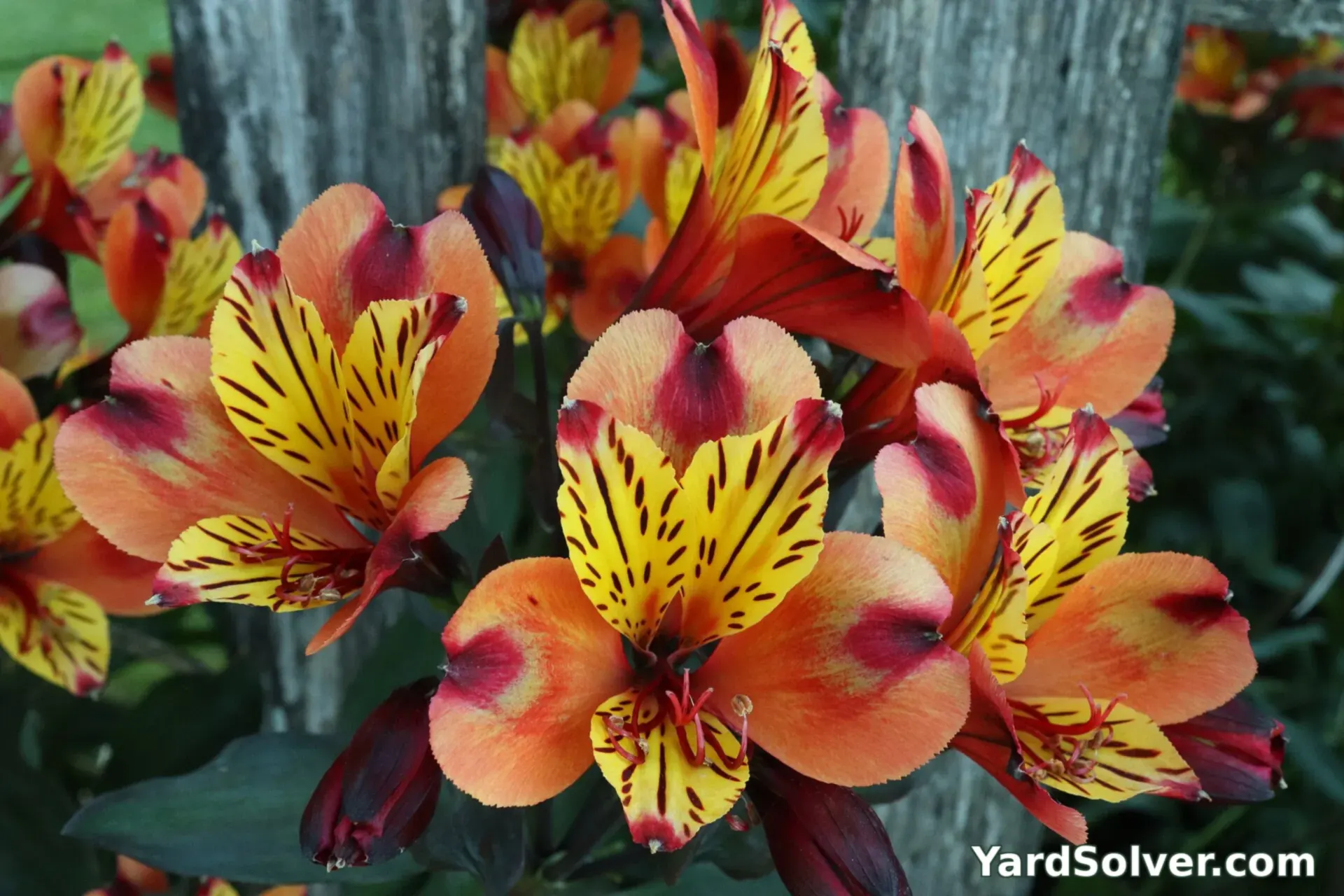
| Indian Summer | Bronze foliage, sunset flowers | Compact hardy series with dark leaves — striking even before it blooms. |
| Inticancha series | Many colours, dwarf | Bred for pots and small borders; free-flowering all summer. |
| Princess series | Pastels, compact | Tidy plants for containers with a very long vase life. |
Good for you — and take care
Benefits
- Among the longest-lasting cut flowers you can grow — up to two weeks in the vase.
- Flowers for months, June to September, once established.
- A perennial investment: one planting picks for a decade.
Take care
- Sap irritates some skin — wear gloves for big cutting sessions.
- Tubers are brittle and hate disturbance; plant deep and leave alone.
- Borderline hardy in zone 6–7 — mulch deeply after frost.
A little history — and one good fact
Alstroemeria comes from the cool mountains of South America and is named for Clas Alströmer, the Swedish botanist who sent its seed to Linnaeus in the 1700s. Dutch breeders turned the wild species into the florist's staple it is today — few cut flowers outsell it.
Fun fact: Alstroemeria leaves grow upside down: the leaf stalk twists 180° as it grows, so the leaf's underside faces the sky.
Keep going
Guides: Companion planting basics · Crop rotation basics · Succession planting
Calculators: Plant Spacing Calculator · Garden Mix Calculator · Fertilizer Calculator
More flowers: Lily · Ranunculus · Gladiolus · Lisianthus
← Back to the Plant Library · Get your personal planting dates
Questions people ask
Why do you pull alstroemeria stems instead of cutting?
Pulling removes the stem cleanly from the tuber and stimulates the rhizome to send up fresh flowering shoots. A cut stump does not trigger that response, so pulling both harvests and encourages the next flush.
Will alstroemeria survive winter in my garden?
In zones 8–10, reliably. In zones 6–7, hardy garden series survive with deep planting (6–8 in) and a thick mulch after the first frost. Colder than that, grow it in pots and move them under cover.
Why are my alstroemeria leaves twisted?
They are meant to be — the leaf stalks twist as they grow so the leaf underside faces upward. It is a family trait, not a disease or nutrient problem.
Pull, don't cut: the alstroemeria harvest trick that makes the plant flower harder
Peruvian lilies break the usual cut-flower rule. When a flowering stem has finished, do not snip it off — grasp it low and pull it away from the rhizome with a firm twist, the way you would pull a leek. That clean pull signals the underground rhizome to push up a replacement flowering stem, while a cut stub simply sits there and slowly rots back. Growers use the same pull on stems picked for the vase, which is one reason a well-grown clump keeps producing stems from late spring into autumn instead of giving one June flush.
The second key is a cool root run. Alstroemeria flowers best where its rhizomes stay cool while the top grows in sun — in practice, a deep mulch of bark or straw, or underplanting with low ground cover, and soil that never fully dries out in summer. It resents root disturbance more than almost any common perennial: plant it once, in the right place, and leave the clump alone for years rather than lifting and dividing on a schedule. In cold districts the borderline-hardy varieties survive winter under that same deep mulch; in very cold ground, the dwarf pot varieties come under cover as pots instead.
The worked example: one established clump, roughly 45 cm across by its third year, pulled rather than cut and kept mulched and watered through dry spells, commonly yields two to three vase stems a week at peak — a fresh bunch every few days for eight to ten weeks. The identical clump cut with secateurs and left dry at the roots typically gives half that, and stops weeks earlier. The difference costs nothing but the change of habit.
Sources
Key facts on this page — timing, spacing and care — cross-checked against NC State Extension Plant Toolbox — Alstroemeria — culture, hardiness and care requirements.
Related page
Read next: How to Divide Perennials: When, How, and a Chart for Common Plants.
Comments & ratings
No comments yet.
Be the first to share your experience.