
Plant Library · Flowers · By Faizan Ahmad
💙 How to Grow Larkspur
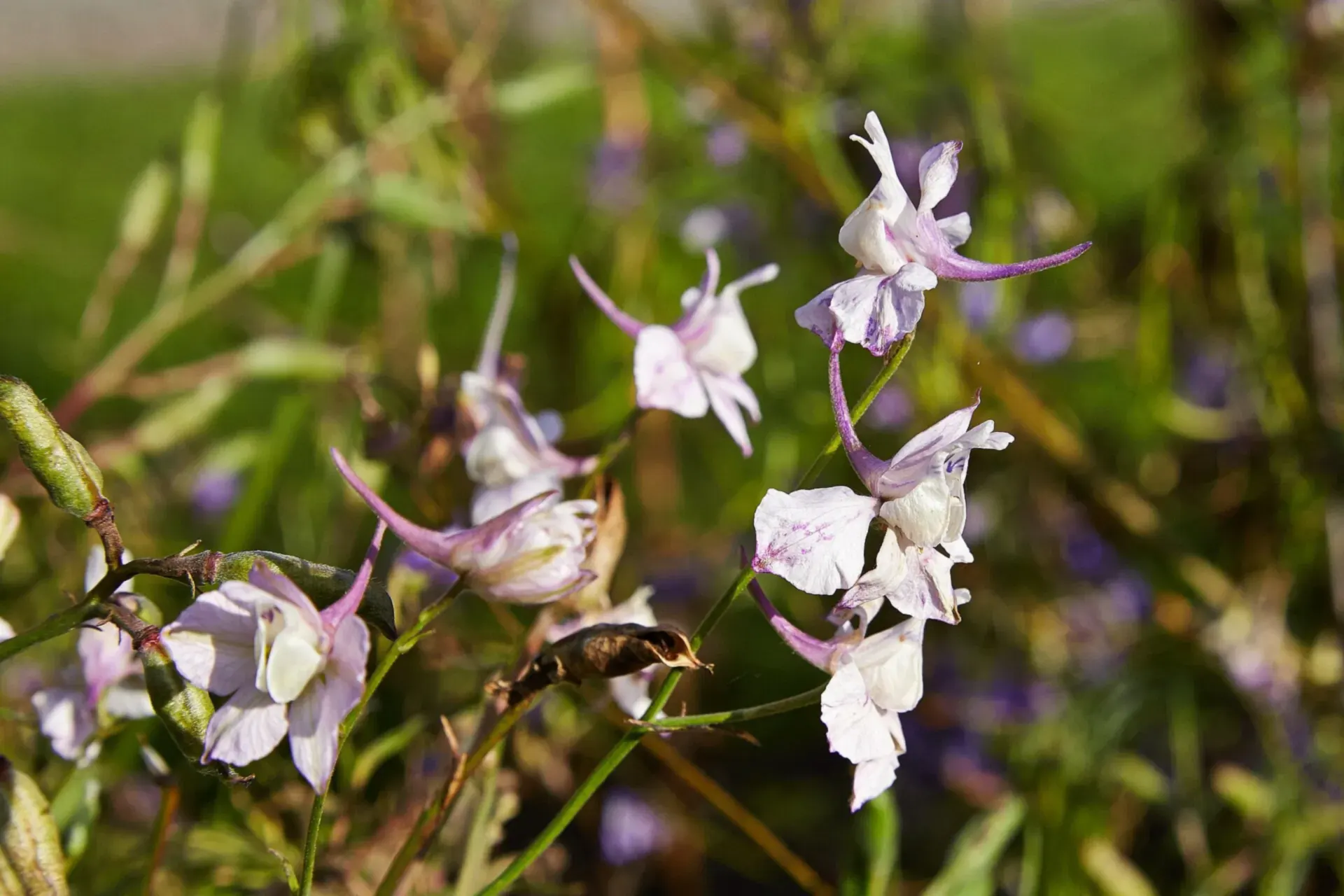
Delphinium's wilder, easier cousin — larkspur (Consolida ajacis) is the annual spire flower: sow it in autumn or earliest spring, and by June it carries branching spikes of blue, violet, pink and white. It resents transplanting and root warmth, loves a cold start, and self-sows ever after. One honest warning rides with it: like its delphinium kin, every part is poisonous — admire, don't eat.
Grow Larkspur with us — step by step
Everything for this plant is written step by step below — what to do, and exactly when. Read it through first if you like: you can grow it entirely on your own with that guide. Or start with us here — tell us your planting day and we lay out your personal schedule on this page, every next step on its own day, counted from your planting date. No guessing, no forgetting.
Step 1 — today: Sow larkspur seed directly where it will flower — in autumn for the strongest plants, or in very early spring.
Larkspur at a glance
Sow indoors: Not recommended — it hates transplanting
Sow outdoors: Autumn (mild winters) or earliest spring, where it will flower
Spacing · Seed depth: 12 in apart · 1/4 in deep (needs darkness)
Sun: Full sun
Water: Moderate — cool roots preferred
Bloom: June to August; deadhead for a second flush
Timing counts from your average last spring frost — get your own dates in the Planting Calendar. Guidance follows standard extension-service practice for Canada and the US.
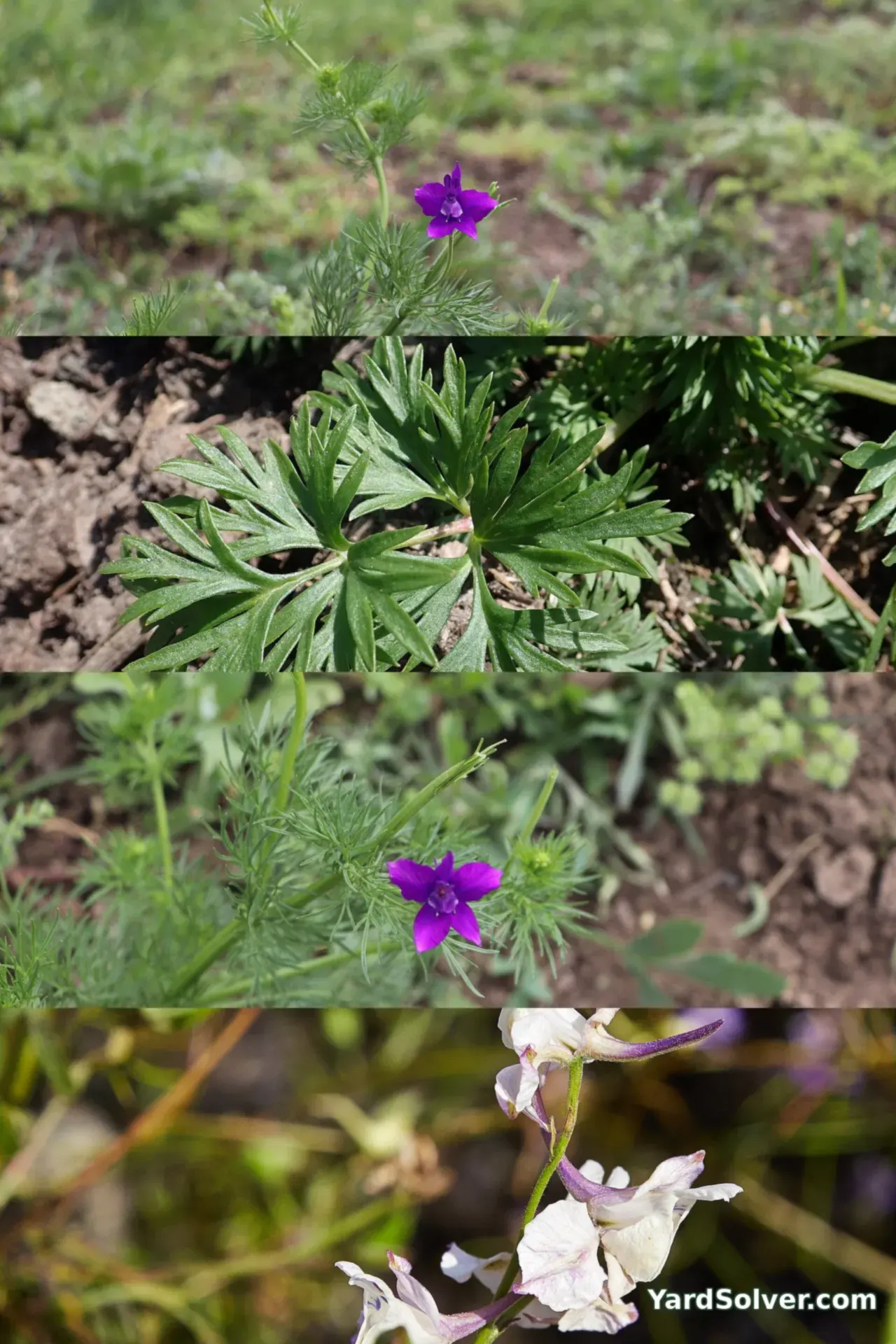
How to plant and grow larkspur, step by step
Step 1 — Time it right
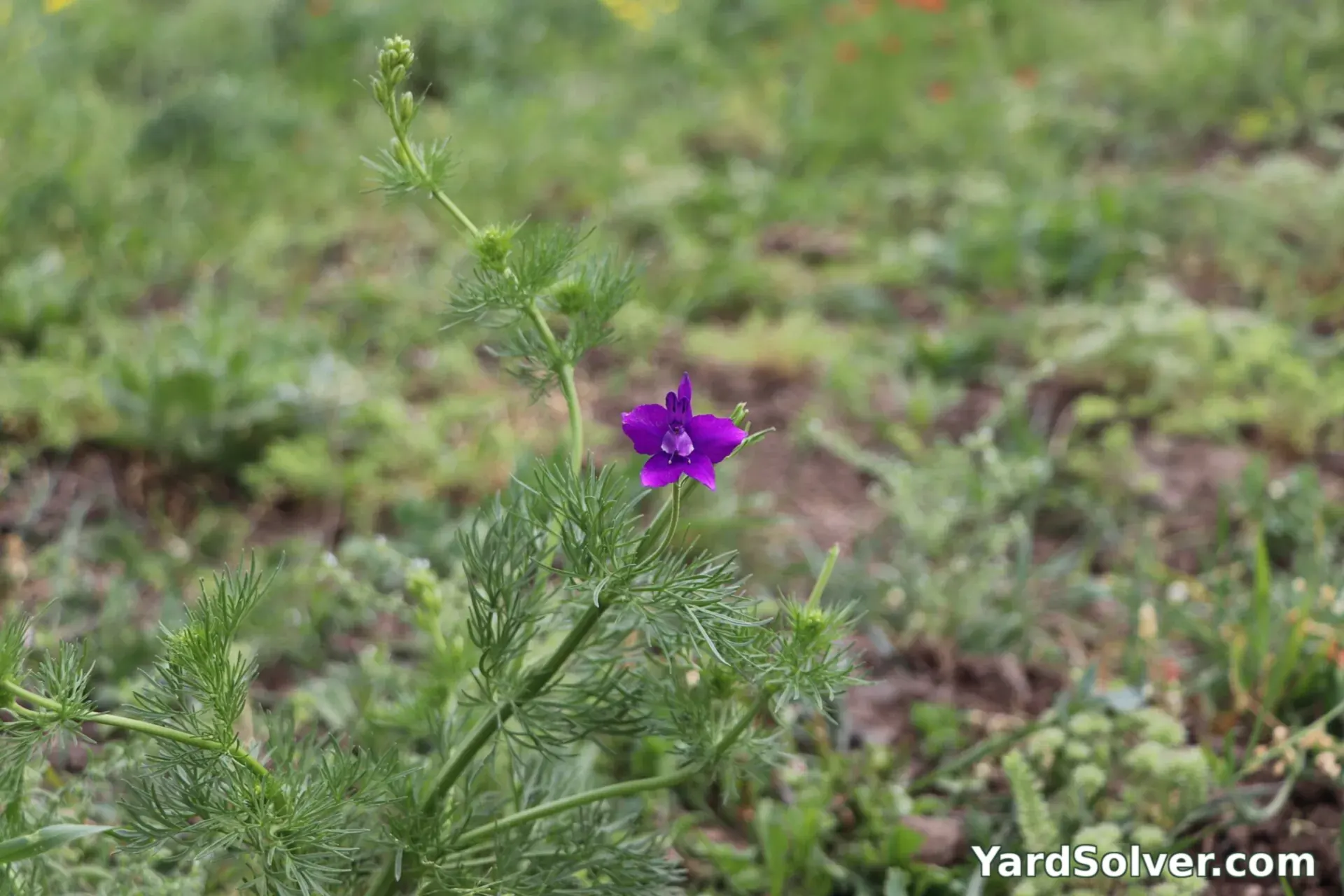
Sow outdoors: in autumn where winters are mild, or in earliest spring, exactly where it will flower; Sow indoors: not recommended — larkspur hates transplanting. All dates count from your average last spring frost — the Planting Calendar turns them into real dates for your garden. Larkspur seed germinates best cool (around 55 °F), in darkness, after a chill — a week in the fridge before sowing noticeably improves an erratic seed. Autumn sowing in mild-winter districts (zone 7 and warmer) gives the classic strong plants; elsewhere sow in earliest spring while the soil is still cold. Germination takes 2–3 weeks. It flowers about 3 months after spring sowing.
Step 2 — Prepare the spot
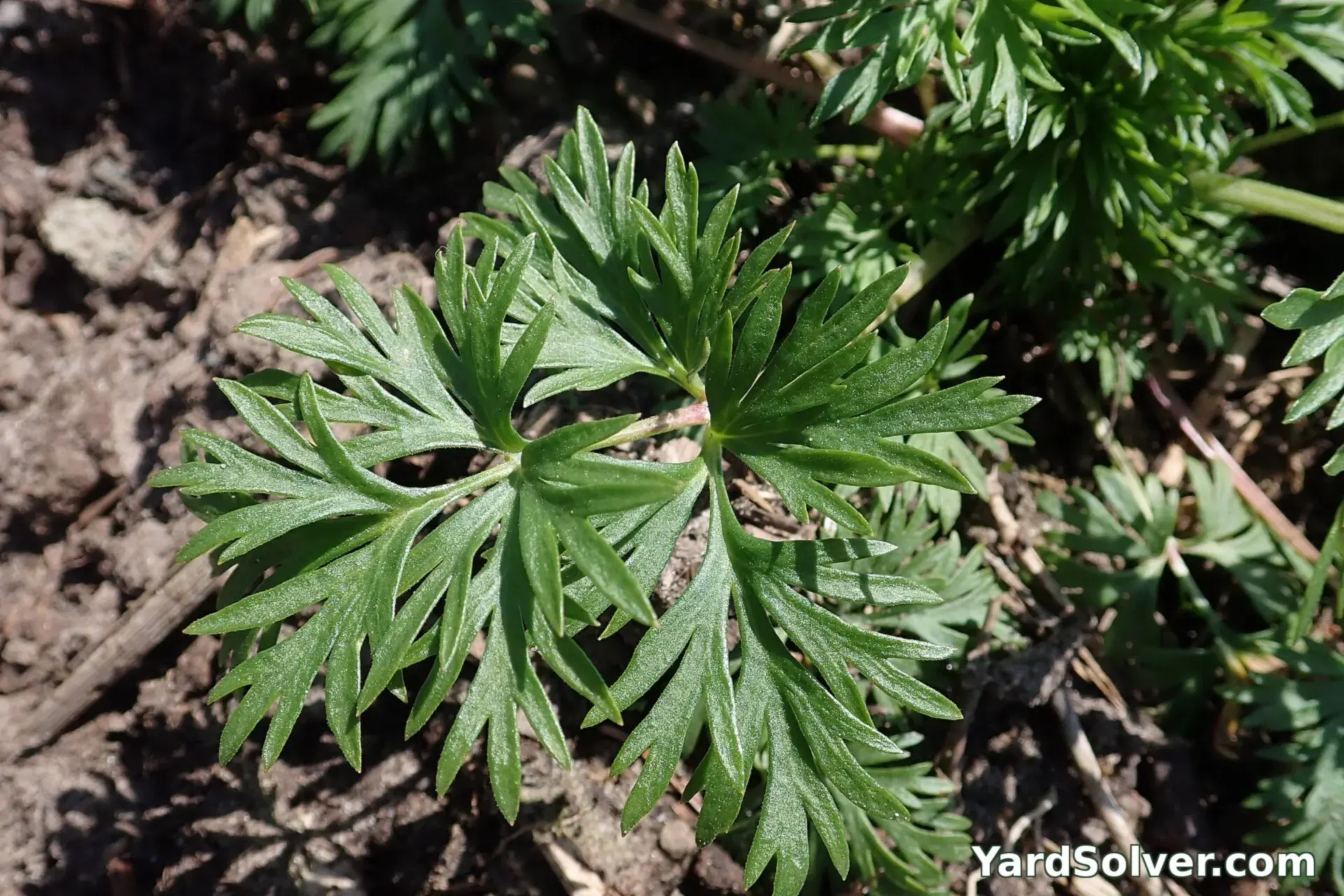
Larkspur wants full sun overhead and cool roots below: fertile, well-drained soil in an open border does it; a light mulch or low-growing neighbours shading the soil completes it. Work the bed fine for direct sowing — the seed is sown in place and never moved. For a raised bed, the Raised Bed Soil Calculator counts the bags for you; mixing your own? The Garden Soil Calculator gives the compost-rich split to aim for.
Step 3 — Sow and plant out
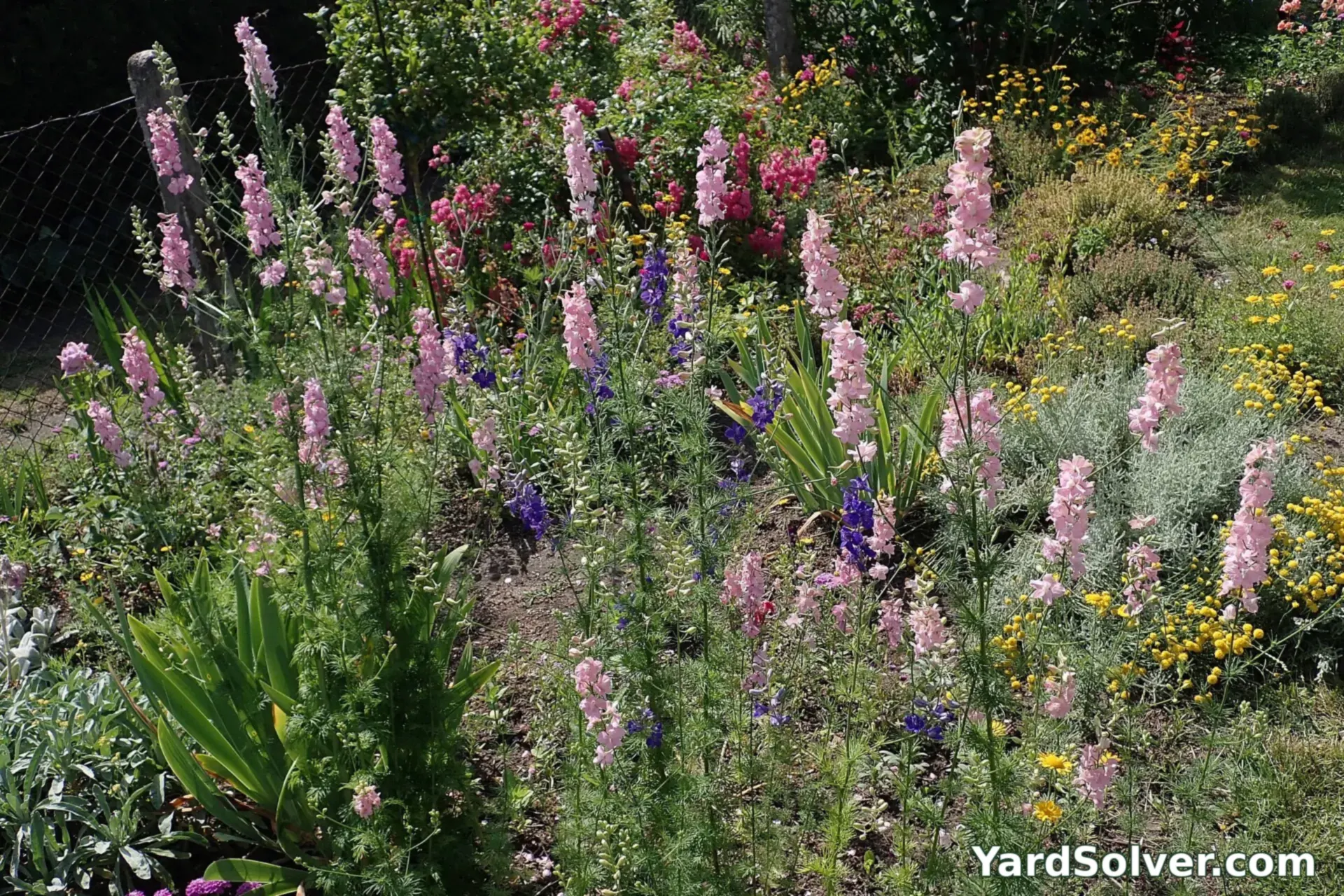
Sow 1/4 in deep (darkness matters) in drills or broadcast patches, and thin seedlings to 12 in apart while small. The Plant Spacing Calculator turns your bed size into an exact plant count. Good neighbours: larkspur is the June partner of poppies and love-in-a-mist in the self-sowing cottage patch — the three manage the whole season between them.
Step 4 — Water and feed
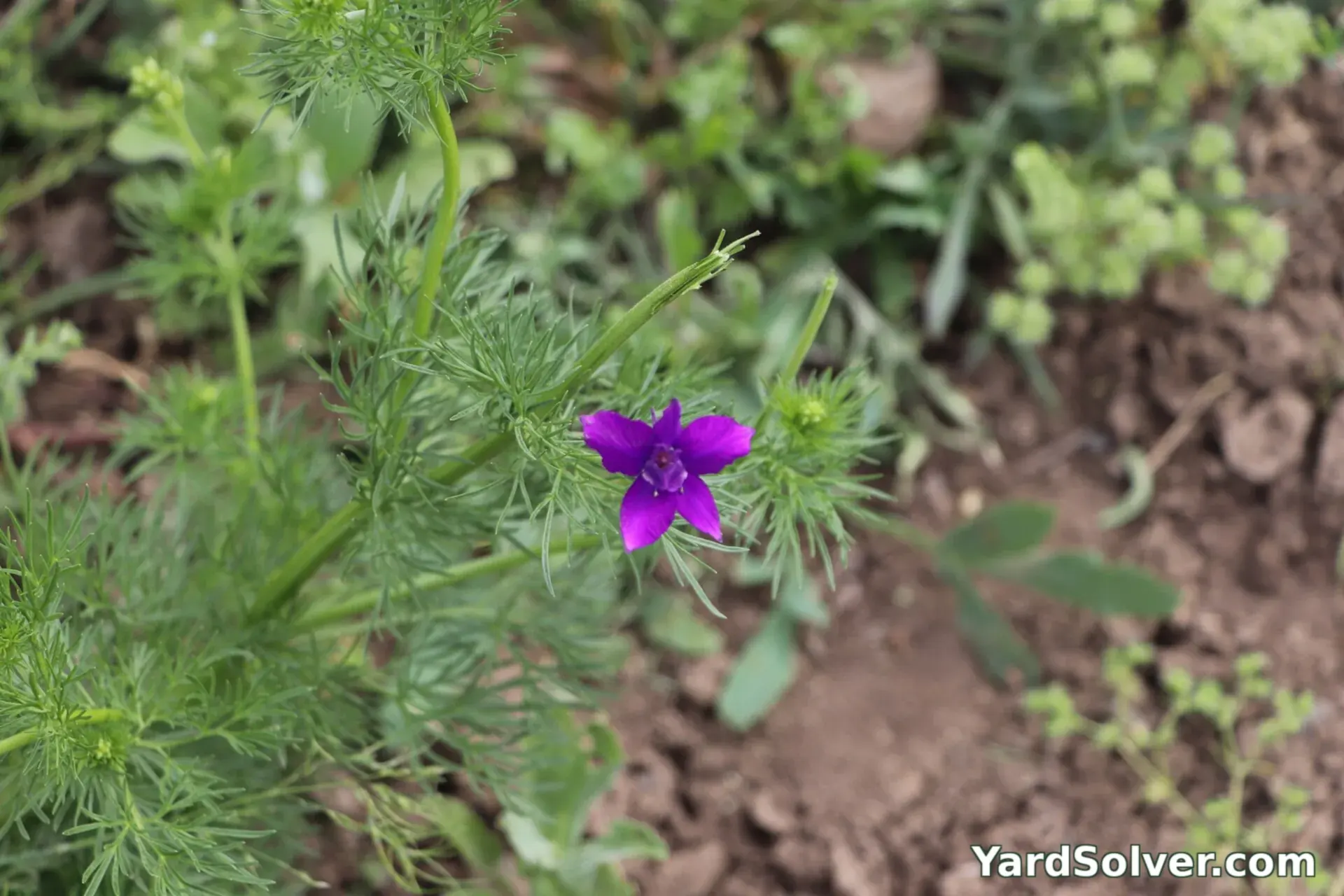
Water young plants in dry spells and keep moisture steady as the spikes rise — drought checks the height. A balanced feed at sowing time is enough on good soil; larkspur is not a heavy feeder — the Fertilizer Calculator turns your bed size into exact amounts. Stake tall strains in exposed gardens, or grow them through their neighbours for support.
Step 5 — Care and the problems to watch for
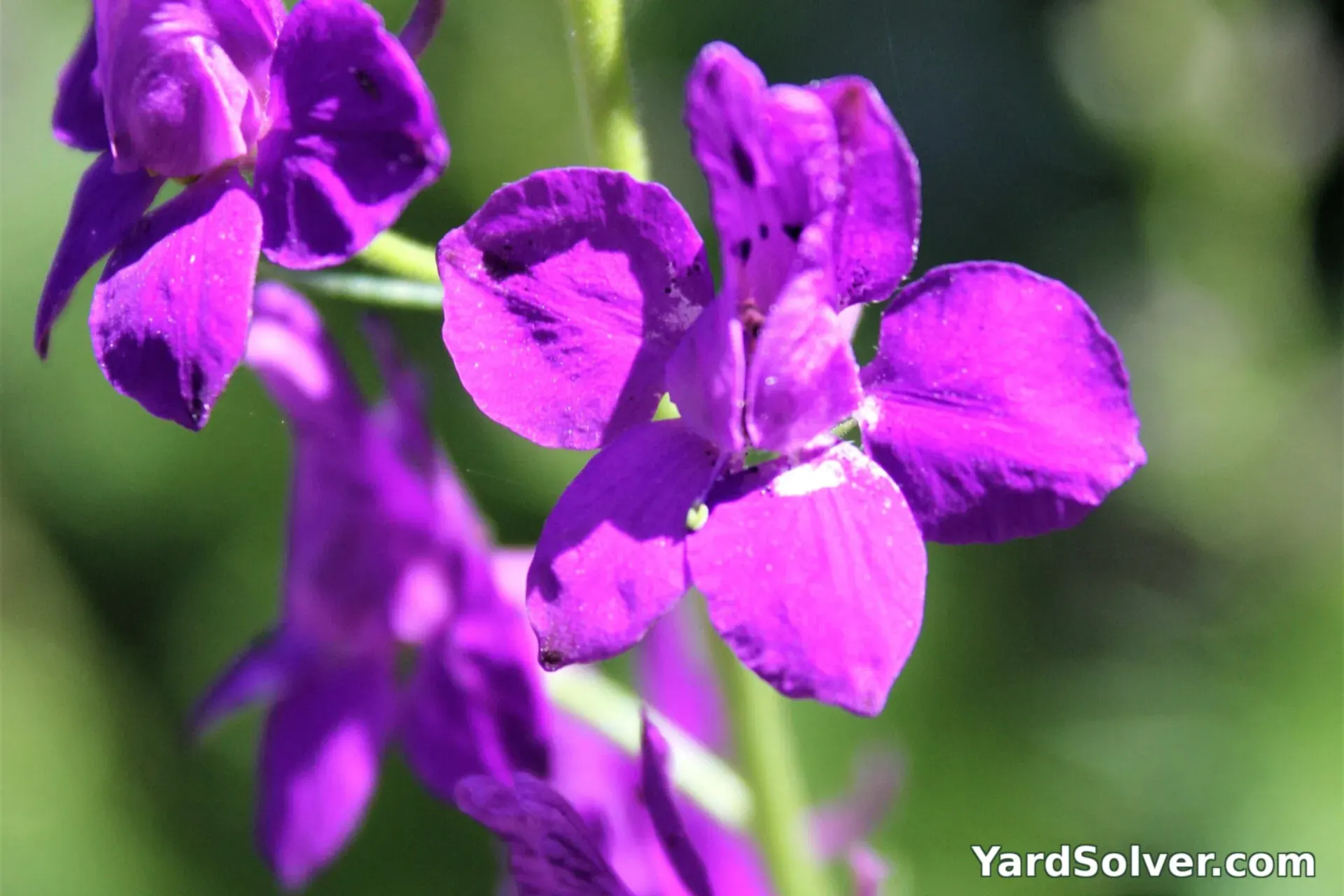
Cut the main spike when its flowers fade and the branching side spikes extend the show by weeks. Leave the last spikes to seed if you want the patch permanent.
- Seedlings vanishing — slugs love the feathery seedlings; protect autumn sowings until they're sturdy.
- Plants yellowing in heat — larkspur is a cool-season flower; in hot districts it finishes by midsummer and that's its nature.
- Failure to germinate — warm soil or light: chill the seed, sow covered, and try autumn.
Step 6 — Harvest
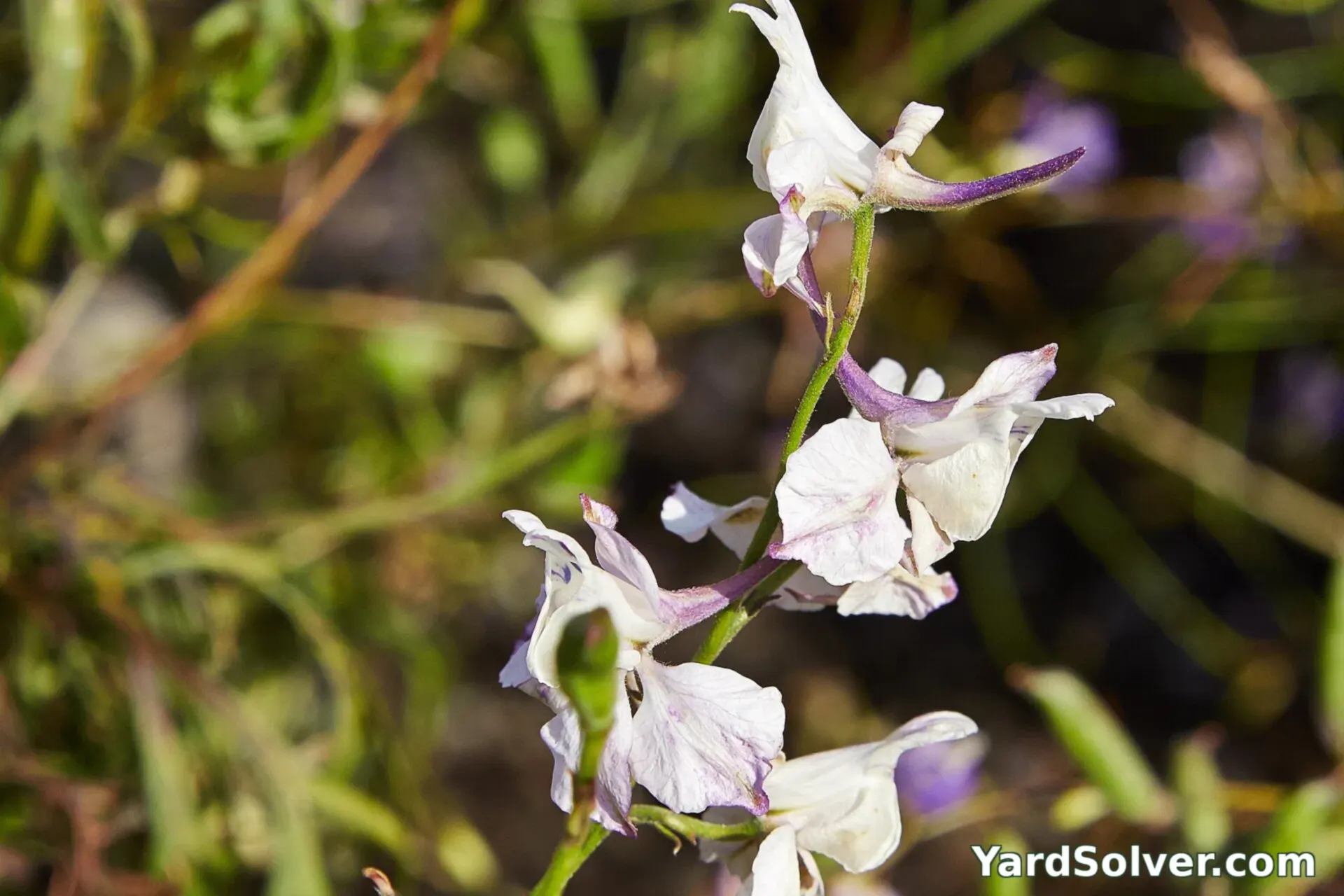
Larkspur is a premier drying flower: cut spikes when two-thirds of the flowers are open, hang them upside down in a dark, airy place, and the blues and violets hold for a year or more. Fresh cuts last about a week in the vase. Leave the last pods to dry on the plant for seed — the patch then sows itself, and larkspur becomes a permanent, shifting citizen of the border.
📅 Your personal Larkspur schedule
Counted from your planting day — not a generic calendar. Day 0 is the day the seed went in the ground or the young plant went out.
Varieties worth growing
| Variety | Colour | Why gardeners like it |
|---|---|---|
| Giant Imperial Mix | Tall branching spikes | The classic strain — 4 ft spikes in the full colour range. |
| Sydney Mix | Pastel shades | Soft pinks, lilacs and white for gentle schemes. |
| Earl Grey | Smoky mauve-grey | An unusual smoky-lavender strain the flower arrangers fight over. |
Good for you — and take care
Benefits
- Delphinium looks with annual ease — sown, not cosseted.
- The best blue in the dried-flower basket — it keeps its colour.
- Self-sows into a permanent cottage patch.
Take care
- POISONOUS — all parts, especially the seed; never eat, keep from livestock.
- Hates transplanting and warm roots — sow in place, cool and dark.
- A cool-season flower — hot districts get a spring show only.
A little history — and one good fact
Consolida ajacis (named for Ajax, whose blood supposedly became the flower in Greek myth) grew in European cornfields for centuries before gardens adopted it. It was split from Delphinium by botanists on seed structure, but gardeners still treat it as the family's easy annual — grown since the 1500s and a cottage staple ever since.
Fun fact: Larkspur's name comes from the nectar spur behind each flower, shaped like a lark's claw — and the spur is where the hummingbirds and long-tongued bees make their living.
Keep going
Guides: Companion planting basics · Succession planting · Crop rotation basics
Calculators: Plant Spacing Calculator · Garden Mix Calculator · Fertilizer Calculator
More flowers: Delphinium · Poppies · Love-in-a-Mist · Sweet Peas
← Back to the Plant Library · Get your personal planting dates
Questions people ask
Why won't my larkspur seed germinate?
Warmth and light are the usual culprits. Larkspur seed wants a chill first (a week in the fridge), darkness (sow 1/4 in deep), and cool soil around 55 °F. Autumn sowing solves all three at once in mild districts.
Can larkspur be started indoors?
It's strongly discouraged — larkspur makes a taproot and resents transplanting badly. If you must, use deep individual pots and plant out tiny, disturbing nothing. Direct sowing is the honest method.
Is larkspur really poisonous?
Yes — all parts contain delphinium-type alkaloids, most concentrated in the seed. It's a look-and-don't-eat flower: keep it away from livestock and hay ground, and wash hands after handling seed.
A cottage-garden spire that wants sowing where it will flower — and a plant to place with care: every part is poisonous
Larkspur (Consolida and annual Delphinium types) gives the cottage border its early-summer spires of blue, pink and white — but it earns them on its own terms. The seed resents transplanting because of its taproot, so the reliable method is sowing where it will flower: in autumn in mild climates, very early spring elsewhere, with a spell of cold helping germination. Chilling bought seed in the fridge for a week or two before sowing is the old, effective trick.
The safety note belongs up front: larkspur contains delphinine alkaloids and every part of the plant is poisonous to people and livestock, so it belongs away from grazing animals and is never a cut flower for a table where toddlers graze too. In the border itself it asks little — full sun, ordinary soil, and support or close company in windy spots, since a laden spire in a thunderstorm can snap at the base.
The worked example: autumn-sown larkspur, thinned in place and left undisturbed, typically makes the tallest, earliest spires in the border. The same seed raised in modules and planted out late typically sulks, flowers short and finishes early — larkspur is a plant that rewards being left exactly where it started.
Sources
Key facts on this page — timing, spacing and care — cross-checked against Larkspur — Wikipedia — background on larkspur, its sowing and its toxicity and NC State Extension Plant Toolbox — Delphinium — culture and care requirements.
Related page
Read next: Companion Planting Basics: Good & Bad Neighbours.
Comments & ratings
No comments yet.
Be the first to share your experience.