
Plant Library · Flowers · By Faizan Ahmad
💙 How to Grow Love-in-a-Mist
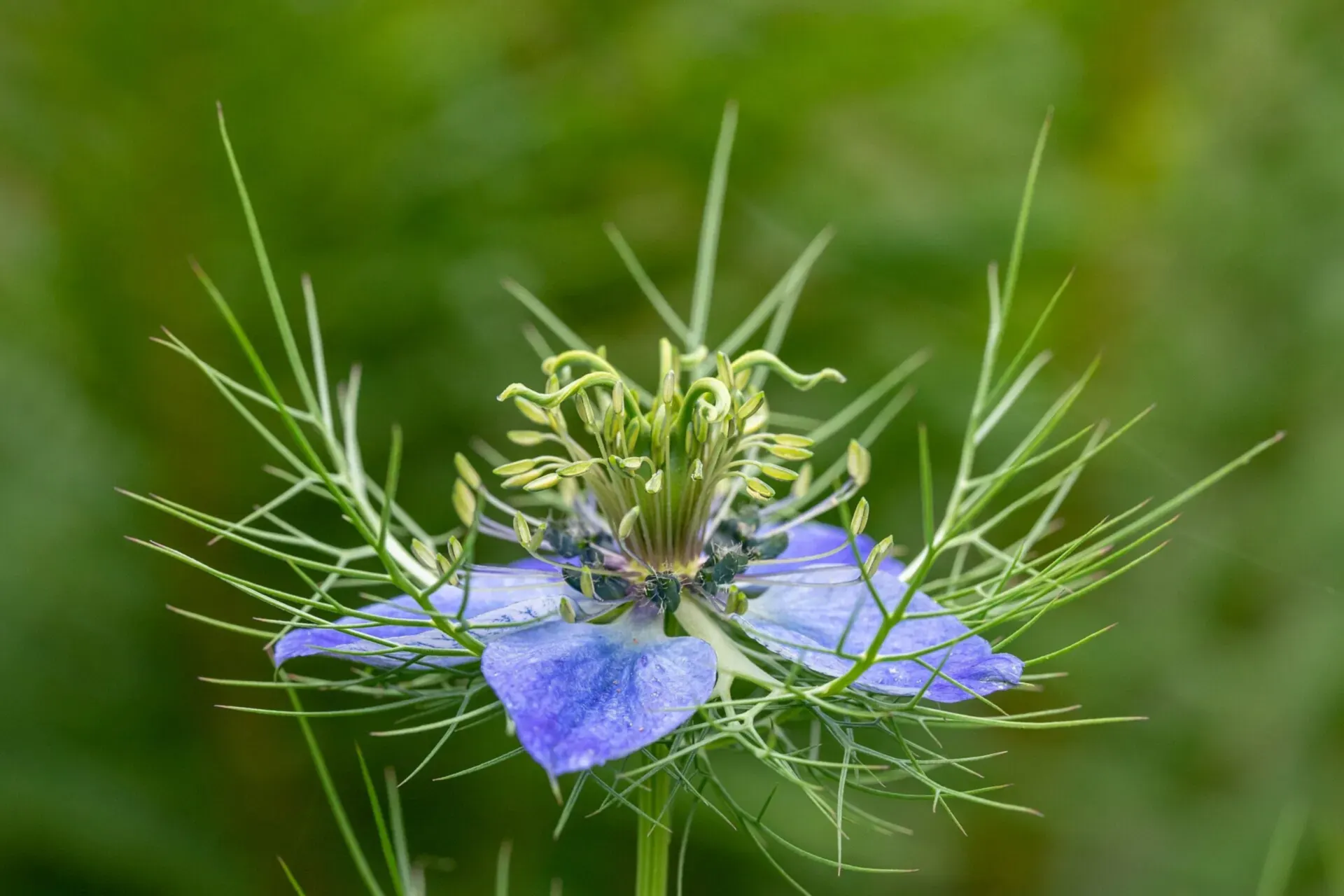
Blue stars floating in a haze of emerald thread — and seed pods like little balloons that dry for winter. Love-in-a-mist (Nigella damascena) is a hardy annual that sows itself around the garden forever once introduced. Sow it where it will grow (the taproot insists), in spring or autumn, and you get two harvests: the flowers, then the stripy pods.
Grow Love-in-a-Mist with us — step by step
Everything for this plant is written step by step below — what to do, and exactly when. Read it through first if you like: you can grow it entirely on your own with that guide. Or start with us here — tell us your planting day and we lay out your personal schedule on this page, every next step on its own day, counted from your planting date. No guessing, no forgetting.
Step 1 — today: Scatter love-in-a-mist seed directly onto its bed in early spring or autumn — it grows best untouched.
Love-in-a-Mist at a glance
Sow indoors: Only in pots — it dislikes transplanting
Move outside: At last frost
Sow outdoors: 2 weeks before last frost, or in autumn
Spacing · Seed depth: 10 in apart · 1/4 in deep
Sun: Full sun
Water: Low to moderate — drought-tolerant
Bloom: May to July; pods follow for drying
Timing counts from your average last spring frost — get your own dates in the Planting Calendar. Guidance follows standard extension-service practice for Canada and the US.
How to plant and grow love-in-a-mist, step by step
Step 1 — Time it right
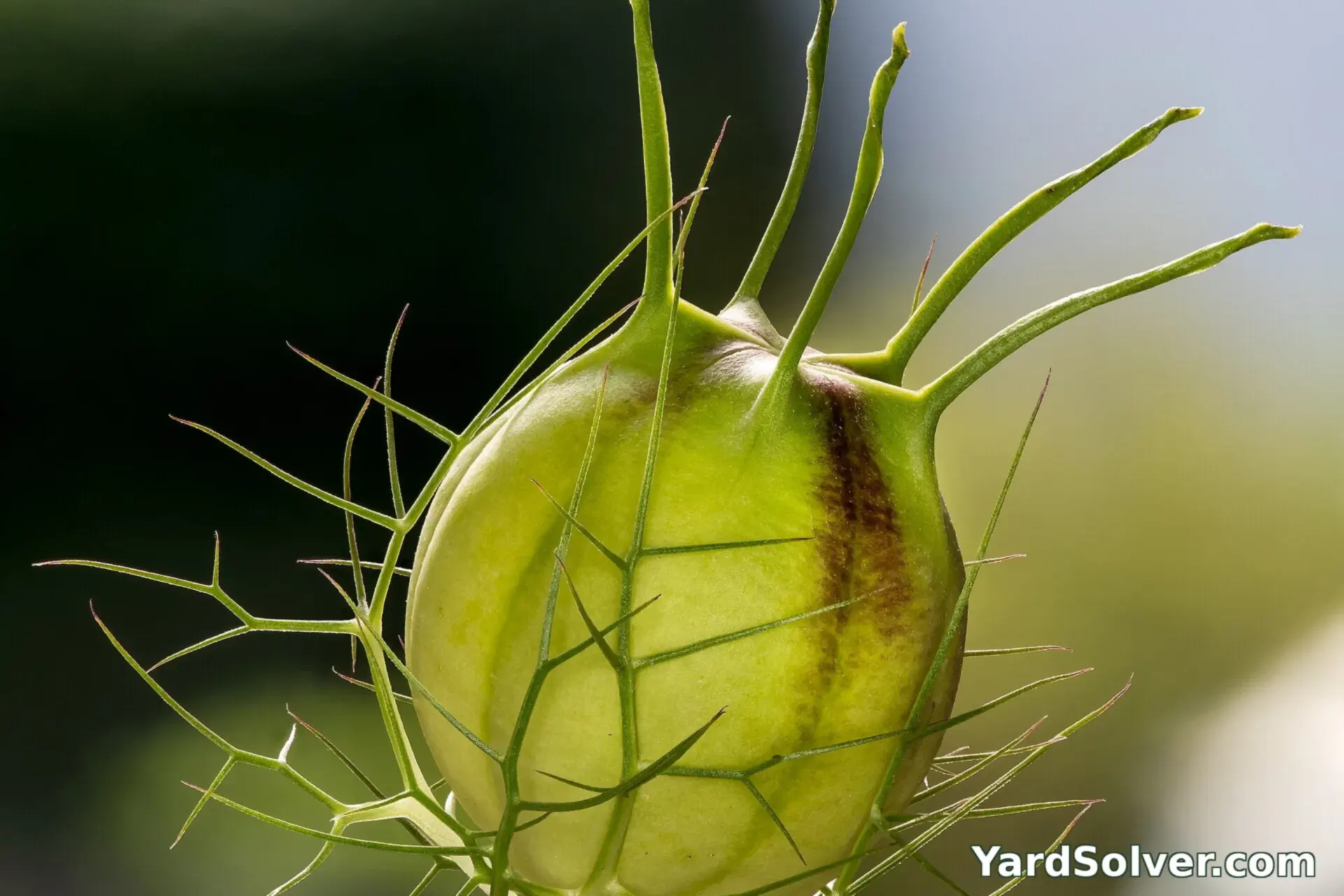
Sow outdoors: 2 weeks before last frost, or in autumn for the earliest flowers; Sow indoors: only in biodegradable pots, to plant out whole. All dates count from your average last spring frost — the Planting Calendar turns them into real dates for your garden. Nigella germinates in 10–21 days in cool soil. Autumn sowings (mild districts, or with a cloche) flower earliest and strongest; spring sowings follow a few weeks behind. A sowing every month from early spring to early summer stretches the season nicely. Transplanting is the one thing it hates — sow in place, or in pots you plant whole.
Step 2 — Prepare the spot
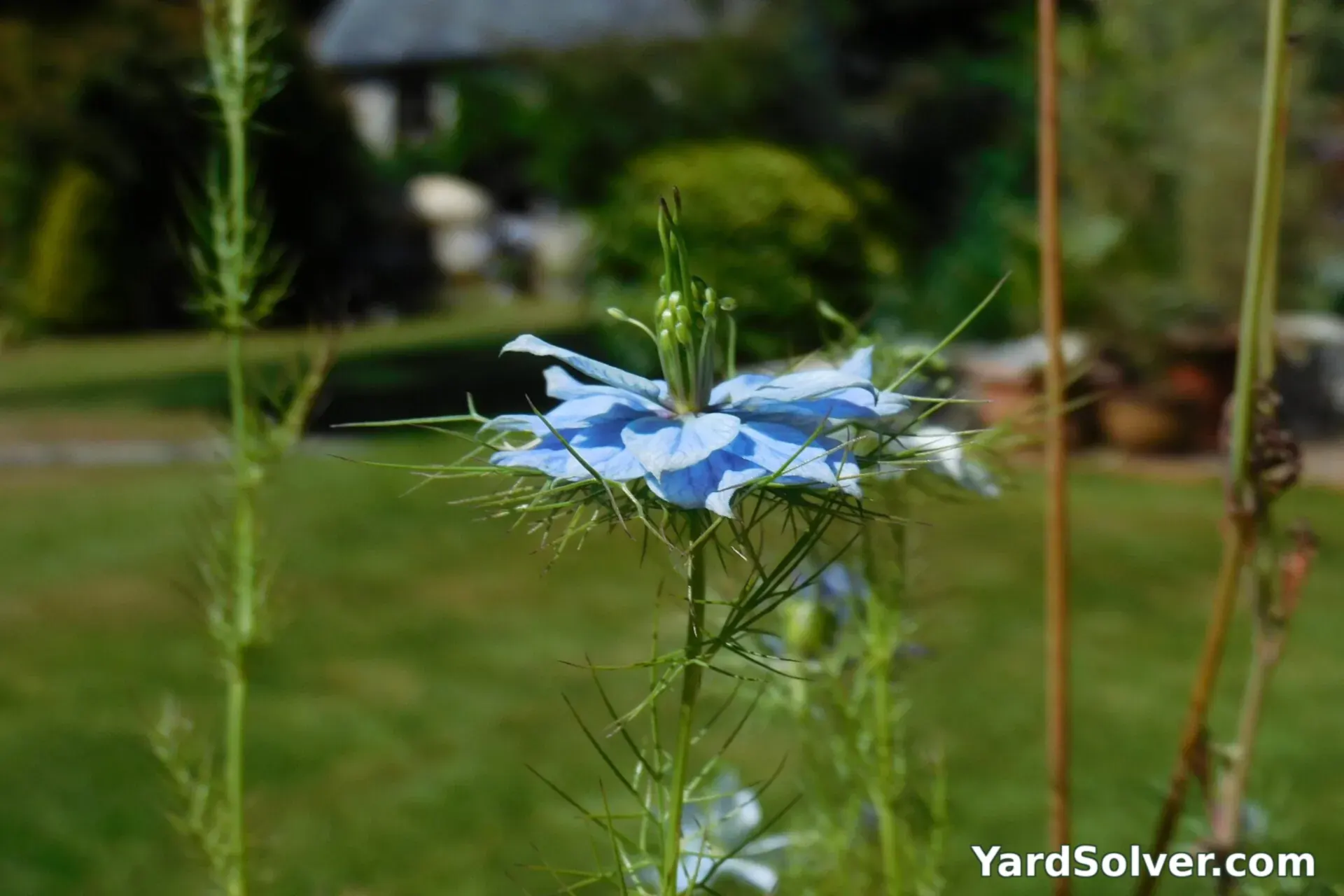
Love-in-a-mist grows in any ordinary, drained soil in full sun, and tolerates poor ground gracefully. Rake the bed fine — the display depends on a dense drift, so sow a patch, not a line. Don't enrich: lean soil keeps plants compact and floriferous. For a raised bed, the Raised Bed Soil Calculator counts the bags for you; mixing your own? The Garden Soil Calculator gives the compost-rich split to aim for.
Step 3 — Sow and plant out
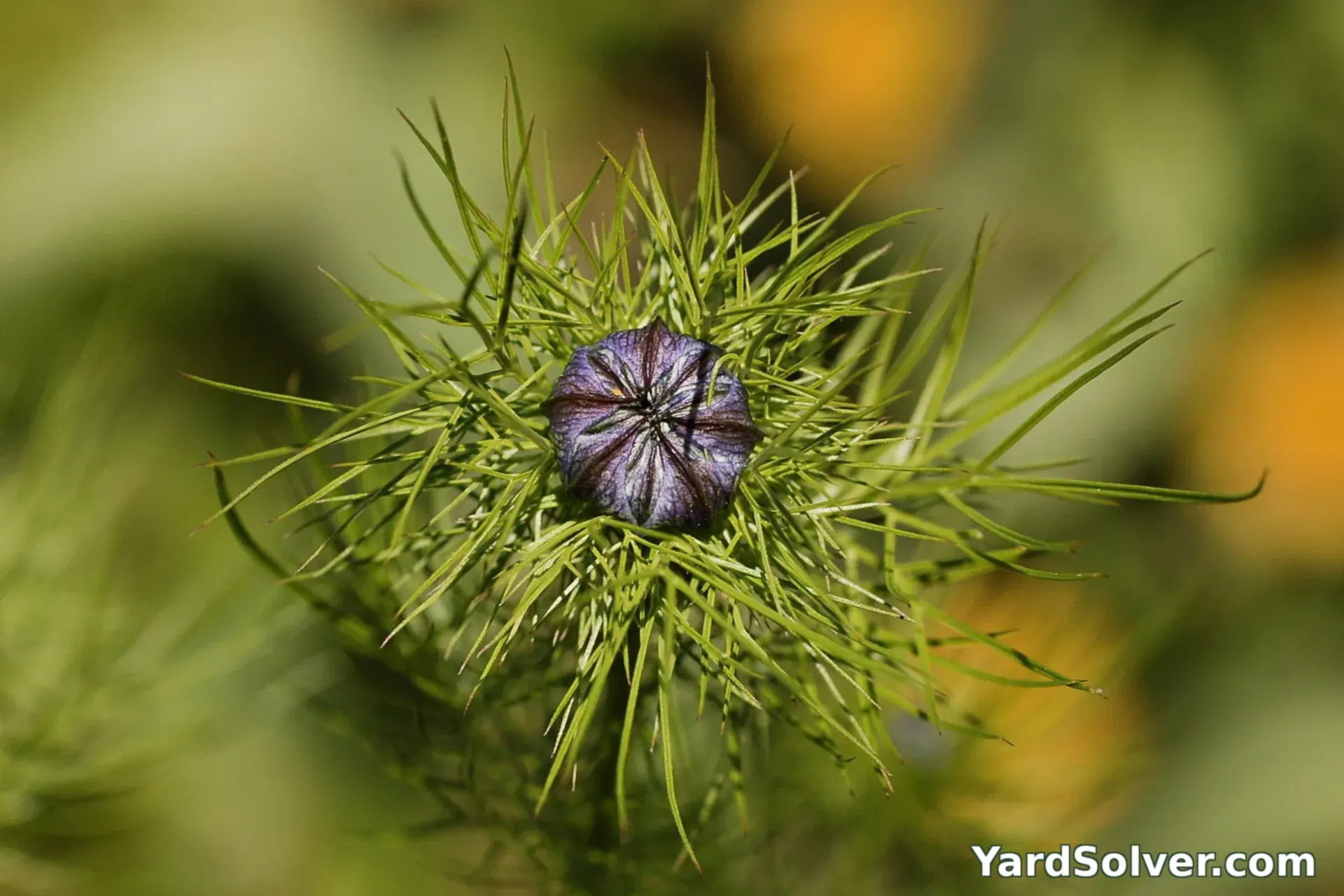
Thin seedlings to 10 in apart, snipping out the extras with scissors. The Plant Spacing Calculator turns your bed size into an exact plant count. Good neighbours: nigella threads through the early summer border with cornflowers and calendula, and its pods carry the display when the flowers finish.
Step 4 — Water and feed
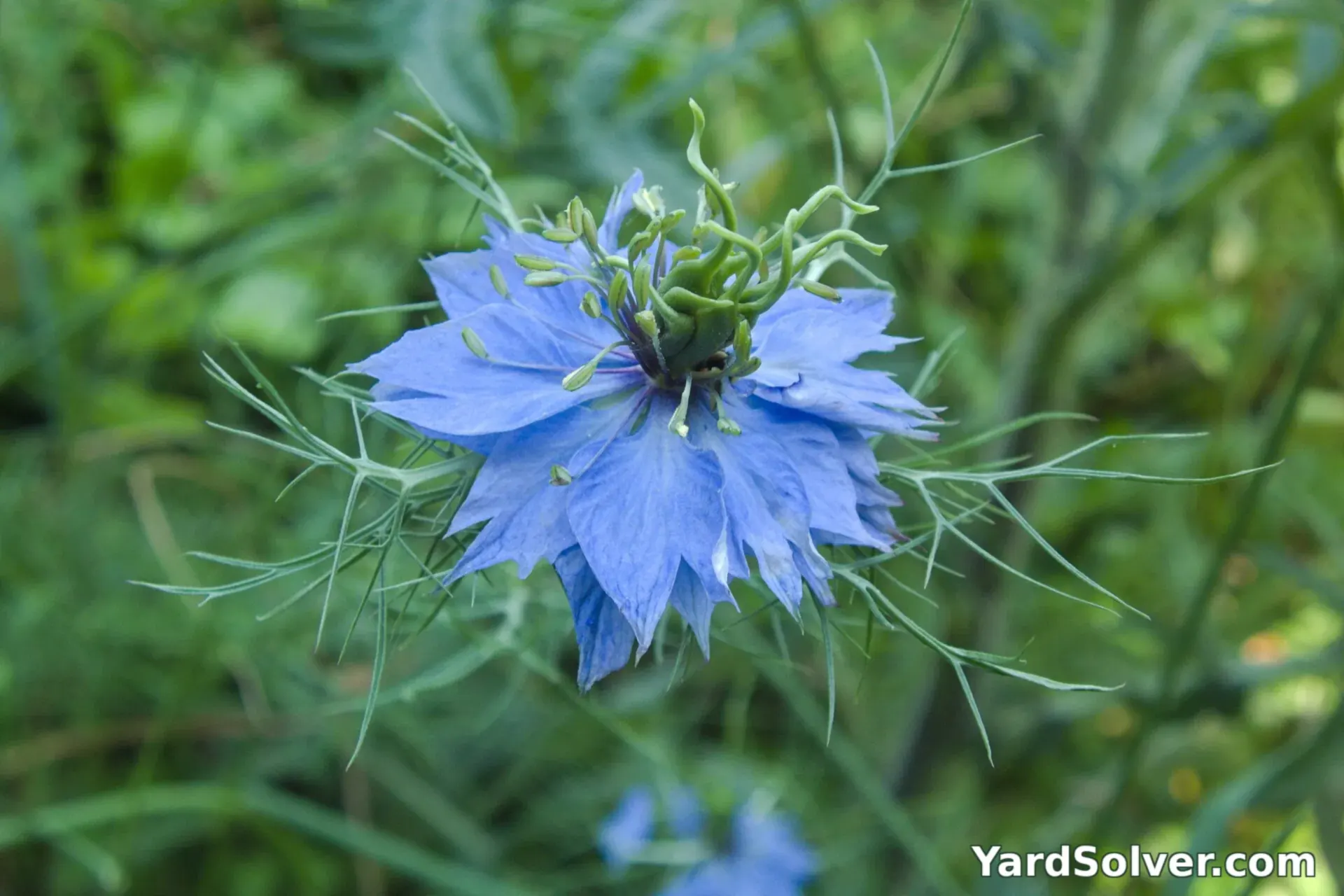
Water seedlings in dry springs; established plants are properly drought-tolerant and feeding is unnecessary. Rich feeding gives mist, more mist, and fewer stars. On the thinnest sand, nothing at all is still the right dose.
Step 5 — Care and the problems to watch for
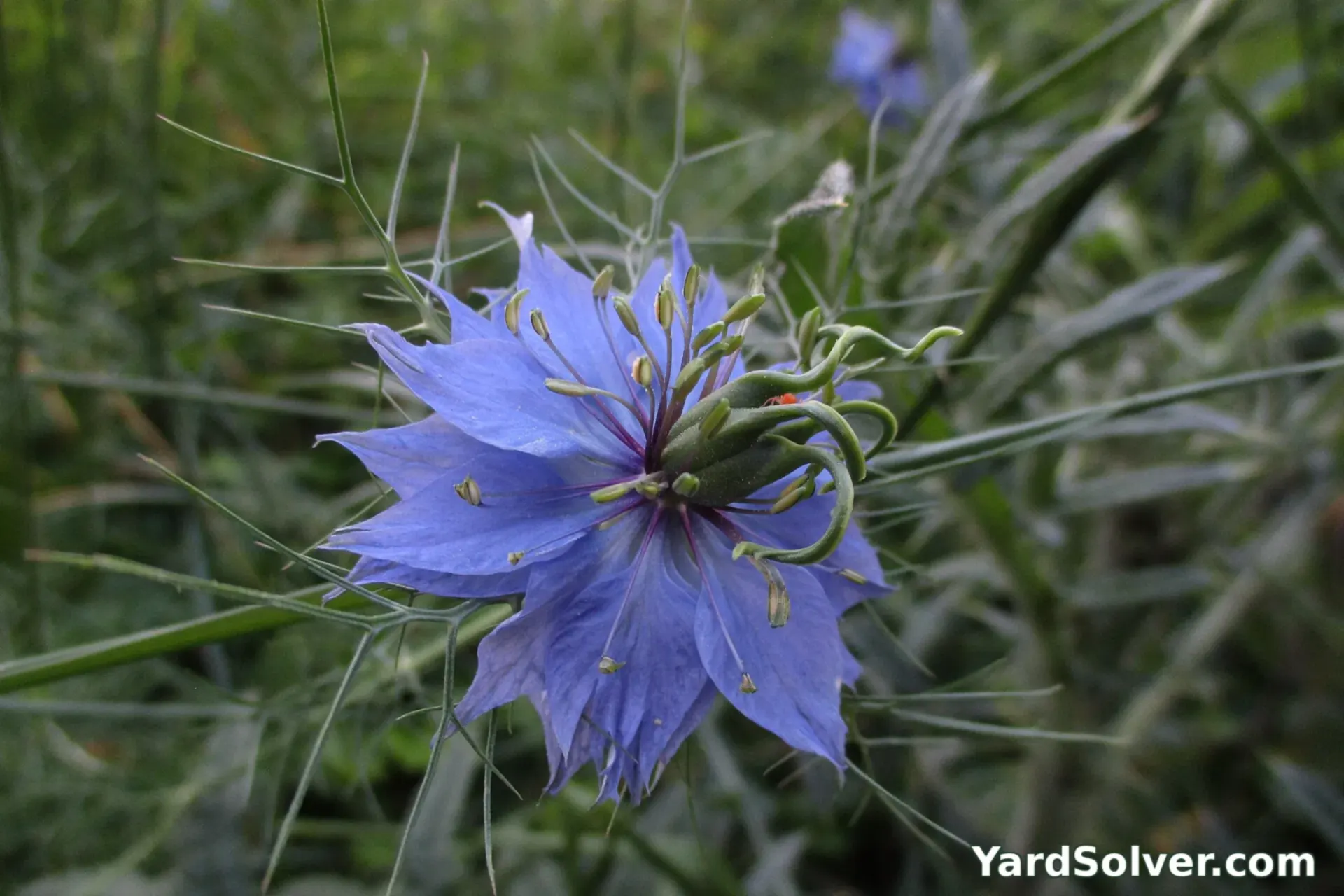
Love-in-a-mist asks for almost nothing: no staking (plants are self-supporting), no deadheading (the pods are half the point), no fuss.
- Seedlings everywhere next year — it self-sows charmingly; hoe or transplant the surplus.
- Powdery mildew in a wet summer — cosmetic and late; the pods still ripen.
- Short flowering — succession sowings are the answer; each batch flowers for about 8 weeks.
Step 6 — Harvest
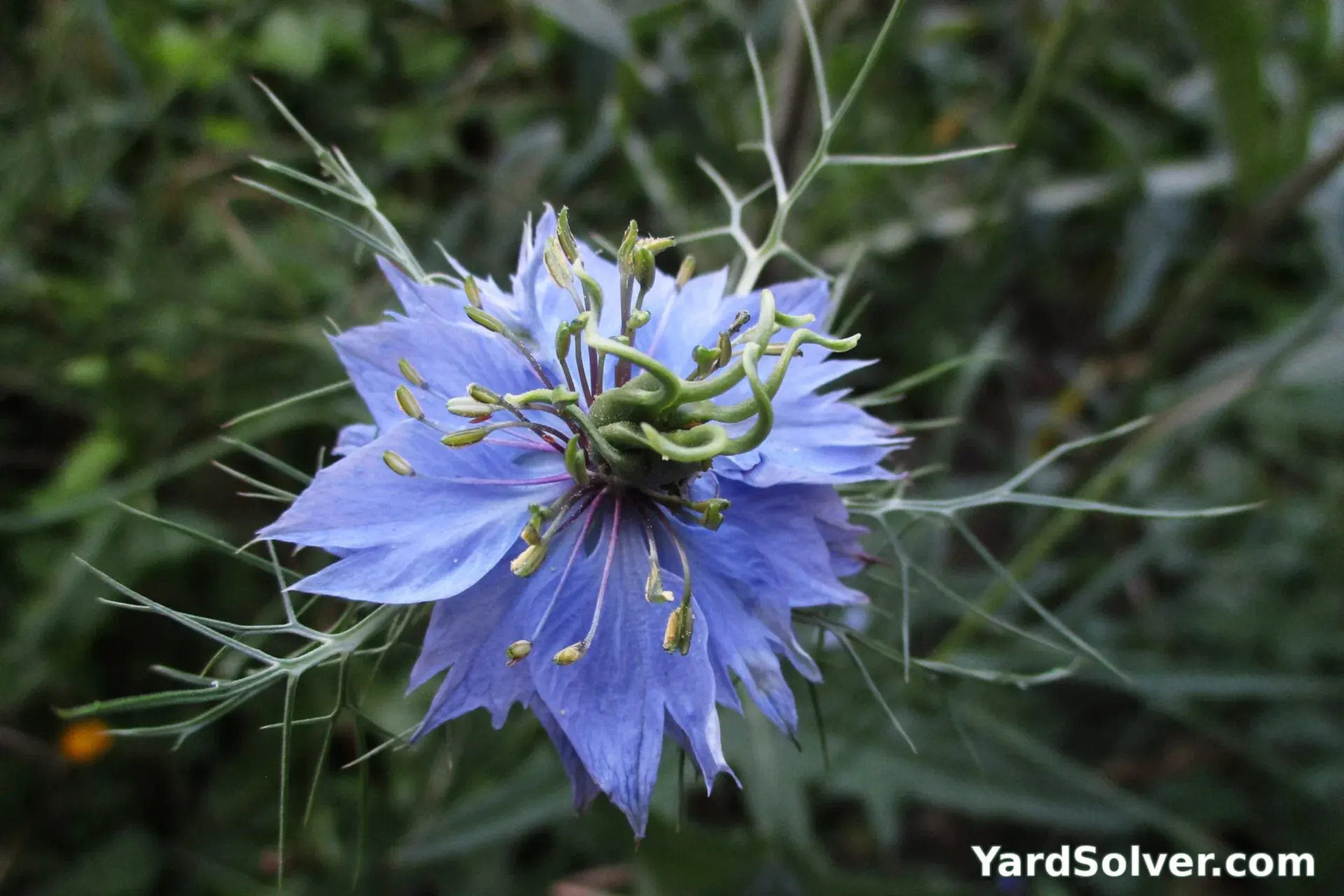
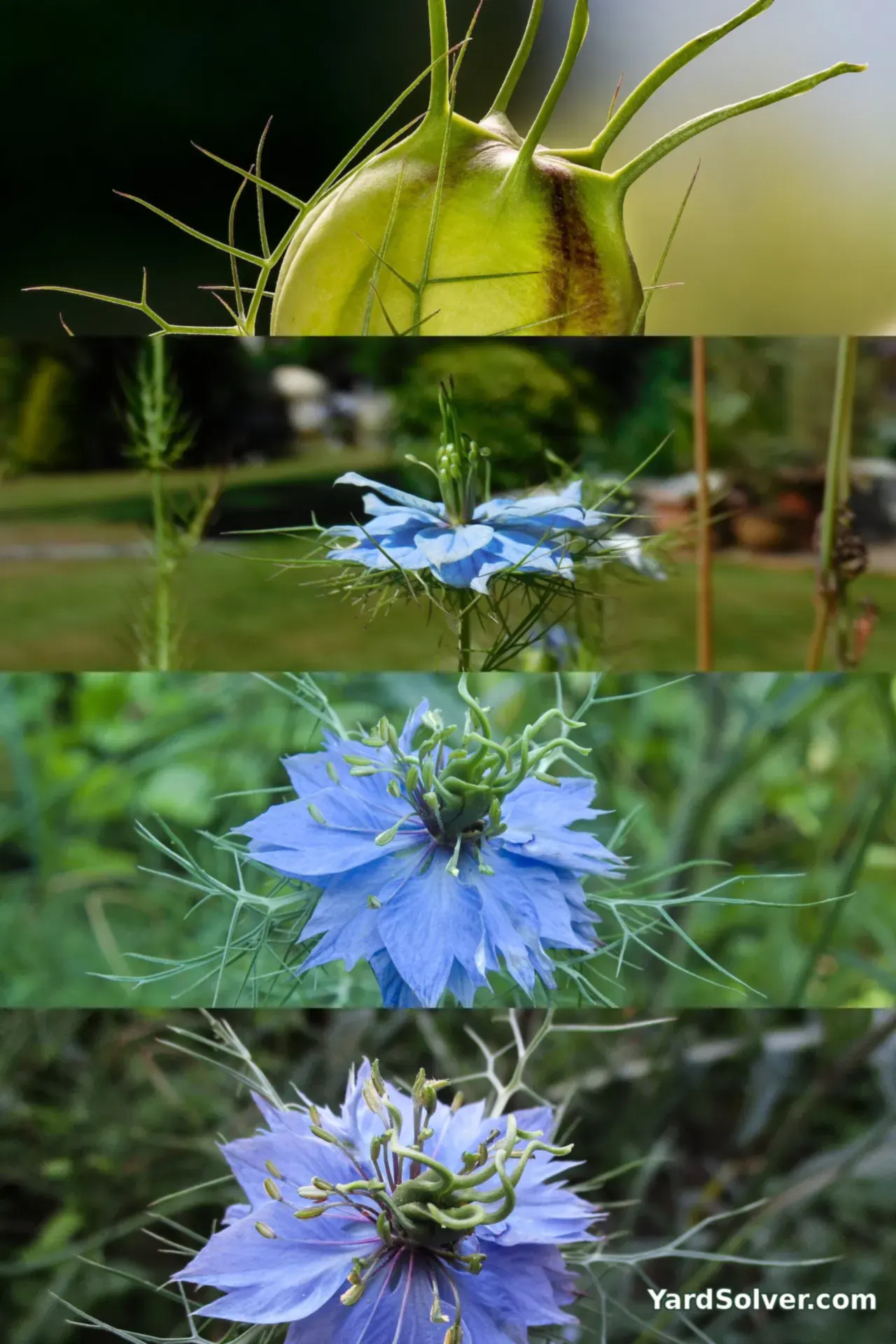
Cut fresh flowers as they open for a week of vase life (the mist is the arrangement). The greater harvest is the pods: cut stems when the balloons are plump, striped maroon and green, and papery, then hang them to dry fully. Dried pods rattle with seed, keep for years, and a shaken pod over a bed in autumn plants next year's drift.
📅 Your personal Love-in-a-Mist schedule
Counted from your planting day — not a generic calendar. Day 0 is the day the seed went in the ground or the young plant went out.
Varieties worth growing
| Variety | Colour | Why gardeners like it |
|---|---|---|
| Miss Jekyll | Sky blue | The classic strain, named for Gertrude Jekyll — the deepest traditional blue. |
| Persian Jewels | Mixed blue, pink, white | A jewel-box mix for drifts and cutting. |
| Delft Blue | White splashed with blue | Unusual bicolour flowers like hand-painted china. |
Good for you — and take care
Benefits
- Two displays in one plant: misty blue flowers, then balloon pods.
- Dried pods last for years in winter arrangements.
- Self-sows forever — plant once, edit annually.
Take care
- Sow in place — the taproot refuses transplanting.
- Ornamental nigella is not the culinary spice; keep it for the vase.
- Each batch flowers about 8 weeks — succession-sow for a long season.
A little history — and one good fact
Nigella damascena — 'of Damascus' — has grown in European cottage gardens since the 1500s, gathering romantic names in every language: love-in-a-mist, devil-in-a-bush, ragged lady. Its black seeds gave it the genus name (niger = black), though the spice fame belongs to its cousin N. sativa.
Fun fact: The 'mist' is a ruff of finely cut bracts around each flower — the plant makes its own green fog, which is why a drift of it looks soft-focus even on a sharp day.
Keep going
Guides: Succession planting · Companion planting basics · Pollinator garden guide
Calculators: Plant Spacing Calculator · Garden Mix Calculator · Fertilizer Calculator
More flowers: Cornflower · Clarkia · Larkspur · Calendula
← Back to the Plant Library · Get your personal planting dates
Questions people ask
Does love-in-a-mist really self-sow?
Yes, enthusiastically and true to type. Leave the pods to ripen and seedlings appear exactly where the parents grew — thin or transplant them in autumn or spring, and the planting renews itself indefinitely.
Are love-in-a-mist seeds the same as black cumin?
No — the culinary spice is Nigella sativa, a different species grown for its seed. Nigella damascena is the ornamental; enjoy its flowers and pods and buy your spice from the spice shelf.
Why did my love-in-a-mist flower so briefly?
Each sowing flowers for roughly eight weeks. Succession sowings every month from early spring stretch the season; so does leaving the pods, which are a display in themselves.
Sow it where it will flower and leave it alone: love-in-a-mist resents transplanting and repays neglect with flowers, then seed pods
Love-in-a-mist (Nigella damascena) is a hardy annual whose blue flowers float in a haze of finely cut foliage — and whose whole cultivation is a lesson in leaving well alone. It has a taproot and transplants badly, so seed is sown directly where it will flower, in autumn for the earliest flowers or in spring succession for a longer run, and thinned rather than moved. Bought seedlings in modules are the commonest way this easy plant is made difficult.
The second act is the seed pod: inflated, striped capsules that dry beautifully for arrangements and shed the black seed that gives the plant its other life as a relative of the nigella spice. Leave the pods standing and the plant self-seeds reliably, returning each year in the loose, shifting drifts that suit it — formal gardeners deadhead; cottage gardeners simply let it be.
The worked example: seed scattered in autumn onto raked soil and thinned once typically flowers early and returns by itself for years. The same seed raised in trays and planted out late typically sulks and flowers small — love-in-a-mist is at its best when it is sown, not planted.
Sources
Key facts on this page — timing, spacing and care — cross-checked against Nigella damascena — Wikipedia — background on love-in-a-mist and its cultivation and NC State Extension Plant Toolbox — Nigella damascena — culture and care requirements.
Related page
Read next: Companion Planting Basics: Good & Bad Neighbours.
Comments & ratings
No comments yet.
Be the first to share your experience.