
Plant Library · Flowers · By Faizan Ahmad
🌸 How to Grow Poppies (Annual)
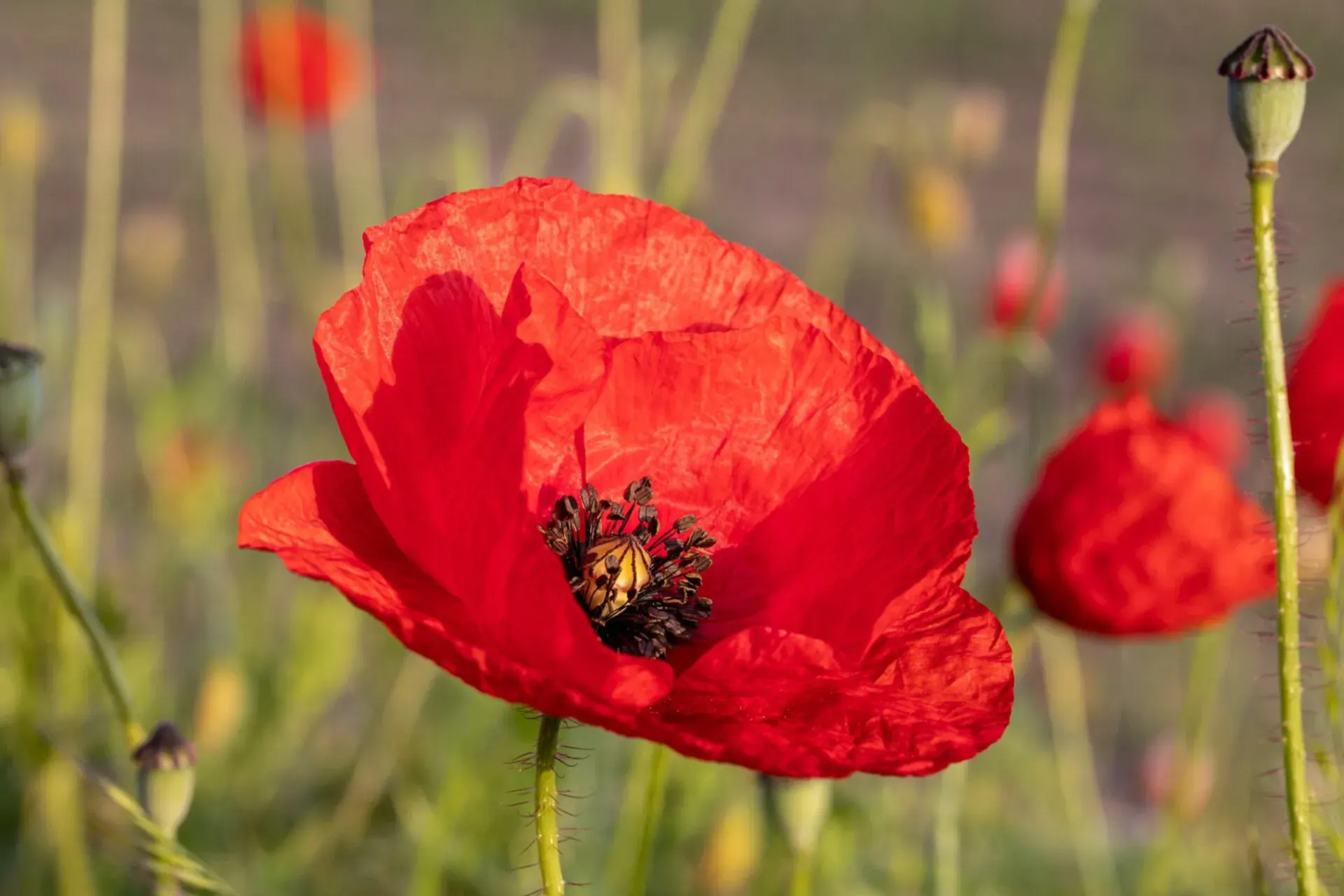
Silk petals on hairy stems, sown in place and left to glory — the annual poppies are gardening's beautiful minimalists. This page covers the annual kinds: field poppies (Papaver rhoeas) and their Shirley descendants, Iceland poppies, and the big breadseed types. All share the family rules: sow where they'll grow (taproots), in cool seasons, on the surface — then do almost nothing, beautifully.
Grow Poppies (Annual) with us — step by step
Everything for this plant is written step by step below — what to do, and exactly when. Read it through first if you like: you can grow it entirely on your own with that guide. Or start with us here — tell us your planting day and we lay out your personal schedule on this page, every next step on its own day, counted from your planting date. No guessing, no forgetting.
Step 1 — today: Scatter poppy seed directly onto a raked bed in early spring or autumn — mixed with a little sand so you can see where it falls.
Poppies (Annual) at a glance
Sow indoors: Not recommended — direct sow
Sow outdoors: 2 weeks before last frost, or in autumn
Spacing · Seed depth: 10 in apart · surface — seed needs light
Sun: Full sun
Water: Low — drought-tolerant
Bloom: May to July; each flower brief, the drift lasting weeks
Timing counts from your average last spring frost — get your own dates in the Planting Calendar. Guidance follows standard extension-service practice for Canada and the US.
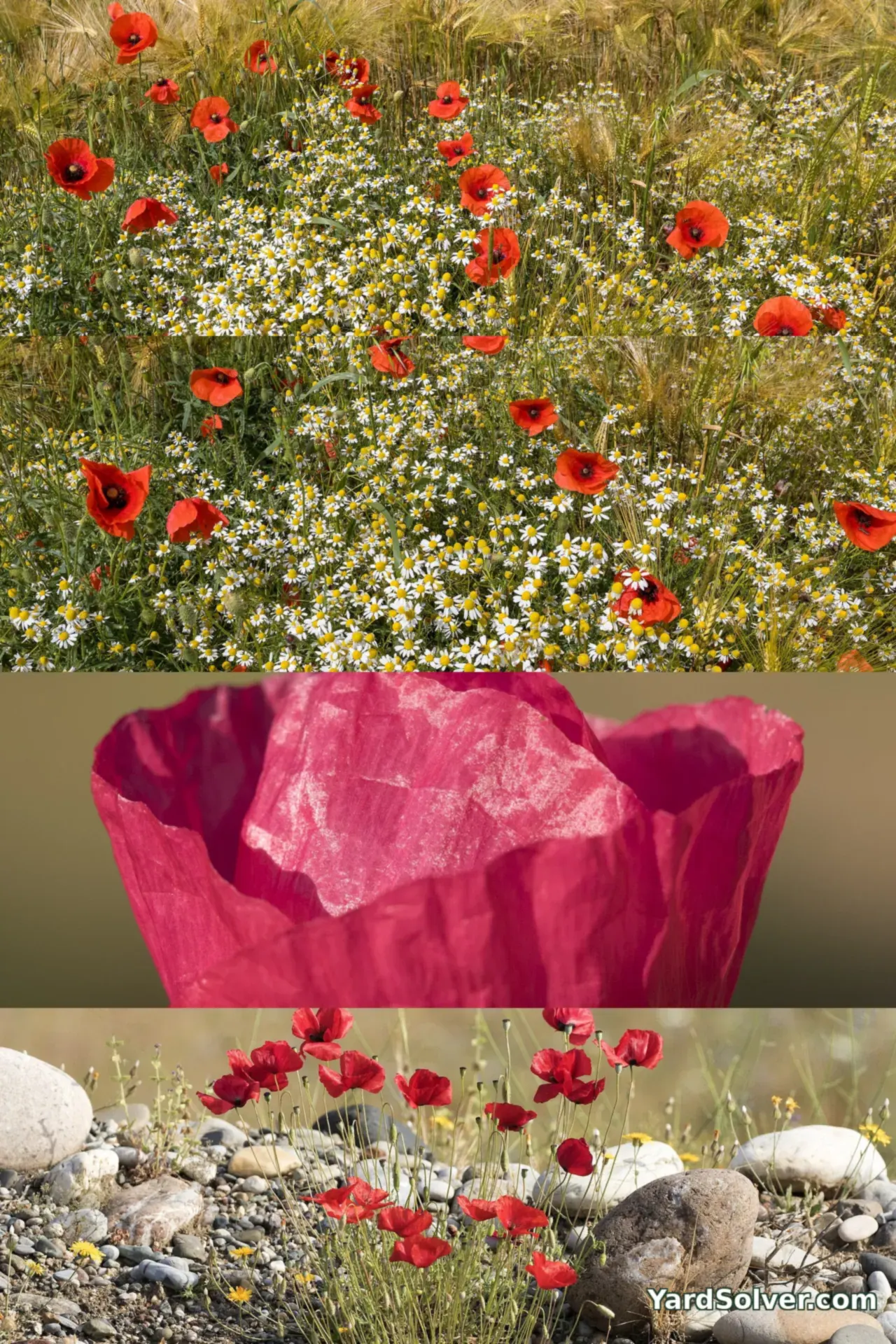
How to plant and grow annual poppies, step by step
Step 1 — Time it right
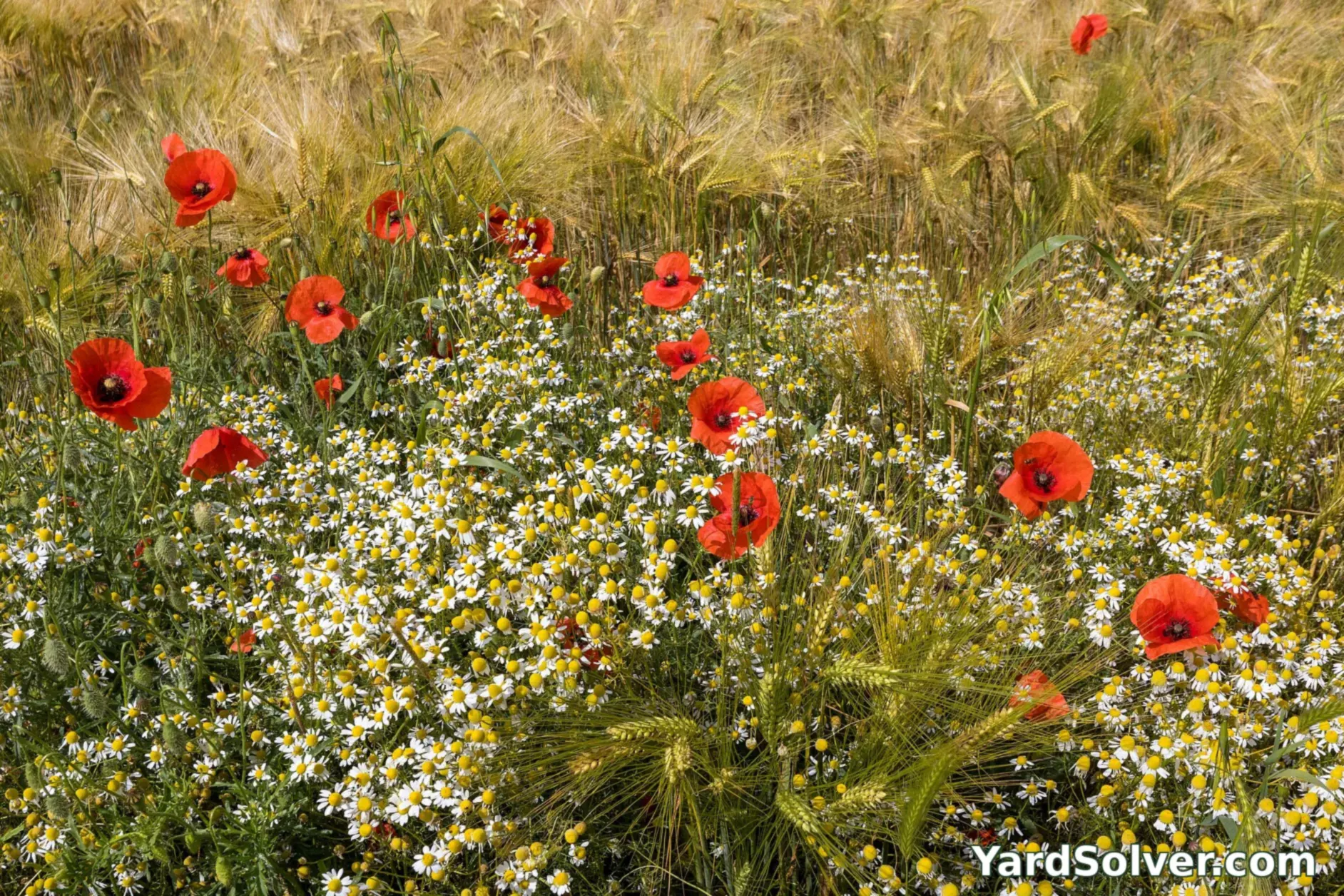
Sow outdoors: 2 weeks before last frost, or in autumn in mild districts; Sow indoors: not recommended — poppies' taproots refuse transplanting. All dates count from your average last spring frost — the Planting Calendar turns them into real dates for your garden. Poppy seed needs light and cool soil: scatter it on the surface in early spring (or autumn where winters are mild) and germination follows in 10–21 days. Each plant flowers for a day or two, so the display is a relay — sow in drifts, and succession-sow a small patch every few weeks in spring for the longest season.
Step 2 — Prepare the spot
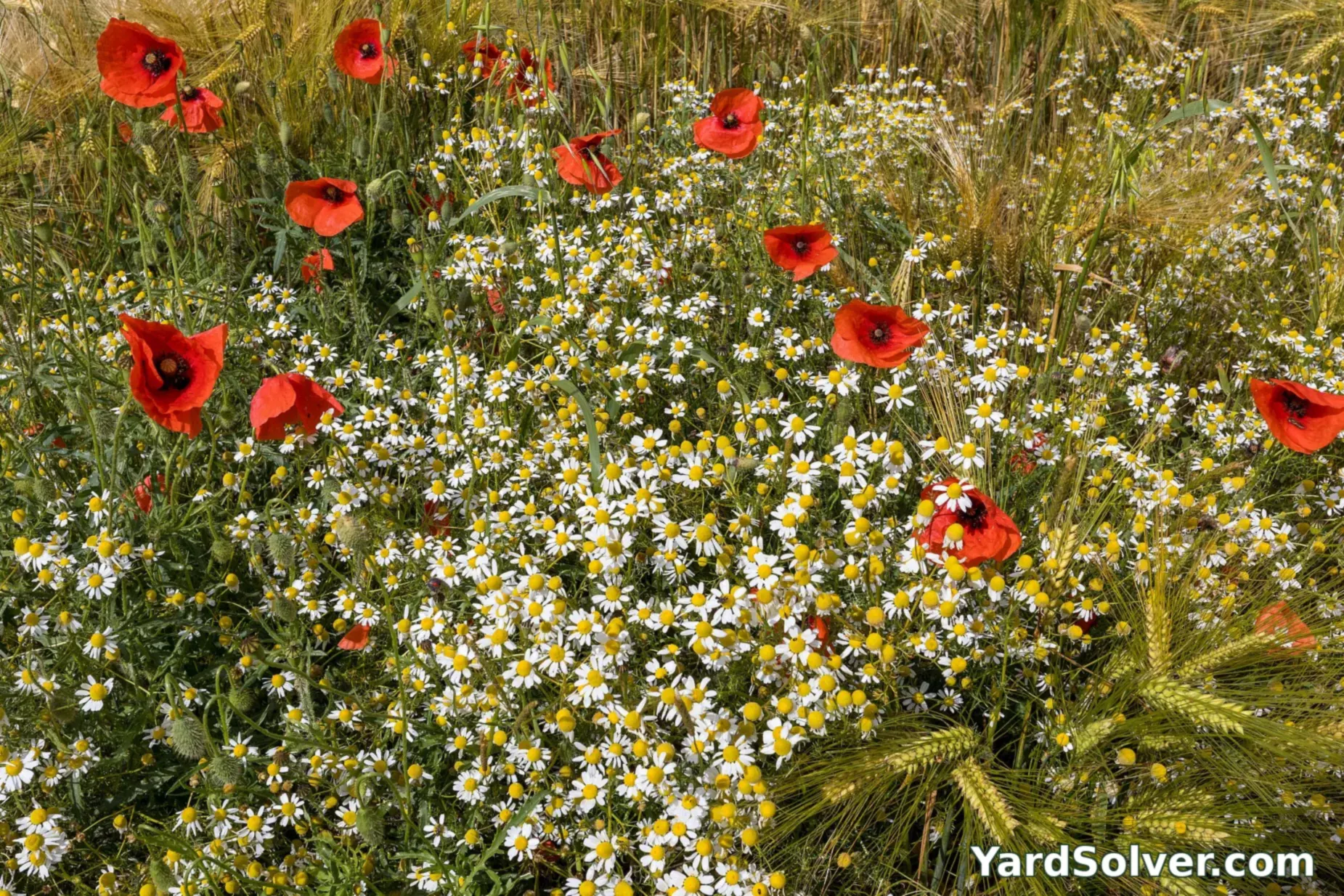
Annual poppies are field flowers: average-to-poor, well-drained soil in full sun. Rake the bed fine and firm. Don't feed or enrich — rich soil makes foliage and flop. A patch at the front of a border, a gravel garden, or the classic cornfield drift with cornflowers and calendula all suit them. For a raised bed, the Raised Bed Soil Calculator counts the bags for you; mixing your own? The Garden Soil Calculator gives the compost-rich split to aim for.
Step 3 — Sow and plant out
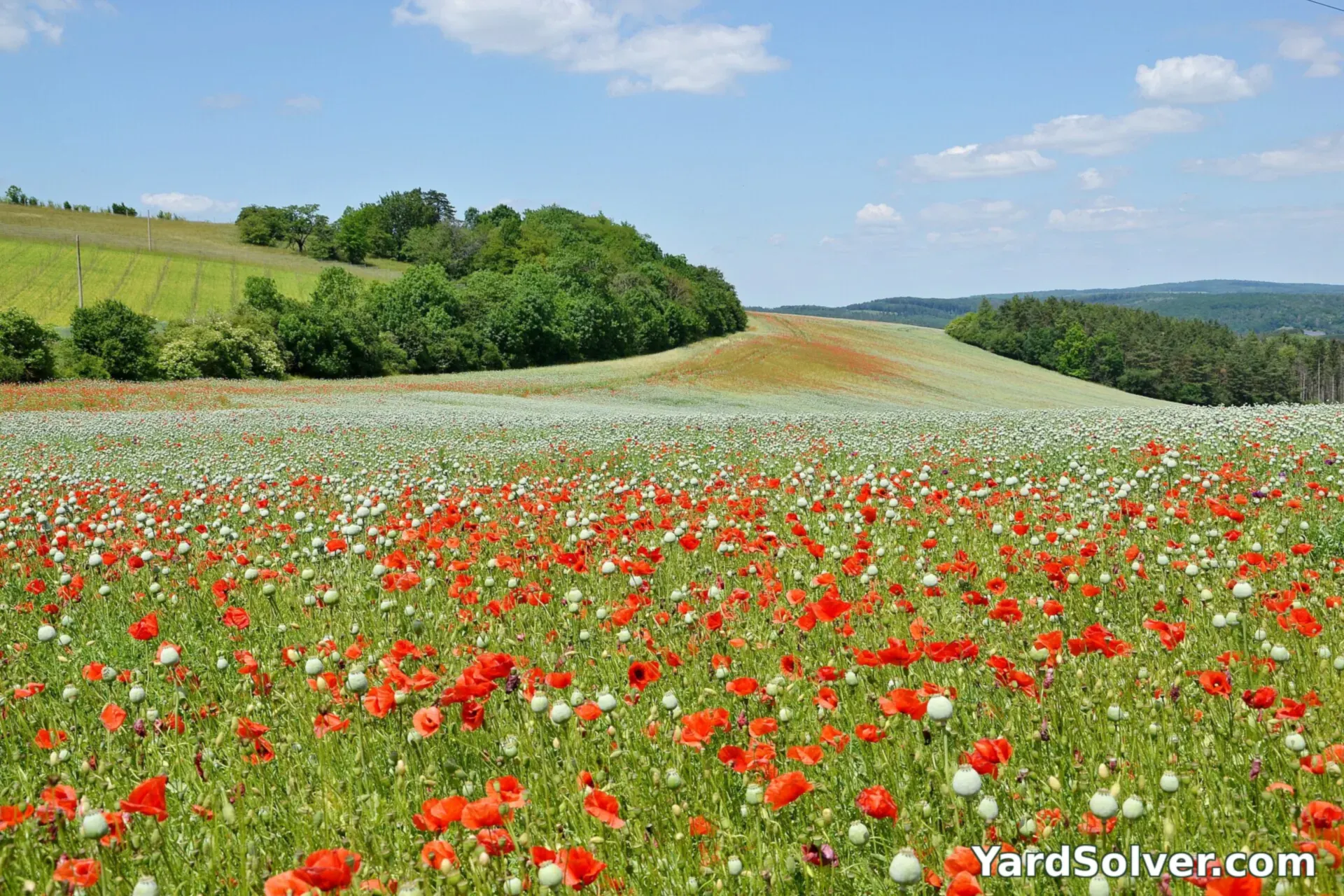
Thin seedlings in two stages to a final 10 in apart, snipping rather than pulling. The Plant Spacing Calculator turns your bed size into an exact plant count. Good neighbours: poppies are the heart of the cornfield trio with cornflowers and calendula — sow them together for the meadow effect in a single pass.
Step 4 — Water and feed
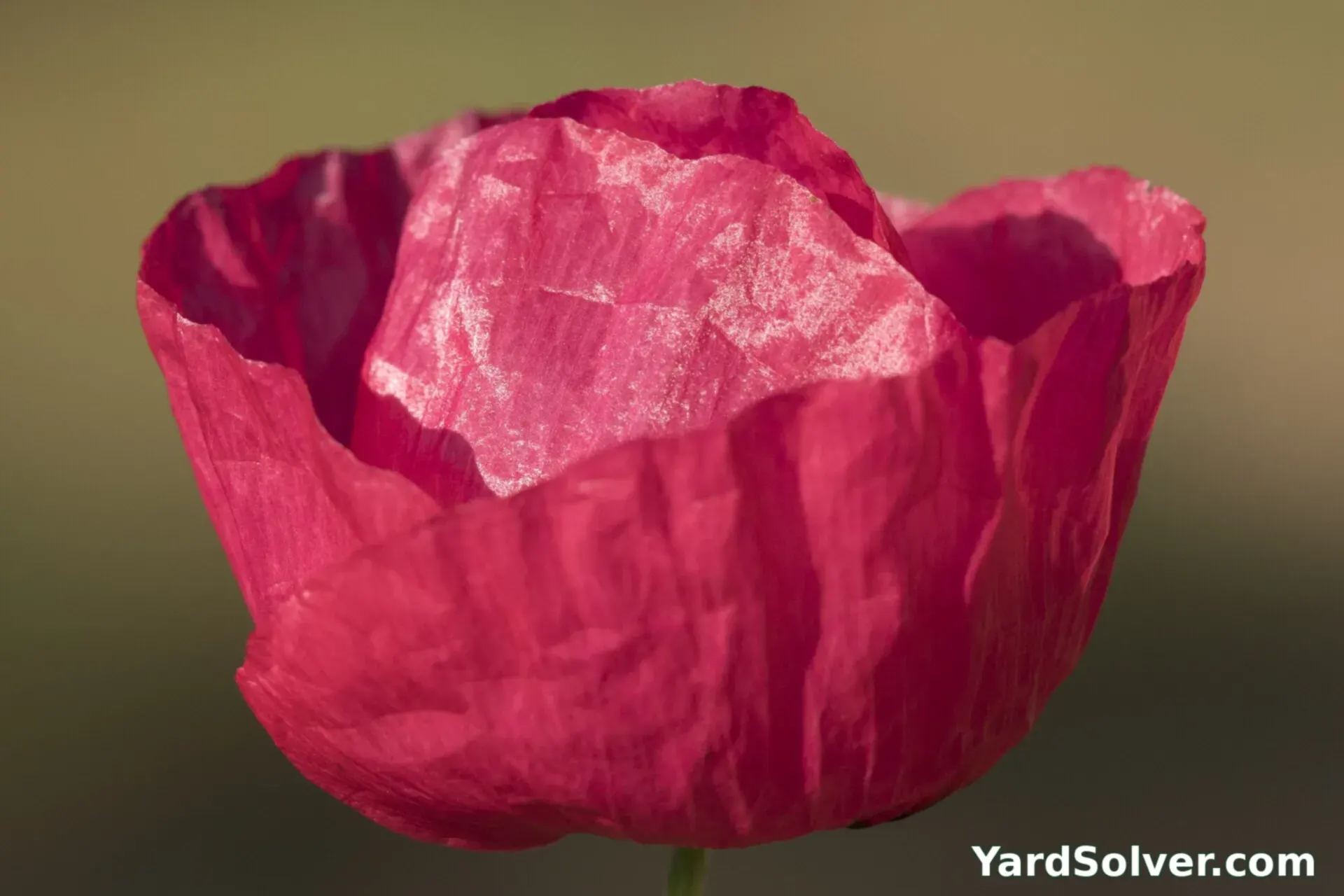
Water the seedbed if spring is dry; established plants are drought-tolerant and feeding is counterproductive. On the very poorest soil the plants are smaller but the flowers are the same silk. Leave the fertiliser in the shed — the Fertilizer Calculator turns your bed size into exact amounts (use it on the vegetables instead).
Step 5 — Care and the problems to watch for
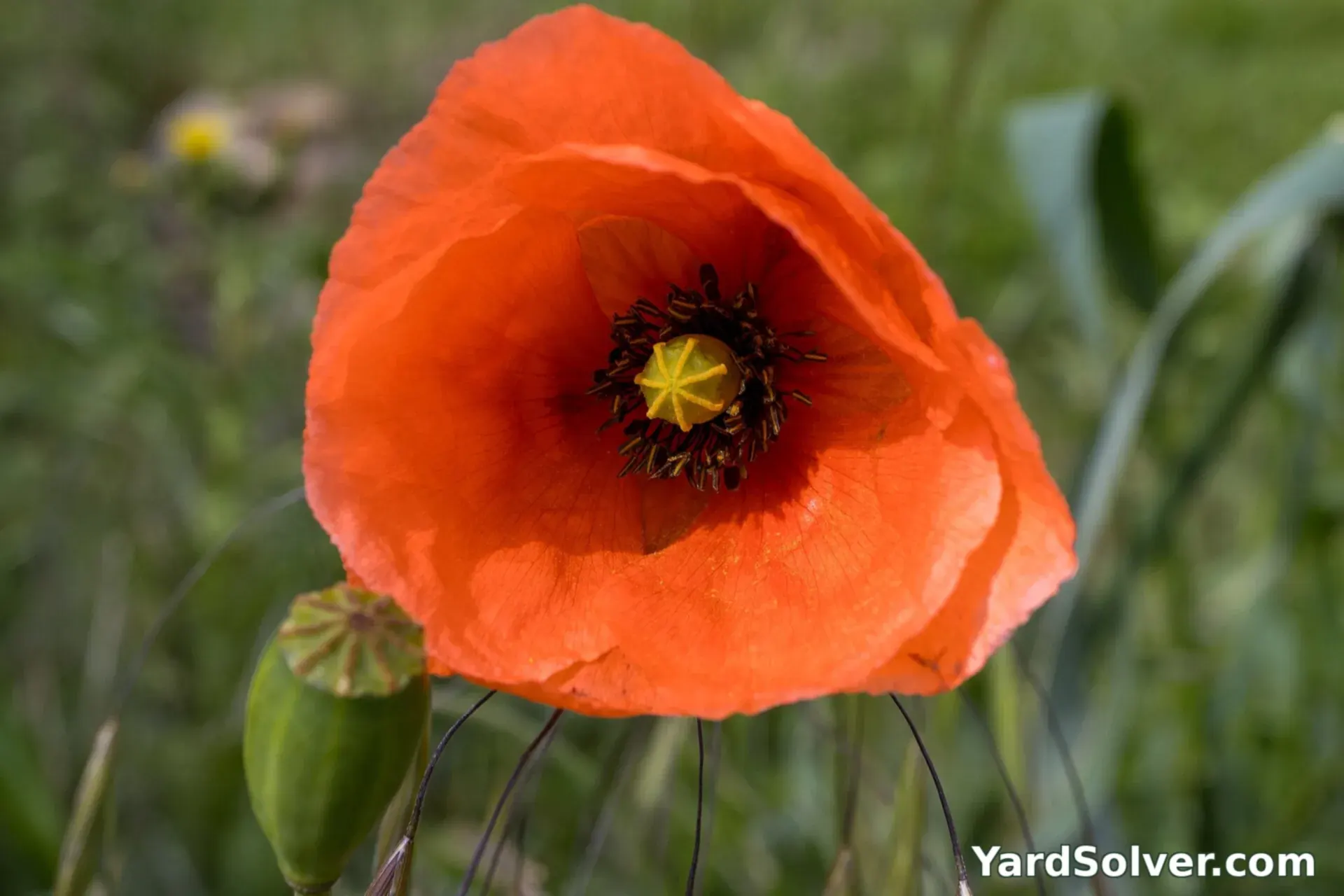
Care is nearly nil: deadhead if you want more flowers and no self-sowing, or leave the pods for seed and winter structure.
- Seedlings vanishing — slugs graze young rosettes; a gravel mulch or your usual defences.
- Flopping in rich soil — grow leaner next year; brushwood helps this year's.
- Flowers lasting a day — that's poppies; the drift, not the individual, is the display.
Step 6 — Harvest
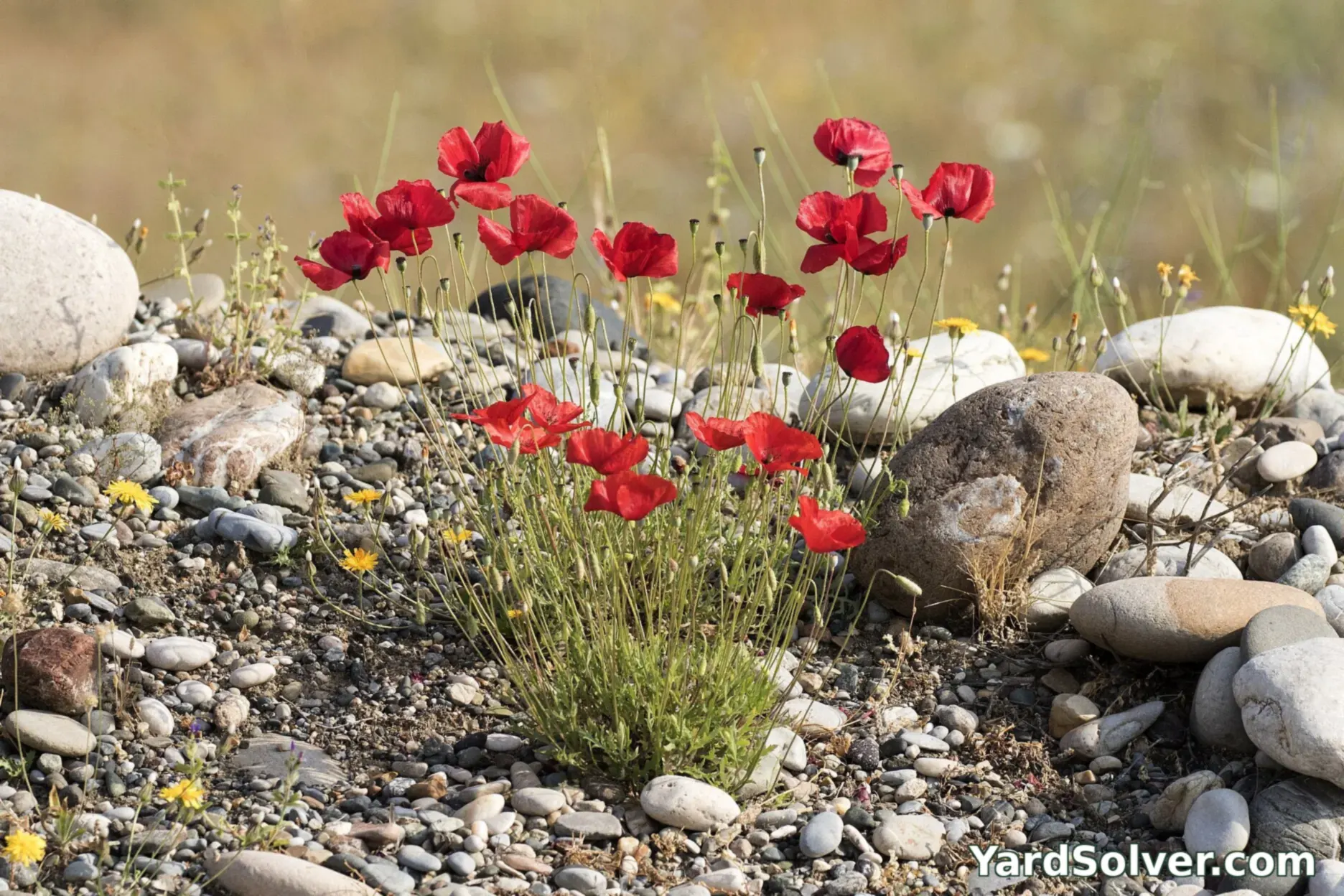
Cut flowers are fleeting (sear the stem ends in boiling water and you may get two days) — poppies are for the garden. The seed harvest is the satisfying part: let pods dry until they rattle, cut them into a paper bag, and shake out the tiny seed for next year's sowing (or the kitchen, from breadseed strains where legal). Dried pods are handsome in winter arrangements.
📅 Your personal Poppies (Annual) schedule
Counted from your planting day — not a generic calendar. Day 0 is the day the seed went in the ground or the young plant went out.
Varieties worth growing
| Variety | Colour | Why gardeners like it |
|---|---|---|
| Shirley Poppies | Silk pastels, picotees | Reverend Wilks' famous selection of the field poppy — the cottage standard. |
| American Legion | Scarlet with white cross | The remembrance-red field poppy, single and simple. |
| Iceland Poppy 'Champagne Bubbles' | Large cups, mixed citrus shades | Papaver nudicaule — a short-lived perennial type, sown the same way, glorious in spring. |
Good for you — and take care
Benefits
- The most romantic drift in the spring garden for the least possible effort.
- Bees feast on the pollen — poppies offer no nectar but pollen in plenty.
- Pods give seed for next year and structure for winter.
Take care
- Sow in place — transplanting is futile with taprooted poppies.
- Check local rules before breadseed types; field and Iceland poppies are fine everywhere.
- Each flower lasts a day or two — plant drifts, not singles.
A little history — and one good fact
The field poppy grew in grain for millennia and followed armies' disturbed earth — which is how it became the remembrance flower of the First World War, blooming between the trenches of Flanders. The Shirley strain was selected in the 1880s by the Reverend William Wilks, who spotted one white-edged flower in a field of red.
Fun fact: Poppy seeds can sleep in soil for decades — the Flanders poppies bloomed from seed banks woken by the churned earth of the battlefields.
Keep going
Guides: Pollinator garden guide · Succession planting · Companion planting basics
Calculators: Plant Spacing Calculator · Garden Mix Calculator · Fertilizer Calculator
More flowers: California Poppy · Cornflower · Love-in-a-Mist · Larkspur
← Back to the Plant Library · Get your personal planting dates
Questions people ask
Why do poppy flowers only last a day?
Annual poppies make brief, extravagant flowers — a day or two each — but a healthy plant produces them in succession for weeks, and a drift is in flower for a month or more. The pods that follow are a display in themselves.
Can I transplant poppy seedlings?
It rarely works — the taproot breaks and plants sulk or die. Always sow in place, thinning by snipping. If you must move one, do it as a tiny seedling with a big ball of soil, in cool wet weather.
Is it legal to grow poppies?
Field poppies, Shirley poppies and Iceland poppies are ordinary ornamentals. Breadseed (opium) poppy, Papaver somniferum, is restricted in some jurisdictions even for ornament — check your local rules before growing that type.
Poppies hate being moved more than any flower in the border: sow them where they are to bloom
Poppies — the annual Shirley and corn poppies (Papaver rhoeas) and the perennial Oriental poppy (Papaver orientale) — share one defining trait: a taproot that resents transplanting. Seedlings raised in pots and planted out sulk or die; the same seed scattered on the spot races away. Autumn or early-spring direct sowing, thinly, on raked soil the seed can touch, is the whole technique for the annual kinds.
The seed is tiny and needs light to germinate, so it is barely covered, if at all, and kept moist until it is up. Thin in stages to a hand's width apart — crowded poppies flower small and mildew early. Oriental poppies are the perennial exception that proves the rule: planted as crowns in autumn, they flower hugely in early summer, then go dormant and leave a gap the wise gardener fills with late plants.
The worked example: seed scattered in autumn on bare, raked ground typically gives a drift of flowers with no further work. The same seed fussed into modules and transplanted typically gives gaps — with poppies, the less you handle them, the better they grow.
Sources
Key facts on this page — timing, spacing and care — cross-checked against NC State Extension Plant Toolbox — Papaver rhoeas — culture and care requirements and Papaver rhoeas — Wikipedia — background on corn poppies and their cultivation.
Related page
Read next: Succession Planting Guide: Sow Little and Often.
Comments & ratings
No comments yet.
Be the first to share your experience.