
Plant Library · Flowers · By Faizan Ahmad
🧡 How to Grow California Poppy
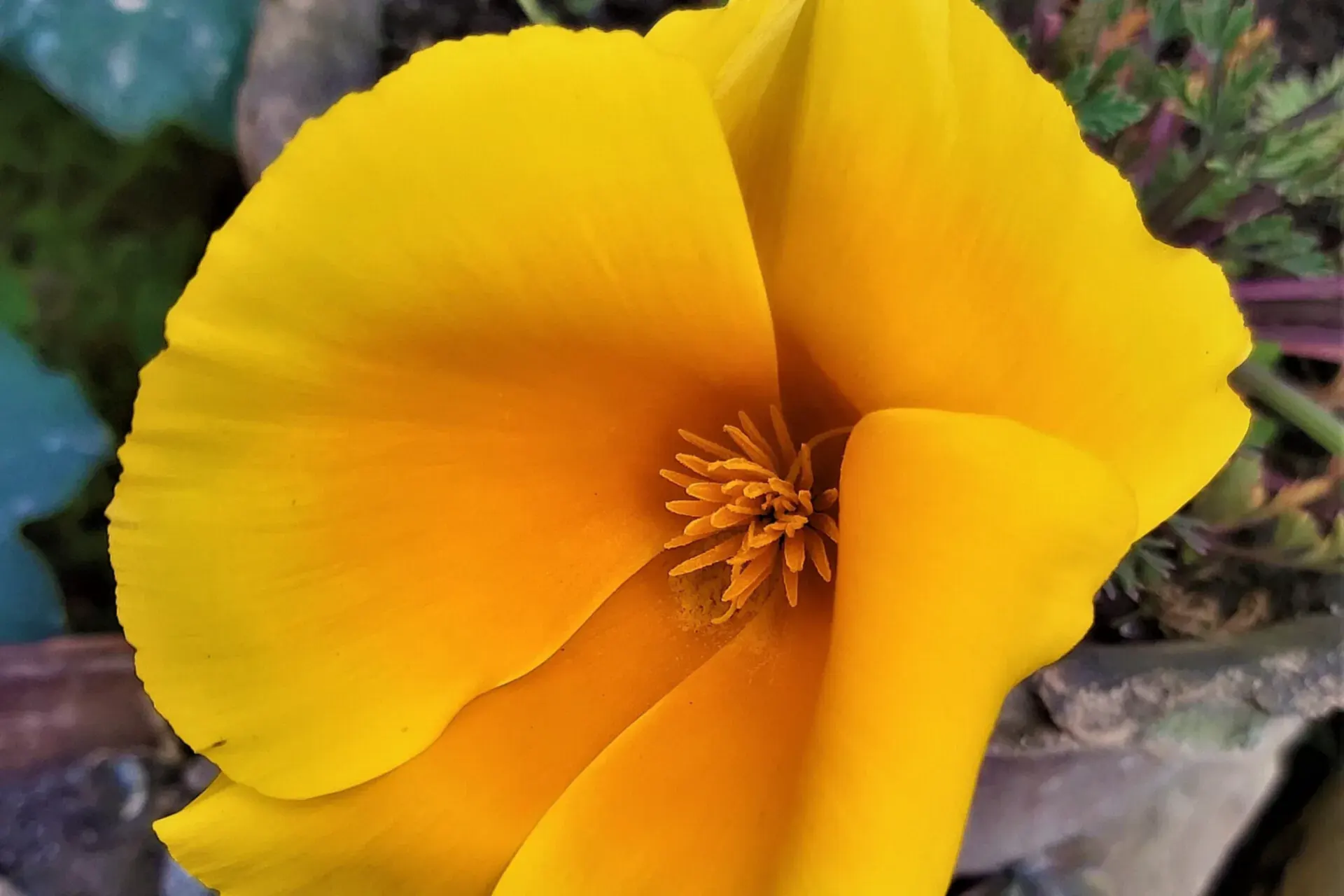
Cups of molten orange that open with the sun — sow them where they'll grow and forget them. California poppy (Eschscholzia californica) is a drought-proof annual (short-lived perennial in mild zones) with one firm rule: it has a taproot and hates transplanting, so seed goes straight into the ground. In return it asks for nothing — poor soil, no water, no food — and reseeds for years.
Grow California Poppy with us — step by step
Everything for this plant is written step by step below — what to do, and exactly when. Read it through first if you like: you can grow it entirely on your own with that guide. Or start with us here — tell us your planting day and we lay out your personal schedule on this page, every next step on its own day, counted from your planting date. No guessing, no forgetting.
Step 1 — today: Scatter california poppy seed directly onto its growing spot in early spring — a gravel edge, a dry bank, a crack in the paving.
California Poppy at a glance
Sow indoors: Not recommended — direct sow
Sow outdoors: 2 weeks before last frost; again in autumn in mild districts
Spacing · Seed depth: 9 in apart · 1/8 in deep
Sun: Full sun
Water: Low — drought-proof once established
Bloom: Spring to early summer; deadhead to extend, or let it reseed
Timing counts from your average last spring frost — get your own dates in the Planting Calendar. Guidance follows standard extension-service practice for Canada and the US.
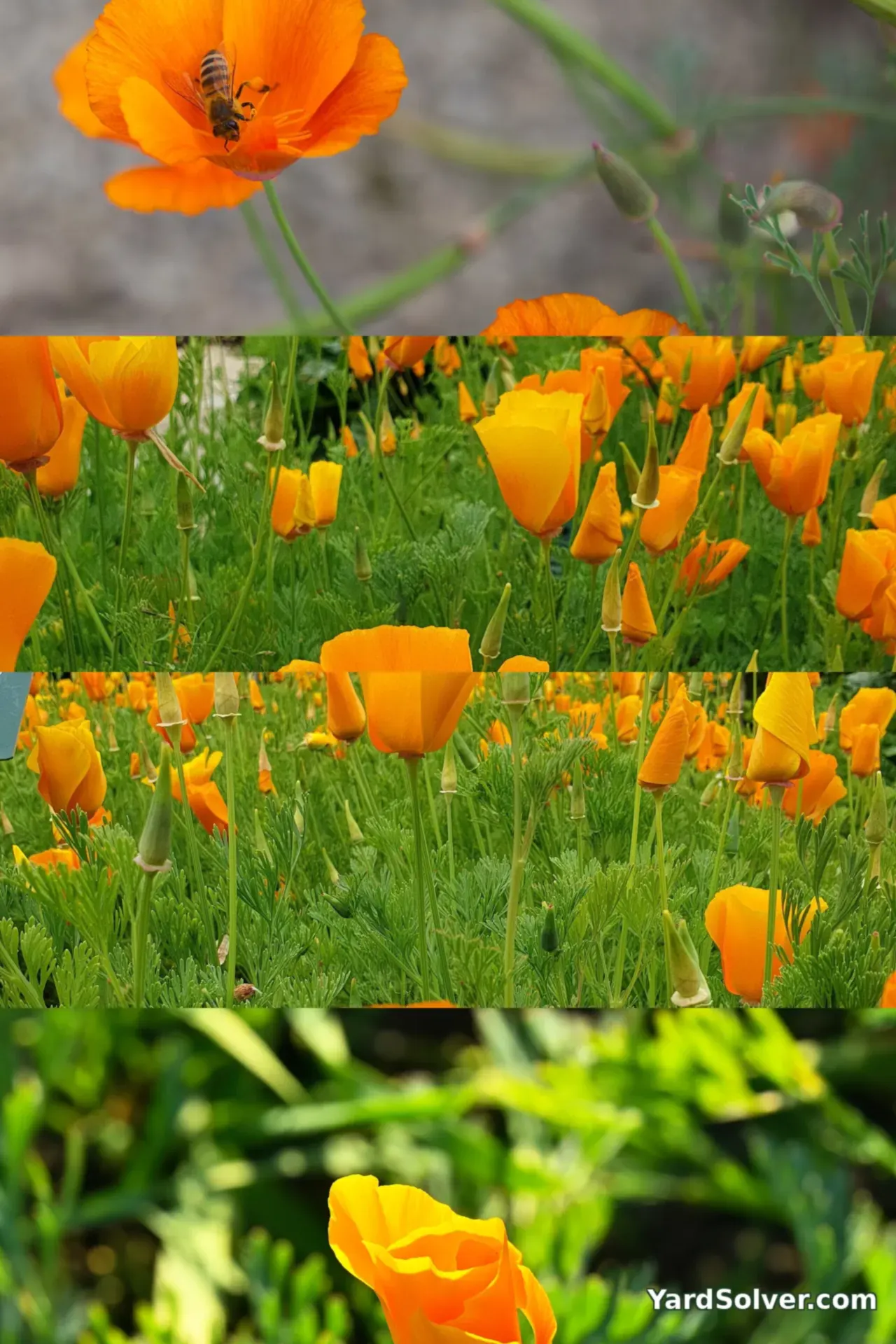
How to plant and grow california poppy, step by step
Step 1 — Time it right
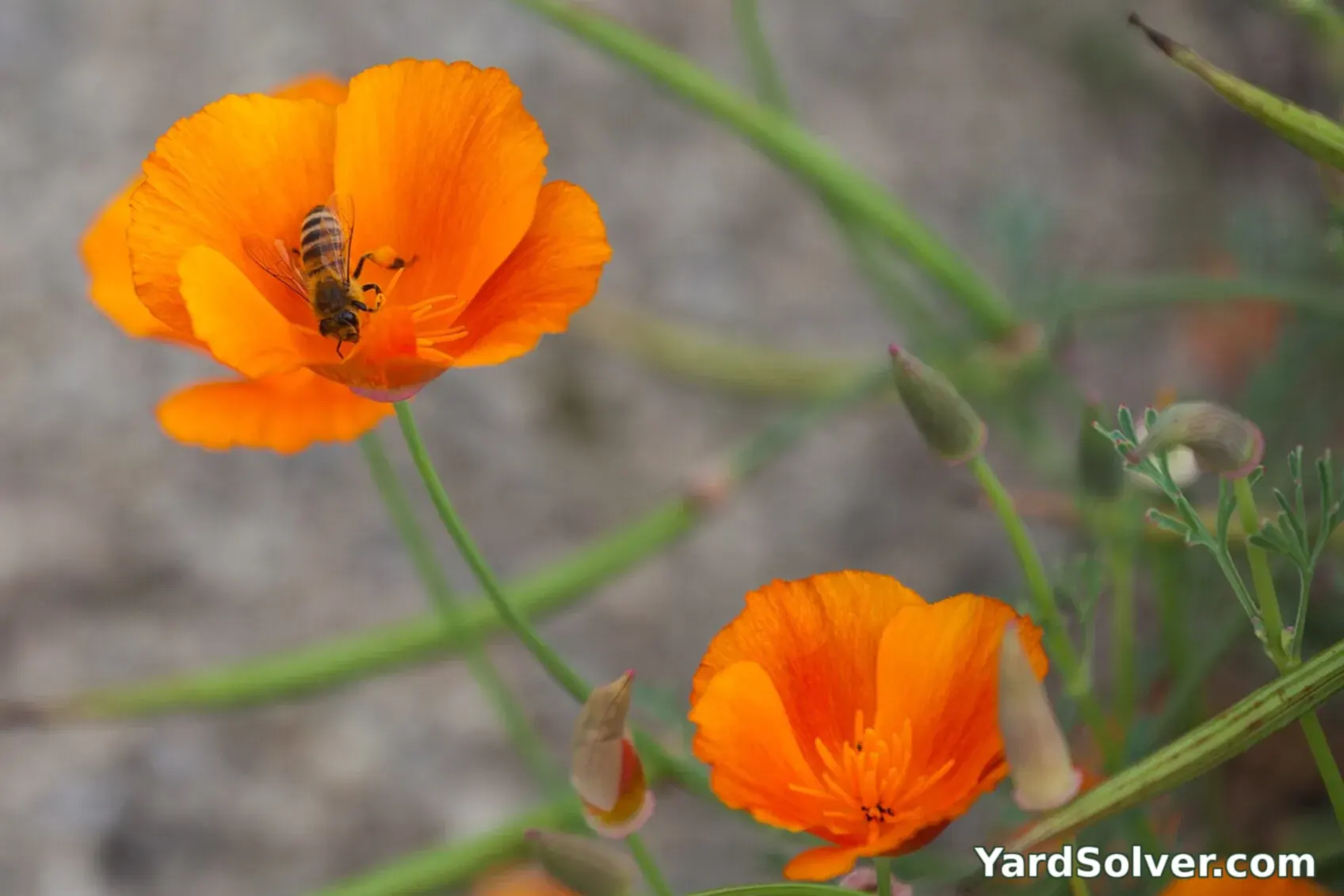
Sow outdoors: 2 weeks before last frost — and again in autumn where winters are mild; Sow indoors: not recommended, the taproot hates moving. All dates count from your average last spring frost — the Planting Calendar turns them into real dates for your garden. California poppy germinates in 14–21 days in cool spring soil and grows away fast. Autumn sowing in mild districts gives earlier, bigger plants. If you truly must start it in pots, use deep biodegradable pots and plant the whole thing out un-disturbed — but direct sowing is simpler and better.
Step 2 — Prepare the spot
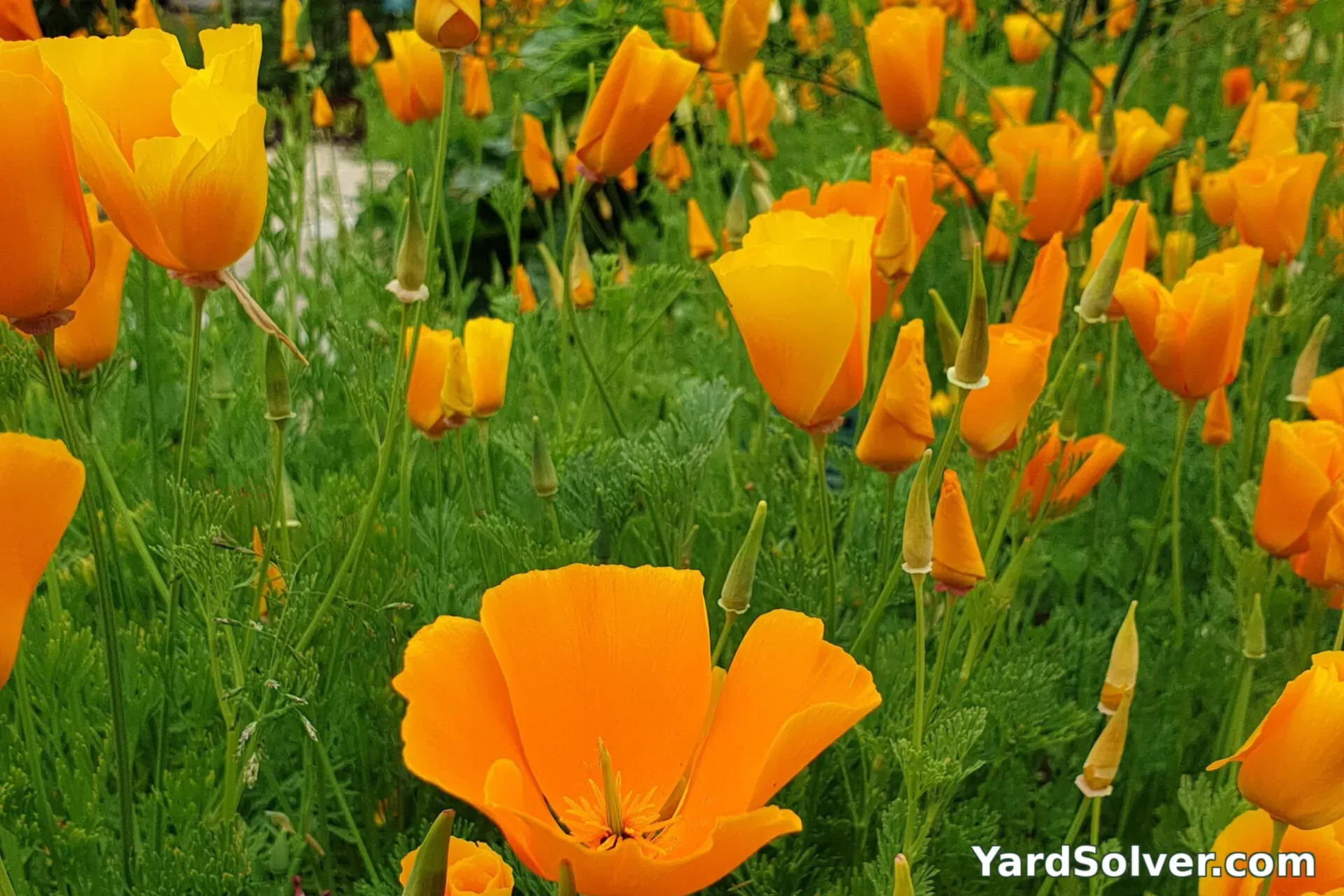
This is a flower of Californian hillsides and railways: it wants poor, free-draining soil in full sun and actively dislikes rich, wet ground. Rake the spot roughly level, pick out big weeds, and that's the whole preparation. Don't add compost — kindness makes it leafy and shy to flower. For a raised bed, the Raised Bed Soil Calculator counts the bags for you; mixing your own? The Garden Soil Calculator gives the compost-rich split to aim for.
Step 3 — Sow and plant out
Scatter seed, rake in lightly (about 1/8 in), and thin seedlings to 9 in apart. The Plant Spacing Calculator turns your bed size into an exact plant count. Good neighbours: california poppy drifts beautifully through lavender and other dry-border plants, and its early flowers feed bees before most of the garden wakes.
Step 4 — Water and feed
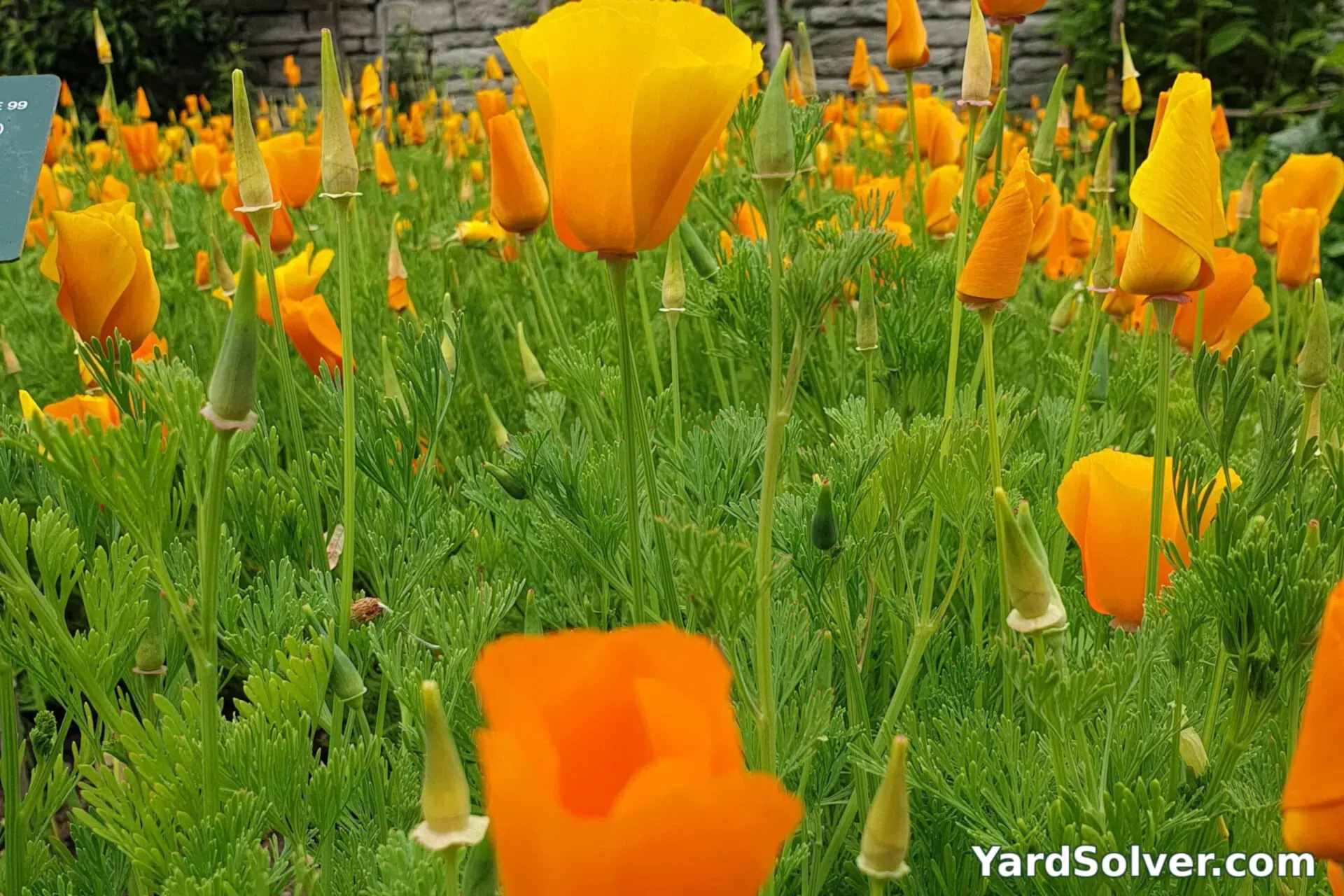
Water the seedbed if a dry spring follows sowing; established plants essentially never need watering — the taproot finds deep moisture. Feeding is forbidden territory: rich soil equals leaves without flowers. On the poorest sand, the plants still flower — that is rather the point of them.
Step 5 — Care and the problems to watch for
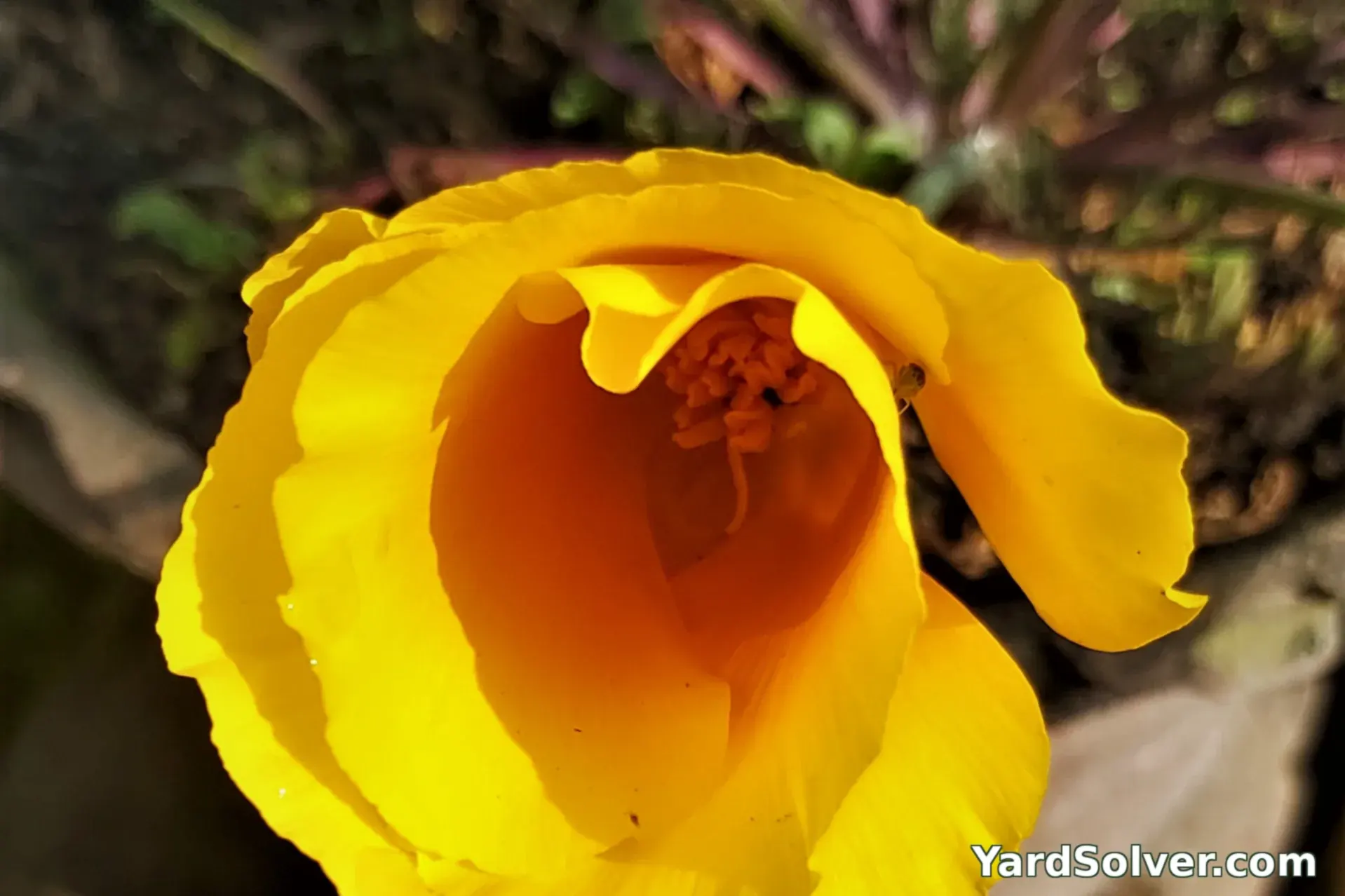
There is almost no care to give. Deadhead spent flowers to stretch the show, or leave them to ripen the long, thin pods that fling seed for next year.
- Flowers closed all day — they only open in sun; a grey day is a day off.
- Leggy, leafy, few flowers — the soil is too rich or the spot too shady; it wants poverty and sun.
- Aphids on buds — occasional; the plant outgrows them, or a water jet sorts them.
Step 6 — Harvest
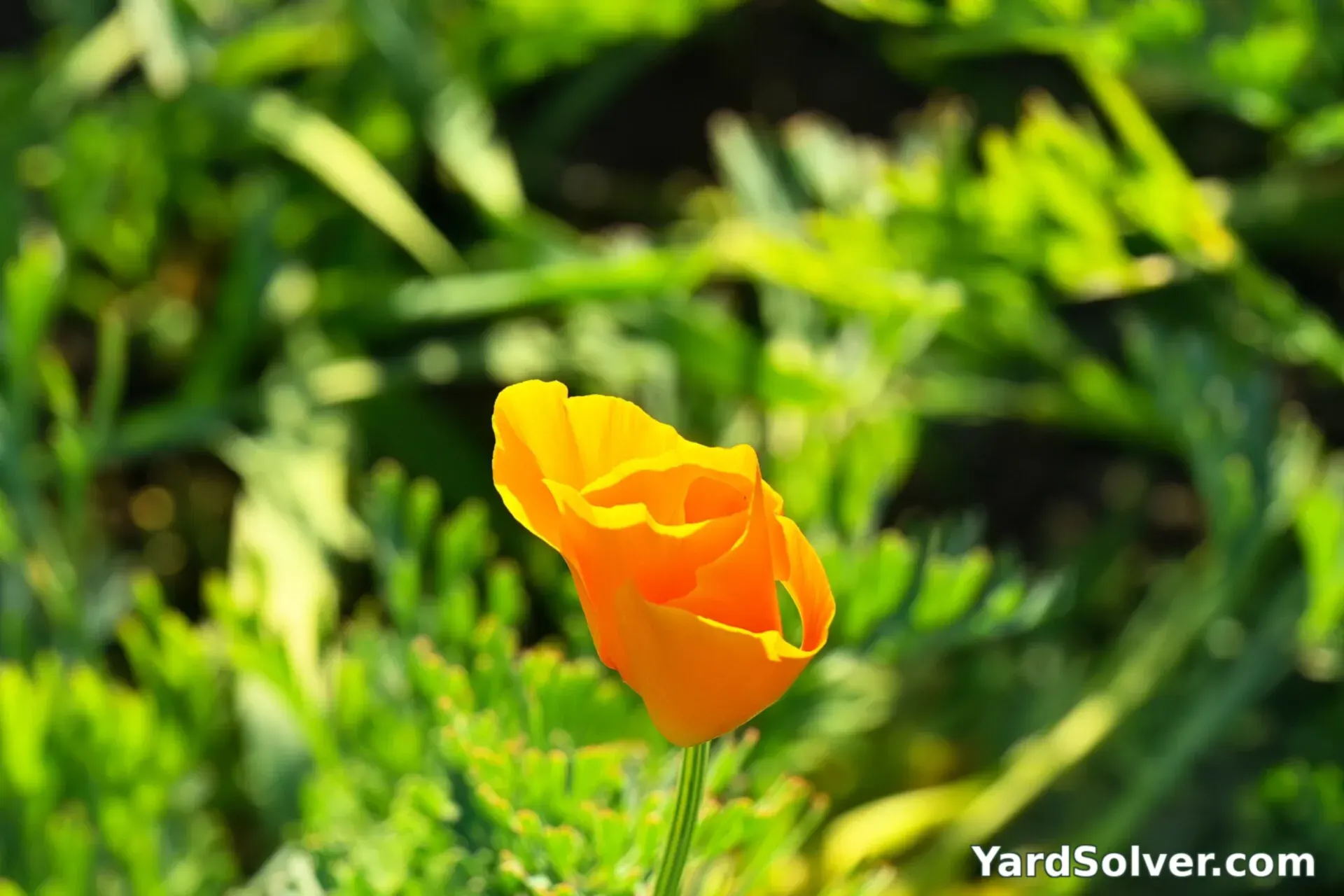
As a cut flower it's fleeting (sear stem ends in boiling water for a day or two of vase life), so the real harvest is seed and spectacle. Let the final pods turn straw-coloured, collect them just before they split, and scatter or save the tiny seed. In mild zones the plants themselves may overwinter and flower again — a bonus, never a promise.
📅 Your personal California Poppy schedule
Counted from your planting day — not a generic calendar. Day 0 is the day the seed went in the ground or the young plant went out.
Varieties worth growing
| Variety | Colour | Why gardeners like it |
|---|---|---|
| Golden West | Golden orange | The classic wild-type colour — the state flower in seed form. |
| Mission Bells | Mixed pastels, semi-double | Pinks, creams and apricots with frilled petals — the cottage mix. |
| Thai Silk series | Fluted petals, many shades | Ruffled 'silk' petals in colours from milk-white to fire-engine red. |
Good for you — and take care
Benefits
- The ultimate low-effort flower — sow once, enjoy for years of self-sown drifts.
- Thrives in drought, gravel and neglect where other annuals fail.
- Early flowers feed waking bees; the seed feeds small birds.
Take care
- Direct-sow only — transplanting cripples the taproot.
- Rich soil and feeding kill the flowering; keep it poor.
- Deadhead if you don't want its (usually welcome) self-sowing.
A little history — and one good fact
California poppy was named for the Baltic naturalist Eschscholtz by his friend Chamisso, who collected it on an 1816 expedition to San Francisco Bay — where the hills, in a wet spring, still turn gold with it. It became California's state flower in 1903.
Fun fact: The flowers are solar-powered in the literal sense: the cups open only in sunshine, folding into green-tipped candles at dusk and on overcast days.
Keep going
Guides: Pollinator garden guide · Succession planting · Companion planting basics
Calculators: Plant Spacing Calculator · Garden Mix Calculator · Fertilizer Calculator
More flowers: Poppies · Cornflower · Clarkia · Bunny Tail Grass
← Back to the Plant Library · Get your personal planting dates
Questions people ask
Why won't my california poppies flower?
Usually the ground is too kind: rich soil, feeding or shade produces leaf instead of bloom. They flower best in poor, dry soil in full sun — true neglect is the correct treatment.
Can I transplant california poppy seedlings?
It rarely ends well — the long taproot breaks and plants stall or die. Always sow in place, or in deep biodegradable pots planted out whole without disturbing the root.
Is california poppy a perennial?
It is a short-lived perennial in mild, frost-light climates (zones 8–10) and an annual elsewhere — but it self-sows so reliably that plantings persist for years either way.
Sow it where it will flower and then leave it alone: California poppy hates transplanting and loves neglect
California poppy is a plant with one firm rule: it grows a long taproot from its first weeks and resents being moved, so it must be sown directly where it is to flower. Seed scattered into modules and transplanted almost always sulks or dies; the same seed scattered on the spot in autumn or early spring rises into ferny, blue-green mounds covered in silk cups of orange, gold and cream. It wants the poorest, driest, sunniest ground you have — a gravel edge, a thin-soiled bank, the crack-side of a path — and in rich, watered soil it makes leaves at the expense of flowers.
Once sown, the management is mostly restraint. Water to establish seedlings, then stop: established plants are deeply drought-tolerant and flower hardest in dry summers. Deadheading extends the show, but leave the last flowers to ripen their slender pods and the plant self-seeds into a permanent colony that shifts a little each year — which is how it paints whole hillsides in its native California. The flowers close at night and on dull days, opening only in sun, so place them where midday light actually reaches them.
The worked example: seed scattered on a sunny, thin-soiled bank and then ignored commonly returns a self-renewing sheet of colour every spring. The identical seed raised in pots and transplanted into a rich border typically gives a few pale flowers on lush, flopping foliage. California poppy is not a plant you grow — it is a plant you start, in the right place, and then let alone.
Sources
Key facts on this page — timing, spacing and care — cross-checked against NC State Extension Plant Toolbox — Eschscholzia californica (California poppy) — culture, spacing and care requirements.
Related page
Read next: Native Plants: Benefits, Regional Picks & How to Grow.
Comments & ratings
No comments yet.
Be the first to share your experience.