
Plant Library · Flowers · By Faizan Ahmad
🌸 How to Grow Peony

The hundred-year flower — a peony planted well can bloom for a century, outliving houses. Peonies (Paeonia lactiflora and its hybrids) are herbaceous perennials planted in autumn as bare roots, bud-eyes pointing up and barely covered — planted too deep, they leaf beautifully and never flower. Given sun, patience (two years to settle), and no disturbance, they repay with the most sumptuous flowers of June.
Grow Peony with us — step by step
Everything for this plant is written step by step below — what to do, and exactly when. Read it through first if you like: you can grow it entirely on your own with that guide. Or start with us here — tell us your planting day and we lay out your personal schedule on this page, every next step on its own day, counted from your planting date. No guessing, no forgetting.
Step 1 — today: Order bare-root peonies for autumn delivery — plump roots with 3–5 pink eyes — and plant them the week they land.
Peony at a glance
Plant out: Autumn is THE season — bare roots with 3–5 eyes
Sow outdoors: From seed takes 5+ years — buy roots
Move/divide: Almost never — peonies resent moving
Spacing · Depth: 36 in apart · eyes 2 in below the surface (1 in in warm zones)
Sun: Full sun
Water: Moderate and deep
Bloom: May to June; ant-covered buds are normal and harmless
Timing counts from your average last spring frost — get your own dates in the Planting Calendar. Guidance follows standard extension-service practice for Canada and the US.

How to plant and grow peony, step by step
Step 1 — Time it right
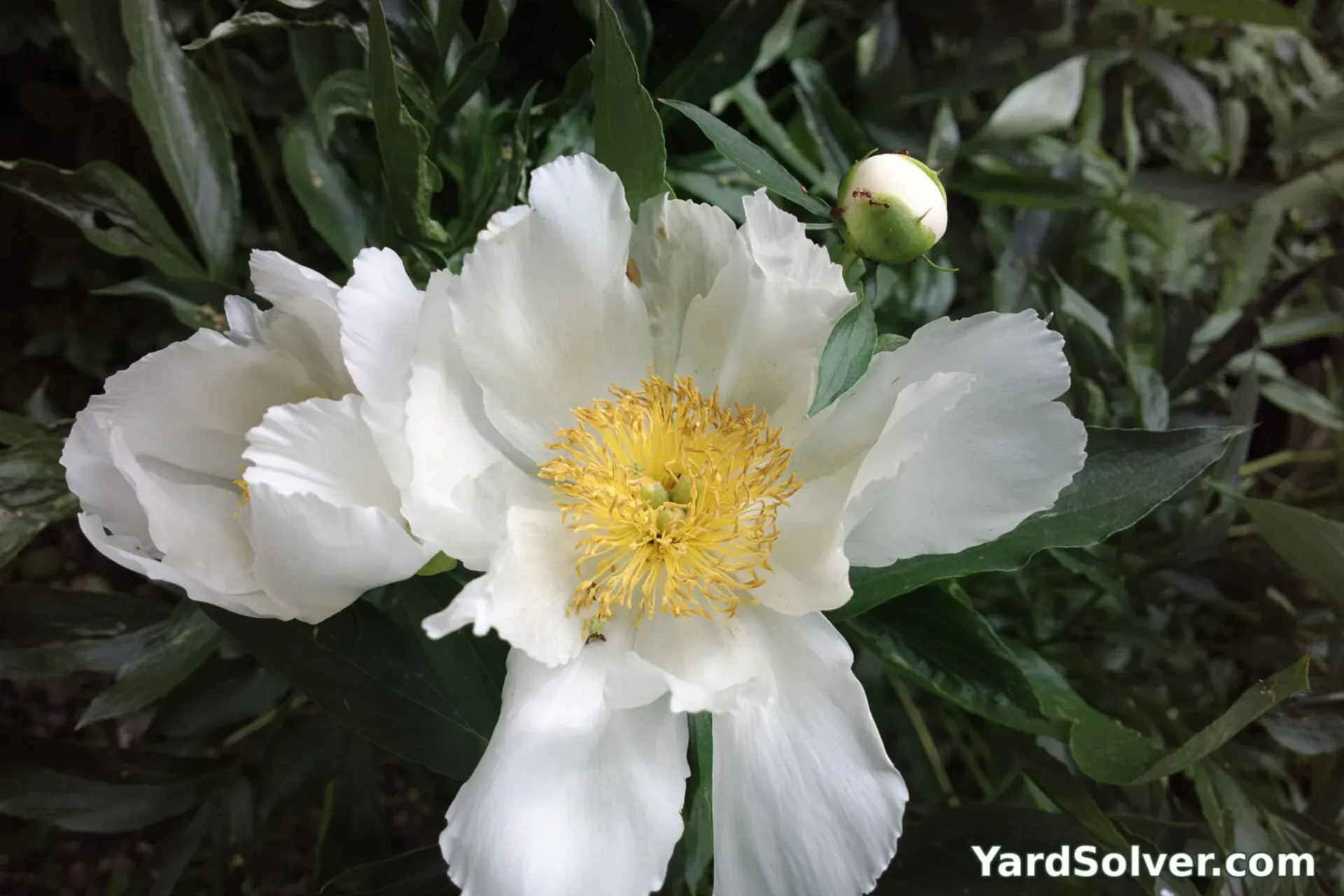
Plant out: in autumn — the peony's one true season — as bare roots with 3–5 eyes; From seed: a 5-year path for the patient only. All dates count from your average last spring frost — the Planting Calendar turns them into real dates for your garden. Autumn is peony planting season — the roots establish in warm soil while the top sleeps, and spring planting is a poor second. Buy divisions with 3–5 'eyes' (the pink buds on the crown). Young peonies take two years to settle and a third to show off: this is the plant of gardeners who think in decades, and it rewards exactly that thinking.
Step 2 — Prepare the spot
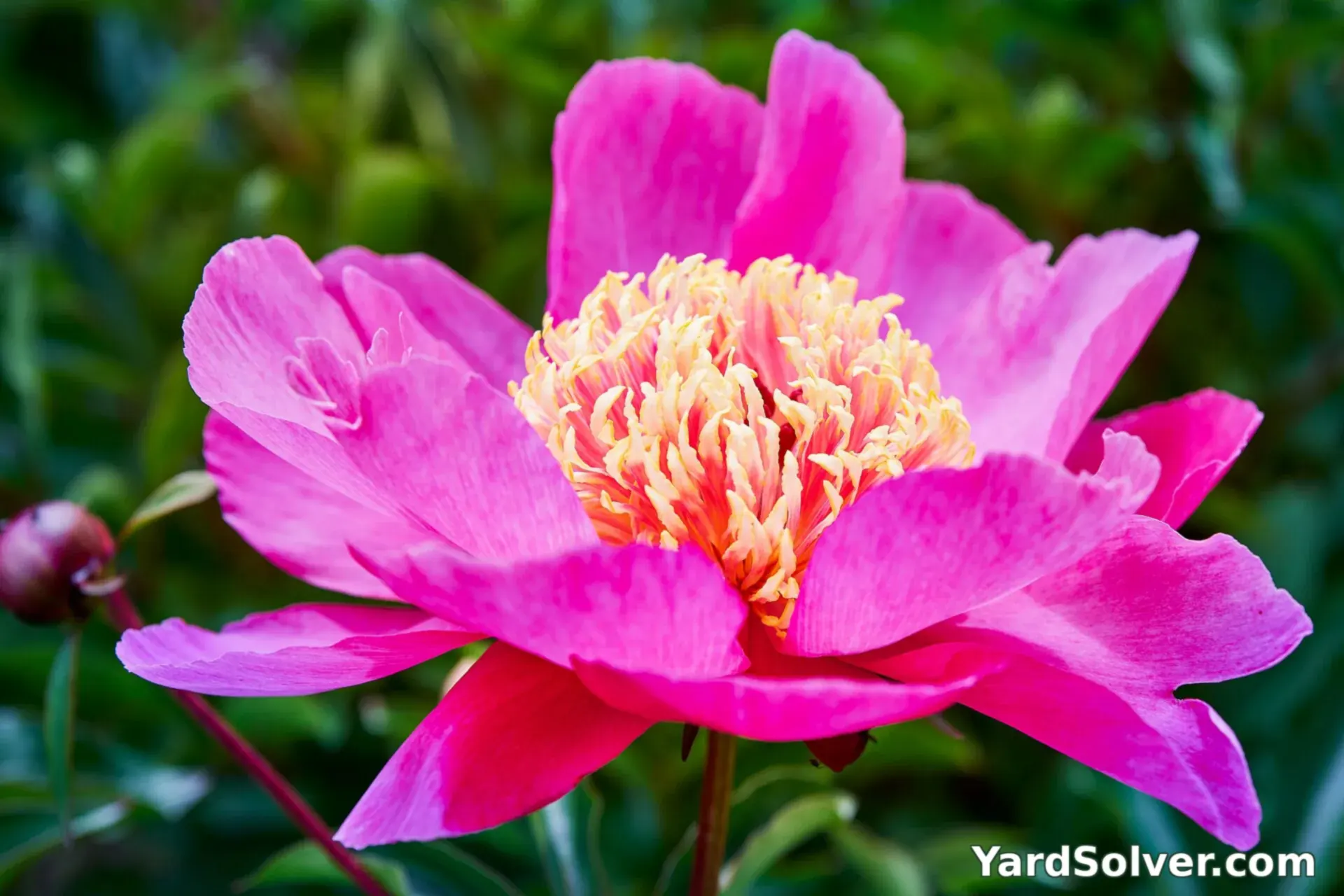
Because a peony may occupy its spot for 50–100 years, prepare it like you mean it: a hole 18 in wide and deep, in full sun, with the soil enriched with compost and a balanced feed, in ground that drains (wet winter soil rots the crown). Keep the spot away from tree roots and the drip of shrubs. For a raised bed, the Raised Bed Soil Calculator counts the bags for you; mixing your own? The Garden Soil Calculator gives the compost-rich split to aim for.
Step 3 — Sow and plant out

Set the root with eyes facing up, spread over a low mound in the hole, and cover so the eyes sit exactly 2 in below the surface (1 in in warm districts). Plant 36 in apart. The Plant Spacing Calculator turns your bed size into an exact plant count. Deep planting is the number one cause of flowerless peonies — if yours leaf but never bud, this is the first suspect. Good neighbours: peonies bloom with irises in the May-June chorus; after flowering, their deep green foliage is the border's backbone.
Step 4 — Water and feed
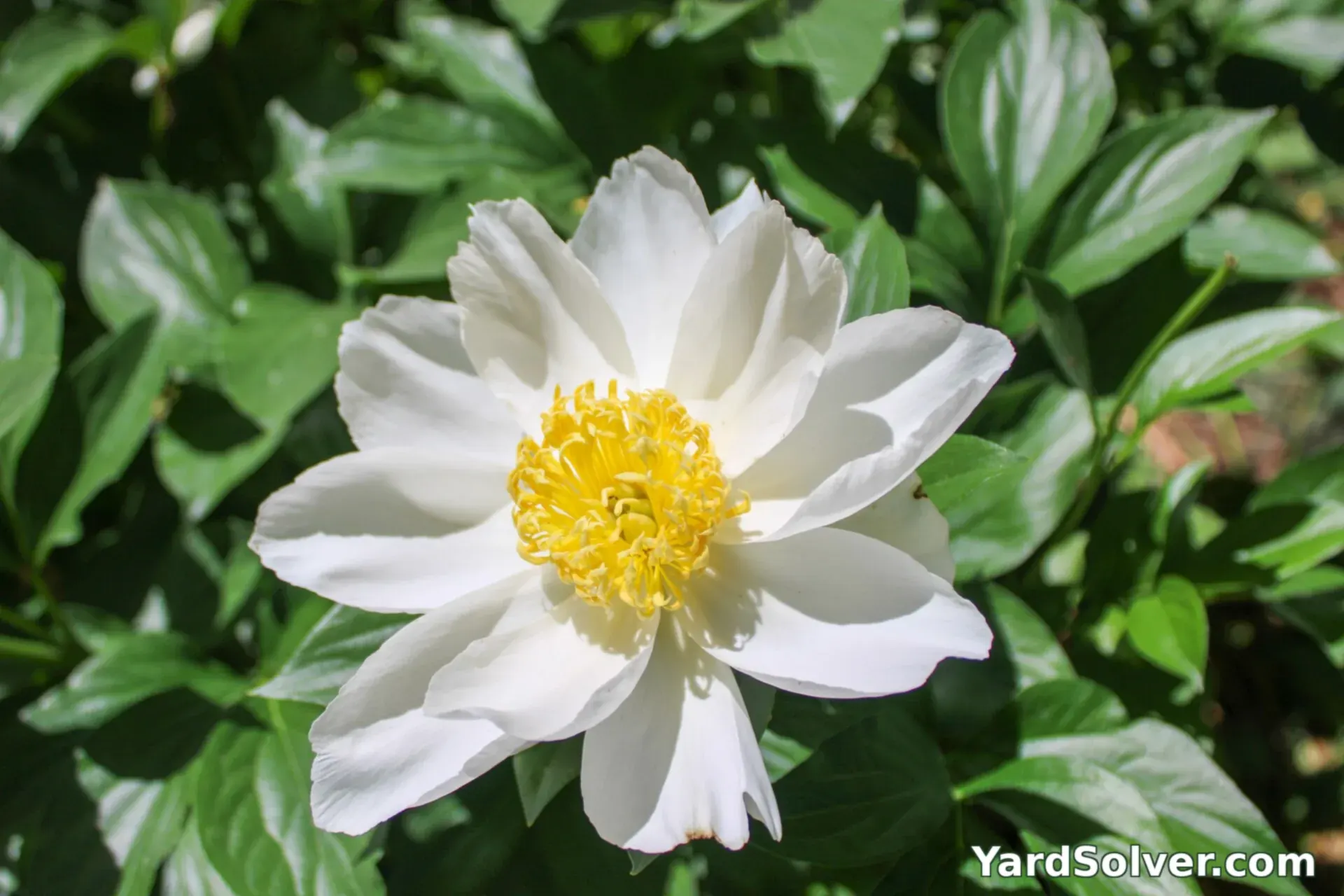
Water deeply in dry springs, especially as buds swell — the flowers are built then. Feed in spring with a balanced feed or compost mulch, keeping it off the crown itself — the Fertilizer Calculator turns your bed size into exact amounts. After flowering, a potash feed helps the root store next year's show.
Step 5 — Care and the problems to watch for
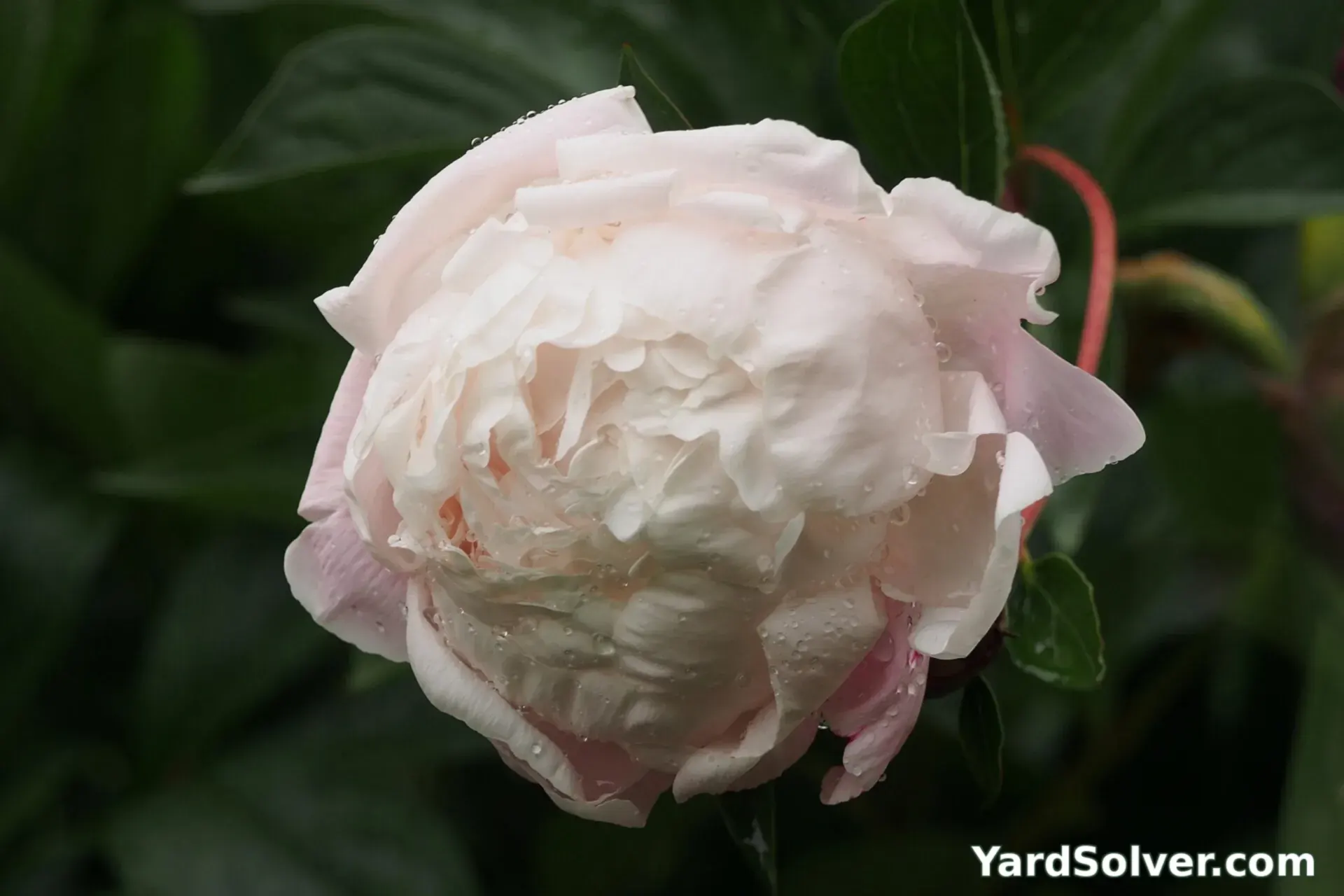
Support floppy doubles with a ring or grid before the stems lengthen — a peony face-down in June rain is the saddest sight in gardening. Cut foliage down only after it yellows in autumn.
- Buds form but never open ('bud blast') — drought at bud stage, a late frost, or a plant still settling; deep water and patience.
- No buds at all — planted too deep, too shaded, or moved too often. Replant at correct depth in autumn.
- Grey mould on buds (botrytis) — in wet springs; remove affected buds and improve air flow.
Step 6 — Harvest
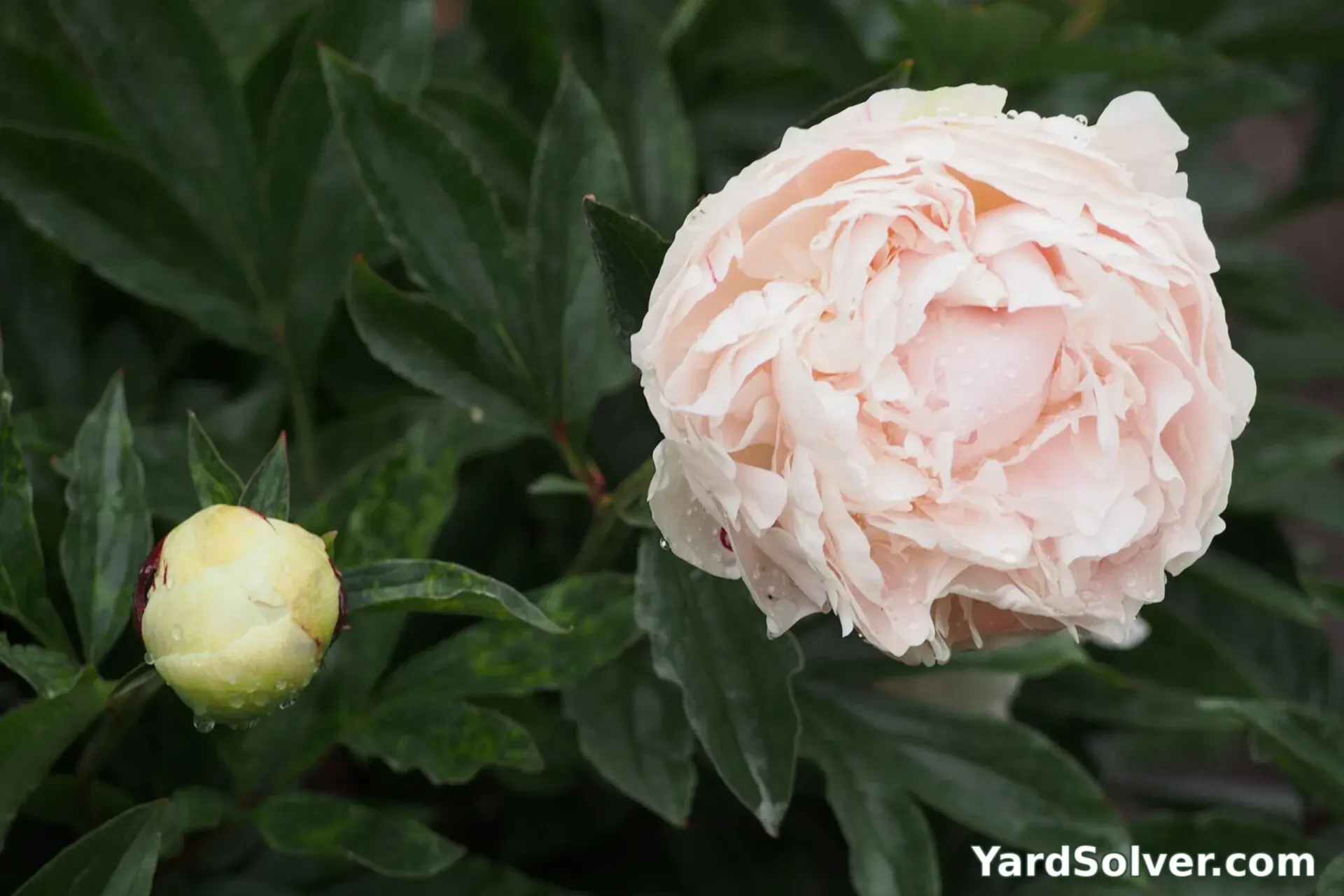
For the vase, cut buds when they feel soft as a marshmallow and show full colour — they open indoors over two days and last a week, outliving open-cut flowers threefold. Leave at least half the stems uncut so the plant keeps its strength. The plant itself is the harvest: divide almost never, move almost never, and a peony becomes the garden's memory — grandmothers' peonies still bloom in gardens whose houses have changed hands five times.
📅 Your personal Peony schedule
Counted from your planting day — not a generic calendar. Day 0 is the day the seed went in the ground or the young plant went out.
Varieties worth growing
| Variety | Colour | Why gardeners like it |
|---|---|---|
| Sarah Bernhardt | Blush pink double | The world's favourite peony since 1906 — huge, fragrant, dependable. |
| Coral Charm | Coral fading to cream | A semi-double that opens coral and fades through apricot to cream. |
| Bowl of Beauty | Pink and cream, Japanese form | A ring of pink petals around a cream cushion — the elegant alternative to doubles. |
Good for you — and take care
Benefits
- Flowers of unmatched sumptuousness — June's whole argument.
- A century plant: plant once, bloom for generations.
- Cut buds last a week in the vase — florist quality, free.
Take care
- Eyes must sit 2 in deep — deeper planting means leaves forever, no flowers.
- Two years to settle, three to glory — patience is the price.
- Heavy doubles need support before the June rains.
A little history — and one good fact
Peonies were China's 'king of flowers', cultivated for over a thousand years and named for Paeon, physician to the Greek gods. The herbaceous lactiflora types reached Europe in the 1800s and France bred them into the great doubles. In China and Japan the flower symbolises wealth and honour; in Victorian England, bashfulness — the nymph Paeonia hid in its petals.
Fun fact: Peony buds secrete sugary nectar that ants queue for — an old myth said buds couldn't open without ants licking them. They can, but the ants are harmless regulars and possibly useful guards.
Keep going
Guides: Companion planting basics · Crop rotation basics · Pollinator garden guide
Calculators: Plant Spacing Calculator · Garden Mix Calculator · Fertilizer Calculator
More flowers: Iris · Rose · Lilac · Daylily
← Back to the Plant Library · Get your personal planting dates
Questions people ask
Why does my peony never flower?
Almost always planting depth: if the eyes are more than 2 in below the surface, peonies produce leaves and no buds. Other causes: too much shade, or a young/recently moved plant still settling. Lift and replant at the correct depth in autumn.
Do peonies need ants to open?
No — the myth comes from ants drinking the sweet nectar buds secrete. Buds open fine without them, and the ants do no harm. Just shake them off before bringing cut flowers indoors.
When can I move a peony?
If you must, in autumn — dig a huge rootball, replant at exactly 2 in eye depth, and accept two quiet years while it settles. Peonies genuinely resent moving, so the real answer is: choose the spot once, properly.
Peonies punish two mistakes for years: planted too deep they will not flower, and moved, they sulk
Herbaceous peonies (Paeonia) are among the longest-lived plants in the garden — a settled clump can flower for decades — but they keep two grudges. The first is depth: the pink growth buds (eyes) must sit just 2.5–5 cm below the surface; planted deeper, the plant grows handsome leaves and refuses to flower, sometimes for years. The second is disturbance: peonies resent moving, and a transplanted clump may take two or three seasons to bloom again.
Everything else is straightforward: full sun, rich but well-drained soil, generous spacing for air movement (which holds the fungal disease botrytis at bay), and support for the heavy double flowers before rain flattens them. Ants on the buds are harmless nectar-seekers, not pests. Autumn is the planting and dividing season, and patience is the fertiliser — a peony's third year is when the show really starts.
The worked example: a division planted shallow in autumn, in sun, and then left alone typically builds to a dozen blooms by its third spring. The same division planted deep and moved twice typically gives leaves only — with peonies, set them shallow and never move them again.
Sources
Key facts on this page — timing, spacing and care — cross-checked against Peony — Wikipedia — background on peonies and their cultivation.
Related page
Read next: How to Divide Perennials: When, How, and a Chart for Common Plants.
Comments & ratings
No comments yet.
Be the first to share your experience.