
Plant Library · Vegetables · By Faizan Ahmad
🧅 How to Grow Scallions
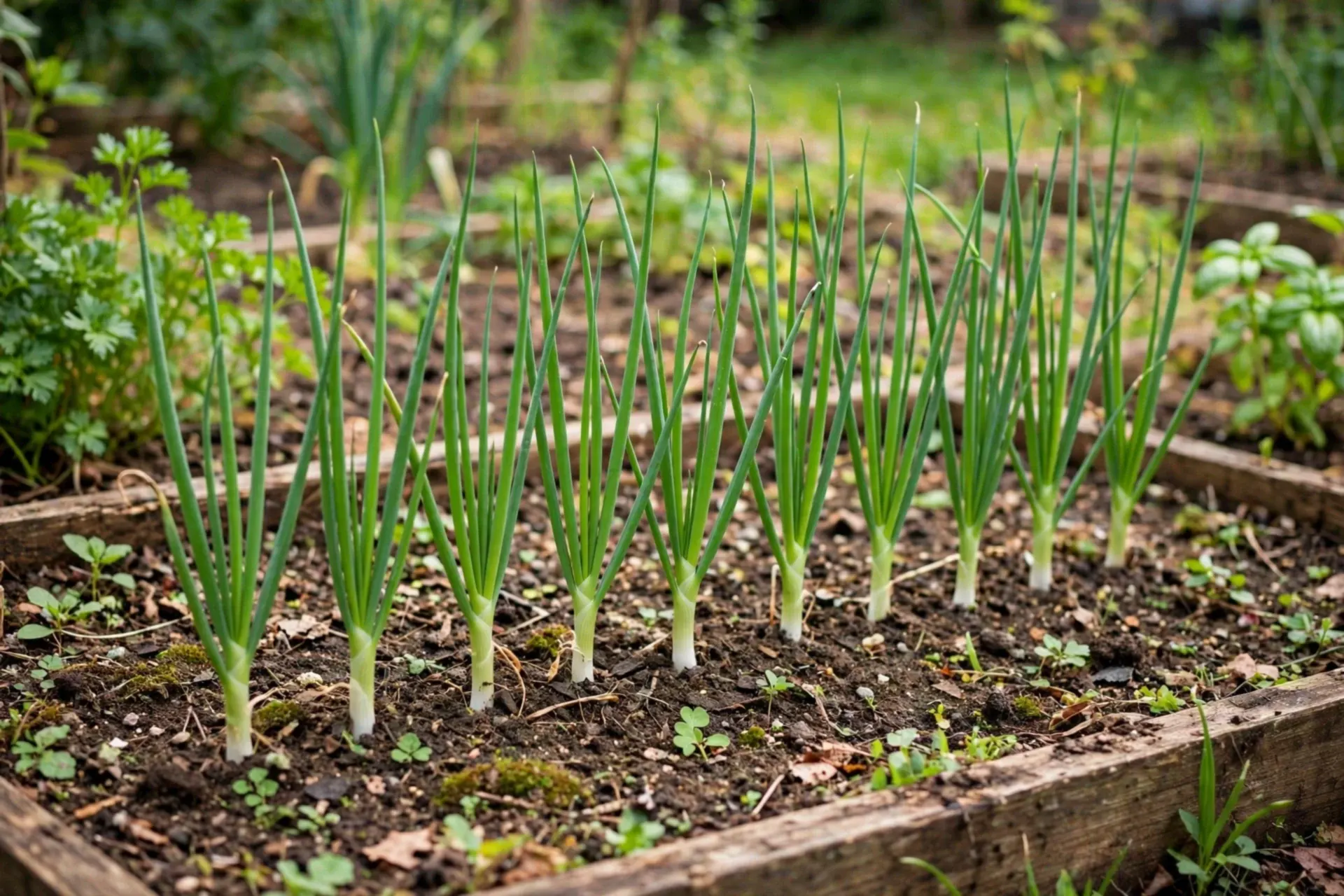
Green onions grown from bunching onion seed — not baby bulb onions: quick, forgiving and endlessly useful; sow a short row every few weeks from spring to late summer. True scallions come from bunching onions — varieties bred to make clusters of slim green stems instead of bulbs. They are among the easiest alliums to grow: sow a short row every few weeks, keep it watered, and pull stems as the kitchen needs them from about two months on.
Grow Scallions with us — step by step
Everything for this plant is written step by step below — what to do, and exactly when. Read it through first if you like: you can grow it entirely on your own with that guide. Or start with us here — tell us your planting day and we lay out your personal schedule on this page, every next step on its own day, counted from your planting date. No guessing, no forgetting.
Step 1 — today: Sow Scallion seed today where they will grow, 1/4 in deep in a short row, and water gently. Mark the row — the thread-thin seedlings are easy to lose among weeds.
Scallions at a glance
Sow outdoors: 3 weeks before last frost
Spacing: 1–2 in · Seed depth: 1/4 in
Sun: Full sun to part shade
Water: Keep evenly moist
Harvest: 60–70 days
Timing counts from your average last spring frost — get your own dates in the Planting Calendar. Guidance follows standard extension-service practice for Canada and the US.
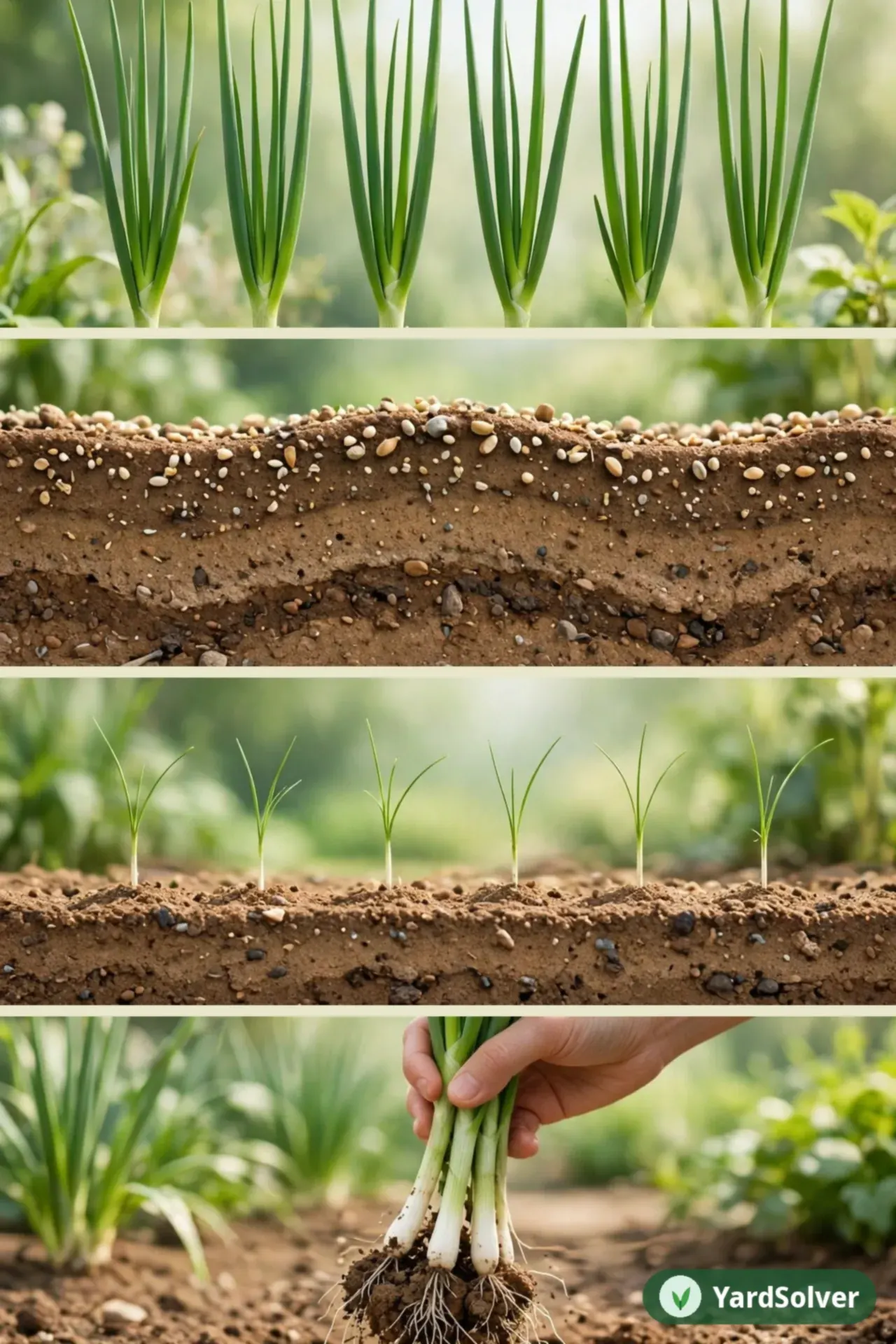
How to plant and grow scallions, step by step
Step 1 — Time it right
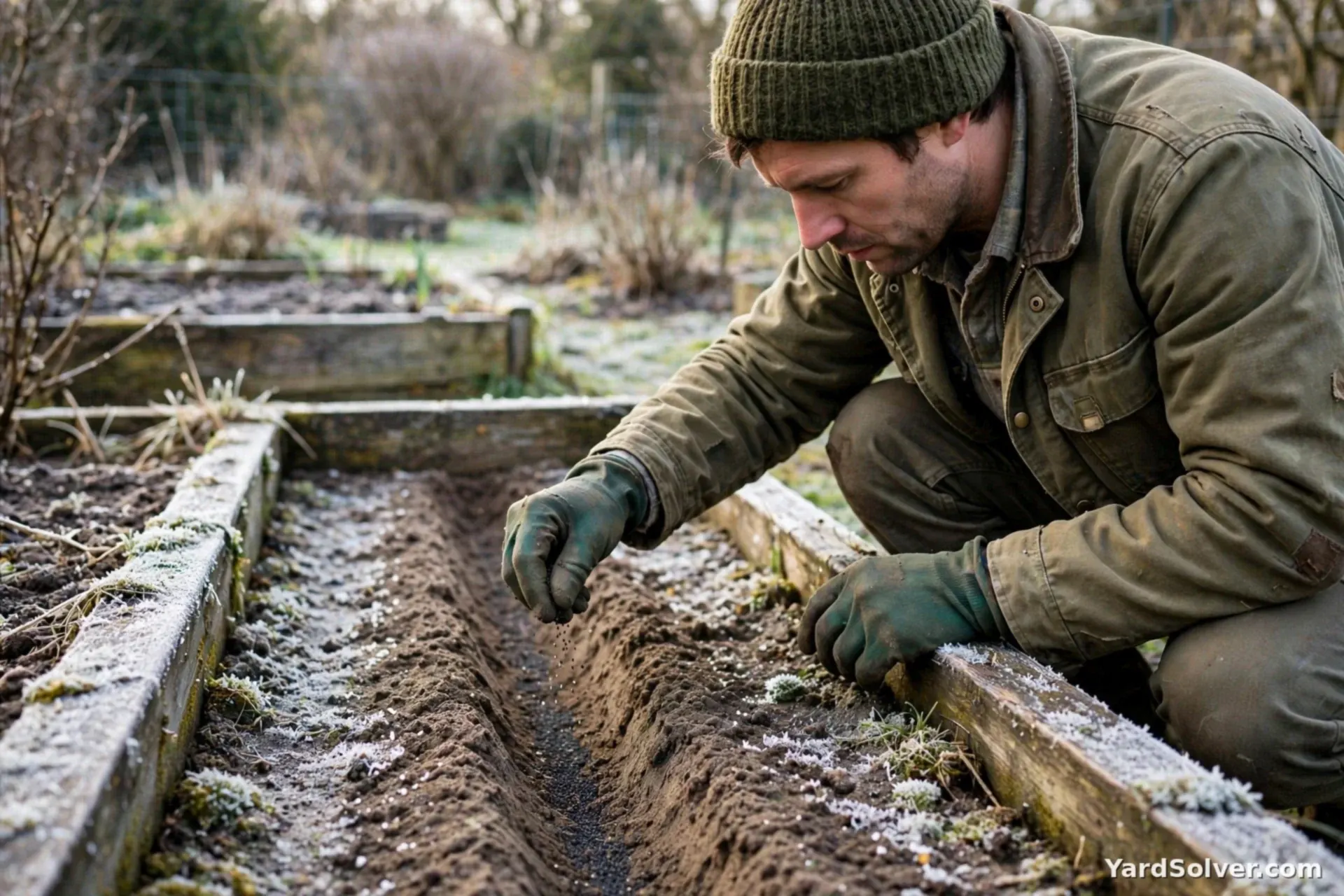
Sow outdoors: 3 weeks before last frost. All dates count from your average last spring frost — the Planting Calendar turns them into real dates for your garden. True scallions come from bunching onions — varieties bred to make clusters of slim green stems instead of bulbs. They are among the easiest alliums to grow: sow a short row every few weeks, keep it watered, and pull stems as the kitchen needs them from about two months on.
Step 2 — Prepare the spot
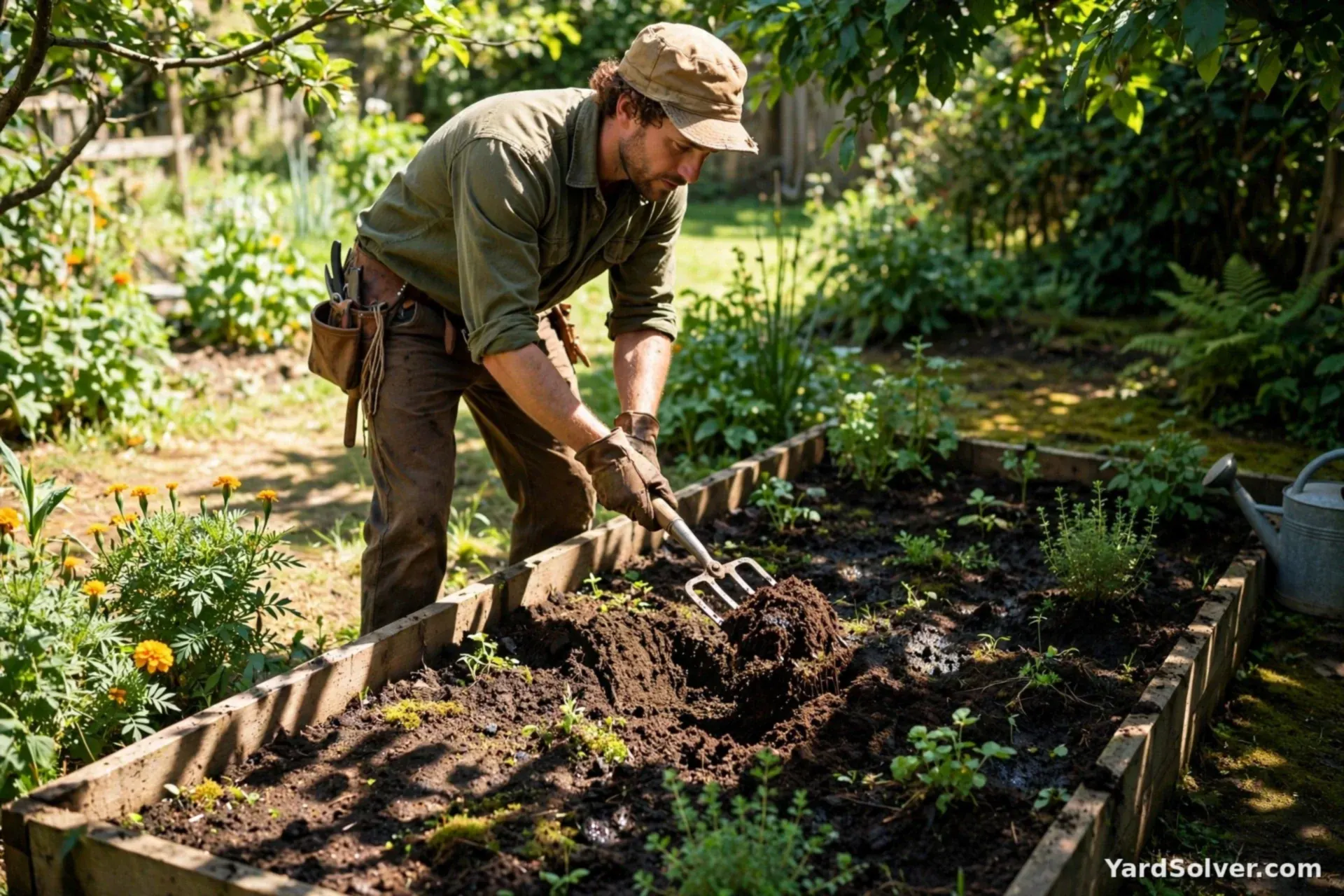
Sun: Full sun to part shade. Any decent soil that holds moisture — scallions are unfussy; work in a little compost so the stems grow fast and mild. Work out how much you need with the Garden Mix Calculator or the Raised Bed Soil Calculator.
Step 3 — Sow and plant out
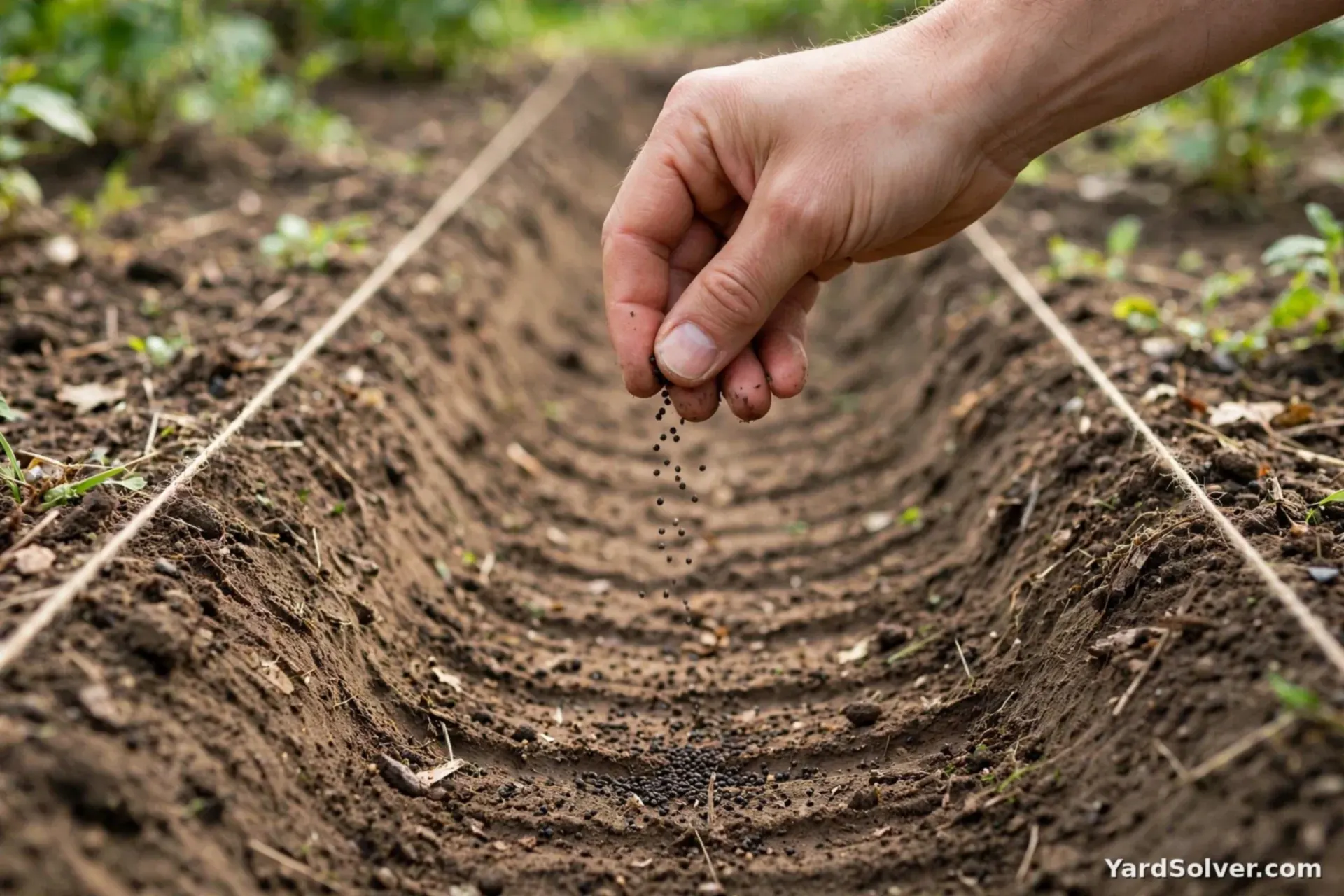
Sow directly where they will grow, 3 weeks before last frost, 1/4 in deep and 1–2 in apart in short rows. The Seed Calculator works out how much seed a bed needs. Little and often is the rule: a short row every 3 weeks beats one long row that all comes ready at once.
Step 4 — Water and feed
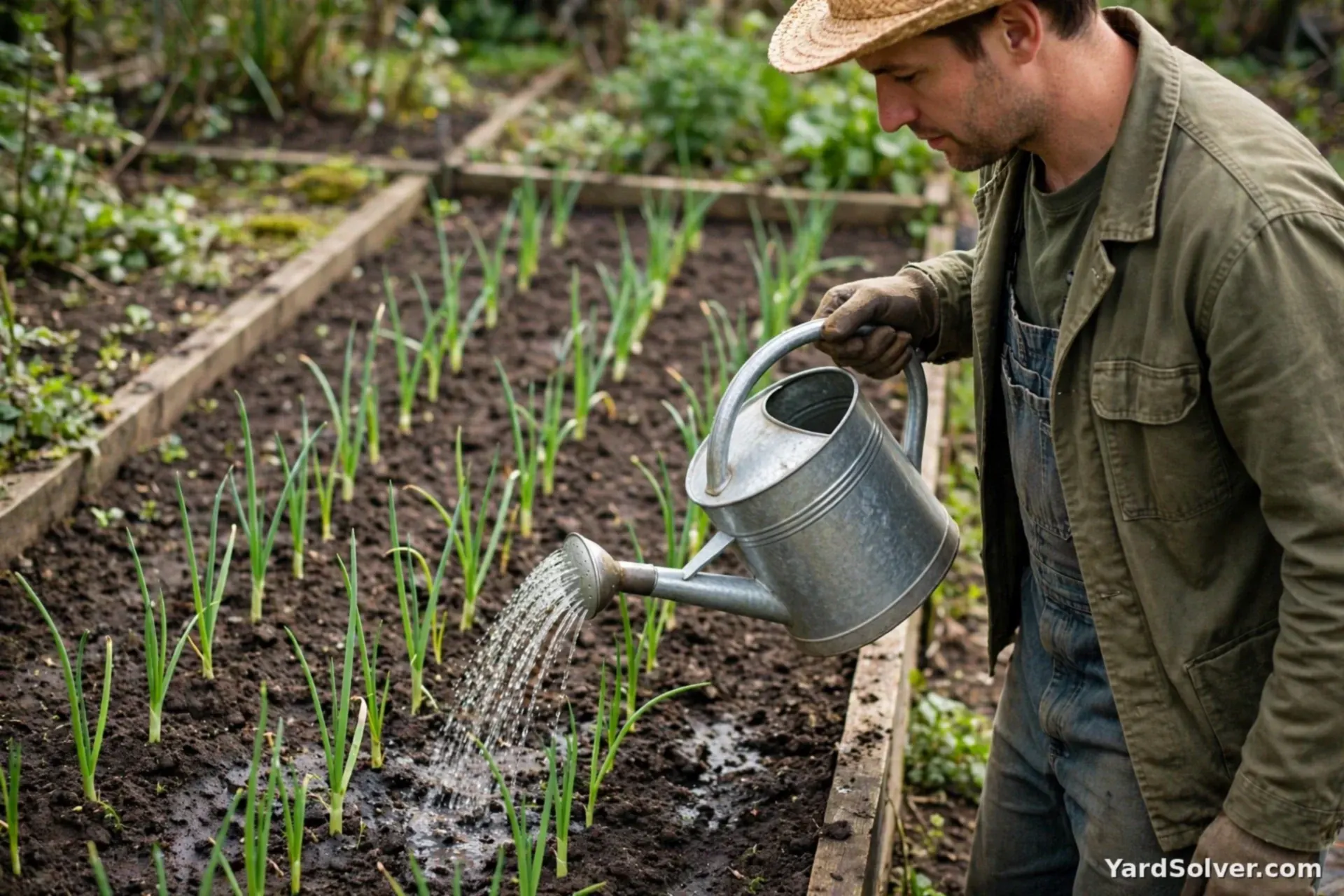
Water: Keep evenly moist. The Fertilizer Calculator turns a bed size into the right amount.
Step 5 — Care and the problems to watch for
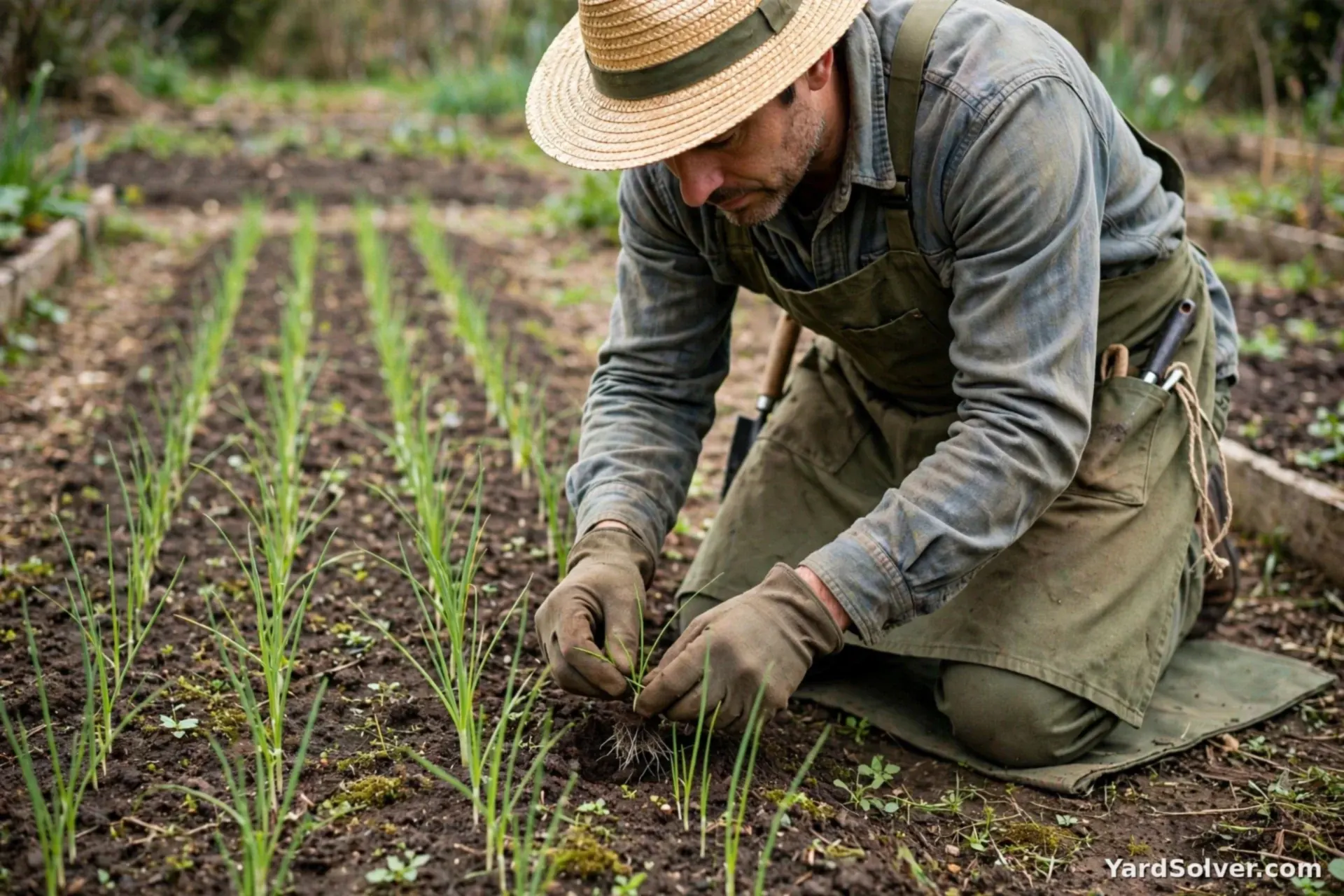
- Thin, weak stems — the row dried out or was sown in poor soil; steady water and compost are the whole trick.
- Seedlings vanishing among weeds — the seedlings are hair-thin at first; mark the row and weed little and often.
- White rot or rust spots in old onion ground — rotate scallions away from beds that grew onions or garlic last year.
Take care: Scallions regrow from the white base — stand cut ends in a jar of water on the windowsill and they will sprout fresh greens.
Step 6 — Harvest
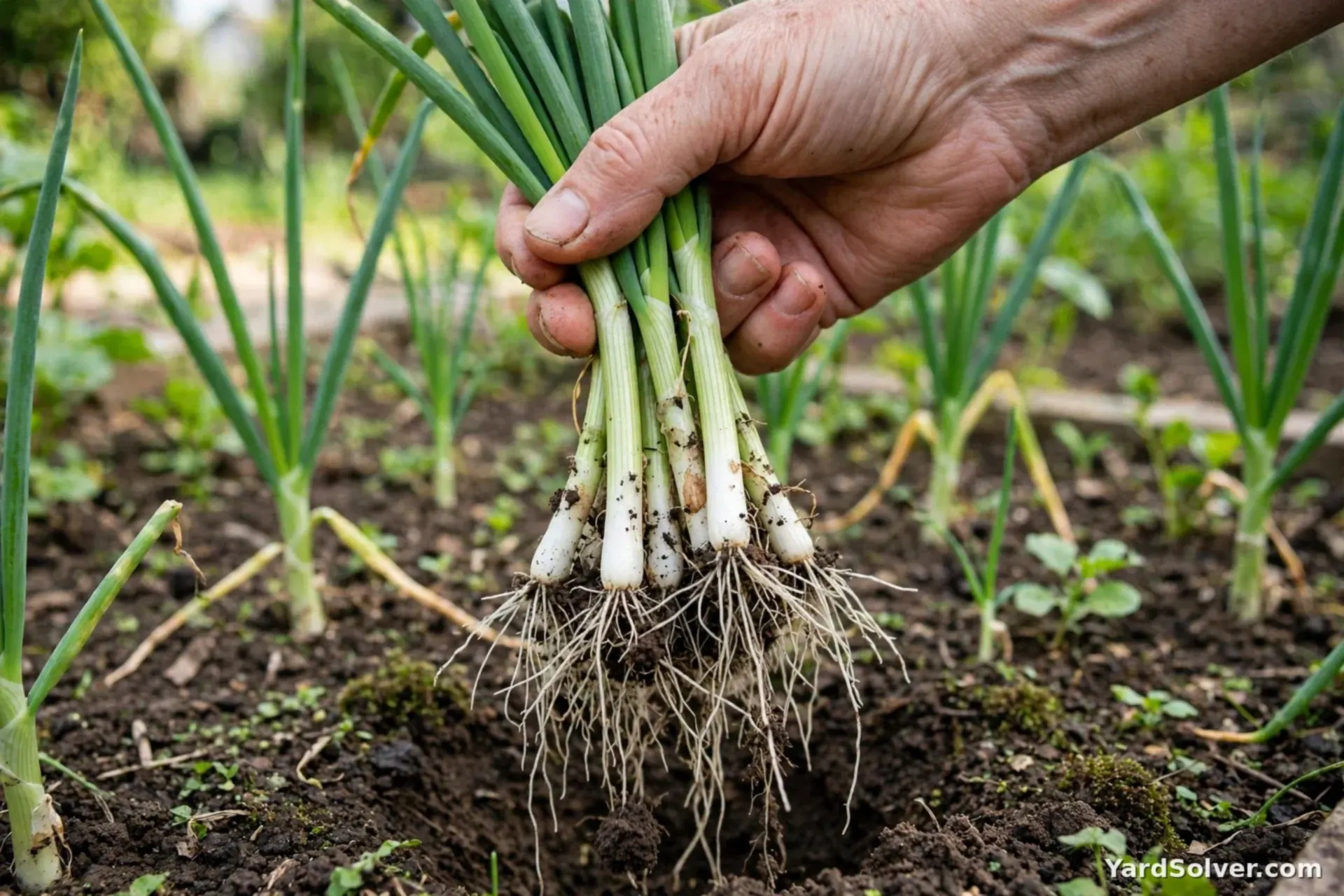
Ready in: 60–70 days. Pull stems from about day 60 at pencil thickness; bunching types left in the ground divide into bigger clusters you can split and replant.
📅 Your personal Scallions schedule
Counted from your planting day — not a generic calendar. Day 0 is the day the seed went in the ground or the young plant went out.
Varieties worth growing
| Variety | Colour | Why gardeners like it |
|---|---|---|
| Evergreen Hardy White | White and green | The standard bunching onion — hardy enough to overwinter in many gardens |
| Tokyo Long White | White and green | Long, elegant white shafts — the negi style of Japanese cooking |
| Ishikura | White and green | A single thick stem type — more like a slim leek than a cluster |
| Parade | White and green | Upright, uniform stems bred for tidy bunches |
| Red Beard | Red-purple stems | A Japanese type whose stems blush red in cool weather |
Good for you — and take care
Benefits
- Provides vitamin K and vitamin C
- A source of folate
- Gives onion flavour raw without cooking — perfect for salads and garnishes
- Very low in calories
- The green tops carry much of the nutrition — use the whole stem
Take care
- Wash stems well — soil hides between the layers at the base
- People told to watch vitamin K (blood thinners) can note the greens are rich in it — keep servings steady
- Home-grown scallions pulled fresh need eating within days — they wilt fast
A little history — and one good fact
Bunching onions (Allium fistulosum) were bred in China over 2,000 years ago and became the green onion of all East Asian cooking — the long white negi of Japan. Unlike bulb onions, they never bulb: the whole plant is stem and leaf, made for cutting fresh.
Fun fact: The name scallion is shared with shallots and spring onions in old cookbooks — three different plants wearing one name, which is why recipes disagree.
Keep going
Guides: How to Grow Onions from Seed · How to Get Rid of Aphids · Best Vegetables for a Small Garden
Calculators: Plant Spacing Calculator · Seed Calculator · Fertilizer Calculator · Garden Mix Calculator
More vegetables: Onion (sets) · Leeks · Shallots
← Back to the Plant Library · Get your personal planting dates
Questions people ask
When do I plant scallions?
Count from your average last spring frost: sow outdoors 3 weeks before last frost. True scallions come from bunching onions — varieties bred to make clusters of slim green stems instead of bulbs. They are among the easiest alliums to grow: sow a short row every few weeks, keep it watered, and pull stems as the kitchen needs them from about two months on.
How far apart do I space scallions?
Space plants 1–2 in apart, with seed sown 1/4 in deep. Sun: full sun to part shade.
When is scallions ready to harvest?
60–70 days. Green onions grown from bunching onion seed — not baby bulb onions: quick, forgiving and endlessly useful; sow a short row every few weeks from spring to late summer.
Scallions are onions harvested impatient: the same seed gives a green garnish in weeks or a bulb in months
Scallions — green onions — are mostly Allium fistulosum, the Welsh onion that never bulbs, or ordinary onions (Allium cepa) pulled young. The craft is timing and succession: a short row sown every few weeks from spring to late summer gives a continuous supply of pencil-thick stems, because a scallion bed is harvested over a narrow window before the stems toughen and the flavour coarsens.
They ask for what all onions ask: an open, sunny bed, soil that does not sit wet, and freedom from weed competition while the thin seedlings establish — the stage at which most scallion sowings are lost. Bunching types left in place clump up and can be divided as a perennial; sown types are pulled whole. In mild winters a late sowing stands and gives the earliest spring stems.
The worked example: fortnightly sowings, kept weeded for their first month, typically give scallions from spring to frost without a gap. One big sowing typically gives a glut in one week and none after — with scallions, succession is the whole skill.
Sources
Key facts on this page — timing, spacing and care — cross-checked against Scallion — Wikipedia — background on scallions and their cultivation.
Related page
Read next: Succession Planting Guide: Sow Little and Often.
Comments & ratings
No comments yet.
Be the first to share your experience.