
Plant Library · Vegetables · By Faizan Ahmad
🧅 How to Grow Onion (sets)
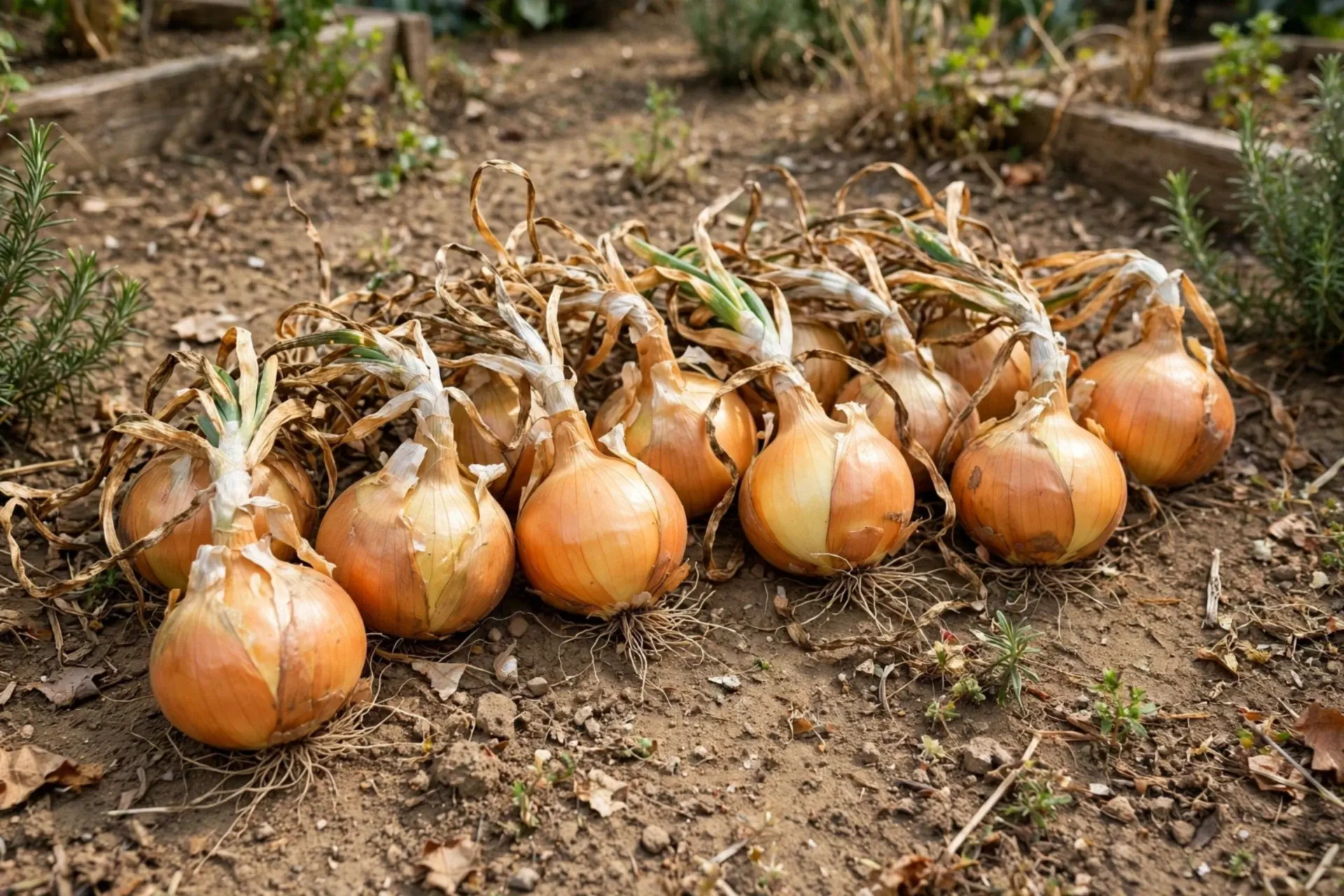
Plant sets pointed-end up, just under the surface. Plant onion sets about 3 weeks before your last frost, pointed end up and just under the surface — bulbs size up over summer and are ready in about 90 to 110 days, when the tops fall over.
Grow Onion (sets) with us — step by step
Everything for this plant is written step by step below — what to do, and exactly when. Read it through first if you like: you can grow it entirely on your own with that guide. Or start with us here — tell us your planting day and we lay out your personal schedule on this page, every next step on its own day, counted from your planting date. No guessing, no forgetting.
Step 1 — today: Sow your Onion (sets) seeds today: 1 (sets) in deep, spaced 4–6 in apart, in full sun. Water the row in well and keep it moist while seeds sprout.
Onion (sets) at a glance
Sow outdoors: 3 weeks before last frost
Spacing: 4–6 in · Seed depth: 1 (sets) in
Sun: Full sun
Water: Regular until tops fall
Harvest: 90–110 days
Timing counts from your average last spring frost — get your own dates in the Planting Calendar. Guidance follows standard extension-service practice for Canada and the US.
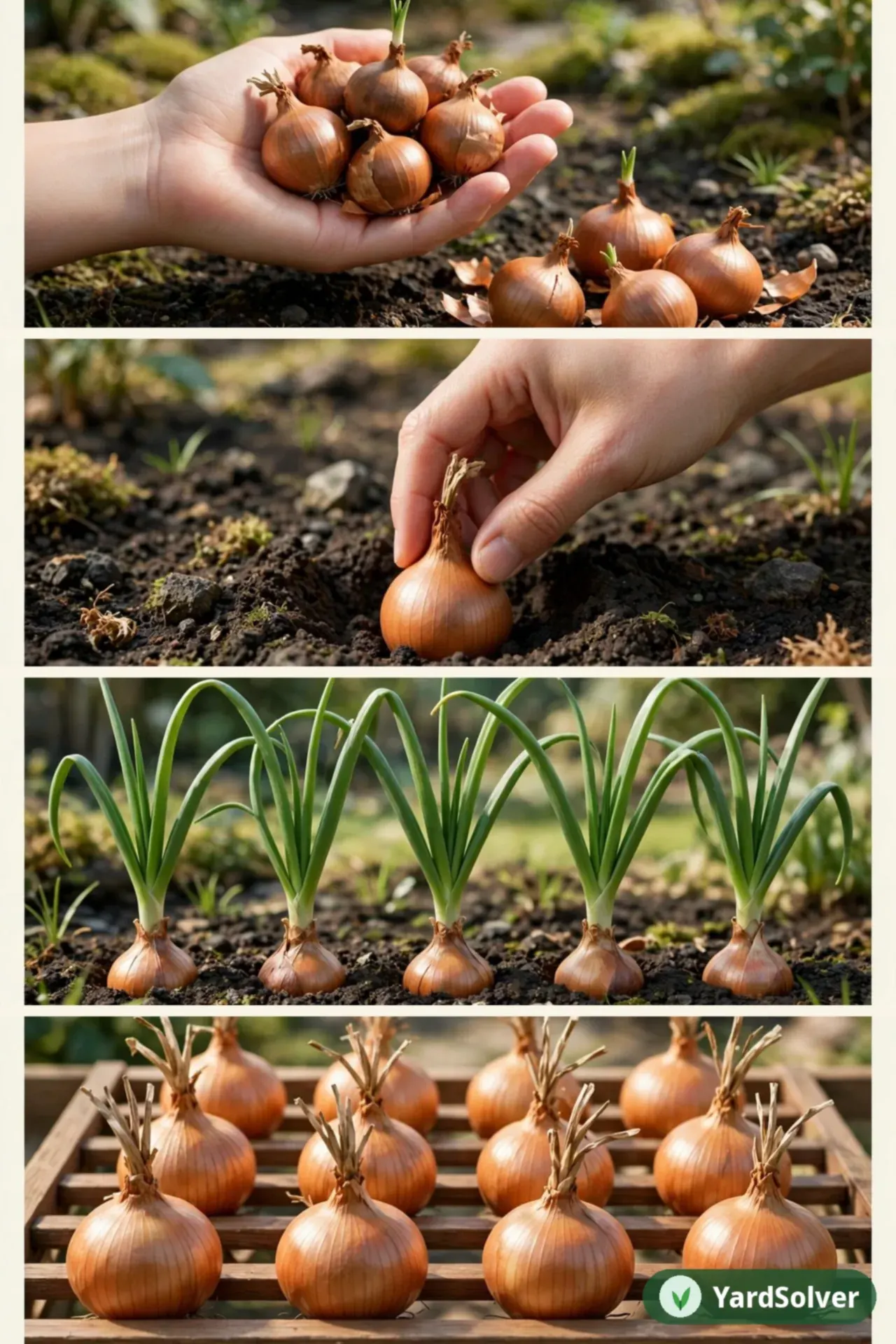
How to plant and grow onion (sets), step by step
Step 1 — Time it right
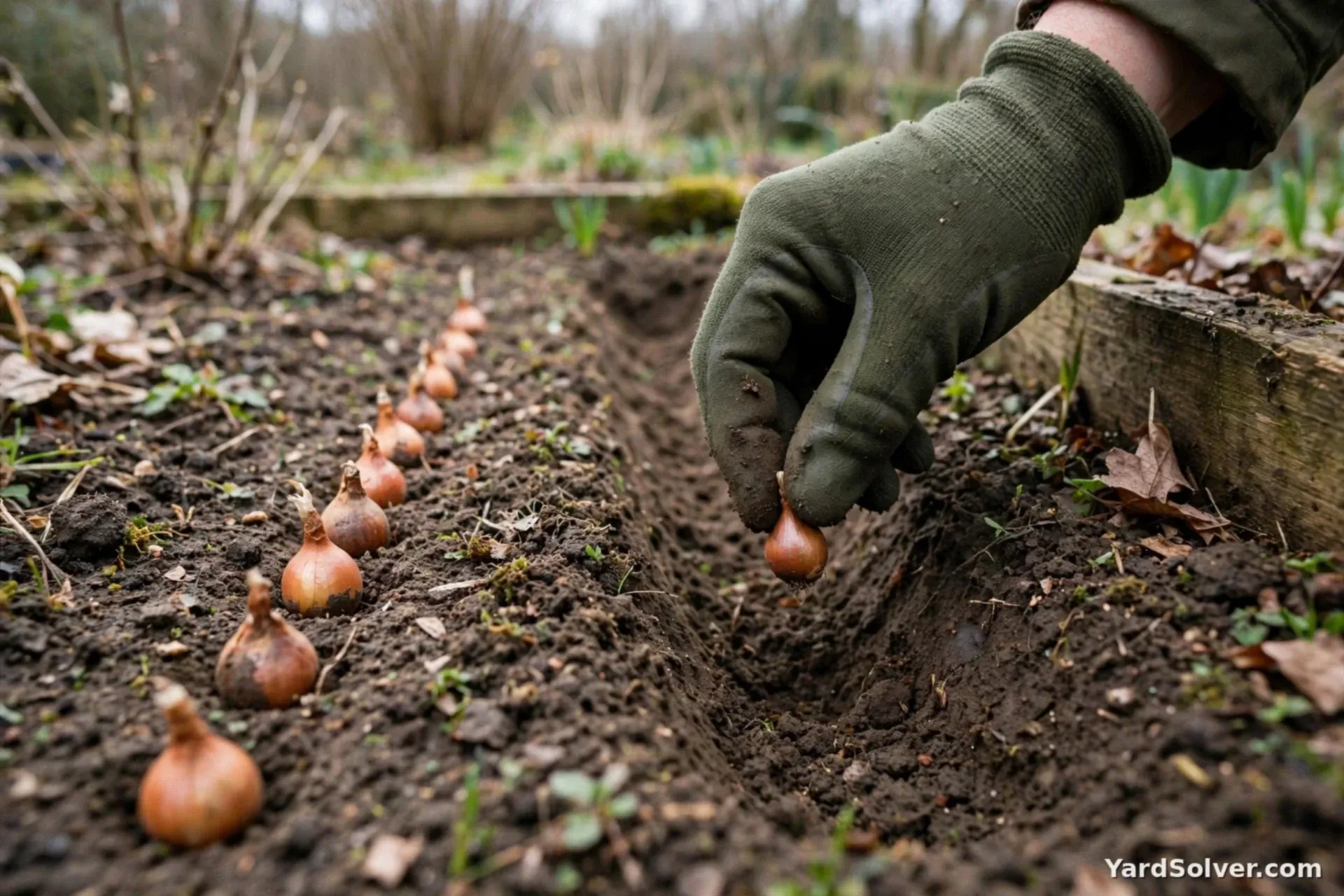
Sow outdoors: 3 weeks before last frost. All dates count from your average last spring frost — the Planting Calendar turns them into real dates for your garden. Plant onion sets about 3 weeks before your last frost, pointed end up and just under the surface — bulbs size up over summer and are ready in about 90 to 110 days, when the tops fall over.
Step 2 — Prepare the spot
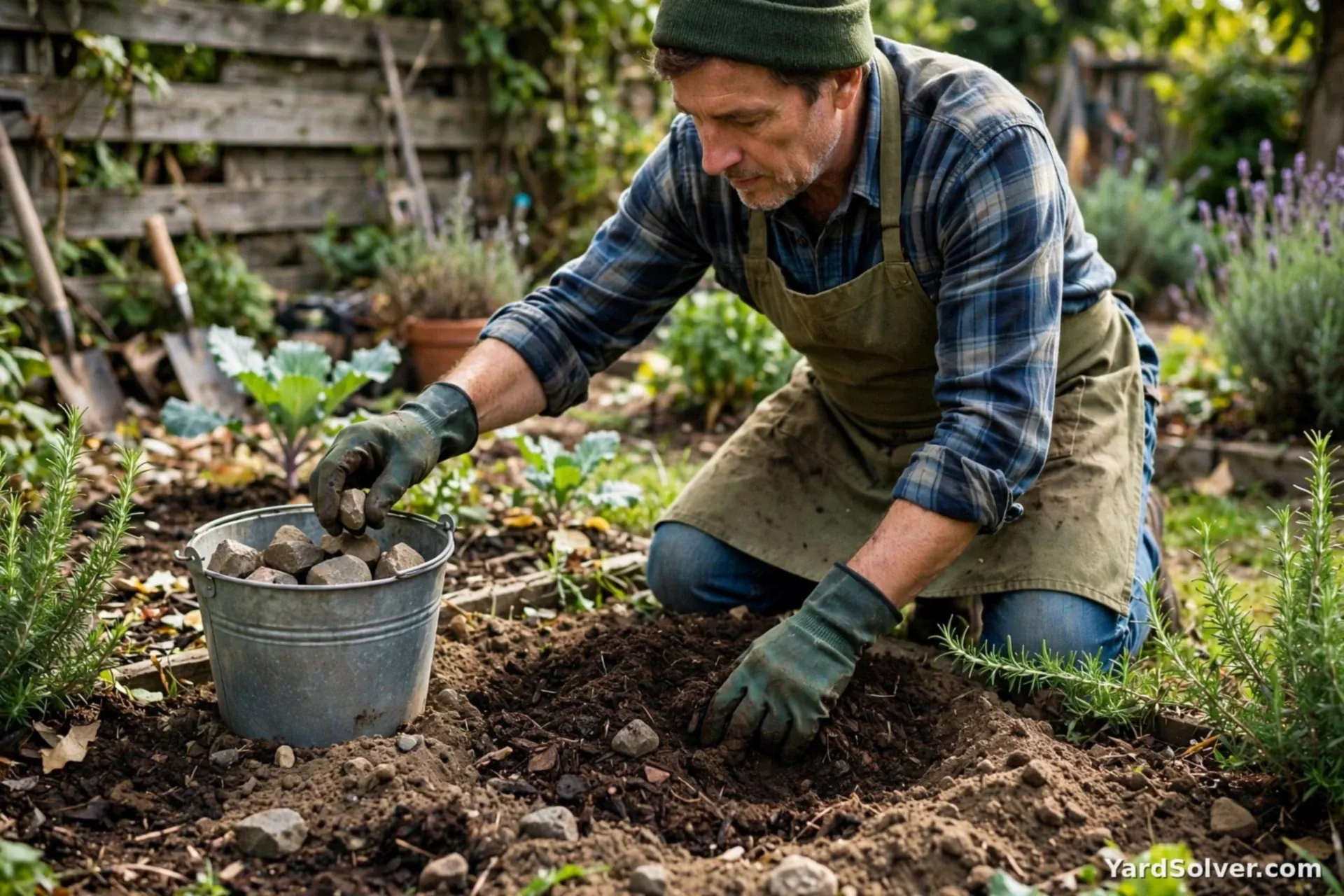
Sun: Full sun. Loose, stone-free soil is the whole secret for root crops — dig it over, pick out stones, and work in compost (never fresh manure, which forks roots). Depth and drainage matter more than feeding. Work out how much you need with the Garden Mix Calculator or the Raised Bed Soil Calculator.
Step 3 — Sow and plant out
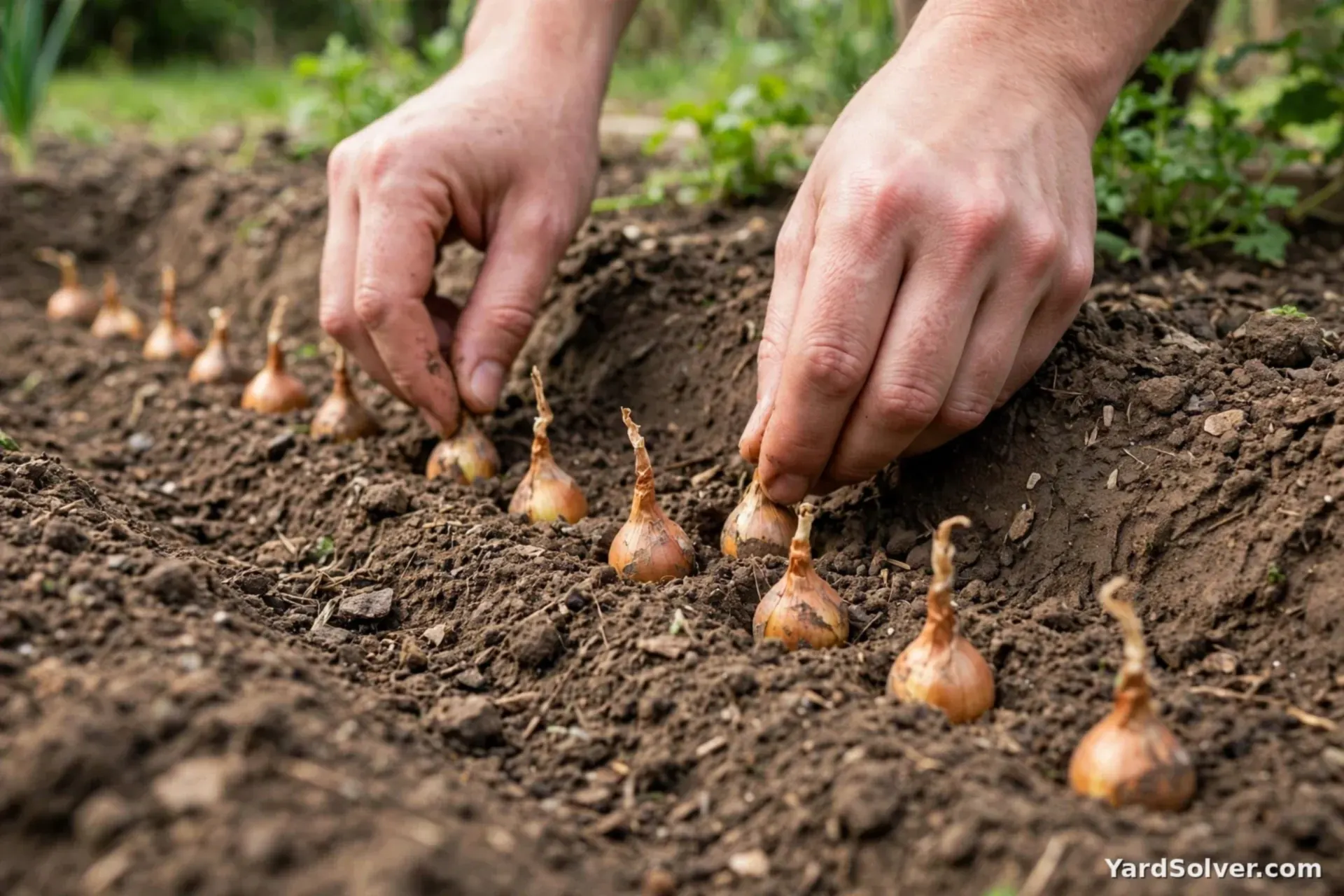
Sow directly where they will grow, 3 weeks before last frost, 1 (sets) in deep and 4–6 in apart (thin seedlings to that spacing once they are up). The Seed Calculator works out how much seed a bed needs.
Step 4 — Water and feed
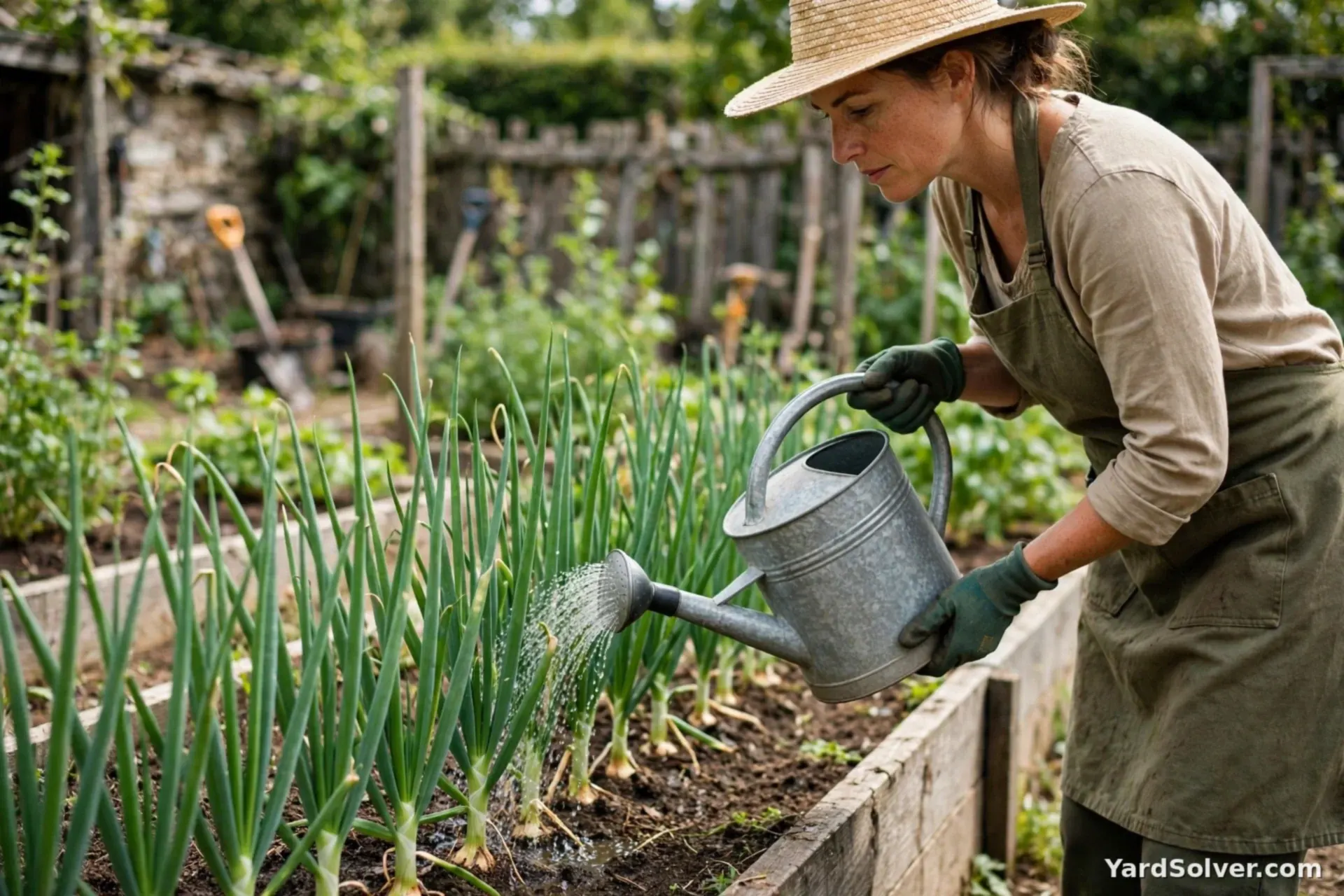
Water: Regular until tops fall. The Fertilizer Calculator turns a bed size into the right amount.
Step 5 — Care and the problems to watch for
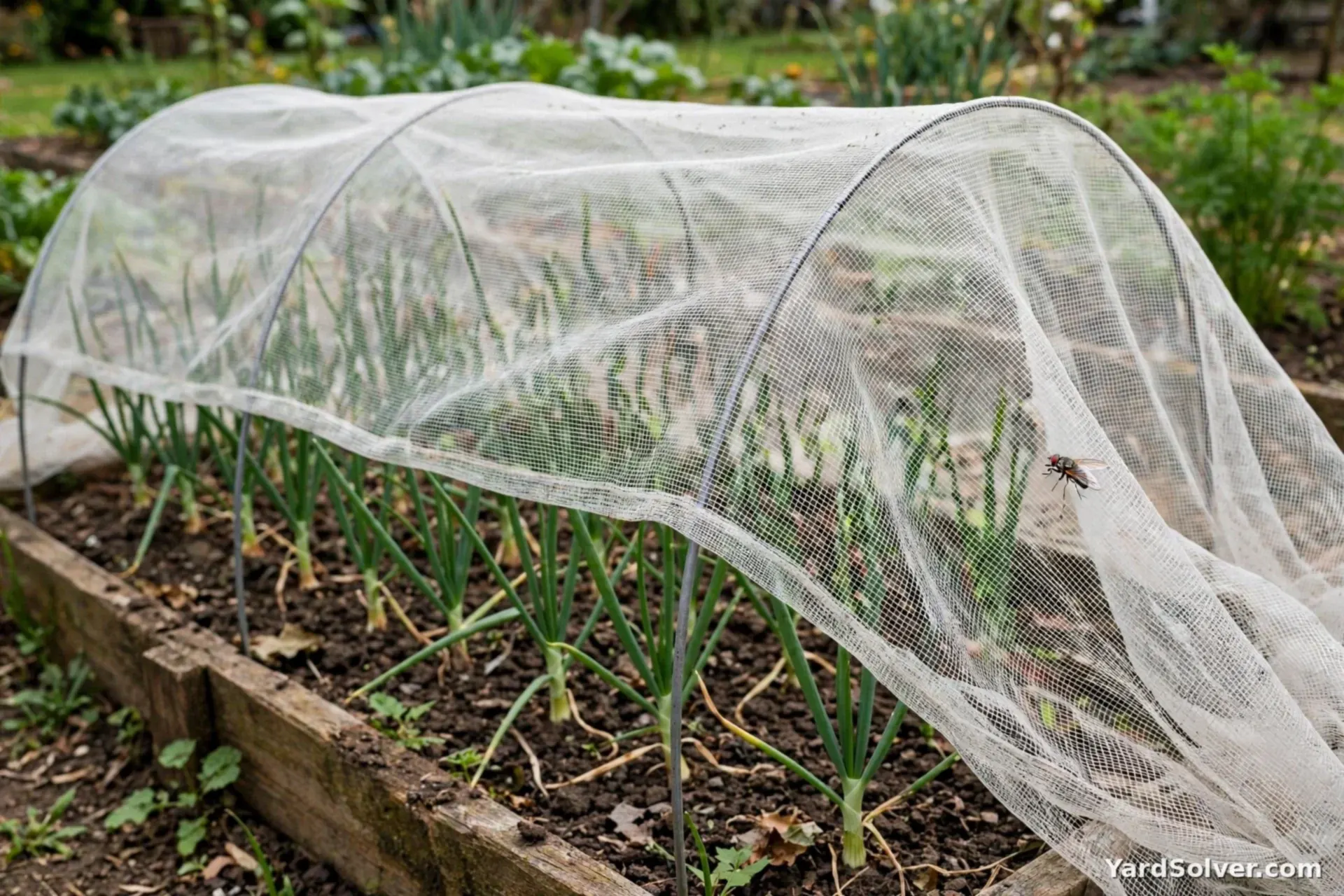
- Onion fly — maggots in the bulbs; mesh covers help where it is common.
- White rot — white mould at the base; rotate away from onion-family beds for several years if it appears.
- Bolting — some sets flower in a cold spring; remove flower stalks and use those bulbs first.
Take care: Raw onion causes heartburn, gas or bloating in some people — cooked onion is gentler. Keep onions away from dogs and cats — onions are poisonous to them, raw or cooked.
Step 6 — Harvest
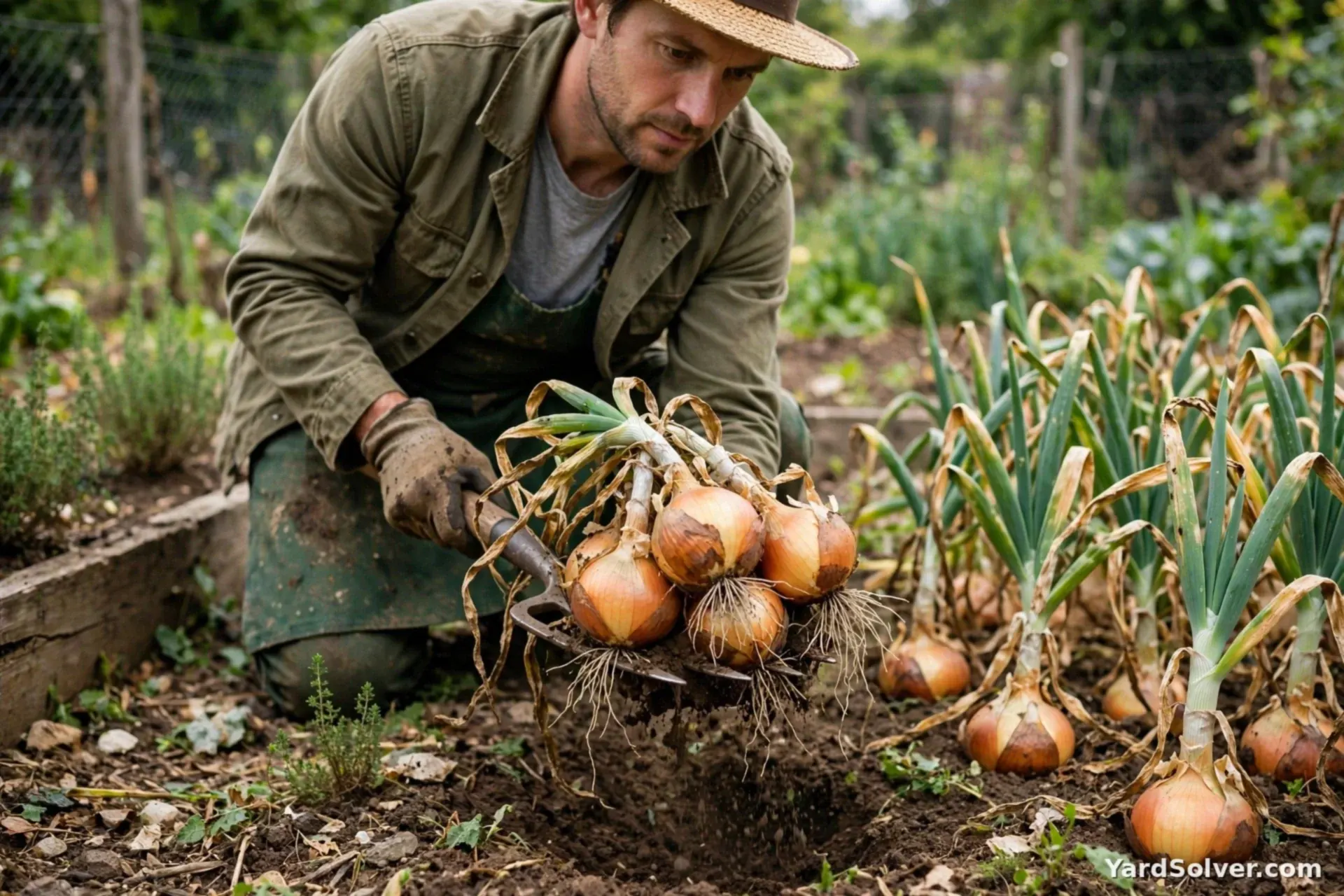
Ready in: 90–110 days. Harvest runs from about day 90 to 110 — lift bulbs once the tops start to yellow and flop over.
📅 Your personal Onion (sets) schedule
Counted from your planting day — not a generic calendar. Day 0 is the day the seed went in the ground or the young plant went out.
Varieties worth growing
| Variety | Colour | Why gardeners like it |
|---|---|---|
| Stuttgarter Riesen | Golden yellow | The most common set onion — flat-round bulbs that store very well |
| Sturon | Golden brown | A reliable round onion with a strong skin for long storage |
| Red Baron | Deep red | A red set onion with mild, sweet flesh for salads and cooking |
| Snowball | White | A mild white onion, best eaten fresh rather than stored for months |
Good for you — and take care
Benefits
- Provides vitamin C and vitamin B6
- Provides fibre, including fibres that feed good gut bacteria
- Contains natural antioxidants such as quercetin
- Low in calories but big on flavour, helping cut down on salt
- Red onions add extra colour-based antioxidants in their skins
Take care
- Raw onion causes heartburn, gas or bloating in some people — cooked onion is gentler
- Keep onions away from dogs and cats — onions are poisonous to them, raw or cooked
A little history — and one good fact
Onions are among the oldest vegetables humans grow, farmed in Central Asia and the Middle East for thousands of years and prized in ancient Egypt. Growing onions from 'sets' — tiny bulbs grown from seed the year before and dried — is an old shortcut that gives gardeners a head start. Onions travelled with settlers everywhere because they store all winter without spoiling.
Fun fact: Onions make your eyes water because cutting one releases a gas that reacts with the water in your eyes — chilling the onion first, or cutting it under a trickle of water, helps.
Keep going
Guides: When to Start Seeds Indoors · How to Prepare Garden Soil in Spring · How to Harden Off Seedlings
Calculators: Plant Spacing Calculator · Seed Calculator · Garden Mix Calculator
More vegetables: Tomato · Pepper · Cucumber · Scallions · Shallots
← Back to the Plant Library · Get your personal planting dates
Questions people ask
When do I plant onion (sets)?
Count from your average last spring frost: sow outdoors 3 weeks before last frost. Plant onion sets about 3 weeks before your last frost, pointed end up and just under the surface — bulbs size up over summer and are ready in about 90 to 110 days, when the tops fall over.
How far apart do I space onion (sets)?
Space plants 4–6 in apart, with seed sown 1 (sets) in deep. Sun: full sun.
When is onion (sets) ready to harvest?
90–110 days. Plant sets pointed-end up, just under the surface.
Bulb onions are day-length clocks: the variety must match your latitude, or you grow leaves and no bulb
Bulbing onions (Allium cepa) form their bulbs in response to day length, and varieties are bred as short-day, intermediate or long-day types. Plant a long-day variety in a short-day region and it never receives the signal to bulb; plant a short-day type where days are long and it bulbs too early, at marble size. Matching the type to your latitude is the single decision the harvest hangs on.
The growing rules support that one decision: onions root shallowly, compete badly with weeds, and want steady moisture and an open, sunny bed. Sets give a head start and reliability; seed gives the full range of varieties and better storage. Bulbing stops when the tops fall naturally — that flop is the harvest signal, followed by curing until the necks dry tight.
The worked example: the correct day-length type for the region, kept weeded and watered, typically sizes up and cures into months of storage. The wrong type in the same perfect bed typically gives a season of fine leaves and a handful of spring onions — with onions, latitude is destiny.
Sources
Key facts on this page — timing, spacing and care — cross-checked against NC State Extension Plant Toolbox — Allium cepa — culture and care requirements and Onion — Wikipedia — background on onions, day-length types and cultivation.
Related page
Read next: Companion Planting Basics: Good & Bad Neighbours.
Comments & ratings
No comments yet.
Be the first to share your experience.