
Plant Library · Vegetables · By Faizan Ahmad
🟠 How to Grow Turmeric
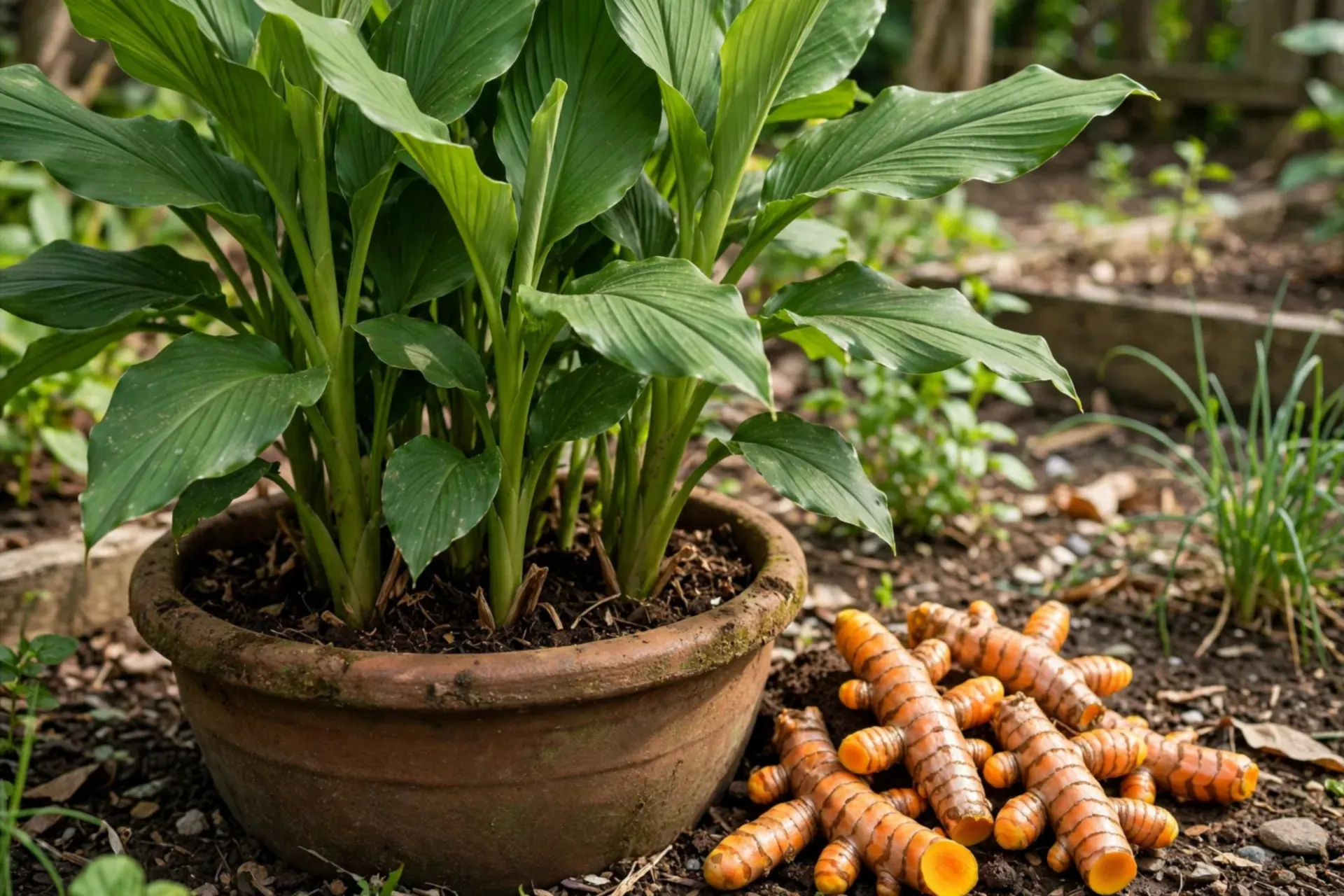
The golden root — a long, warm season in a pot for most of us. Turmeric is a tropical relative of ginger, grown for rhizomes that stain everything a deep, generous gold: start pieces indoors in late winter, give them the biggest pot, steady warmth and water all summer, and dig the crop when the leaves yellow and die back in fall, 7 to 9 months after starting.
Grow Turmeric with us — step by step
Everything for this plant is written step by step below — what to do, and exactly when. Read it through first if you like: you can grow it entirely on your own with that guide. Or start with us here — tell us your planting day and we lay out your personal schedule on this page, every next step on its own day, counted from your planting date. No guessing, no forgetting.
Step 1 — today: Start your Turmeric rhizome pieces in pots indoors today: set firm pieces buds-up, 2 in deep in moist potting mix, somewhere warm, and be patient — turmeric is slower than ginger, and shoots can take 5–7 weeks. This schedule counts from today.
Turmeric at a glance
Start indoors: 8 weeks before last frost
Move outside: 3 weeks after last frost
Spacing: 12–18 in · Planting depth: 2 in (rhizome piece, buds up)
Sun: Part shade
Water: Plenty — warm, humid and evenly moist
Harvest: Rhizomes at 210–270 days, when the leaves yellow and die back
Timing counts from your average last spring frost — get your own dates in the Planting Calendar. Guidance follows standard extension-service practice for Canada and the US.
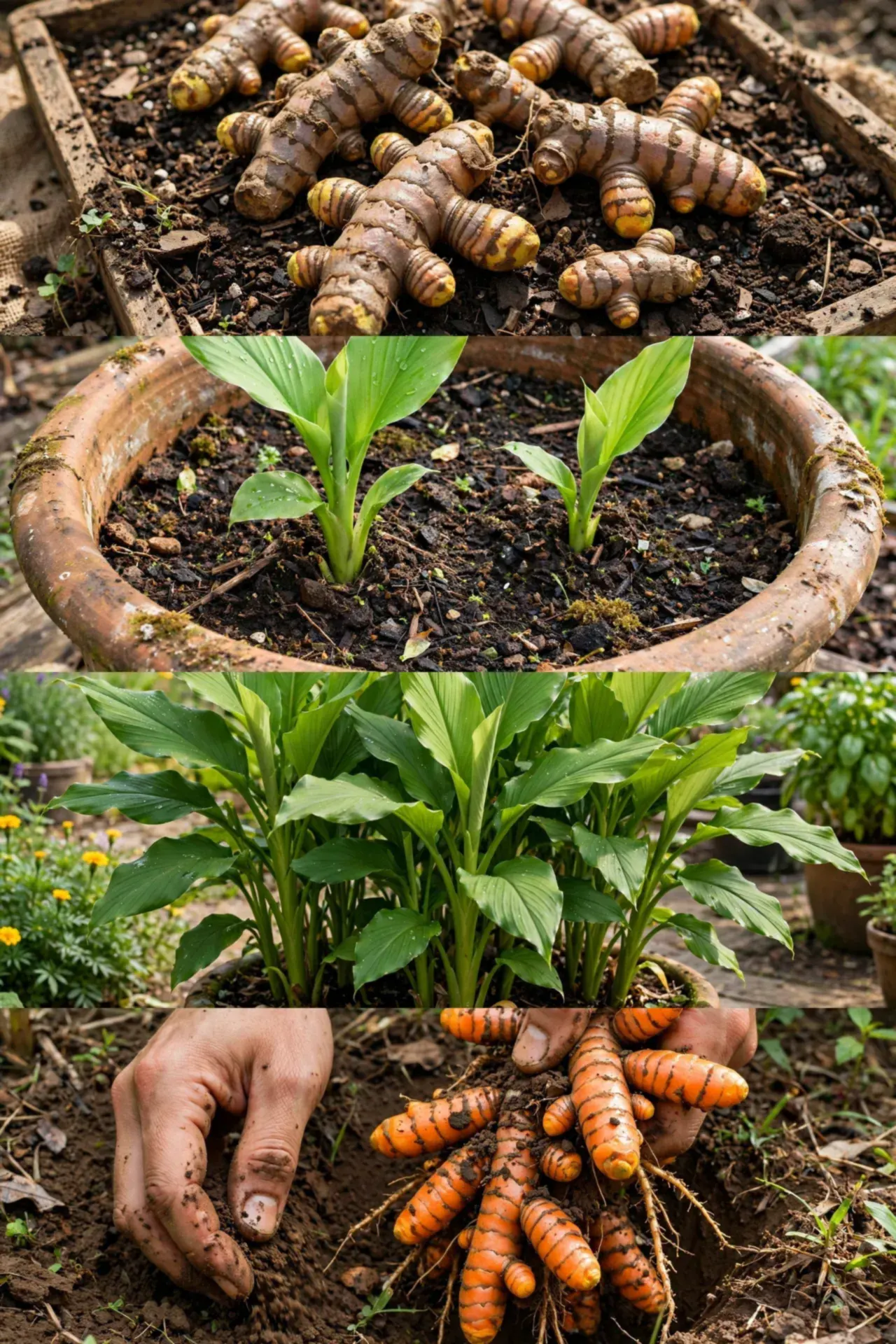
How to plant and grow turmeric, step by step
Step 1 — Start rhizomes indoors
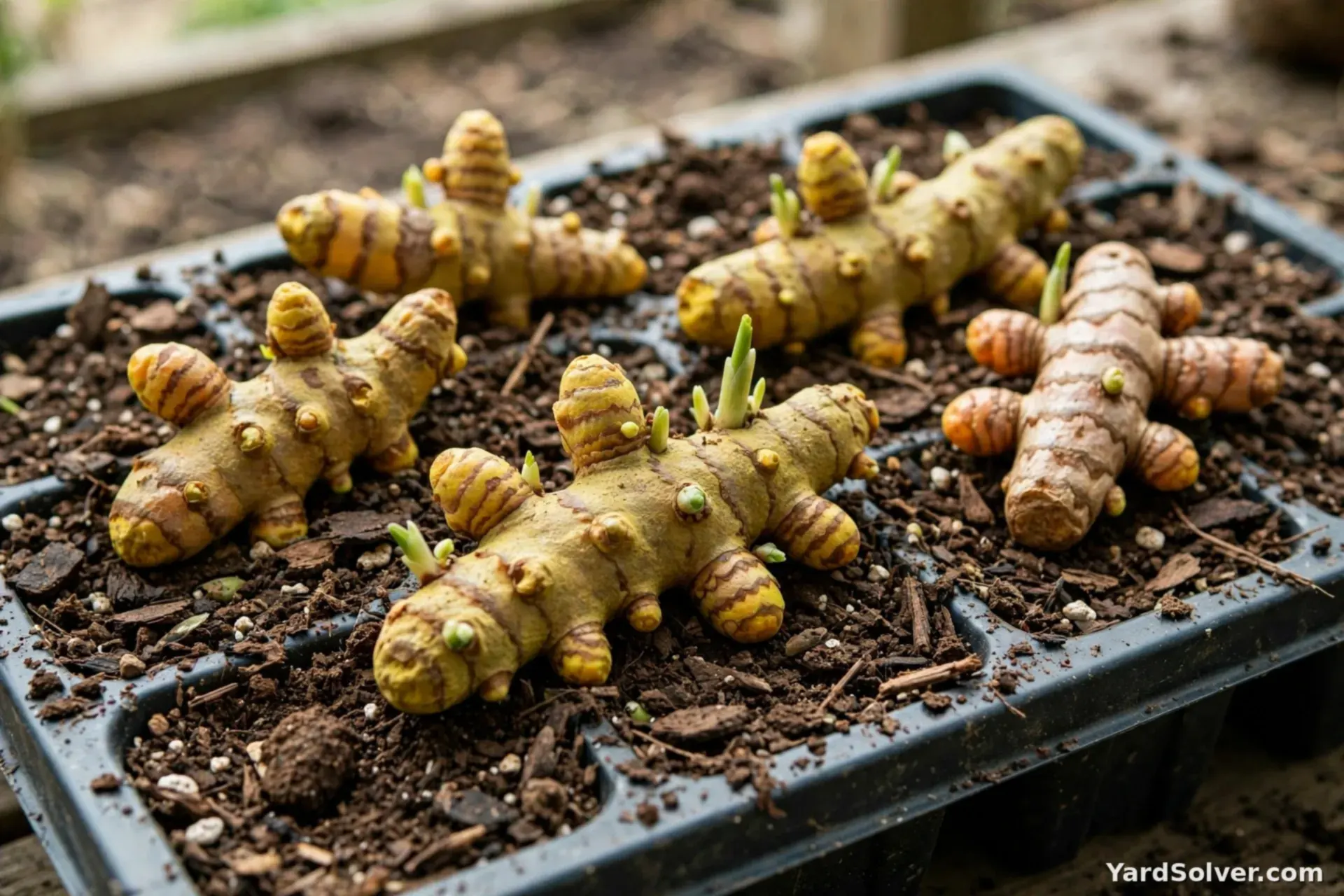
Start indoors: 8 weeks before last frost; Move outside: 3 weeks after last frost. All dates count from your average last spring frost — the Planting Calendar turns them into real dates for your garden. Choose firm, plump rhizomes with visible buds, break them into pieces with one or two buds each, let the cuts dry for a day, and set the pieces 2 in deep, buds up, in moist potting mix somewhere warm. Then be patient: turmeric is slower than its cousin ginger, and 5–7 weeks to the first shoot is normal.
Step 2 — Prepare the spot
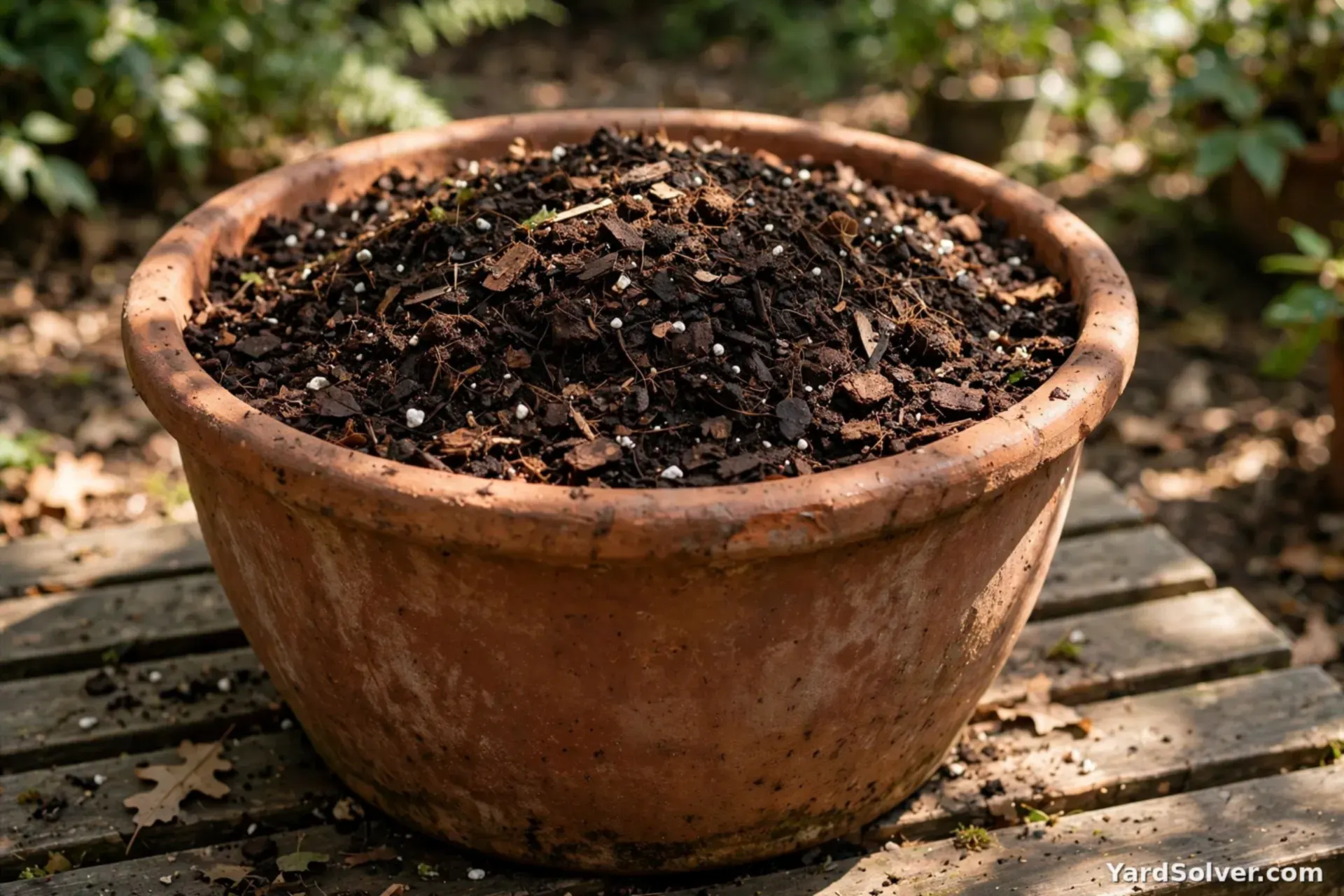
Sun: Part shade. Turmeric wants rich, moisture-holding mix in a big pot — at least 14 in wide per plant — or the richest bed in warm zones. For beds, work out amounts with the Garden Mix Calculator or the Raised Bed Soil Calculator.
Step 3 — Plant out into summer warmth
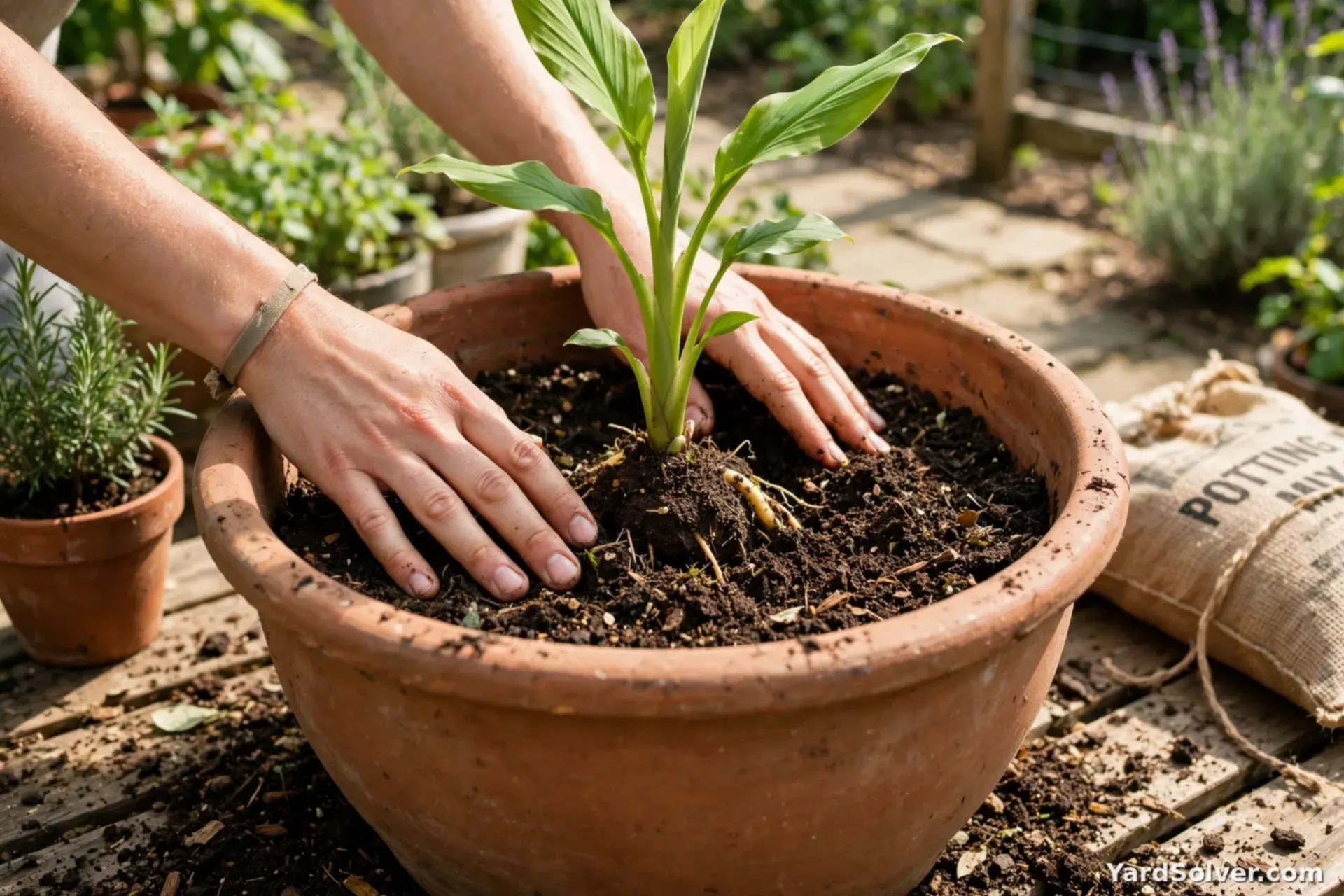
Move plants outside 3 weeks after last frost, into settled summer warmth — cold nights stall turmeric for weeks. Harden the pots off gradually (see How to Harden Off Seedlings). In beds, space plants 12–18 in apart. The Plant Spacing Calculator turns that spacing into plants-per-bed.
Step 4 — Water and feed
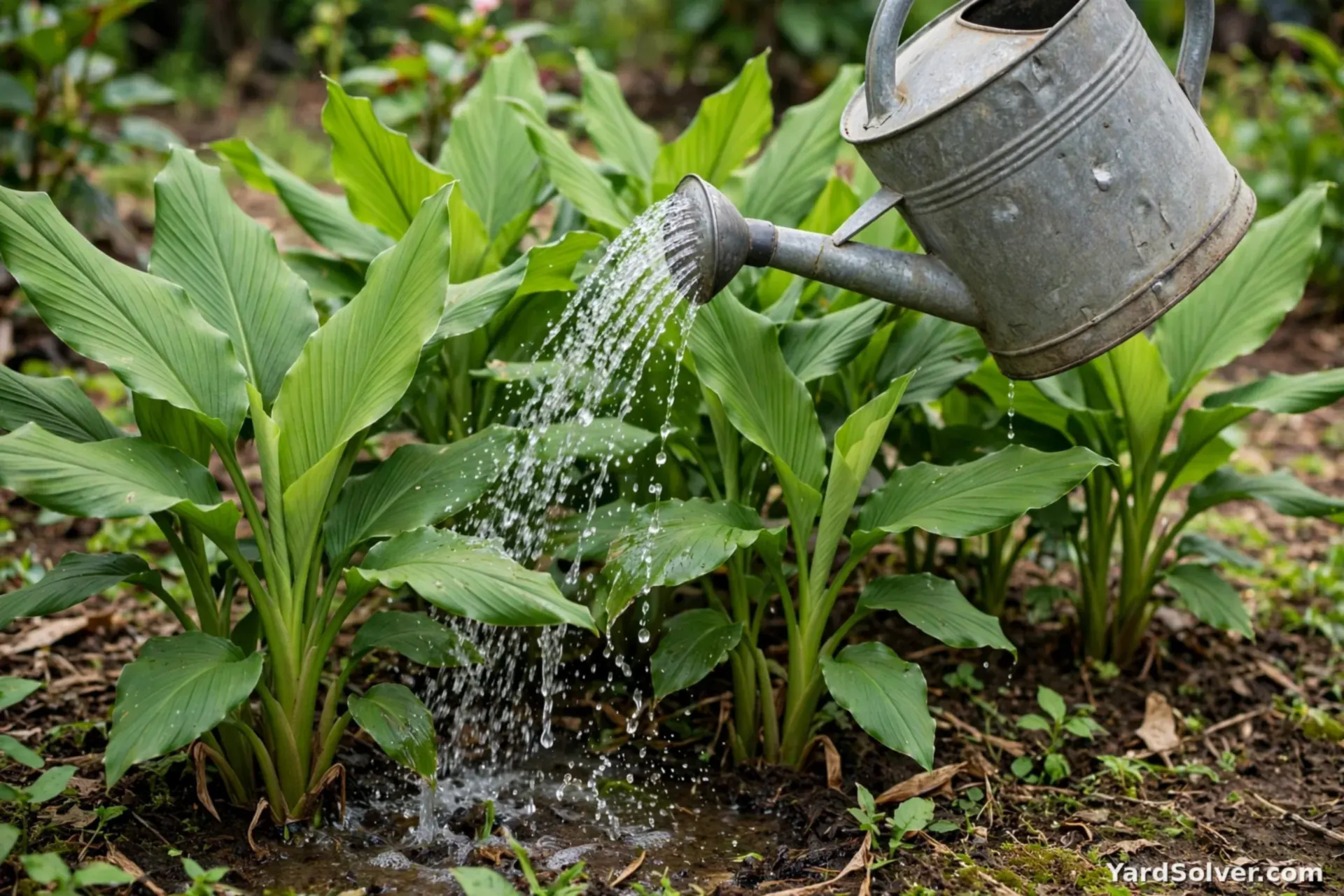
Water: Plenty — warm, humid and evenly moist. Feed every few weeks with a balanced fertilizer through the summer, and mulch thickly — turmeric grows in the monsoon season at home and never wants to dry out while it is in leaf. The Fertilizer Calculator turns a bed size into the right amount.
Step 5 — Care and the problems to watch for
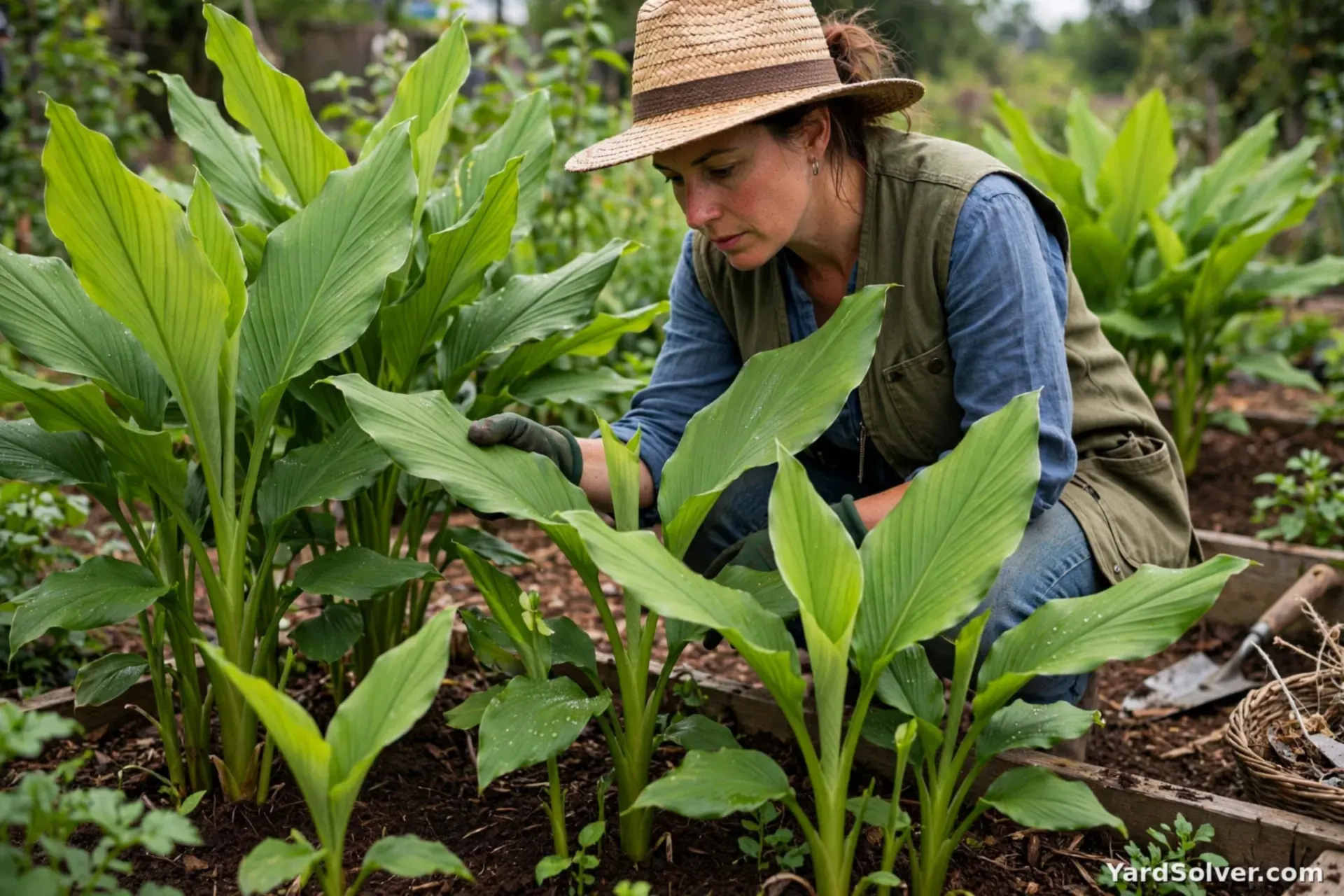
- Rot in cold soil — rhizomes sulk and rot if pots sit cold and wet in spring; waiting for real warmth is the prevention.
- Drought — leaves roll inwards and edges brown when the pot dries; water deeply and mulch.
- Short season, small rhizomes — in cool climates the crop is simply smaller; start earlier indoors and grow in the biggest dark-coloured pot you have, for extra warmth.
Take care: Turmeric stains skin, clothes, boards and counters a deep gold that lasts for days — wear gloves and protect surfaces when you cut fresh rhizomes.
Step 6 — Harvest
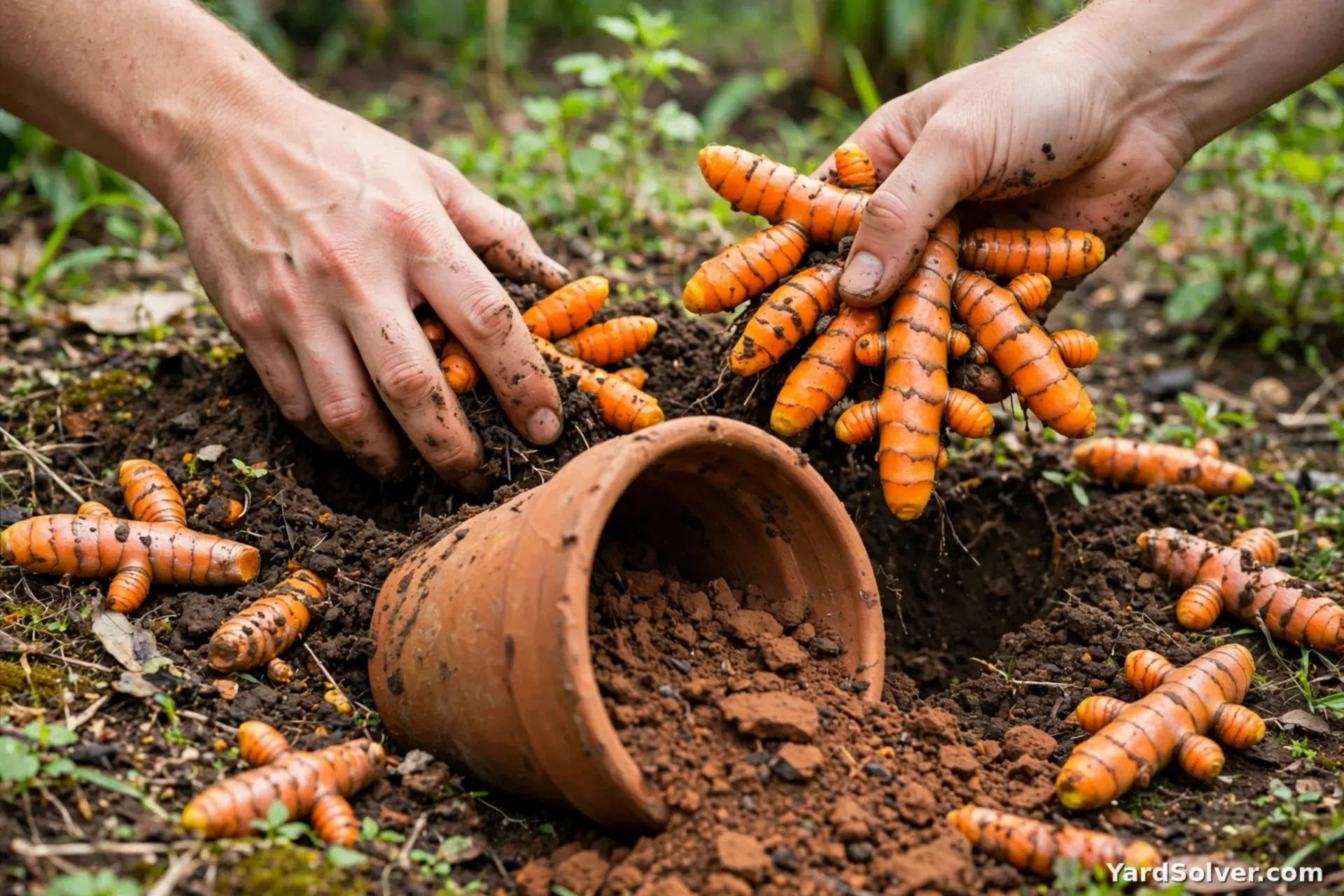
Ready in: Rhizomes at 210–270 days, when the leaves yellow and die back. Tip the pot out and break the clump apart. Fresh rhizomes can be grated like ginger straight away; for powder, follow the traditional cure — simmer the rhizomes until just tender, dry them hard in the sun or a dehydrator, then grind. Keep the plumpest pieces back to replant next year.
Problems, pests & diseases — diagnosis and fixes
- Nothing has sprouted after 5–6 weeks: turmeric is slower than ginger, and cold mix is the usual cause. Fix: move the pot somewhere genuinely warm and wait — shoots can take 7 weeks; only give up if the rhizome feels soft when checked.
- Rhizome soft and mushy, mix smelling sour: rhizome rot from cold, wet conditions. Fix: cut back to firm, bright-orange tissue, repot into fresh mix, and keep the pot warm with drainage that actually drains.
- Brown spots and blotches spreading on the leaves: leaf blotch, a fungal leaf spot of warm, humid weather. Fix: remove the worst leaves, space pots for airflow, and water at the base rather than over the foliage.
- Leaves rolling inwards, edges crisping: drought stress. Fix: water deeply, mulch the surface, and in heatwaves check big pots daily — turmeric in leaf should never dry out.
- Leaves pale and growth slow in midsummer: hungry plants — turmeric feeds heavily while it is growing. Fix: give a balanced feed and repeat every few weeks until early fall.
- Whole plant yellowing and dying back in the fall: not a disease — the crop is mature and the tops are finishing. Fix: none; it is the harvest signal (Step 6). Only worry if the soil is sodden and the rhizomes feel soft, which is rot.
📅 Your personal Turmeric schedule
Counted from your planting day — not a generic calendar. Day 0 is the day the seed went in the ground or the young plant went out.
Varieties worth growing
| Variety | Colour | Why gardeners like it |
|---|---|---|
| Common turmeric (Curcuma longa) | Deep orange flesh | The kitchen and dye standard — the richest colour and the warm, earthy flavour everything else is judged by |
| 'Hawaiian Red' type selections | Red-orange flesh | Named selections traded by tropical growers for especially rich colour — sold as rhizomes, never seed |
| Mango ginger | Pale yellow flesh | A relative with a raw-mango tang — eaten fresh and pickled, not ground as a spice powder |
| Zedoary | Creamy white flesh | Another relative — bitter, and used in traditional medicine rather than as a turmeric substitute in the kitchen |
| Black turmeric | Dark blue-black heart | A striking relative grown as an ornamental and in traditional medicine — beautiful, but not the kitchen spice |
Good for you — and take care
Benefits
- Fresh rhizome is brighter and more aromatic than powder — grate it into teas, curries and rice
- One of the world's great natural dyes: the gold in curry and in ceremonial robes is the same pigment, curcumin
- A handsome, lush pot plant all summer, even before any harvest
- Rhizomes dry and grind into your own turmeric powder
- Easy to keep going — replant your best pieces each year
Take care
- Stains everything it touches a lasting gold — gloves, old boards, and no white counters
- Turmeric taken in supplement amounts may interact with blood-thinning medication — culinary use is ordinary food, but check with a clinician about supplements
- Frost kills the rhizomes — dig the crop, or bring pots in, before the first frost
A little history — and one good fact
Turmeric has been cultivated in India for at least 4,000 years — as a spice, a dye, and a sacred plant in Hindu ceremonies — and it travelled the same trade routes as ginger to reach medieval Europe, where Marco Polo marvelled at a root that dyed like saffron. India still grows most of the world's crop, and the plant, like ginger, is propagated only by dividing its rhizomes.
Fun fact: Turmeric is a natural pH indicator: its curcumin stays yellow in acid but turns reddish-brown in alkali — turmeric-dyed paper was once a standard chemistry-lab test.
Keep going
Guides: Earliest Seeds to Start Indoors · How to Harden Off Seedlings · Container Gardening for Beginners
Calculators: Plant Spacing Calculator · Fertilizer Calculator · Mulch Calculator
More vegetables: Ginger · Sweet Potato · Potato
← Back to the Plant Library · Get your personal planting dates
Questions people ask
When do I plant turmeric?
Count from your average last spring frost: start rhizomes indoors 8 weeks before last frost; move outside 3 weeks after last frost. Turmeric is a tropical crop needing a long, warm season: start rhizome pieces in pots indoors 8 weeks before your last frost and move plants outside 3 weeks after it, into settled summer warmth — most gardeners outside zones 8–11 grow it in a big pot and dig the rhizomes when the leaves die back.
How far apart do I space turmeric?
Space plants 12–18 in apart, with rhizome pieces planted 2 in deep, buds up. Sun: part shade.
When is turmeric ready to harvest?
Rhizomes at 210–270 days, when the leaves yellow and die back. The golden root — a long, warm season in a pot for most of us.
Turmeric is a tropical rhizome that needs nine warm months and a patient harvest
Turmeric (Curcuma longa) grows from knobbly rhizomes planted shallow in warm, rich, moist soil once the weather is settled and hot; in cool climates it is started indoors in late winter, because the plant needs the better part of a year of warmth to build a worthwhile hand of rhizomes. The broad leaves make a handsome summer pot plant long before there is anything to dig.
Water and feed generously through the growing season, then watch the leaves: as they yellow and die down in autumn the rhizomes are ready. Dig the whole clump, snap off the fingers, boil and dry the harvest before grinding if you want powder that keeps — fresh turmeric, grated like ginger, is the simpler home use and stains everything it touches its famous gold.
The worked example: rhizomes started early indoors and grown on in a large pot in the warmest spot typically give a useful handful of fingers by autumn. The same rhizomes planted out into a cold spring bed typically sit still for months and yield little — with turmeric, the season is the yield.
Sources
Key facts on this page — timing, spacing and care — cross-checked against NC State Extension Plant Toolbox — Curcuma longa — culture and care requirements and Turmeric — Wikipedia — background on turmeric and its cultivation.
Related page
Read next: Best Vegetables for Containers: Pots, Soil & Watering.
Comments & ratings
No comments yet.
Be the first to share your experience.