
Plant Library · Vegetables · By Faizan Ahmad
🫚 How to Grow Ginger
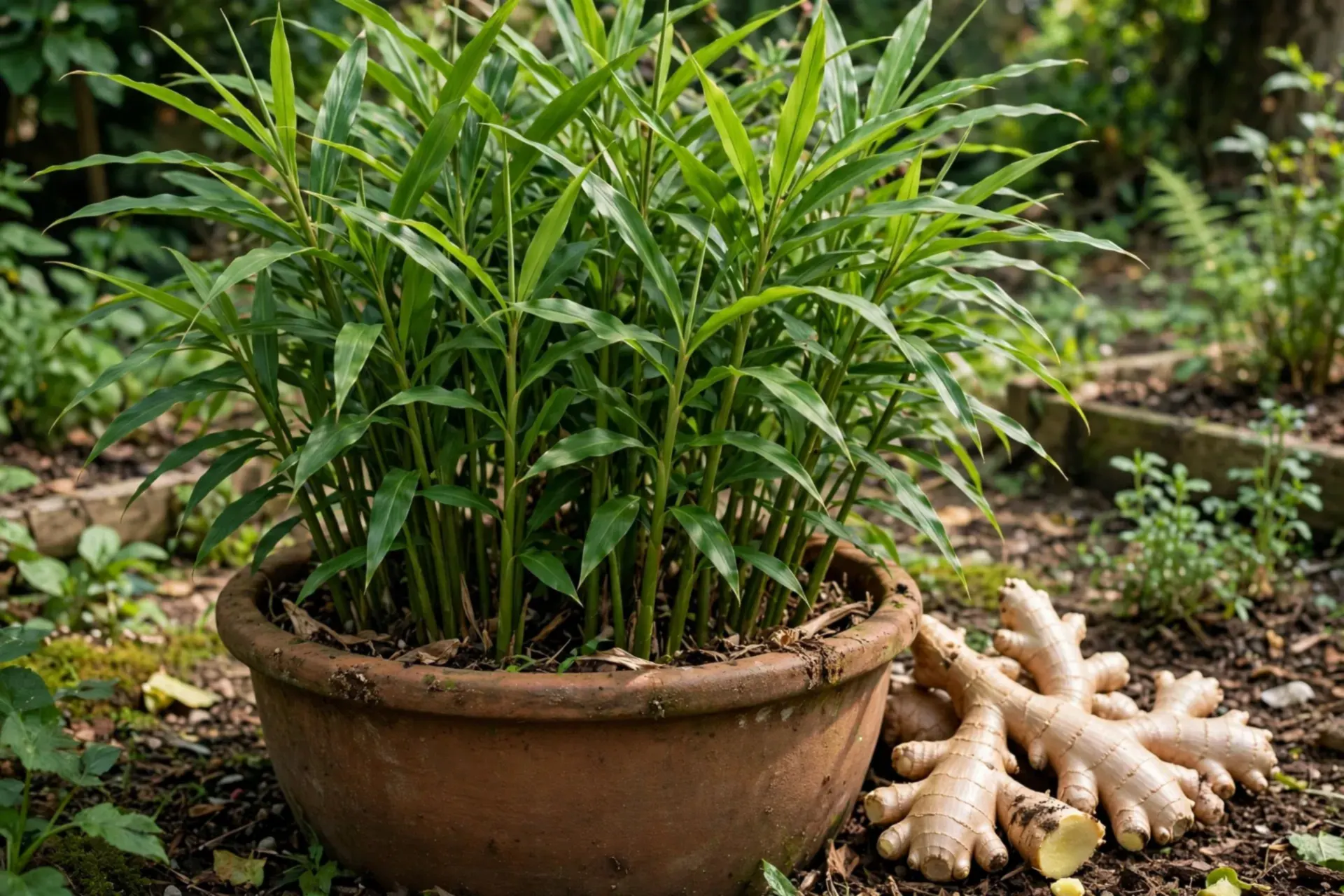
A tropical crop — everywhere cool, it grows in a big pot. Ginger is a tropical plant grown for its knobbly rhizomes, and it needs 8 to 10 months of warmth: outside zones 9–12, the routine is to start pieces of rhizome in pots indoors in late winter, grow the plants on in the biggest pot you have through summer, and lift fresh ginger — mild, pink baby ginger or fiery mature roots — before the first frost.
Grow Ginger with us — step by step
Everything for this plant is written step by step below — what to do, and exactly when. Read it through first if you like: you can grow it entirely on your own with that guide. Or start with us here — tell us your planting day and we lay out your personal schedule on this page, every next step on its own day, counted from your planting date. No guessing, no forgetting.
Step 1 — today: Start your Ginger rhizome pieces in pots indoors today: set plump pieces buds-up, 2 in deep in moist potting mix, somewhere warm, and keep them warm and evenly moist — shoots take a slow 3–6 weeks to appear. This schedule counts from today.
Ginger at a glance
Start indoors: 8 weeks before last frost
Move outside: 3 weeks after last frost
Spacing: 12–15 in · Planting depth: 2 in (rhizome piece, buds up)
Sun: Part shade
Water: Plenty — warm and evenly moist
Harvest: Baby ginger from about 120 days; mature rhizomes at 240–300 days
Timing counts from your average last spring frost — get your own dates in the Planting Calendar. Guidance follows standard extension-service practice for Canada and the US.
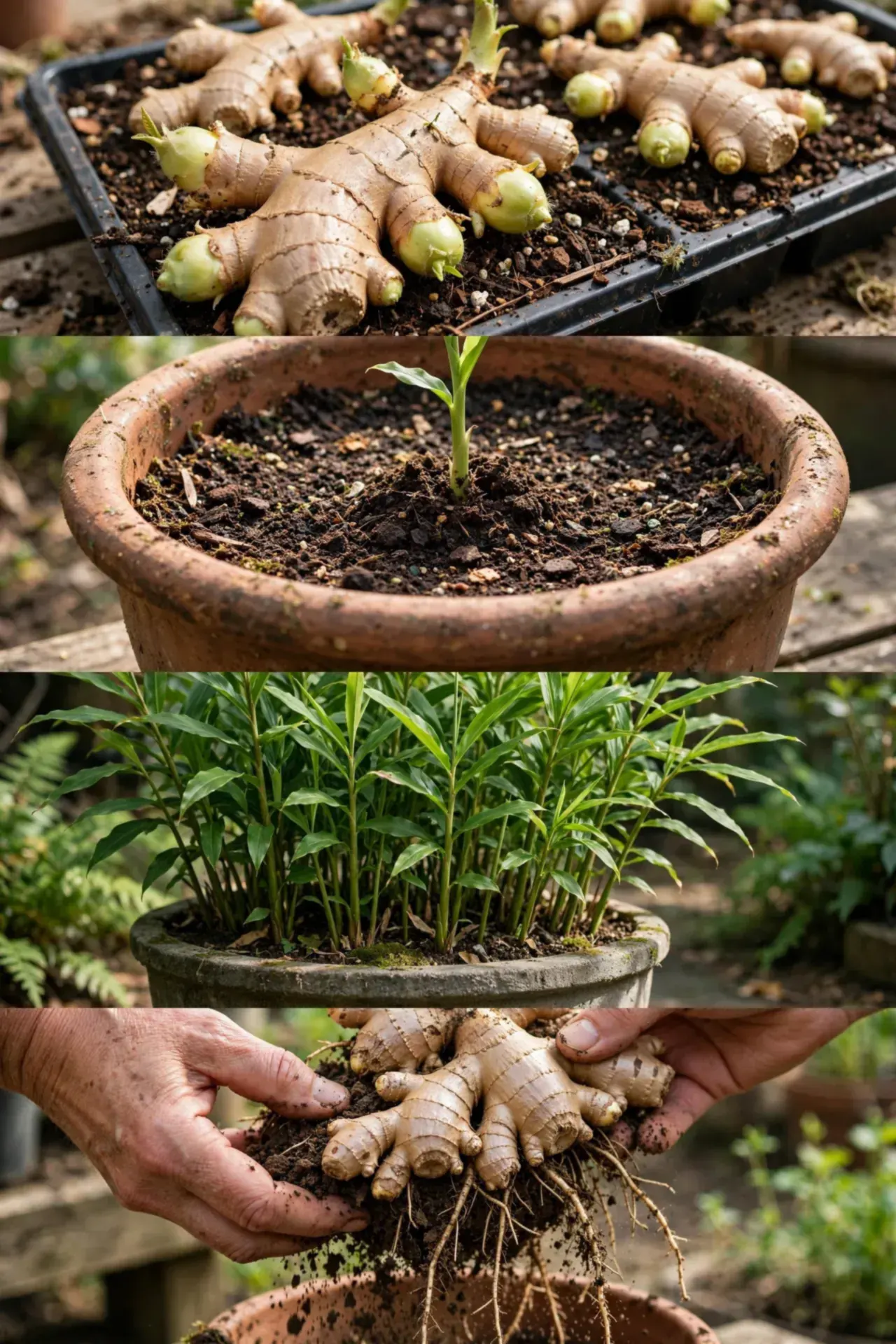
How to plant and grow ginger, step by step
Step 1 — Start rhizomes indoors
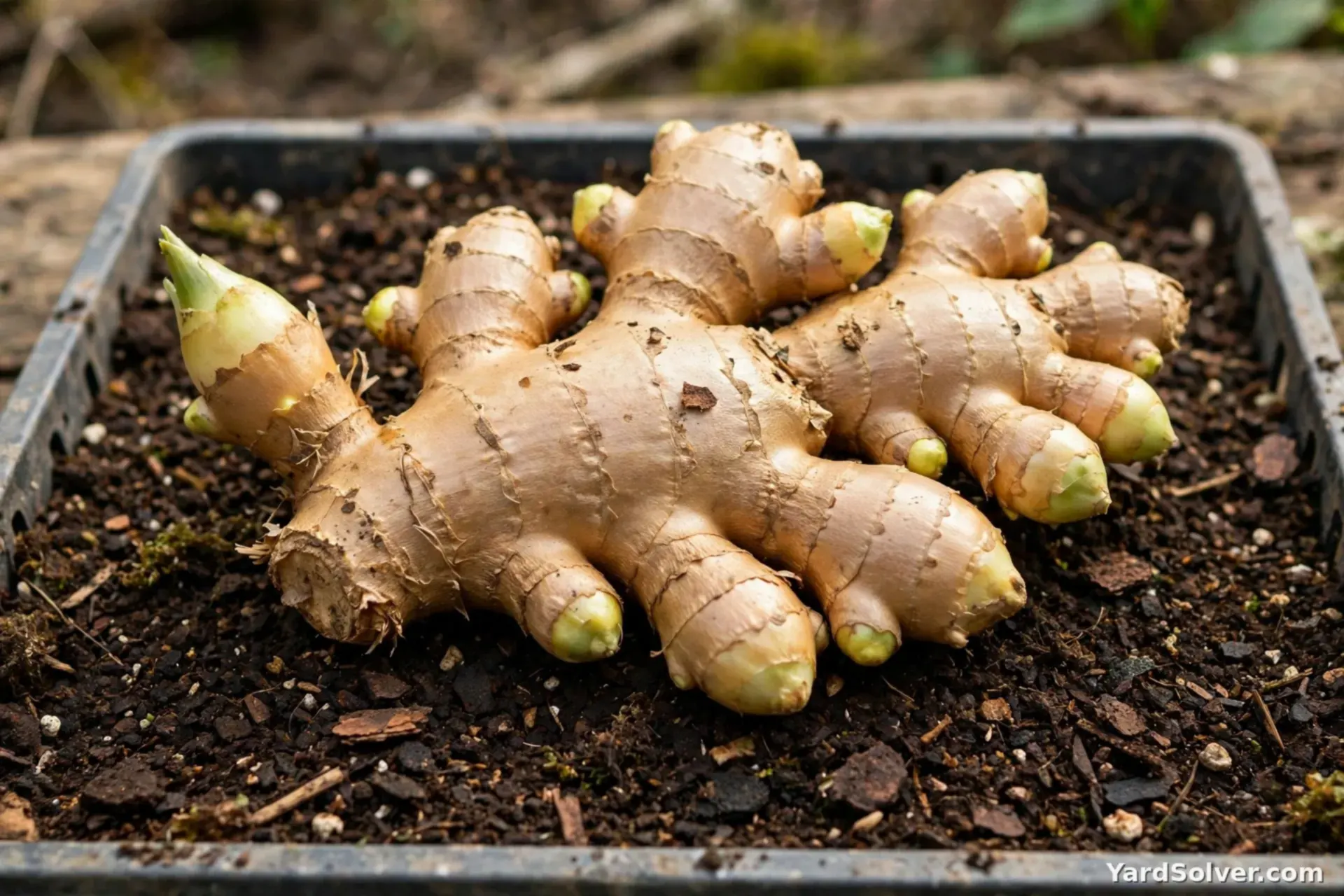
Start indoors: 8 weeks before last frost; Move outside: 3 weeks after last frost. All dates count from your average last spring frost — the Planting Calendar turns them into real dates for your garden. Choose plump, firm rhizomes with fat, pale buds — grocery ginger works if it is fresh and untreated, and rhizomes sold for planting are the surest start. Break or cut them into pieces, each with one or two buds, let the cut surfaces dry for a day, then set the pieces 2 in deep, buds up, in moist potting mix. Warmth is everything at this stage: a cold windowsill in late winter will simply sit there, while a warm spot coaxes shoots out in 3–6 weeks.
Step 2 — Prepare the spot
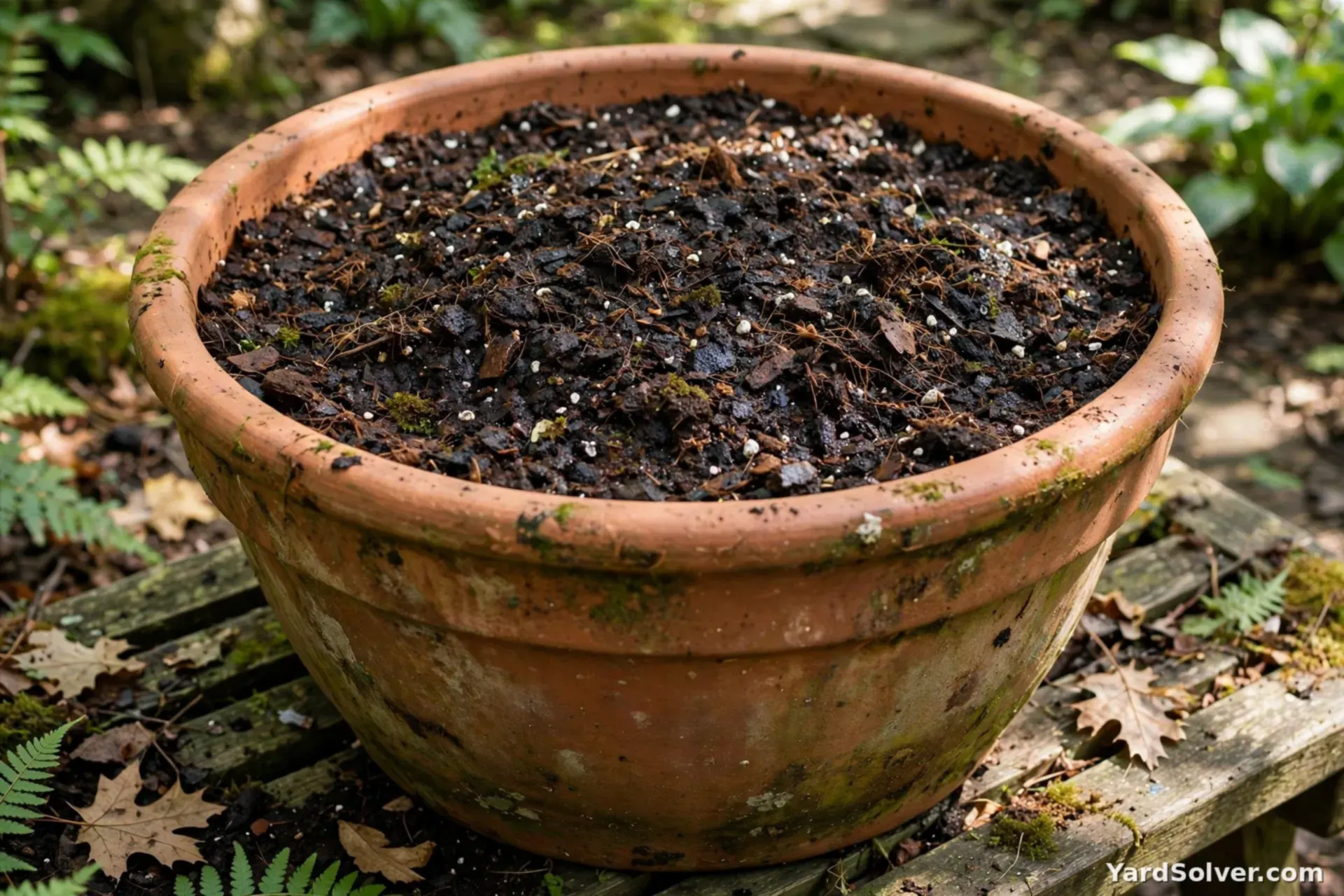
Sun: Part shade. Ginger wants the richest, most moisture-holding mix you can give it — potting mix with plenty of compost — in a pot at least 14 in wide per plant, or the richest bed in the garden in warm zones. For beds, work out amounts with the Garden Mix Calculator or the Raised Bed Soil Calculator.
Step 3 — Plant out after nights are warm
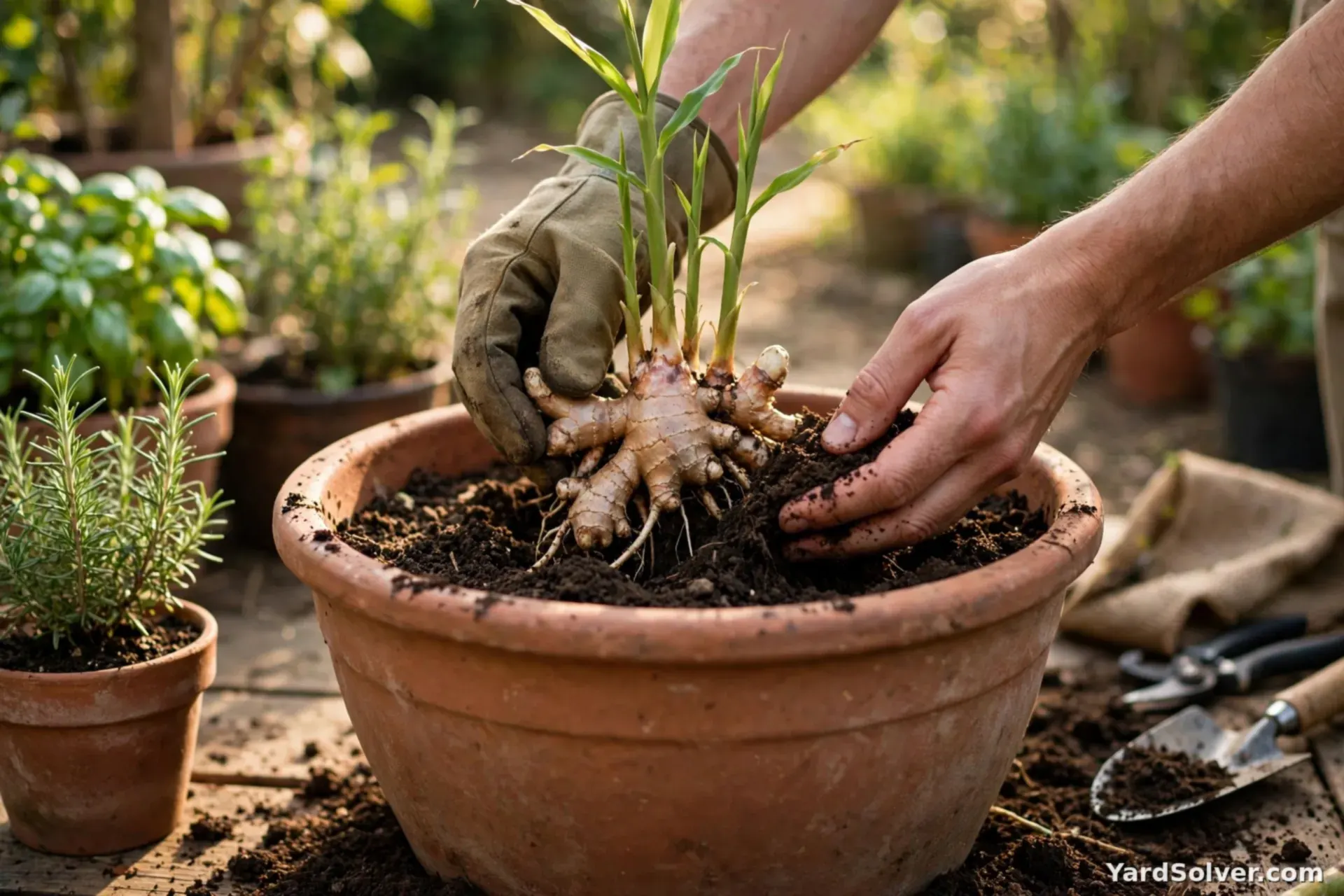
Move plants outside 3 weeks after last frost, and only once nights stay reliably warm — ginger stops growing in cold snaps and sulks for weeks afterwards. Harden the pots off gradually (see How to Harden Off Seedlings). In beds, space plants 12–15 in apart; in pots, one plant per big pot. The Plant Spacing Calculator turns that spacing into plants-per-bed.
Step 4 — Water and feed
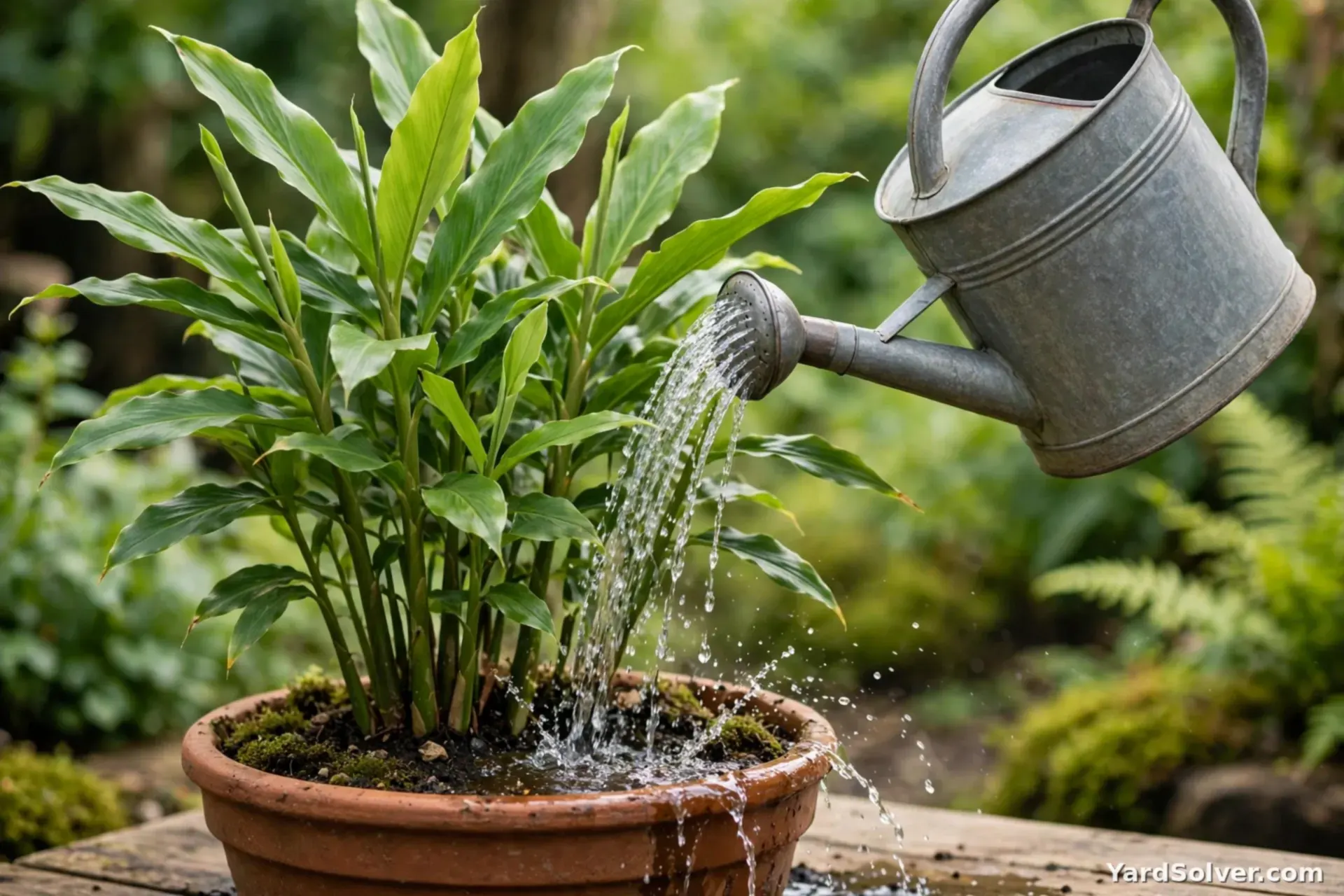
Water: Plenty — warm and evenly moist. Ginger is a heavy feeder and drinker through summer: feed every few weeks with a balanced fertilizer, and mulch thickly to hold moisture. As the rhizomes swell and begin to push up, mound a little extra mix over them. The Fertilizer Calculator turns a bed size into the right amount.
Step 5 — Care and the problems to watch for
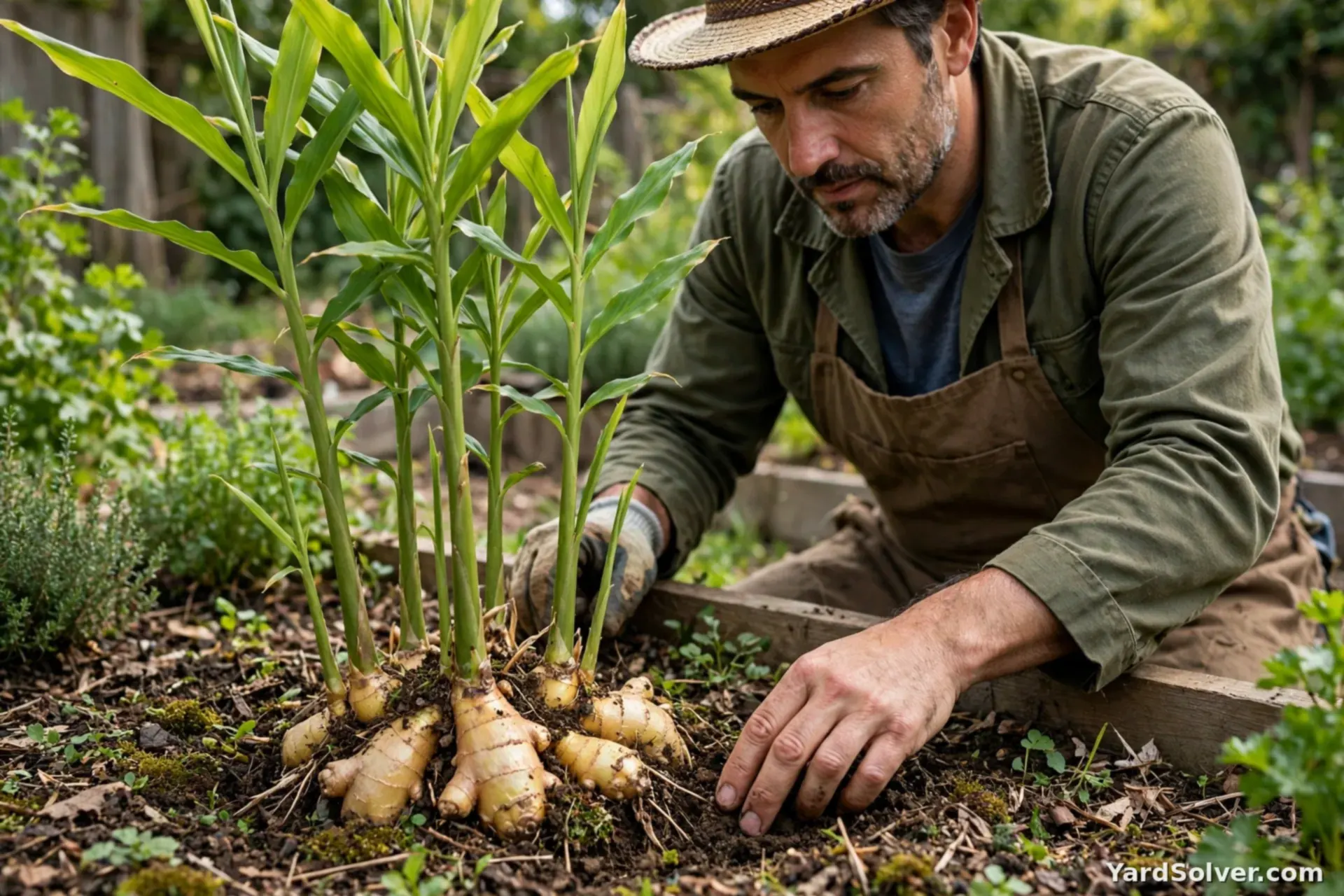
- Rhizome rot — soft, smelly rhizomes in cold, wet mix; warmth and drainage are the whole prevention, so never leave pots standing in cold water.
- Drought check — leaves curl and brown at the edges when a pot dries out; water deeply and mulch.
- Sun scorch — bleached patches where potted plants were moved straight into harsh sun; harden off gradually and keep the part shade.
Take care: Ginger is killed by frost — bring pots in well before the first frost, or lift the rhizomes and store them.
Step 6 — Harvest
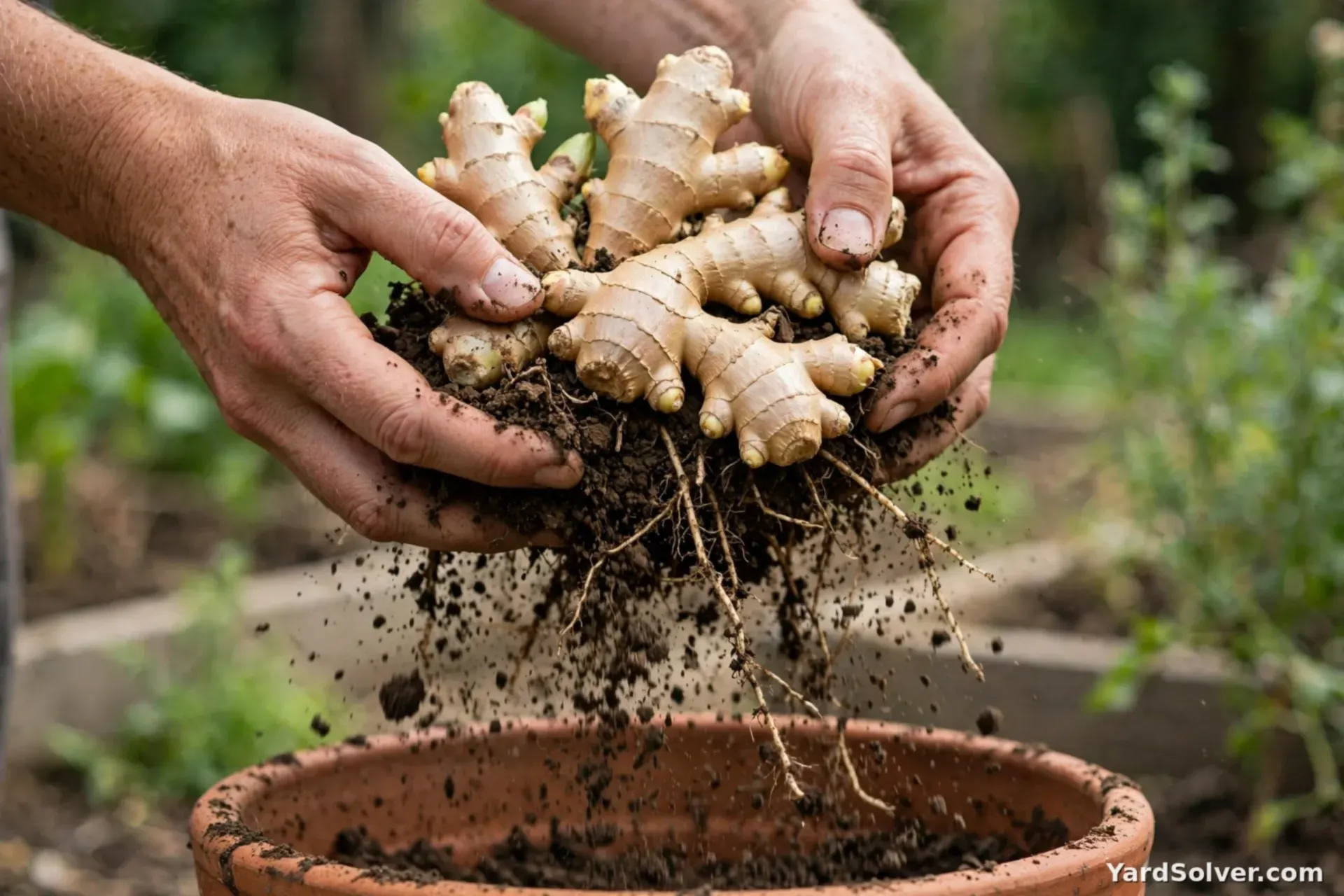
Ready in: Baby ginger from about 120 days; mature rhizomes at 240–300 days. Scrape soil aside and snap off a piece of baby ginger whenever you need some from about 4 months — it is pink, thin-skinned and mild, with no peeling needed. For the mature crop, wait until the stems yellow and flop, or until frost threatens: tip the pot out, break the clump apart, keep the best pieces for cooking and a few plump ones to start next year.
Problems, pests & diseases — diagnosis and fixes
- Nothing has sprouted after 5–6 weeks: the pot is too cold, or the rhizome was treated with a sprout inhibitor, as some grocery ginger is. Fix: move the pot somewhere genuinely warm and wait a little longer; if there is still no life, restart with fresh, plump rhizomes — ideally sold for planting.
- Rhizomes soft, dark and smelling sour when checked: rhizome rot, from cold, wet mix. Fix: cut away every soft piece back to firm, pale tissue, dust the cuts, and repot into fresh mix — then keep the pot warm and never standing in water.
- Plant collapses suddenly, stems watery at the base: bacterial wilt. Fix: there is no cure — bin the plant and its mix (do not compost them) and scrub the pot before reusing it.
- Leaves bleached white in patches after moving outside: sun scorch on soft, indoor-grown foliage. Fix: the damage stays, but new leaves adapt — harden plants off over a week next time and keep the part-shade spot.
- Leaf edges browning and leaves rolling in hot weather: drought stress in the pot. Fix: water deeply until it drains, mulch the surface, and in heatwaves check pots daily.
- Stems yellowing and flopping in the fall: usually not a disease at all — the plant is maturing and the rhizomes are ready. Fix: none needed; it is harvest time (Step 6), unless the mix is sodden and the rhizomes feel soft, which is rot instead.
📅 Your personal Ginger schedule
Counted from your planting day — not a generic calendar. Day 0 is the day the seed went in the ground or the young plant went out.
Varieties worth growing
| Variety | Colour | Why gardeners like it |
|---|---|---|
| Common culinary ginger (Zingiber officinale) | Pale buff skin, cream flesh | The kitchen standard — hot and aromatic, and the one to grow for cooking |
| Baby ginger | Pink-tinged, almost skinless | Not a variety but a harvest stage — young rhizomes lifted early: mild, juicy, and no peeling |
| 'Buderim' | Pale gold | An Australian selection named for the Queensland ginger town of Buderim — plump, mild rhizomes |
| Galangal | Orange-brown and banded | A close relative with a sharper, citrus-pine flavour — essential in Thai cooking, grown the same way |
| Ornamental gingers | Green foliage, showy flowers | Grown for their flowers, not the kitchen — enjoy them in the border, but do not cook with them |
Good for you — and take care
Benefits
- Fresh homegrown ginger is juicier and milder than shop roots — baby ginger needs no peeling at all
- A handsome pot plant in its own right, with lush, reed-like foliage all summer
- Rhizomes store well — freeze them whole and grate from frozen as needed
- A kitchen staple for teas, stir-fries and baking, picked a piece at a time
- One rhizome multiplies into a whole clump by fall
Take care
- Frost kills it — pots must come in well before the first frost anywhere cold
- Rhizomes rot in cold, wet soil — never leave pots standing in cold water
- Culinary amounts are everyday food, but concentrated ginger supplements are a different matter — check with a clinician if you take blood-thinning medication
A little history — and one good fact
Ginger has been grown in southern China and India for well over 4,000 years and was among the first Asian spices to reach Europe, travelling the Silk Road and the spice routes — dried ginger was a luxury in medieval kitchens. The plant almost never sets seed and is spread entirely by dividing its rhizomes, so every ginger plant is a cutting of a cutting, back through centuries of gardens.
Fun fact: Ginger is not a root at all — the part we eat is a rhizome, an underground stem, which is why a single piece with one fat bud can grow a whole new plant.
Keep going
Guides: Earliest Seeds to Start Indoors · How to Harden Off Seedlings · Container Gardening for Beginners
Calculators: Plant Spacing Calculator · Fertilizer Calculator · Mulch Calculator
More vegetables: Turmeric · Sweet Potato · Potato · Horseradish · Jerusalem Artichoke
← Back to the Plant Library · Get your personal planting dates
Questions people ask
When do I plant ginger?
Count from your average last spring frost: start rhizomes indoors 8 weeks before last frost; move outside 3 weeks after last frost. Ginger is a tropical crop that needs 8 to 10 months of warmth: start rhizome pieces in pots indoors 8 weeks before your last frost and move plants outside 3 weeks after it, only once nights stay warm.
How far apart do I space ginger?
Space plants 12–15 in apart, with rhizome pieces planted 2 in deep, buds up. Sun: part shade.
When is ginger ready to harvest?
Baby ginger from about 120 days; mature rhizomes at 240–300 days. A tropical crop — everywhere cool, it grows in a big pot.
A tropical rhizome on a ten-month clock: start it warm and early, or the season ends before the harvest does
Culinary ginger (Zingiber officinale) is a tropical plant being asked to perform in a temperate season, so the whole craft is buying it time. The rhizome needs warmth — soil around 20°C or more — to sprout, grows through the hottest months, and needs eight to ten months before the rhizomes size up. In short-season climates that means starting pieces indoors in late winter, not planting out in spring and hoping.
Choose plump rhizomes with several fat, pale growth buds, and pre-sprout them on warm damp compost until shoots show. Ginger is a forest-edge plant, so unlike most vegetables it prefers partial shade and constant moisture in rich, loose soil; it is also a heavy feeder. Harvest decides the product: lifted young, at four to five months, you get mild, thin-skinned 'baby' ginger that needs no peeling; left to full maturity, the skins toughen and the heat builds.
The worked example: rhizomes pre-sprouted indoors in February, grown in a big pot of rich compost in light shade and fed through summer, commonly yield a hand of ginger per piece by autumn. Rhizomes planted cold in May typically spend six weeks just waking up — and the first frost closes the account before they have paid anything back.
Sources
Key facts on this page — timing, spacing and care — cross-checked against NC State Extension Plant Toolbox — Zingiber officinale — culture and care requirements and Ginger — Wikipedia — background on ginger, its rhizome and its cultivation.
Related page
Read next: Best Vegetables for Containers: Pots, Soil & Watering.
Comments & ratings
No comments yet.
Be the first to share your experience.