
Plant Library · Vegetables · By Faizan Ahmad
🌻 How to Grow Jerusalem Artichoke
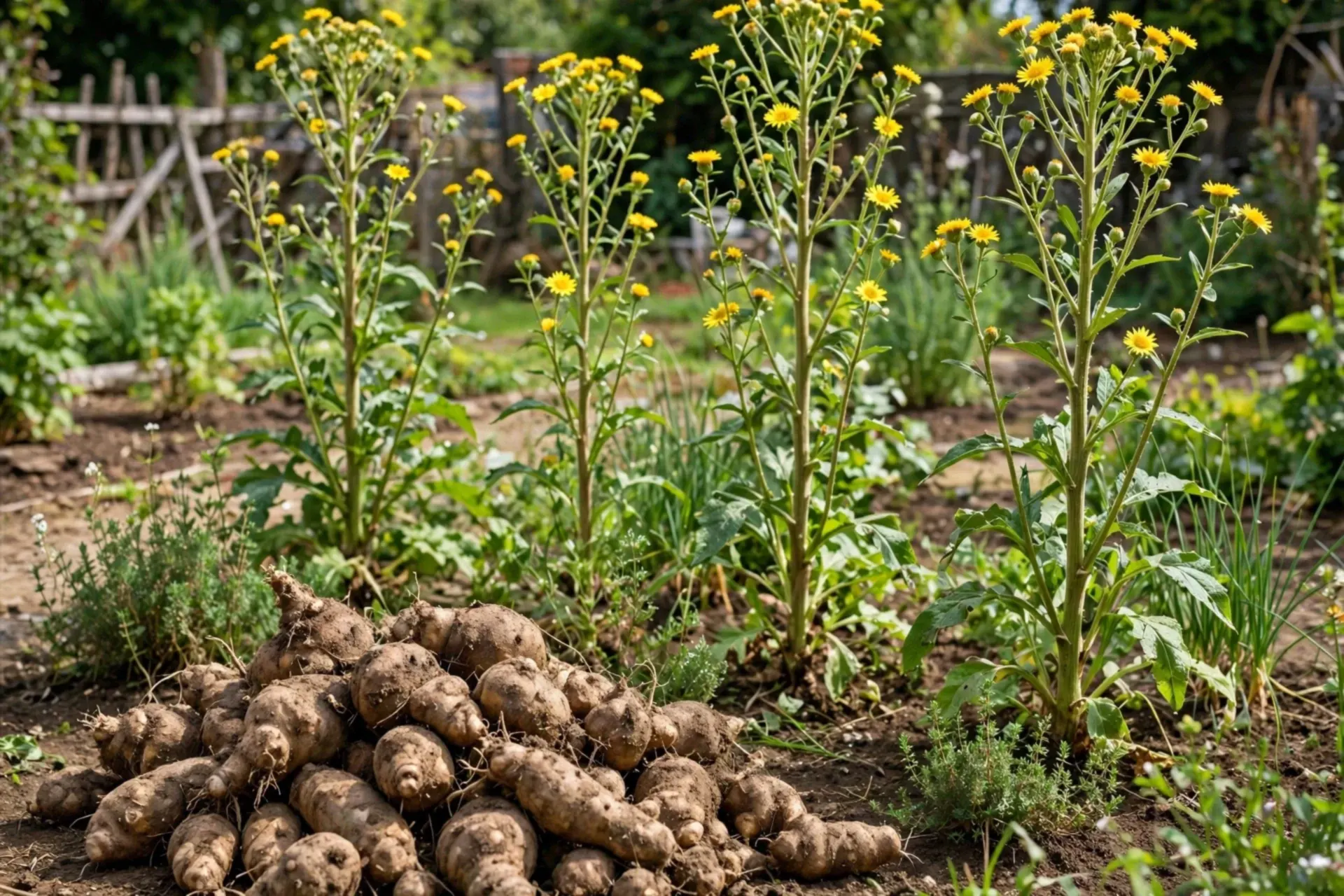
A giant perennial sunflower grown for knobbly tubers: plant it once, at the back of the garden where its 8-foot stems can stand — every tuber you miss at digging starts next year's patch. Jerusalem artichoke — also called sunchoke — is not from Jerusalem and not an artichoke: it is a North American sunflower grown for its knobbly, nutty tubers. The plants grow 8–10 feet tall, flower late, and spread from every tuber left in the ground, so treat the patch as permanent and put it where height is useful, like a living fence.
Grow Jerusalem Artichoke with us — step by step
Everything for this plant is written step by step below — what to do, and exactly when. Read it through first if you like: you can grow it entirely on your own with that guide. Or start with us here — tell us your planting day and we lay out your personal schedule on this page, every next step on its own day, counted from your planting date. No guessing, no forgetting.
Step 1 — today: Plant your Jerusalem Artichoke tubers today, 4–6 in deep and 12–18 in apart, at the back of the garden or along a fence. Water in well — then stand back.
Jerusalem Artichoke at a glance
Sow outdoors: 2 weeks before last frost
Spacing: 12–18 in · Seed depth: 4–6 (tubers) in
Sun: Full sun to part shade
Water: Regular in dry spells once the plants are tall
Harvest: Tubers from about 110–140 days, best dug after the first frosts
Timing counts from your average last spring frost — get your own dates in the Planting Calendar. Guidance follows standard extension-service practice for Canada and the US.
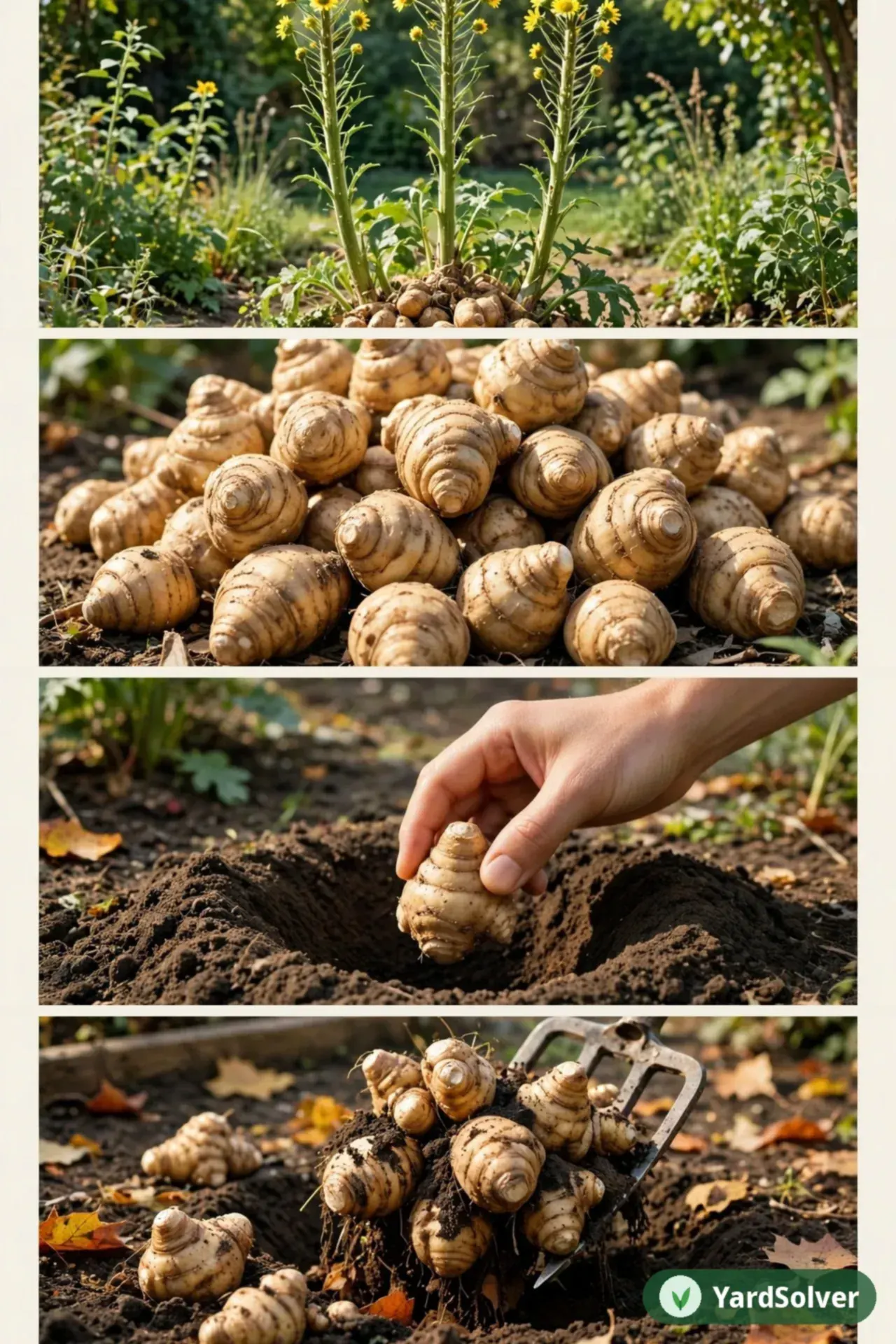
How to plant and grow jerusalem artichoke, step by step
Step 1 — Time it right
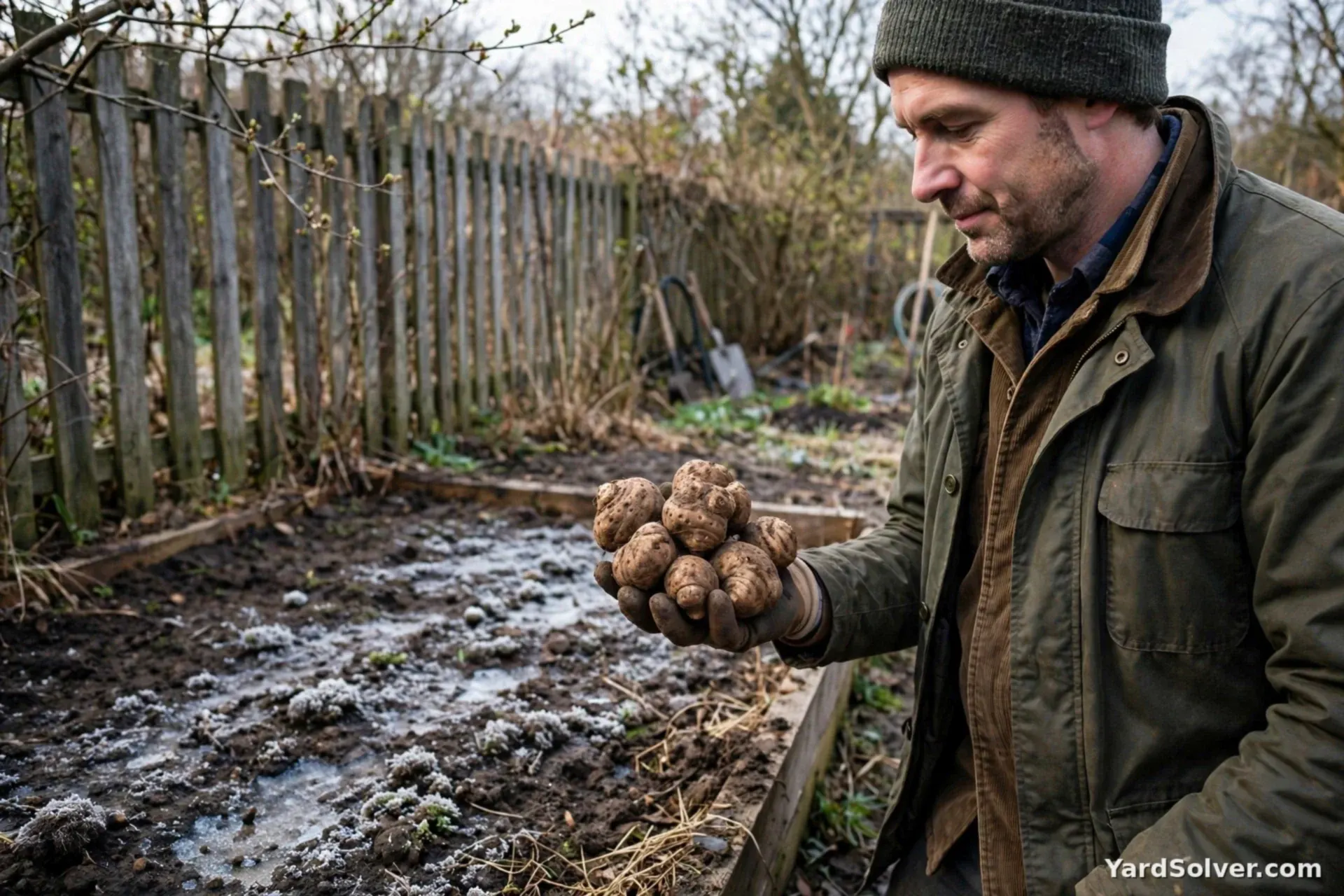
Sow outdoors: 2 weeks before last frost. All dates count from your average last spring frost — the Planting Calendar turns them into real dates for your garden. Jerusalem artichoke — also called sunchoke — is not from Jerusalem and not an artichoke: it is a North American sunflower grown for its knobbly, nutty tubers. The plants grow 8–10 feet tall, flower late, and spread from every tuber left in the ground, so treat the patch as permanent and put it where height is useful, like a living fence.
Step 2 — Prepare the spot
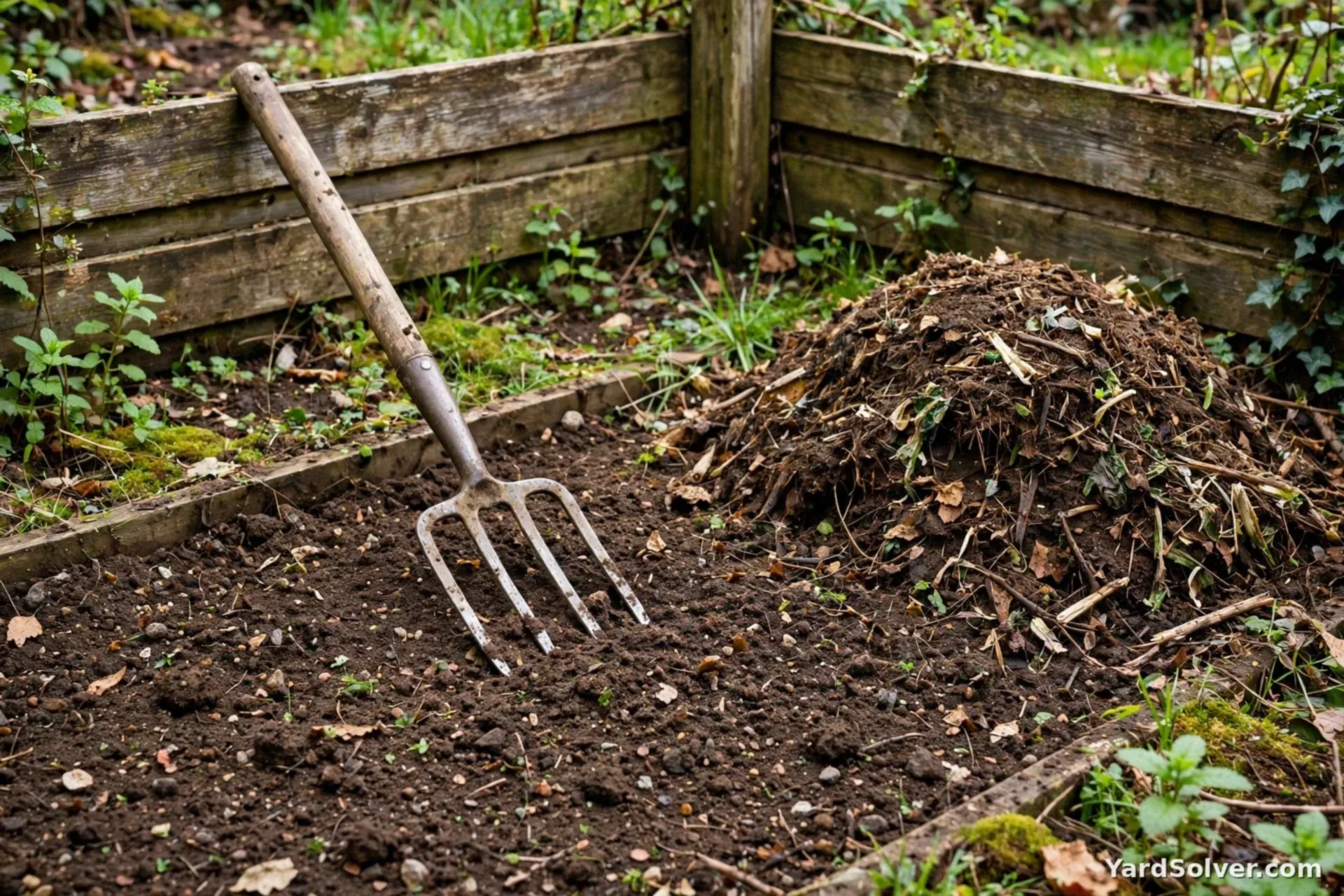
Sun: Full sun to part shade. Almost any soil at the back of the garden — the plants are nearly indestructible; give them the fence line or the compost corner, where 8–10 ft of growth screens something all summer. Work out how much you need with the Garden Mix Calculator or the Raised Bed Soil Calculator.
Step 3 — Sow and plant out
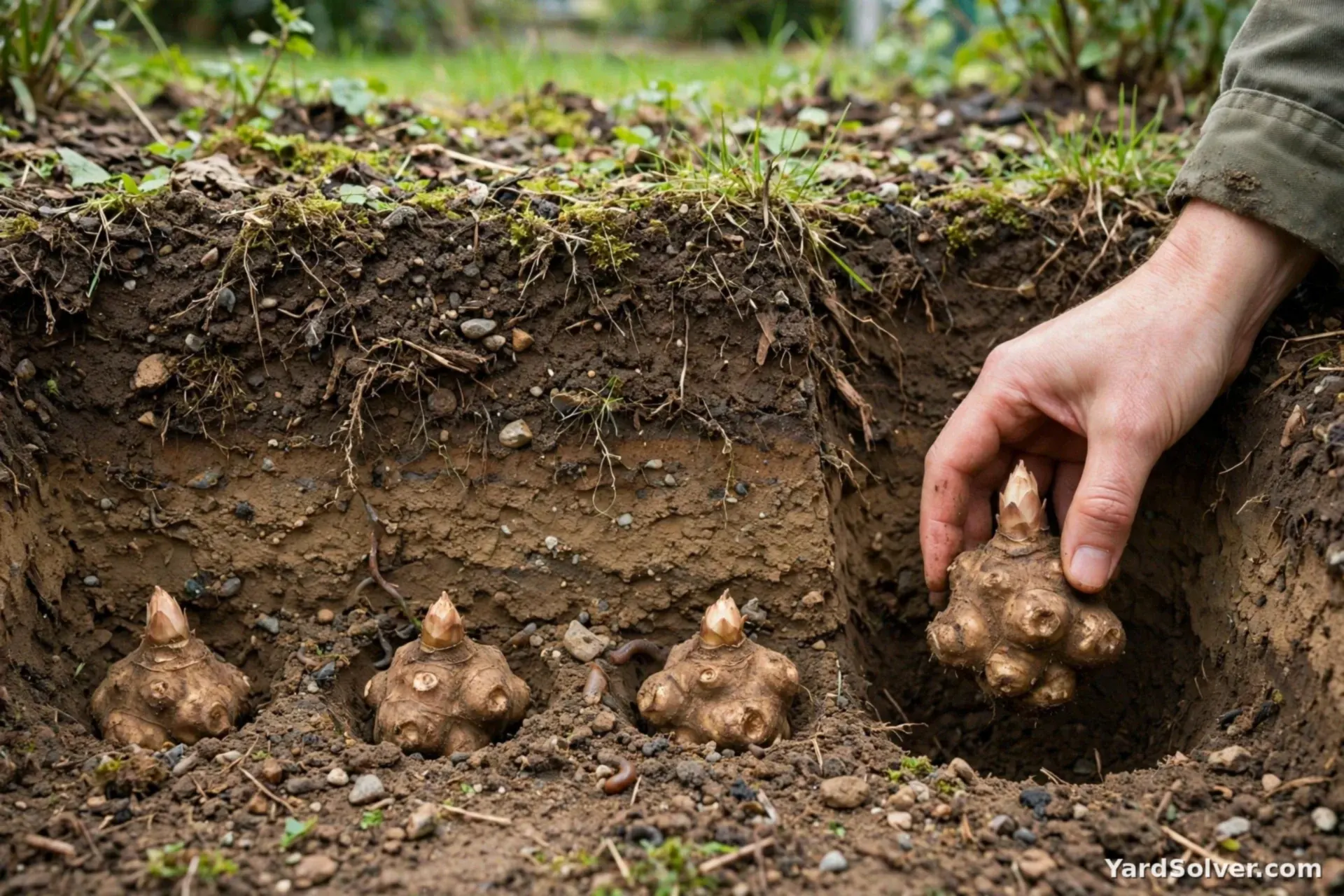
Plant tubers in early spring, 2 weeks before last frost, as soon as the soil can be worked: set whole or cut tubers with at least one eye 4–6 in deep, spaced 12–18 in apart in rows 3 ft apart. There is no seed and no transplanting — the tuber is the whole start.
Step 4 — Water and feed
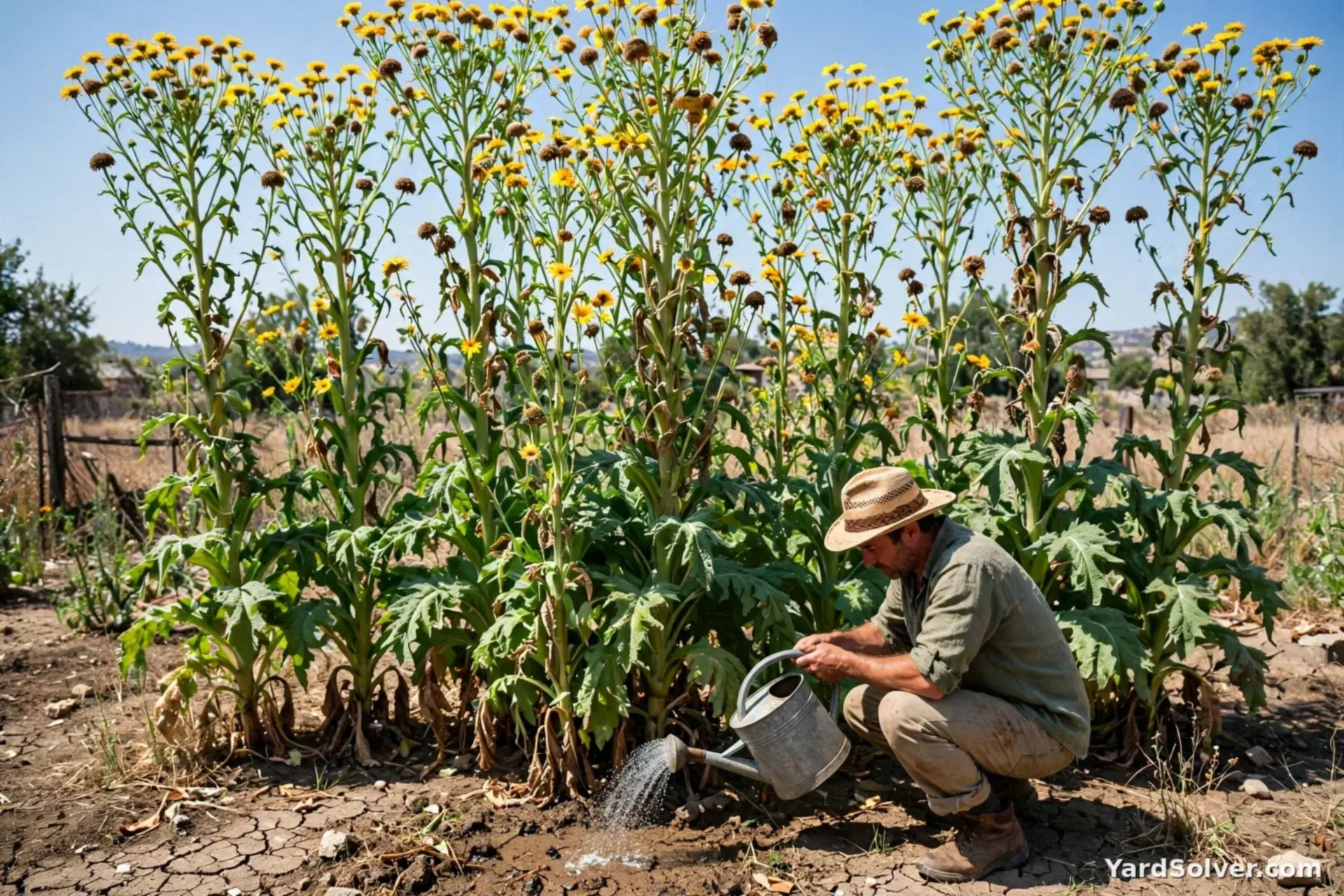
Water: Regular in dry spells once the plants are tall. The Fertilizer Calculator turns a bed size into the right amount.
Step 5 — Care and the problems to watch for
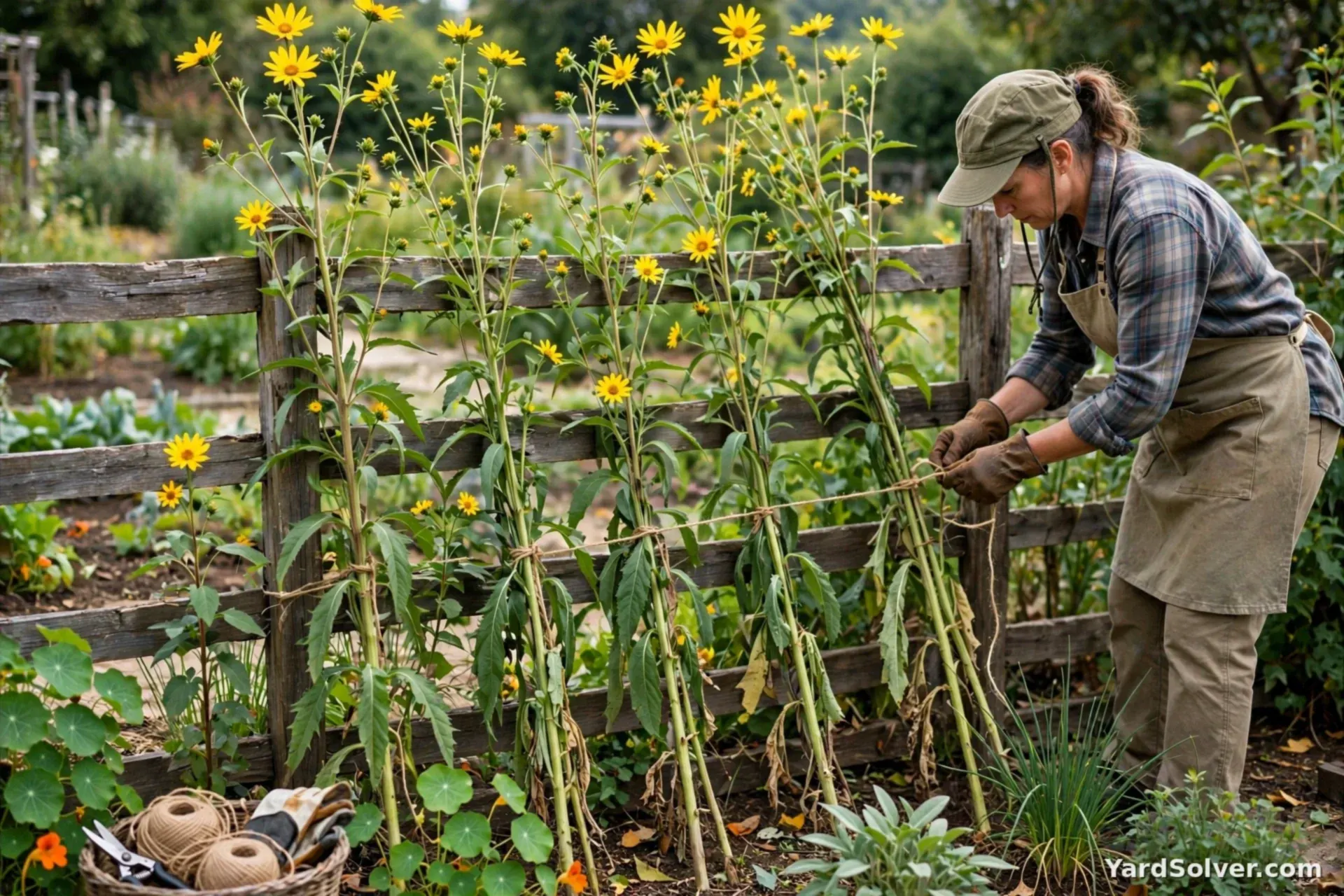
- Plants falling over — they grow 8–10 ft on shallow roots; plant in a sheltered line or string them up along a fence.
- Tubers everywhere next year — you missed some at digging (everyone does); dig the patch thoroughly, or site it where spread is welcome.
- Small tubers — the patch is crowded or went thirsty while tubers swelled; thin the stems in year two and water in drought.
Take care: The tubers' inulin makes many people gassy — start with small servings, and cook them well; long, slow cooking softens the effect.
Step 6 — Harvest
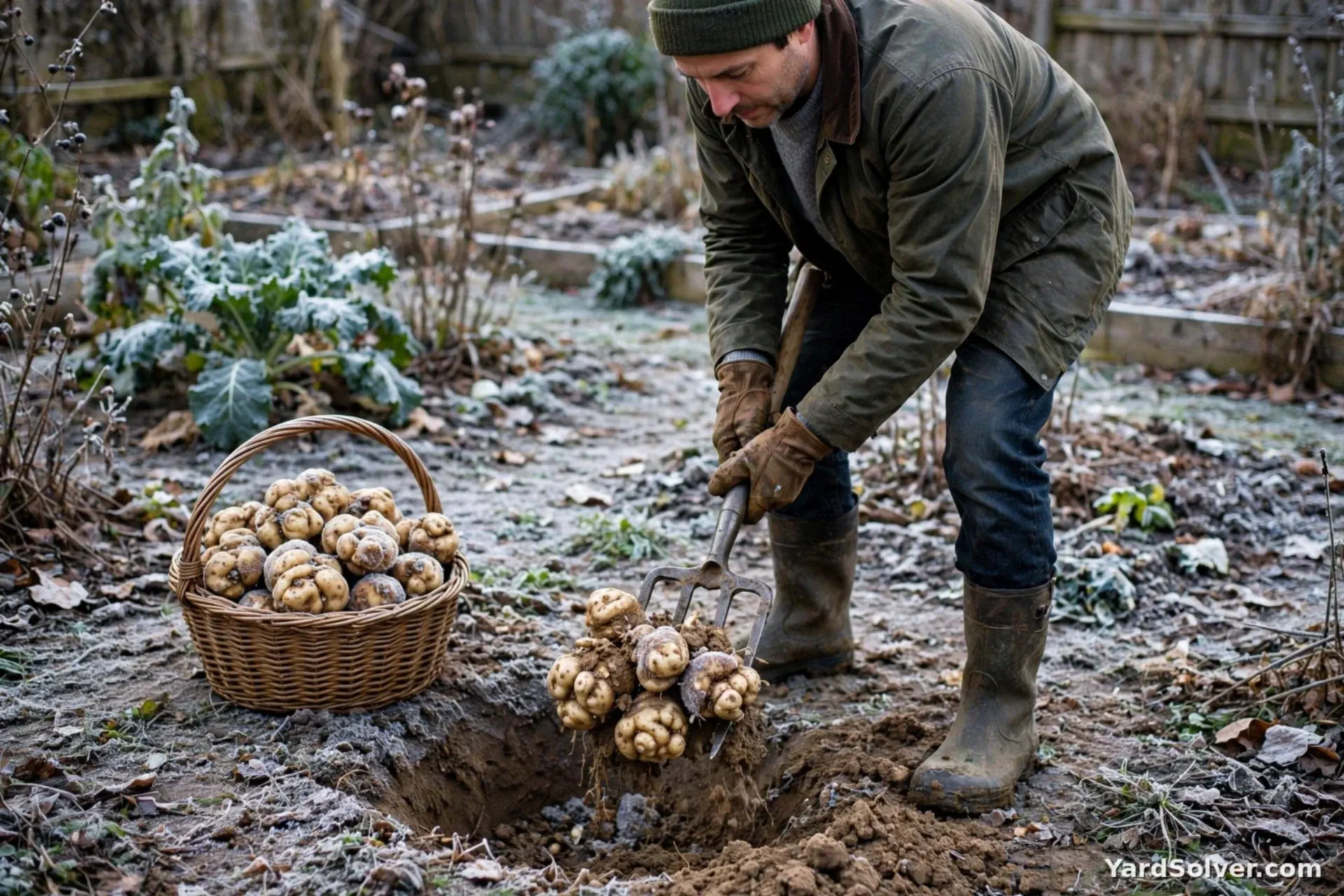
Ready in: Tubers from about 110–140 days, best dug after the first frosts. Dig from about day 110 onward, but the flavour is best after frost; leave the main harvest in the ground and lift it fresh all winter in mild spells.
📅 Your personal Jerusalem Artichoke schedule
Counted from your planting day — not a generic calendar. Day 0 is the day the seed went in the ground or the young plant went out.
Varieties worth growing
| Variety | Colour | Why gardeners like it |
|---|---|---|
| Fuseau | Pale, smooth | Long, smooth tubers that are far easier to scrub and peel than knobbly types |
| Red Fuseau | Red-skinned | A red-skinned form with sweet, nutty flesh — pretty roasted whole |
| Stampede | Creamy | An early, heavy-yielding selection that bulks up in shorter seasons |
| Clearwater | Pale | Bred for smoother tubers and reliable yields in northern gardens |
| Mammoth French White | White | An old, very tall and vigorous type — a living fence that also feeds you |
Good for you — and take care
Benefits
- Provides inulin, a prebiotic fibre that feeds good gut bacteria
- A source of iron, potassium and B vitamins
- Sweet and nutty with no starch — a different energy profile from potatoes
- Crops heavily with almost no care
- Tall summer screening plus fall flowers for late bees
Take care
- Start with small servings — the inulin causes wind in many people until the gut adjusts
- Scrub tubers well; the knobs hold soil (smooth varieties are easier)
- Store tubers in the ground, not the fridge — they shrivel fast in dry air
A little history — and one good fact
Jerusalem artichokes are native to North America, where Indigenous peoples grew and traded the tubers for centuries. French explorers shipped them to Europe in the 1600s — the Jerusalem in the name is a mangling of the Italian word for sunflower, girasole, and the artichoke comparison came from the taste.
Fun fact: Samuel de Champlain, who sent the tubers to France in 1605, thought they tasted like artichoke hearts — the name stuck for 400 years.
Keep going
Guides: Putting Your Garden to Bed · How to Prepare Garden Soil in Spring · How to Keep Deer Out of the Garden
Calculators: Plant Spacing Calculator · Seed Calculator · Fertilizer Calculator · Garden Mix Calculator
More vegetables: Artichoke · Sunflower · Horseradish
← Back to the Plant Library · Get your personal planting dates
Questions people ask
When do I plant jerusalem artichoke?
Count from your average last spring frost: sow outdoors 2 weeks before last frost. Jerusalem artichoke — also called sunchoke — is not from Jerusalem and not an artichoke: it is a North American sunflower grown for its knobbly, nutty tubers. The plants grow 8–10 feet tall, flower late, and spread from every tuber left in the ground, so treat the patch as permanent and put it where height is useful, like a living fence.
How far apart do I space jerusalem artichoke?
Space plants 12–18 in apart, with seed sown 4–6 (tubers) in deep. Sun: full sun to part shade.
When is jerusalem artichoke ready to harvest?
Tubers from about 110–140 days, best dug after the first frosts. A giant perennial sunflower grown for knobbly tubers: plant it once, at the back of the garden where its 8-foot stems can stand — every tuber you miss at digging starts next year's patch.
A sunflower grown for its tubers — and, like horseradish, a plant you install rather than plant: it never fully leaves
Jerusalem artichoke, or sunchoke (Helianthus tuberosus), is a tall North American sunflower grown for its knobbly tubers. It contains no artichoke and has no link to Jerusalem, but it does share horseradish's defining trait: persistence. Every tuber fragment left at digging sprouts, so it belongs in a contained corner, a dedicated bed, or a large sunken container — never in a rotation bed it will colonise for years.
The crop itself is undemanding. Plant tubers in spring in any reasonable soil in full sun, expect stems two to three metres tall (a windbreak and a privacy screen as a side effect), and dig the tubers after the first frosts, when their flavour sweetens; they store better left in the ground and dug as needed than they do indoors. Their inulin, a fibre some digestions find lively, cooks down with long, slow roasting — introduce them in small portions.
The worked example: a contained row dug thoroughly each autumn typically feeds a household sunchokes all winter from the same corner, indefinitely. Tubers tucked casually into a mixed vegetable bed typically reappear among the beans, the paths and next year's potatoes — productive, delicious, and entirely on the plant's own terms.
Sources
Key facts on this page — timing, spacing and care — cross-checked against NC State Extension Plant Toolbox — Helianthus tuberosus — culture and care requirements and Jerusalem artichoke — Wikipedia — background on sunchokes, their inulin content and their cultivation.
Related page
Read next: Crop Rotation Basics: A Simple Four-Year Plan.
Comments & ratings
No comments yet.
Be the first to share your experience.