
Plant Library · Vegetables · By Faizan Ahmad
🌱 How to Grow Horseradish
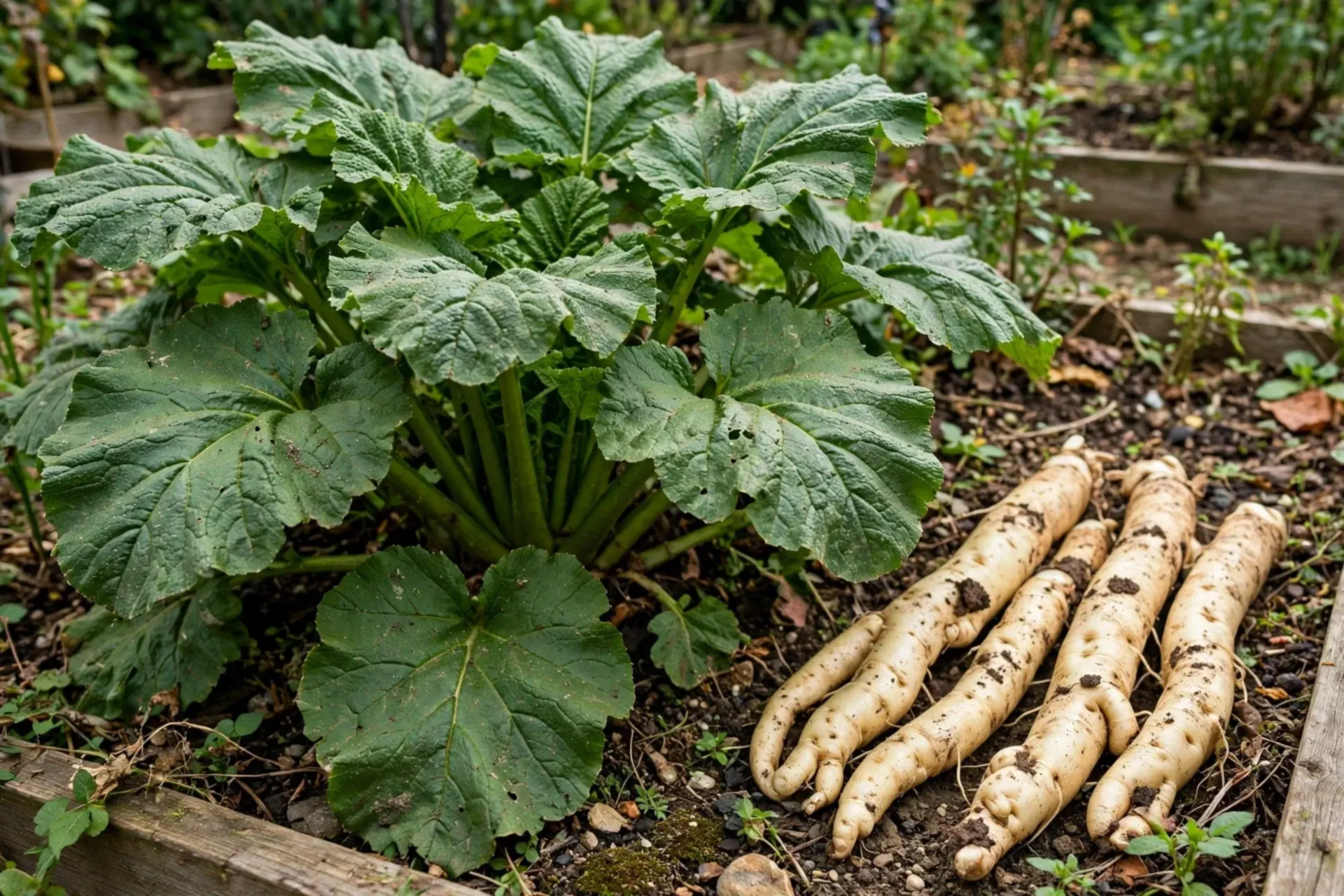
A hardy perennial grown from root cuttings: plant it once, in a corner where it can stay forever — every scrap of root left in the soil regrows, so choose the spot as if it were permanent. Because it is. Horseradish is planted as pencil-thick root cuttings (called thongs or sets) pushed into the ground in early spring. It asks for almost nothing after that — the real decision is where to put it: any fragment of root left behind sprouts, so horseradish beds are effectively forever. A bottomless pot sunk in the ground keeps it polite.
Grow Horseradish with us — step by step
Everything for this plant is written step by step below — what to do, and exactly when. Read it through first if you like: you can grow it entirely on your own with that guide. Or start with us here — tell us your planting day and we lay out your personal schedule on this page, every next step on its own day, counted from your planting date. No guessing, no forgetting.
Step 1 — today: Plant your Horseradish root cuttings today at a slant, thick end up, with the top of each cutting about 2–3 in below the surface, spaced 24–36 in apart. Water in well.
Horseradish at a glance
Sow outdoors: 3 weeks before last frost
Spacing: 24–36 in · Seed depth: 2–3 (root cuttings) in
Sun: Full sun
Water: Regular in dry spells
Harvest: Roots from the first fall onward, dug after the tops die back
Timing counts from your average last spring frost — get your own dates in the Planting Calendar. Guidance follows standard extension-service practice for Canada and the US.
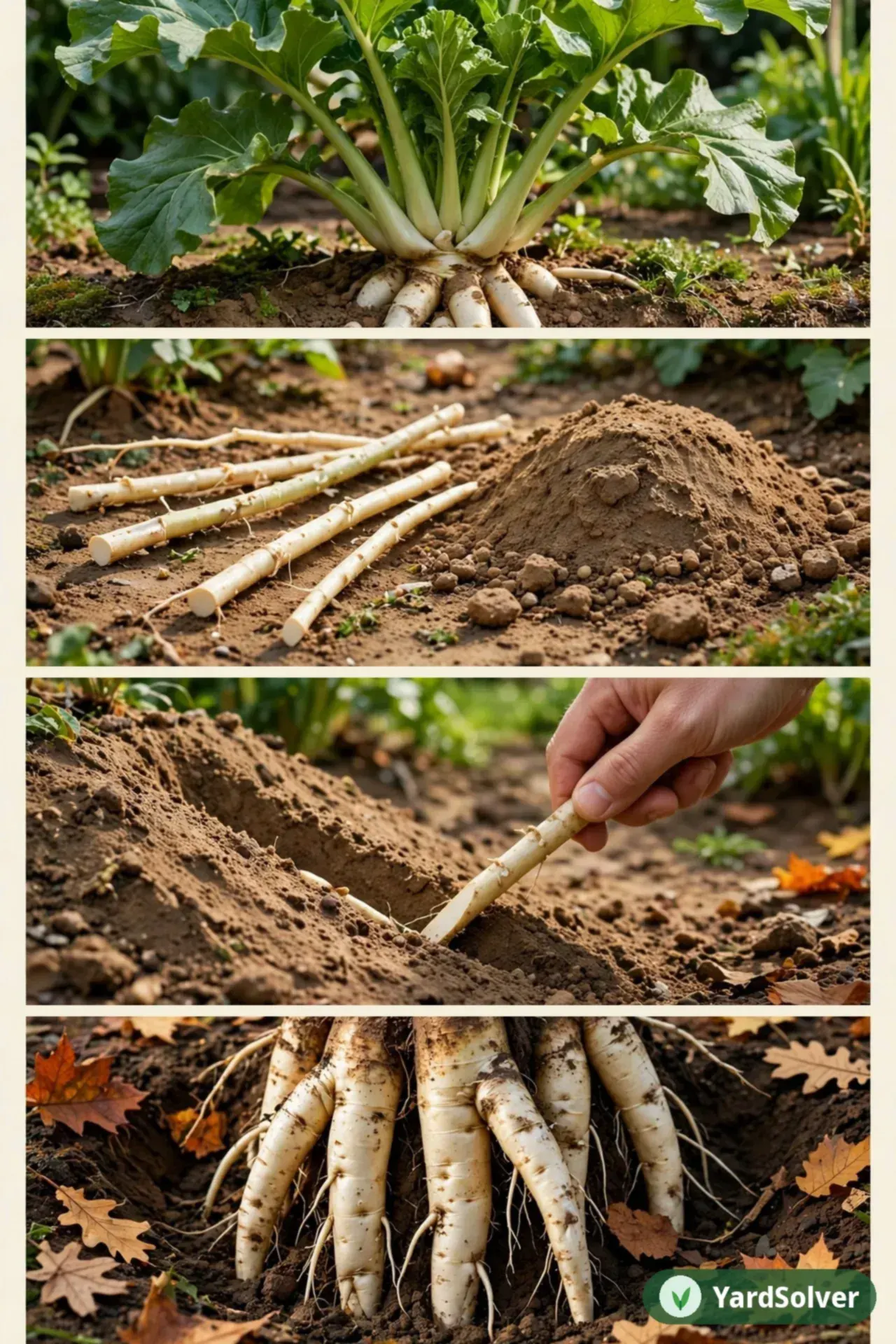
How to plant and grow horseradish, step by step
Step 1 — Time it right
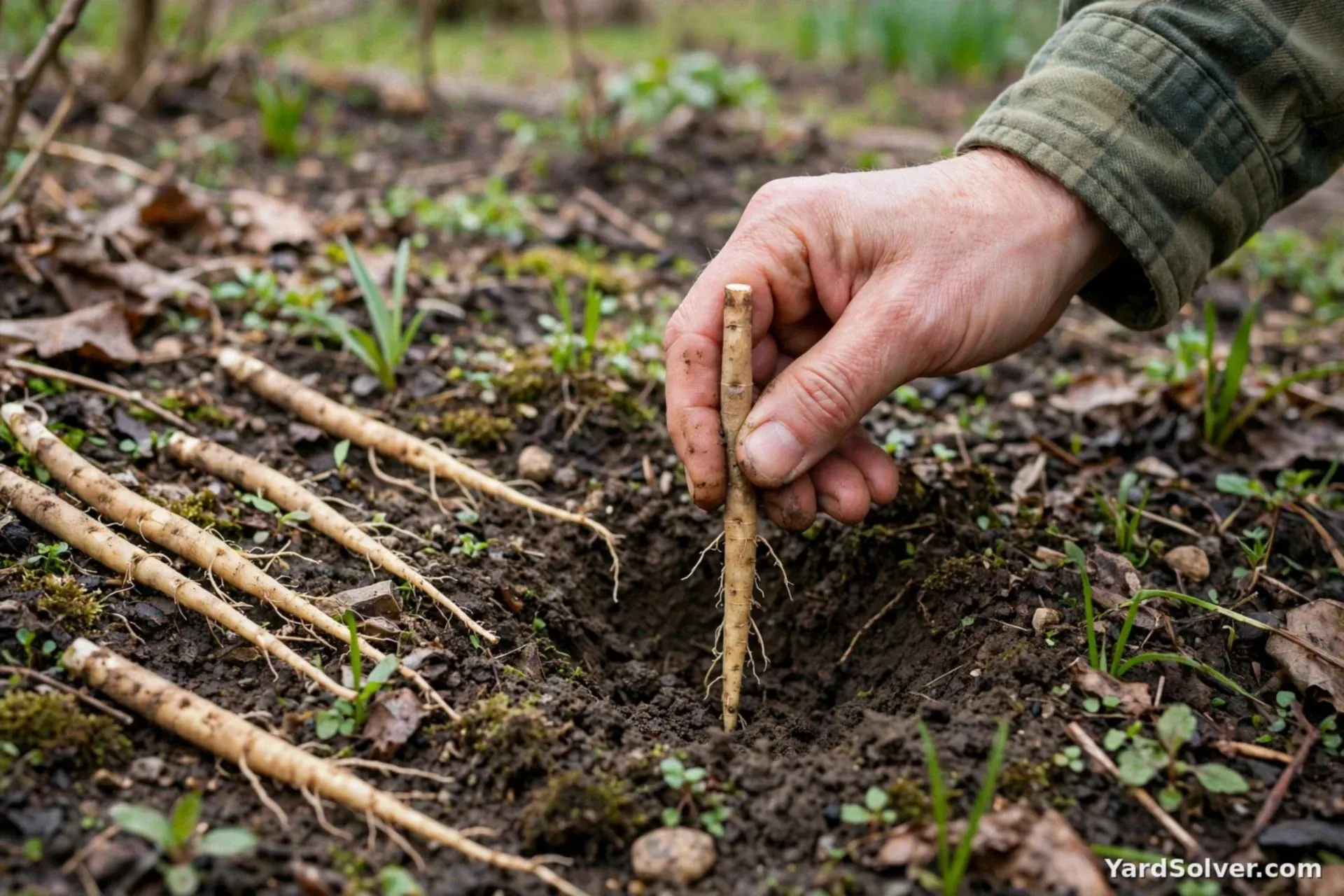
Sow outdoors: 3 weeks before last frost. All dates count from your average last spring frost — the Planting Calendar turns them into real dates for your garden. Horseradish is planted as pencil-thick root cuttings (called thongs or sets) pushed into the ground in early spring. It asks for almost nothing after that — the real decision is where to put it: any fragment of root left behind sprouts, so horseradish beds are effectively forever. A bottomless pot sunk in the ground keeps it polite.
Step 2 — Prepare the spot
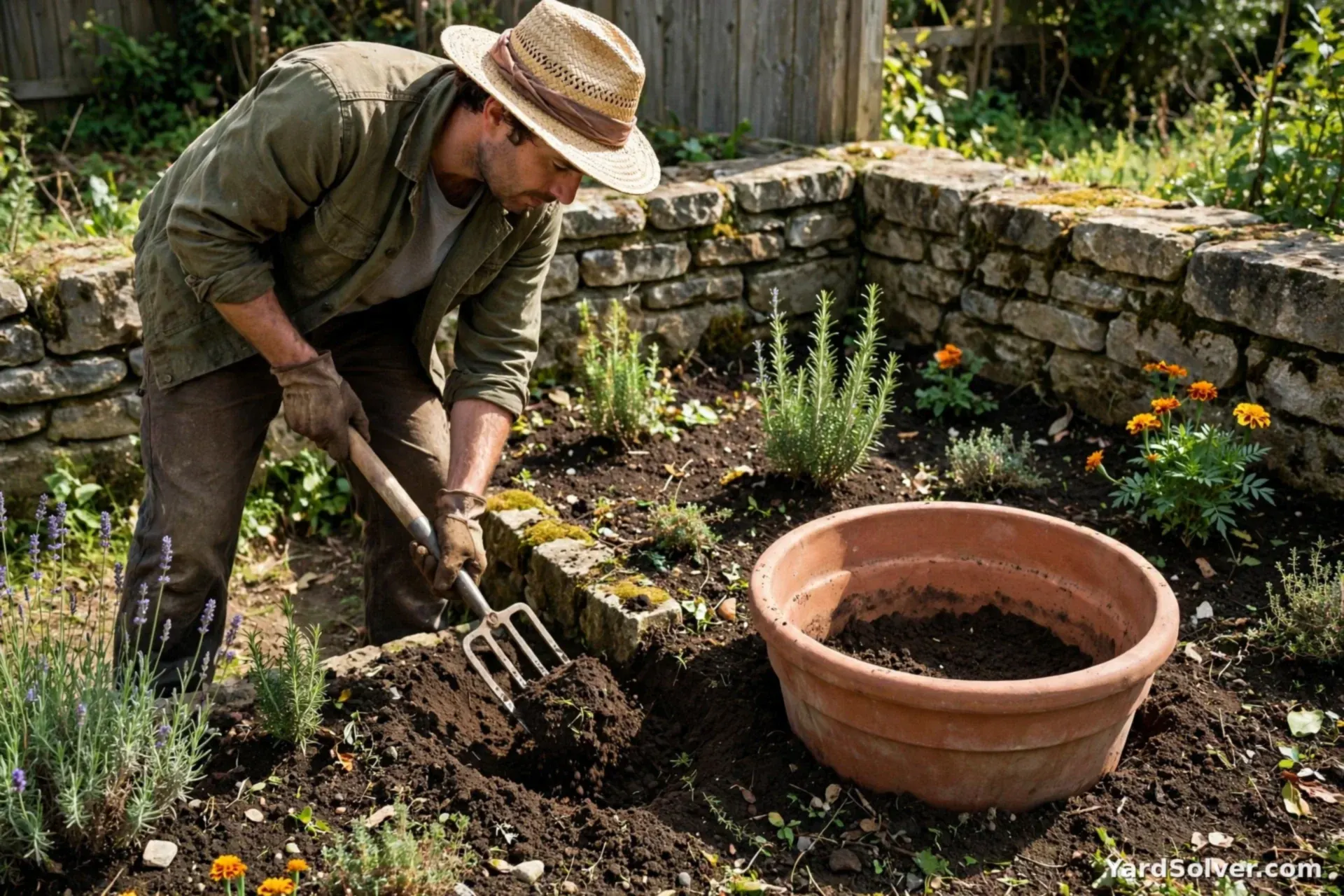
Sun: Full sun. Deep soil in a permanent corner — or a large bottomless pot sunk to its rim: fork the ground deeply, because the roots run down 2 feet or more. Work out how much you need with the Garden Mix Calculator or the Raised Bed Soil Calculator.
Step 3 — Sow and plant out
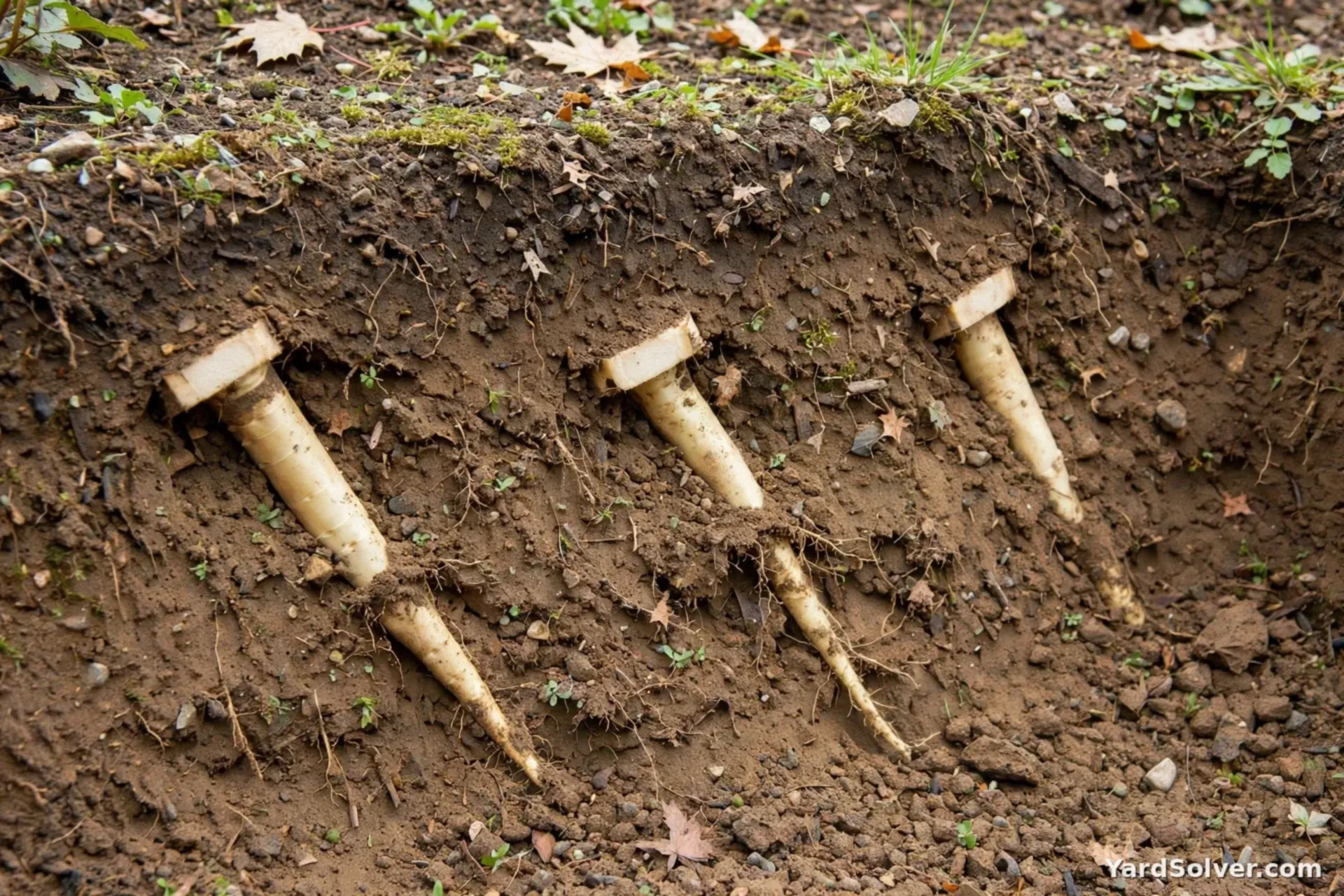
Plant root cuttings in early spring, 3 weeks before last frost, as soon as the soil can be worked: push pencil-thick pieces of root into the ground at a slant, thick (square-cut) end up and thin end down, tops 2–3 in below the surface, spaced 24–36 in apart. Getting the cutting the right way up is the whole art — the ends are cut differently at lifting so you can tell.
Step 4 — Water and feed
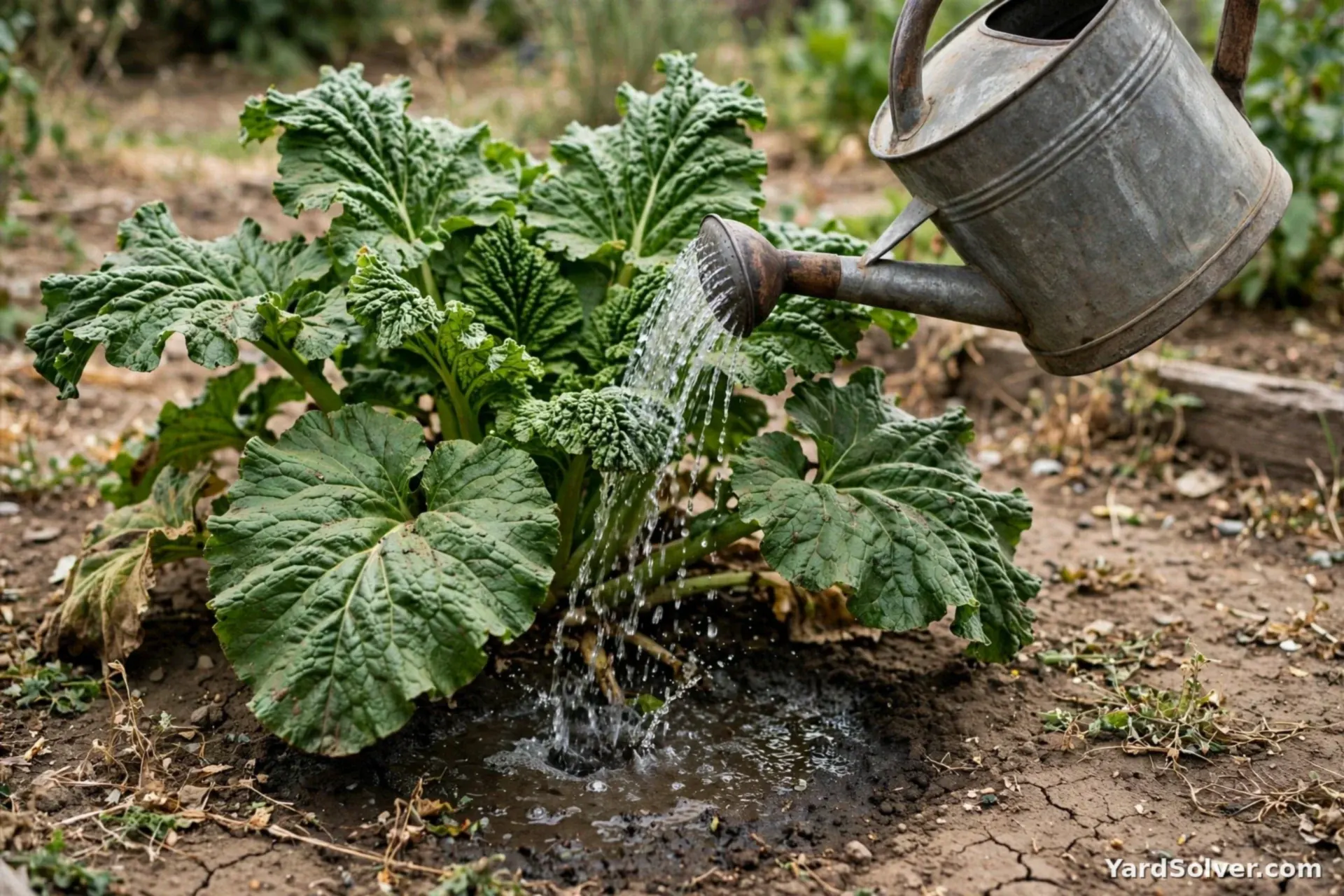
Water: Regular in dry spells. The Fertilizer Calculator turns a bed size into the right amount.
Step 5 — Care and the problems to watch for
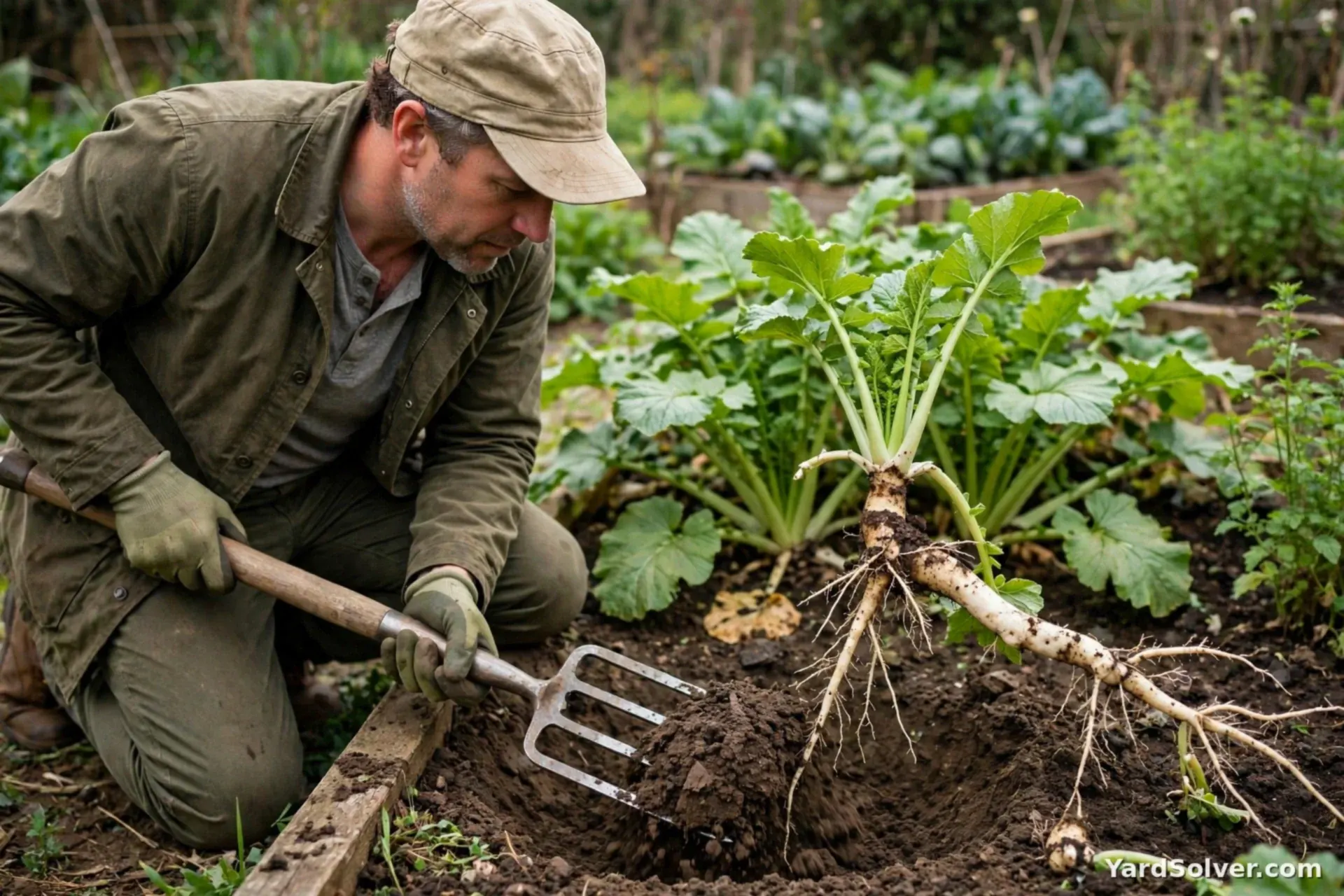
- Horseradish appearing where you did not plant it — roots travel and every fragment regrows; dig strays out deeply, or accept the patch and mow around it.
- Flea beetles and caterpillars chewing the big leaves — mostly cosmetic on this vigorous plant; it outgrows them.
- Forked, hairy roots — stony soil or cuttings planted too shallow; deep, loose ground gives straight roots.
Take care: Grate horseradish in a ventilated spot — freshly grated root releases fumes far stronger than onion, and a little goes a very long way.
Step 6 — Harvest
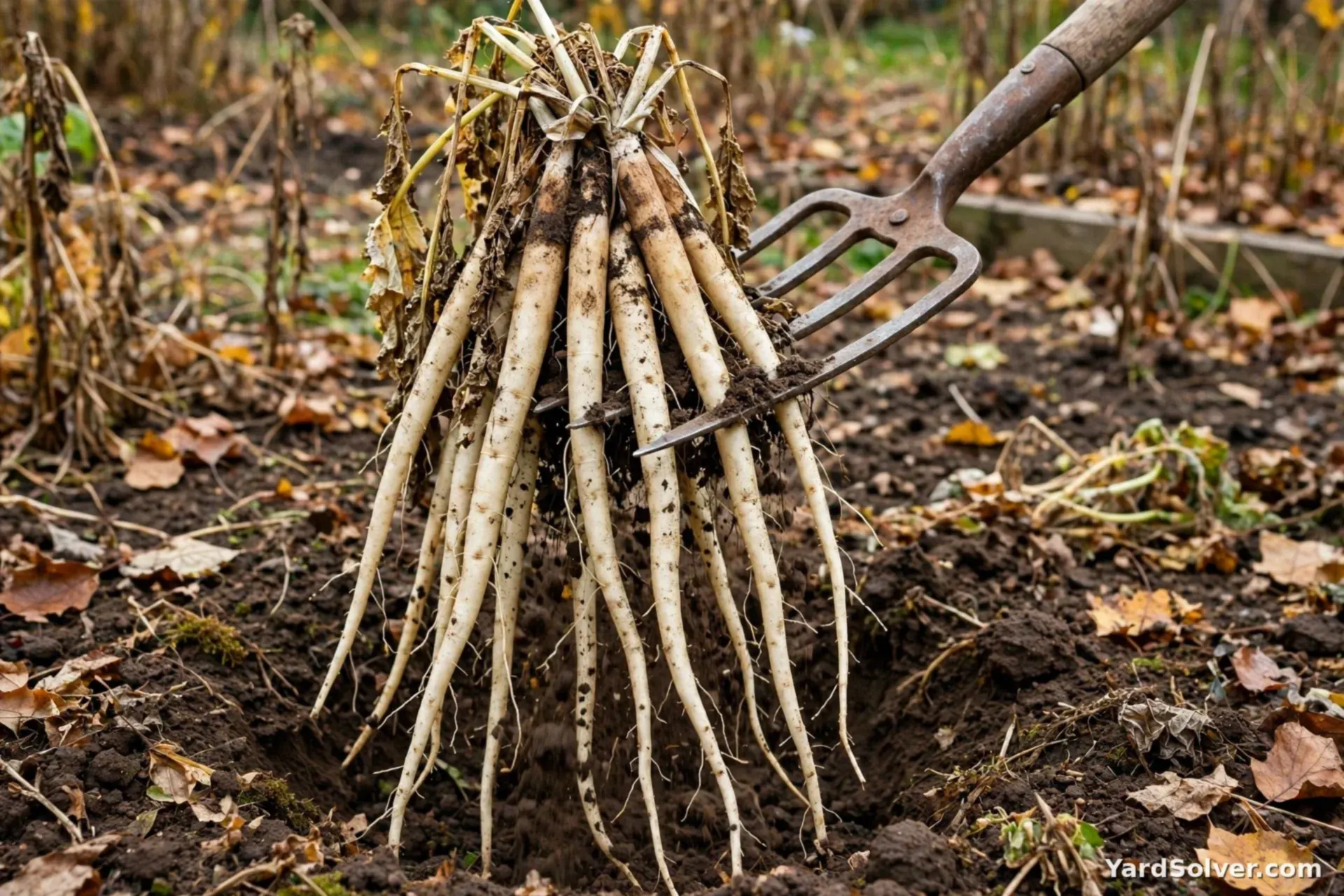
Ready in: Roots from the first fall onward, dug after the tops die back. Dig roots from the first fall onward once tops die back; the flavour peaks after cold weather. Grate only what you need — prepared horseradish loses its fire within weeks.
📅 Your personal Horseradish schedule
Counted from your planting day — not a generic calendar. Day 0 is the day the seed went in the ground or the young plant went out.
Varieties worth growing
| Variety | Colour | Why gardeners like it |
|---|---|---|
| Common Horseradish | Creamy white | The standard type sold as root cuttings — hot, clean fire and vigorous growth |
| Bohemian | Creamy white | An old European type long grown for forcing and grating — slightly milder |
| Maliner Kren | Creamy white | A Czech selection prized for large, straight roots for grating |
| Variegated Horseradish | Cream and green leaves | An ornamental form with splashed leaves — pretty, but the roots are just as hot |
| Big Top Western | Creamy white | A selection grown commercially in Illinois, the horseradish capital of the US |
Good for you — and take care
Benefits
- A little provides vitamin C
- The pungent oils are the same family of compounds studied in other brassicas
- Strong flavour means tiny servings — almost no calories per meal
- Freshly grated root clears the sinuses — a folk remedy with a real basis in its volatile oils
- A permanent, zero-effort perennial once planted
Take care
- Eat in small amounts — large servings can upset the stomach
- People with thyroid conditions are sometimes advised to go easy on strong brassica roots — check with your clinician if you eat it often
- Grate outdoors or by an open window; the fumes are powerful
A little history — and one good fact
Horseradish has been grown in Europe for at least 2,000 years — the Greeks and Romans used it as medicine before cooks adopted it. It travelled to North America with settlers and became the fire in cocktail sauce, roast-beef traditions and Passover seders, where it stands for the bitterness of slavery.
Fun fact: Horseradish is not related to radish at all in flavour chemistry — the horse in its name is an old word meaning strong or coarse.
Keep going
Guides: How to Prepare Garden Soil in Spring · Putting Your Garden to Bed · Companion Planting Basics
Calculators: Plant Spacing Calculator · Seed Calculator · Fertilizer Calculator · Garden Mix Calculator
More vegetables: Asparagus · Rhubarb · Jerusalem Artichoke · Ginger · Turmeric · Burdock
← Back to the Plant Library · Get your personal planting dates
Questions people ask
When do I plant horseradish?
Count from your average last spring frost: sow outdoors 3 weeks before last frost. Horseradish is planted as pencil-thick root cuttings (called thongs or sets) pushed into the ground in early spring. It asks for almost nothing after that — the real decision is where to put it: any fragment of root left behind sprouts, so horseradish beds are effectively forever. A bottomless pot sunk in the ground keeps it polite.
How far apart do I space horseradish?
Space plants 24–36 in apart, with seed sown 2–3 (root cuttings) in deep. Sun: full sun.
When is horseradish ready to harvest?
Roots from the first fall onward, dug after the tops die back. A hardy perennial grown from root cuttings: plant it once, in a corner where it can stay forever — every scrap of root left in the soil regrows, so choose the spot as if it were permanent. Because it is.
Plant it where you want it forever: every root fragment left at digging makes a new plant
Horseradish (Armoracia rusticana) is a perennial grown for its pungent root, and its defining trait is persistence: any thumbnail-sized piece of root left in the ground at harvest regrows, which is why experienced growers plant it in a contained corner, a bottomless bucket sunk in the soil, or a bed of its own — never in the middle of a rotation it will haunt for a decade.
The crop itself is simple. Set root cuttings in spring, pencil-thick pieces planted at an angle with the top just below the surface; keep the bed watered and weeded through summer while the big leaves build the root. Roots are dug after the first frosts sweeten and sharpen them, through autumn and winter as needed, and the straightest pieces are saved as next year's sets. Lifting and replanting annually in a fresh spot is also the tidy gardener's answer to its spread — the old site is forked over thoroughly for strays.
The worked example: a contained planting, lifted each autumn and replanted from its own best roots, gives a household all the fresh horseradish it can grate, in the same corner, indefinitely. A plant tucked casually into a mixed border typically reappears in the beans, the paths and the compost for years — delicious, but entirely on its own terms.
Sources
Key facts on this page — timing, spacing and care — cross-checked against NC State Extension Plant Toolbox — Armoracia rusticana — culture and care requirements and Horseradish — Wikipedia — background on horseradish and its cultivation.
Related page
Read next: Crop Rotation Basics: A Simple Four-Year Plan.
Comments & ratings
No comments yet.
Be the first to share your experience.