
Guides · Tool reviews · Published November 21, 2026 · By Faizan Ahmad
Your Greenhouse Is Cooking at Noon: The 4 Best Automatic Vent Openers That Need No Power at All
As an affiliate, YardSolver may earn a commission from qualifying purchases made through buttons on this page — it never changes the price you pay, and it never buys a place in these rankings.
An automatic greenhouse vent opener opens your roof vent by itself when the greenhouse warms up, and closes it again as the evening cools — no electricity, no batteries, no WiFi, and no you. The mechanism is a sealed wax cylinder: heat expands the wax, the wax pushes a piston, and the piston lifts the vent. On a sunny spring day a closed hobby greenhouse can climb past 100°F (38°C) by late morning, hot enough to stall seedlings and cook pollen — which is why this simple device, unchanged in principle for decades, is still the highest-value automation in the whole greenhouse. The four openers below cover the real range of vents: the adjustable all-rounder, the kit-greenhouse perfect fit, the corrosion-proof workhorse, and the heavy lifter.
Fitting takes minutes with a screwdriver, and the opener then works every day you own the greenhouse. Pair it with the seasonal routine in How to Winterize a Greenhouse and your structure is looked after at both ends of the year.
The 4 best automatic vent openers, compared
The proven all-rounder — Bayliss MK7 Autovent Automatic Greenhouse Vent Opener
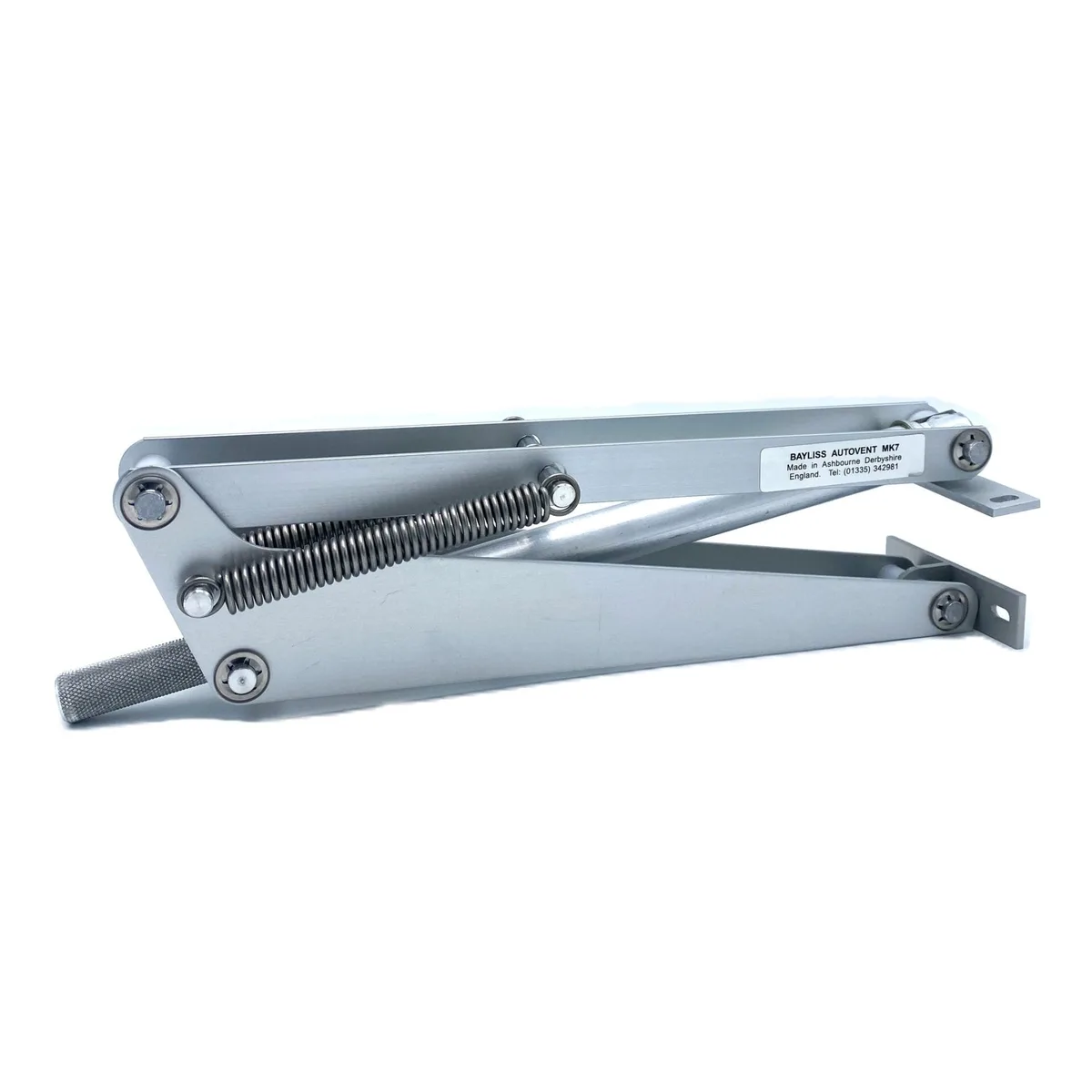
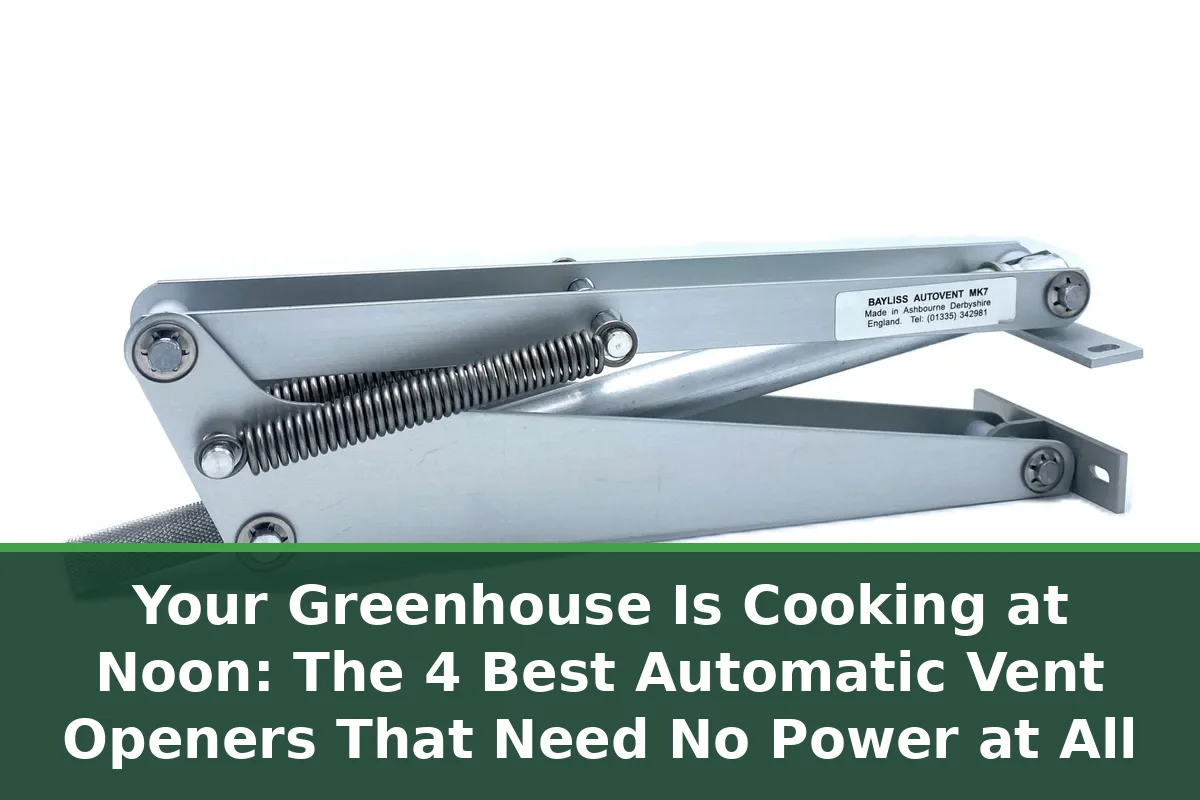
Bayliss has made wax vent openers in Britain for decades, and the MK7 is the design the rest of the market is measured against. Its cylinder lifts vents up to about 14 lb, and the opening temperature is adjustable across roughly 54–77°F, so you can tune the vent to start cracking open exactly when your crop wants air rather than when a factory guessed it should. Everything is mechanical: heat in, vent up; heat out, vent down, every day, with nothing to charge, pair or update.
What's new/automated: fully heat-powered automation with an adjustable opening temperature — the set-and-forget benchmark. Pros: decades-proven design; adjustable start temperature; fits most greenhouse brands' roof vents; replacement cylinders are available when the wax eventually tires. Cons: manual override is limited — holding the vent shut on a stormy day takes extra hardware — and the cylinder is an eventual consumable, not a lifetime part.
Who it suits: most hobby greenhouse owners — the default buy unless your vent is brand-specific or unusually heavy.
Check Price on Amazon — USCheck Price on Amazon — Canada
Buttons open a search for the Bayliss MK7 Autovent on each store, so you see today's price and the current models — we never print prices here because they change daily.
The kit-greenhouse fit — Palram Canopia Automatic Roof Vent Opener
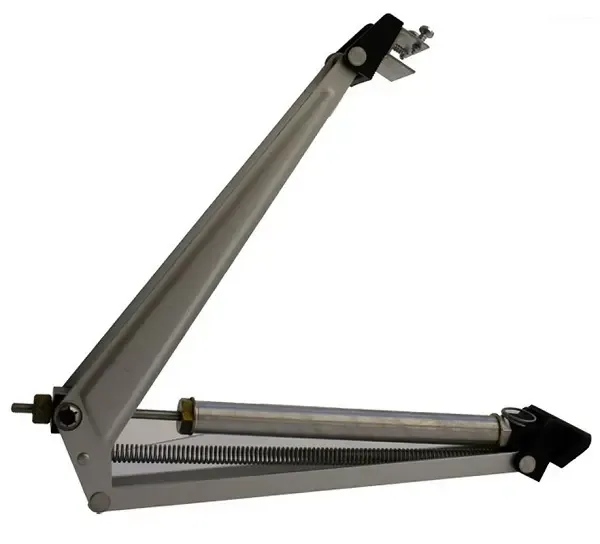
Palram (Canopia) kit greenhouses are among the most common hobby structures in North America, and this opener is made by the same company to bolt straight onto their roof vents — no drilling, no adapting brackets, no guessing whether the geometry works. It opens and closes with temperature like every wax opener, and because it is a first-party accessory it matches the vent's weight and travel exactly.
What's new/automated: factory-matched, power-free vent automation for Palram/Canopia structures. Pros: the easiest install in this guide if you own the matching greenhouse; correct fit guaranteed by the maker; same zero-power wax principle. Cons: it really only suits Palram vents — this is not a universal opener — and the opening-temperature range is not very adjustable compared with the Bayliss.
Who it suits: Palram or Canopia greenhouse owners, full stop — buy your own brand's opener and skip the fitting headaches.
Check Price on Amazon — USCheck Price on Amazon — Canada
Buttons open a search for the Palram Canopia vent opener on each store, so you see today's price and the current models — we never print prices here because they change daily.
The corrosion-proof workhorse — Univent Automatic Vent Opener
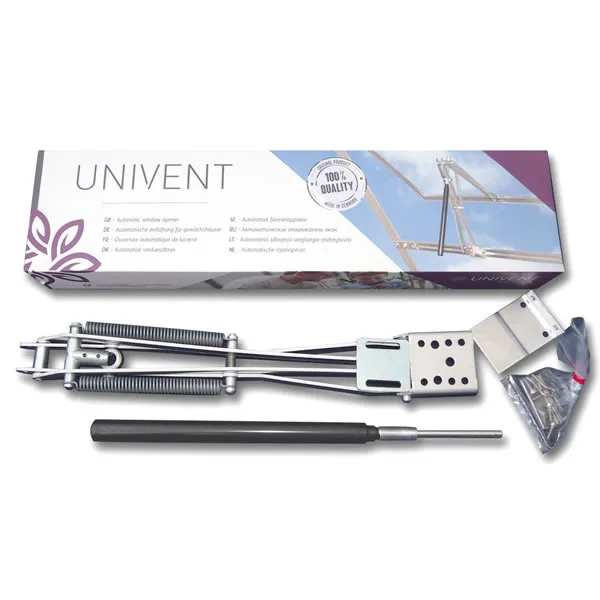
A greenhouse is a warm, wet room, and the Univent is built for exactly that: its wax cylinder is stainless steel, shrugging off the humidity and condensation that corrode cheaper cylinders over a few seasons. It also includes a quick-disengage fitting, so when you do want the vent open by hand — a still, scorching afternoon, or cleaning day — you can release the arm in seconds instead of fighting the mechanism.
What's new/automated: the same heat-powered automation, with a stainless cylinder and a manual quick-release most rivals skip. Pros: best corrosion resistance in this guide; genuine manual override; solid mid-range lifting for typical vents. Cons: mid-weight lifting capacity — not the choice for large glass vents, where the Gigavent below earns its keep.
Who it suits: humid-climate and coastal greenhouse owners, and anyone who wants to open the vent by hand sometimes.
Check Price on Amazon — USCheck Price on Amazon — Canada
Buttons open a search for the Univent vent opener on each store, so you see today's price and the current models — we never print prices here because they change daily.
The heavy lifter — Gigavent Automatic Vent Opener
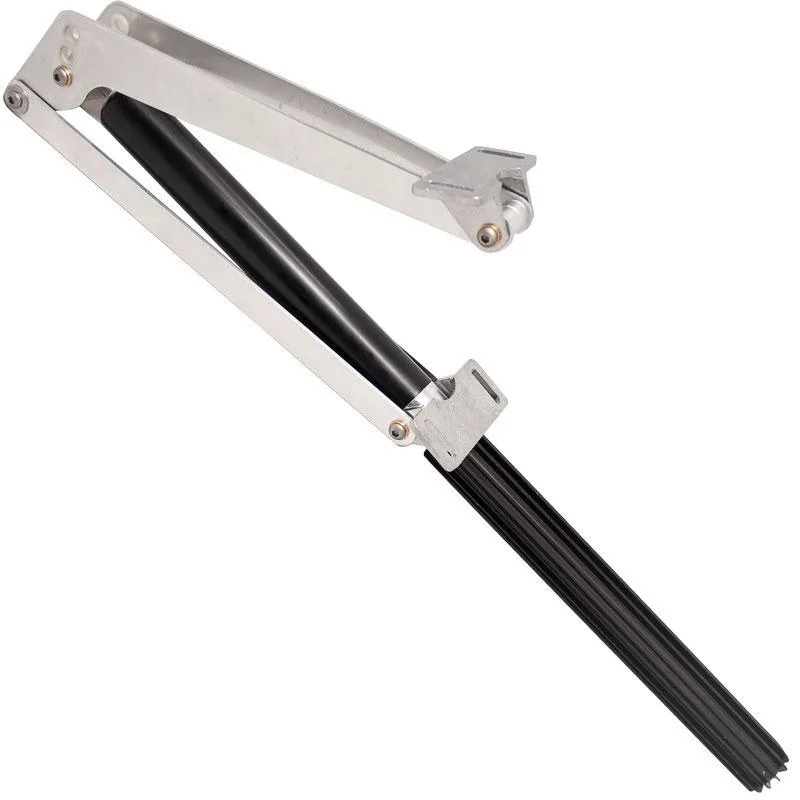
Some vents defeat the standard class entirely: big glass panes, wide span vents on larger structures, cold frames with heavy lids. The Gigavent answers with a hydraulic cylinder rated to lift around 65 lb — several times the standard opener — while staying completely power-free. If your vent currently needs two hands and a grunt to open, this is the opener that makes it automatic anyway.
What's new/automated: heavy-duty hydraulic lifting, still driven purely by temperature. Pros: lifts the vents nothing else here can; suits wind-exposed and large structures; no power, like the rest. Cons: costs several times a standard opener — money wasted on a light polycarbonate vent, money well spent only when the weight demands it.
Who it suits: owners of large glass vents, big cold frames and heavy lids that standard openers stall on.
Check Price on Amazon — USCheck Price on Amazon — Canada
Buttons open a search for the Gigavent vent opener on each store, so you see today's price and the current models — we never print prices here because they change daily.
Side by side
| Opener | Lift capacity | Adjustable start | Manual override | Best for |
|---|---|---|---|---|
| Bayliss MK7 Autovent | ~14 lb | Yes, ~54–77°F | Limited | Most greenhouses |
| Palram Canopia Opener | Matched to Palram vents | Limited | Standard | Palram/Canopia kits |
| Univent | Mid-weight class | Yes | Quick-disengage | Humid climates |
| Gigavent | ~65 lb | Yes | Standard | Large, heavy vents |
How to choose your vent opener
Weigh the vent first. Lift capacity is the whole game. Polycarbonate vents and small glass panes sit comfortably in the standard ~14 lb class; a big glass vent can double that, and an opener asked to lift beyond its rating opens halfway on exactly the hottest days. If you cannot weigh the vent, its size and glazing material tell you the class — and when in doubt between classes, heavy vents go Gigavent, everything else goes Bayliss or brand-matched.
Match the brand when you can. Kit greenhouses have proprietary vent geometry, and the maker's own opener (Palram's, for Palram houses) removes all fitting doubt. Universal openers earn their place on wooden, aluminium and older glasshouses where no first-party option exists.
Set the start temperature for the crop, then leave it alone. Most plants want air moving before the house passes the mid-70s °F. Set an adjustable opener to begin there, watch it across one sunny day, and resist weekly fiddling — the wax responds to the greenhouse's temperature, not the forecast. Seedlings are the crop most often lost to a shut vent; How to Harden Off Seedlings covers the other half of keeping them alive, and Do Seedlings Need a Heat Mat? handles the cold end of the same problem. More tool comparisons live on the Tools hub.
Keep going
An opener guards the hot half of the year; How to Winterize a Greenhouse guards the cold half — insulation, sealing and what to bring inside.
More comparisons and the full tool shelf live on the Tools hub.
Questions people ask
How do automatic greenhouse vent openers work without power?
Each opener holds a sealed cylinder of wax. As the greenhouse warms, the wax expands and pushes a piston that lifts the vent open; as it cools, the wax contracts and the vent's own weight closes it. No electricity, batteries or WiFi are involved — heat itself is the motor.
What temperature should a greenhouse vent start opening at?
Set the opener to begin opening before your plants stress — for most crops that means starting to crack open around 65–75°F (18–24°C) and reaching full opening roughly 10–15 degrees higher. Adjustable models like the Bayliss MK7 let you tune that start point; fixed models are pre-set at the factory.
How many automatic openers does a greenhouse need?
One opener per vent is the rule. A vent that is unusually wide or heavy for its class may need two openers working in parallel, and side louvre vents can be fitted with their own smaller openers. Every vent you leave manual is a vent that stays shut on the one hot day you are away.
Can an automatic vent opener lift a glass vent?
Standard openers lift around 14 lb (about 6–7 kg), which covers polycarbonate vents and small glass panes. Large or thick glass vents need a heavy-duty model — the Gigavent class is rated around 65 lb. Weigh or estimate your vent before ordering; an undersized opener stalls half-open on the hottest days.
Do wax vent opener cylinders wear out?
Yes, slowly. After years of daily expansion cycles the wax charge weakens and the vent opens less fully. On the established brands the cylinder is a replaceable part, so the arm and brackets outlive several cylinders. A vent that used to open fully and now only cracks open is telling you the cylinder is due.
Sources
Key facts on this page cross-checked against Wax motor — Wikipedia — how wax expansion drives the piston in these openers — Palram — Canopia greenhouse and vent opener specifications — and Greenhouse — Wikipedia — background on greenhouse ventilation and temperature control.
Related page
Read next: How to Winterize a Greenhouse: Seal, Insulate and Protect It.
Comments & ratings
No comments yet.
Be the first to share your experience.