
Guides · Fall and winter · Published November 18, 2026 · By Faizan Ahmad
December Garden Checklist: 12 Jobs to Do This Month, by Zone (3–10)
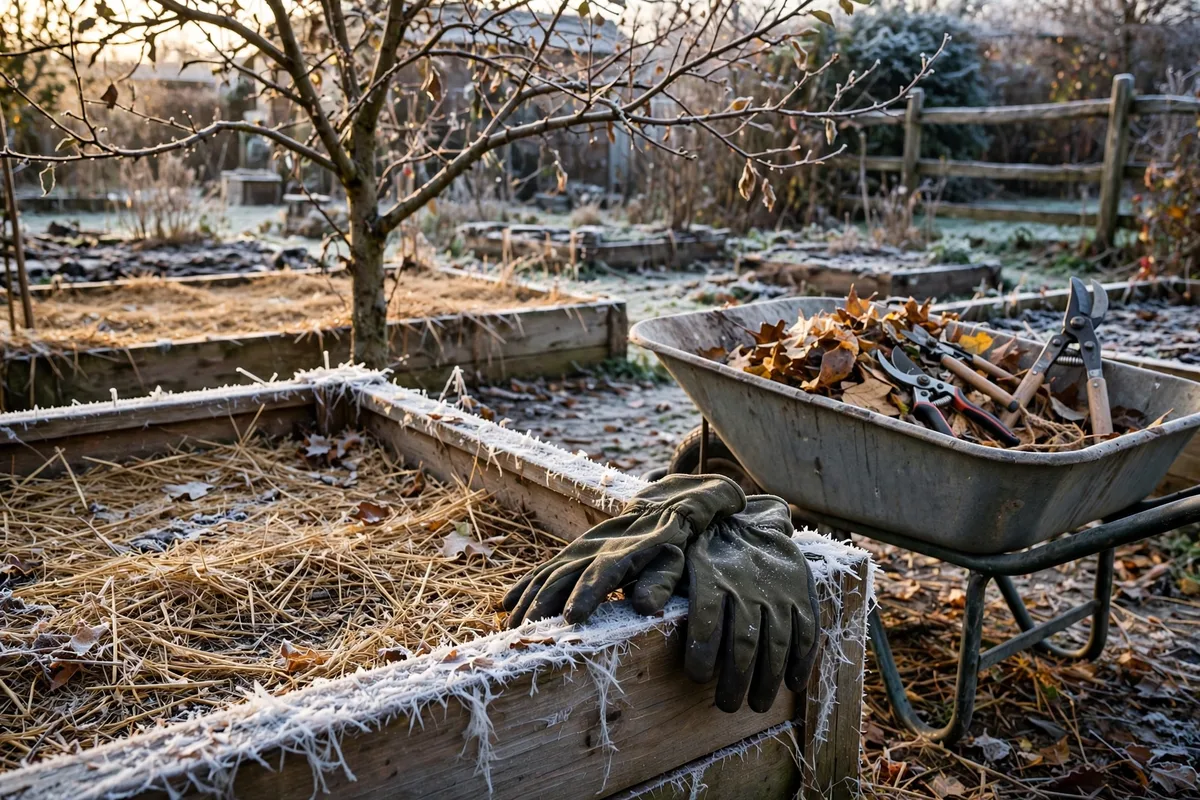
December garden jobs split cleanly by zone: in zones 3–7 you protect what is planted, and in zones 8–10 you keep planting. Cold-zone December is mulching beds after the ground cools, clearing leaves off the lawn, draining hoses before they split, protecting pots and taps, and pruning dormant apple and pear trees. Mild-zone December adds the jobs the north finished in October — planting tulips, garlic and bare-root trees and roses while they are cheap and dormant. This checklist gives you the 12 jobs that matter, in the order to do them, with the zone band each one belongs to — so you do the month once, properly, and the garden coasts to January.
The short answer, on one card
Protect first, plant second. Everywhere: leaves off the lawn, beds mulched 2–4 inches deep once the ground is cold, hoses drained, tools cleaned. Zones 3–5: finish before deep freeze locks the soil. Zones 6–7: plant tulips and prune apples now. Zones 8–10: plant bare-root stock, garlic and hardy vegetables, and keep watering new plantings. The 12 jobs below are the whole month.
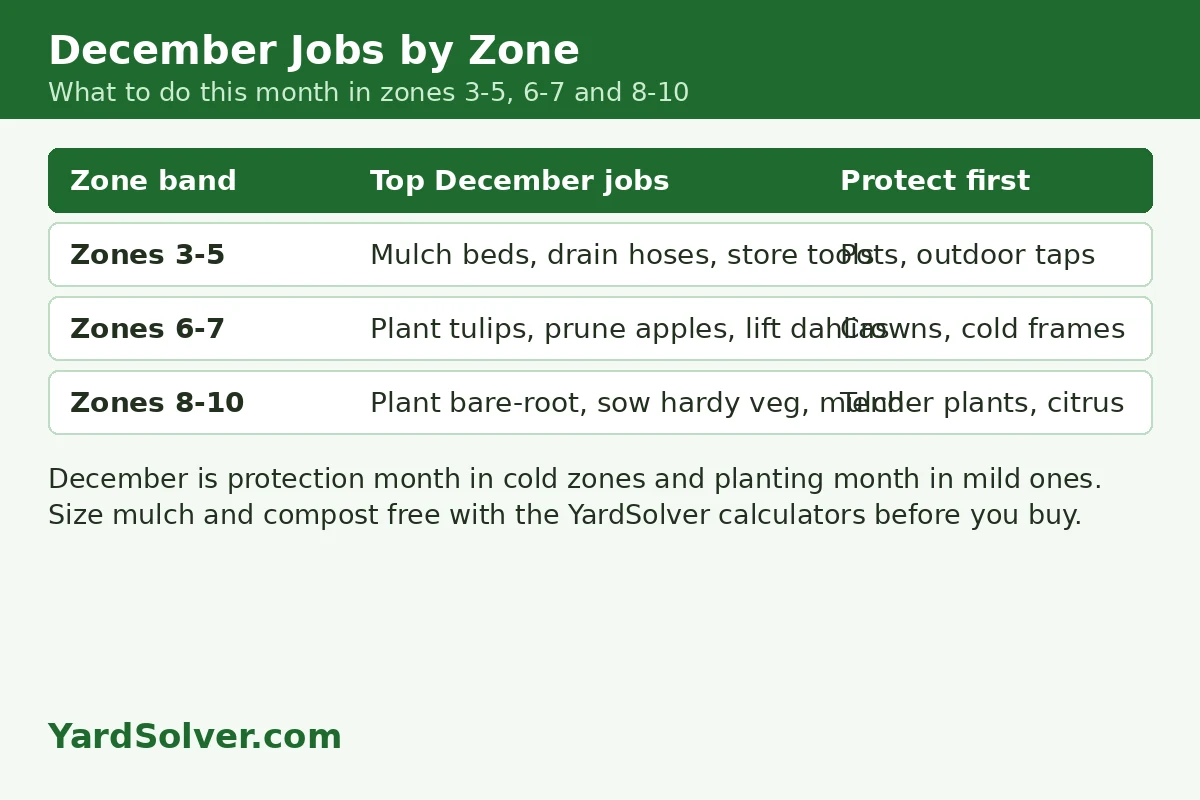
Jobs 1–4: protect the garden you already have (all zones)
1. Get the leaves off the lawn. A matted leaf layer is the fastest way to kill grass over winter: it blocks light, traps moisture and shelters snow mould. Rake or mulch-mow them, then put them to work — shredded leaves make the best free bed mulch there is, and the surplus belongs on the compost heap. If the haul is big, the Compost Calculator tells you how much green material to mix in so a leaf heap heats instead of slumping into a cold mat.
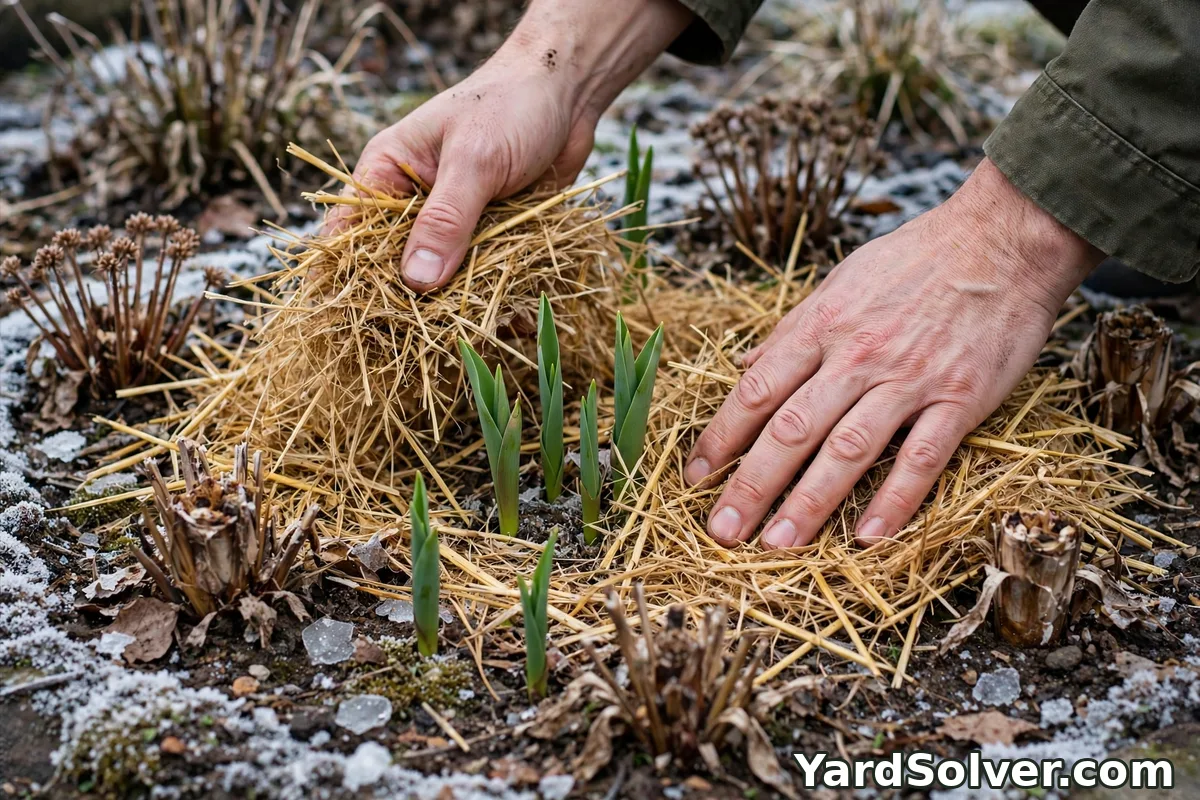
2. Mulch the beds — after the soil cools. Winter mulch is insurance against freeze-thaw heaving, the cycle that literally pushes shallow-rooted perennials and autumn plantings out of the ground. Wait until the soil is cold (after several hard frosts), then lay 2–4 inches of straw, shredded leaves or bark, keeping it a few inches clear of crowns and trunks. The Mulch Calculator sizes the job in bags or bulk before you buy, and our depth guide explains why 2–4 inches is the band that works.
3. Drain hoses, protect taps. In freezing zones this is the job with a deadline written by physics: trapped water expands and splits hoses, fittings and occasionally the pipe inside the wall. Drain and coil hoses under cover, close the inside shut-off to each outdoor tap, and open the tap so the last water escapes. Foam tap covers are cheap extra insurance in zones 3–6.
4. Save the pots. Terracotta and glazed ceramic crack when wet soil inside them freezes and expands. Move empty pots under cover, raise planted pots on feet so they drain, group them against a sheltered wall, and wrap the ones too big to move. Tender plants in pots in zones 7 and below should already be indoors or in a cold frame — December is the check, not the rescue.
Jobs 5–8: the cold-zone four (zones 3–7)
5. Plant tulips — yes, still. Tulips want cold soil, and December soil in zones 6–7 is perfect: cold enough to suppress tulip fire and other bulb fungi that thrive on warm autumn planting. Plant 6–8 inches deep, pointed end up. Our Tulip plant page covers depth by bulb size and the chilling rule southern gardeners need (zones 8–10: fridge-chill bulbs 8–10 weeks first). In zones 3–5, plant on the first workable day — a bulb in frozen-out soil beats a bulb in a bag in March.
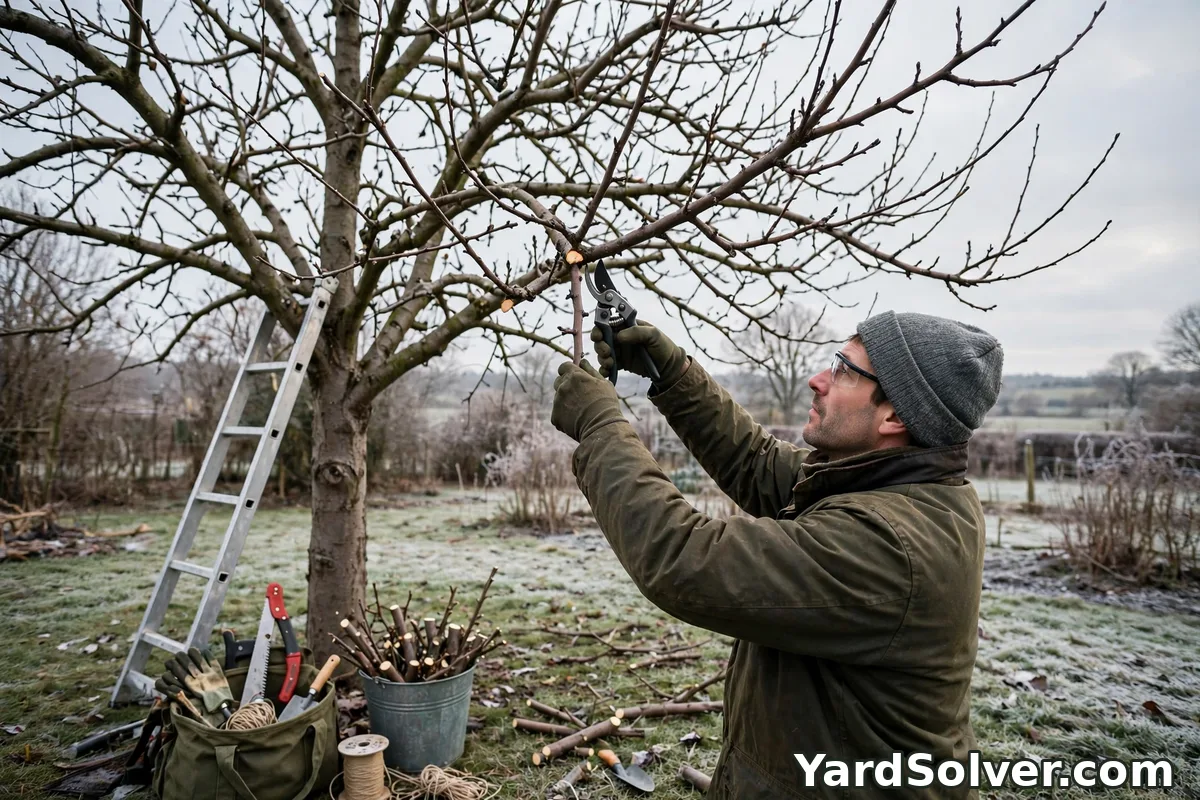
6. Prune apples and pears on a mild day. With the leaves gone you can finally see the tree: cross out the three Ds (dead, damaged, diseased), then crossing and inward-growing branches, opening the centre to light and air. The Apple Tree plant page walks the cuts tree by tree. Two hard rules: prune in a dry, mild spell, not a deep freeze; and never winter-prune plums, cherries or other stone fruit — they wait for summer, because winter cuts invite silver leaf.
7. Lift dahlias and tender bulbs where the ground freezes hard. In zones 3–7 dahlia tubers left in frozen soil are lost. After the first frost blackens the tops, lift, dry, and store tubers in barely damp compost or vermiculite somewhere frost-free and dark. Zones 8–10 can usually leave them in under a thick mulch.
8. Clean, oil and store the tools. December tool care is next spring's head start: scrub soil off, dry everything, sharpen edges, oil wooden handles and metal faces, and empty fuel from petrol tools or stabilise it. Half an hour now is the difference between tools that start the season and tools that start an argument.
Jobs 9–12: the mild-zone four (zones 8–10)
9. Plant bare-root trees, roses and hedging. Dormant bare-root stock is the cheapest way to buy plants all year, and December is prime planting in mild zones: roots settle into cool, moist soil and wake up already in place. Soak roots for an hour before planting, dig wide rather than deep, and water in well even if rain is forecast.
10. Get garlic in, if it is not already. In zones 8–10 garlic planted in December still vernalises in cool soil and sizes up in spring. Pointed end up, 2 inches deep, 6 inches apart, then mulch. Cold-zone gardeners: your garlic went in during autumn — December's job is checking its mulch is still in place after wind.
11. Sow and plant hardy vegetables. Broad beans, garlic, onions from sets, bare-root asparagus and rhubarb, and hardy salad under cover all move in December in mild zones. Indoors, December is planning season everywhere: seed catalogues, last year's notes, and the bed plan.
12. Keep watering new plantings. The mild-zone trap: winter rain feels generous but new roots sit in the top few inches, which dry between storms. Check new trees, hedging and beds weekly and water deeply when the top 2 inches are dry.
The leave-it list: what December is NOT for
Restraint is a December job too. Leave ornamental grasses and seed heads standing — they shelter insects and feed birds, and the crowns stay warmer under their own foliage. Leave hydrangea flower heads on until spring; they protect the buds beneath. Do not feed lawns or beds now in cold zones (growth you trigger gets frosted; nutrients wash away), do not walk on frozen or waterlogged lawns, and do not prune stone fruit, tender salvias or penstemons — their old growth is their winter coat, and it comes off in spring.
A worked example: one December Saturday, zone 6
Here is the month compressed into a single realistic morning. Hour one: mulch-mow the last leaves off the lawn and rake the surplus onto the beds. Hour two: mulch two 4×8 beds — the Mulch Calculator says a 3-inch layer over 64 square feet is 16 cubic feet, about eleven 1.5-cubic-foot bags — and top up the garlic mulch. Hour three: drain both hoses, fit tap covers, move the terracotta pots into the garage. Hour four: plant the bag of tulips that has been waiting since October, 7 inches deep along the front bed. The apple tree waits for the next dry, mild afternoon. That is December done — everything else on the list is either a mild-zone planting job or a five-minute check.
Keep going
Turn December's protection work into next season's plan — beds, sowing dates and rotations — in the Garden Planner.
Size the two materials this month consumes with the Mulch Calculator and the Compost Calculator, and go deeper on the two plants December belongs to: Apple Tree for pruning and Tulip for late planting.
Reading from the southern hemisphere? The seasons flip — What to Plant in November in Australia is the matching checklist.
When December turns, the sequence continues in our January Garden Checklist — the pruning window, the first indoor sowings and the seed-order deadline.
And when January turns, it continues again in our February Garden Checklist — the slow crops sown indoors, potatoes chitted and the pruning window finished before buds swell.
Sources
Seasonal job timing cross-checked against Countryfile — Jobs for the garden this winter, Gardens Illustrated — How to prepare the garden for winter and the do-and-leave guidance in The Household Daily — Winter garden jobs for November and December. Pruning and stone-fruit timing follows standard RHS dormant-pruning guidance; mulch depths and quantities are YardSolver's own calculator maths, linked in the text.
Questions people ask
What should I do in the garden in December?
Protect first, plant second. In zones 3–7 the December jobs are mulching beds after the ground cools, getting fallen leaves off lawns, draining hoses, protecting pots and outdoor taps, and pruning dormant apple and pear trees. In zones 8–10 December is still planting season: bare-root trees and roses, garlic, and hardy vegetables can all go in.
Is it too late to plant tulips in December?
No — in zones 6–7 December is often the best tulip month, because the soil is finally cold enough to discourage the fungal diseases that attack bulbs planted in warm autumn soil. In zones 3–5 plant as soon as you can work the soil. In zones 8–10 tulip bulbs need 8–10 weeks in the fridge first, because winter does not chill them enough outdoors.
Should I mulch in December or wait until spring?
Mulch in December, but time it after the ground has cooled and ideally after the first hard frosts. Winter mulch is not about warmth — it stops the freeze-thaw heaving that pushes shallow-rooted plants out of the soil. Two to four inches over beds, kept a few inches away from stems and trunks, is the working depth.
Can I prune fruit trees in December?
Apples and pears, yes — dormant pruning from late autumn through late winter is standard practice, and December is a good month in zones 6–10. Never prune plums, cherries or other stone fruit in winter: they are pruned in summer because winter cuts invite silver leaf disease. In zones 3–5, wait for a mild spell and avoid pruning in severe cold snaps.
What happens if I leave leaves on the lawn all winter?
A thick leaf layer mats down, blocks light and air, and leaves dead patches and fungal disease by spring. Leaves are a resource, not rubbish: shred them into mulch for beds, or compost them. The Compost Calculator sizes the heap and the greens you need to balance a big leaf haul.
Do I need to drain hoses and outdoor taps in December?
In any zone that freezes, yes — and December is the last call. Water left in a hose or tap expands as it freezes and splits fittings and pipes. Drain hoses, coil them indoors, shut off the interior valve to outdoor taps and open the tap to let the last water out.
Comments & ratings
No comments yet.
Be the first to share your experience.