
Plant Library · Fruits · By Faizan Ahmad
Updated November 17, 2026
🍇 How to Grow Boysenberry
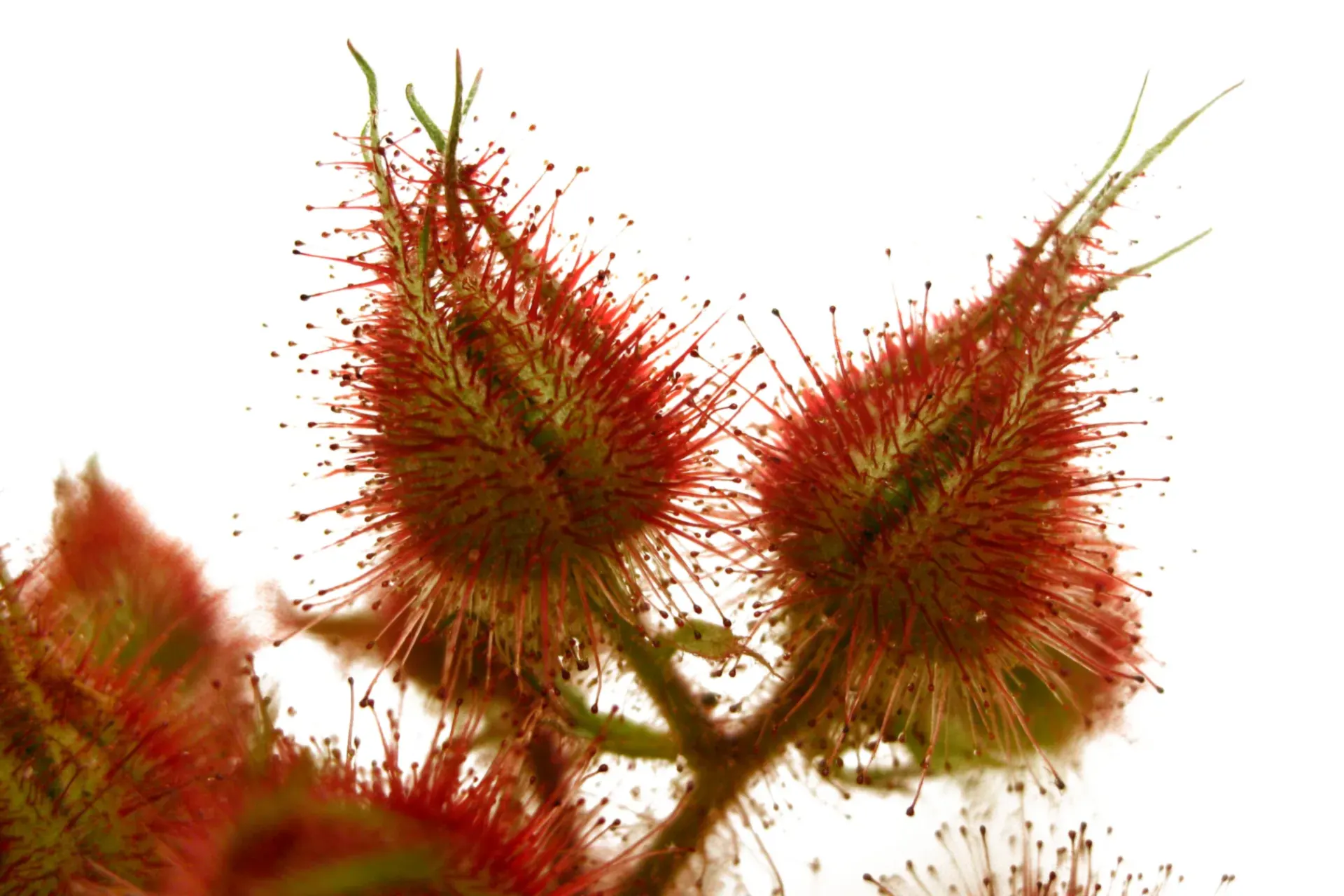
The boysenberry is a three-way cross — blackberry, raspberry and loganberry — that makes huge, wine-dark berries with a flavour bigger than any of its parents. The long canes are trained on wires 4–6 ft apart, the plants fruit on last year's canes, and the first full harvest comes in year 2. Never plant boysenberries where brambles or potatoes grew recently — soil diseases carry over.
Grow Boysenberry with us — step by step
Boysenberry growing stands or falls on cane management: this vigorous blackberry–raspberry–loganberry cross fruits on last year's canes, so the whole craft is keeping this year's green primocanes tidy while last year's floricanes carry the crop. The steps below walk that two-year cycle in plain order. Add your planting date and the page builds the same cycle around your own row — when to tie in, when to tip, and when to cut the fruited canes out.
Step 1 — today: Plant your Boysenberries today, at nursery depth, 4–6 ft apart along a wire trellis in fresh ground — never after brambles or potatoes — water deeply and mulch.
Boysenberry at a glance
Spacing: 4–6 ft on a trellis in · Seed depth: As in the pot
Sun: Full sun
Water: Regular — keep evenly moist
Harvest: First full harvest in year 2
Timing counts from your average last spring frost — get your own dates in the Planting Calendar. Guidance follows standard extension-service practice for Canada and the US.
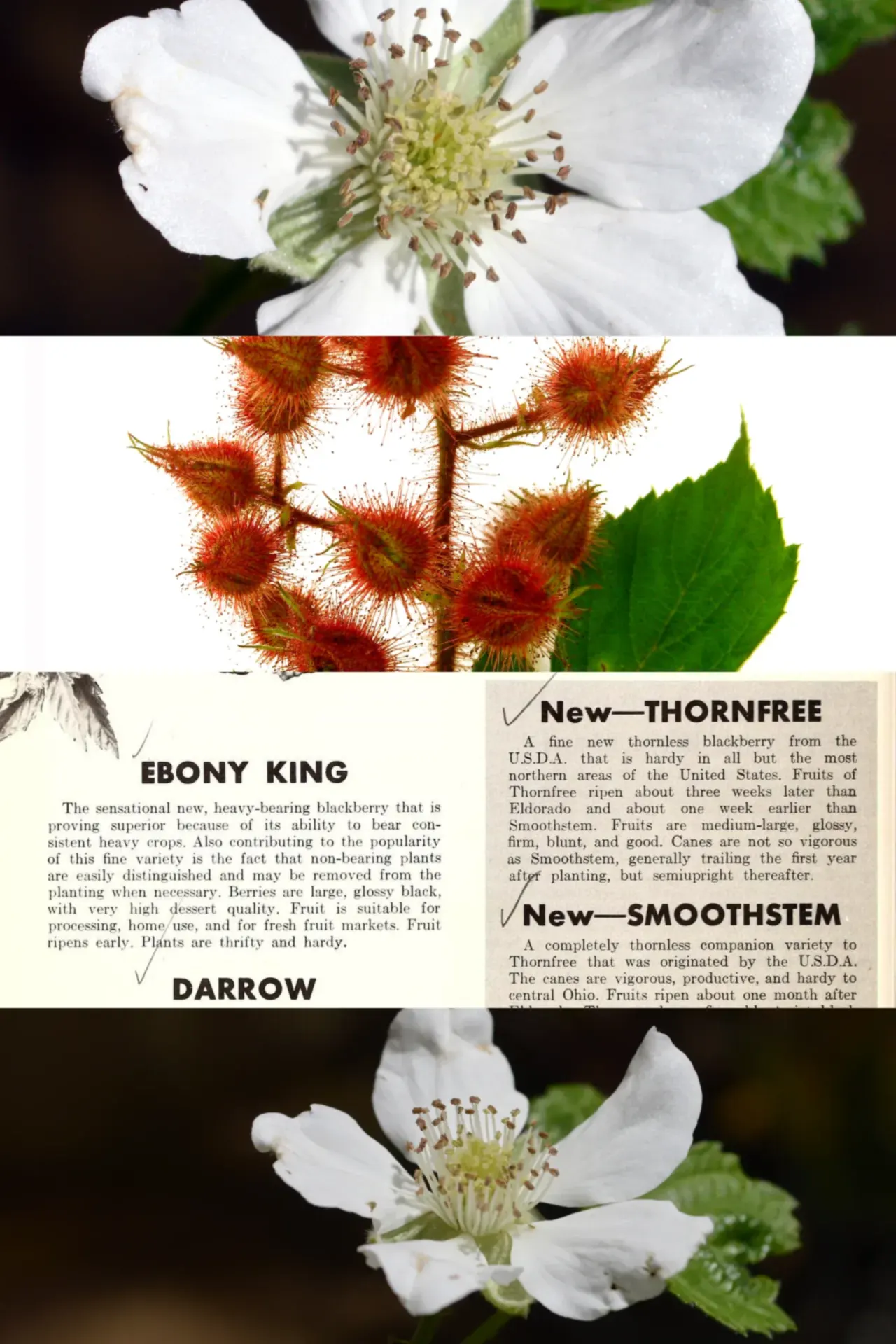
How to plant and grow boysenberry, step by step
Step 1 — Time it right
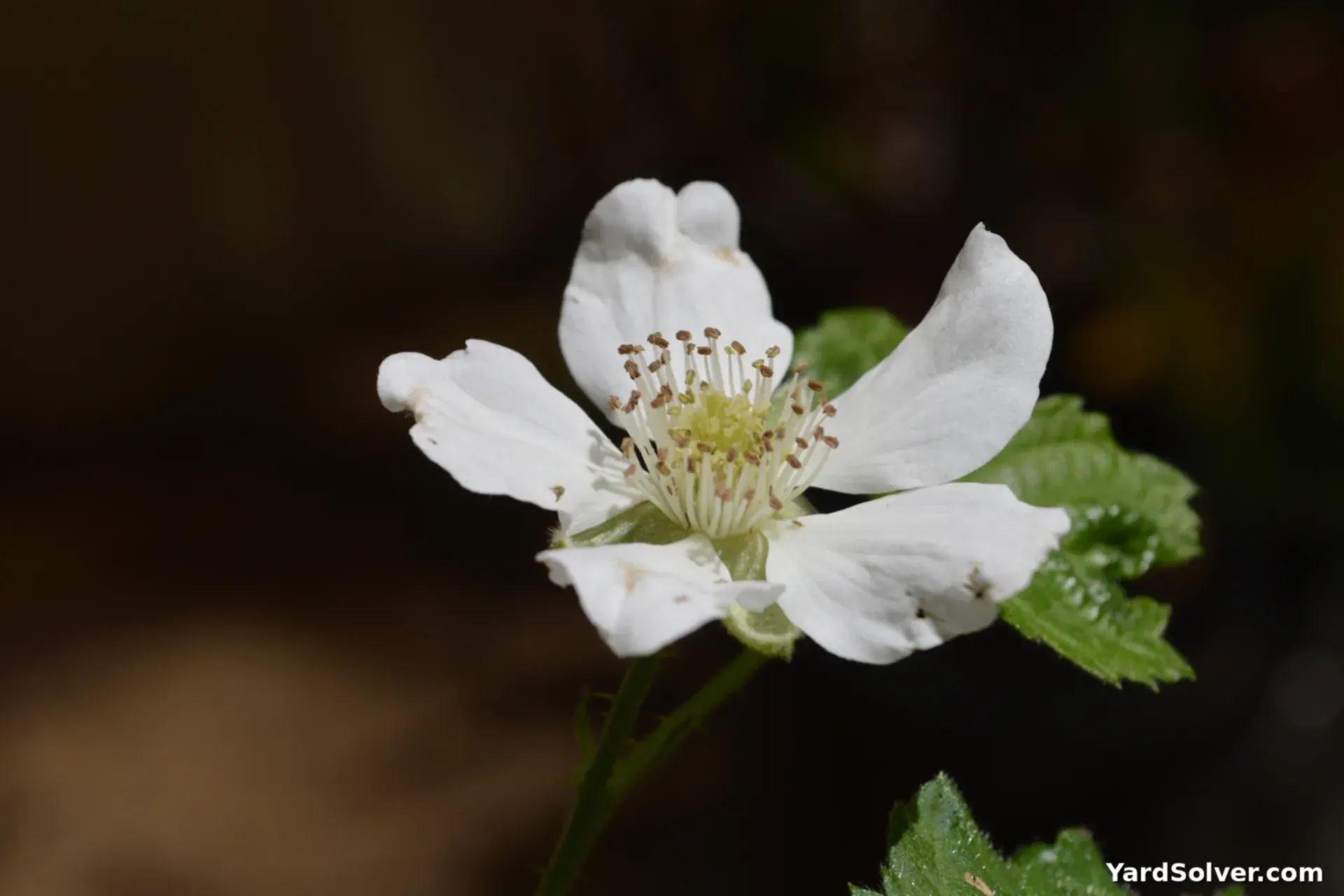
Plant bare-root canes in early spring, or container plants in spring or fall. In mild-winter districts (about zone 7 and warmer), fall planting also works well and gives canes a root head start. Boysenberries are only moderately cold-hardy — in zone 6 and colder, expect some cane dieback in hard winters and plan to lay canes down under mulch where winters bite.
Step 2 — Prepare the spot
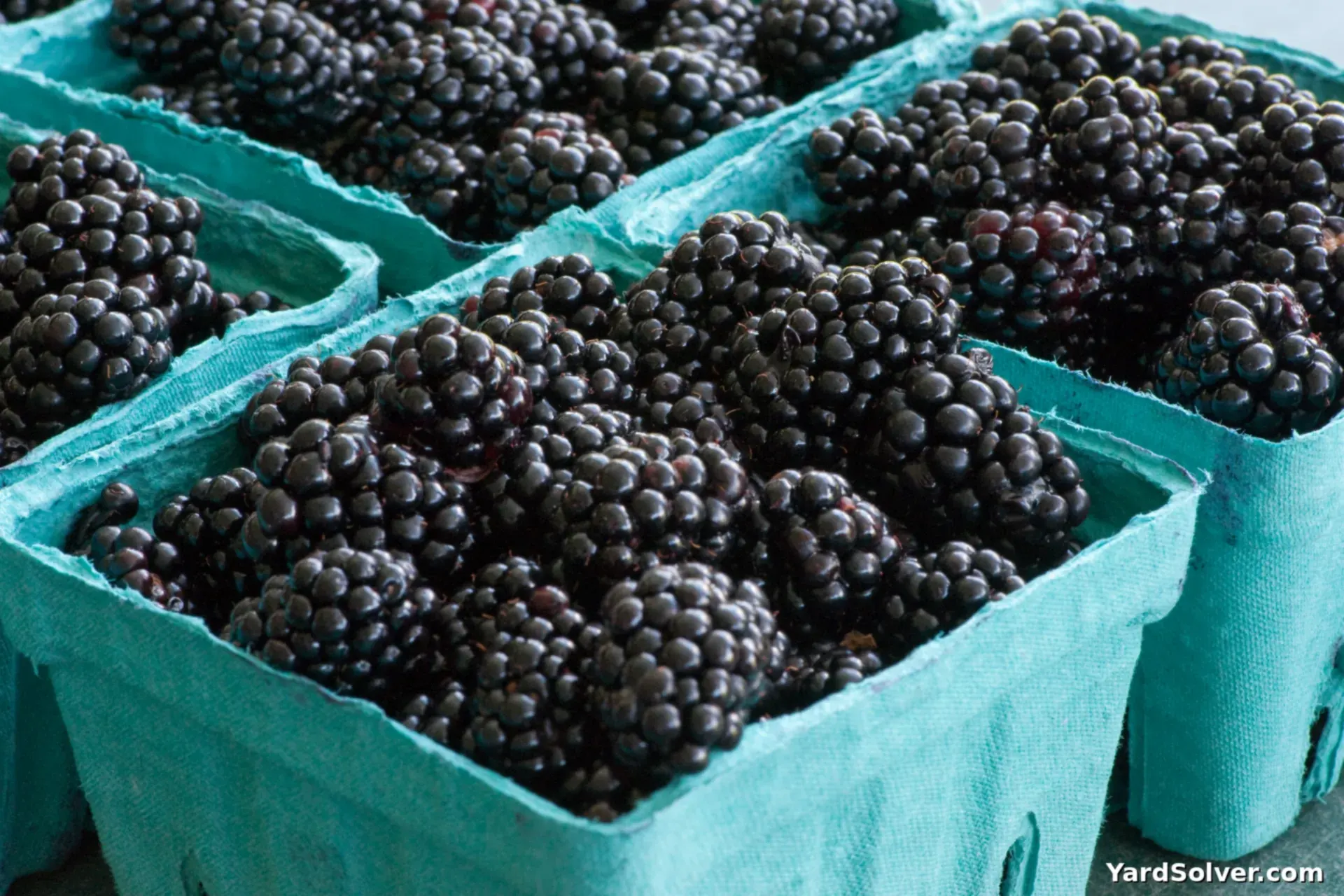
Sun: Full sun. Rich, well-drained soil in full sun. Boysenberries want moisture at the roots but not soggy ground. Work out how much soil you need with the Garden Mix Calculator or the Raised Bed Soil Calculator. Soil around pH 5.8–6.5 with plenty of compost dug in suits them best, and rows need about 8 ft between them for the trellis and picking access. Avoid any bed that grew raspberries, blackberries, potatoes or tomatoes in the last few years — soil viruses and verticillium linger.
Step 3 — Plant it
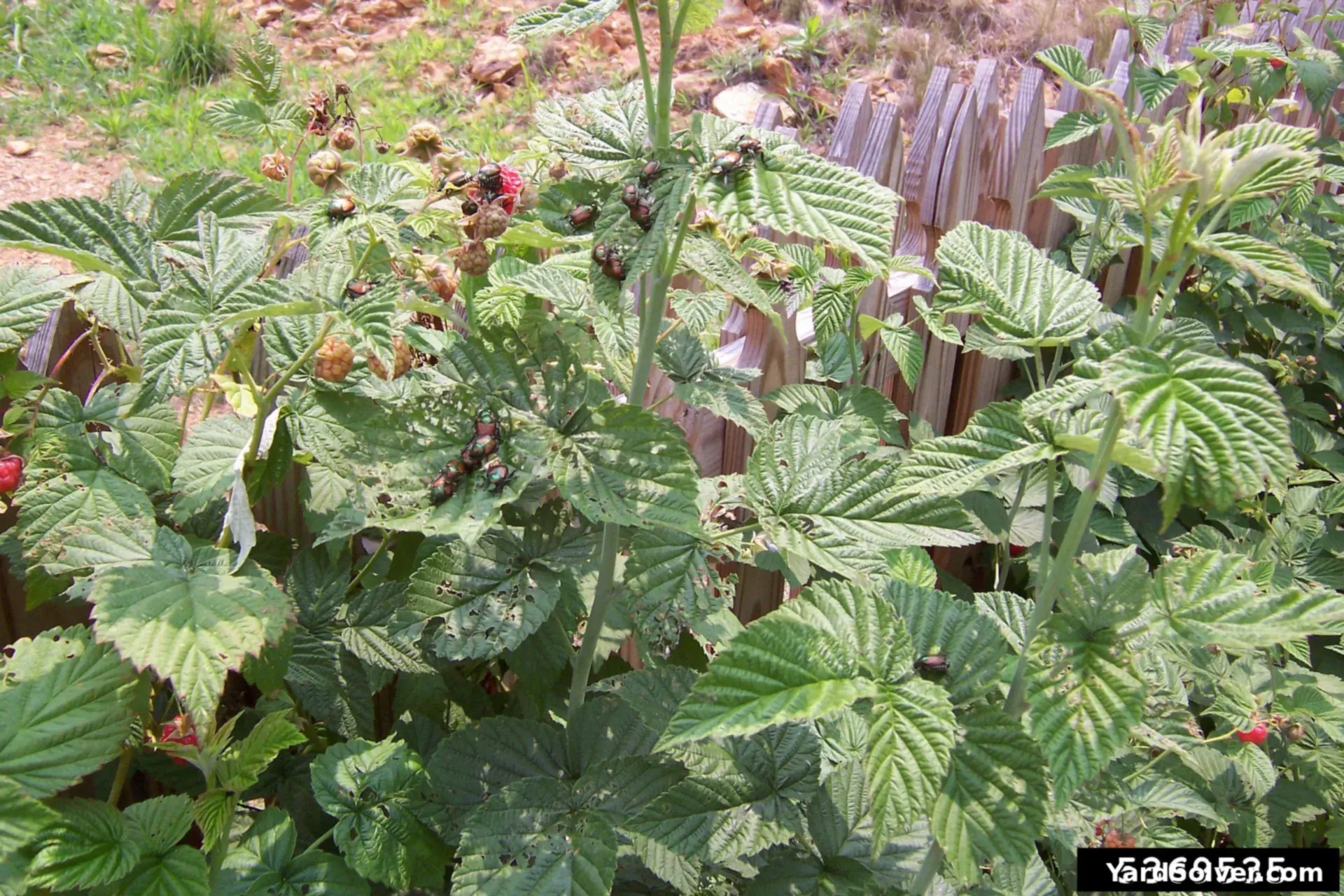
Set plants at the same depth they grew in the nursery, 4–6 ft apart along a wire trellis, water deeply and mulch. The Plant Spacing Calculator turns that spacing into plants-per-row. Cut newly planted canes back to about 6 in so the plant puts its first season into roots and strong primocanes rather than a few early berries. Set the trellis wires before the canes need them: two or three horizontal wires at roughly 3, 4.5 and 6 ft carry a full row comfortably.
Step 4 — Water and feed
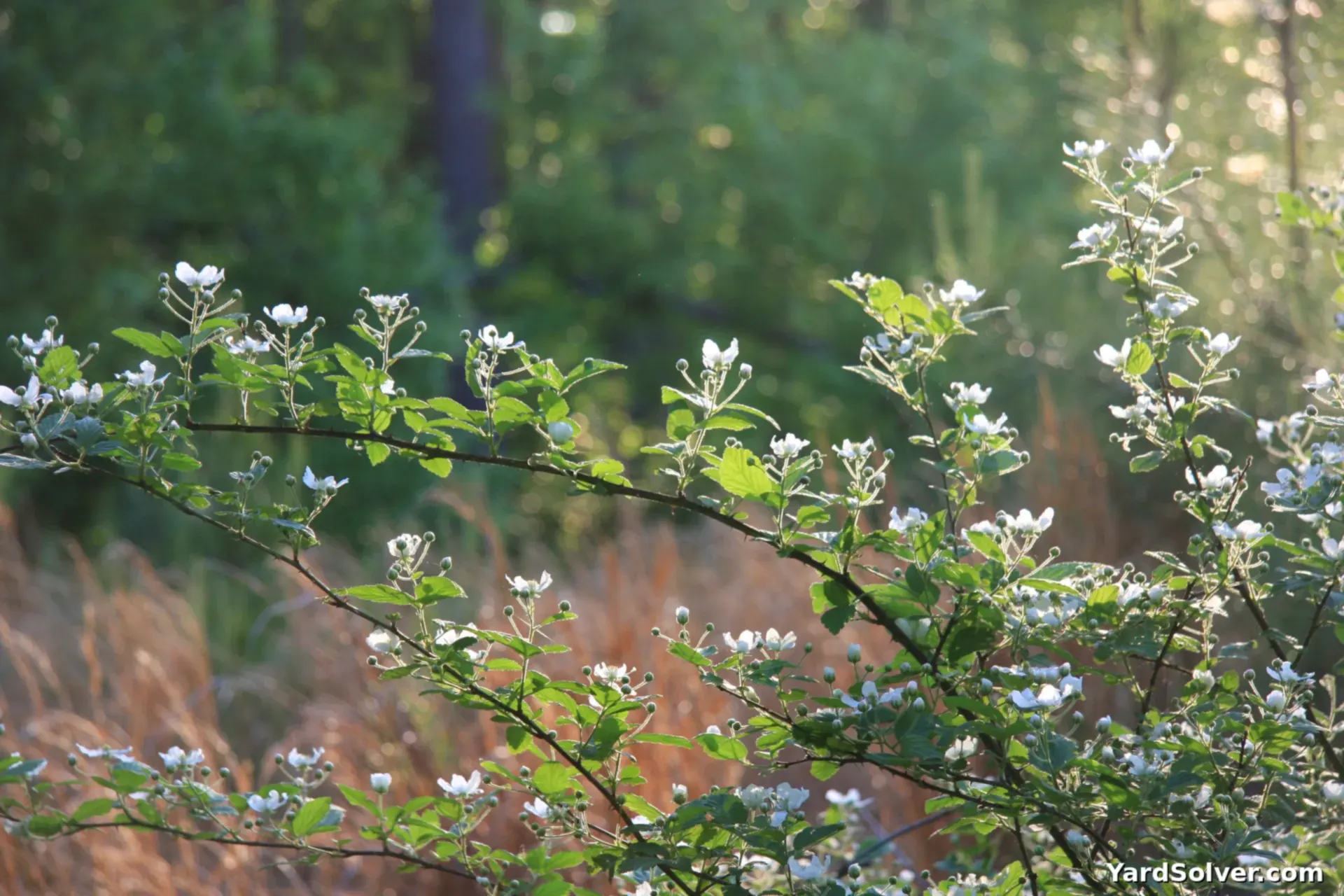
Water: Regular — keep evenly moist. Feed in spring with a balanced fertilizer, and mulch yearly with compost. The Fertilizer Calculator turns a bed size into the right amount. Berries size up fast in the final weeks, and even moisture then is the difference between plump fruit and seedy, hard drupelets. Feed in early spring as growth starts; a second light feed after harvest helps the new primocanes that carry next year's crop.
Step 5 — Care and the problems to watch for
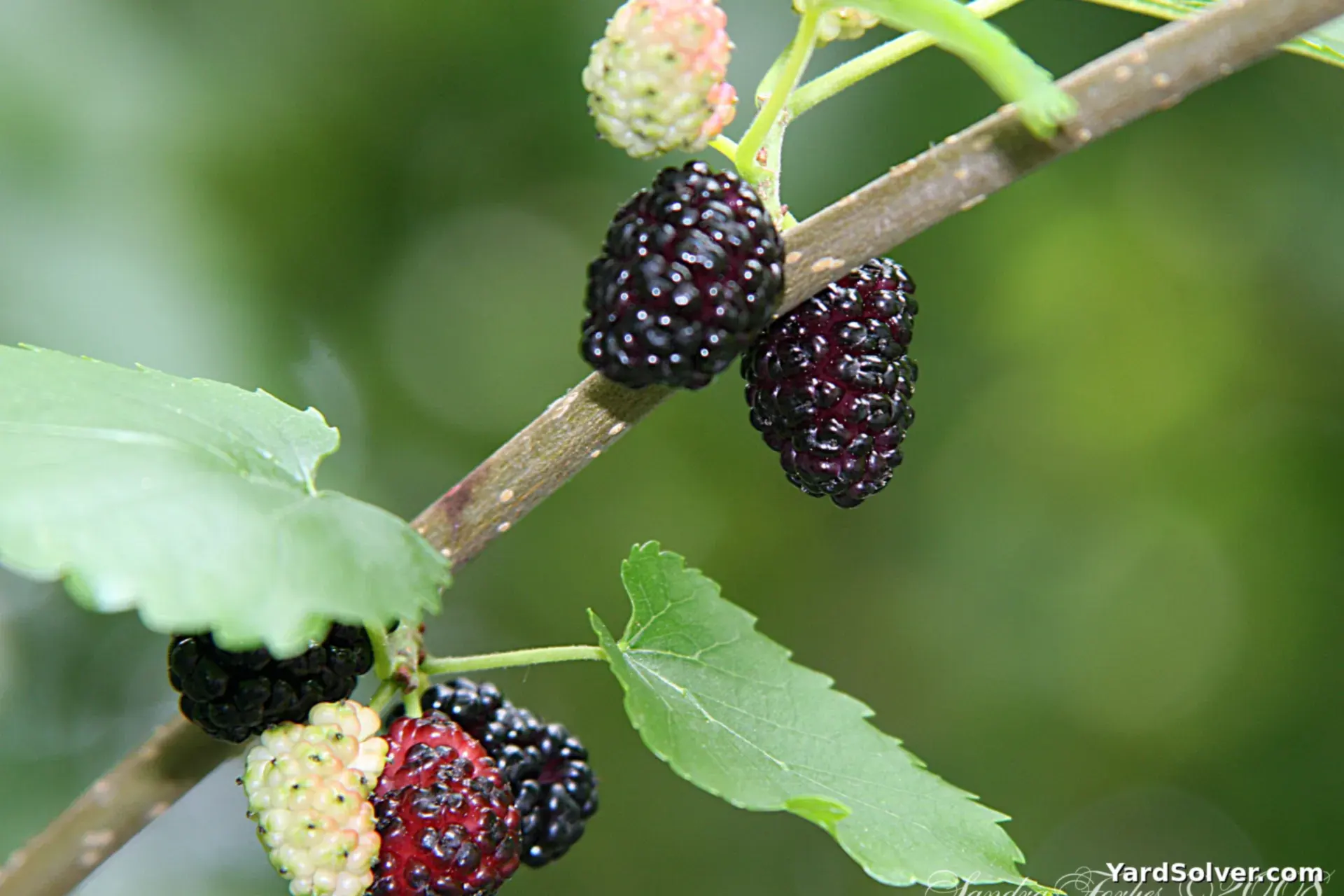
Viruses from old bramble patches — always plant in fresh ground, away from old raspberries and blackberries. Cane blight — canes die back; prune out dead canes and disinfect tools. Birds — net the row as berries colour. Train as you go: weave or tie new primocanes along the wires through summer, and tip them at about 6–7 ft to encourage fruiting side branches. Immediately after harvest, cut every cane that fruited right down to the ground — leaving them invites cane diseases into the row.
Step 6 — Harvest

First full harvest in year 2. Pick when the berries are fully wine-dark and slip off easily — under-ripe boysenberries are mouth-puckeringly tart. Expect roughly 4–6 lb of berries per mature plant picked over 3–4 weeks, gathering every 2–3 days because ripe fruit softens quickly on the cane. Thornless boysenberry types exist and pick far more pleasantly, though many growers find the thorny original heavier-cropping and hardier.
📅 Your personal Boysenberry schedule
Because boysenberries run on a two-year cane cycle, this schedule is counted from your own planting day and keeps the two cane generations straight for you. It marks the tie-in and tipping dates for new primocanes, the harvest-season picking rhythm, and the moment straight after harvest when every fruited cane comes out at ground level.
Varieties worth growing
| Variety | Colour | Why gardeners like it |
|---|---|---|
| Boysenberry (thornless) | Wine-dark | The classic berry on thornless canes — easier picking |
| Boysenberry (thorny) | Wine-dark | The original — some say the flavour is a touch better |
| Tayberry | Red-purple | A blackberry-raspberry cousin, earlier and hardier |
| Loganberry | Red | One of the boysenberry's parents — tart and aromatic |
Good for you — and take care
Benefits
- Huge berries with an intense, wine-dark flavour
- Heavy crops from year 2
- Thornless types exist for easy picking
- Freezes and jams beautifully
Take care
- Do not plant after brambles or potatoes — soil-borne diseases carry over.
- Fruit grows on last year's canes: cut out canes that have fruited, tie in the new ones.
- Train canes on wires in a fan or weave — ground-level canes rot and tangle.
Problems to watch for
- Viruses from old bramble patches — always plant in fresh ground, away from old raspberries and blackberries.
- Cane blight — canes die back; prune out dead canes and disinfect tools.
- Birds — net the row as berries colour.
A little history — and one good fact
The boysenberry was bred in California in the 1920s by Rudolph Boysen, who crossed blackberry, raspberry and loganberry — then nearly lost the plant. Walter Knott rescued it, grew it at Knott's Berry Farm, and named it after Boysen.
Fun fact: Every boysenberry in the world descends from a few rescued canes at Knott's Berry Farm in California.
Keep going
Guides: How to Harden Off Seedlings · How to Read a Seed Packet
Calculators: Plant Spacing Calculator · Seed Calculator · Fertilizer Calculator · Garden Mix Calculator
Plan it: Garden Planner · Planting Calendar · Companion Planting Chart · Seed Box
Good companions: Garlic
Keep apart: Potato · Tomato · Raspberry — see the Companion Planting Chart for the full picture.
← Back to the Plant Library · Get your personal planting dates
The two-year cane cycle, season by season
Boysenberries fruit on floricanes — canes in their second year. Every cane in the row is therefore on a two-year clock, and almost all training is just keeping the two age groups separate:
| Season | Primocanes (year 1 canes) | Floricanes (year 2 canes) |
|---|---|---|
| Spring | New green canes emerge from the crown | Tie in last year's canes along the wires; they flower in late spring |
| Early summer | Keep primocanes loosely bundled or on a separate wire so they stay out of the picking | Fruit swells and ripens; pick every 2–3 days |
| After harvest | Tip primocanes at 6–7 ft and train them onto the wires | Cut fruited canes out at ground level straight away |
| Winter | In cold districts, lay canes down and mulch over them | Next spring these same canes become the fruiting floricanes |
A simple habit keeps it foolproof: tie this year's new canes with one colour of twine and the fruiting canes with another. When harvest ends, you cut everything wearing the fruiting colour — no guessing, no lost crop.
Questions people ask
When do I plant boysenberries?
Plant bare-root canes in early spring, or container plants in spring or fall.
How far apart do I space boysenberries?
Space plants 4–6 ft apart along a wire trellis. Sun: full sun.
When will my boysenberries fruit?
First full harvest in year 2, on last year's canes. Never plant where brambles or potatoes grew recently.
Why did my boysenberry not fruit in its first year?
That is normal. Boysenberries fruit on second-year canes (floricanes), so a new plant spends year 1 growing the primocanes that carry next summer's crop. Protect those canes over winter — they are next year's harvest.
Are there thornless boysenberries?
Yes — thornless boysenberry plants are widely sold and make training and picking far more comfortable. Many growers find the thorny type slightly hardier and heavier-cropping, so the choice is comfort against a little extra vigour.
Train the canes like blackberries, expect the harvest of three berries: boysenberry's trailing habit is the whole technique
A boysenberry is a hybrid of raspberry, blackberry and loganberry, and it grows like its blackberry parent: long, trailing canes that fruit in their second year and then die. That two-year cycle decides everything. After fruiting, cut each spent cane out at ground level; tie the new season's canes along wires or a fence where air and sun reach them; and keep the row contained, because trailing tips that touch soil root where they land and a boysenberry patch expands with real intent. Grown on wires, picking is fast and the fruit — large, wine-dark and softer than a blackberry — comes away clean instead of crushed inside a thicket.
The fruit itself is the argument for the effort: boysenberries carry a tart, aromatic depth that blackberries alone rarely match, and they ripen over a long picking window in early to midsummer. They are softer and more perishable than blackberries, so pick into shallow containers, chill promptly, and eat or freeze within a day or two. In cold districts the trailing canes benefit from being laid along the ground and mulched over winter, then lifted back onto the wires in spring — the flexibility that makes them awkward on a trellis makes them easy to protect.
The worked example: a wire-trained row, pruned on the two-year cane cycle, commonly fruits along its whole length in the open, where every berry can be seen and reached. The untrained patch of the same age typically hides its crop inside a thorny tangle, loses fruit to mould, and spreads a metre beyond its bed each year. Same plant, same soil — the wires and the secateurs were the difference.
Sources
Key facts on this page — timing, spacing and care — cross-checked against Royal Horticultural Society — Blackberries: grow your own — planting, cane pruning and harvest guidance for brambles and NC State Extension Plant Toolbox — Rubus occidentalis (bramble culture reference) — bramble culture and care requirements.
Related page
Read next: How to Prune Fruit Trees in Winter (Without Ruining Fruit).
Comments & ratings
No comments yet.
Be the first to share your experience.