
Plant Library · Fruit & Melons · By Faizan Ahmad
Updated November 17, 2026
🍒 How to Grow Raspberry
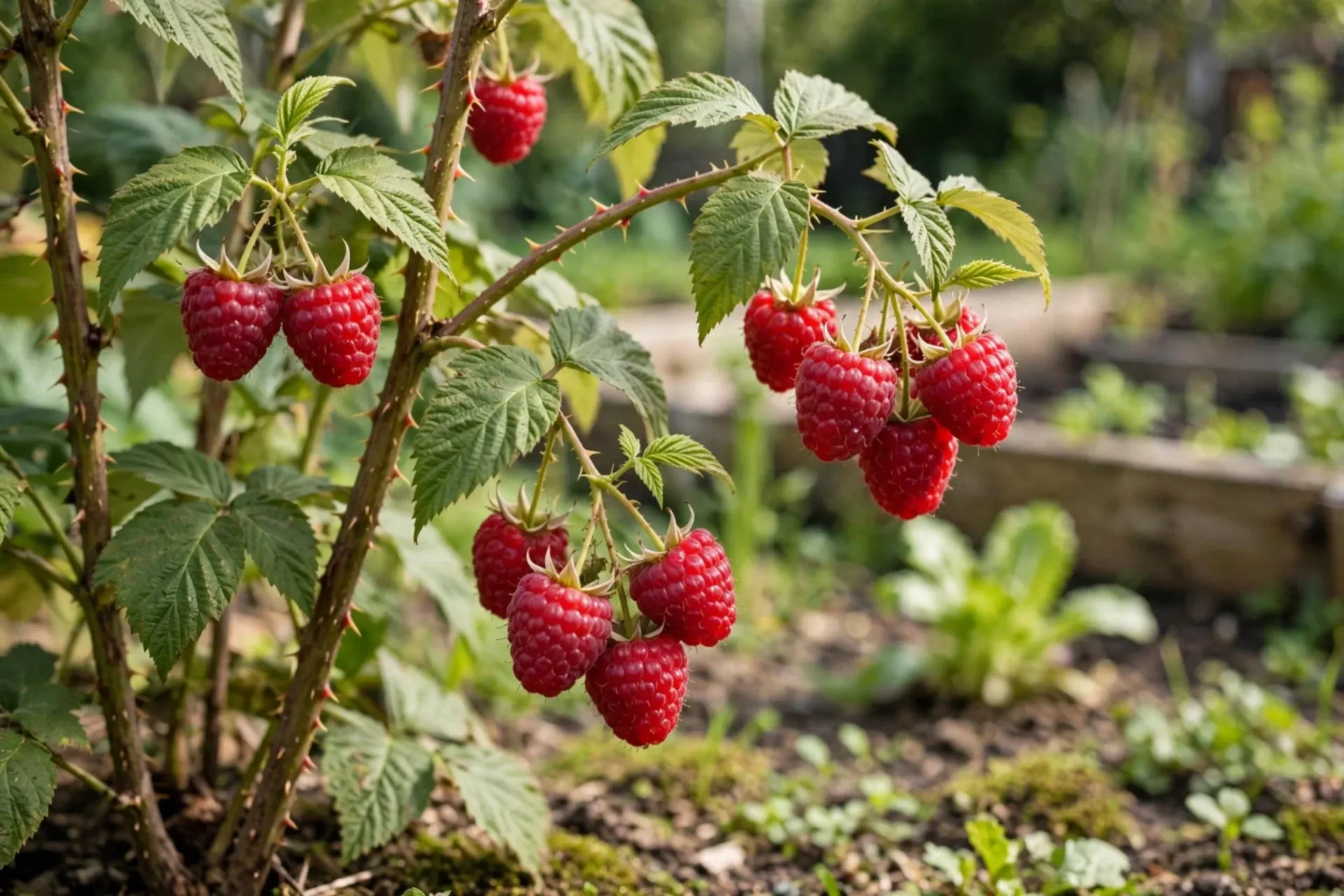
A perennial cane fruit: plant dormant canes in early spring; canes fruit in their second year, then are pruned out. Raspberries are a perennial cane fruit: plant dormant canes in early spring, and expect the main harvests from the second summer onward.
Grow Raspberry with us — step by step
A raspberry patch is a long-term planting: the canes you set out this spring can crop for a decade or more, so the setup matters more than speed. Below is the full routine, from choosing dormant canes to pruning out fruited wood and picking without crushing the berries. If you would rather be guided day by day, tell us your planting date and we will build a raspberry schedule around it, each job landing on its proper day.
Step 1 — today: Start your Raspberry today — sow 1–2 (canes) in deep, spaced 18–24 in apart — and water in well.
Raspberry at a glance
Spacing: 18–24 in · Seed depth: 1–2 (canes) in
Sun: Full sun
Water: Regular in dry spells
Harvest: From the second summer onward
Timing counts from your average last spring frost — get your own dates in the Planting Calendar. Guidance follows standard extension-service practice for Canada and the US.
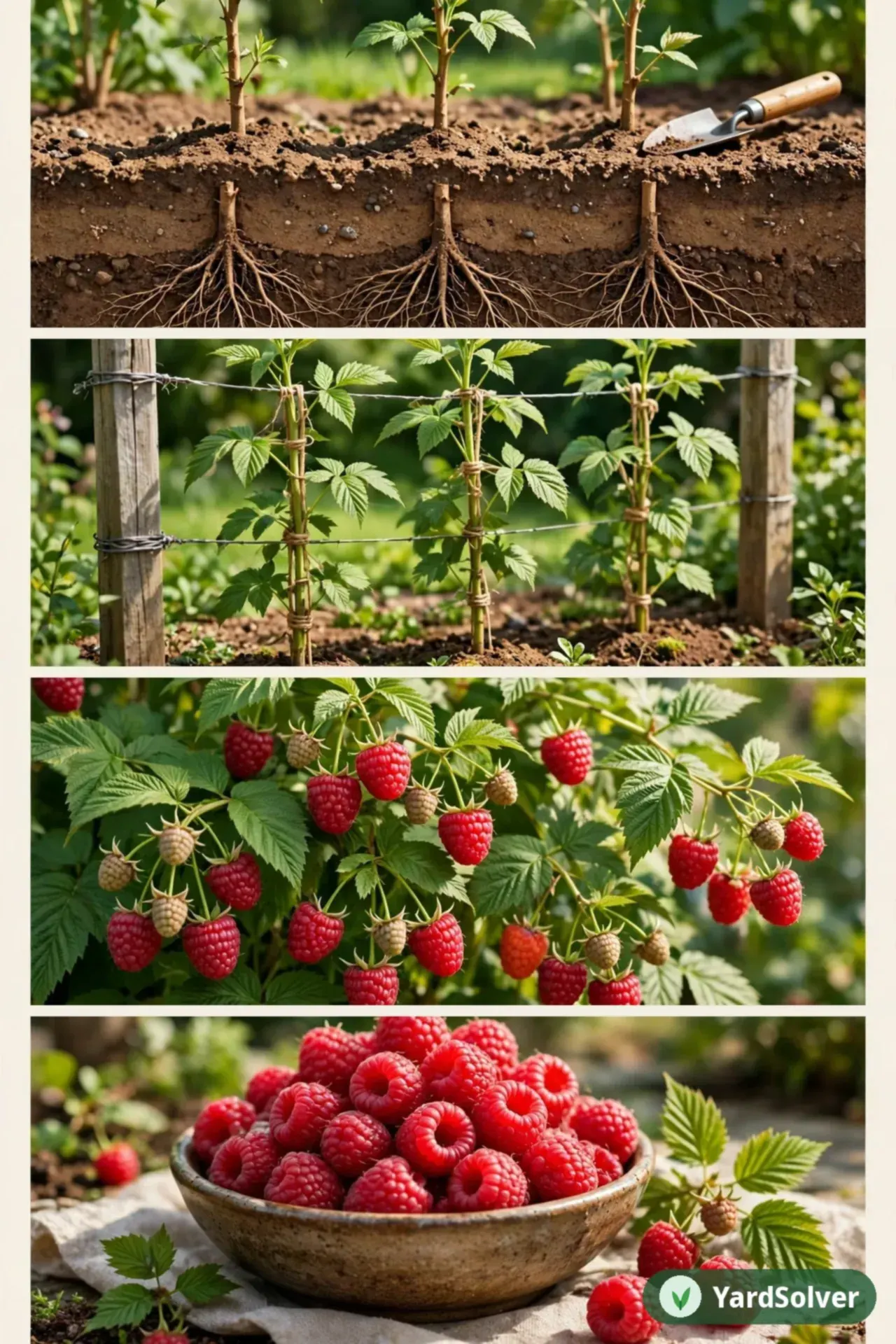
How to plant and grow raspberry, step by step
Step 1 — Time it right
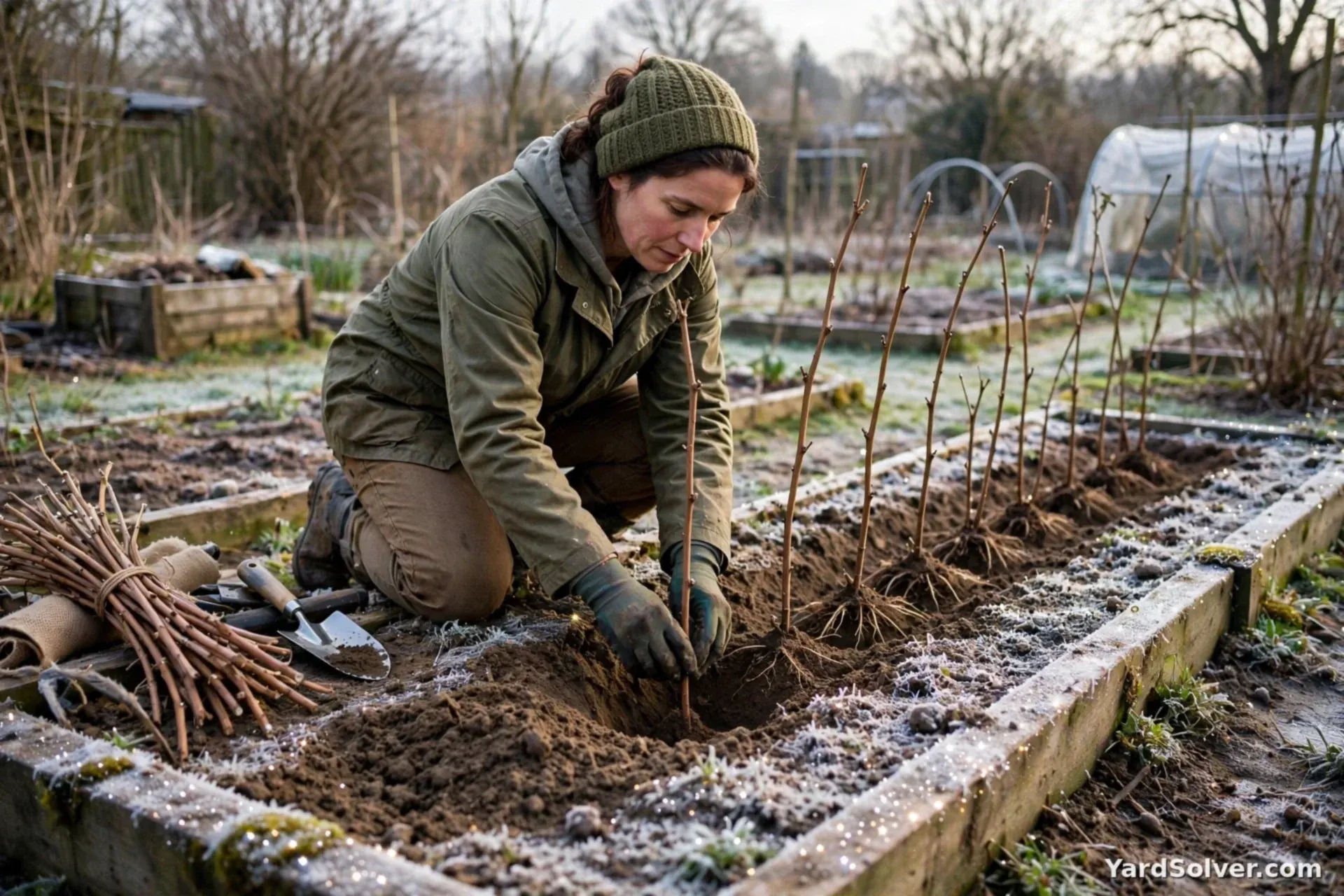
. All dates count from your average last spring frost — the Planting Calendar turns them into real dates for your garden. Raspberries are a perennial cane fruit: plant dormant canes in early spring, and expect the main harvests from the second summer onward. Plant while the canes are fully dormant, so roots settle before buds break; early-planted bare-root canes usually leaf out within 3 to 4 weeks, while late-planted canes sulk in hot weather.
Step 2 — Prepare the spot
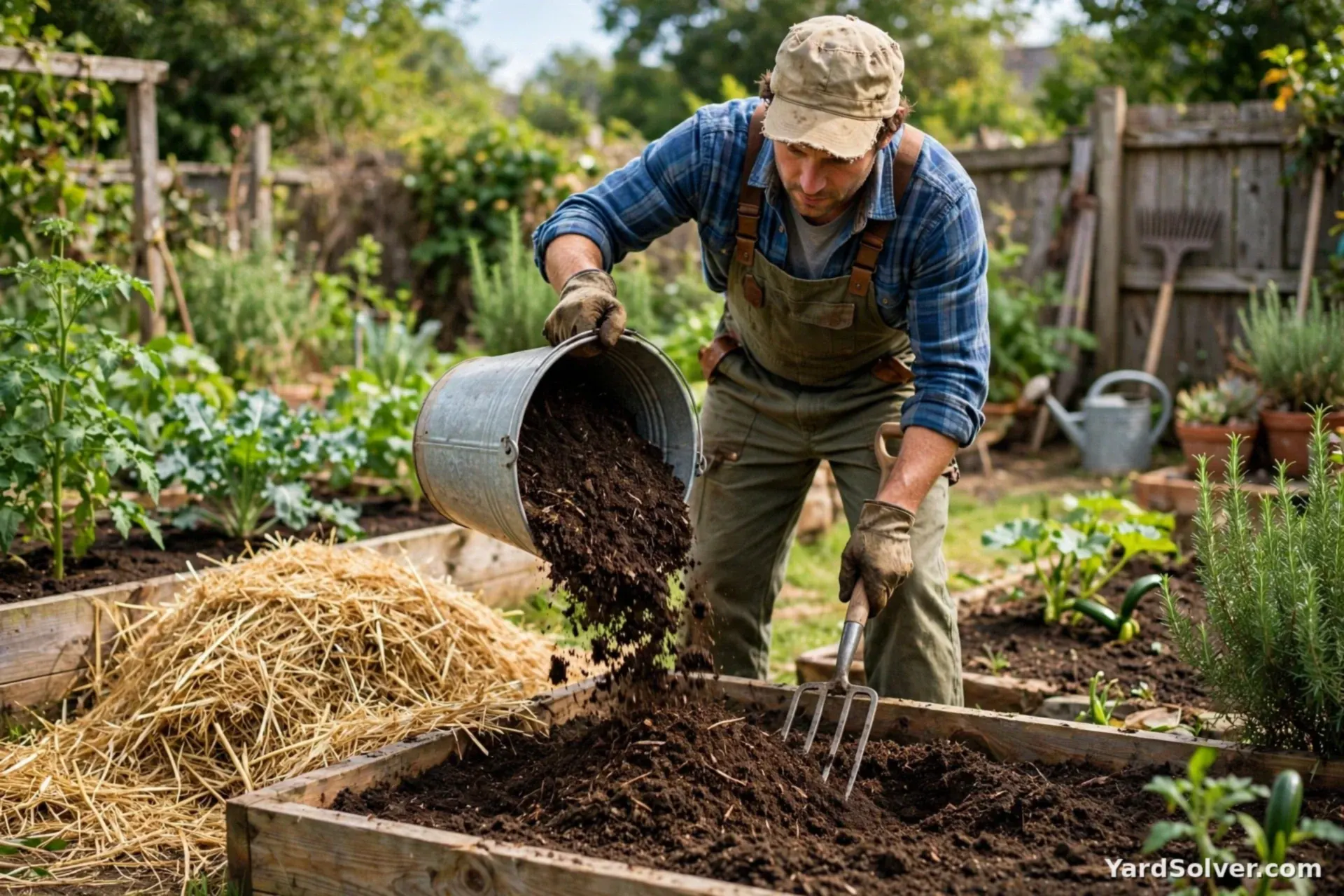
Sun: Full sun. Rich, well-drained soil with compost, and a mulch to hold moisture. Blueberries are the exception: they need acidic soil (about pH 4.5–5.5) — test before planting. Work out how much you need with the Garden Mix Calculator or the Raised Bed Soil Calculator. Aim for soil pH 5.6 to 6.2 and work 2 to 3 in of compost along the row. Avoid ground that grew tomatoes, potatoes or strawberries in the last 3 years, which cuts verticillium wilt risk.
Step 3 — Plant out
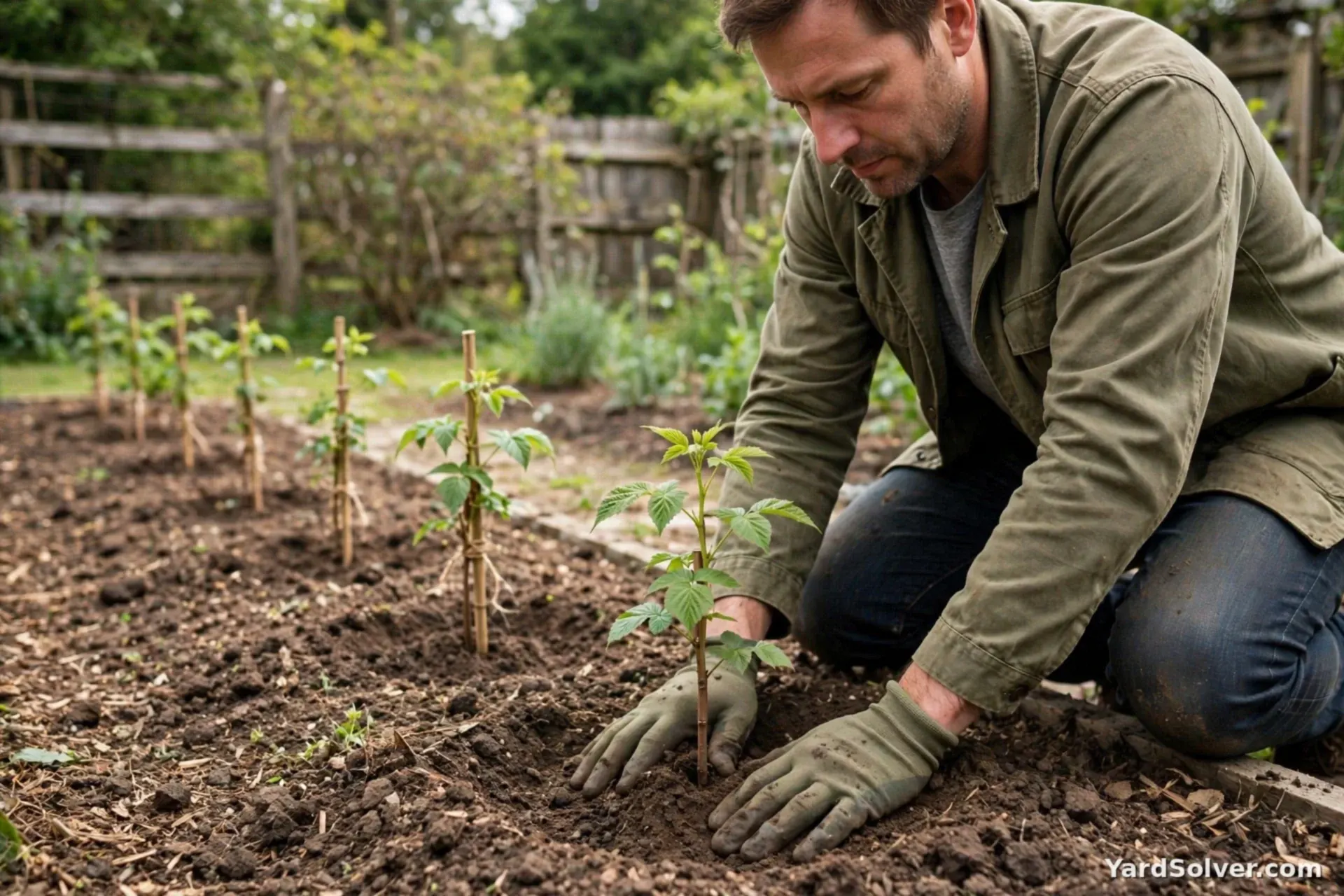
Start indoors None at 1–2 (canes) in deep, or sow outdoors None; plants finish spaced 18–24 in apart. Harden off indoor-started plants before they move out for good. Set each cane with its crown 1 to 2 in below the surface and the roots spread flat, then cut it back to 6 to 9 in. The hard cut pushes energy into roots and strong new canes.
Step 4 — Water and feed
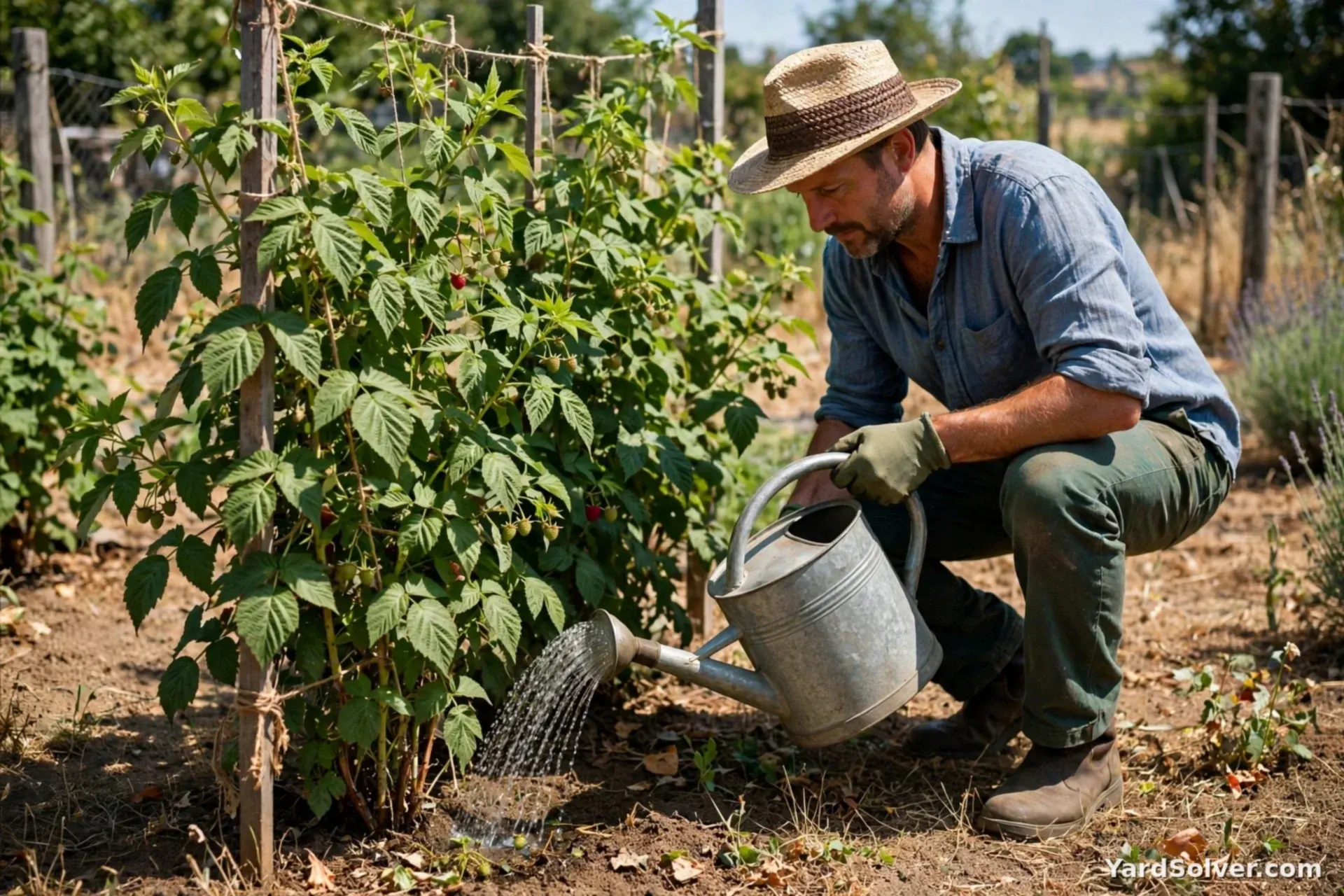
Water: Regular in dry spells. The Fertilizer Calculator turns a bed size into the right amount. Once fruiting starts, give about 1 to 1.5 in of water a week at the base, keeping foliage dry against grey mould. Feed each spring and hold a 3 to 4 in mulch over the roots.
Step 5 — Care and the problems to watch for
- Raspberry beetle — maggots in fruit; pick promptly and remove damaged berries.
- Cane blight / spur blight — prune out dead and diseased canes cleanly.
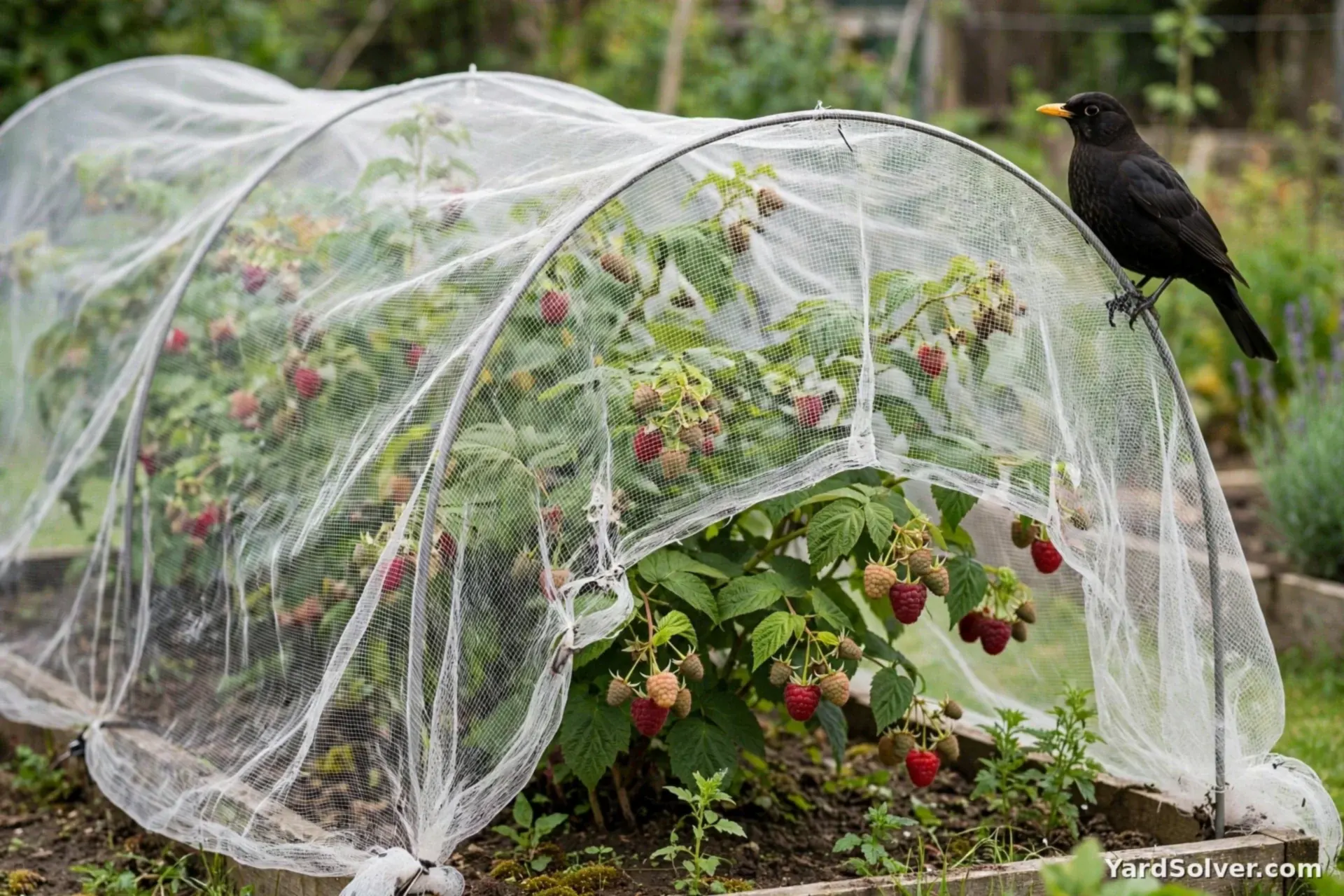
- Birds — netting over the row at ripening time.
Take care: Fresh raspberries mould very quickly — pick often, keep them dry, and eat or freeze them within a day or two. For planting, choose certified virus-free canes — cheap, sickly canes can bring diseases that stay in the patch for years.
On summer-bearing types, cut every fruited cane to the ground after harvest and thin new canes to the strongest 4 to 6 per foot. Everbearing types such as Heritage can be mown down each late winter instead.Step 6 — Harvest
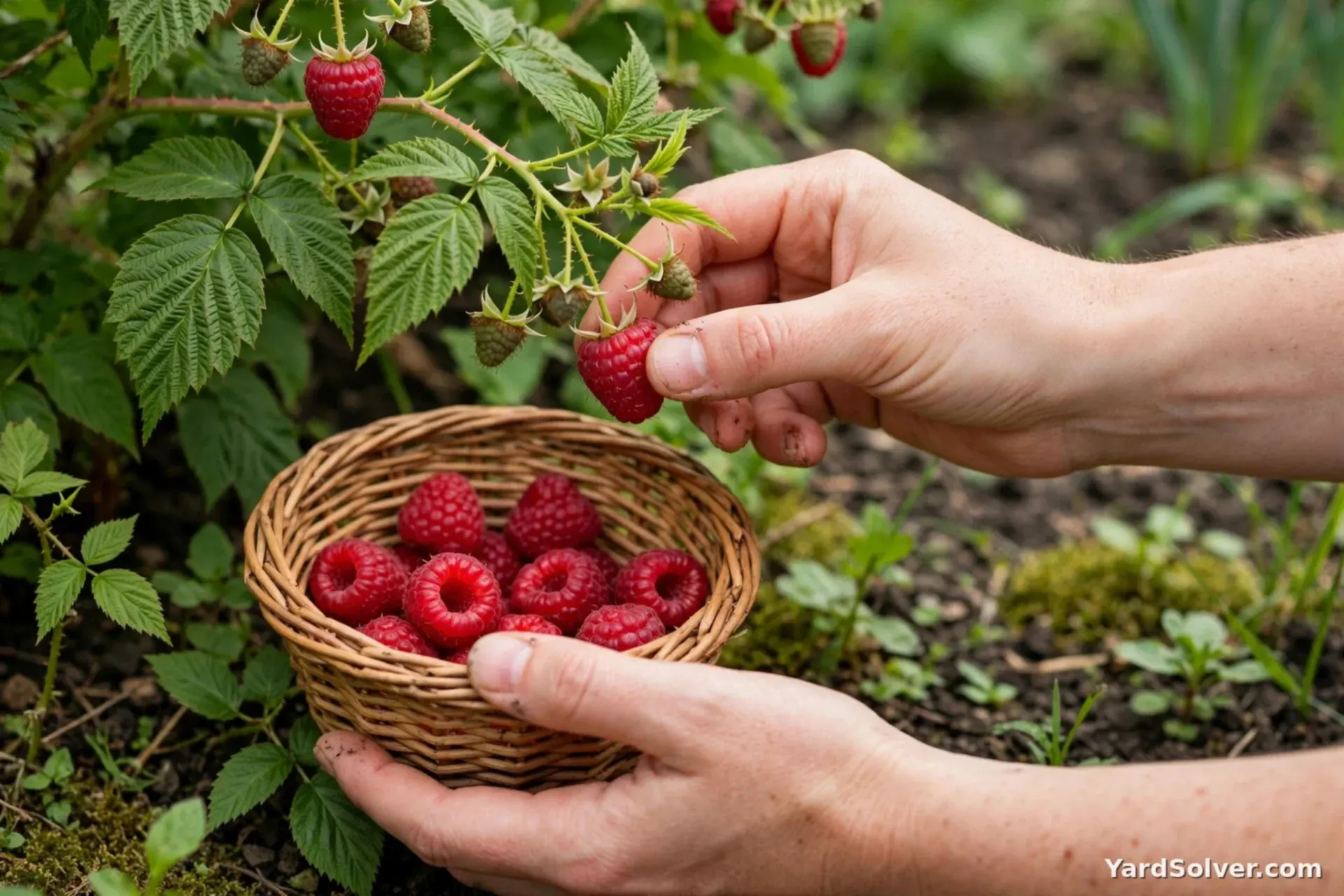
Ready in: From the second summer onward. Pick every 2 to 3 days in season — a ripe berry left hanging moulds and draws beetles. A mature row yields roughly 1 to 2 quarts per foot, and morning pickings keep best.
📅 Your personal Raspberry schedule
For raspberries the calendar runs in years, not weeks: your planting day starts a patch that is tied, pruned and picked by season from then on. Day 0 is the day your dormant canes went in the ground.
Varieties worth growing
| Variety | Colour | Why gardeners like it |
|---|---|---|
| Heritage | Red | The most planted everbearing type — fruits from late summer into fall |
| Boyne | Red | A summer-bearing Canadian-bred type, extremely cold-hardy |
| Nova | Red | A hardy summer bearer bred in Nova Scotia for cold climates |
| Anne | Yellow | An everbearing type with sweet, pale yellow fruit |
| Jewel | Black | The classic black raspberry for pies and jam |
Good for you — and take care
Benefits
- One of the highest-fibre fruits — a cup provides a large share of the day's fibre
- Provides vitamin C for the immune system
- Provides manganese and vitamin K
- The deep colour comes from natural plant antioxidants
- Less sweet than many fruits, for the amount of fibre you get
Take care
- Fresh raspberries mould very quickly — pick often, keep them dry, and eat or freeze them within a day or two
- For planting, choose certified virus-free canes — cheap, sickly canes can bring diseases that stay in the patch for years
A little history — and one good fact
Raspberries grow wild across Europe and northern Asia, and people have gathered them since prehistoric times. Roman writers mentioned them, and gardeners in England and France were growing named garden types a few hundred years ago. The red, yellow, purple and black kinds all come from crossing wild species — black raspberries are a North American native.
Fun fact: A raspberry is not one fruit but dozens of tiny fruits clustered together — and unlike a blackberry, it slips off its core when picked, which is why it is hollow inside.
Keep going
Guides: How to Protect Plants from Frost · Putting Your Garden to Bed · Companion Planting Basics
Calculators: Plant Spacing Calculator · Seed Calculator · Fertilizer Calculator · Garden Mix Calculator
More fruit & melons: Grapes · Watermelon · Strawberry · Currants
← Back to the Plant Library · Get your personal planting dates
Raspberry pruning and yield, worked out for a 10-foot row
What one mature 10 ft row looks like in practice — wires, pruning and expected pickings.
| Item | Worked figure |
|---|---|
| Canes to keep | 40 to 60 strong new canes (4 to 6 per foot) |
| Support wires | Lower wire about 30 in, top wire about 54 to 60 in |
| Expected harvest | About 10 to 20 quarts across the season |
| Summer-bearing pruning | Fruited canes cut to the ground after harvest |
| Everbearing pruning | Mow all canes in late winter for one fall crop |
Keep only the strongest canes at thinning time and the row stays open, airy and easy to pick.
Questions people ask
When do I plant raspberry?
Count from your average last spring frost: see the season guide on this page. Raspberries are a perennial cane fruit: plant dormant canes in early spring, and expect the main harvests from the second summer onward.
How far apart do I space raspberry?
Space plants 18–24 in apart, with seed sown 1–2 (canes) in deep. Sun: full sun.
When is raspberry ready to harvest?
From the second summer onward. A perennial cane fruit: plant dormant canes in early spring; canes fruit in their second year, then are pruned out.
Should I grow summer-bearing or everbearing raspberries?
Summer-bearing types such as Boyne and Nova give one large crop in early to mid summer on second-year canes. Everbearing types such as Heritage fruit on first-year canes from late summer into fall, and suit cold zones because the canes can be cut down each winter.
Why are my raspberry canes dying one at a time?
Single canes wilting among healthy neighbours usually means cane blight entering a wound, borer damage, or roots in wet soil. Cut the dead cane out at ground level, clean your pruners and improve drainage. If whole rows decline, suspect virus and replant certified stock elsewhere.
Raspberries fruit on a two-year cane system: the whole pruning craft is knowing which year's cane you are looking at
Raspberries (Rubus idaeus) grow as colonies of canes, each cane living two years: a green primocane in year one, a fruiting floricane in year two, then done. Summer-fruiting types crop on last year's canes, so the winter job is precise — cut out only the canes that fruited, at the ground, and tie in the strong new ones. Autumn-fruiting types simplify everything: they fruit on this year's canes, so the whole row is cut to the ground in late winter.
The row itself wants containment and air: a post-and-wire support, suckers dug out of the paths (raspberries travel), a mulch to keep roots cool and moist, and spacing that lets air move, because cane diseases love a crowded, wet thicket. Birds will take their share at ripening — netting at colour-change, not before, keeps the peace.
The worked example: a row pruned by cane-age each winter, on wires, typically crops heavily for a decade. The same row pruned by guesswork typically loses its fruiting canes or chokes on old wood — with raspberries, the calendar is written on the cane.
Sources
Key facts on this page — timing, spacing and care — cross-checked against NC State Extension Plant Toolbox — Rubus idaeus — culture and care requirements and Raspberry — Wikipedia — background on raspberries and their cultivation.
Related page
Read next: Edible Landscaping Ideas (A Front Yard That Feeds You).
Comments & ratings
No comments yet.
Be the first to share your experience.