
Plant Library · Fruits · By Faizan Ahmad
Updated November 17, 2026
🫒 How to Grow Gooseberry
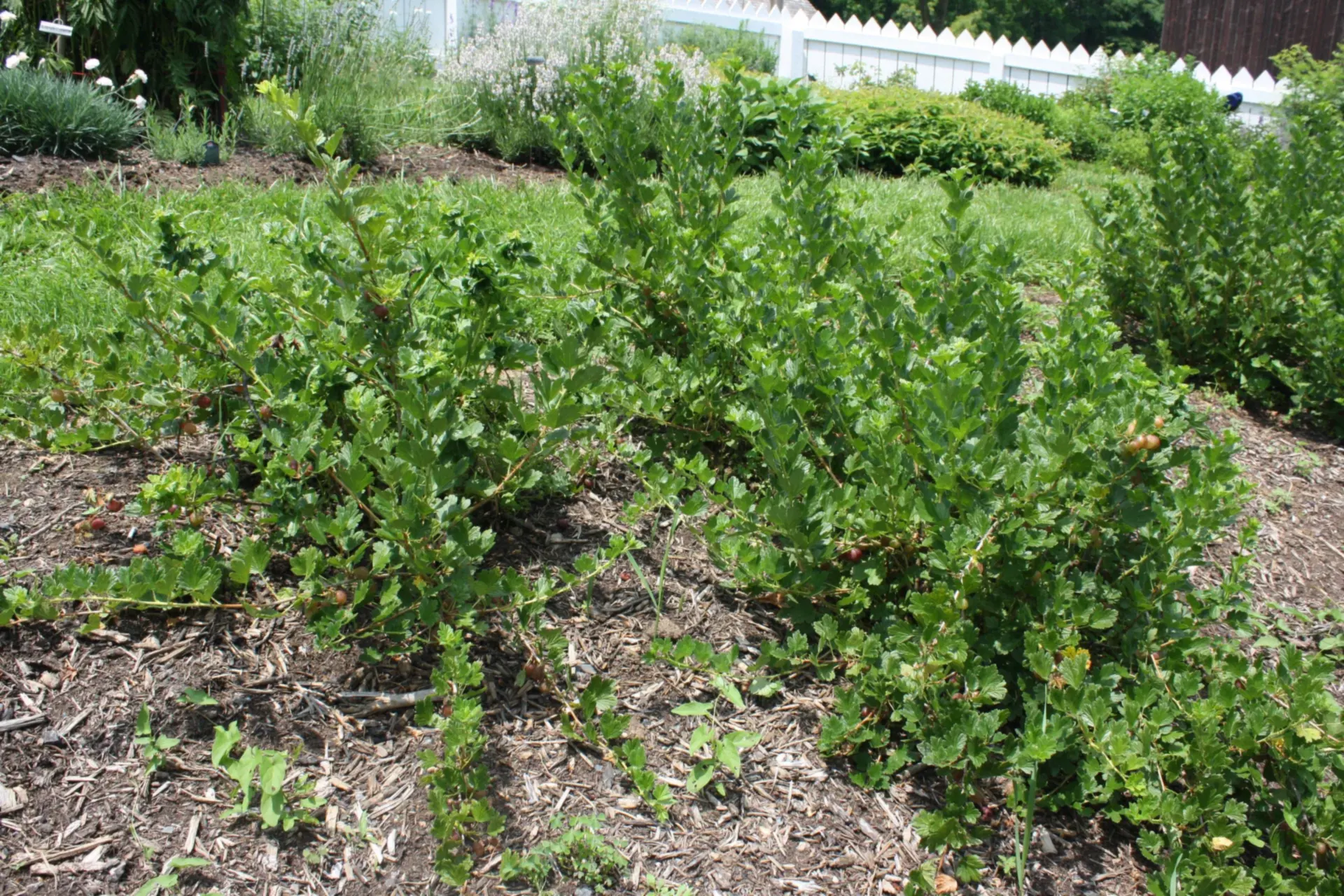
Gooseberries are hardy, self-fertile bushes — one bush is enough — with tart, translucent berries that cook into some of the finest pies and fools in the world. Bushes grow 4–5 ft, fruit from year 2, and shrug off cold winters. Like their cousins the currants, they can host white pine blister rust, so check local rules before planting.
Grow Gooseberry with us — step by step
Gooseberry growing is mostly about two things: an open, airy bush shape that keeps mildew away, and picking at two different ripeness stages — tart and firm for cooking, soft and translucent for eating straight off the bush. The six steps below cover both, in the order the work actually comes. If you would rather be reminded than remember, enter your planting date here and this page builds your own gooseberry calendar from it, from the first sawfly check to the winter prune.
Step 1 — today: Plant your Gooseberries today, 4–5 ft apart at nursery depth, in rich drained soil — check local blister-rust rules first — water in and mulch.
Gooseberry at a glance
Spacing: 4–5 ft in · Seed depth: As in the pot
Sun: Full sun to part shade
Water: Regular — keep evenly moist
Harvest: First berries in year 2
Timing counts from your average last spring frost — get your own dates in the Planting Calendar. Guidance follows standard extension-service practice for Canada and the US.
How to plant and grow gooseberry, step by step
Step 1 — Time it right
Plant bare-root bushes in early spring or fall. Gooseberries leaf out early — plant promptly in spring. Container-grown bushes can also go in during fall in mild districts, giving roots a head start before spring. Whichever season you choose, soak a bare-root bush in a bucket of water for an hour before planting so the roots go in fully hydrated.
Step 2 — Prepare the spot
Sun: Full sun to part shade. Rich, well-drained soil in sun or part shade. Cool, mulched roots suit them best. Work out how much soil you need with the Garden Mix Calculator or the Raised Bed Soil Calculator. Gooseberries crop best on soil around pH 6.0–6.5 that stays moist without sitting wet, and a spot with morning sun dries dew off the leaves quickly, which discourages mildew. Dig in a bucket of garden compost per bush before planting — they feed heavily for years from the same hole.
Step 3 — Plant it
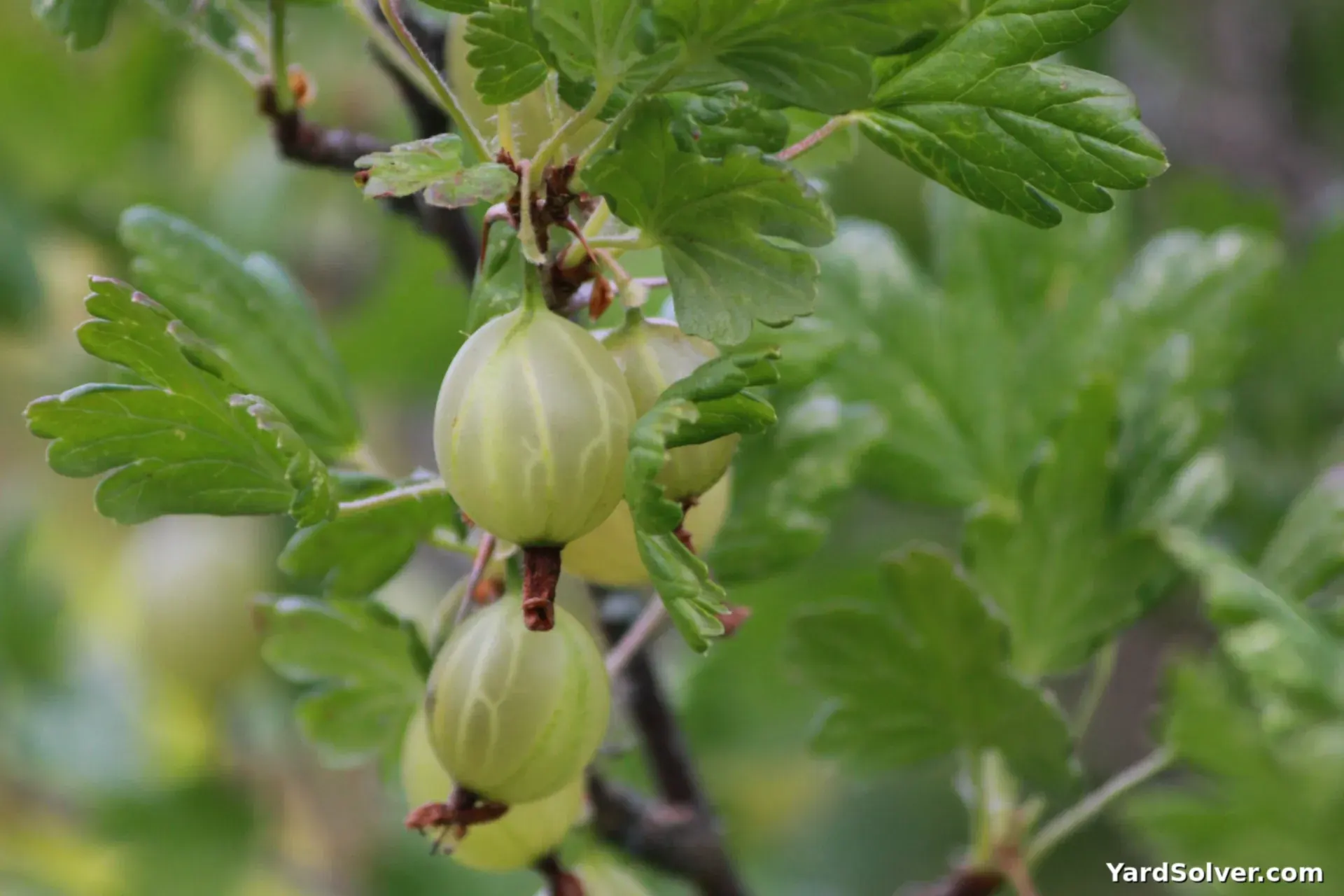
Set bushes 4–5 ft apart at the depth they grew in the nursery, water in and mulch — keeping mulch off the stems. The Plant Spacing Calculator turns that spacing into bushes-per-row. Planting a touch deeper than nursery depth is fine for gooseberries and encourages a strong multi-stemmed bush. Angle the bush very slightly and spread the roots out in the hole; a 5 ft gap between bushes looks generous in year 1 and feels tight by year 4.
Step 4 — Water and feed

Water: Regular — keep evenly moist. Feed in spring with a balanced fertilizer — gooseberries are hungry feeders, especially for potash. The Fertilizer Calculator turns a bed size into the right amount. Potash is the key nutrient: a spring dressing of sulfate of potash, or regular comfrey mulch, firms growth and sweetens fruit. Water deeply once a week in dry spells rather than little and often — berries swell fast in June and split if a drought suddenly breaks.
Step 5 — Care and the problems to watch for
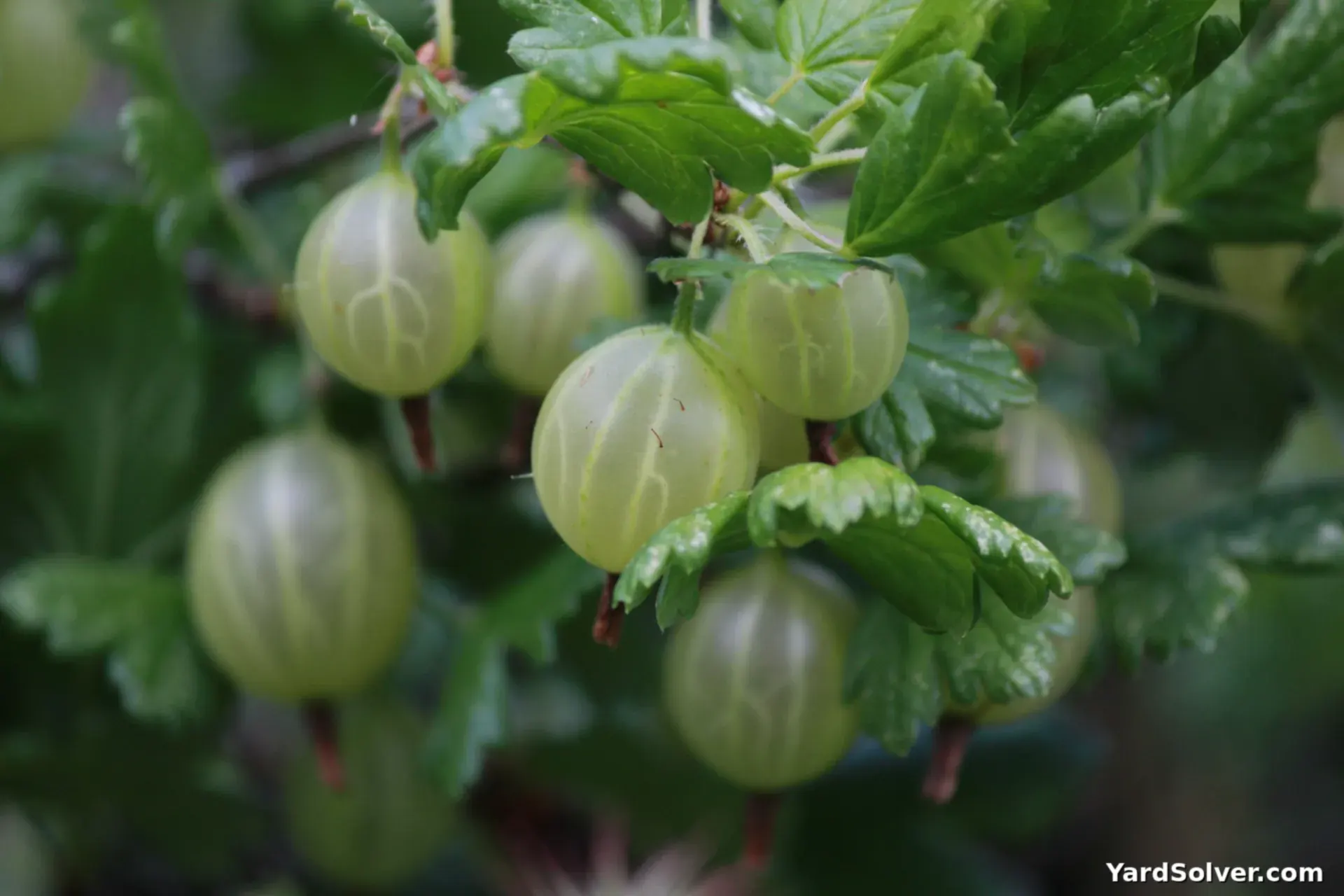
American gooseberry mildew — white film on berries and leaves; prune for airflow and choose resistant varieties. Sawfly — caterpillars can strip a bush fast; check leaf edges in spring. Blister rust — gooseberries share the currant family's rust risk; check local rules. Prune every winter to an open goblet: take out crossing and drooping wood and keep about 8–10 main branches, removing the oldest stems at the base. Gooseberry sawfly has up to three generations a season, so repeat the leaf-edge check monthly from spring, not just once.
Step 6 — Harvest
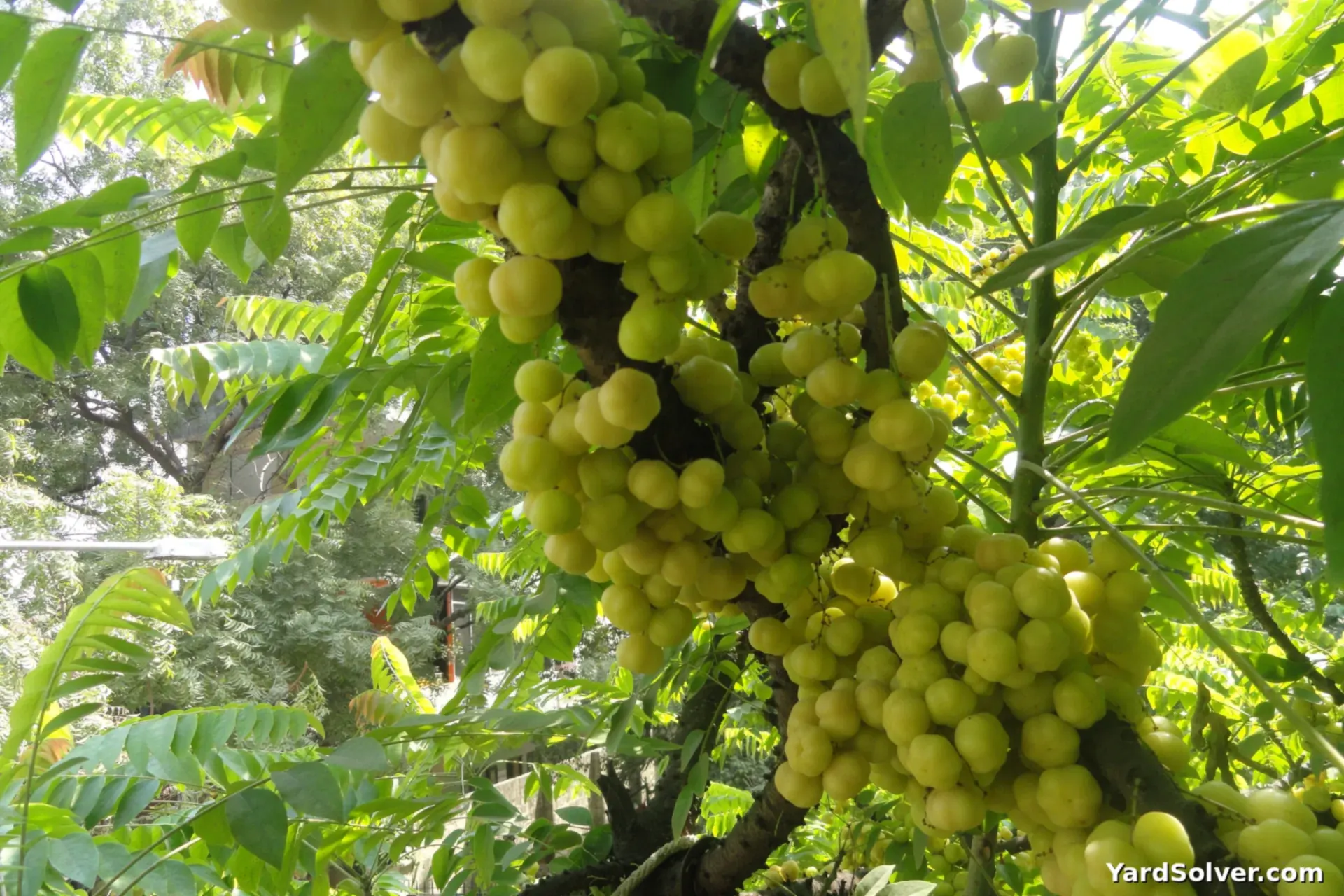
First berries in year 2. Pick under-ripe for pies and jam, and let a few ripen fully for eating fresh — they turn sweet and translucent. Thin the berries in late May, removing about half the fruitlets, and use those thinnings for the first pie — the berries left behind grow far bigger. Wear gloves and pick from underneath the branches; a ripe dessert berry gives slightly when rolled gently between finger and thumb.
📅 Your personal Gooseberry schedule
Your gooseberry schedule is anchored to the day your bush went in — bare-root in spring or fall, it makes no difference to the maths. From that planting day it counts out the handful of dates a gooseberry keeper actually needs: the spring sawfly checks, the late-May thinning, and the winter prune that keeps the bush open and mildew-free.
Varieties worth growing
| Variety | Colour | Why gardeners like it |
|---|---|---|
| Invicta | Green | The famous mildew-resistant variety — heavy crops |
| Hinnonmaki Red | Red | Sweet red berries, hardy and reliable |
| Pixwell | Pink | Nearly thornless — bred for North American gardens |
| Captivator | Red | A thornless-ish, mildew-resistant red type |
Good for you — and take care
Benefits
- Self-fertile — one bush fruits alone
- Very hardy — shrugs off cold winters
- Berries for pies, fools, jam and wine
- Crops from year 2
Take care
- Check local rules — gooseberries can host white pine blister rust, like currants.
- Thin berries in late spring for a smaller crop of much bigger fruit.
- Mind the thorns — prune with gloves.
Problems to watch for
- American gooseberry mildew — white film on berries and leaves; prune for airflow and choose resistant varieties.
- Sawfly — caterpillars can strip a bush fast; check leaf edges in spring.
- Blister rust — gooseberries share the currant family's rust risk; check local rules.
A little history — and one good fact
Gooseberries were a Victorian obsession in England, where gooseberry clubs competed to grow the biggest berry — some reached the size of a hen's egg. They fell out of fashion in North America during the blister-rust bans and are now quietly coming back.
Fun fact: Victorian gooseberry clubs in England competed for the heaviest berry — the record berries were as big as a small apple.
Keep going
Guides: How to Harden Off Seedlings · How to Read a Seed Packet
Calculators: Plant Spacing Calculator · Seed Calculator · Fertilizer Calculator · Garden Mix Calculator
Plan it: Garden Planner · Planting Calendar · Companion Planting Chart · Seed Box
Good companions: Garlic
More berries: Currants · Strawberry · Raspberry
← Back to the Plant Library · Get your personal planting dates
Gooseberry pruning, year by year
Most gooseberry troubles — mildew, small fruit, a tangled thicket of thorns — come back to pruning. The bush fruits best on wood that is 2–3 years old, so the job is a steady renewal, done each winter while the bush is dormant:
| Year | Winter job | Why |
|---|---|---|
| Year 1 | Shorten new leaders by about half; remove weak shoots at the base | Builds a strong framework of main branches |
| Year 2 | Keep 8–10 of the strongest stems; cut out anything crossing the centre | Opens the goblet shape that keeps mildew down |
| Year 3 onward | Each winter, remove 2–3 of the oldest, darkest stems at ground level and shorten side shoots to 2–3 buds | Keeps fruiting wood young and berries large |
| Every summer | In late June, shorten this season's leafy side shoots to about 5 leaves | Lets sun and air reach the ripening fruit |
Work with thick gloves and cut drooping branches first — stems that touch the ground root easily and turn one bush into a thicket. If a stem is pale, scaly and clearly older than its neighbours, it is the one to sacrifice.
Questions people ask
When do I plant gooseberries?
Plant bare-root bushes in early spring or fall. Check local rules first — gooseberries can host white pine blister rust.
How far apart do I space gooseberries?
Space bushes 4–5 ft apart. Sun: full sun to part shade.
When will my gooseberries fruit?
First berries in year 2. Gooseberries are self-fertile — one bush is enough.
How do I prune a gooseberry bush?
Prune in winter to an open goblet shape: keep 8–10 main branches, remove crossing and drooping wood, and each year cut out 2–3 of the oldest stems at the base. Fruit forms best on 2–3-year-old wood, so steady renewal keeps crops heavy.
Why are my gooseberries small?
Usually the bush set too many berries, the roots went dry while fruit was swelling, or the wood is old and crowded. Thin about half the fruitlets in late May, water deeply in dry spells, and renew the oldest stems each winter.
A self-fertile bush that fruits in shade most berries refuse: prune for airflow, net against birds
Gooseberry (Ribes uva-crispa and the American Ribes hirtellum) is the soft fruit for the awkward corner: it tolerates partial shade, is self-fertile so one bush crops alone, and fruits on wood that is two to three years old. That fruiting habit sets the pruning rule — each winter, cut out a share of the oldest stems at the base so the bush constantly renews young fruiting wood without ever losing a whole season's crop.
Its one serious enemy is powdery mildew, the white film that coats leaves and berries in still, humid air. Resistance starts with placement and shape: an open-centred bush on a short leg, spaced so air moves through it, suffers far less than a dense thicket against a wall. American species and modern mildew-resistant cultivars add a second layer of protection where the disease is known to be bad.
The worked example: a bush pruned to an open goblet, mulched, and netted as the berries colour, typically gives bowl after bowl of fruit for pies and jam over several weeks. The same bush left unpruned and unnetted usually gives mildew-marked berries to the gardener and the clean ones to the birds — gooseberries reward two small jobs done on time.
Sources
Key facts on this page — timing, spacing and care — cross-checked against Gooseberry — Wikipedia — background on gooseberries, their species and their cultivation.
Related page
Read next: Edible Landscaping Ideas (A Front Yard That Feeds You).
Comments & ratings
No comments yet.
Be the first to share your experience.